series
« Previous Entries Next Entries »Moche culture jewelry: Ear Plug replica Chair
Saturday, May 2nd, 2015
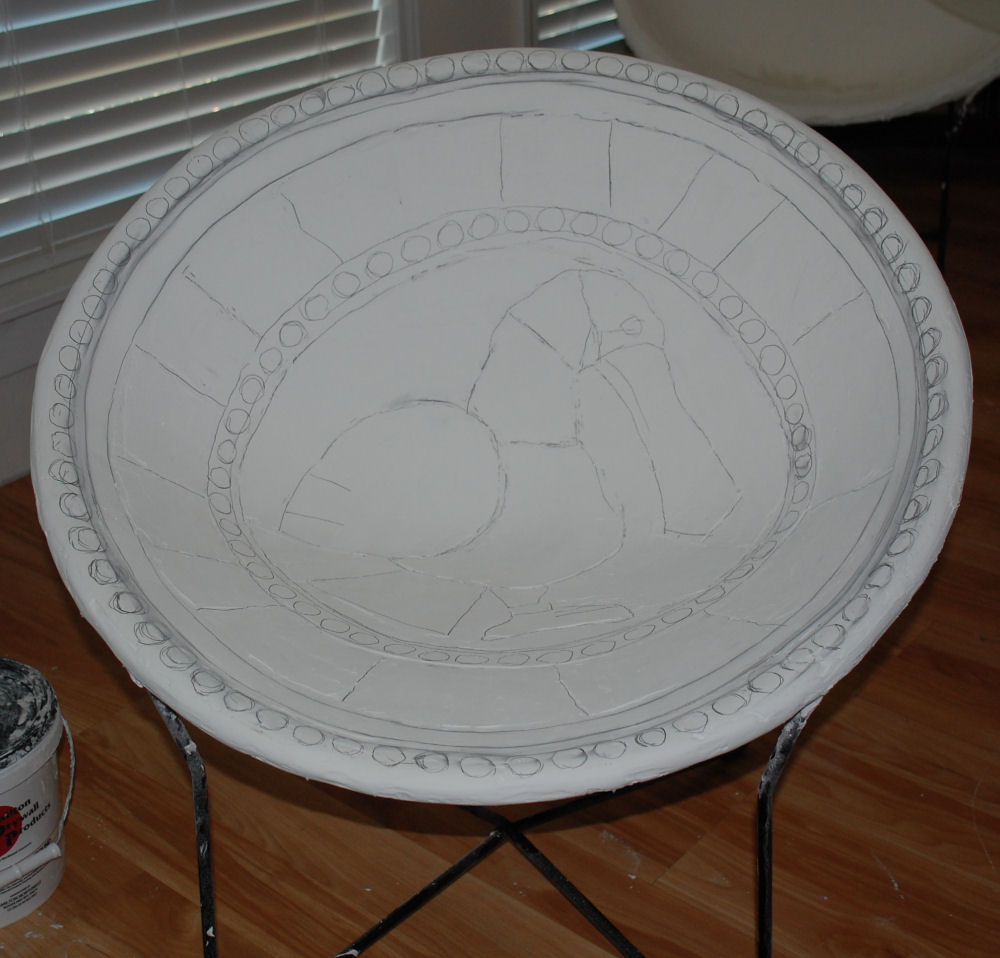
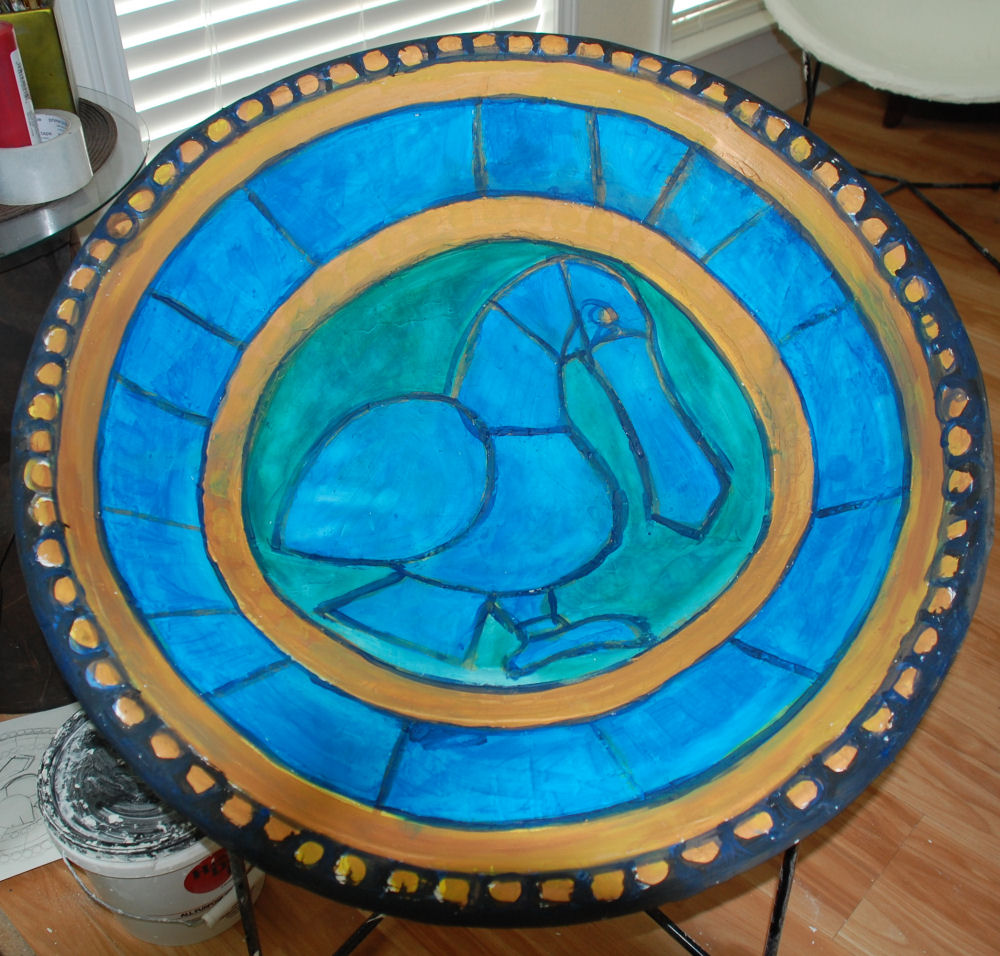
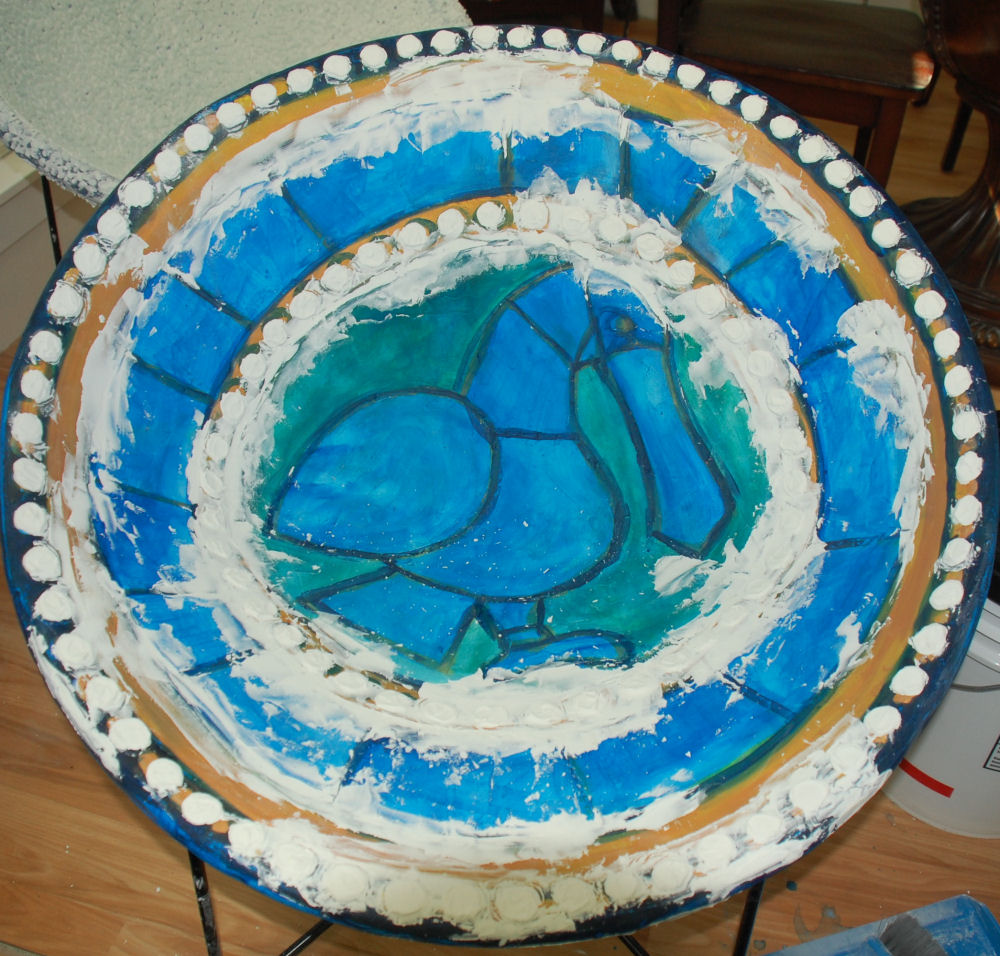
Started Moche Ear Plug replica chair, faux turquoise and gold, 29 x 29 x 29 inches mixed media furniture.
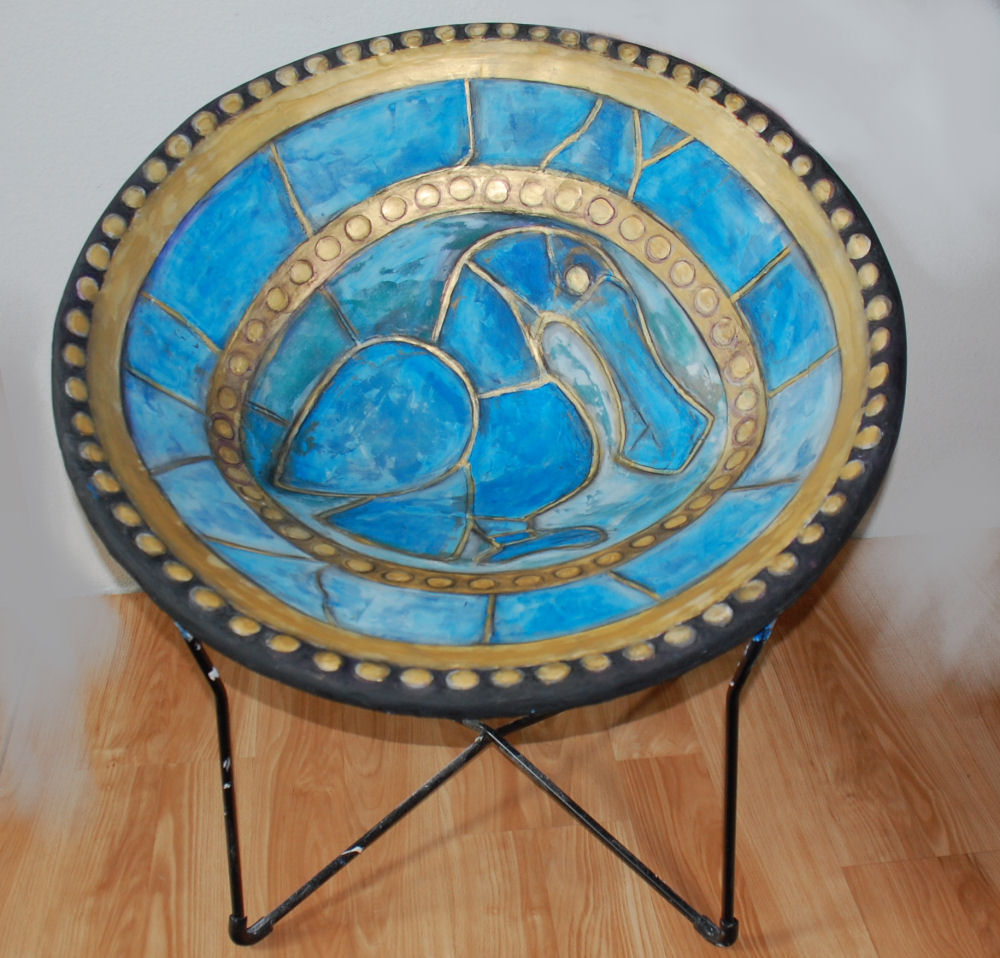
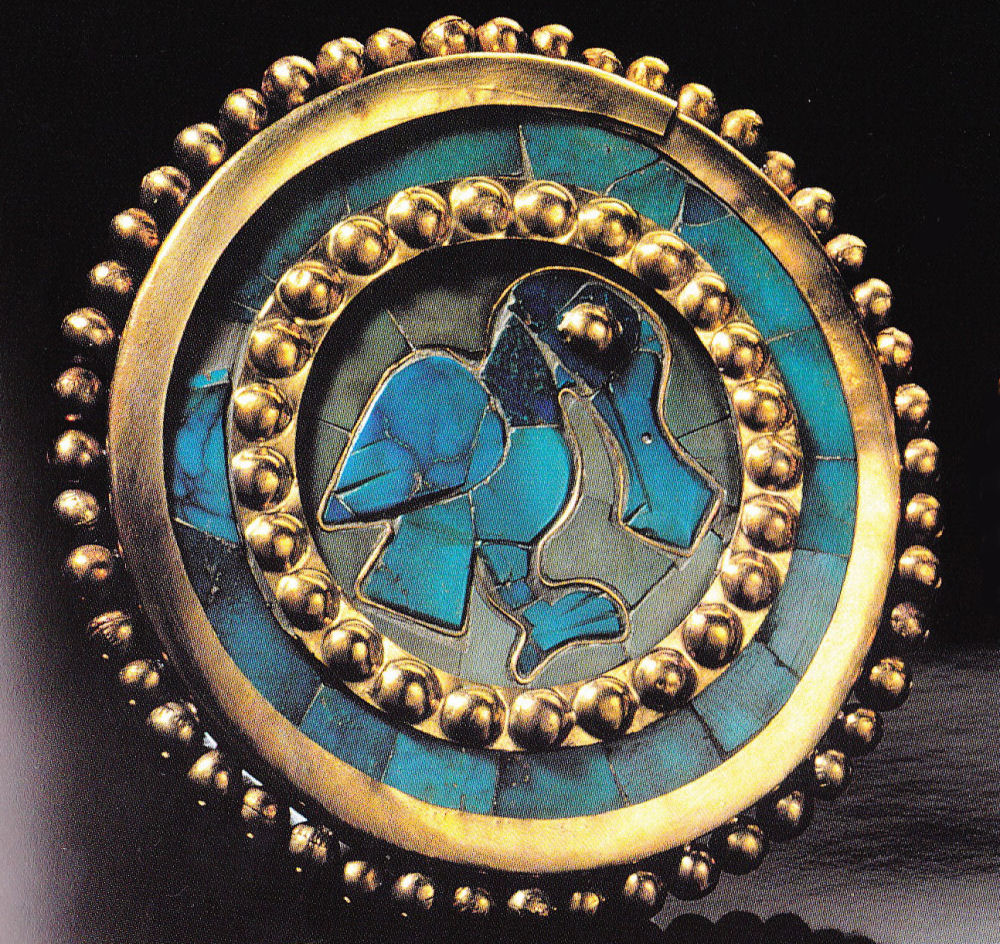 The Moche culture lived on the north coast of Peru between 100 BC and AD 700. With no writing system, they left incredible representations of their activities through art on clothing, pottery, jewelry, architecture, and hunting weapons, illustrating themes like ceremonies, supernatural beings and warfare. This chair is a replica of an Ear Plug – one from a pair found in the tomb of the Lord of Sipan, one of two large tombs discovered in 1987 just north of the village with the same name. Accompanied by sacrificed members of his court and wearing beautifully crafted cotton garments, the highly regarded king died at 30 years of age and was buried with ornaments, carefully placed crowns and various types of jewelry made of gold, gilded copper, shell, feathers, and precious gems. Over 250 ceramics were found, as well as figurines, banners, helmets, scepters and rattles.
The Muscovy duck was a symbol of water abundance to Moche society, and they revered gold as symbol of the light and sun. The color gold is associated with higher ideals, spirituality, wisdom and understanding. For thousands of years, Turquoise mining and adornment has spanned all cultures, prized as a symbol of nobility, invoking luck, protection, and the power of immortality.
I love the idea of incorporating arts and cultural history in my work somehow. The up-cycled chairs are the perfect place to do this. Here are some examples of the influence of history on previous art work.
New Chairs in progress – first, Shiva as Nataraja
Friday, May 1st, 2015
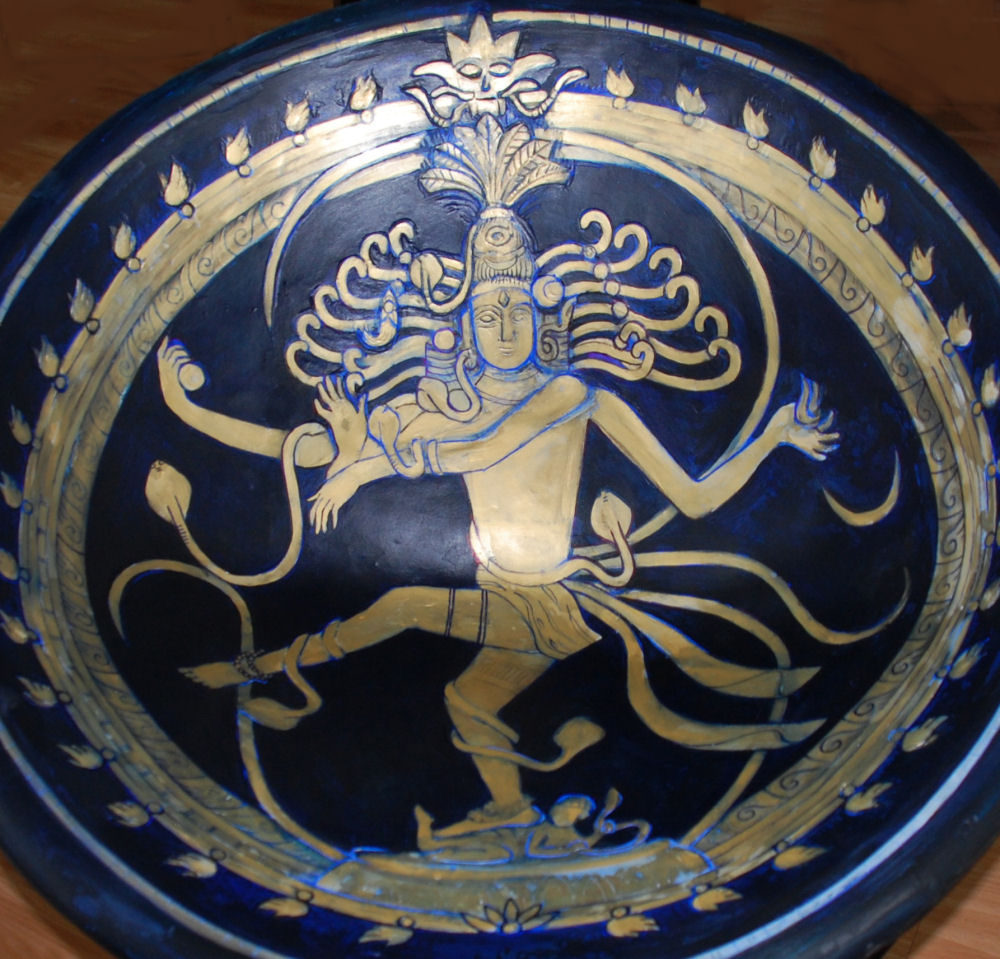
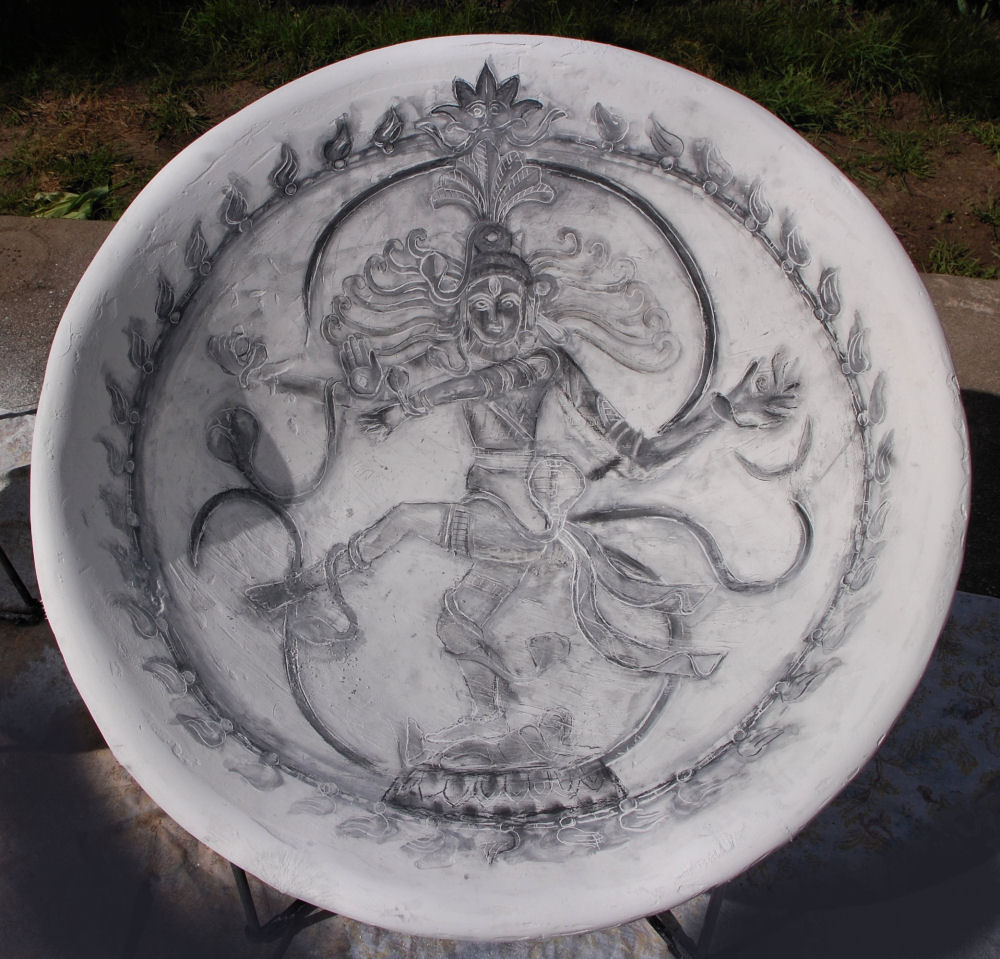
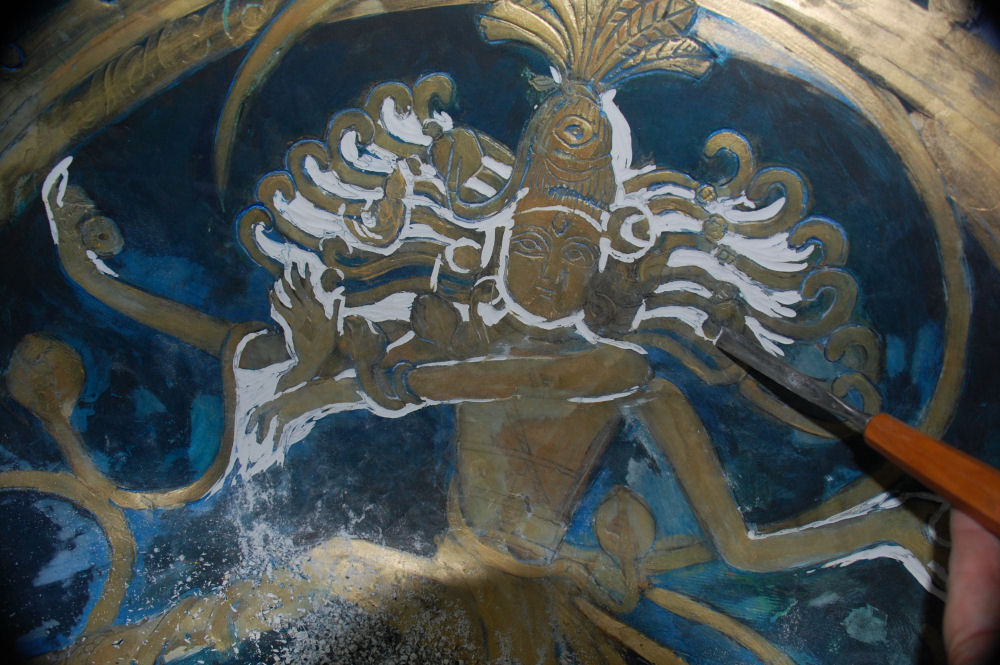
Shiva as Nataraja chair in progress
The Lord of Dance symbolism
Eastern philosophy is full of symbolism for concepts much deeper than words could ever express. The teachings are so complex but beautifully simple at the same time. Divine concepts are depicted in human forms with worldly items to help us identify somewhat, and increase our understanding toward making healthy decisions in our lives – for mind, body, and soul.
 Sculptures, pictures, and literature are charged with multiple meanings and contradictions conveying the extremes in Life, like the existence of intense joy and pain, and the importance of balance in day to day living, and practicing a middle road of contentment. The interpretations here only outline the more prominent symbolism of this famous icon. As research continues, this article will elaborate on the most important symbols of this sculpture.
The purpose of the dance is to release us from our ignorance and entanglement in the world of opposites, all set within the circular, rhythmic motion of the universe. We are to acknowledge, yet remain detached by their effects. It is said that Truth requires detachment and at the same time, knowledge and acceptance.
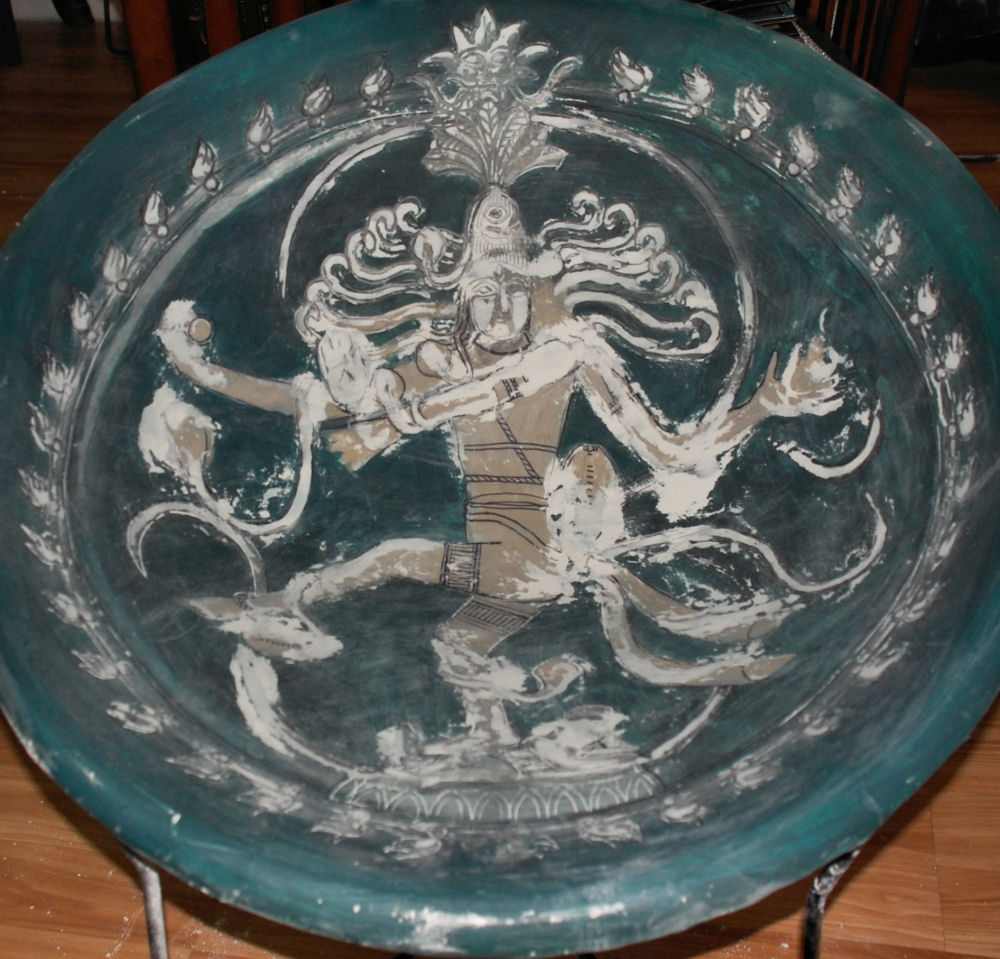 There are different names for the Hindu god, Shiva in his various forms. Though an ascetic, Shiva’s role is as householder, implying that we need not leave society to be devoted to following principles of Dharma; conduct; right way of living. In the aspect depicted here, Lord Shiva creates, sustains, and destroys life. As The Nataraja, he dances within the world of illusion, represented by an outer ring of fire. There is an inner ring of water, and some statues show multiple rings of fire and water. As he victoriously dances upon the demon of ignorance, Shiva’s matted dreadlocks whirl about him, capturing a number of heavenly bodies, like the physical representation of the sacred river Ganges, which fell from heaven to earth, first landing in Shiva’s hair so as not to destroy it. The moon is symbolic of many things, such as seasonal changes, life’s rejuvenation and love, all kept active with this dance.
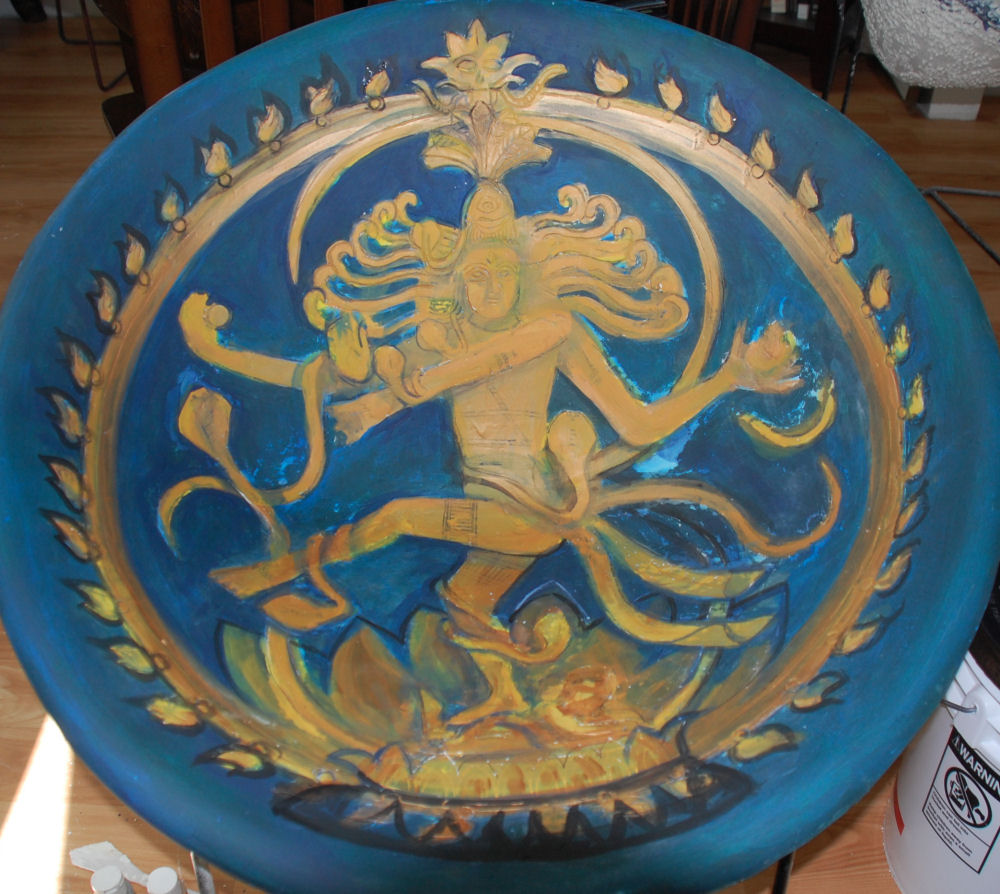 The gestures of the dance represent Shiva’s five activities: creation – symbolized by the drum, protection – the “fear-not” pose of the outward-facing hand, destruction – by the fire, embodiment – by the foot planted on the ground, and release – by the foot held above ground. Snakes coiling about his body symbolize the life force within all of us – the Shakti or kundalini – and display his power over the most deadly of creatures. Also, as snakes shed their skin, so do our souls reincarnate, according to Hindu beliefs.
The first four first four Chairs were up-cycled second-hand store original Solaire Chairs, but I have found a decent source for newer ones, so finally some ideas I’ve had for years can be realized, and special orders can now be filled. With thin applications of plaster then sanding and waiting for successive layers to dry, four new Chairs, 29H x 29W x 29D inches, started April 5th are now in progress, concentrating on the details of two while the others cure. One chair, the priority, is of Shiva as The Lord of Dance, and one chair is an addition to the Zen Garden series. The third is a large replica of a Moche culture (1st century Peru) earring/ear plug, and the fourth chair will portray an Easter Island theme, something I’ve had in mind since I bought the very first chairs in the 1990’s. Until refining stages, the four can be worked at the same time while plaster is added, cures and is sanded down.
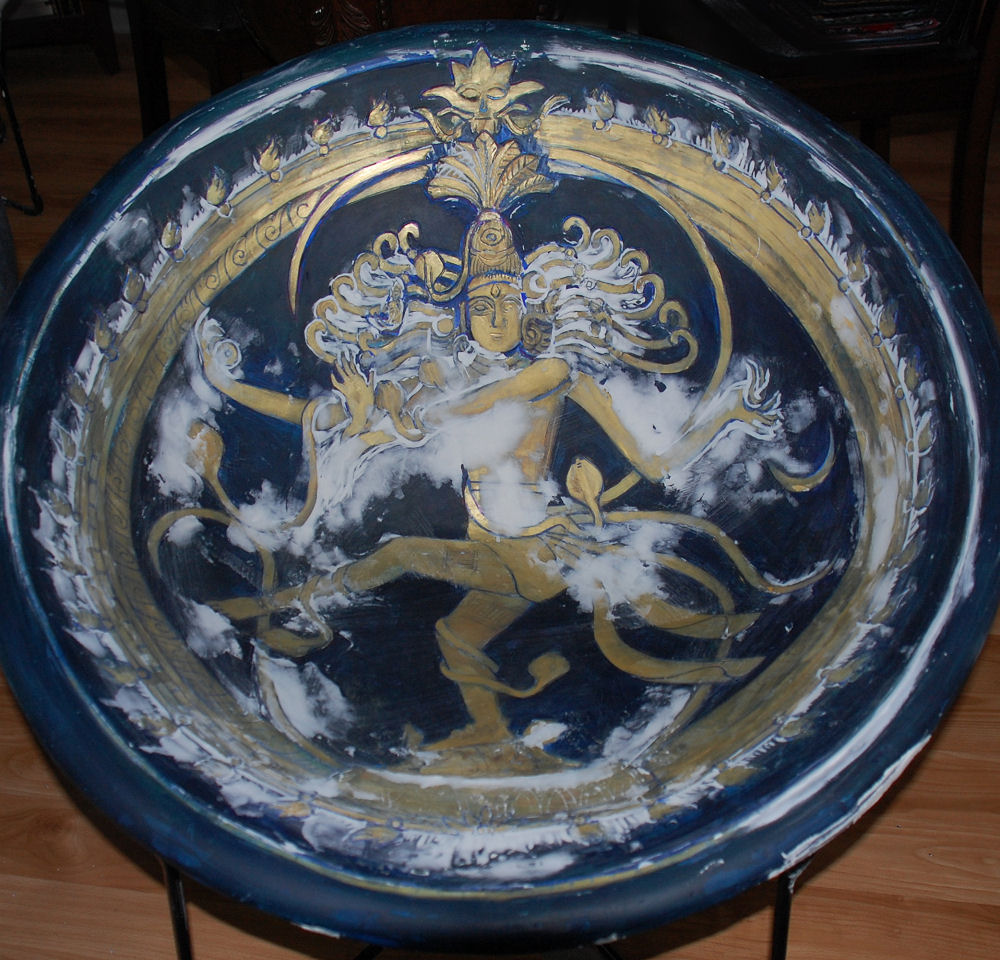 In this visual translation, the symbol of Om, first sound uttered in the Universe, weaves throughout, as if to involve a complete sensory understanding. All hand gestures have specific meanings, like the open front right hand facing us in “abhayamudra” gesture, denoting reassurance and safety for all who follow a righteous path. The drum in his right hand beats ceaselessly and infinitely, “Om”, while the universe is created, destroyed and recreated. The back left hand holds flames of fire, with both destructive and cleansing properties. The front left arm is held across the chest like an elephant’s trunk, with the hand pointing to the left leg and foot, lifted as a sign of liberation as the sacred elephant leads the way through jungles of ignorance.
The graphite design is first partially engraved with pencil in damp plaster, helping to show which areas to raise and hwich to recede. The addition, removal by sanding and carving gradually refine the design along with successive layers of paint which, when finished, the combination shows through as a mottled sort of patina, perfect for this subject. The icon on the finished chair will be gold-bronze colors, as the Shiva as Nataraj sculptures are traditionally made of bronze. Plans are for the background to be antiqued cobalt blue or teal.
Zen Garden #16 Chair started
Monday, April 6th, 2015
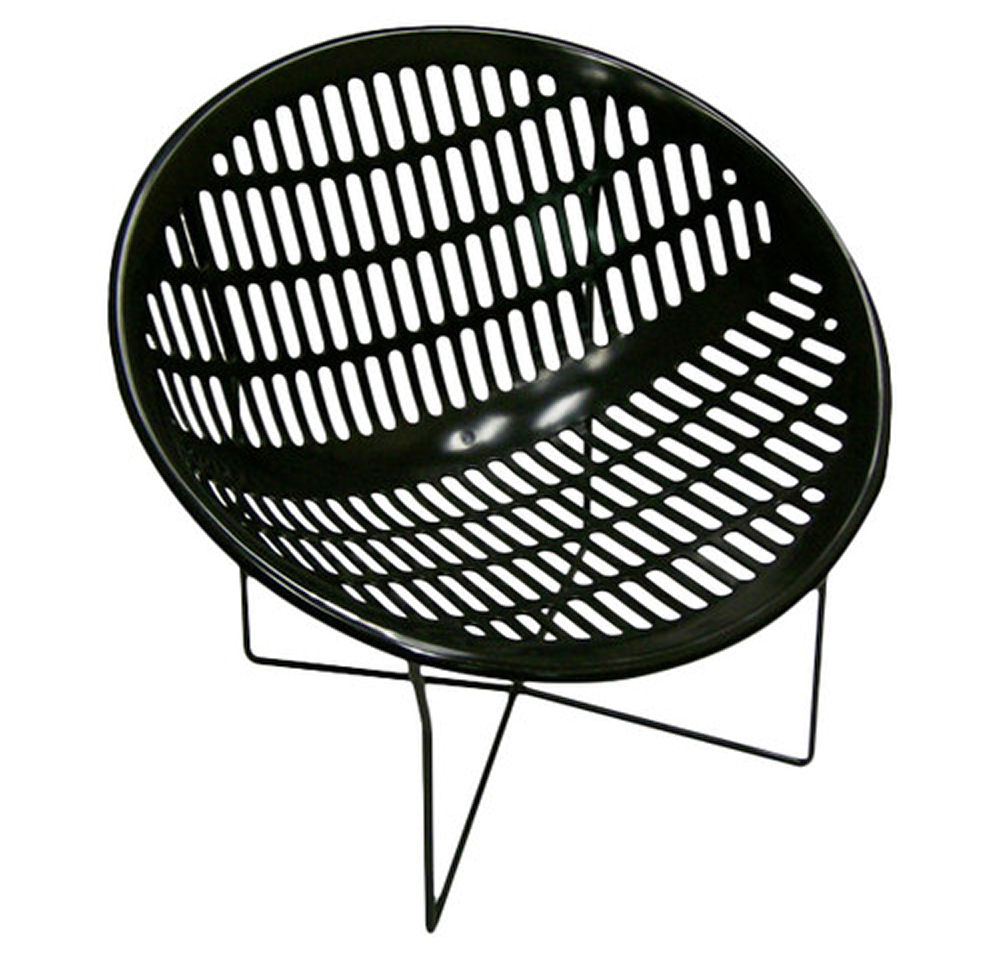
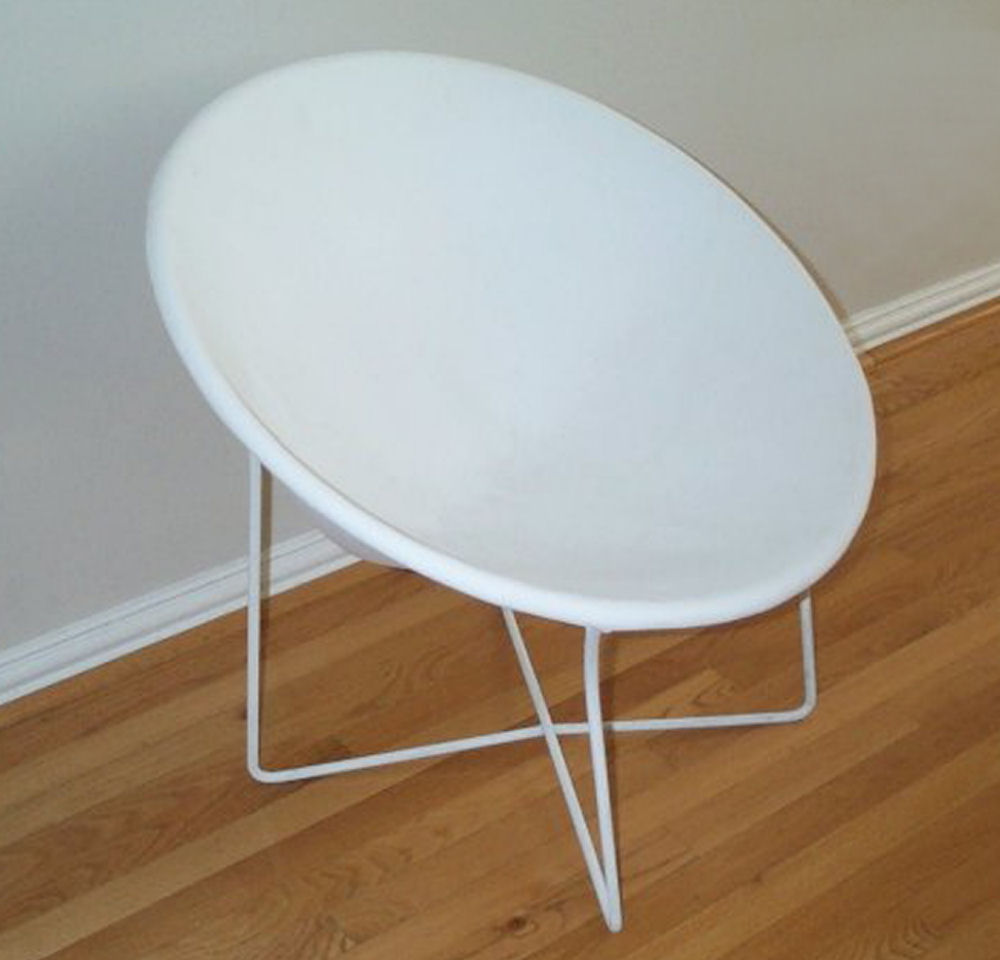
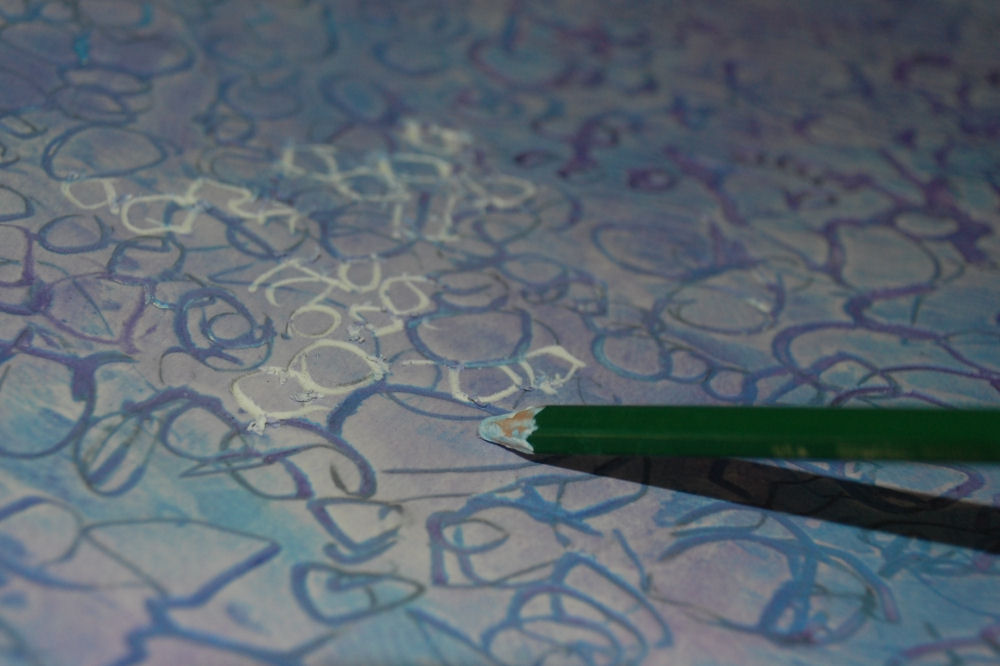
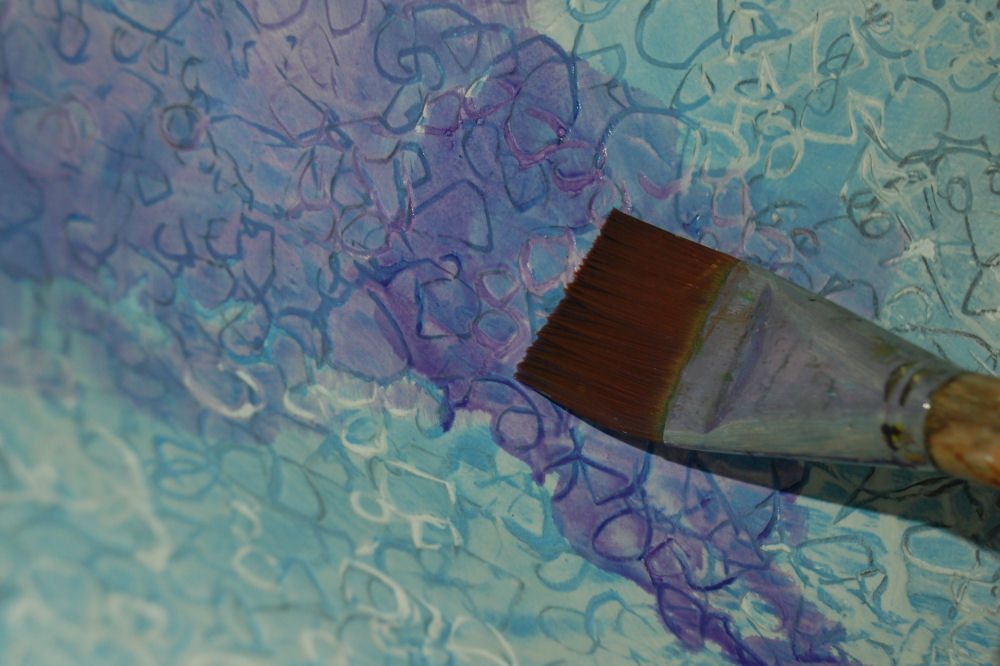
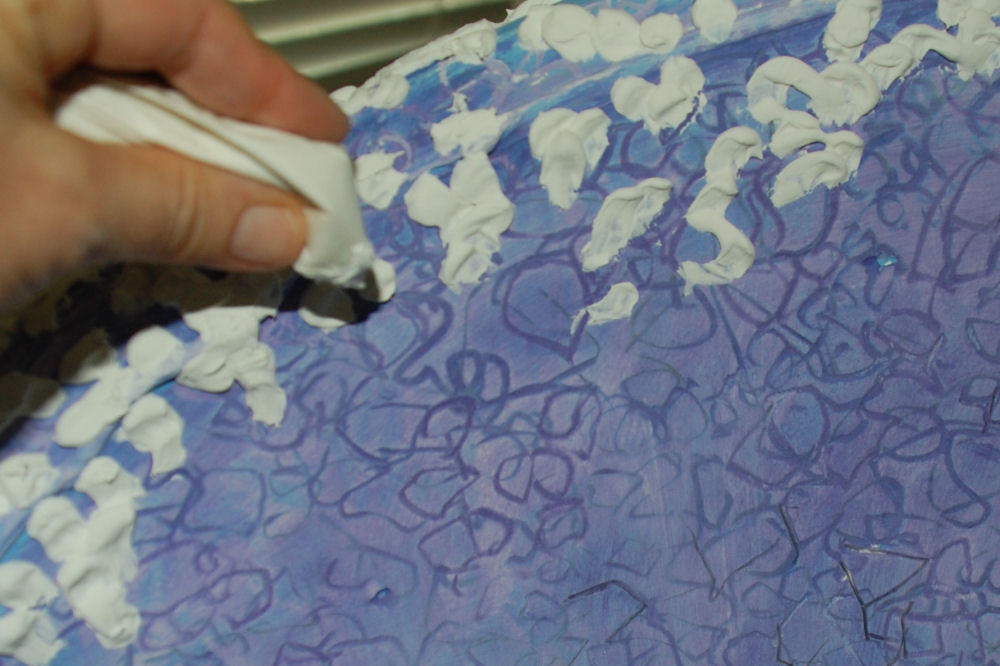
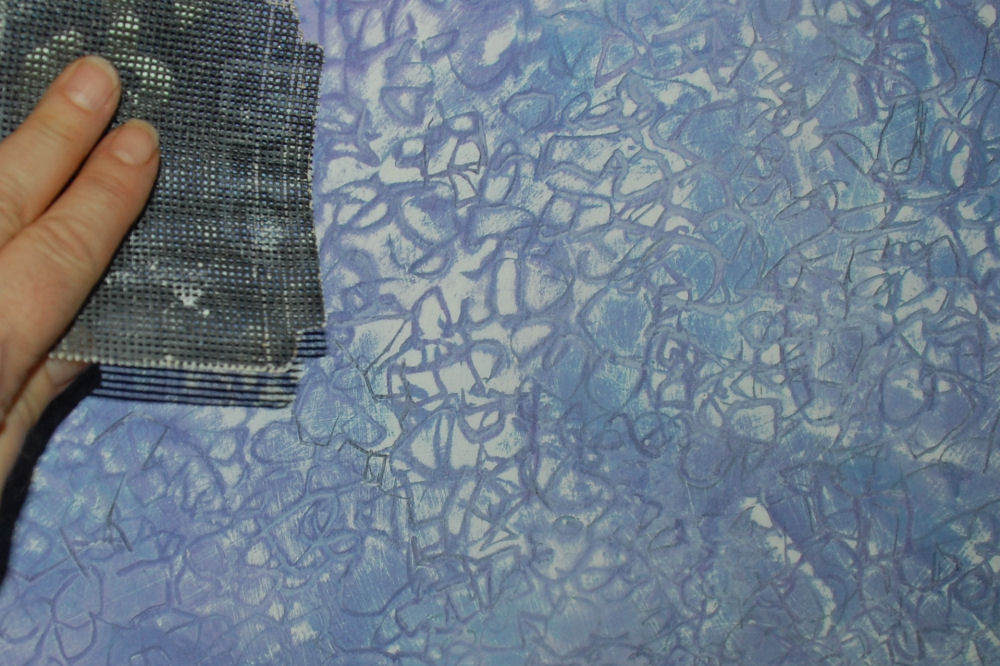
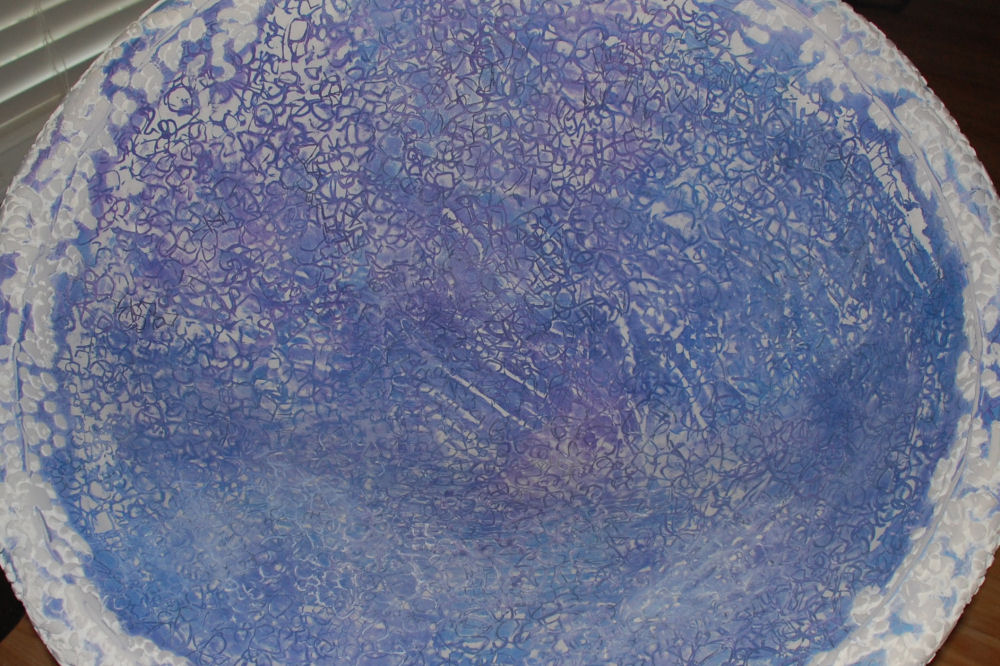
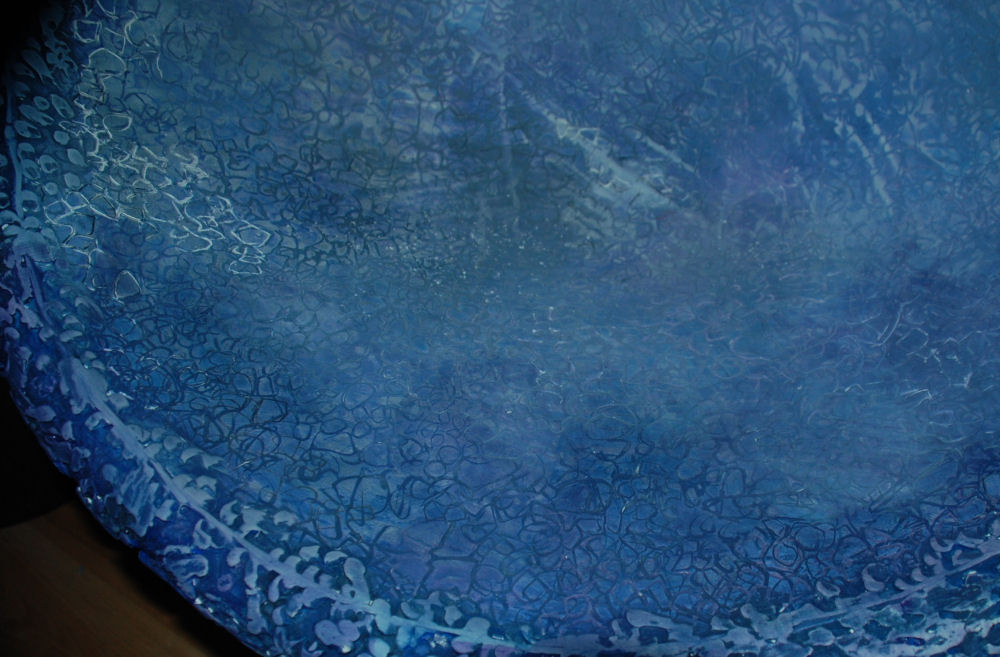
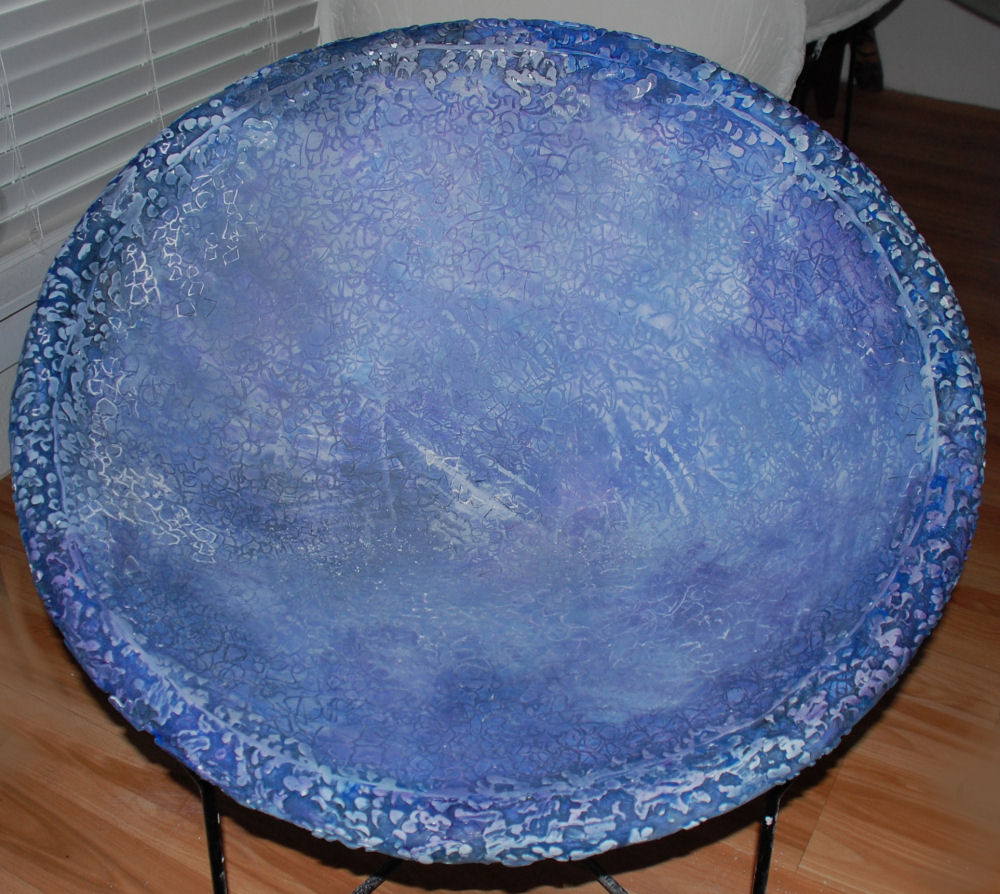
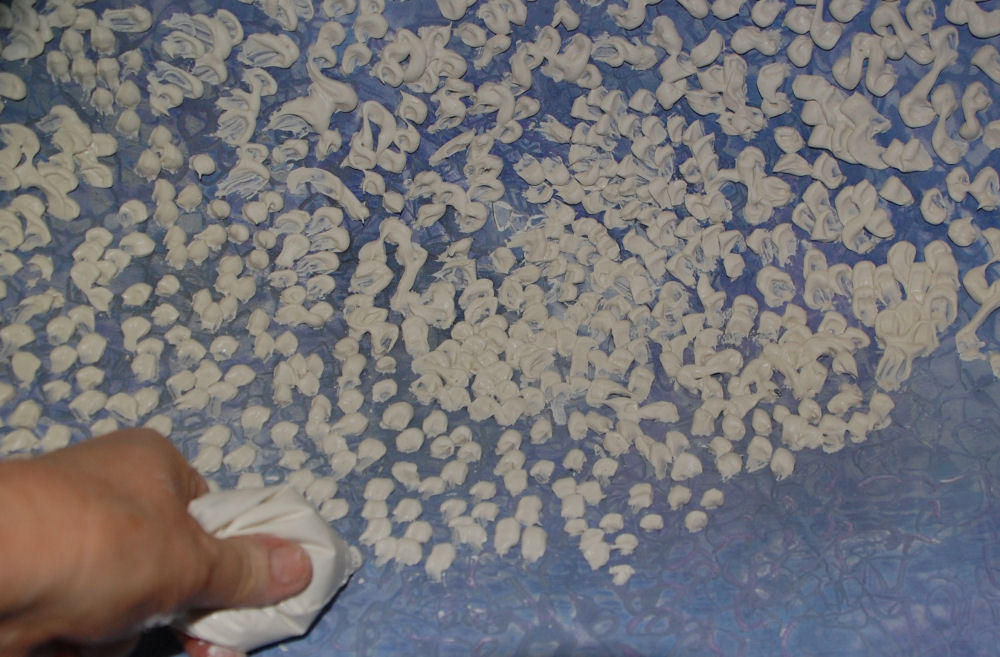
Zen Garden #16, most recent of the Zen Garden series 29 x 29 x 29 inches mixed media on vintage Solair chair, in progress.
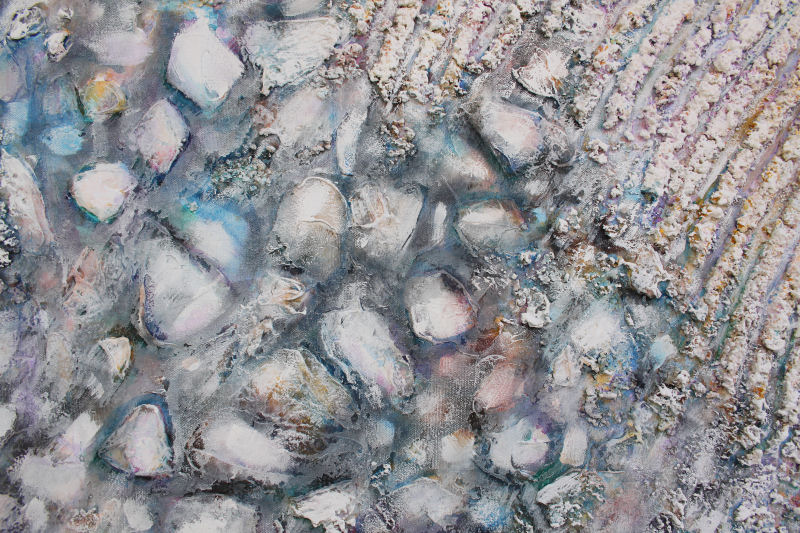
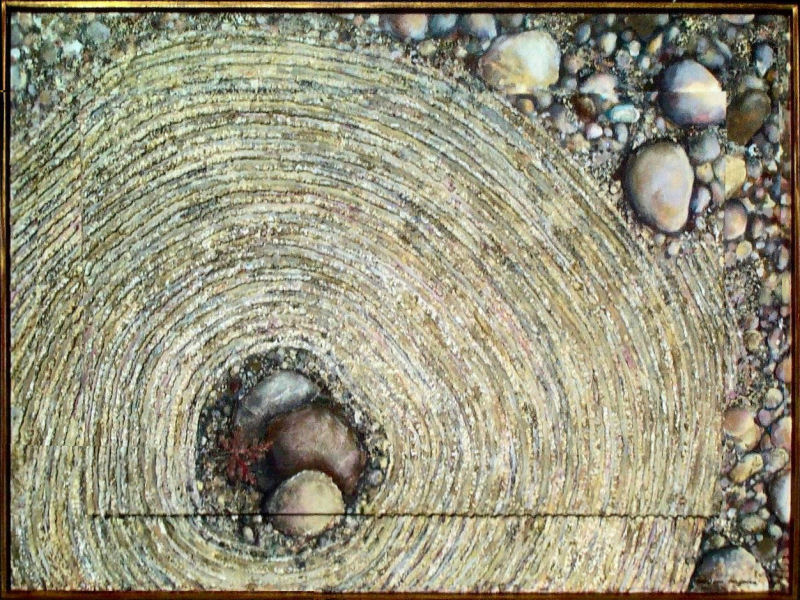
Initially the plan was to engrave pebble designs in the chair’s plaster surface, but since the circumference patterns turn out so interesting, I decided to continue the pebbles all over, front and back/underneath. They will be sanded down to almost flat, so the finished chair will still be comfortable to sit in.
Hydrangea
Tuesday, August 6th, 2013
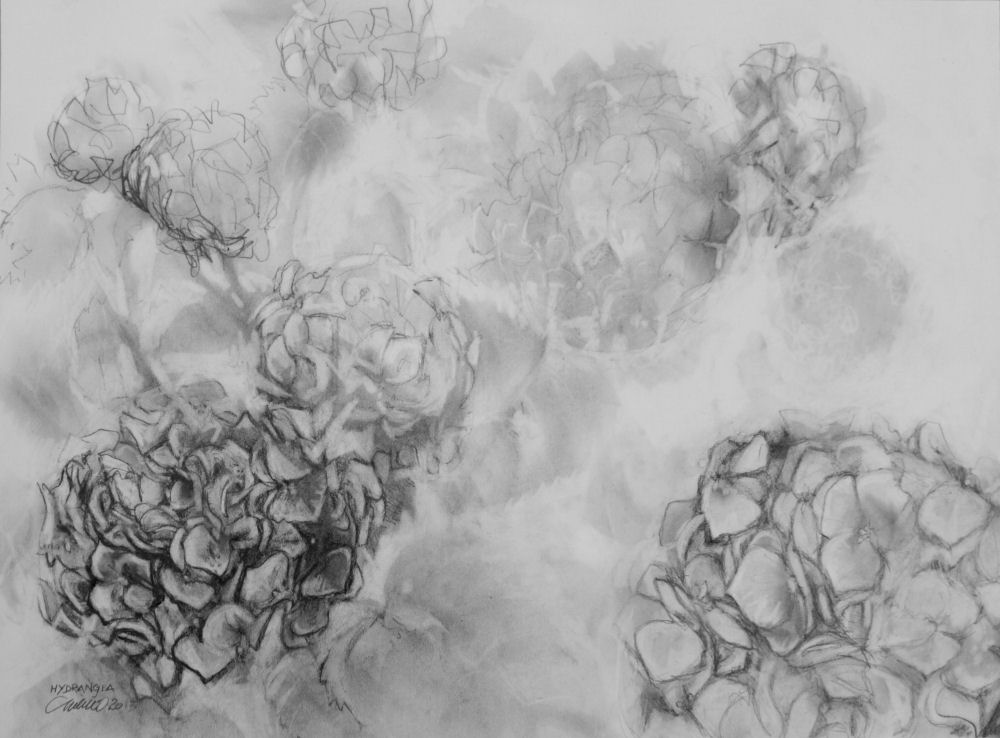
Blue Hydrangea, 18H x 24W inches graphite on 80 lb premium, white mat
Cedar Branches Abstract
Wednesday, February 13th, 2013
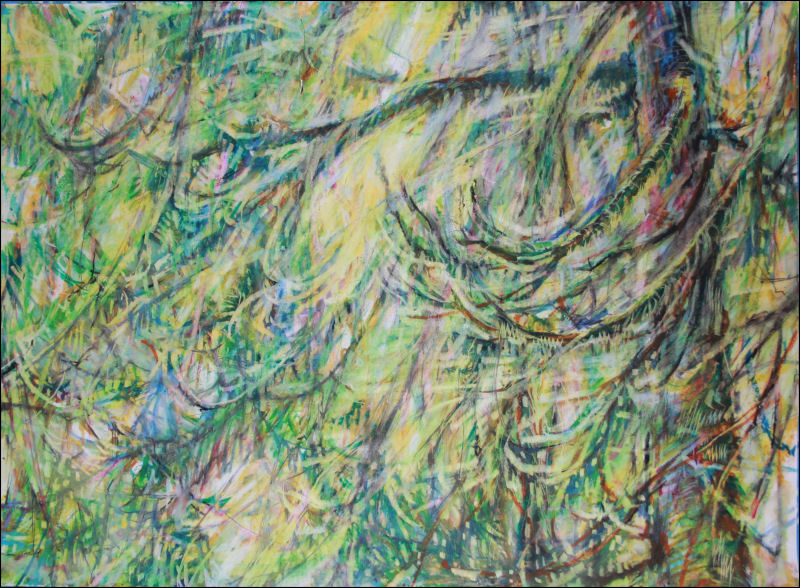
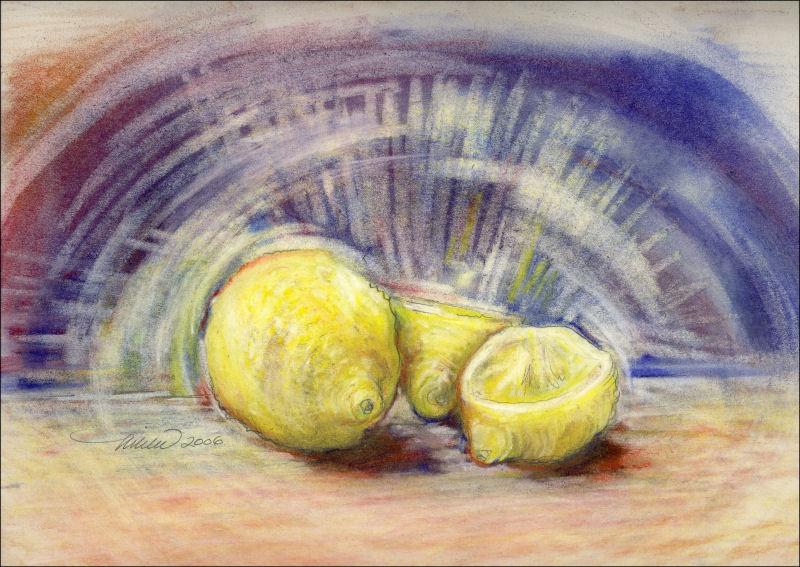
Cedar Branches Abstract, 18H x 24W inches oil pastels on 100% cotton paper, white mat.
Deciduous Forest
Friday, December 7th, 2012
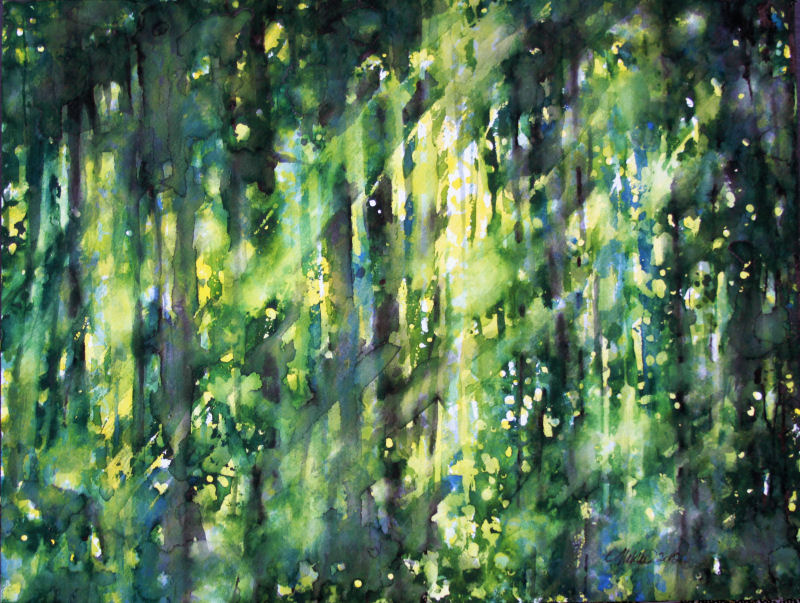
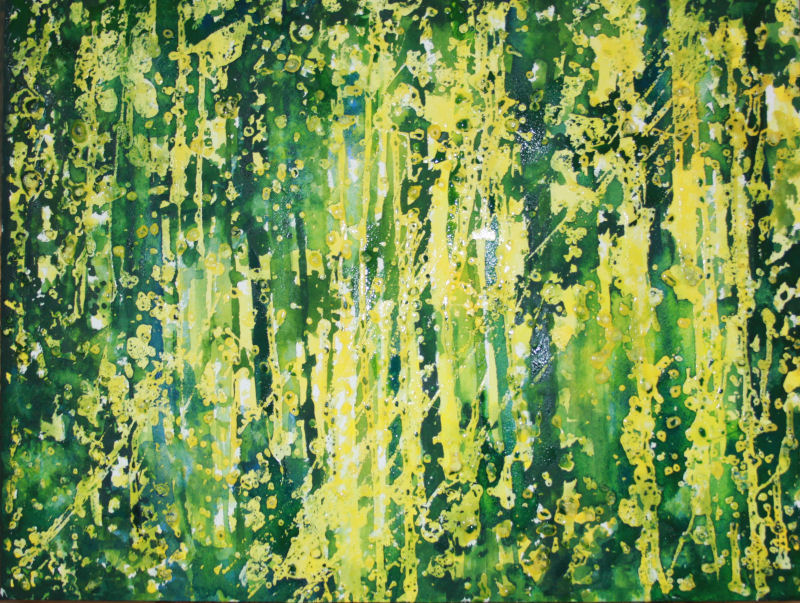
Deciduous Forest – Washington State USA – 12H x 16W inches watercolors on paper, sage green mat
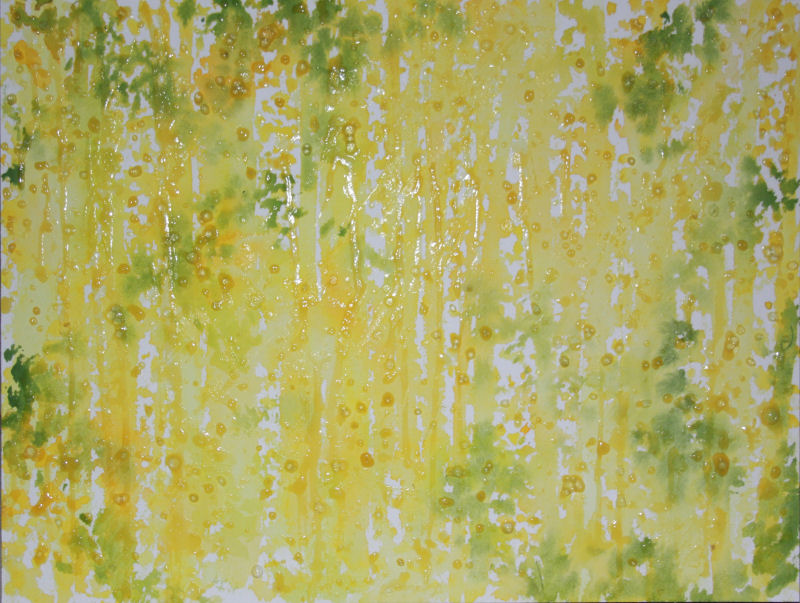
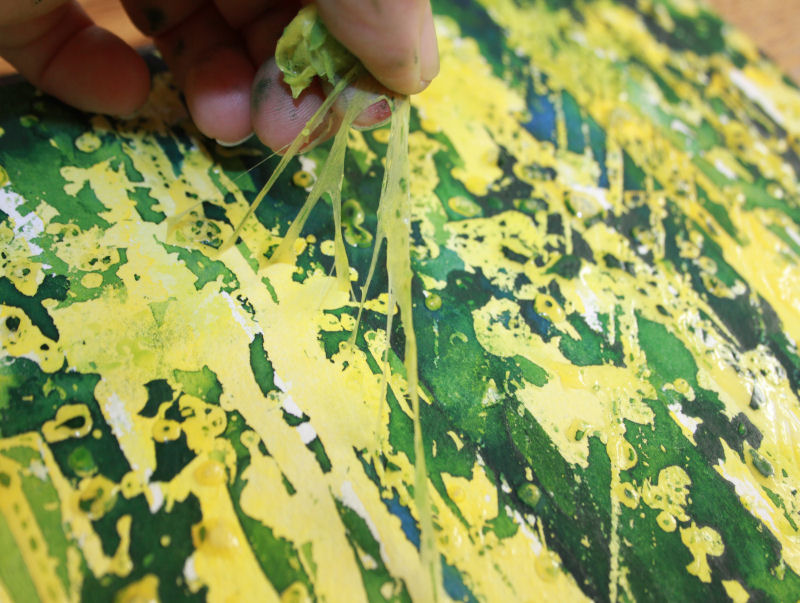
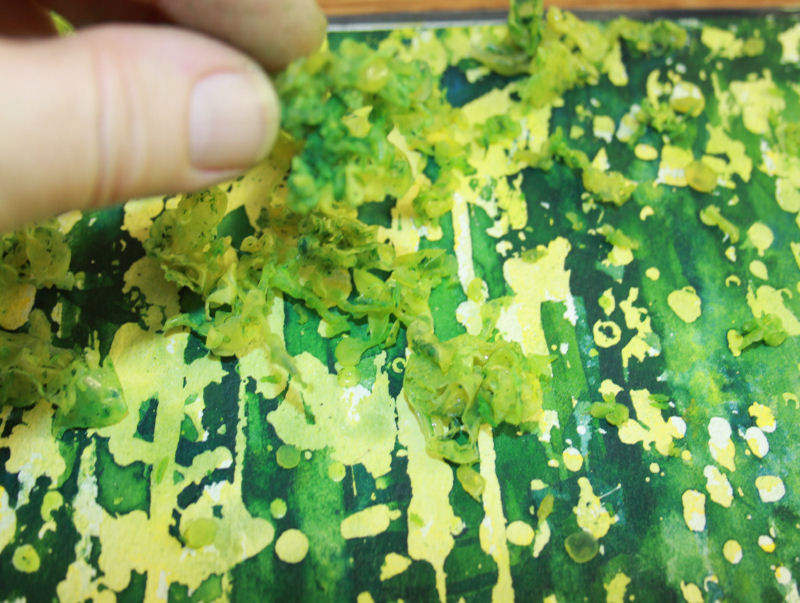
Thumbnails below: 1. resist medium applied, dried and first paint application 2. peeling off the dried resist after painting dark hues of sap green 3. stage 02, after peeled off resist medium, before more paint 4. an idea occurred to use the pulled off rubber pieces as 3D effects in future paintings, probably best on canvas.
A while back, I had visitors attending a show of mine peel off the rubberized medium in the same fashion, revealing the flowers on “Flowering Shavingbrush Tree”.
 |
 |
 |
 |
Colours For Cameron, first book for my grandson
Friday, May 25th, 2012
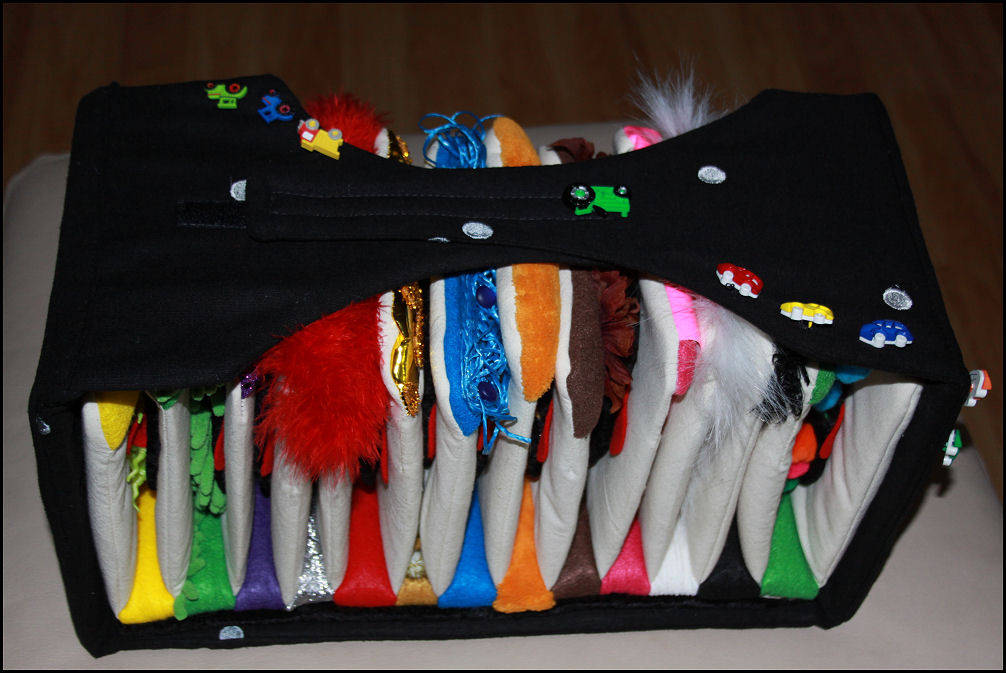 2012: Colors For Cameron
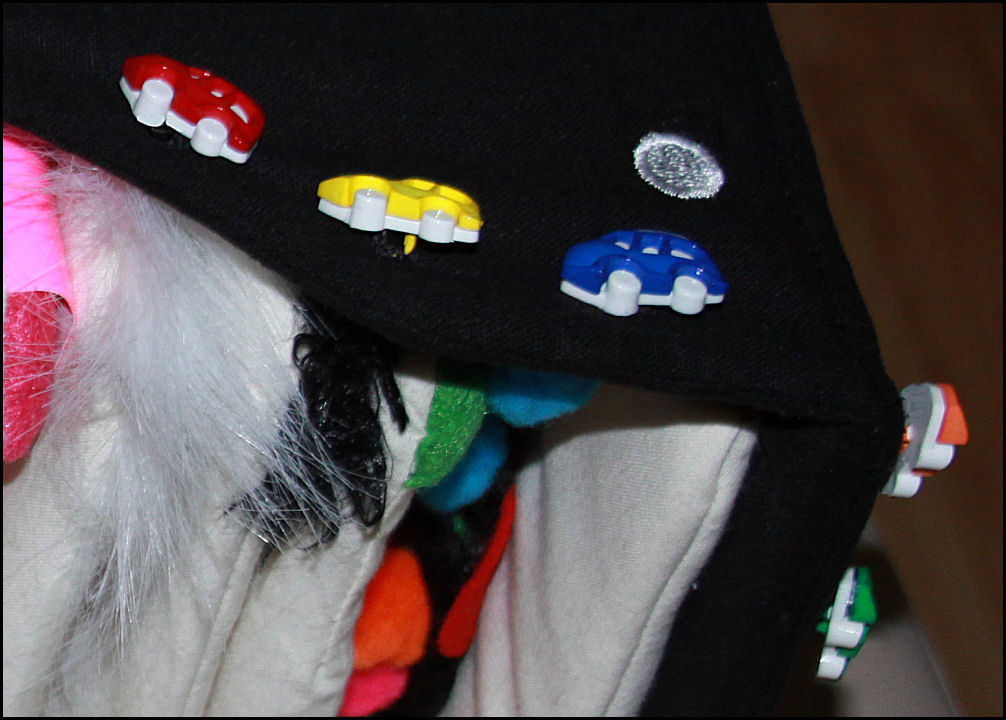
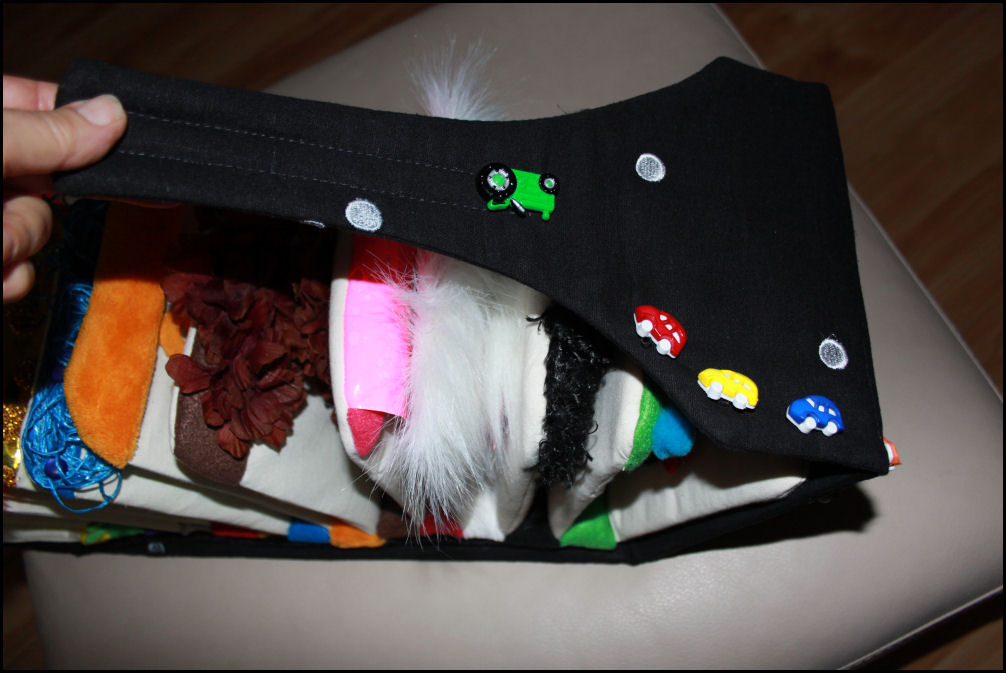
When my grandson was born in 2011, I had already decided to make him a book every year for his birthday. One-year-olds are receptive to colors and textures, so a soft book for Cameron at this age was perfect. Using Monte as my muse, the work evolved into a sort of stuffed toy-book hybrid that is much bigger than was initially planned, but it’s quirky, fun to read, and Cameron likes it. Each 6 x 6 inch page is quilted unbleached cotton sewn over heavy cardboard from a disassembled book purchased at the dollar store. I bought a lot of the things there actually, like many of the textured materials, including a dog toy with the squeaker removed and incorporated into the last page. The savings were spent on tractor buttons and more costly embellishments I knew he would like.
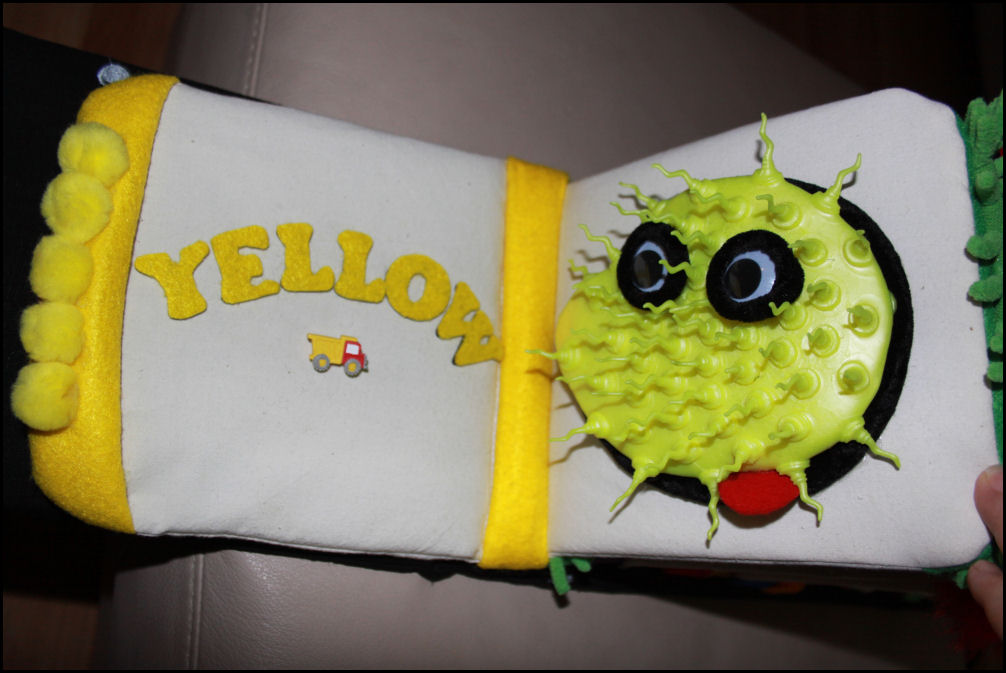 Each page has quilted appliques of Monte in different colors, with big googly eyes. The outer edges of each page have shallow pockets to grab the page, covered whatever textile corresponds to each Monte. The ten or so chubby pages are sewn together – 2 inches of fabric were left on the book’s spine-side for that purpose. The combination was then attached to a sturdy cardboard spine with a glue gun. No turning back after that, because hot glue is permanent on fabric. The entire cover of black linen wraps around with straps that Velcro together, creating a handle. Little button-vehicles adorn the handle area – he loves tractors and cars. I’m happy with the finished piece, and so is Cameron. It’s one of a kind, like him.
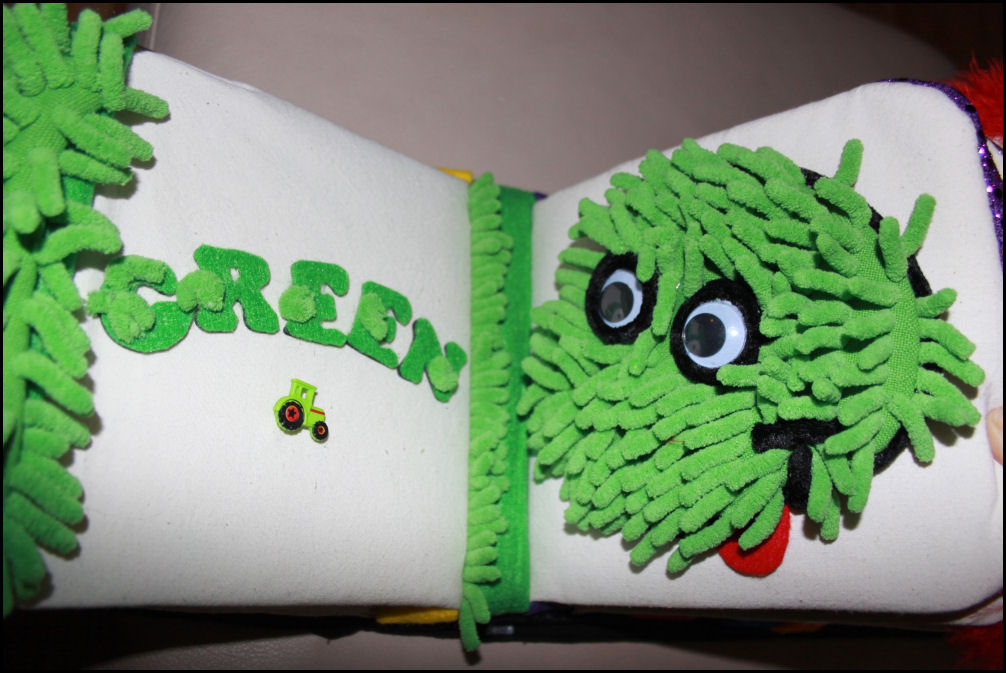
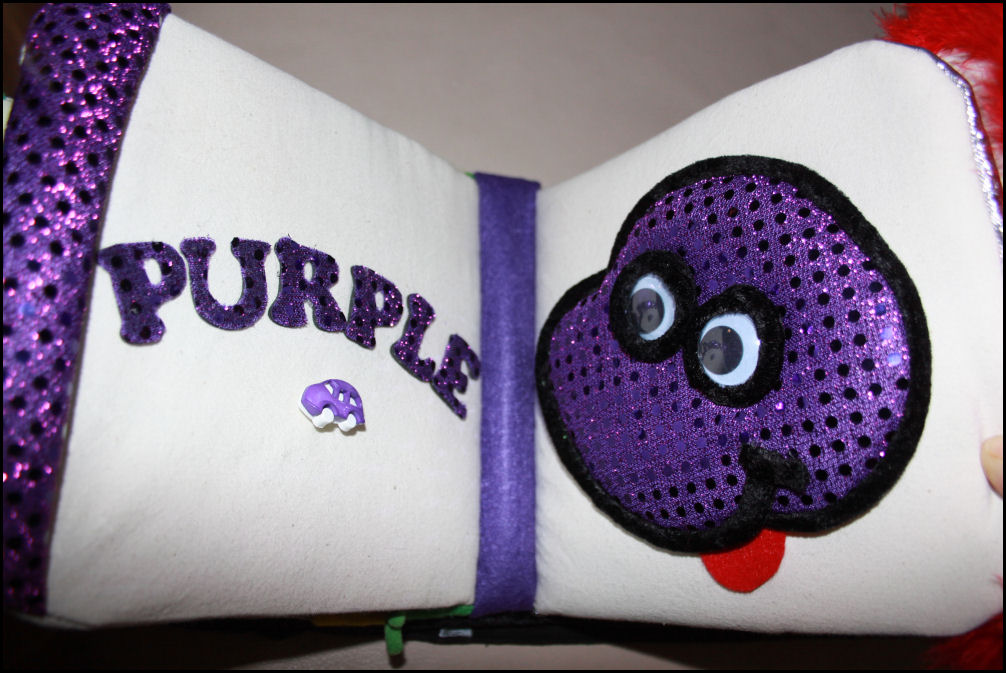
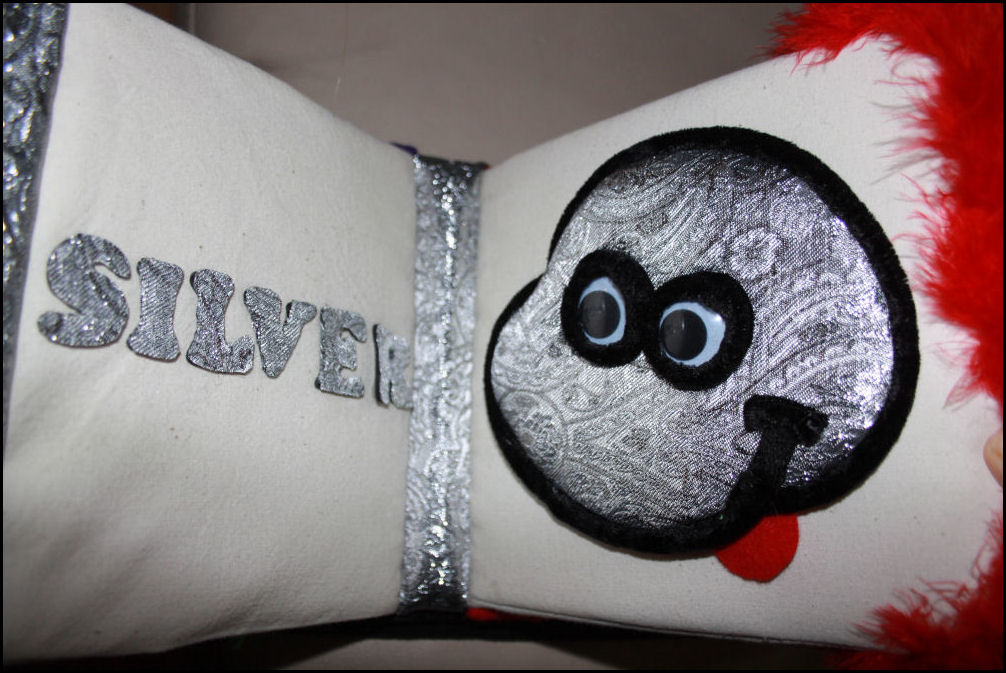
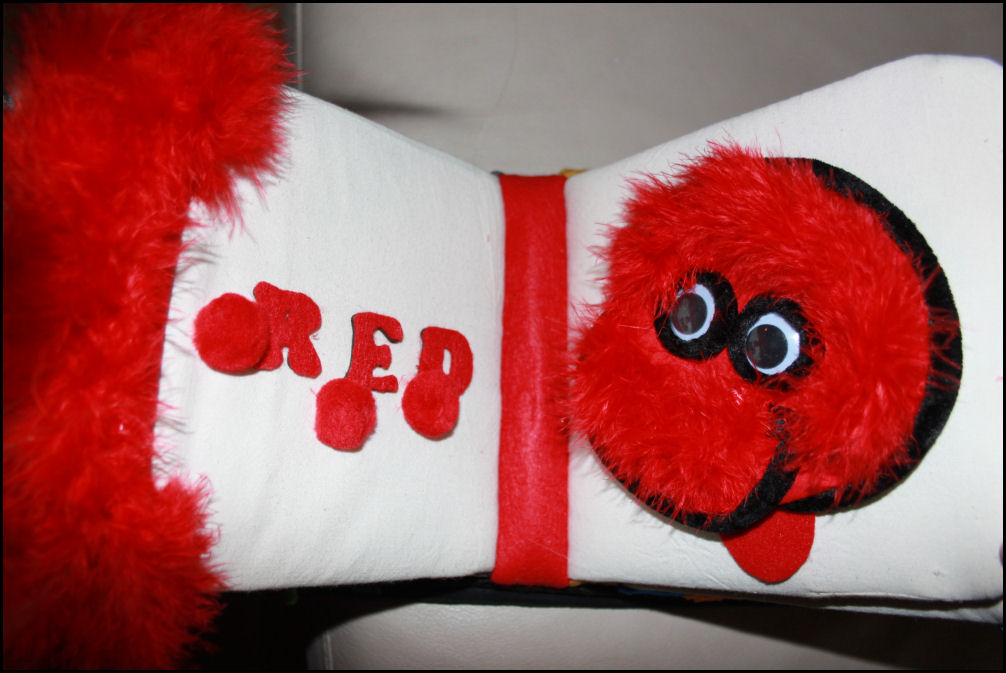
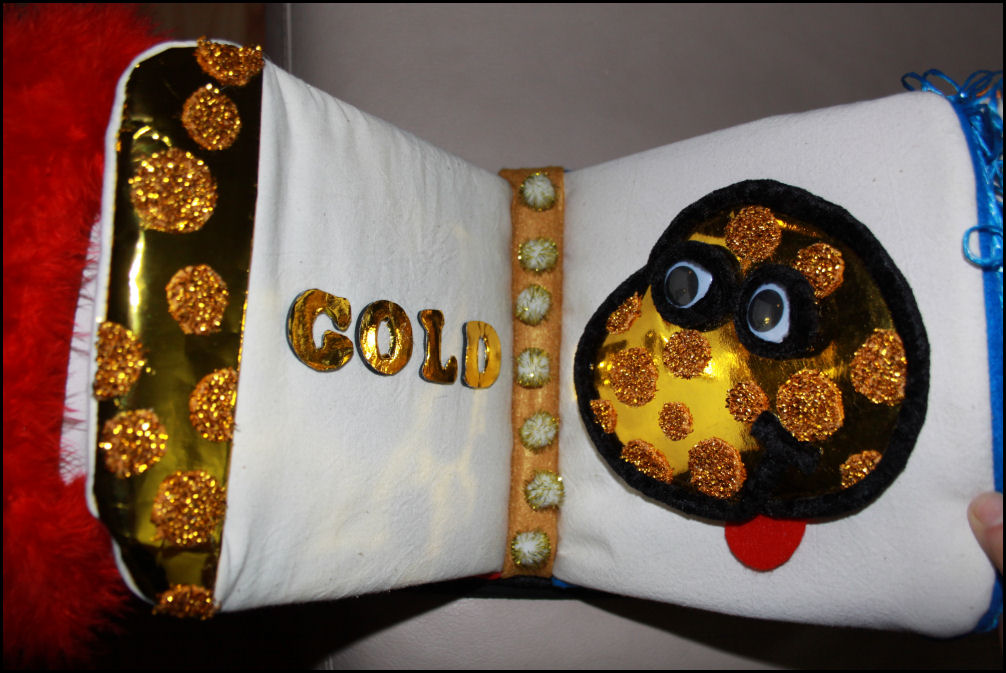
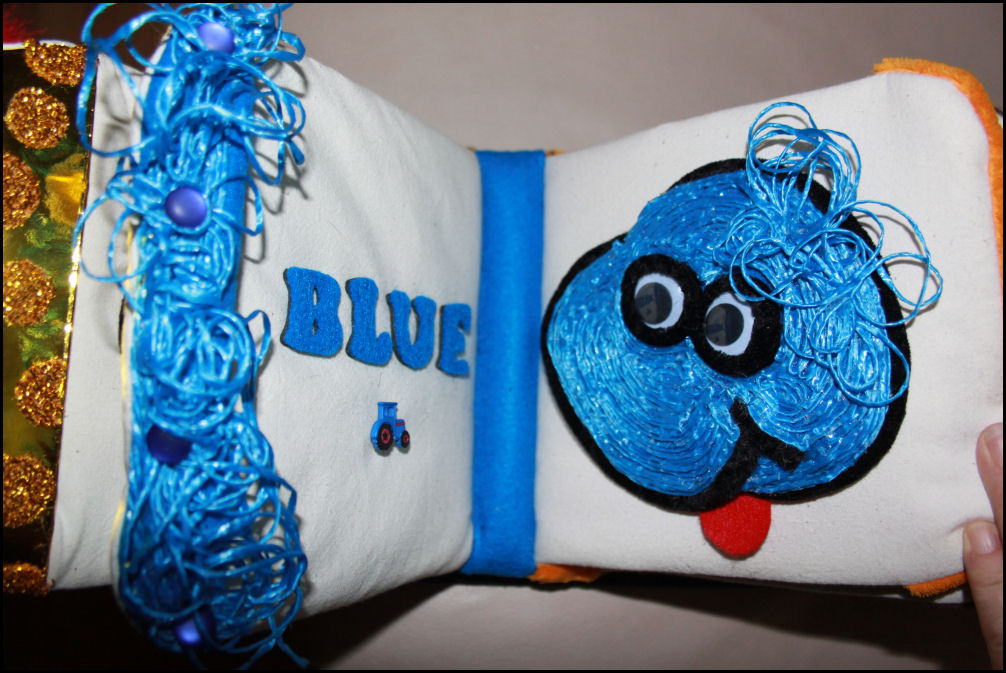
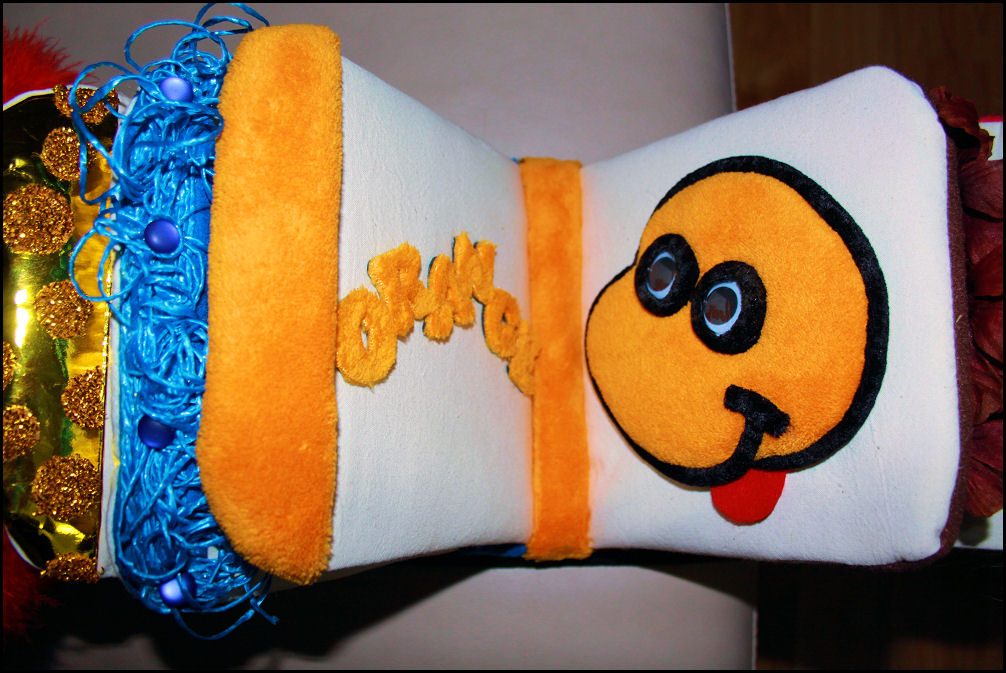
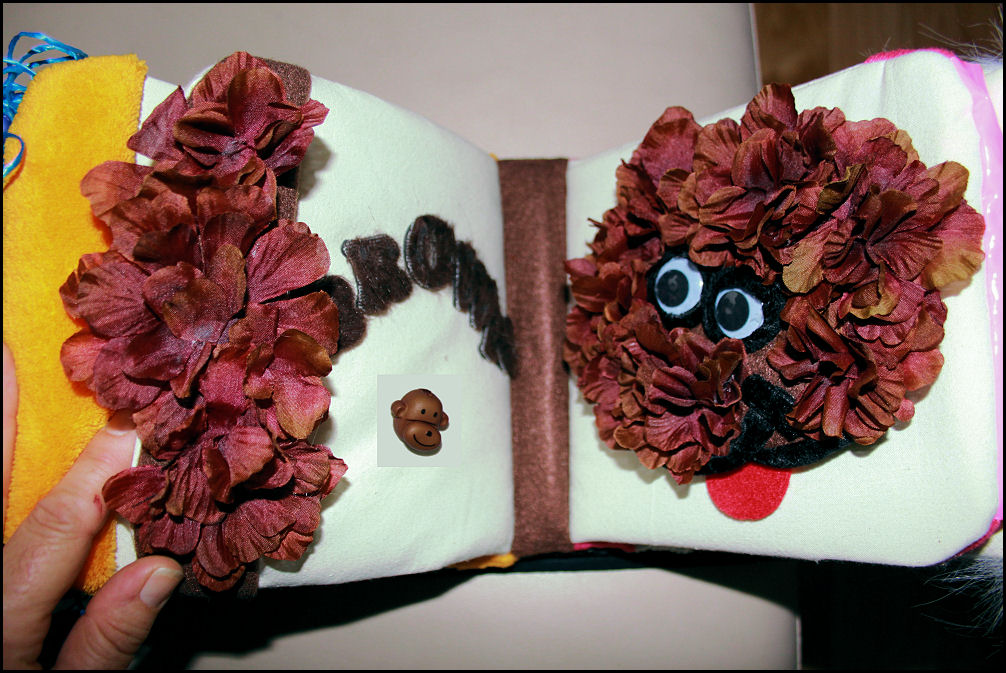
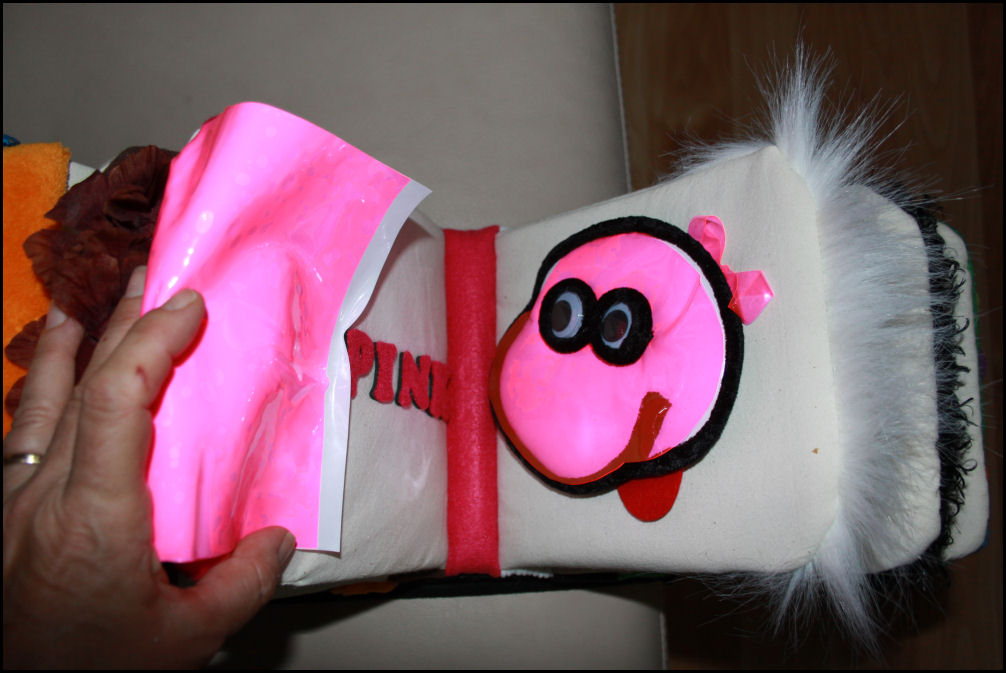
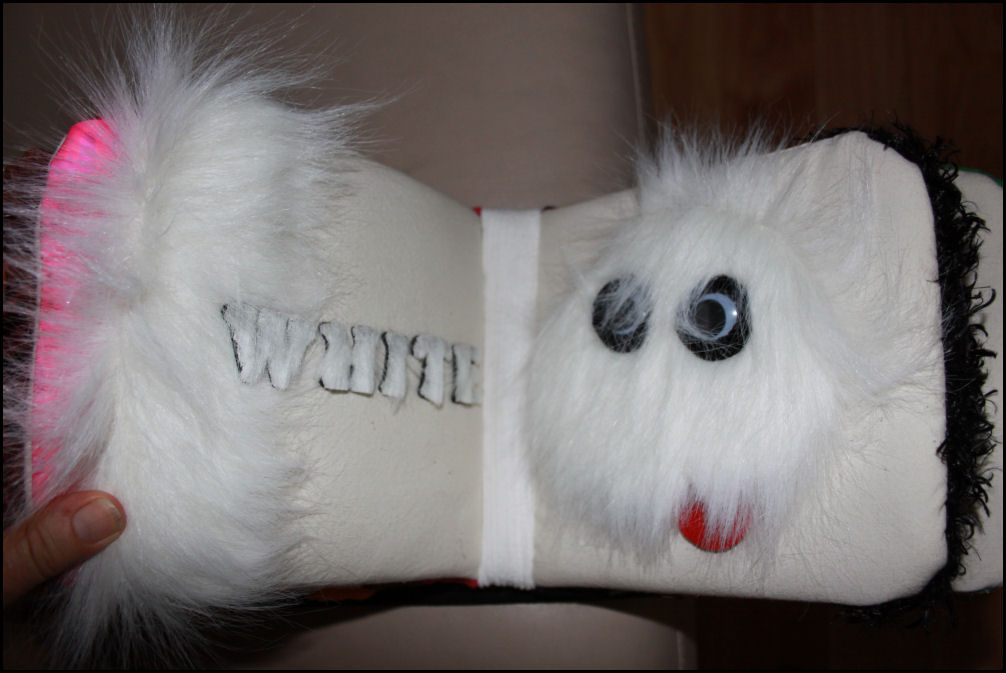
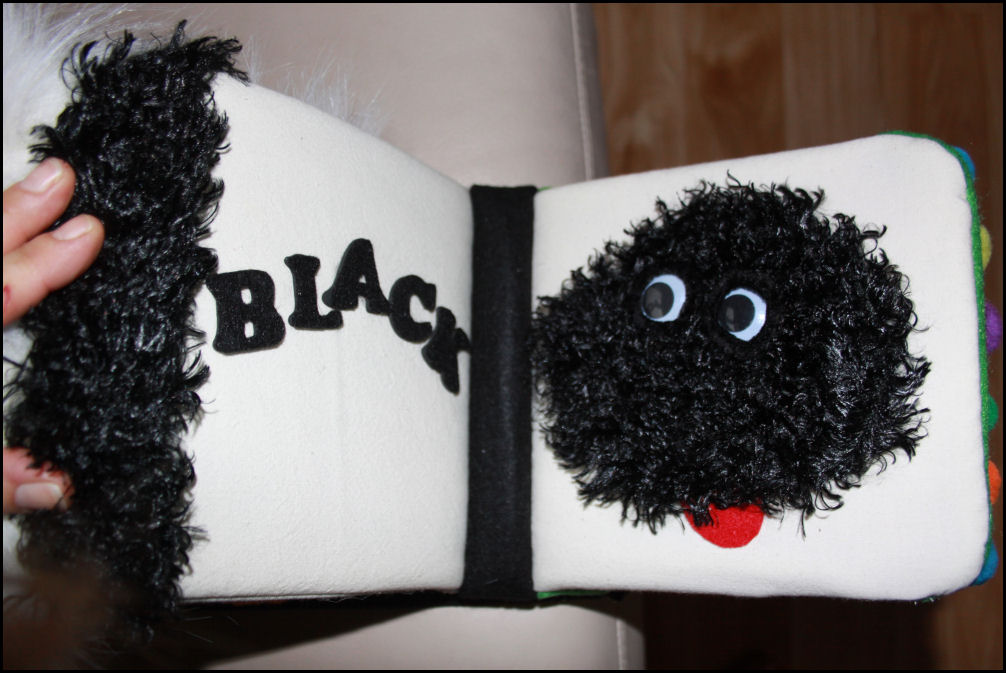
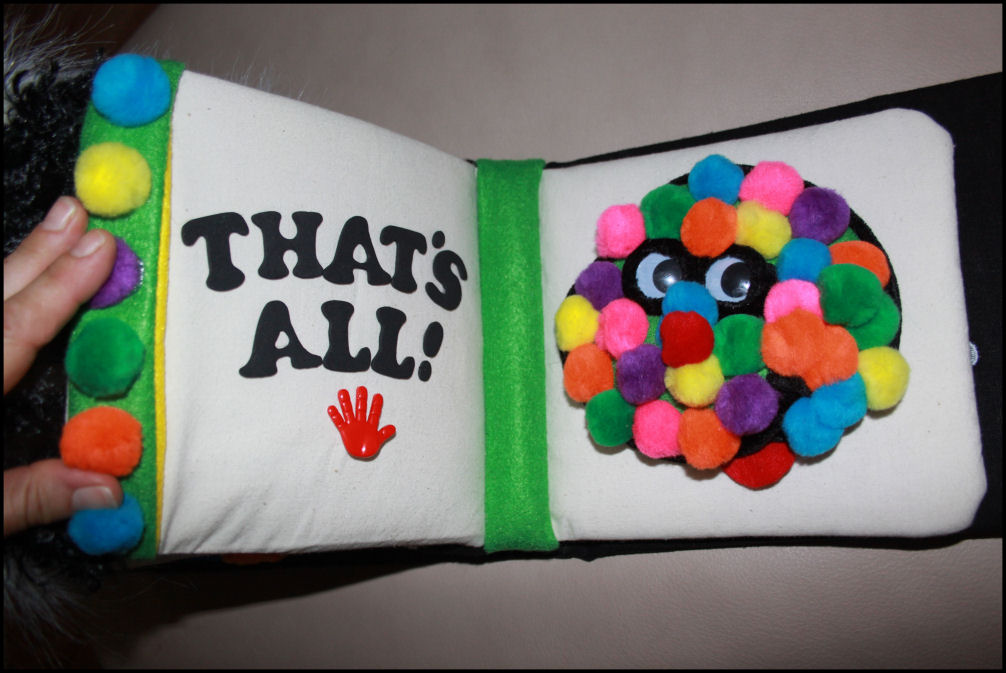
Monte rocks!
Tuesday, May 10th, 2011
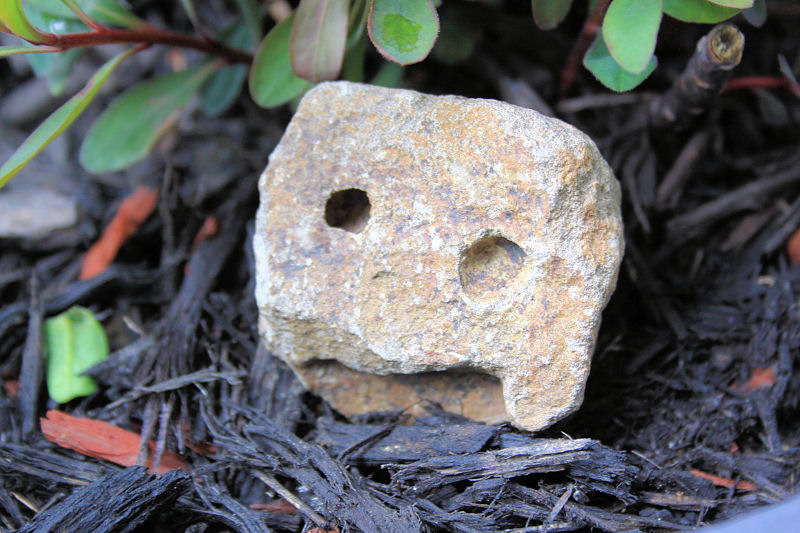
Monte rocks! Who is he?
Stepping Stones
Friday, March 25th, 2011
 1.
1. 2.
2.
 3.
3. 4.
4.
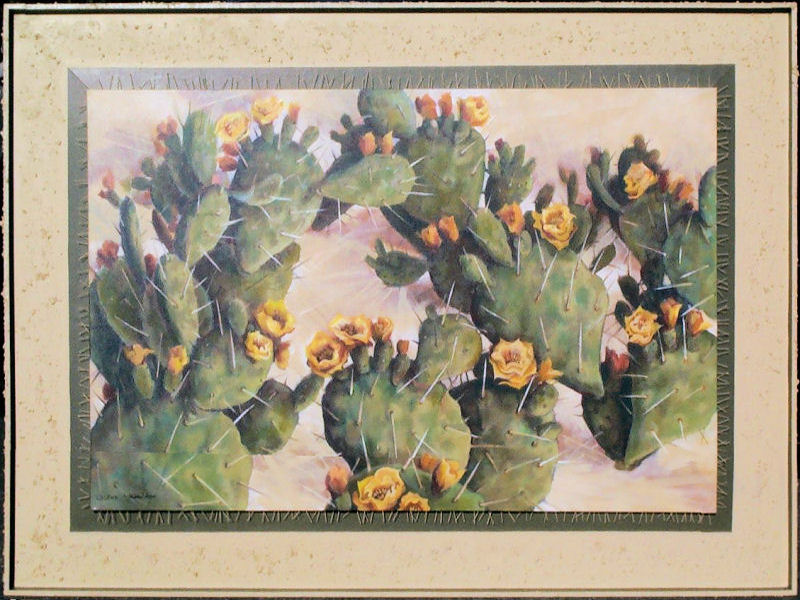
While I was in Portland two weeks ago, starting the Texas-Oregon relocation process, I completed five new Zen Gardens, filling a request for one. All five are smaller, slightly different versions of ones made previously. Four are shown in thumbnail images below.
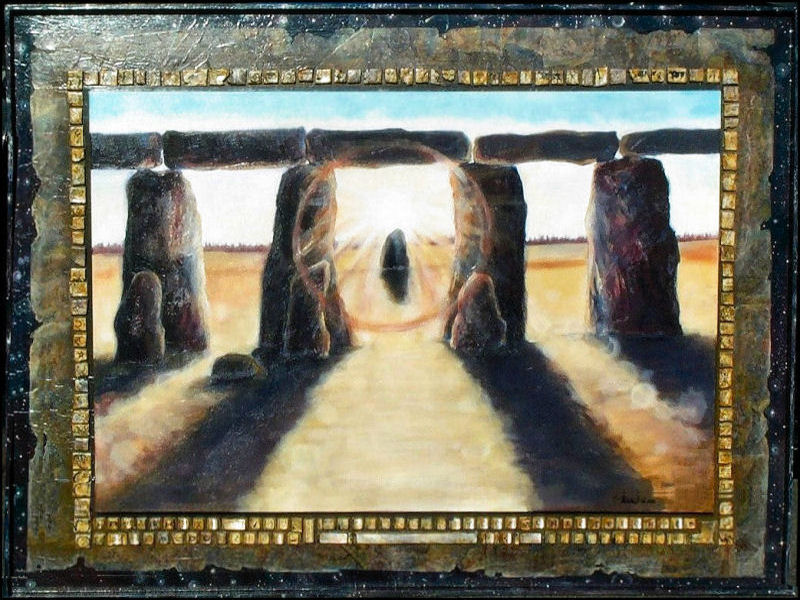
The very first Zen Garden was created in 2000 as part of a four-painting commission. The ideas established in that set foreshadowed new routes to trying methods I hadn’t before, like enhancing my paintings with 3D elements. That set is also the origins of the “box frame” design that I’ve used on several other paintings since then, where each main canvas is mounted on a wood platform, framing the work with about four inches of extra play-space.
Whereas some frames have the effect of abruptly ending a composition, this type of frame enables space for the subject to continue, softens the edges and adds an interesting twist to the overall impression. When items related to the main subject are placed in that area it adds dimension, not just in the physical sense, but also in the conveying of any abstract or symbolic stories beyond the presentation of the main painting inside.
Because of the challenges acheived in those paintings, 1) a series was born that I’ll continue with for the rest of my days. In 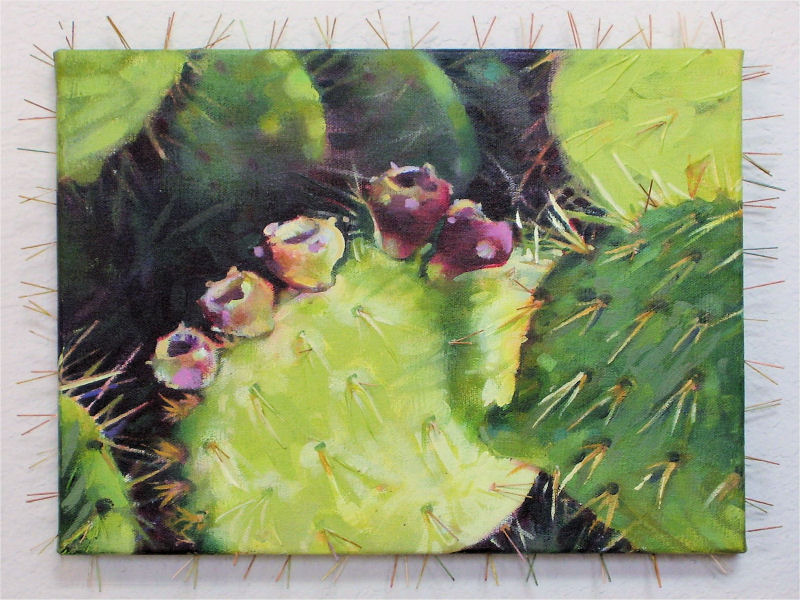 2) Prickly Pear Cactus, pins were applied around the main central frame, then painted. The smaller canvas done during 2005 (left) borrowed this technique, and the same principle of attaching things to the main frame can be used with any number of objects.
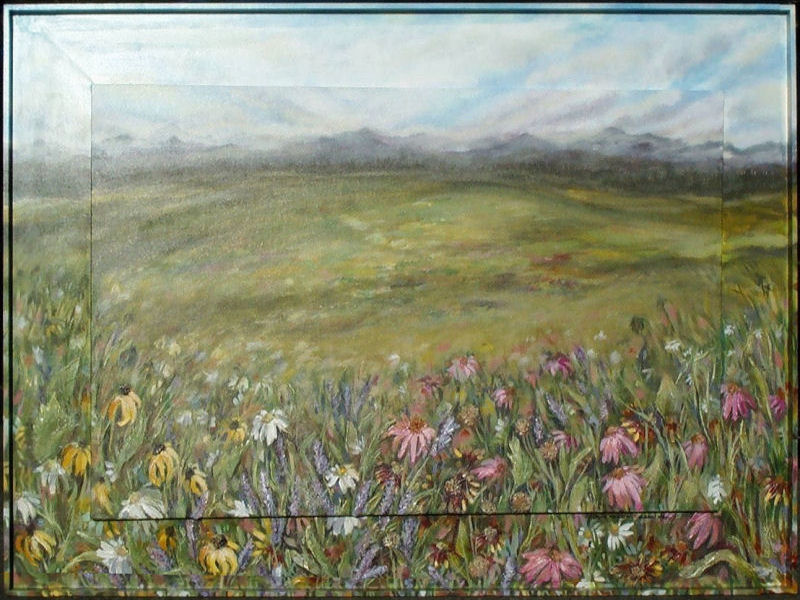
In 3) Alpine Meadows, I learned to use all the qualities acrylic paints offer by watering down the consistency for the distant mountains, then sculpted the flowers and grasses with a palette knife on the lower portion. Finally, the theme of 4), The Evolution of Communication has intrigued me ever since, but I still haven’t fully pursued the possibilities. This is the perfect means to learn about Art History hands-on by attempting to recreate it in some form, then to share that adventure and ideally, inspire interest in the topic at the same time. Two old keyboards have been collecting dust in my studio closet for a number of years, yet to be disassembled and incorporated into a new series of work with similar associations.
~
Some of our peers advocate that if we don’t concentrate our efforts to learn one medium well, we will never excel in any. They are right of course, in many respects, but scores of artists are not content with singing just one note. Some simply cannot. To be fair, what works for one does not work for another. Each of the above paintings are examples where a combination of skills and different media in one piece can be very effective. I’m here to say that integration is possible! It’s a longer, meandering road..but it is possible.
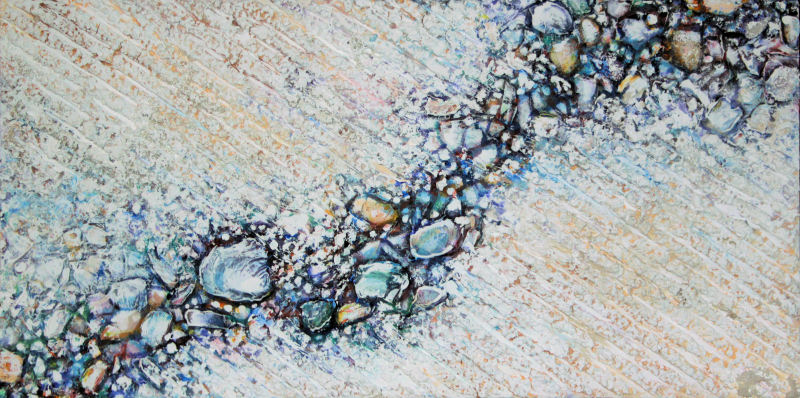 There are so many different paths artists can take, long and short term; opportunities every day. There are endless kinds of subjects, ready-made and unconventional materials, always something to start or finish, new methods to explore, and an overabundance of ideas to attempt in one lifetime. Self discipline is the order of every day, either to start working or know when to stop.
My philosophy is that doing something, unless naturally in need of rest, is better than doing nothing. However, being overly ambitious in too many areas is also how I, along with millions of other artists end up with a variety of different kinds of art (or just stuff!), and the arguements endorsing one type of study come into play. Should we restrain ourselves when it comes to making “stuff”? Why is consistency given more support than variety when it comes to showing and selling art?
Whatever choices we make; whichever direction we take depends mostly on the intention for the finished products. Who is it for, do you want it to sell it, where, how, and how quickly? Was work done as a personally cathartic process, as a lot of art is? …or is it just a thing with no emotional attachments or brainy messages? Artists who support themselves by offering a range of services, satisfied and busy enough by word-of-mouth sales, do well jumping from medium to medium. If the hope is selling work through galleries and art dealers though, what some call “too many voices” are apt to be a disadvantage. 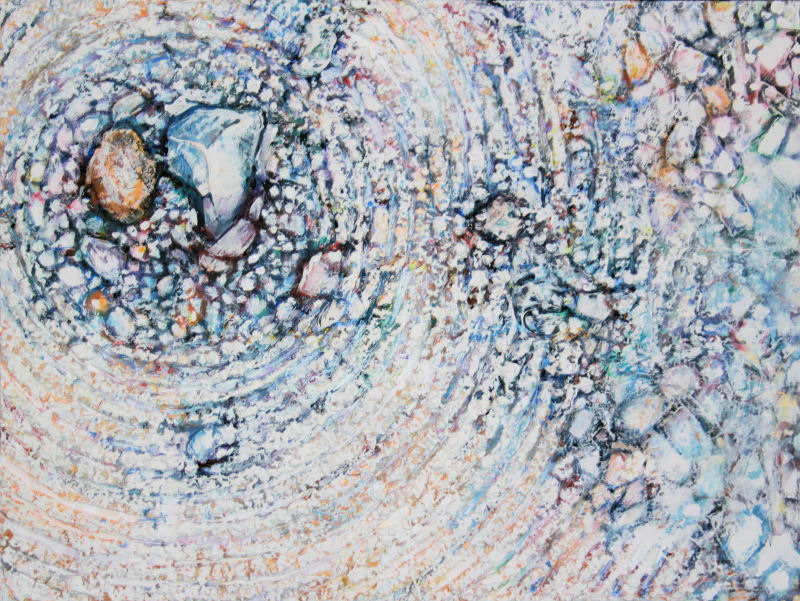
In one of his recent articles, Robert Genn writes sensitively about multi-media artists. While he supports that “for artists, exploration is like oxygen” and that “the nature of our game is to be distracted by our muse”, he also recommends that artists must present consistency in our approach if gallery exhibition/sales is what we pursue.
When a gallery represents an artist, they expect an overall consistent look and a clear statement. Where venues sell a number of artists’ work, the ambiance cannot be one that resembles a yard sale. If potential buyers view too many styles, subjects or media in one place or by one artist, they tend to lose interest, resort to window shopping, and walk away empty-handed.
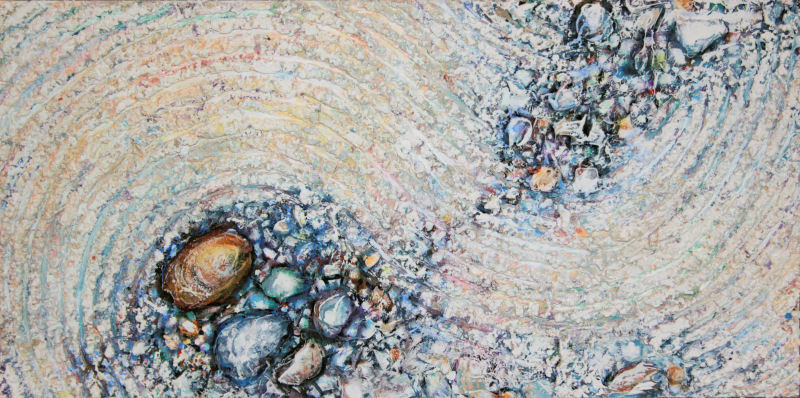 I can relate to that: the effect is like standing in the toothpaste isle at the pharmacy, where the senses are bombarded with colorful packaging, alluring titles and fine-print promises. Assuming beforehand that the choice would not be anything but simple, there have been times when I’ve said ‘forget it’ and gone back another day. With art sales though, you don’t want buyers to come back another day, because it may not be your art they choose then.
Gallery owners and dealers do not do us any favor if they display too much variety in typically limited spaces, so Mr. Genn has an excellent suggestion: bring art done in different medias to different galleries.
He also says to keep working no matter what.
Artists have a strong sense of mission. Periodically it needs reevaluation, and with that bigger picture clear, we create the way as it unfolds before us. If we are serious about selling, we first need to become familiar with what we are best at, what we love, what works and what doesn’t. We need experience in order to learn – that takes time – and there’s no getting around it. Experimentation is fundamental to this profession, but if it’s intended to be sold to others and by others, simplifying the look and clarifying the purpose of our art is crucial.
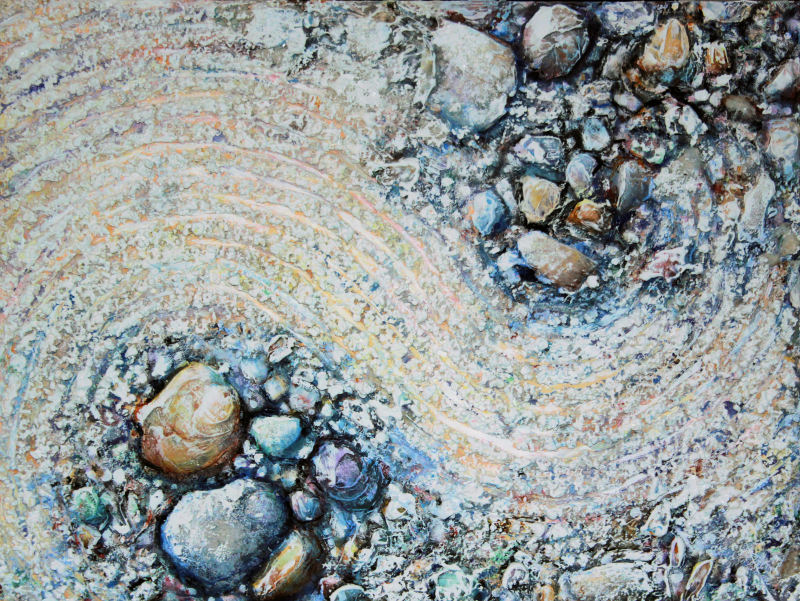 A viewer at one of my exhibitions commented, “You’re all over the place, arentcha?!” As disturbing as that was, it’s true and I needed to hear it, eventually concluding that I do need to clean up my act, but at the same time this is how I work. This is how my stuff works. Every so often there are paintings or a series of works that encompass all that’s been learned and all that I’m capable of; breakthroughs that define a solid new direction or validate the existing one. The commissioned set of paintings described above were like that, and their significance is still an influence on today’s work and will be on tomorrows’ too. They verified that I’m on the right path even though much of the time is spent off of it, experimenting. I call it serious play and paying attention… “playing attention”! Once in a while the bits and pieces come together in one big rewarding “Eureka!”.
Zen Garden #10 almost finished
Wednesday, November 10th, 2010
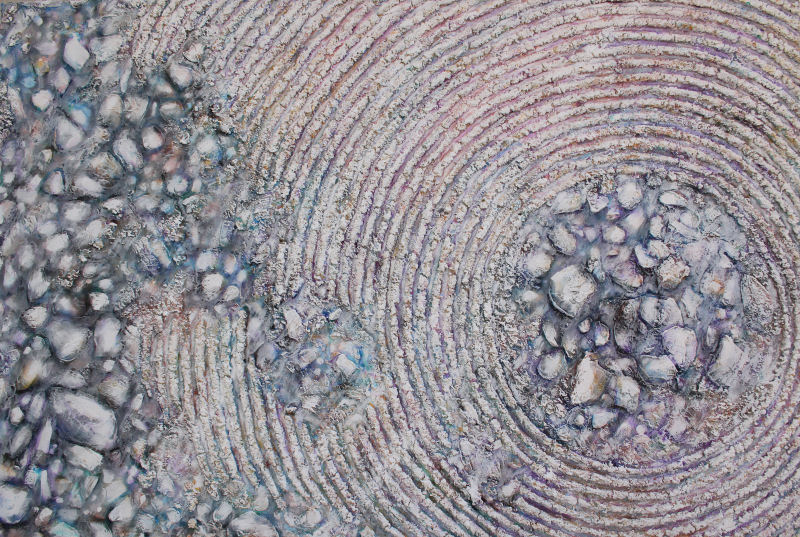
Zen Garden 10, 40 x 60 x 3 inches mixed media on canvas.
The final stages of this paintings will be finished as it hangs on a wall. As seen in a realistic room setting, it will be easier to spot whatever might make the composition more interesting. Some colors may need to be re-enhanced to add more depth and definition, but I also like the overall faded look, so we’ll see. The texture continues around all 3D edges. This painting is extremely heavy, as it is on a home-built canvas stretcher, so it will be transferred onto a lighter-weight stretcher if it sells. It will still be stable, but practical. All paintings in the Zen Garden series are wired to hang in any of 4 orientations: vertically or horizontally. Below: details of left central portion as seen in the above.