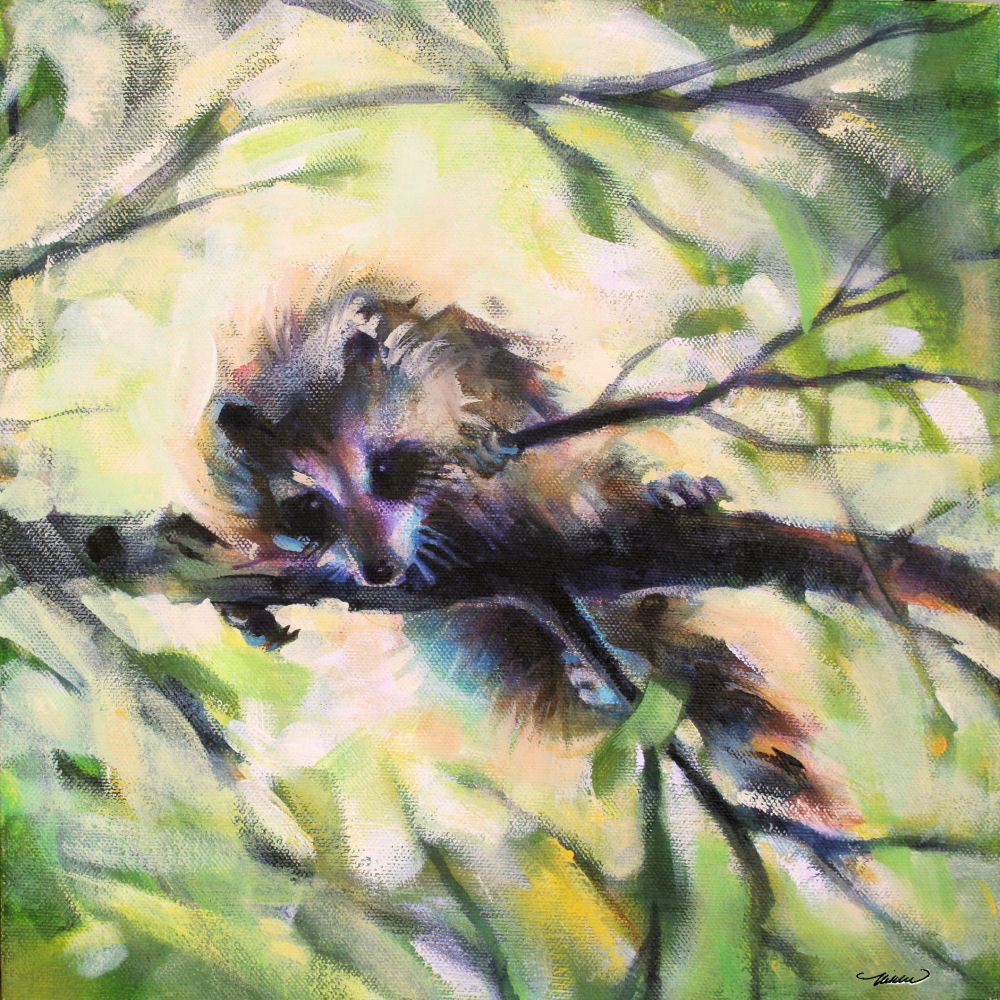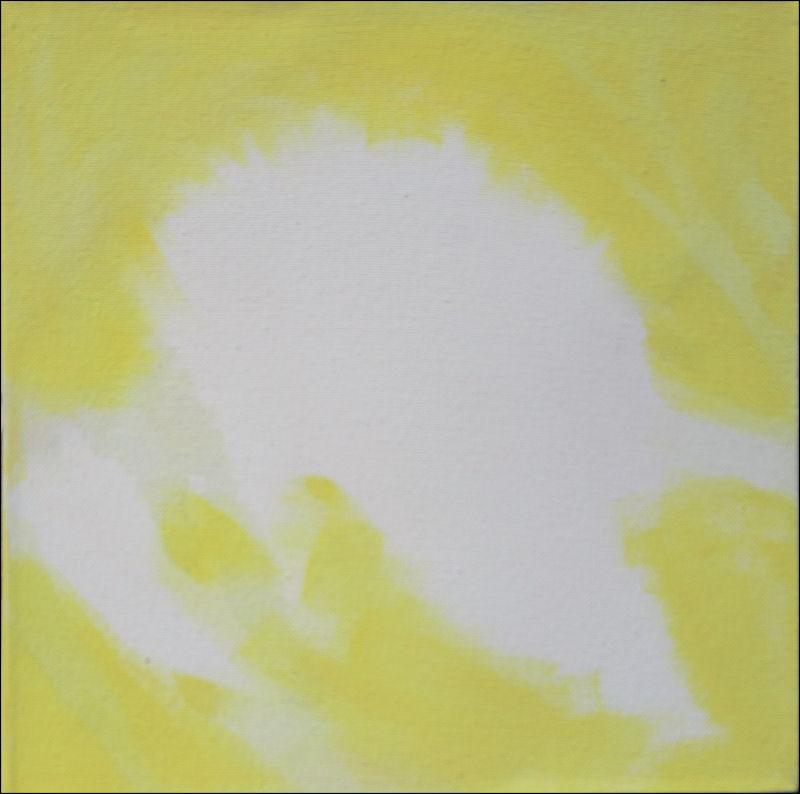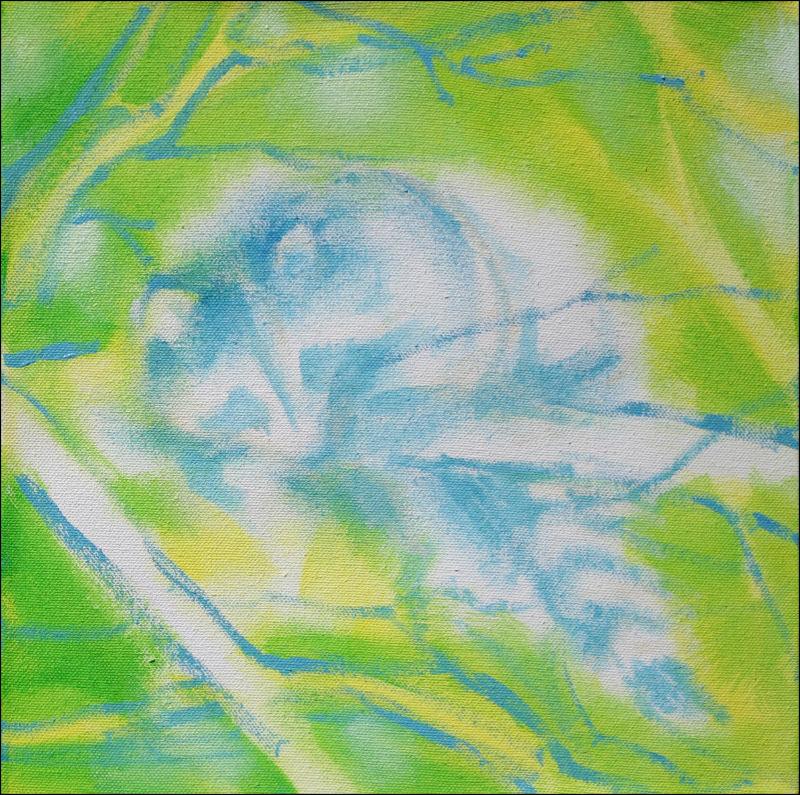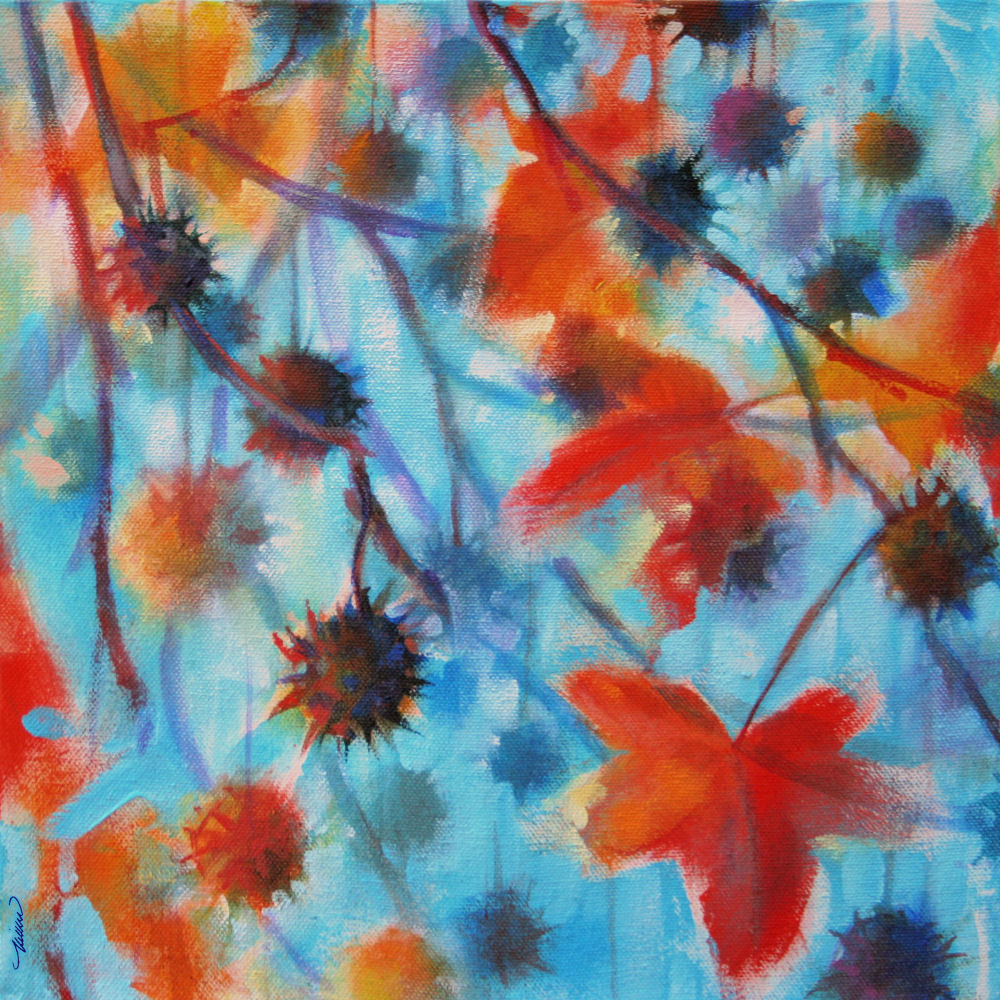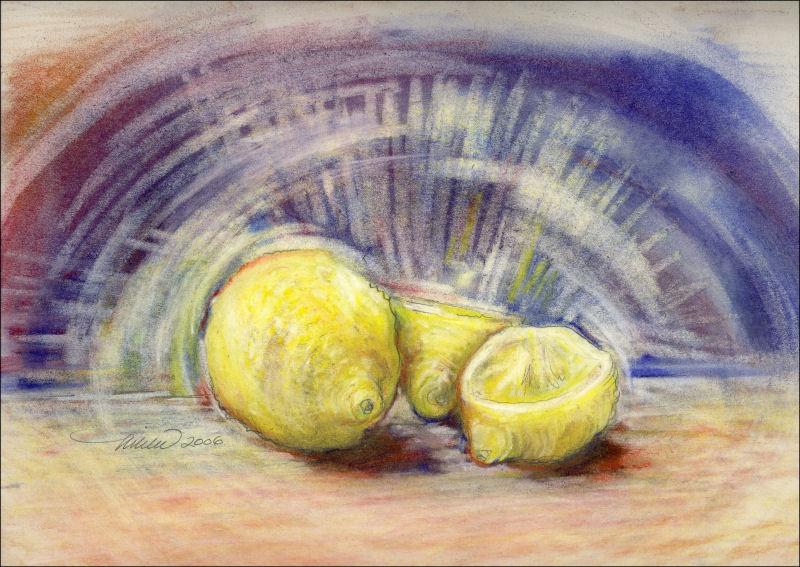
When life gives you lemons, draw them, 11 x 14 inches dry pastels, graphite on paper

"When life gives you lemons, draw them." (Nikki)

"Color! What a deep and mysterious language." (Paul Gauguin)

Art for sale

« Previous Entries Next Entries »

Dancing With Trees 03

Thursday, February 19th, 2009


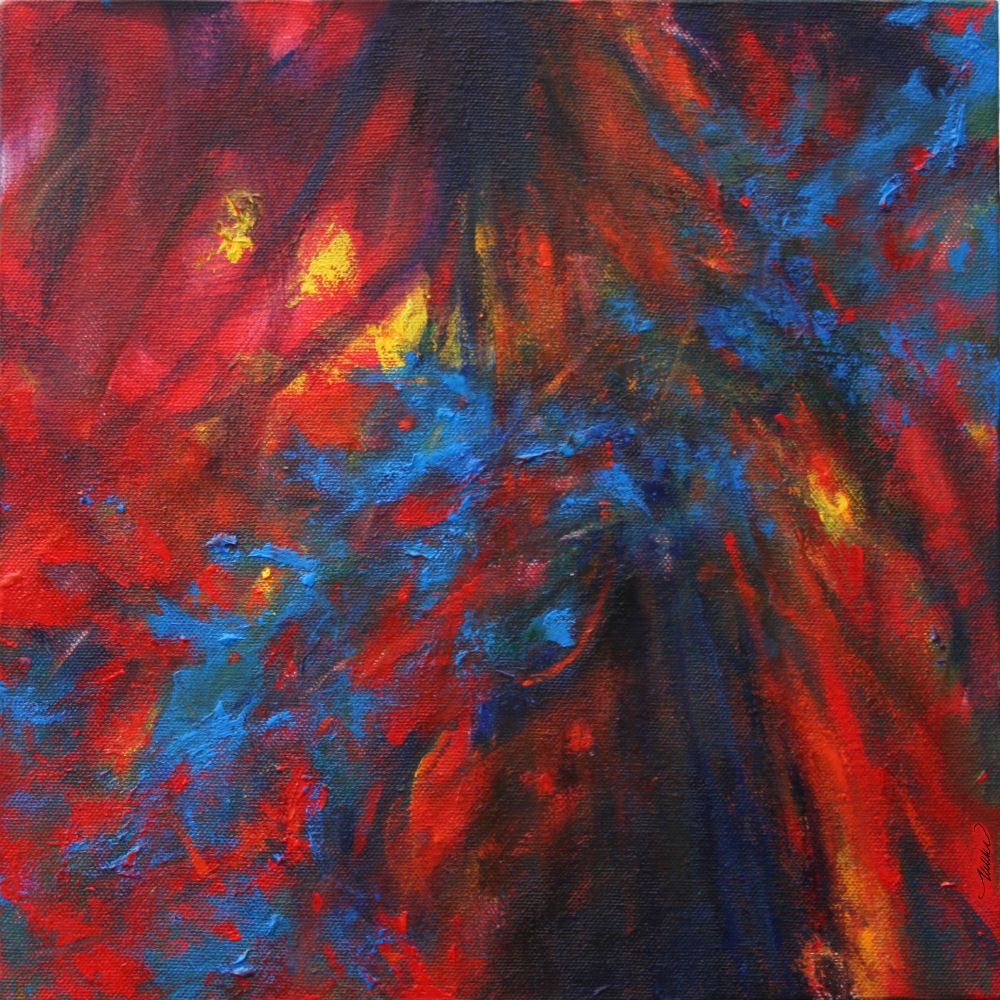
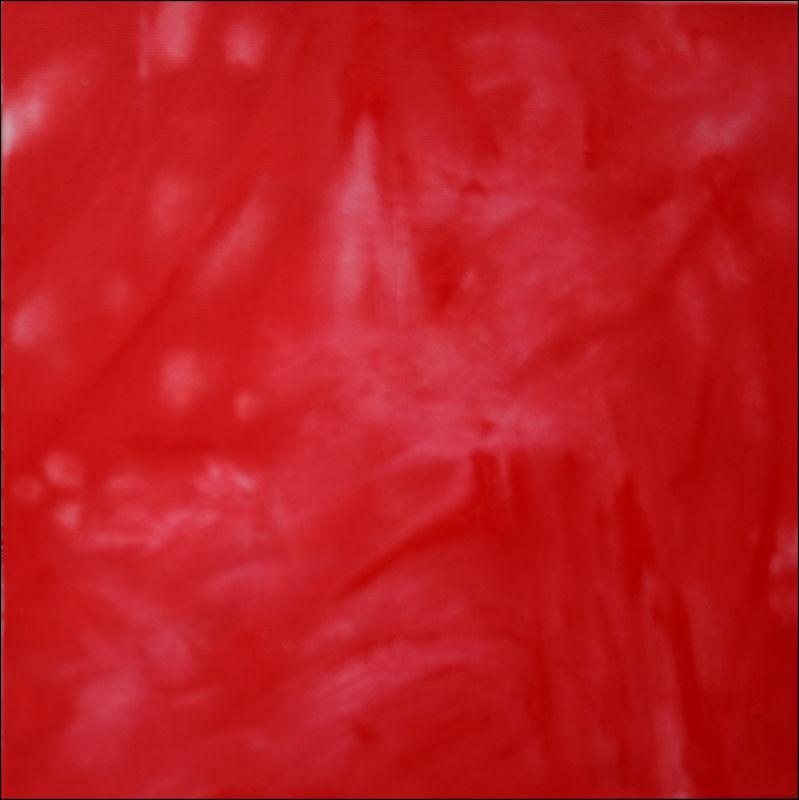
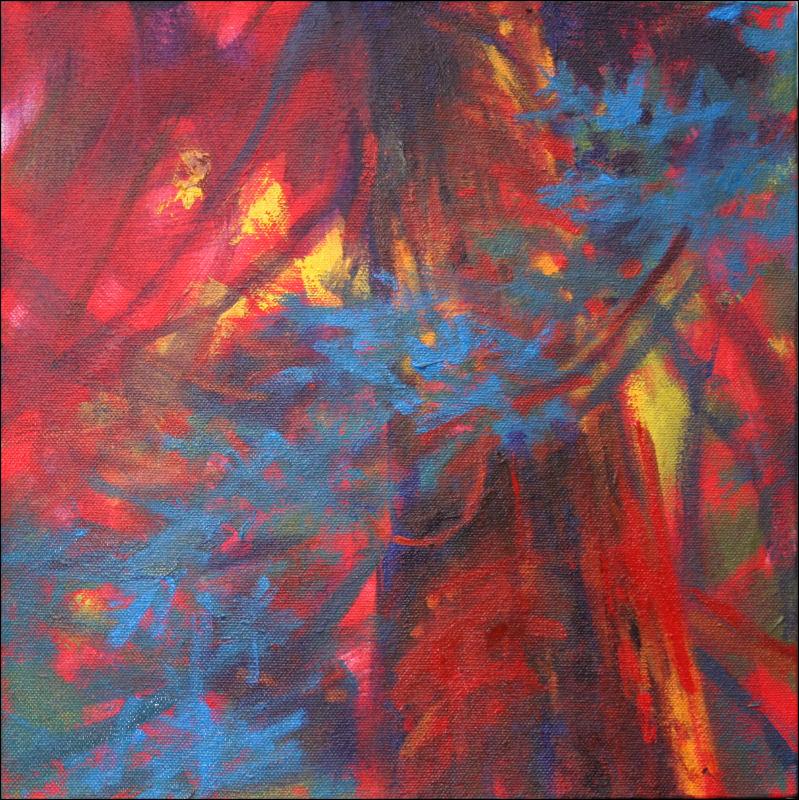
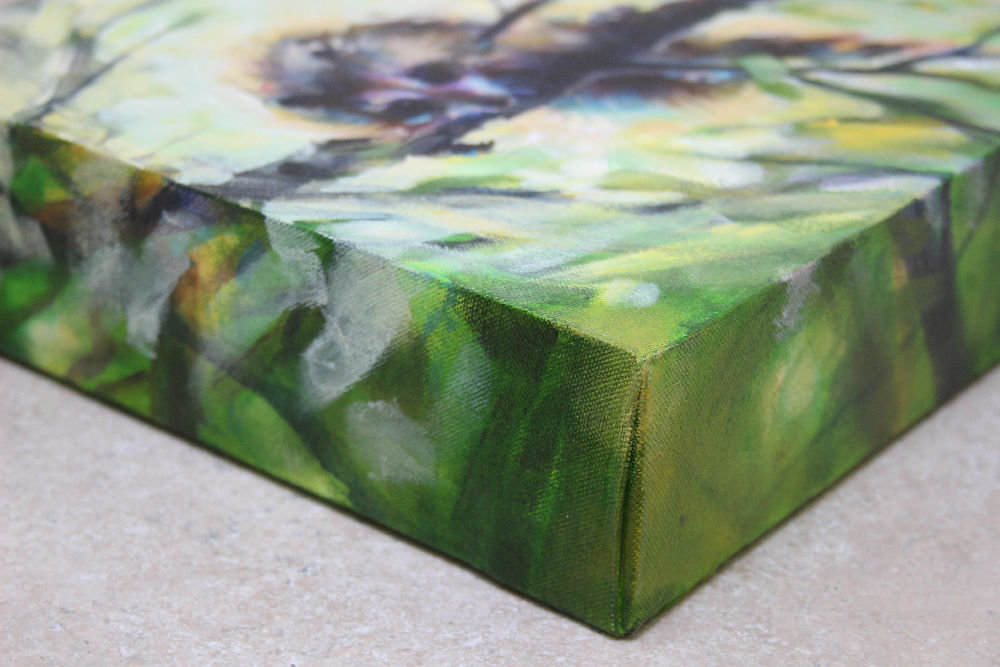
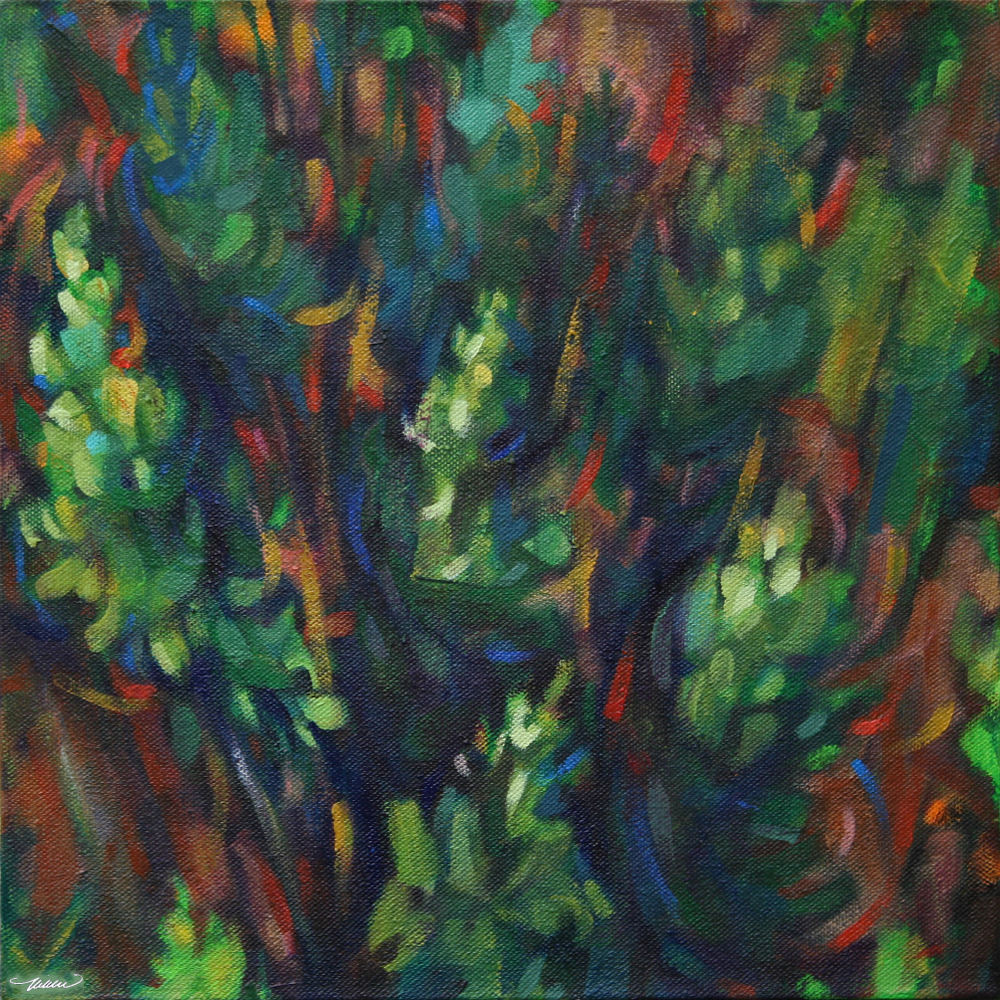
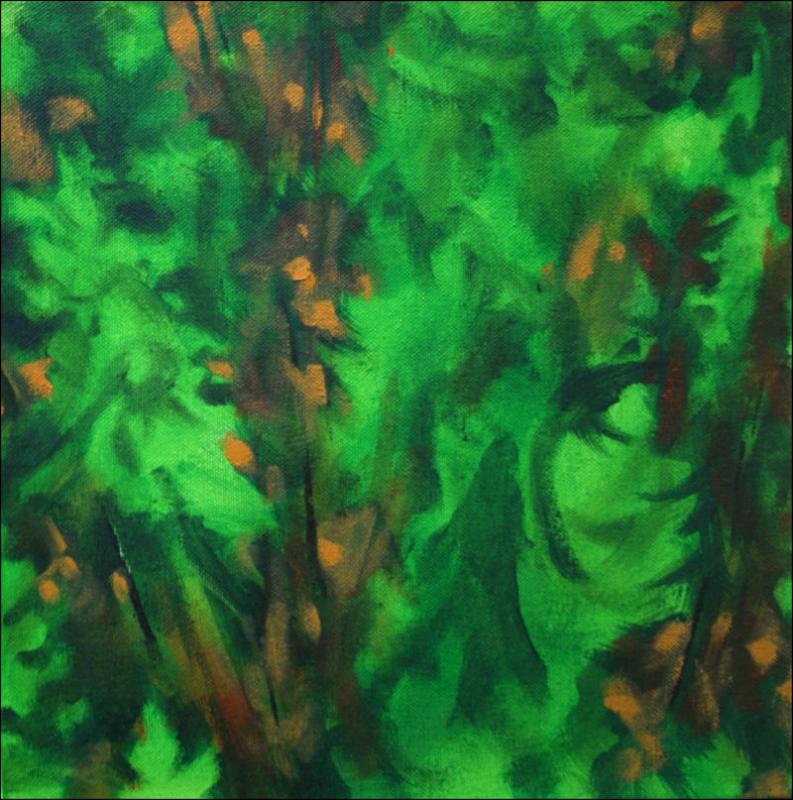
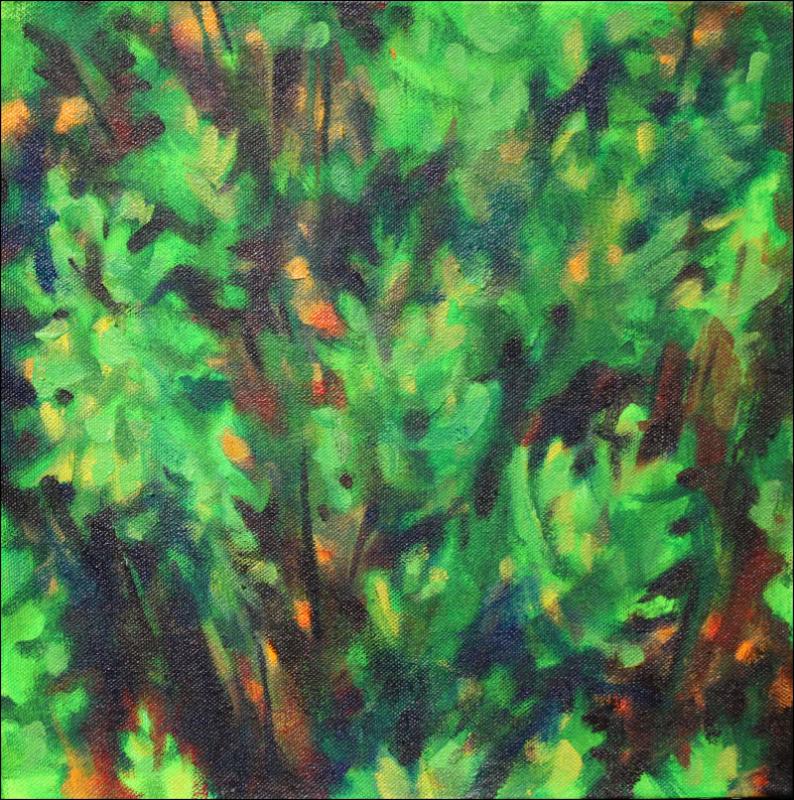
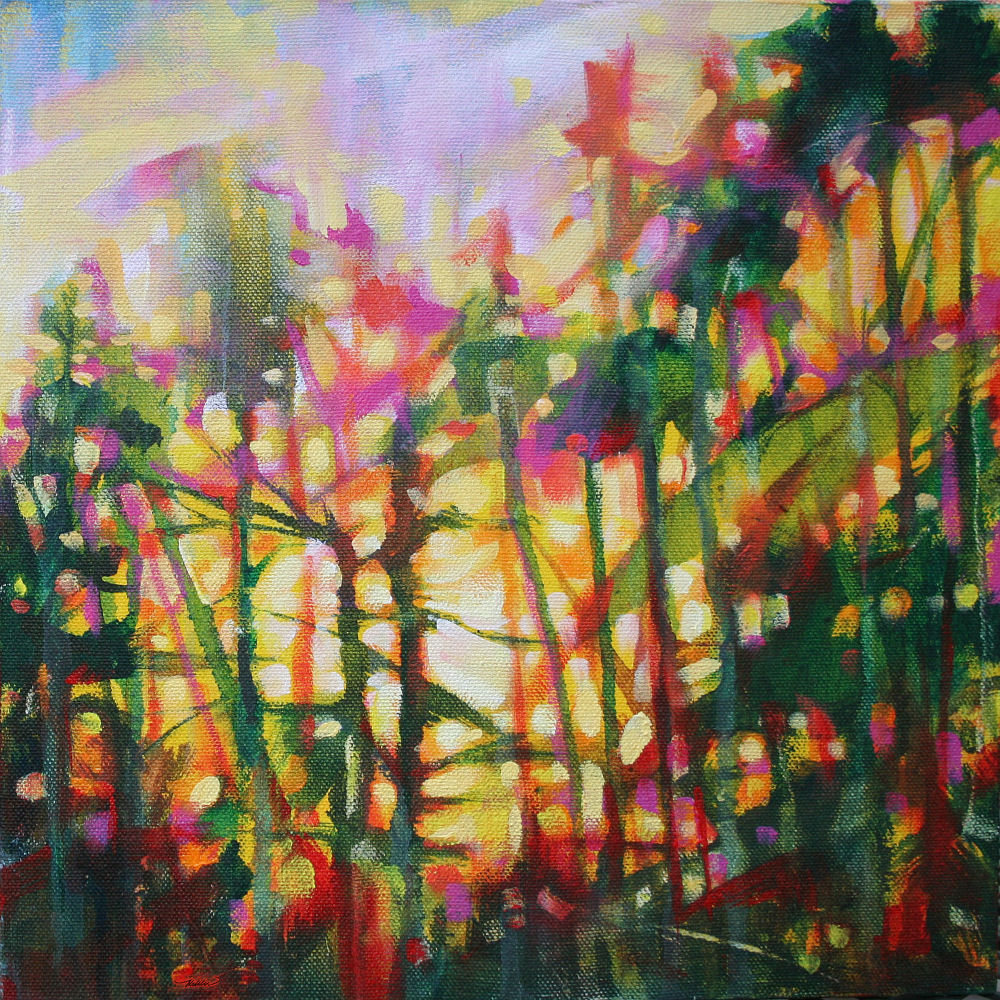
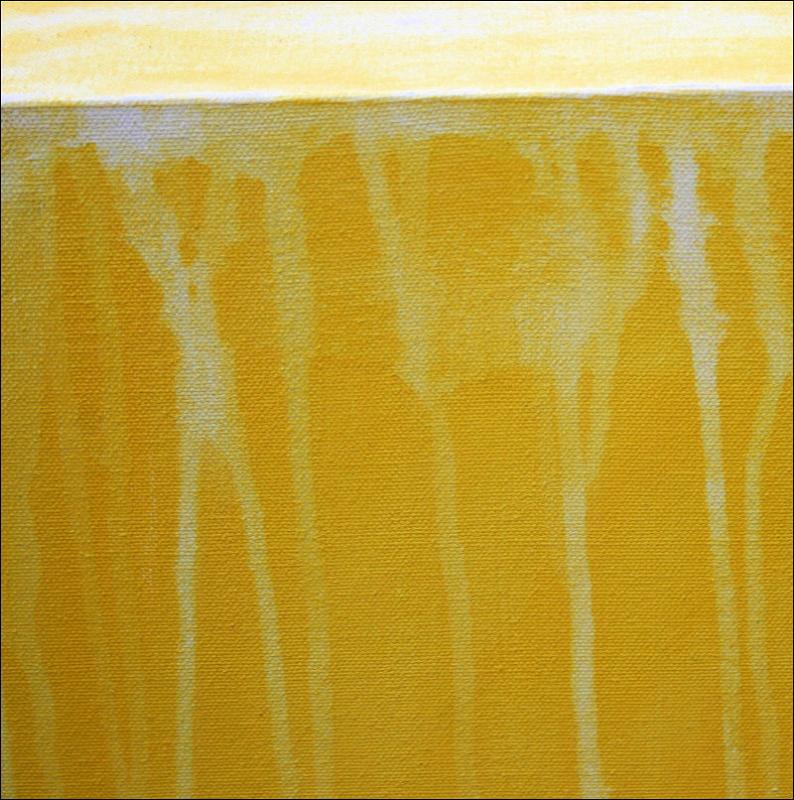
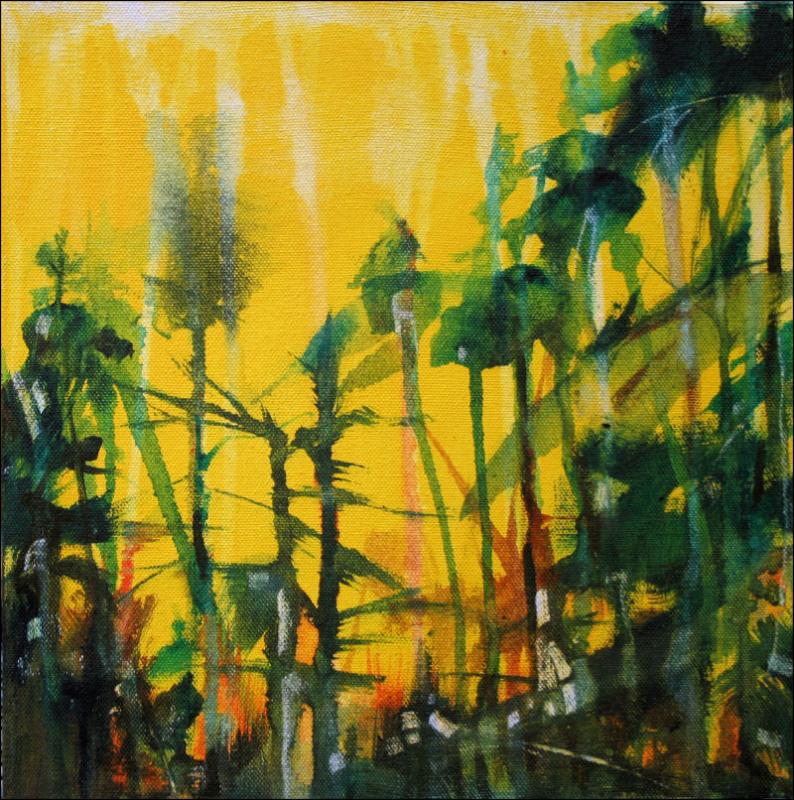
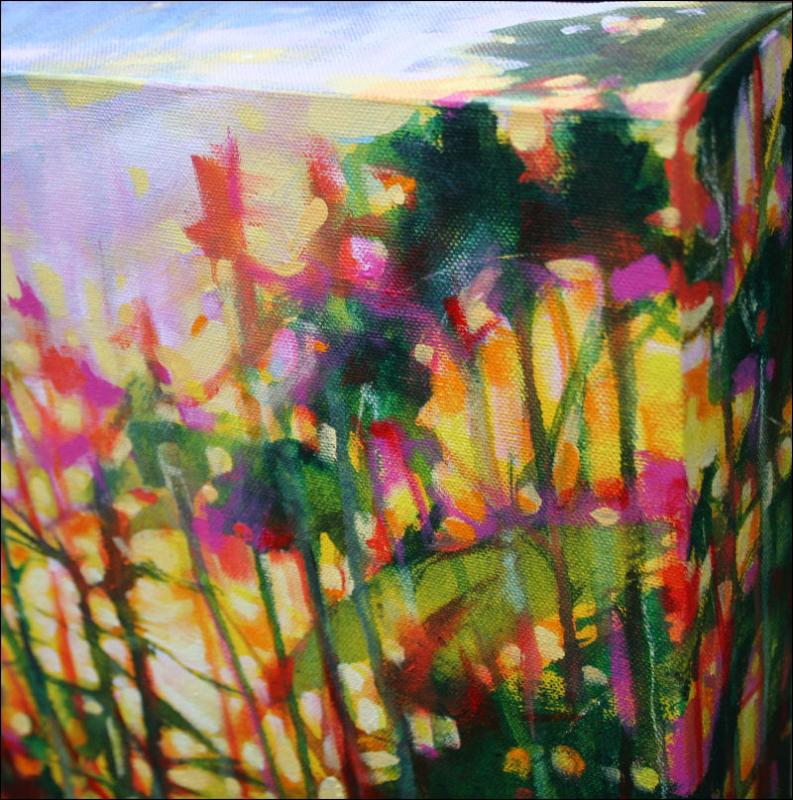
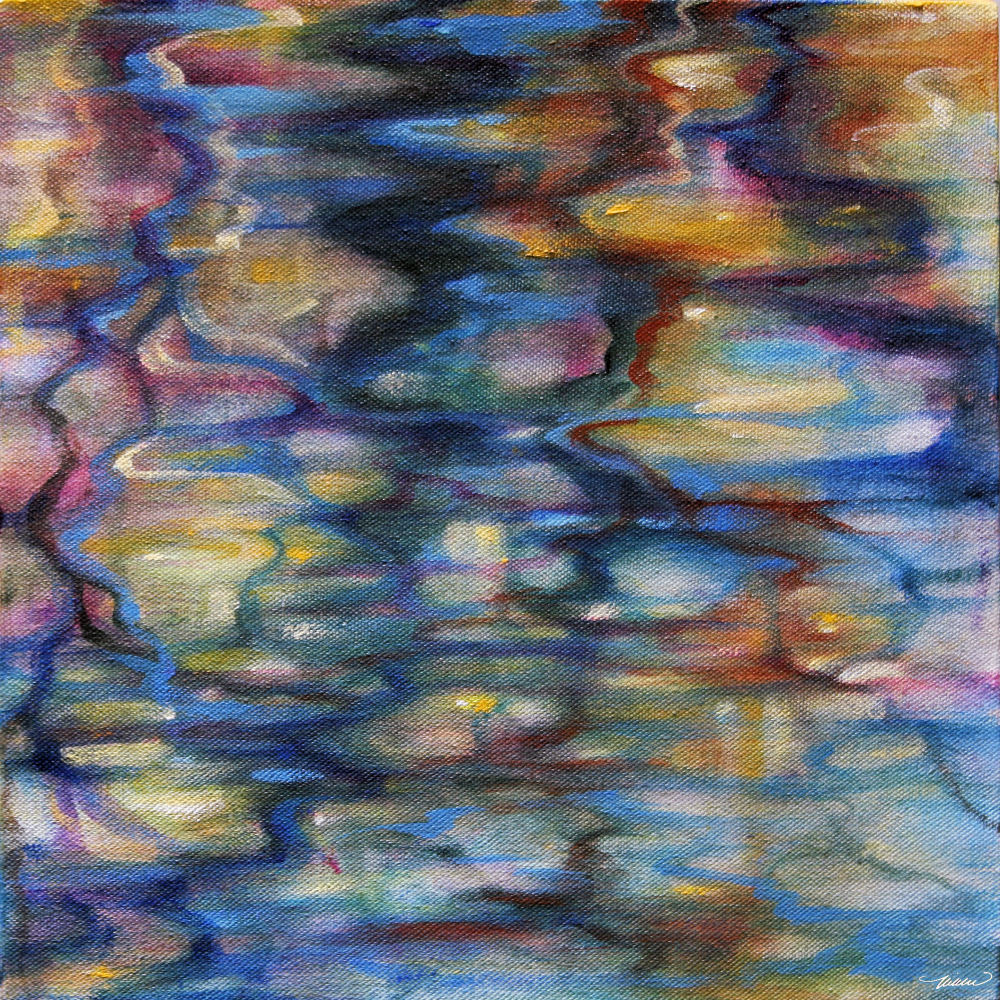
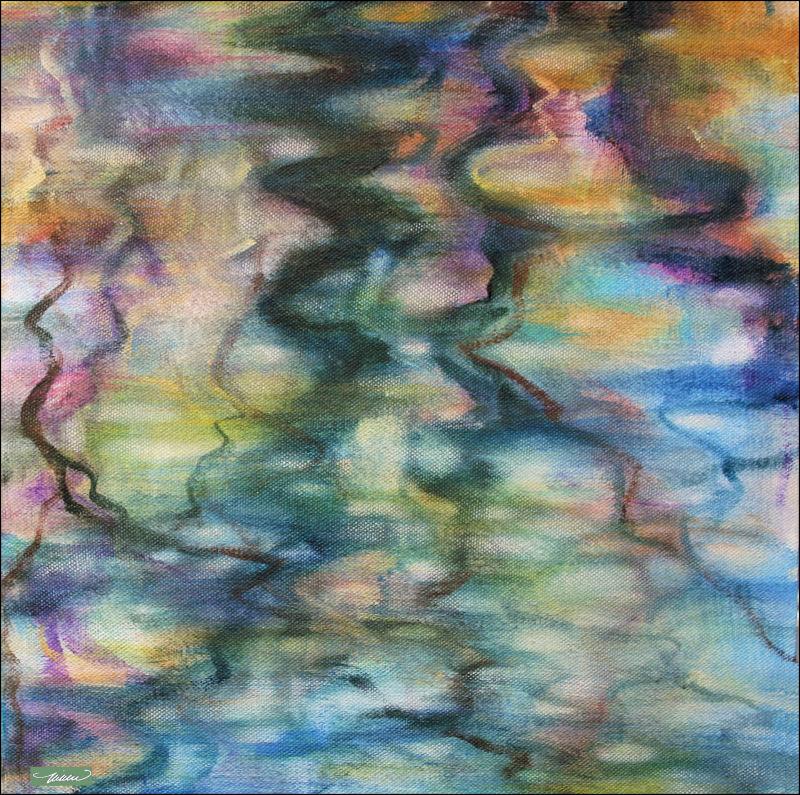
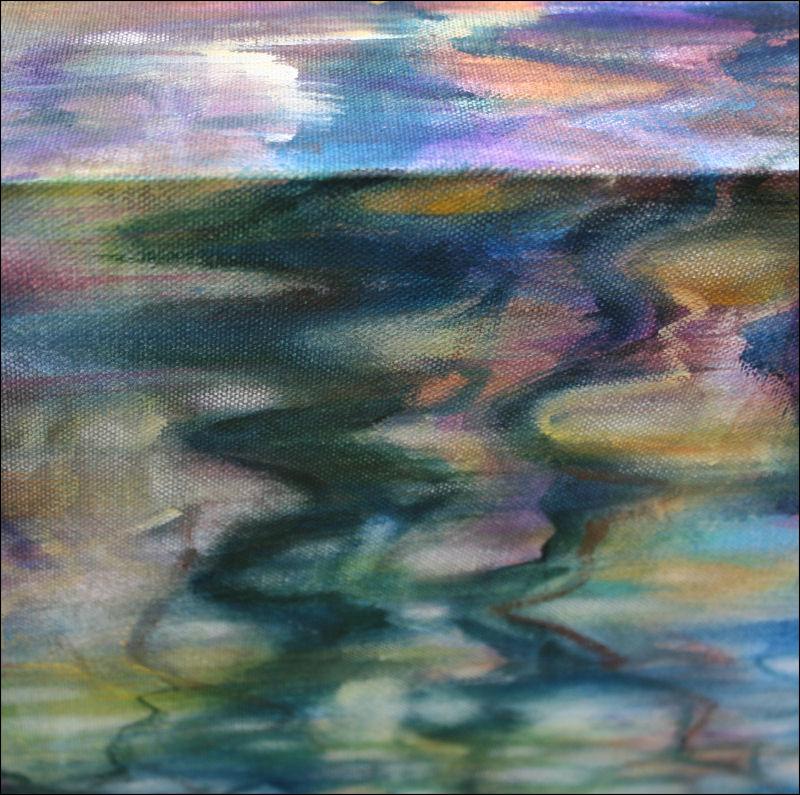
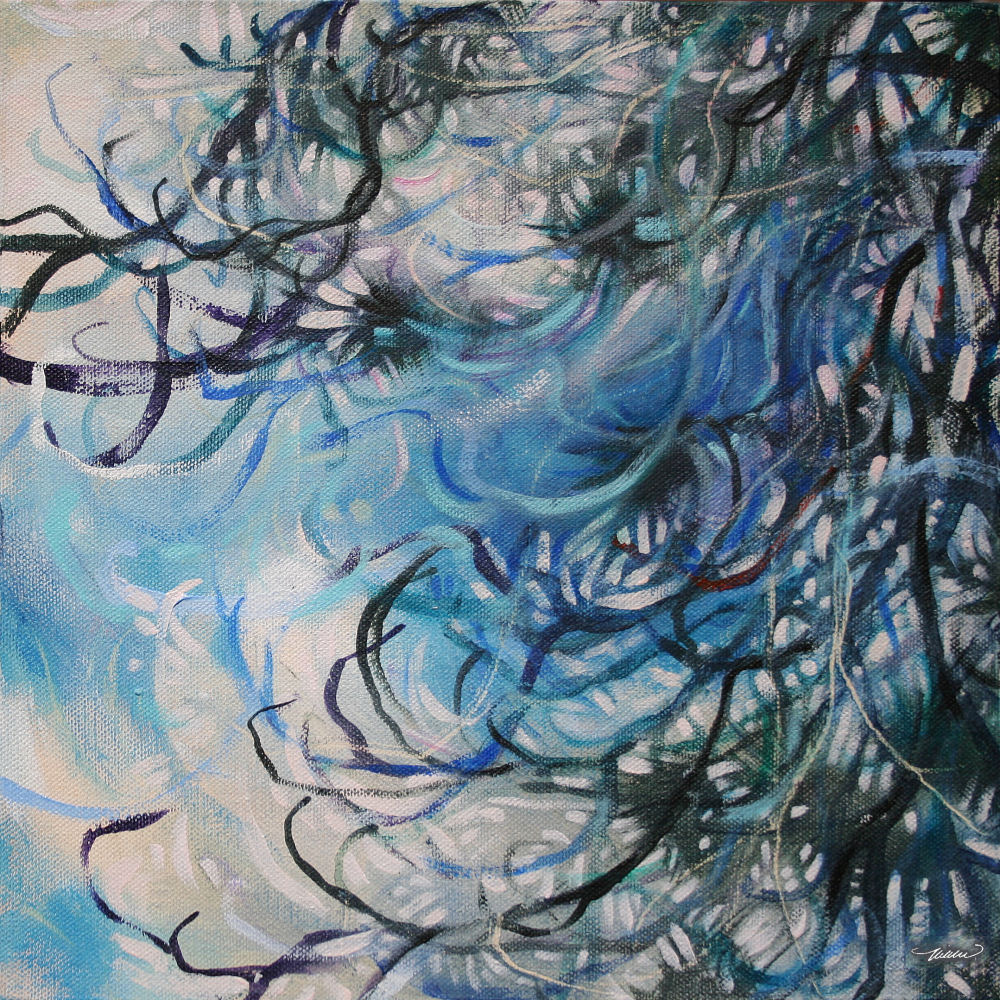
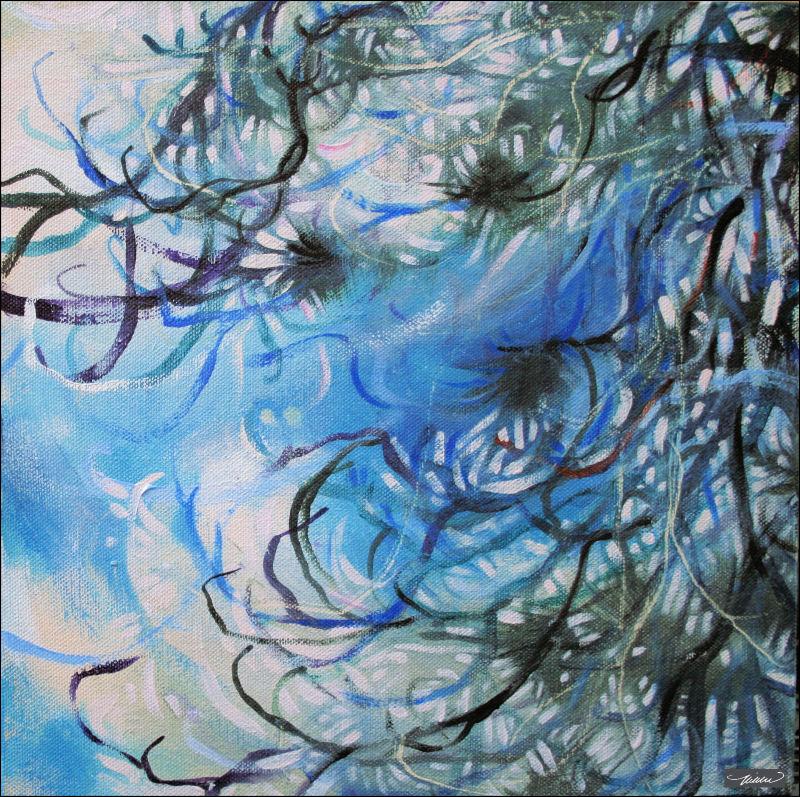
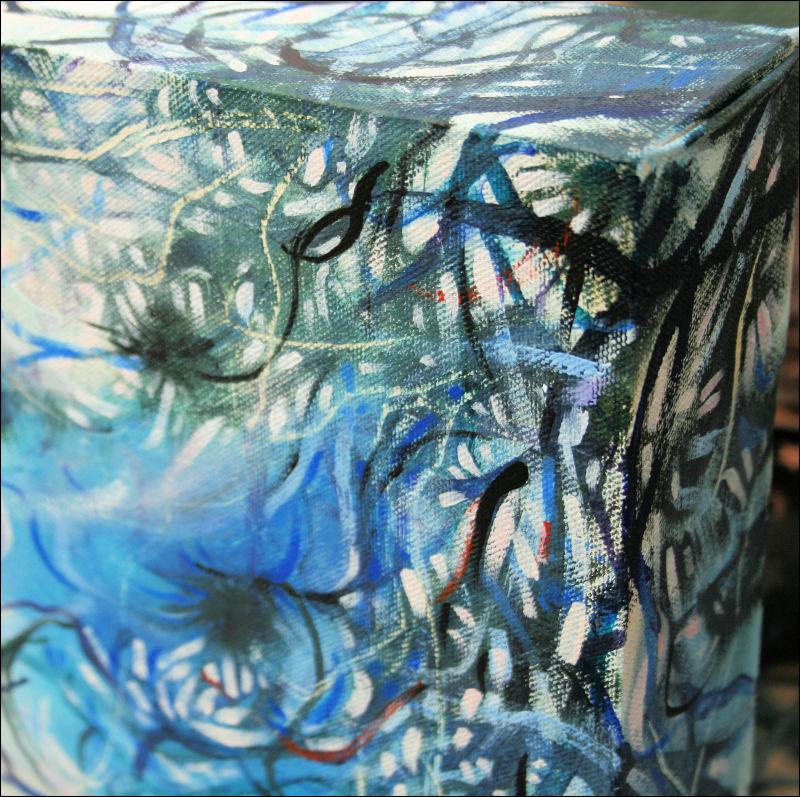
Dancing With Trees 03, upper portion of 85H x 45W x 3D inches acrylics on canvas

Dancing With Trees 03, central portion of 85H x 45W x 3D inches acrylics on canvas

Dancing With Trees 03, lower portion of 85H x 45W x 3D inches acrylics on canvas

Dancing With Trees 03, signature piece for the Majesty of Trees solo exhibition, 85 x 45 x 3 inches acrylics on canvas

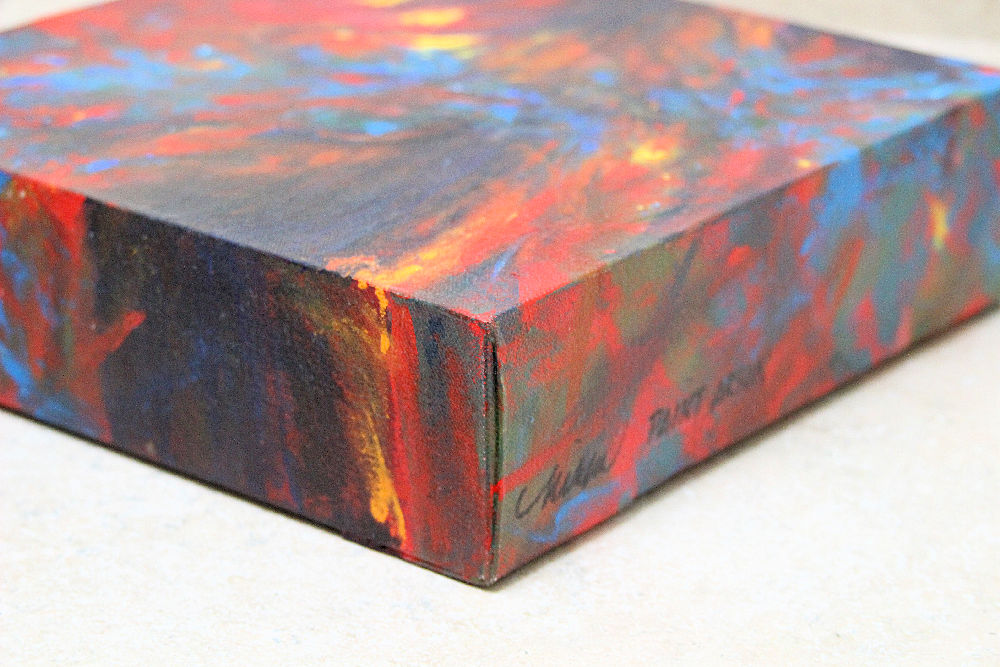
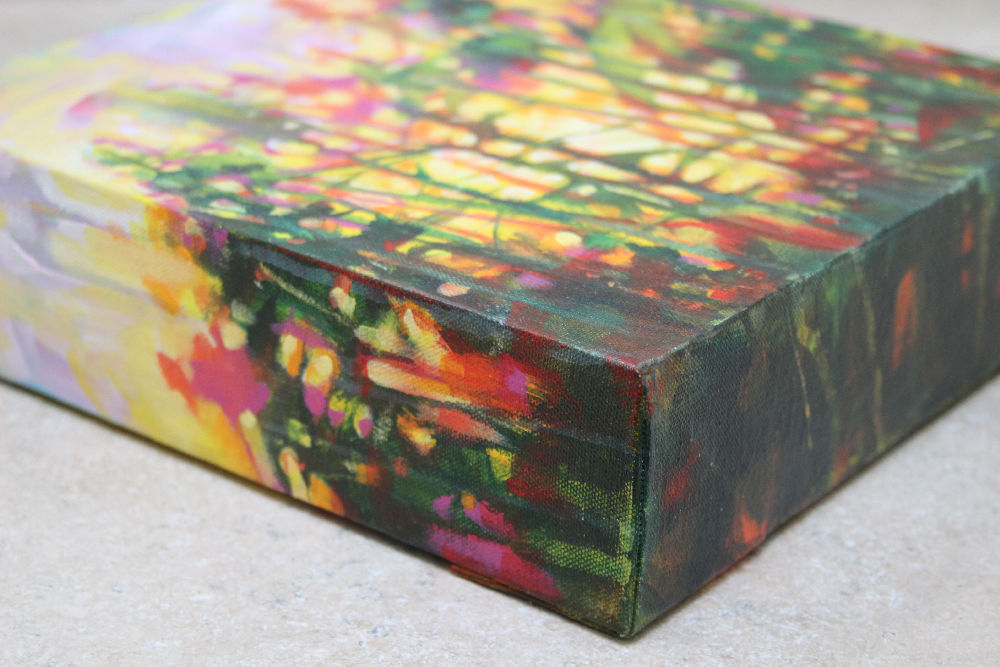
Dancing With Trees 03, 85H x 45W x 3D inches acrylics on canvas, wrapped sides painted, trim frame. Signature piece for the Dancing With Trees exhibition, formerly entitled ‘The Majesty of Trees’.  There is no black in this painting; the darkest areas are dioxazine purple. Aside from a couple of areas that are still questionable this painting is now finished. Specifically: I’m not sure about adding shadows and contrast on the bark of the main trees because it may take away from the cheerful expression of colors.

Progress in previous posts:  January 19th and 30th

The name of the exhibition changed to ‘Dancing With Trees’ to avoid plagiarizing the title of a book, ‘The Majesty of Trees’.

End of Tulip Season

Wednesday, February 18th, 2009


End of Tulip Season, Ottawa, Ontario, Canada 14 x 11 inches oil pastels on paper
Finished today: added some life to End of Tulip Season, 14H x 11W oil pastels on paper.

Images of progress

End of Tulip Season, 14H x 11W oil pastels on paper, 2006 End of Tulip Season, 14H x 11W oil pastels on paper, rework in progress 2009

Except for the fact that paper has a limit to how much it can be reworked before it starts stretching, I could keep revising these drawings in the Paper Places series continually!  Some of them are finished in a day, and truly finished. Some drawings seem OK when they are finished, but have areas that are not quite there yet, so they are left for a month or a year or two then taken out and reworked. It’s great exercise playing with color and composition. Some are taken too far, but with regard to learning, effort is never wasted. Change characterizes this series too; change of place, change of time, change of styles, changing what’s already been changed.

Please curb your dogma

Saturday, February 7th, 2009


Lake Cote Cloud Forest Reserve, 14H x 11W oil pastels on paper, 26H x 22W inches framed“Please curb your dogma” reads the large sign outside the Horizon Unitarian Universalist Church in Carrolton, Texas. The Artists On The Horizon  program offers artists an opportunity to show and sell their work in an open, receptive atmosphere. Now on exhibit: a series of  interesting collages of paper that incorporate elements of painting, drawing and sculpture by contemporary artist Bryce Lafferty. The Paper Places series shows March 1 – 31st.  Left: Lake Cote Cloud Forest Reserve, Costa Rica.

Logic is one-dimensional, creativity is not

Monday, January 19th, 2009


January Thaw - The Evolution of a Drawing - 14H x 11W inches oil pastels on paper, framed with 3 inch white double mat, brass name plate, and white wood frame with crackle finish, 26H x 22W inches total sizeThere are at least four active projects on the go here, and that’s the case with most artists. Because creativity is all-encompassing, and when the unpredictable nature of it is revealed on a daily blog, a defining statement or mission and re-evaluating it every once in a while is all-important.

* Career artists do not generate production like a factory or have the same business formulas and game plans as retailers; for us everything from conception to sale is self-prompted. Motivation to work every day on something often means doing something different every day. I give myself the guilt-free permission to do whatever I want at on any given day. However…

* One main piece of work needs to be on the plate always, and the others are like a sort of coffee break; the mind needs to think of other things for a bit then return to the main work with new perspective.

* About faith and fortitude: eventually things are finished one after the other, some in one day, some not…but every day no matter what, if one puts forth effort even with no results, then something is still accomplished.

* Self-discipline: if a client is expecting an original concept and a complete product within 48 hours, then absolutely: results can be forced. Within that limited time frame, the usual way of working and thinking becomes temporarily chaotic; a difficult process for some, because presupposed thoughts have to scatter and previously-done ideas need to be let go. At some point, maybe with only one hour left – crunch time – trust that chaos regroups into something totally new and unexpected..the best, most rewarding work can occur during these times. In other words, here’s how anything is created: you’ve gotta be willing to go a little kooky if you have to, but always be alert to reason and bring a thing into reality!

* We have long-term goals and short-term goals, and mini-goals within the short-term ones, but the process is one and the same: shifting the usual and expected way of thinking – or working – is the best way to regenerate creativity on a consistent basis.

Encaustic – painting with beeswax

Friday, January 16th, 2009


Windy Maple Leaves 8H x 10W x 2D inches encaustic

Windy Maple Leaves, 8H x 10W x 2D inches encaustics

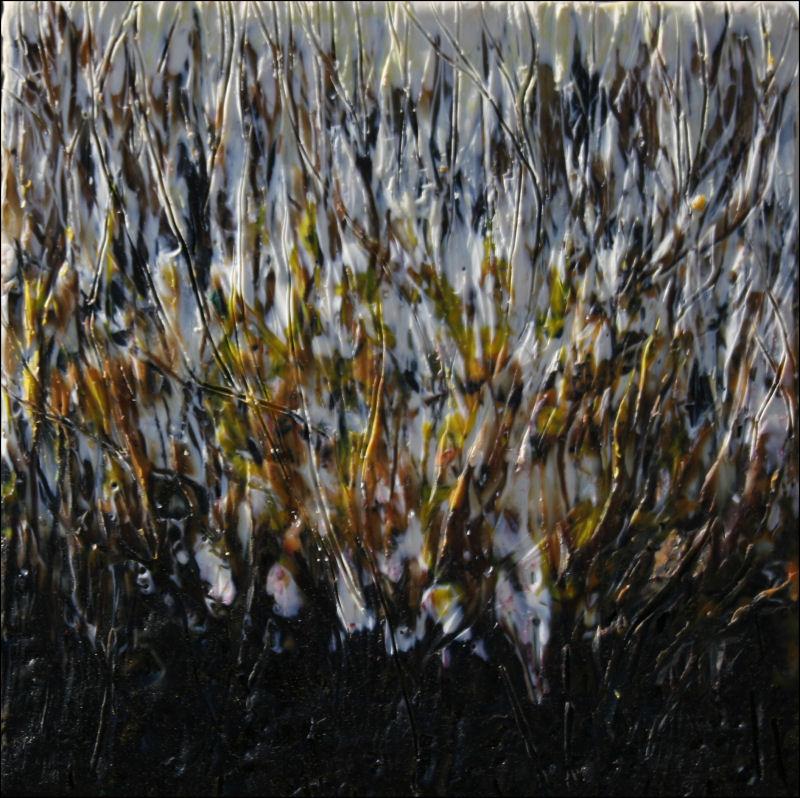
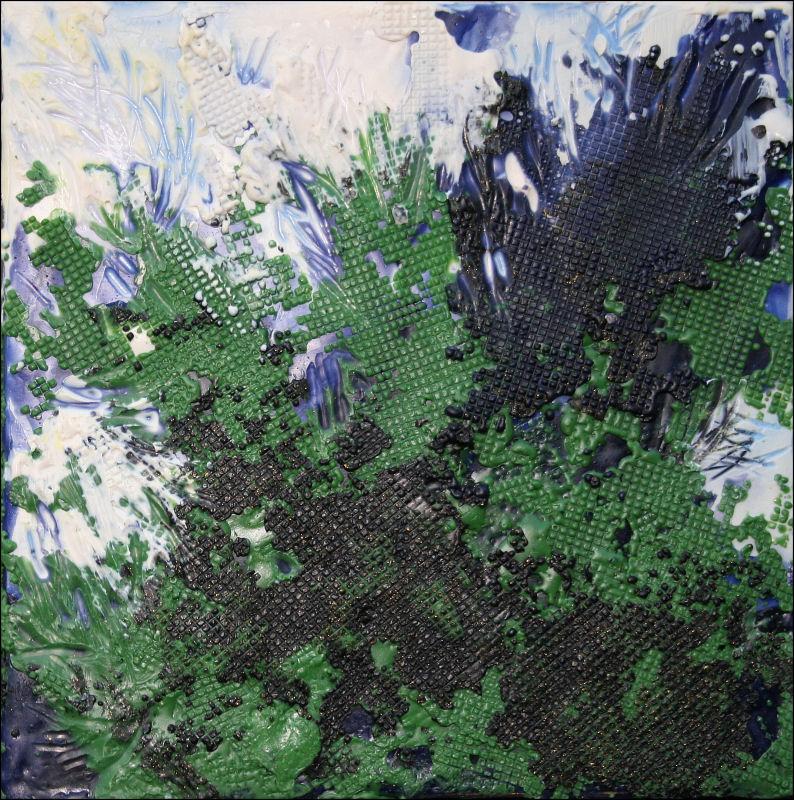
Flamboyant Tree Seed Pods design, 10H x 8W x 2D inches, Encaustic Dahlias, Encaustic, 8H x 10W x 2D inches

1) design inspired by Flamboyant Tree Seed Pods, white beeswax inlay on black, and 2) using a print of an old painting Dahlias as a base, techniques were more spontaneous, each 10H x 8W x 2D inches encaustics


Encaustic Artist Deanna Wood offers her studio space and supplies to her students on days when she’ll be there working. It’s a bargain for $30 per day so I went yesterday and finished the two pieces above.  Painting with wax is a messy process, and Deanna’s studio is all set up for it, so it’s a perfect arrangement for artists who work primarily in other mediums, who don’t yet have their own supplies and wish to continue exploring encaustics. BYOS – Bring your own surface!

Encaustics work table: heat gun to fuse wax to surfaces, a piece I worked on yesterday, some scraping tools, and an electric frying pan melts naturally colored beeswax A heating tray melts the colored wax

With a FAQ page on her website, Deanna outlines a brief history about encaustics and herself.  Her most recent solo exhibition displays a portion of the extensive amount of encaustic works created around the theme of tornadoes. Including a few multi-media pieces as well, the show runs January 10th – February 29th, 2009 at the Leslie Powell Foundation and Gallery in Lawton, Oklahoma.

Salish Spindle Whorl Chair finished

Saturday, December 20th, 2008


Salish (Pacific Northwest) Wooden Whorl Replica chair - finished detail of 29H x 29W x 29D inches 1960s Chair and mixed media


The original Salish Pacific Northwestern Native Wooden for spinning yarn, about 6 x 6 inchesAbout the chairs: Art on Art on Art – A Tribute to Creativity

Each functional, comfortable 29 x 29 x 29 inch replica of ancient Art or artifact re-utilizes vintage plastic lawn chairs that were considered Art during the 1960’s. The original structures, damaged or unusable were refurbished by a process of weaving canvas strips along with white glue paper-mache style over the entire plastic top and bottom, and multiple layers of drywall compound sanded in between coats. Designs are drawn with graphite, painted with acrylics and a few coats of varnish for durability, then waxed to finish and enrich the colors. Two more Solaire chairs and other styles of chairs are in various stages of completion yet to be embellished with historic Art themes from other cultures. Other styles of chairs are also in progress.

Salish NW Pacific Wooden Whorl Replica Chair, 29 x 29 x 29 inches, Vintage chair, canvas strips, plaster, acrylics, varnished and waxed; durable, functionalThe skeletal structure of these chairs, called Solaire chairs, were manufactured during the 1960s and 1980s. Art in their own day, these particular ones were unusable; in poor condition they were bound for the landfill sight. Originals designed by Fabiano and Panzini, a French Canadian team, the Solaire chairs are now collectors items, some selling for $500.

The first chair to be up-cycled was a large replica of a Mayan bowl. The Mayan culture (Mexico, Guatemala, Belize and parts of Honduras, 900 B.C. – 900 A.D. Common Era)  developed a very complex written language using pictographs. Many of these were facial expressions and hand gestures. The bowl displays the birth of the Maize God, and along the top edge the name of the bowl’s owner is written, as well as possibly what it was used for.

Salish Carved Wood Whorl
Eve Spinning, 1170 A.D. Illuminated manuscript from the Hunterian Psalter (book of Psalms)Whorls are weights that stabilize used for spinning yarn. The yarn in this case would have been wound just above the whorl. Spinning yarn and weaving fabric are some of humankind’s oldest technology. Left: example of a spindle with whorl,  Eve Spinning Illuminated Manuscript c. 1170 A.D.

Historically everywhere wood has been used for tools, utensils and everyday items, they were often carved. The original spindle whorl that was the inspiration for this chair was used by a Salish Northwest Pacific coast community living south and east of Vancouver Island. Here a central human figure holds two otters. A Kwakiutl (also living in Vancouver Island territory) prayer to a Cedar tree prayer was very much a part of the inspiration for this chair. It reads: “Look at me friend! I come to ask you for your dress, since there is nothing you cannot be used for. I come to beg you for this, Long-life maker”.

Cured plaster, acrylic paint over graphite, and carving started    Salish Wooden Whorl Chair - rubbing off paint to create carved effects. Finished chair is varnished then waxed.

December 18th: Finishing details, further definition with acrylics and two coats of varnish, waxed. Decided against the decoupage of the Kwakiutl prayer to a Cedar tree because it does not look as good as hoped. December 16th: Carved the plaster in areas then inlaying purple for contrast rather than black. Purple glazes also make yellows much richer.
The back and under-side of the chair is painted to look carved. The undercoat of yellows shines through succeeding layers, and carved wood textures are created with varnish leaving raised brushstrokes, and am trying whatever else I can think of to make it look like wood! More modeling with plaster and light sanding, then redrawing with graphite, and the design is continually adjusted.

Oxide Gallery

Sunday, November 30th, 2008


Calgary In September - 14 x 11 inches oil pastels on paper, 26 x 22 inches framedFour pieces will show December 2nd, 2008 through February 28th, 2009 alongside other artists’ work at the Oxide Gallery, 501 West Hickory Street, Denton, TX.
Zen Garden #8, or Zen Day and Night, 24 x 24 x 1 inches woven canvas strips, Acrylics on wrapped canvas, clear lights in back. Price $750. Showing are Calgary In September, Gold In The Mountains 02, Mayan Bowl Replica Chair, and Zen Garden 08. Join us at the Show Opening for music, refreshments, and 10% off purchases on December 2nd, 2008, 6 – 9 p.m.

VAST/VACD Exhibition

Wednesday, October 1st, 2008


Adam - part of the Children series 11 x 14 graphite drawings on paper

Merit Award winning Adam, 11H x 14W inches graphite on paper, 21 x 25 inches framed will be on exhibit as part of VAST Connections, running from October 3rd through November 1st. Sponsored by the Visual Arts Society of Texas and the Visual Arts Coalition of Dallas, the exhibition will be held at the VACD Gallery in the Thompson Fine Arts, Inc. Building, 2902 Maple Avenue, Suite A , Dallas, TX. Gallery hours: Fri, Sat: 11a.m. – 5 p.m.

Shadows of Summer update

Monday, September 22nd, 2008


Shadows Of Summer, 60H x 40W x 3D inches acrylics on canvas, narrow frame
Shadows of Summer, 60H x 40W x 3D inches acrylics on canvas.

Going for the magic every hour

Friday, August 15th, 2008


Magic Hour 60H x 40W x 3D inches acrylics on canvas, sturdy home-built core stretcher frame, wrapped sides painted

Magic Hour finished (Gitxsan Totem Pole, Thunderbird Park, Victoria, BC Canada), 60H x 40W x 3D inches acrylics on canvas, sturdy home-built stretcher frame, wrapped sides painted, narrow trim frame. Here is an earlier post with information about this totem pole.

Magic Hour, top detail of 60H x 40W x 3D inches acrylics on canvasGreat moments in painting are addictive, when so completely immersed in the work that time becomes non-existent… The Zone! I’ve had a good week with this one, partly because of getting past the habit of trying to control the outcome. Things happen in every painting that are not planned, and the endless choices are part of the fun.

Magic Hour, bottom detail of 60H x 40W x 3D inches acrylics on canvas

Painting is considered to be a two-dimensional undertaking, but it’s so much more. While lost in the work process, all the dimensions of the subject are explored, including the deeper dimensions of ourselves. While painting we discover our convictions and the means to ask how far we are willing to go to stand up for them.

Work every day is about continually reevaluating decisions, taking responsibility for choices made, being honest about mistakes, shortcomings and limitations of media and self, and digging deep to find compromise between technical and intuitive solutions. It’s about control of all those elements, combined with easing up on trying to control too much. All this and more translates onto a flat surface as we hope to give the illusion of depth…if that isn’t magic, I don’t know what is!

Post-dated Note: When choosing this totem pole that is erected in Thunderbird Park at the RBC Museum in Victoria, I didn’t realize that it’s the same one that Emily Carr painted in 1928. More magic! Here is a link to more information about this totem and the Gitxsan Poles moved from Gitanyow (formerly Kitwankool) B.C.

A word here about artists’ representation of First nations or any other cultural/historic works: subjects are painted with the greatest honor and respect, with purpose to study and draw interest to the importance of appreciating our multi-cultural world and the unique characteristics of each and every culture. This is what artists do. Our differences as cultures are connected across time and place, as there are many common traits and themes expressed through Art everywhere.
Robert Genn and readers of The Painters’ Keys have some very interesting comments all around the board about this topic.

« Previous Entries Next Entries »