Autumn
« Previous Entries Next Entries »Japanese Maple
Saturday, February 11th, 2017
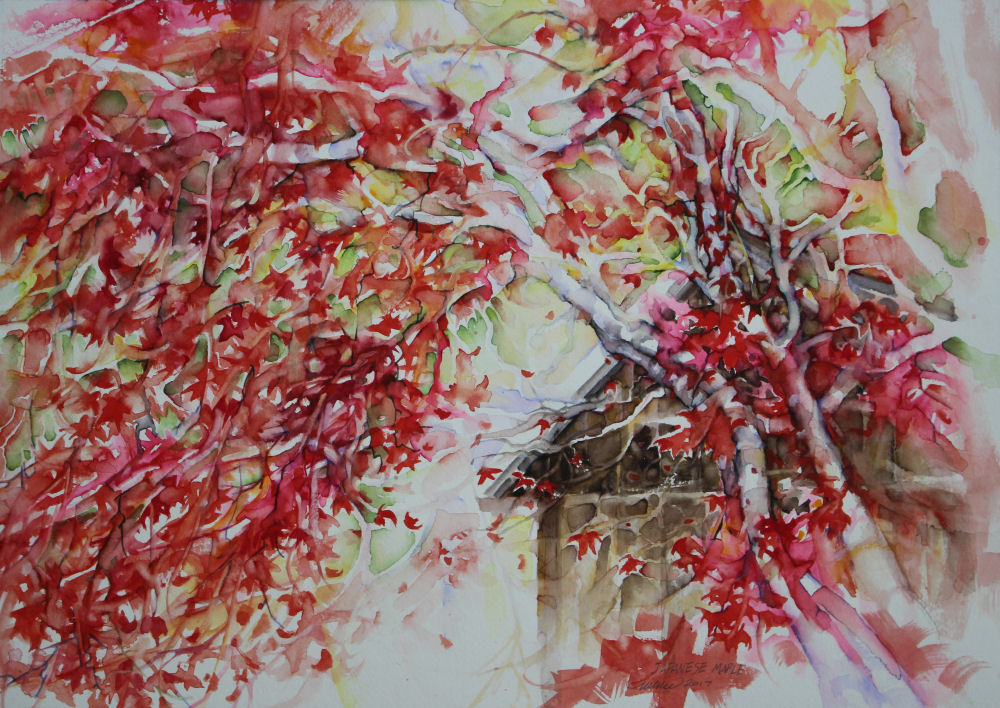
Japanese Maple, 20W x 15H inches watercolors on 140 lb. cold pressed premium work in progress.
Fairy Lake Sumac
Tuesday, November 13th, 2012
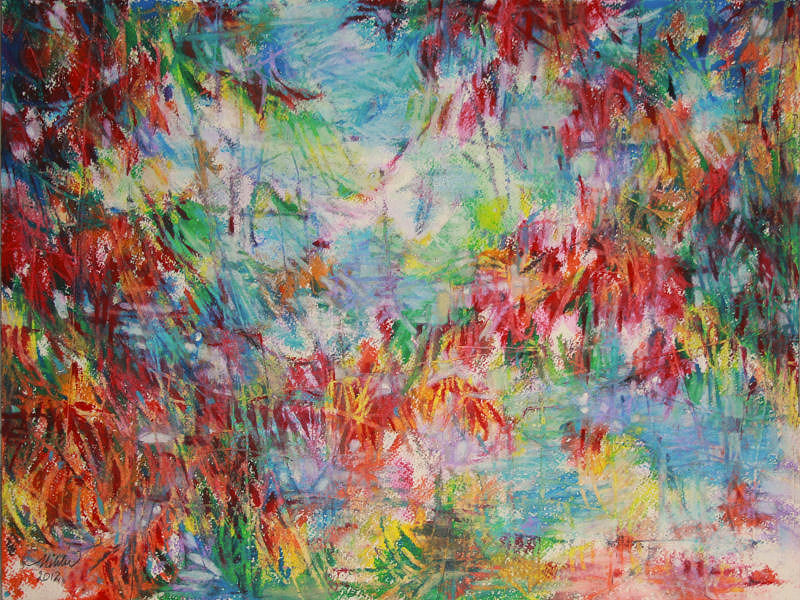
Fairy Lake Sumac – Sumac bushes during Fall, Fairy Lake BC Canada, 16H x 20W inches with mat, oil pastels on 140 lb W/C paper.
This piece has a base of watercolor crayons, which I hadn’t heard of before and was excited to try. The crayon colors were weak though, and they do not paint well either, so oil pastels were layered on top with areas scratched away using fingernails and pottery tools.
Bigleaf Maple watercolors
Sunday, November 4th, 2012
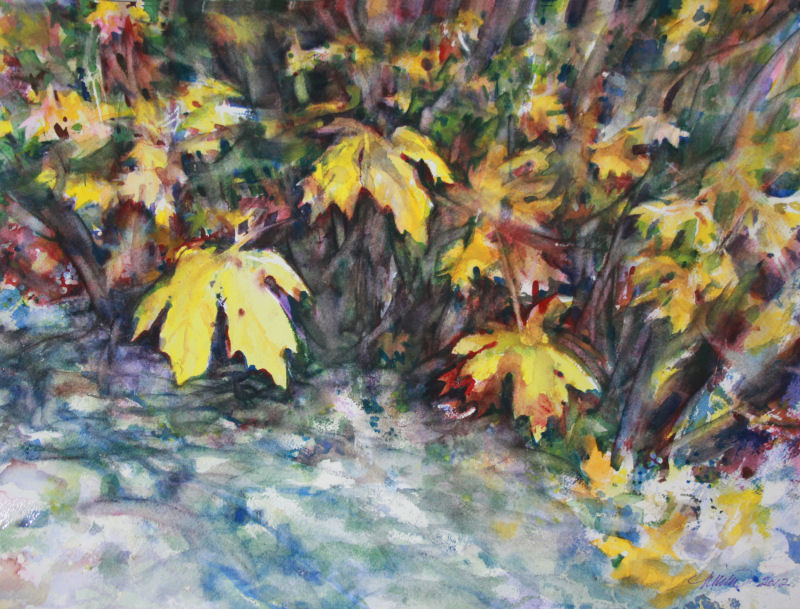
Big Leaf Maple near Port Renfrew, Vancouver Island, BC Canada, 12H x 16W inches watercolors on 140 lb 100% cotton paper. Framed size 22H x 26W inches.
Sumac Bushes Chair finished
Tuesday, May 5th, 2009
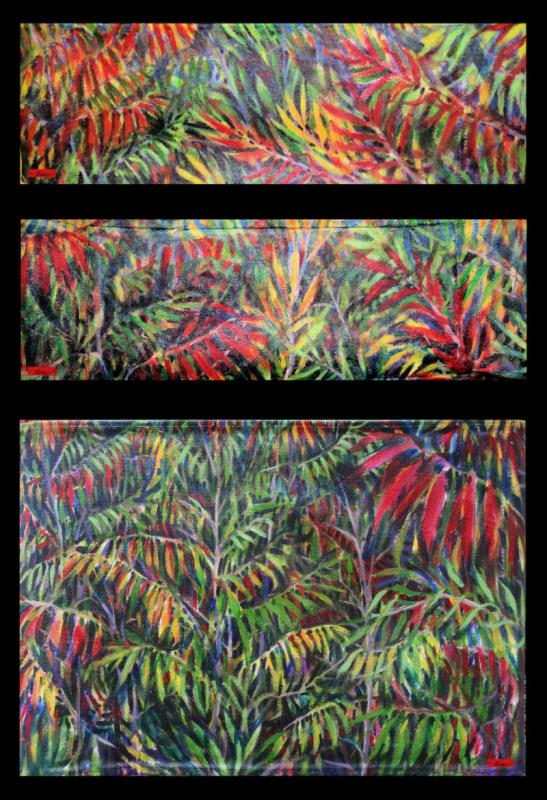
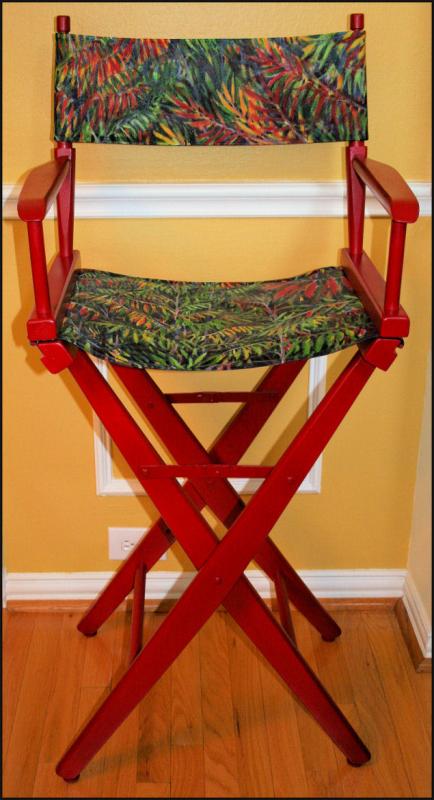
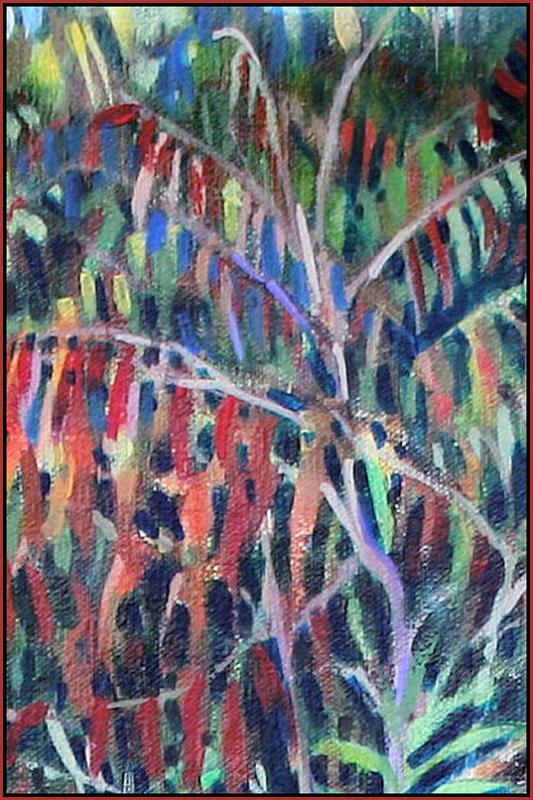
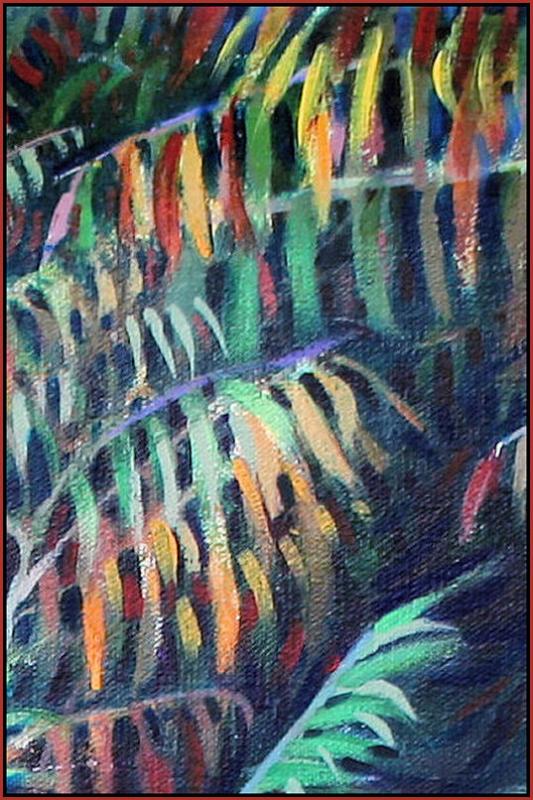
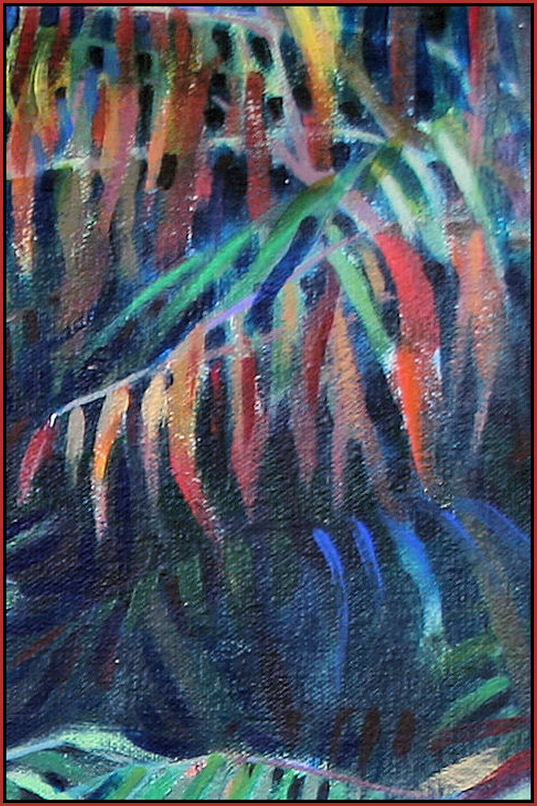
Sumac Bushes, 47H x 22W x 16D inches refurbished Director’s Chair, acrylics on canvas.
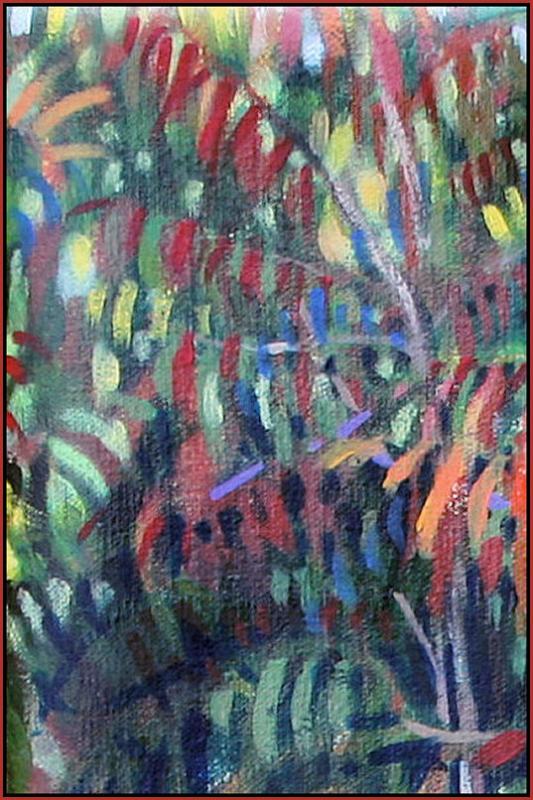
Four cropped pieces of the 1999 painting that inspired this chair hang above it, updated and framed with red narrow plastic w/glass frames. The chair and small paintings are a set.
Branching Out
Friday, March 20th, 2009
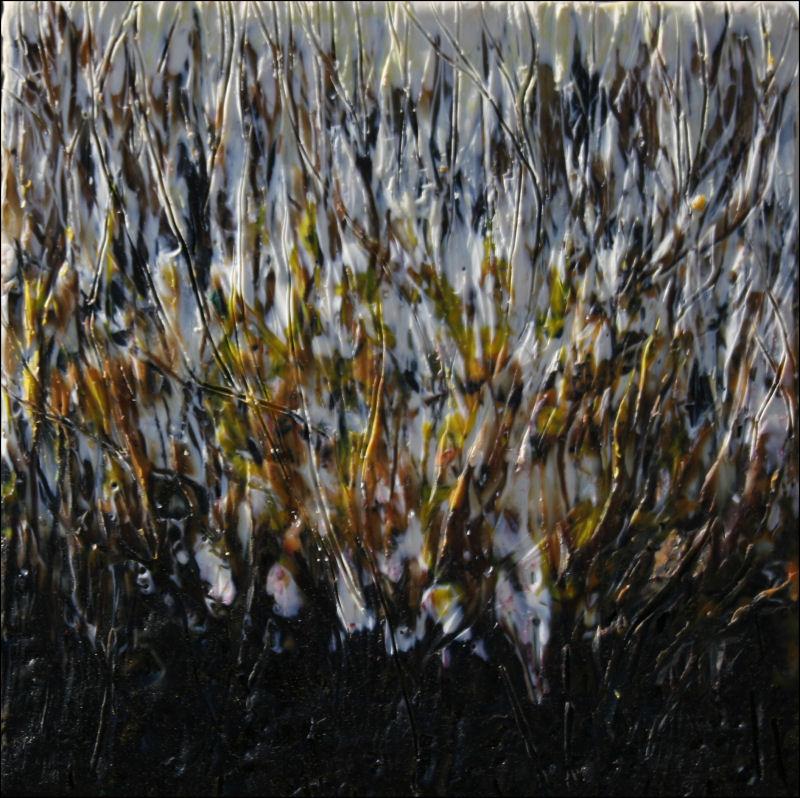
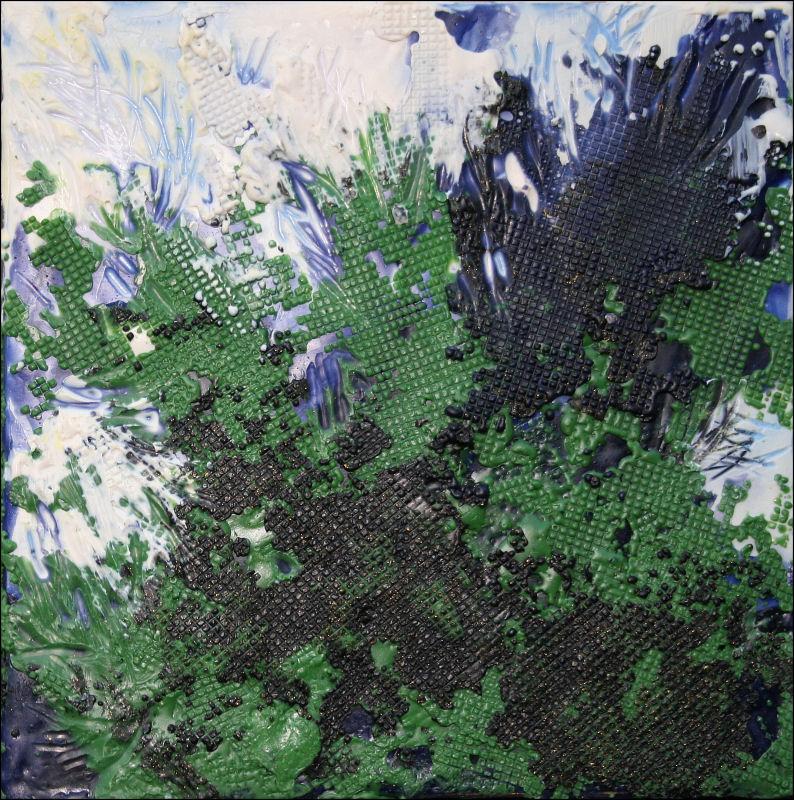
Branching Out and Conifer, each 6H x 6W x 2D inches Encaustic, side surfaces also done.
Encaustic is designing/painting with beeswax. I’m not usually intimidated by trying any new medium, but wax is so unique and there are so many possibilities for it, I was a little overwhelmed when I took an introductory course with Deanna Wood. She offers her students workshop days where they can use her supplies to continue experimenting with the medium. Although I’d love to have my own supplies to work at home, the encaustic process is so messy, not to mention expensive to get started, so that is a generous offer. Today’s studio work produced 4 small encaustic paintings, and 2 are successful. Compared to other media, wax is so versatile it can be scraped off to whatever degree, reworked, layered, carved and manipulated as much or as long as you wish. It’s a lot of fun!
Sweetgum Seed Pods
Wednesday, March 4th, 2009
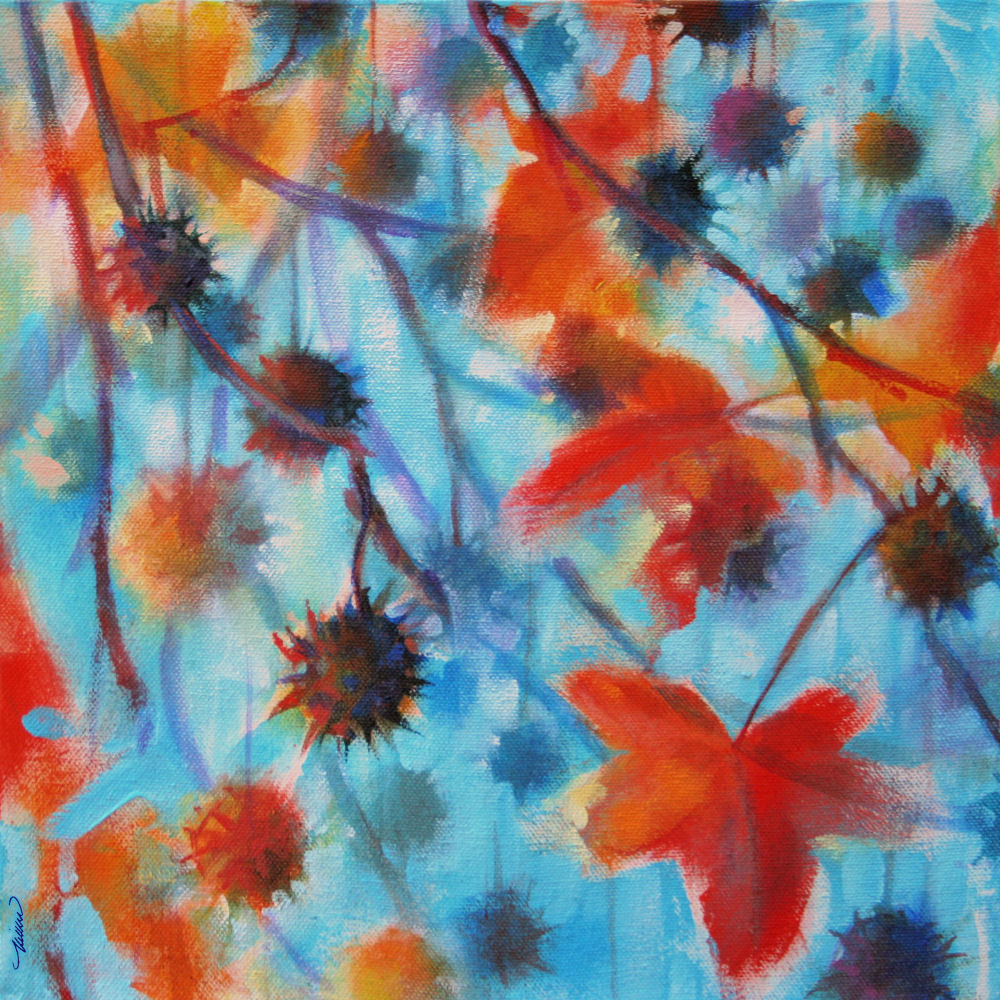
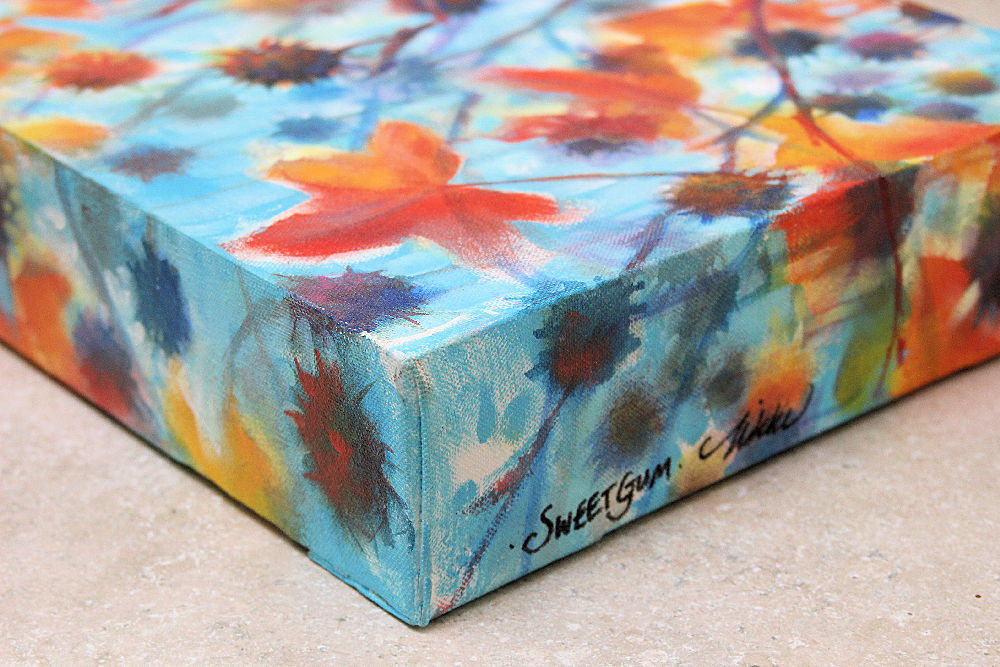
Sweetgum Seed Pods, 11H x 11W x 3D inches acrylics on canvas, wrapped sides painted. Signature is on the side, so one is superimposed here on the front. Frame unnecessary. Hang on a wall or display on a flat surface.
Please pass the peace
Saturday, February 14th, 2009
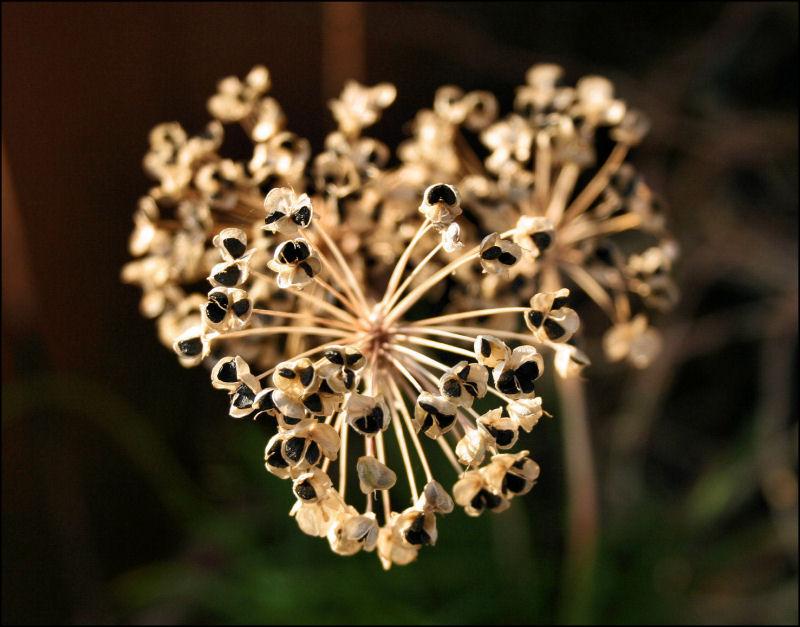
Garlic Chive seed head, heart-shaped growth
Sumac Bushes director’s chair started
Tuesday, January 6th, 2009
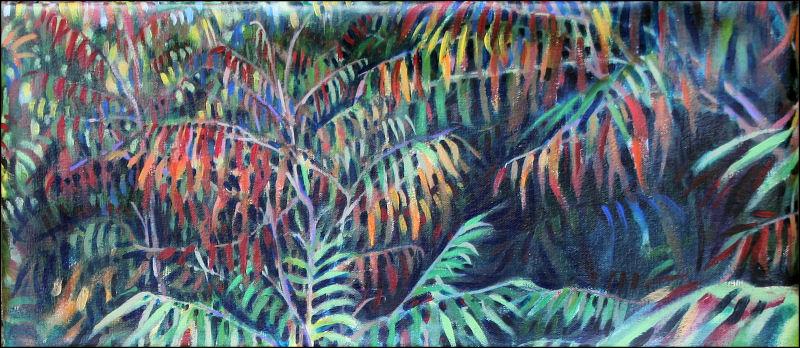
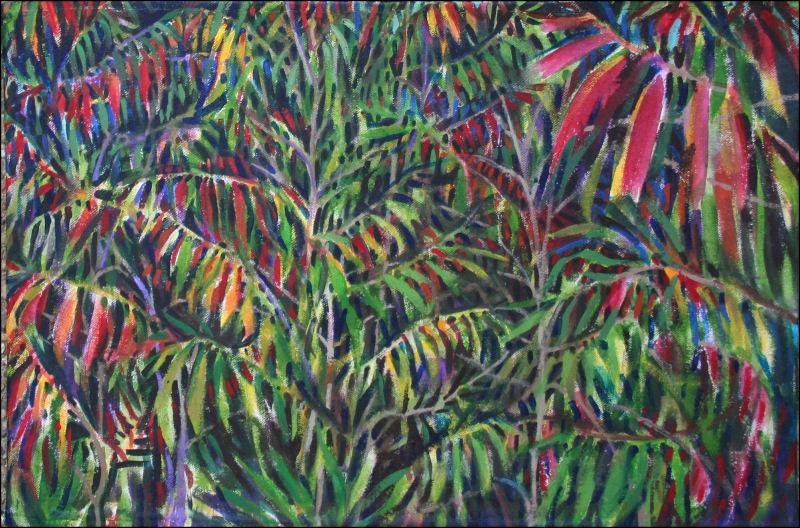
Sumac Bushes director’s chair started. Back and seat of 47H x 22W x 16D inches acrylics on canvas, will be varnished. Up-cycled tall wood director’s chair, work in progress, functional art. The wood will be painted a cherry color.
Shadows of Summer update
Monday, September 22nd, 2008
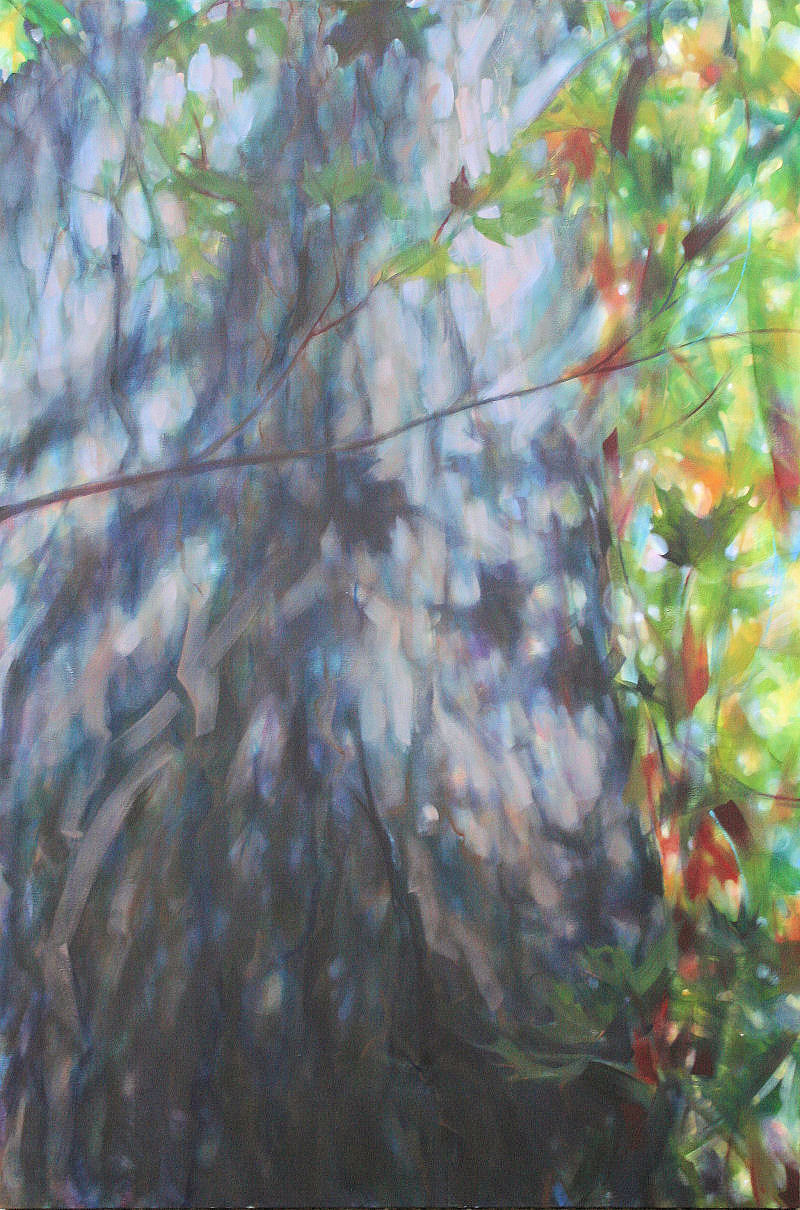
Shadows of Summer, 60H x 40W x 3D inches acrylics on canvas.
Seasonal treasures
Sunday, November 11th, 2007
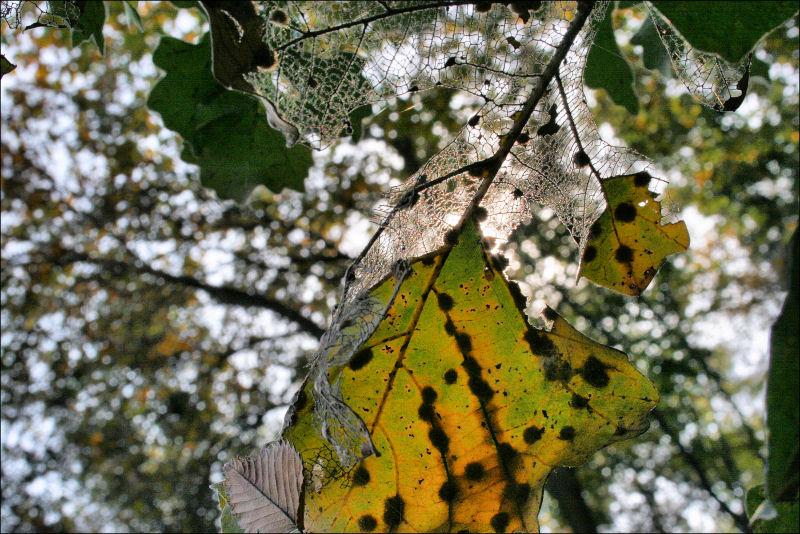
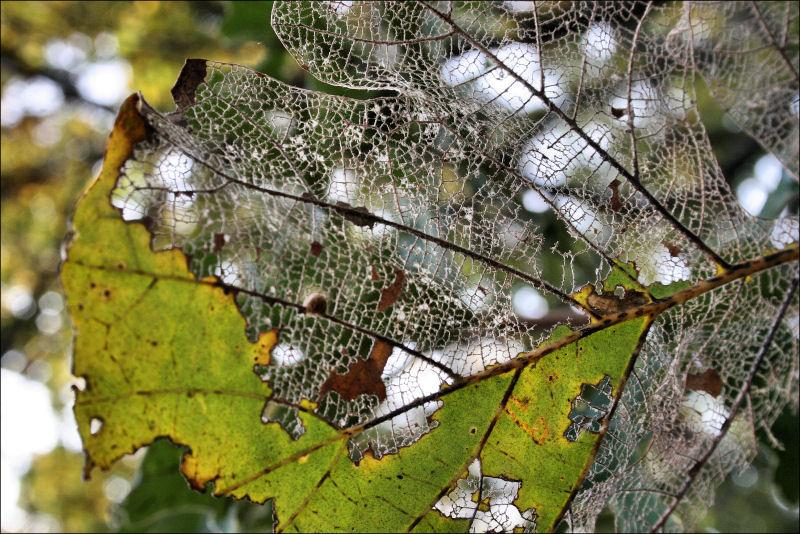
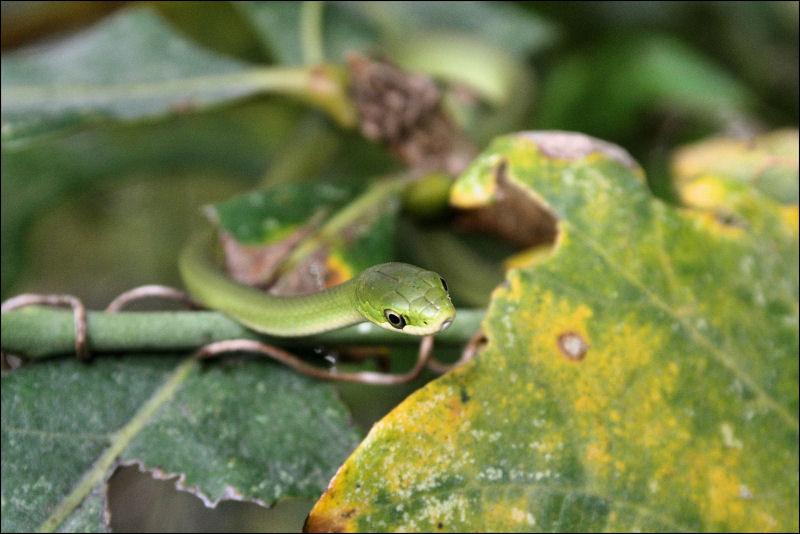
While photographing the filigree on many of the decaying oak leaves in a park forest, leaning backwards with my head in the branches, a little green snake struck out at me, the delicate body about 8″ long and no wider than a baby finger. I wrote to the Biology Dept. at Texas University, and they identified it as a Rough Green Snake – Opheodrys aestivus – it’s non-venomous.
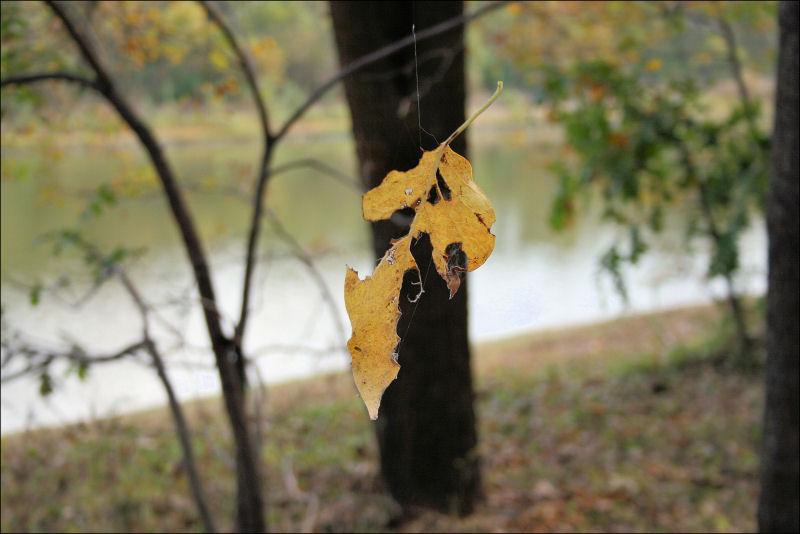
Walking back home completely happy to have chosen that path, expecting no more treasure for the day, a leaf twirled in the breeze, hanging from a spider web strand.