Canada
« Previous Entries Next Entries »Northern Delights 02
Friday, April 4th, 2008


Northern Delights 02, Quaking Aspen, 24H x 36W inches acrylics on canvas, started this morning (left) – work in progress – above: after a few more hours…hope to keep brushstrokes and colors fresh and uncomplicated in this one.
Eastern White Pine
Friday, February 1st, 2008

Eastern White Pine 18 x 24 inches oil pastels on paper, professionally framed, total size 21 x 27 inches. Sold.
Finished today, and the first drawing in a long time that I didn’t stop to document along the way…that breaks the momentum of work sometimes. This one kind of flew out for a change! It can be viewed in Arlington, Texas at AVAA’s 32nd Annual Regional Juried Art Exhibit, February 15 – March 28, 2008.
Salt Spring Island Fog
Friday, January 18th, 2008
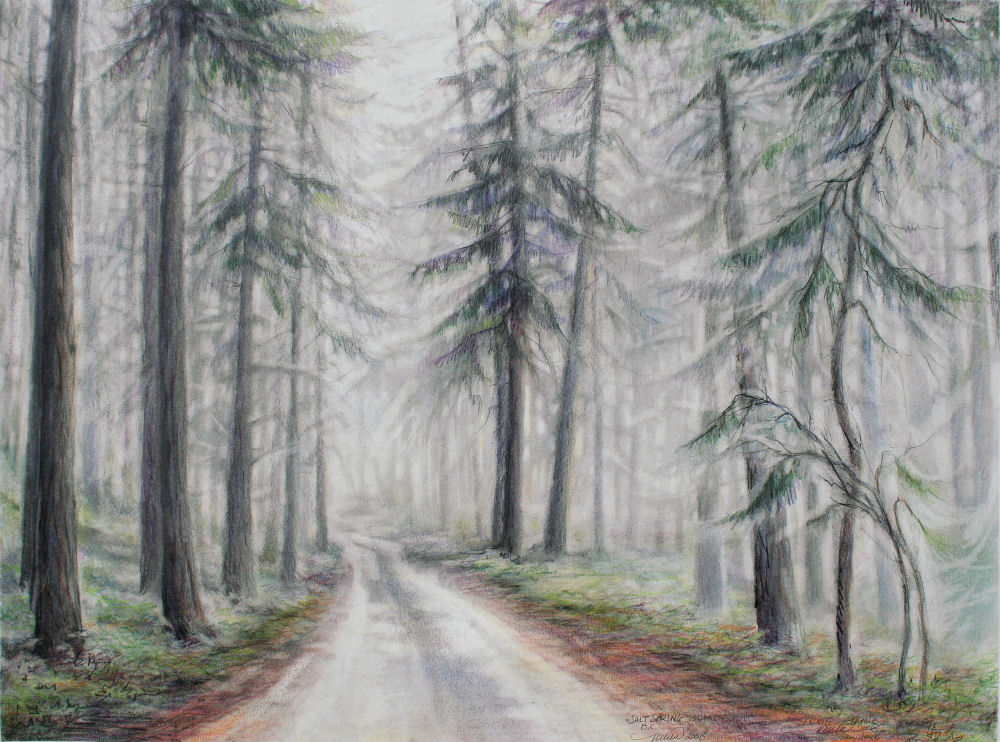
Salt Spring Island Fog, B.C. Canada, 16H x 22W inches graphite, dry pastels, colored pencils on paper, framed size 29H x 35W x 3D inches Details:
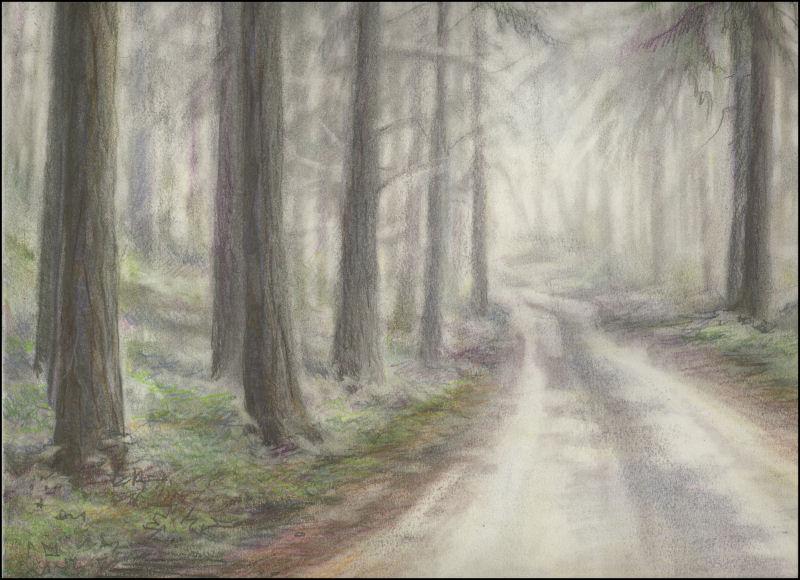
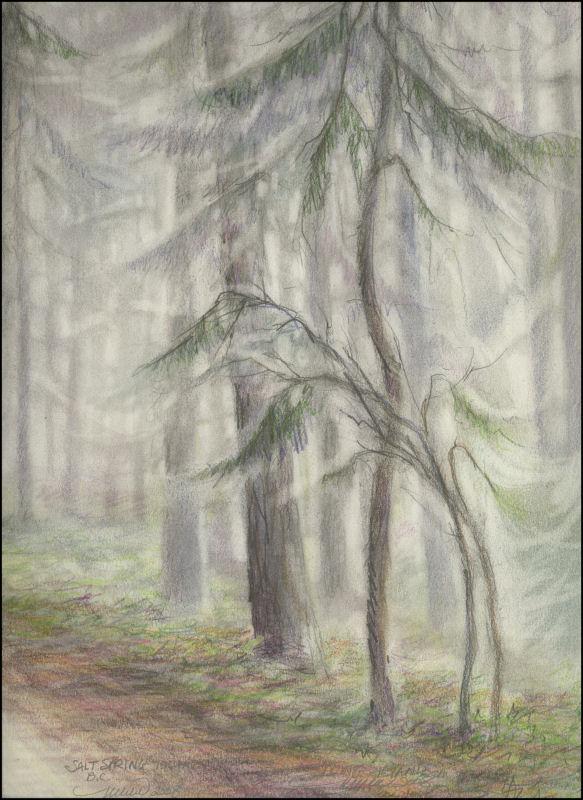
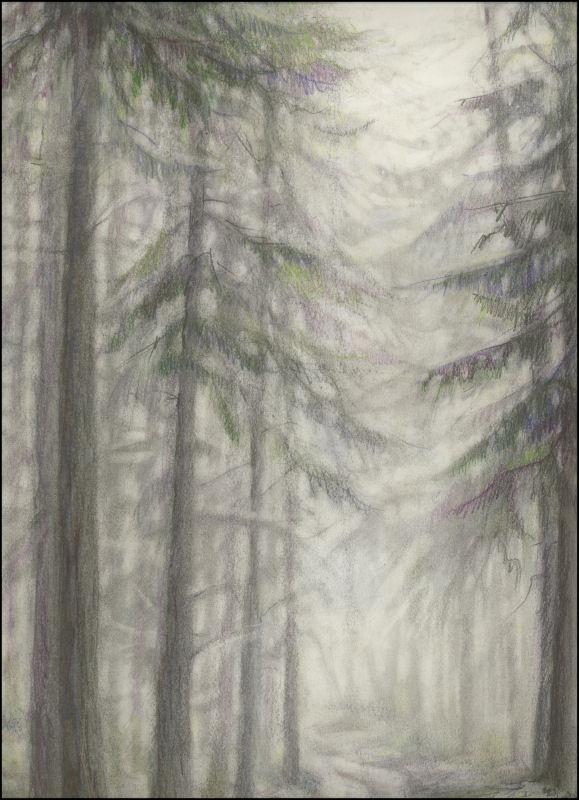
Credit to my Dad, Jim Drury for the photo references.
Salt Spring Island Fog work in progress
Thursday, January 17th, 2008
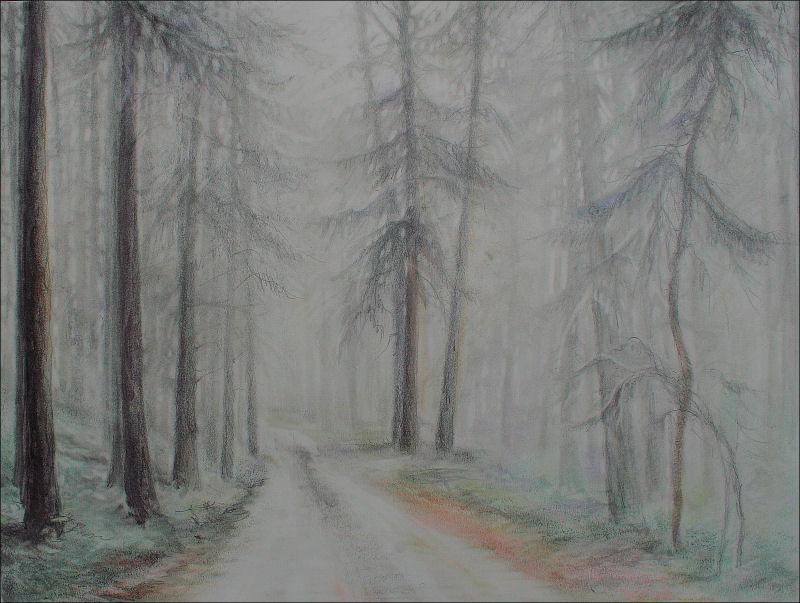
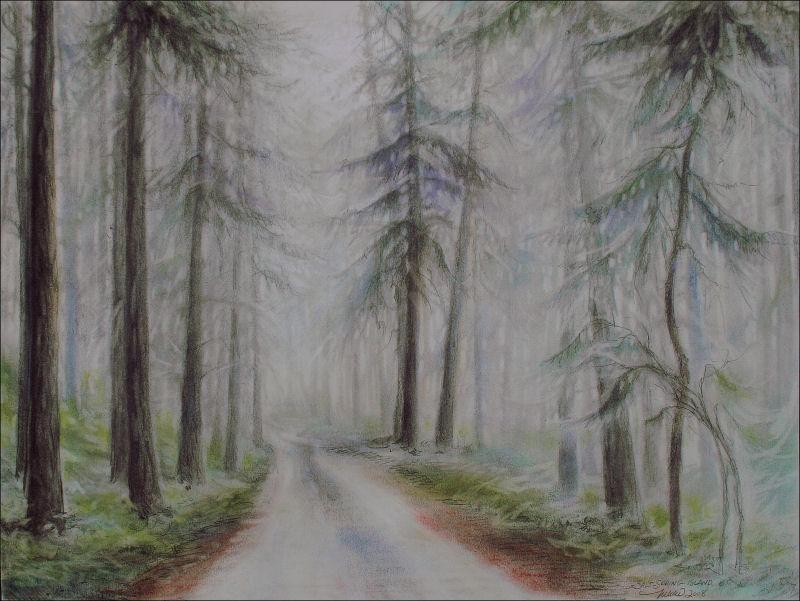
Salt Spring Island Fog, B.C. Canada, 16H x 22W inches graphite, dry pastels, colored pencils. Stages 1 and 2 work in progress
Cedar, Stony Swamp
Monday, January 14th, 2008
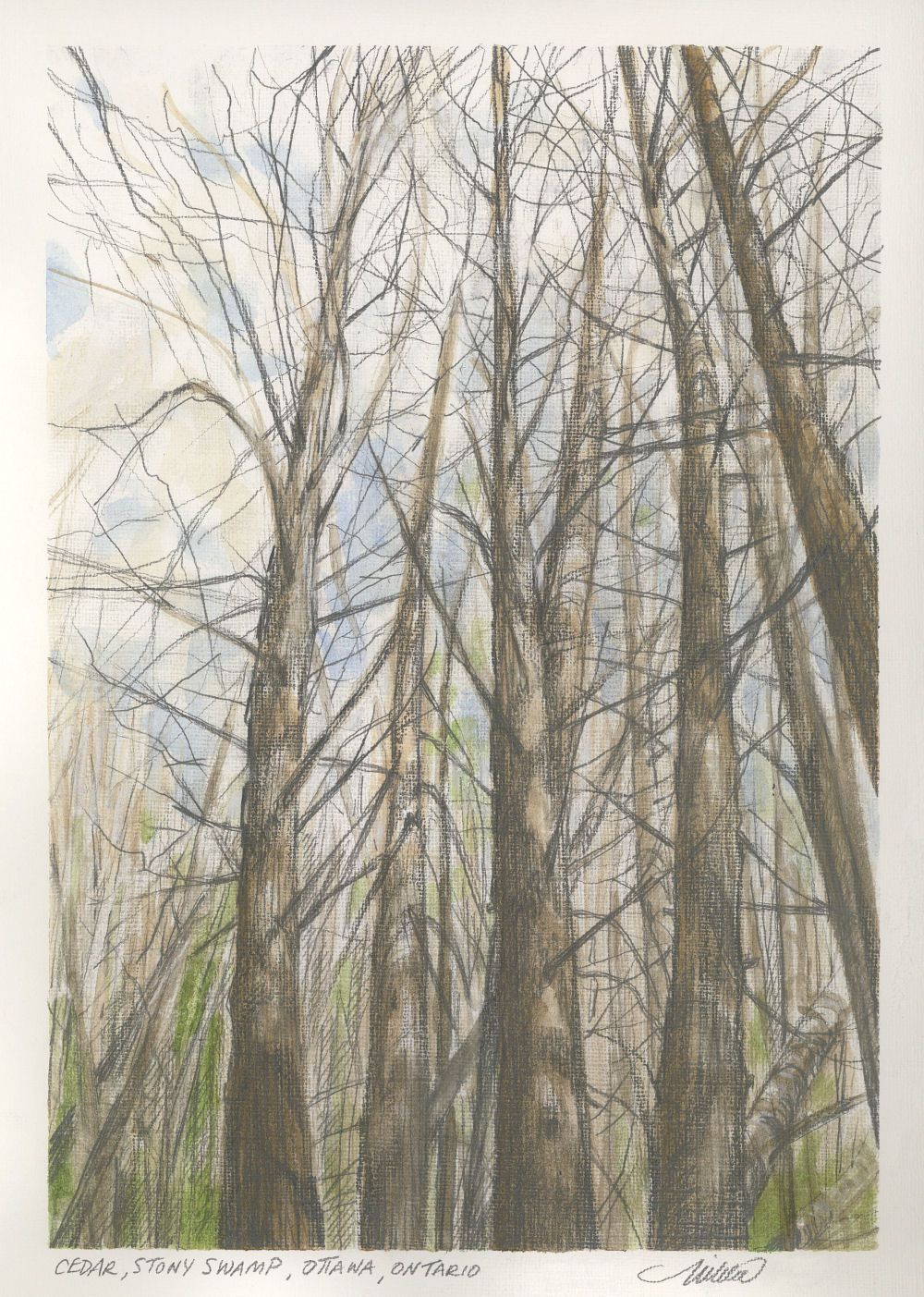
Cedar, Stony Swamp, Ottawa, ON, Canada, 12H x 9W inch watercolor and graphite on 40lb cold-pressed premium watercolor paper. Framed size 26H x 22W inches.
Takkakaw Falls
Saturday, January 12th, 2008
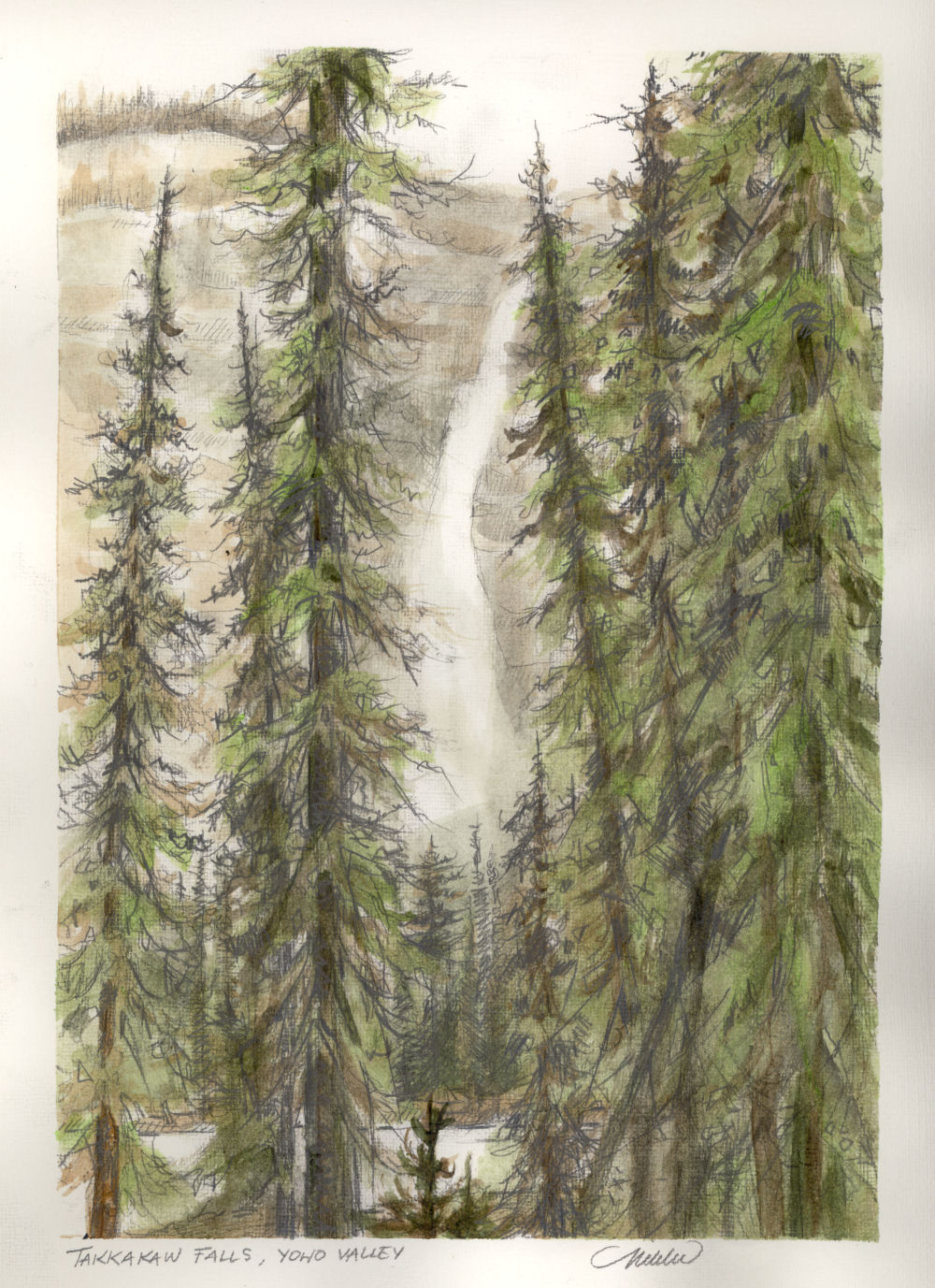
Takkakaw Falls, Yoho Valley, B.C. 830 feet high, said to be the most impressive waterfalls in North America next to Niagara. 12H x 9W inches graphite, watercolors, based on antique Vandyck photos of the Canadian Rockies. Study only, not available
Mt. Assiniboine
Friday, January 11th, 2008
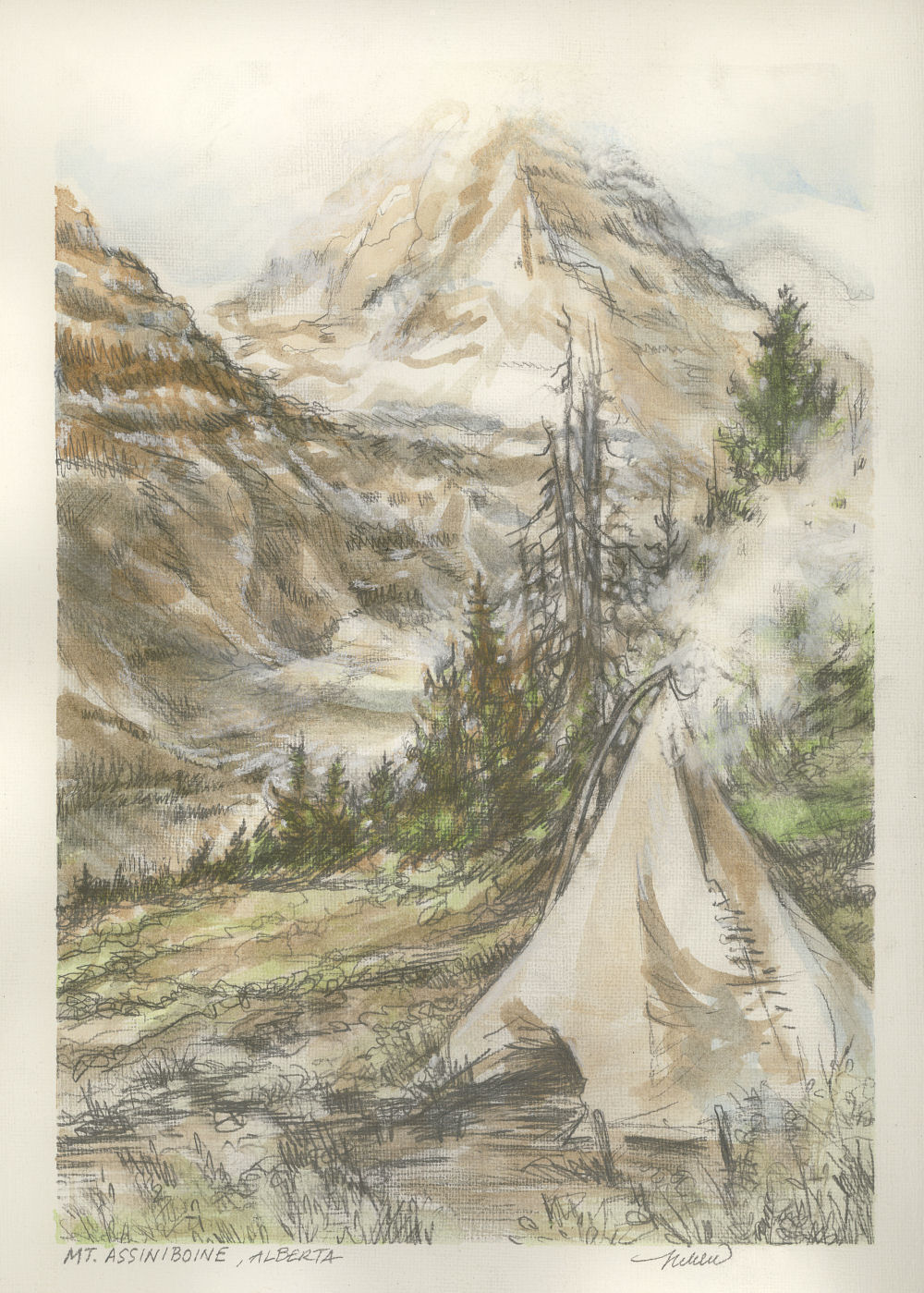
Mt. Assiniboine, about forty miles southwest of Banff, Alberta. 12H x 9W inch watercolor and graphite, study only, not available.
I inherited some charming antique books of hand-colored “Vandyck Photogravures” of Canadian Rocky Mountains scenery as it was at the turn of the twentieth century. The monotone sepia and few other pale colors add such a warmth to the already beautiful scenery in the 1910 photographs, and since I haven’t tried watercolors for years, I thought they would make perfect studies.
First Snow, final update
Saturday, December 1st, 2007
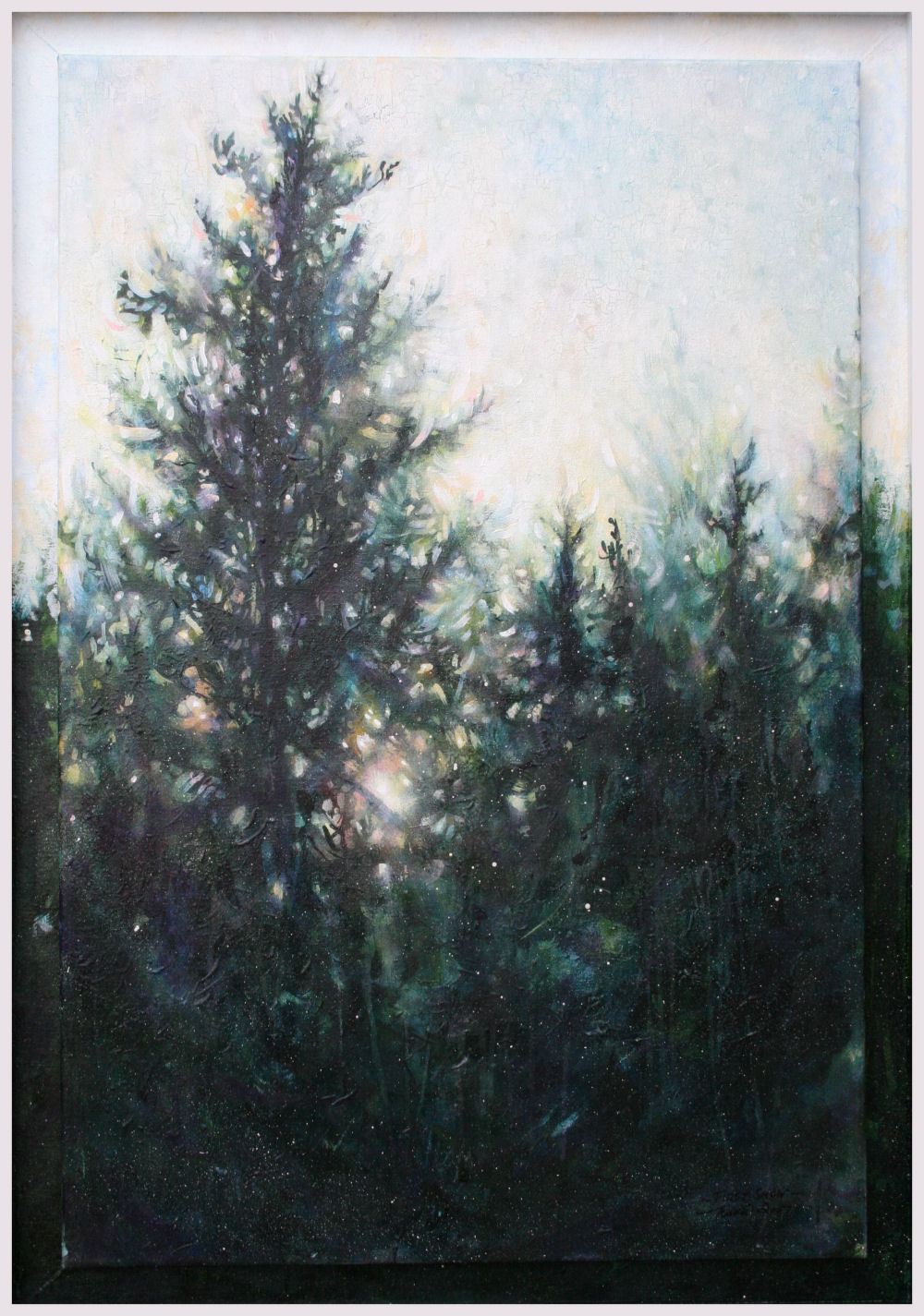
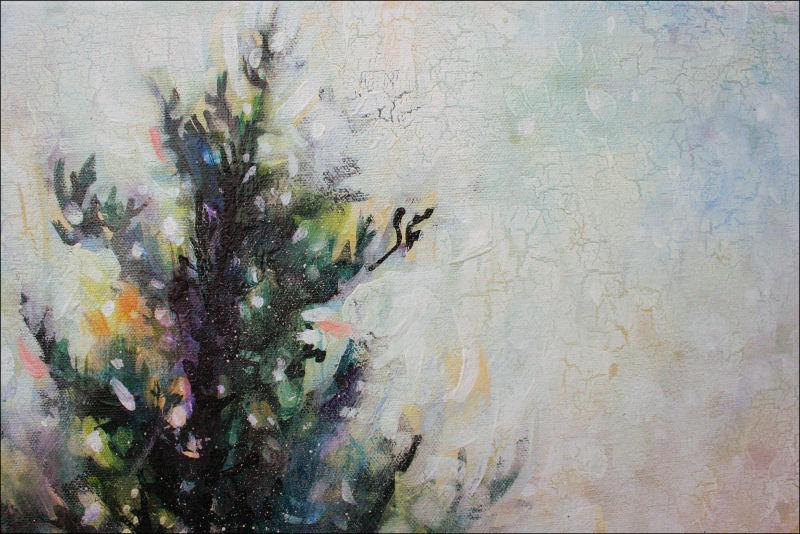
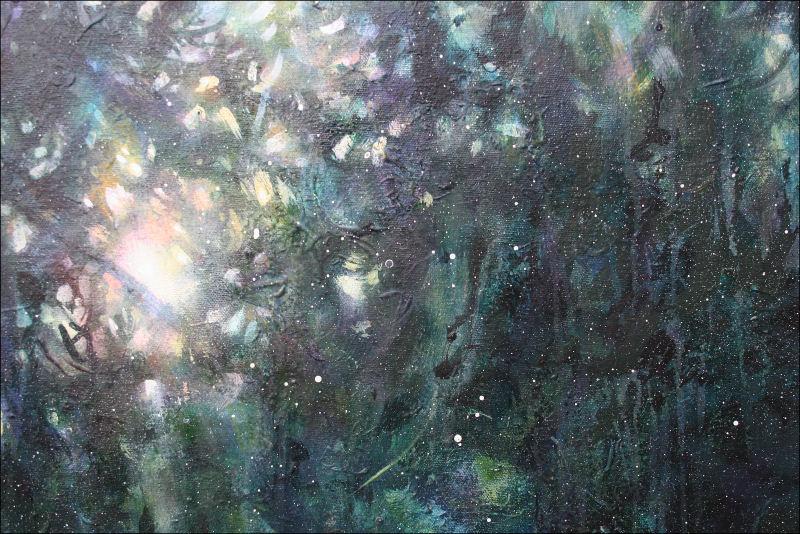
First Snow, 39H x 30W inches acrylics, crackle glaze on canvas and box-frame. Finishing: added some darker areas, dripped water down the top layer of glaze, and flicked some specks of white with a toothbrush. Sold, but can be replicated as a new, unique piece by special order in the same spirit as the original.
Detail images:
Gold In The Mountains 01
Sunday, November 4th, 2007
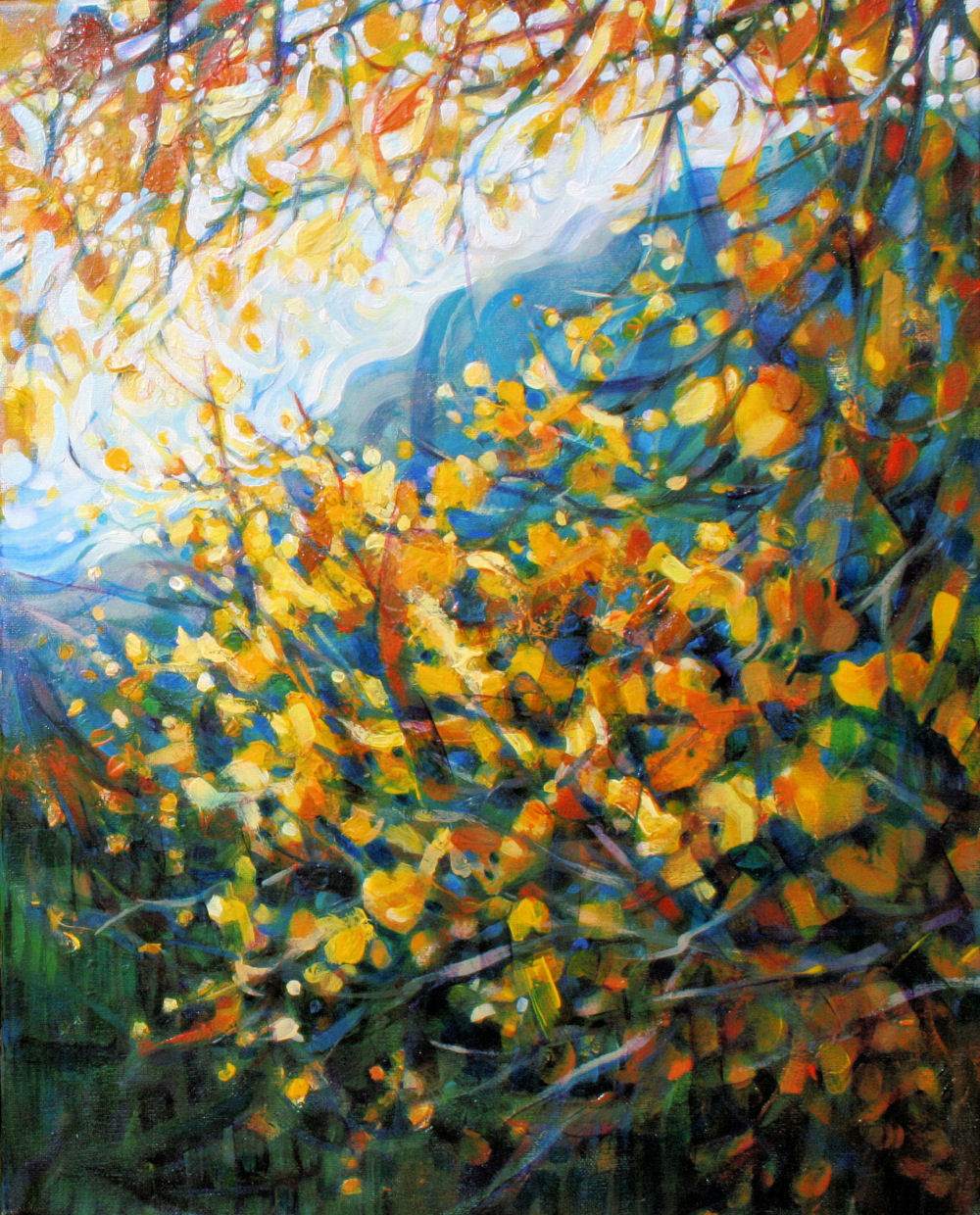
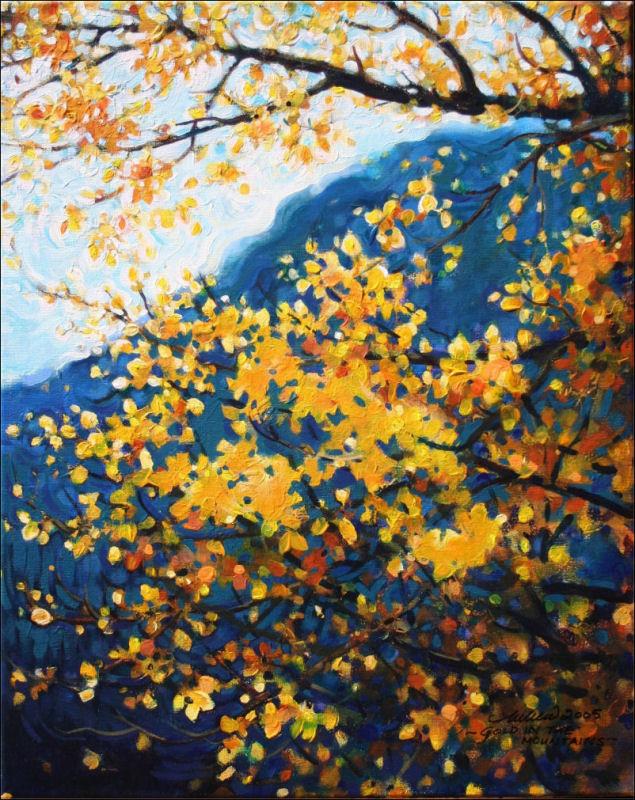
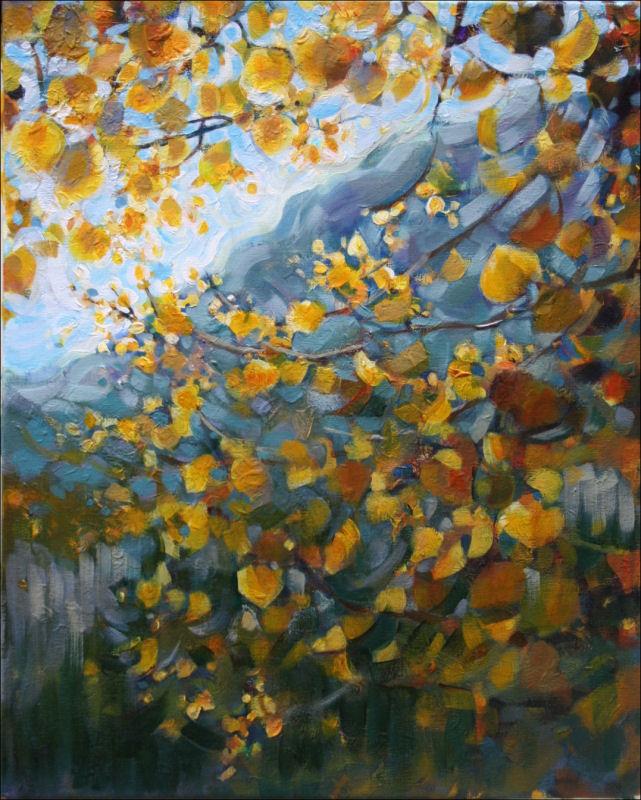
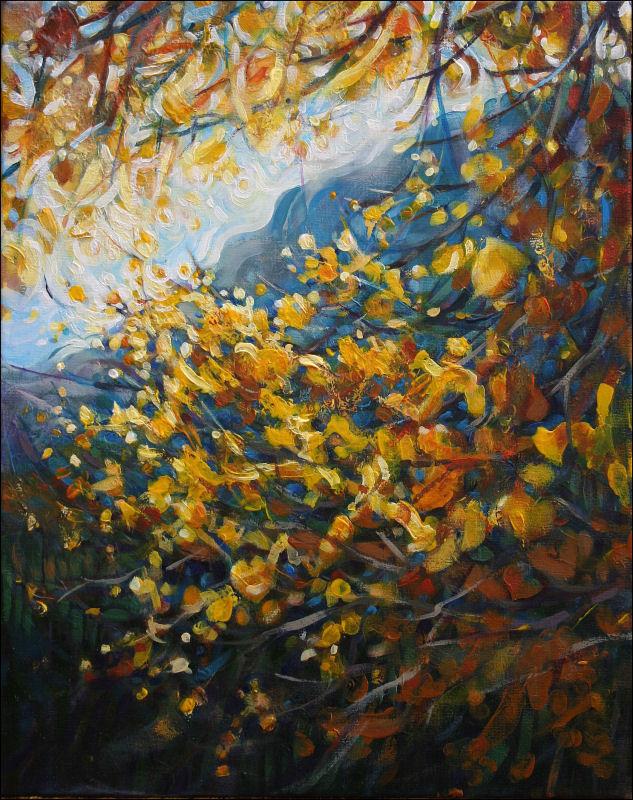
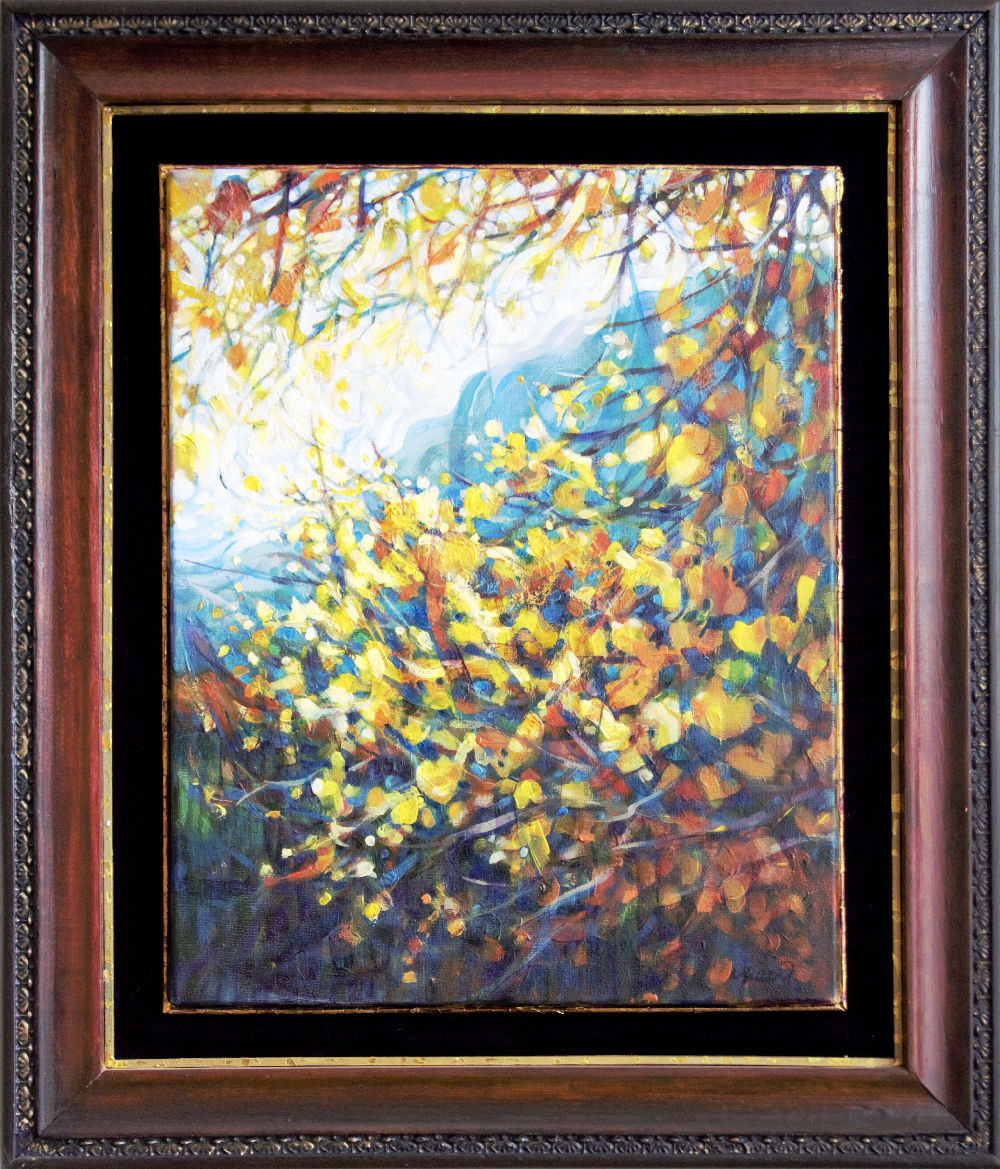
Gold In The Mountains 01, finished – 20H x 16W inches acrylics on canvas. Has 28H x 24W inches dark-stained antique frame with gold trim
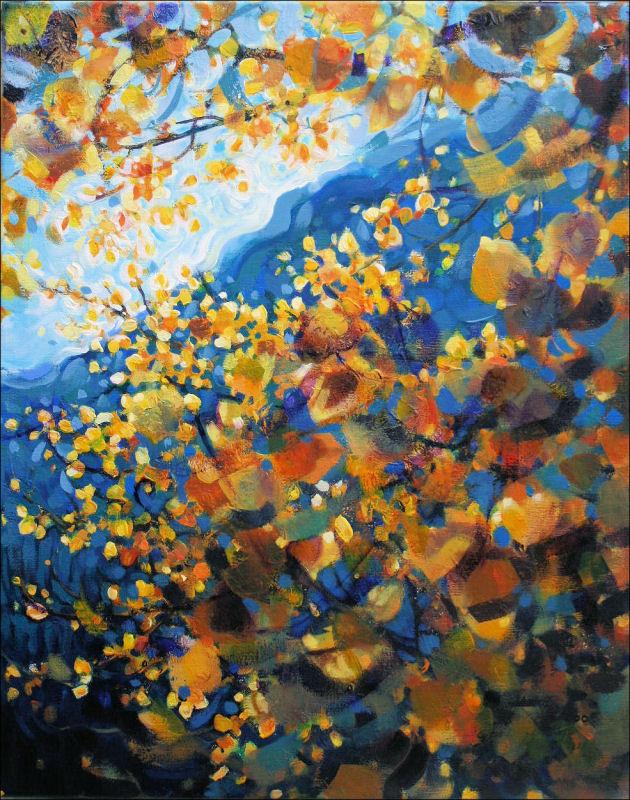
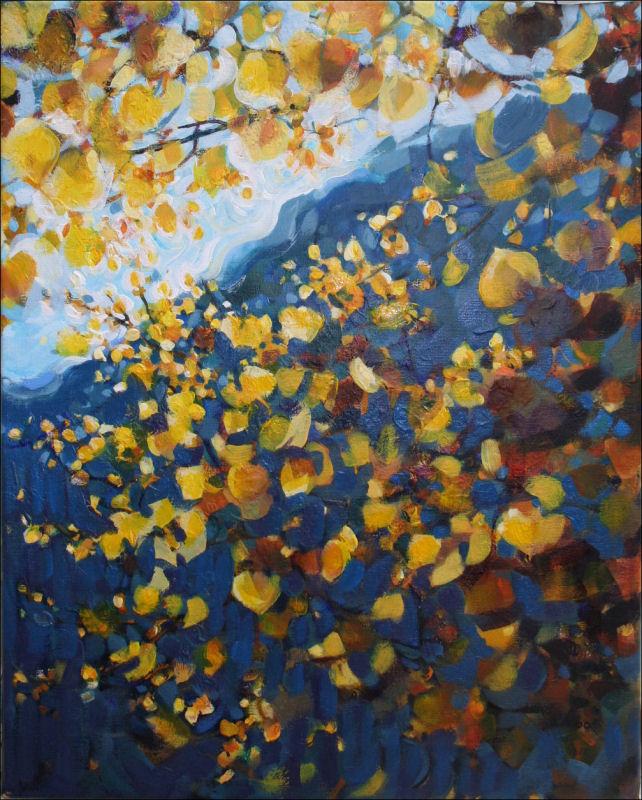
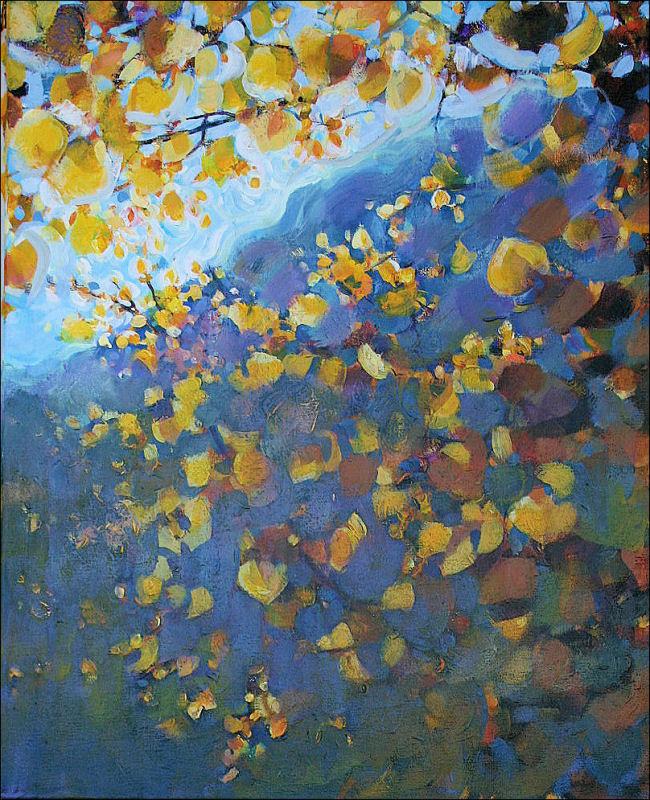
Started late in 2005, Gold In The Mountains 01 has evolved through many changes to achieve the finished painting above. The first thumbnail shows the painting at a stage where I thought it finished so entered it into Artjury.com’s 2006 Spring/Summer online exhibition. It was accepted, and at the time I liked the larger areas of flat orange-gold, but about six months later I thought the work needed more depth, and the dark branch across the upper portion stood out, so I began a long process of scrubbing off, building back up, scraping and layering paint, repainting, etc. The piece reached a few different stages where it could have been called finished, but I was not entirely pleased, so kept searching. Here are a few stages in the transformation of Gold In The Mountains 01:
 |
 |
 |
|||
 |
 |
 |
Polypore Fungi finished
Thursday, November 1st, 2007
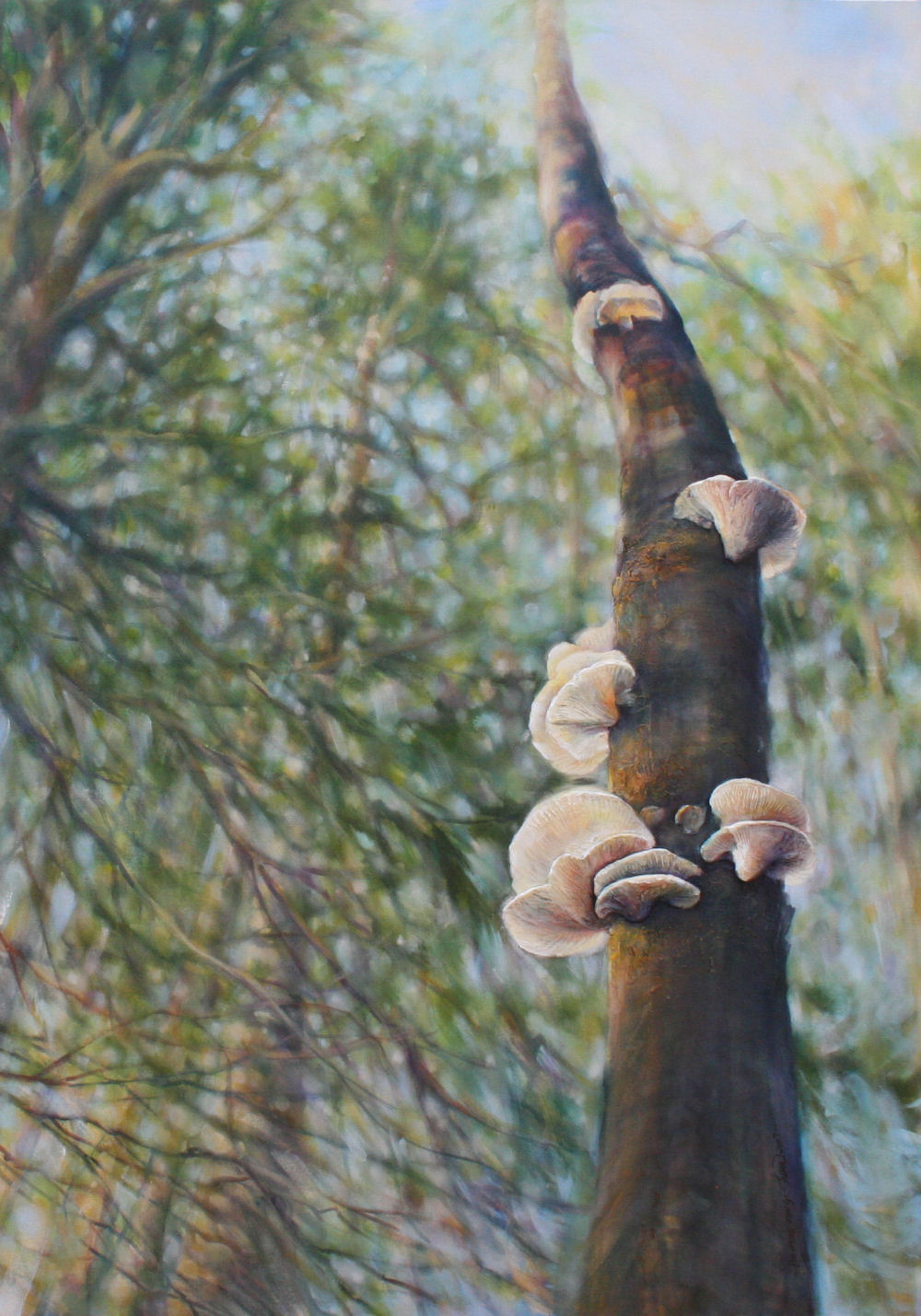
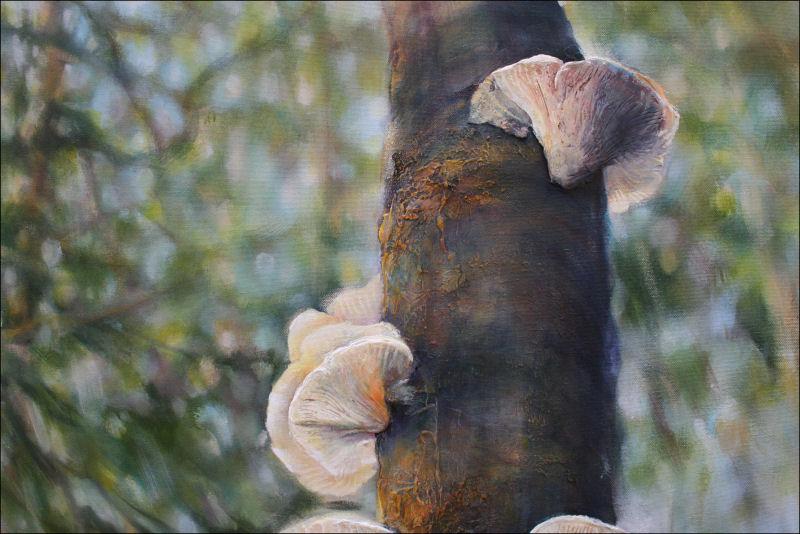
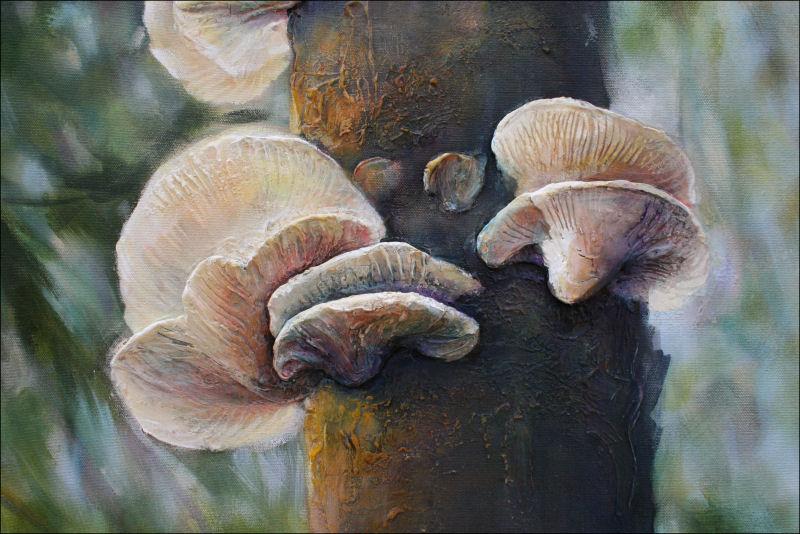
Polypore Fungi finished – 58H x 41W x 1.5D inches, acrylics, modeling paste, plaster on canvas, wrapped sides painted, narrow frame
One of the goals for this painting was to see if a composition could remain balanced with the main subject offset to the right. With Petra’s suggestion there is more contrast, also scrubbed some paint away for more background to show through.
Mushrooms, bacteria, molds, lichen and other non-flowering plants are lesser appreciated life forms that help maintain the healthy life cycles of forests by aiding the decay and conversion of plant and animal matter into nutrient-rich soil.