
Canada
« Previous Entries Next Entries »Bird’s Eye
Saturday, February 28th, 2009
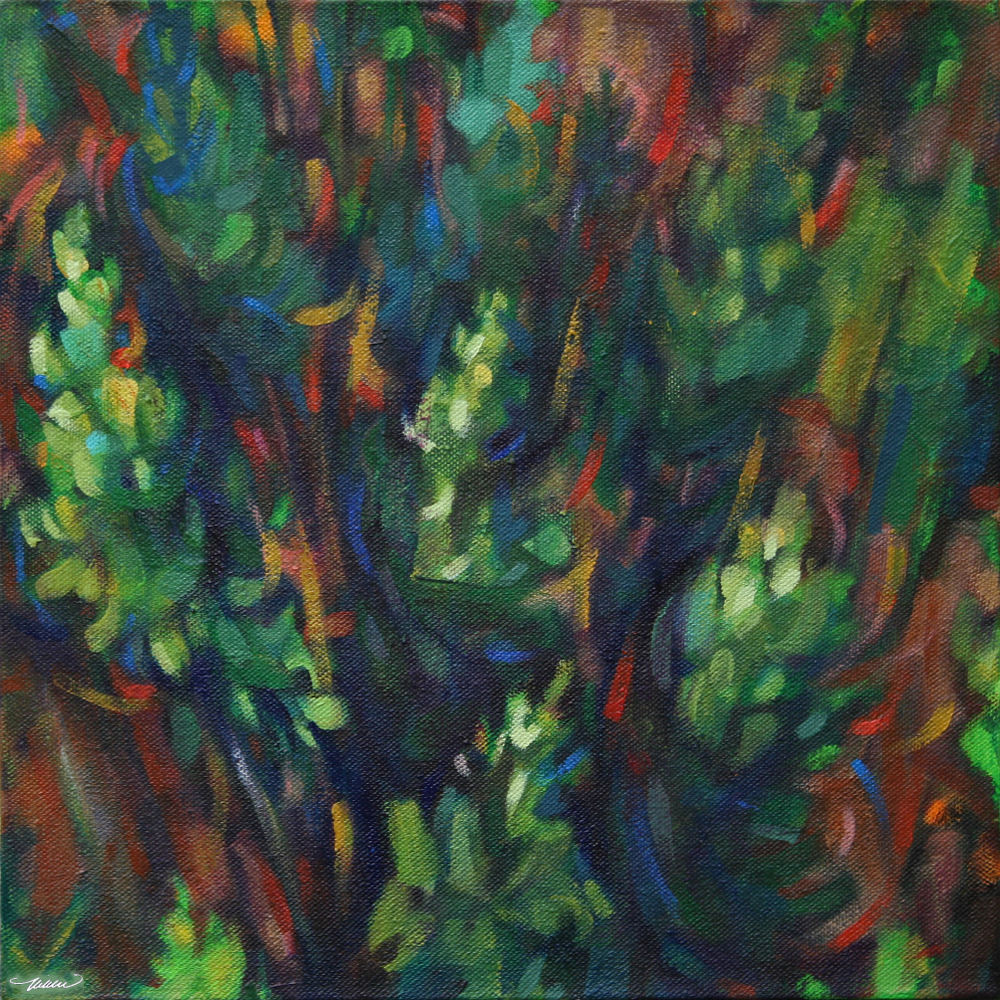
Bird’s Eye, Banff, Alberta, Canada, 11H x 11W x 3D inches acrylics on canvas, wrapped sides painted. Frame unnecessary. Hang on a wall or display on a flat surface. Signed on the side so as not to impose on the composition.
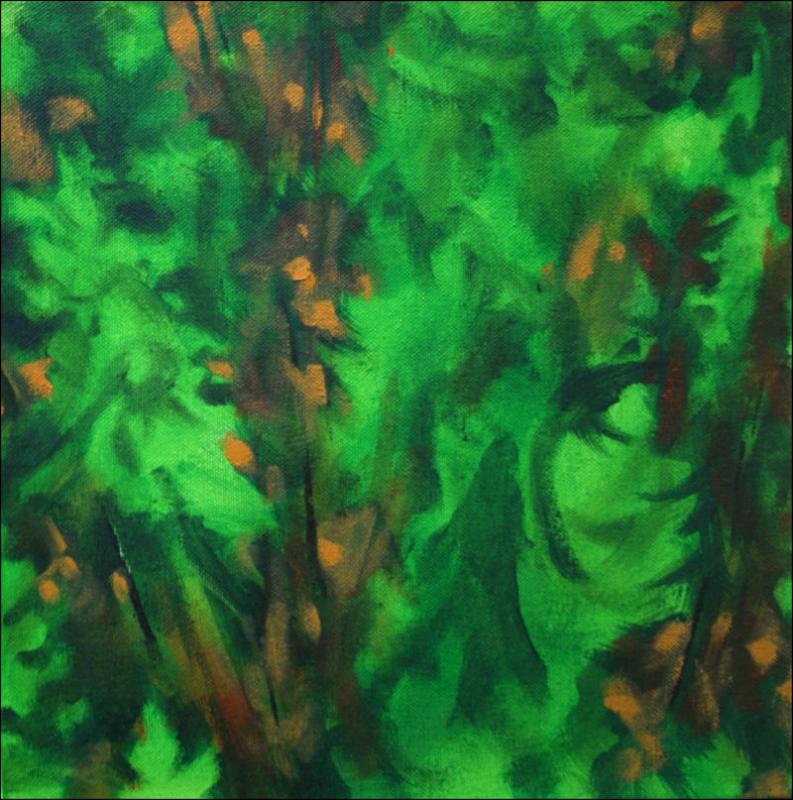
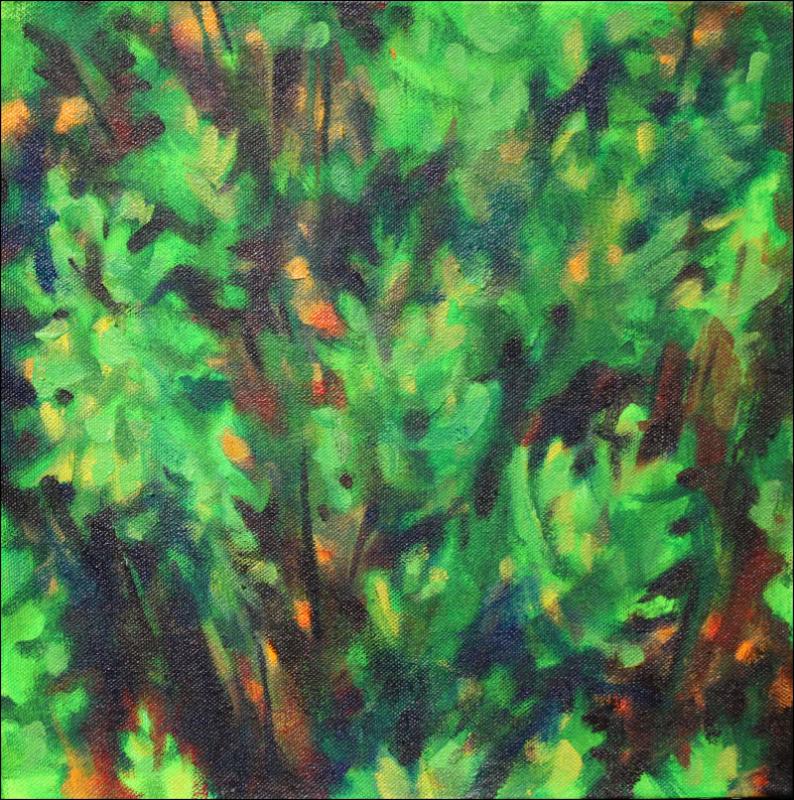
Progress thumbnail images below:
St. Catharine’s Sunset
Friday, February 27th, 2009
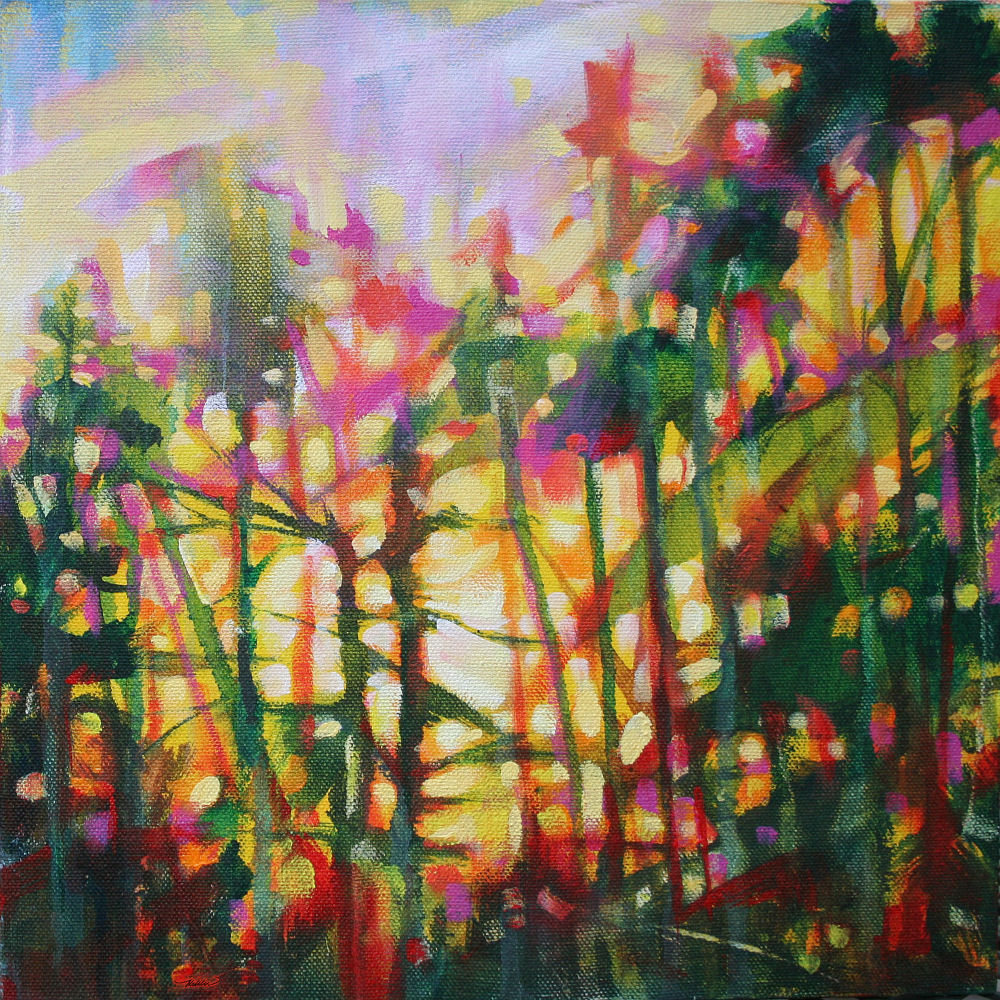
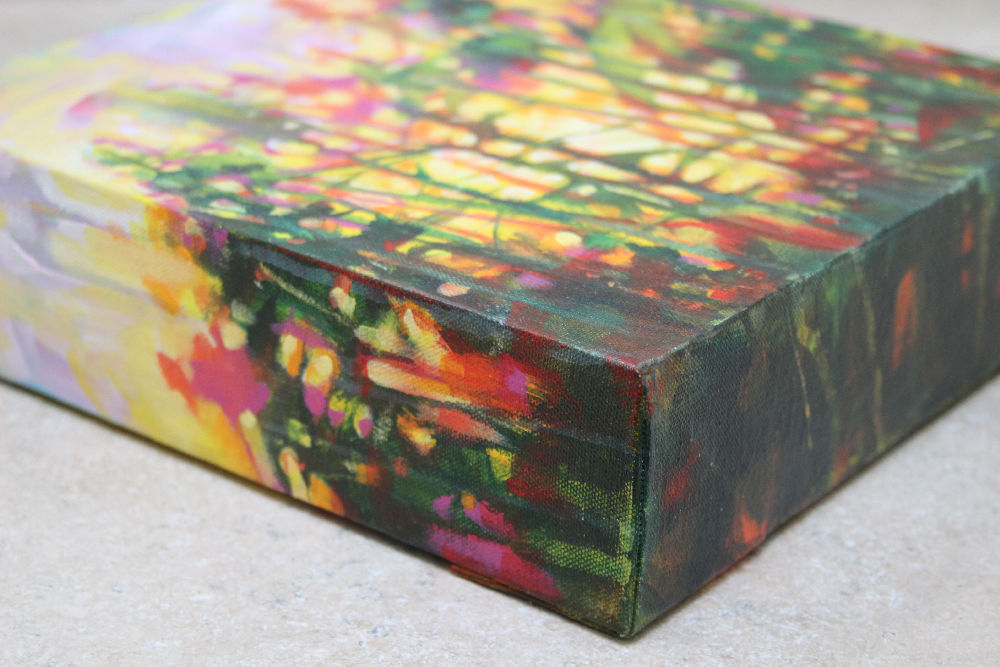
St. Catharine’s Sunset Ontario, Canada just north of Niagara Falls, 11H x 11W x 3D inches acrylics on canvas, wrapped sides painted. Frame unnecessary. Hang on a wall or display on a flat surface. Signed on the side so as not to impose on the composition.
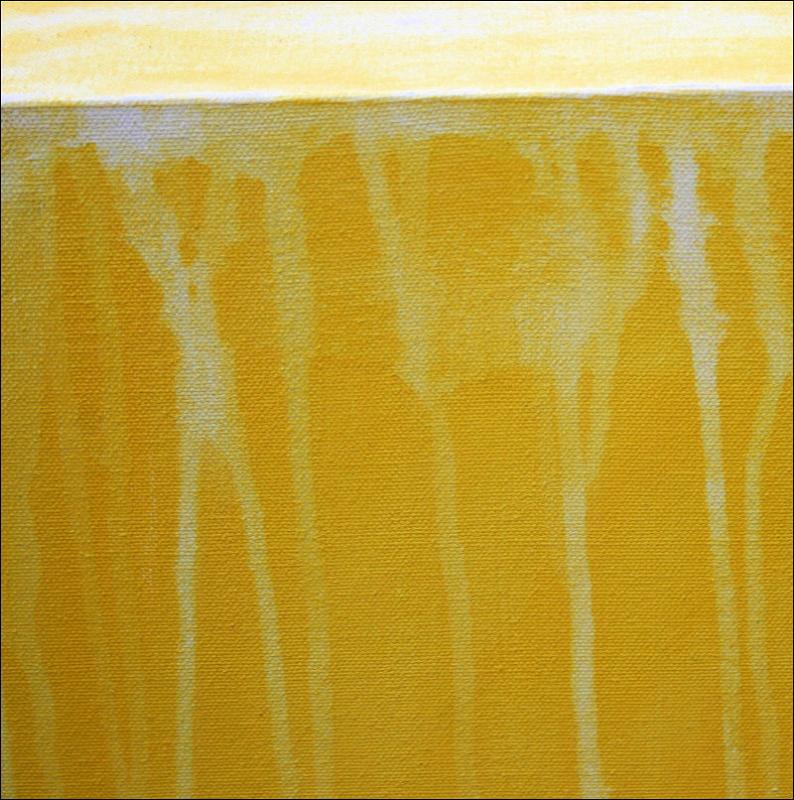
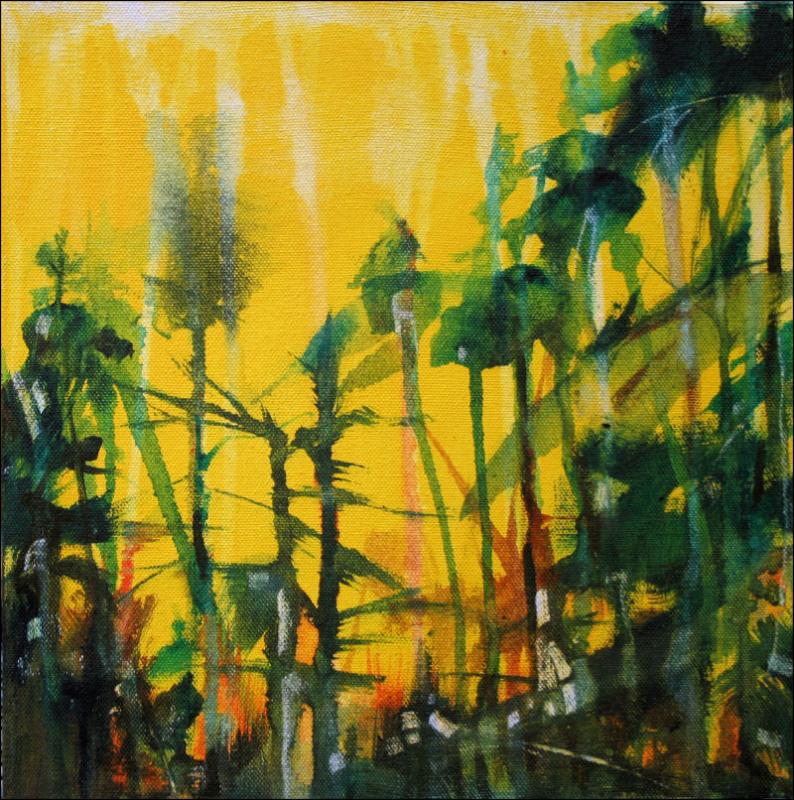
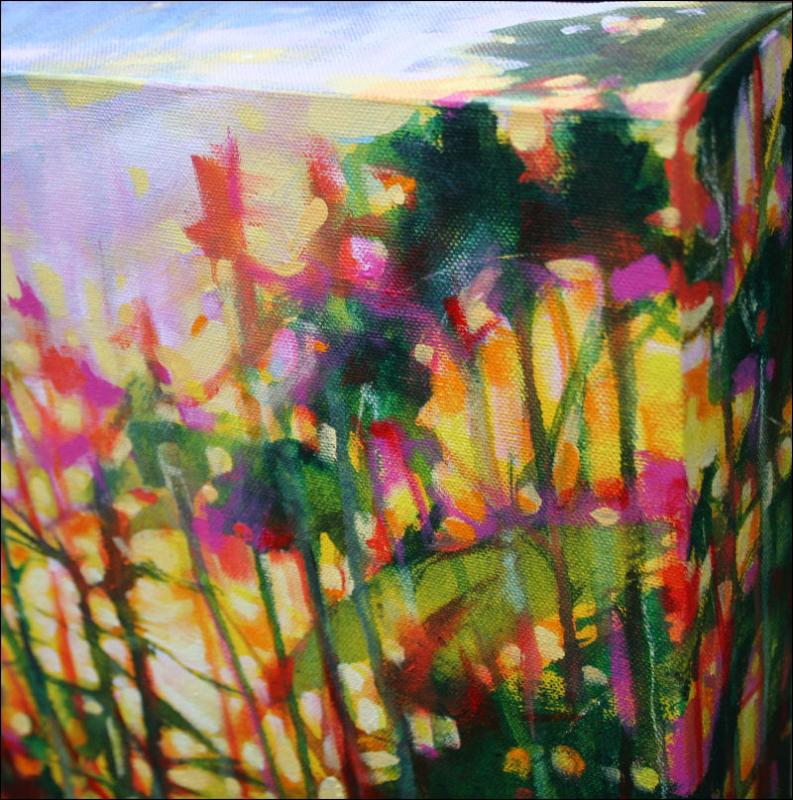
There is no one method for starting a painting. When faced with a blank white surface, sometimes our mind can go blank too. When that happens I use a base color that inspires energy. Here, water and paint were dripped down a wet surface of Hansa Yellow Deep. Painting intuitively with a wide raggedy old brush, the fraying bristles are used to advantage, and those marks direct how the painting proceeds.
This painting is dedicated to my Mom, born in St. Catherine’s, Ontario, Canada whose birthday was two days ago.
Jack Pine
Wednesday, February 25th, 2009
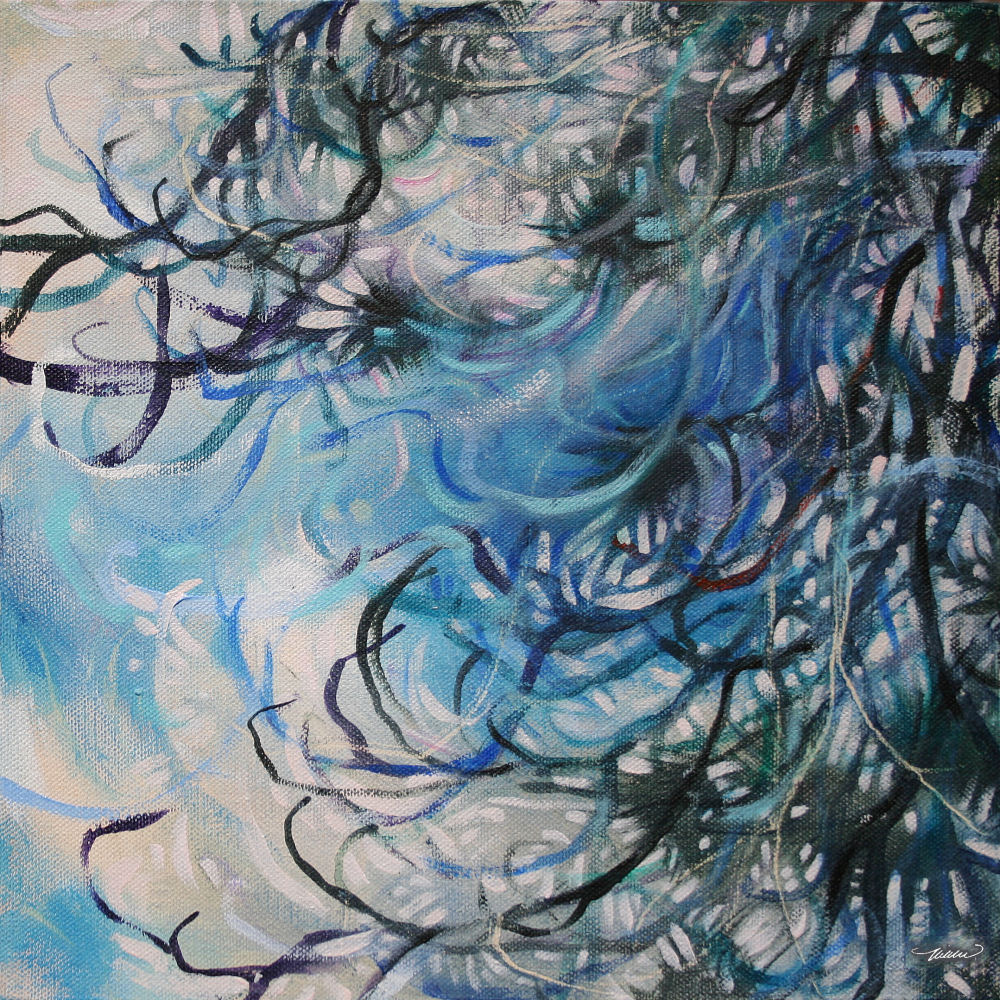
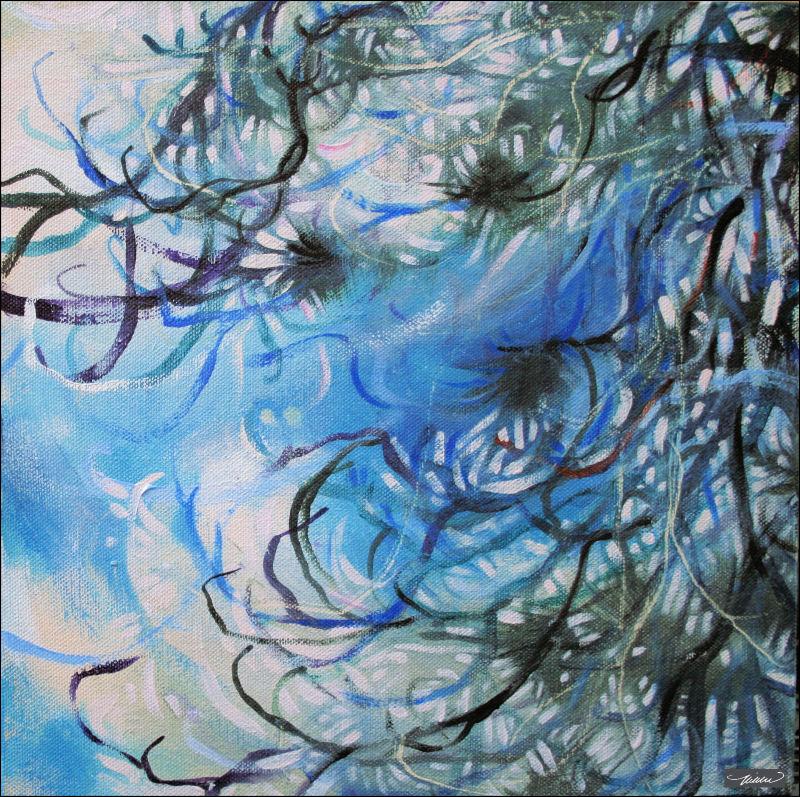
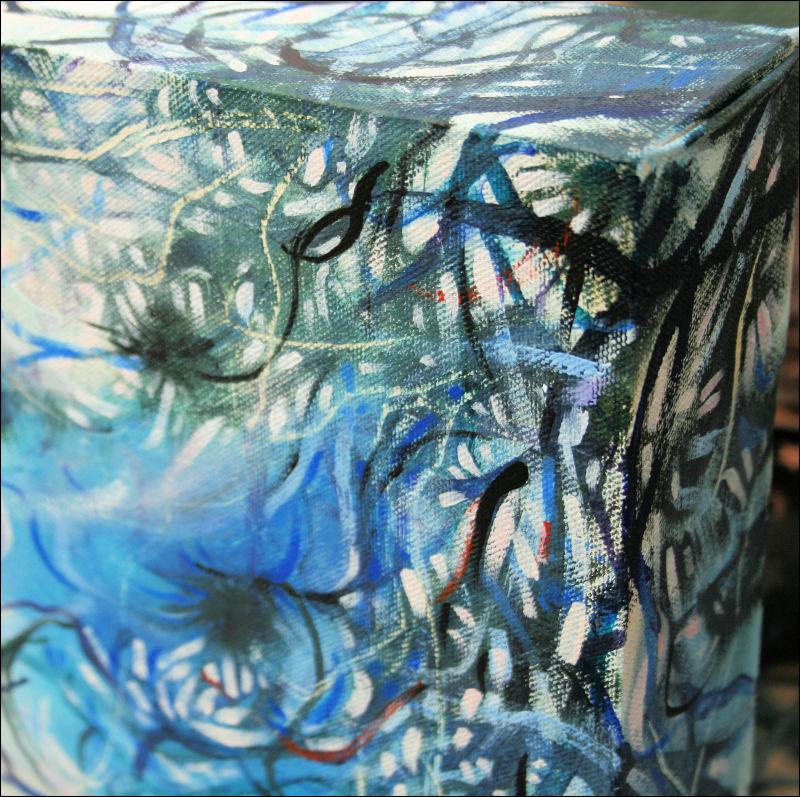
Jack Pine, 11H x 11W x 3D inches acrylics on canvas and detail of right side; wrapped sides painted. Signature is on the side, so one is superimposed here on the front. Hang on a wall or display on a flat surface.
Dancing With Trees 03
Thursday, February 19th, 2009
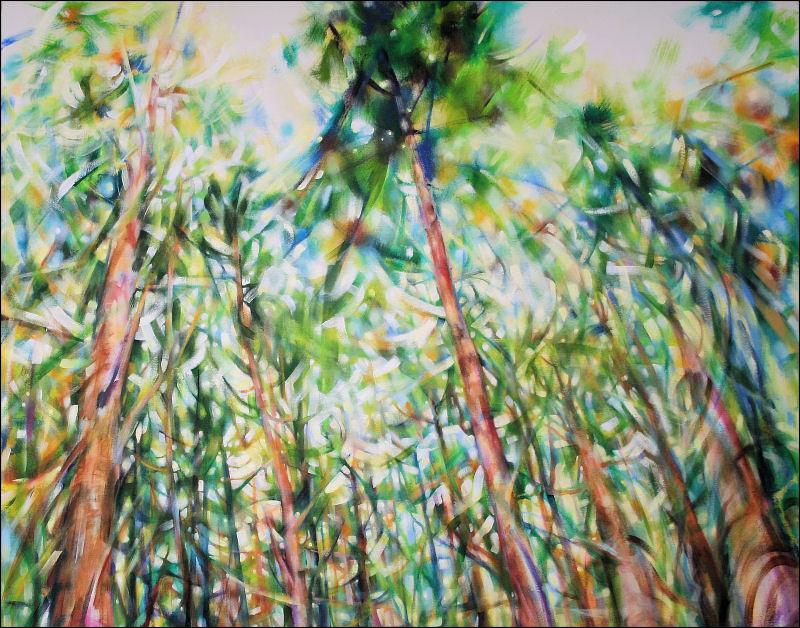
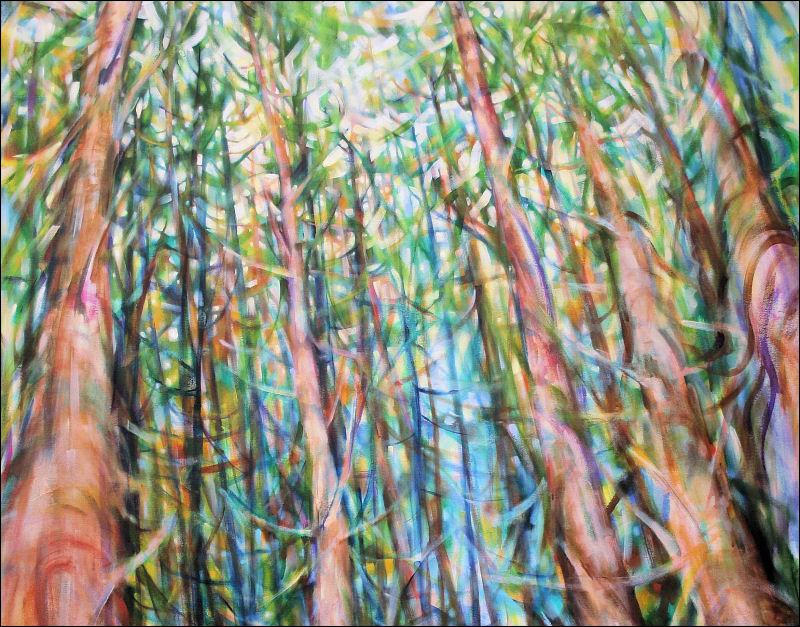
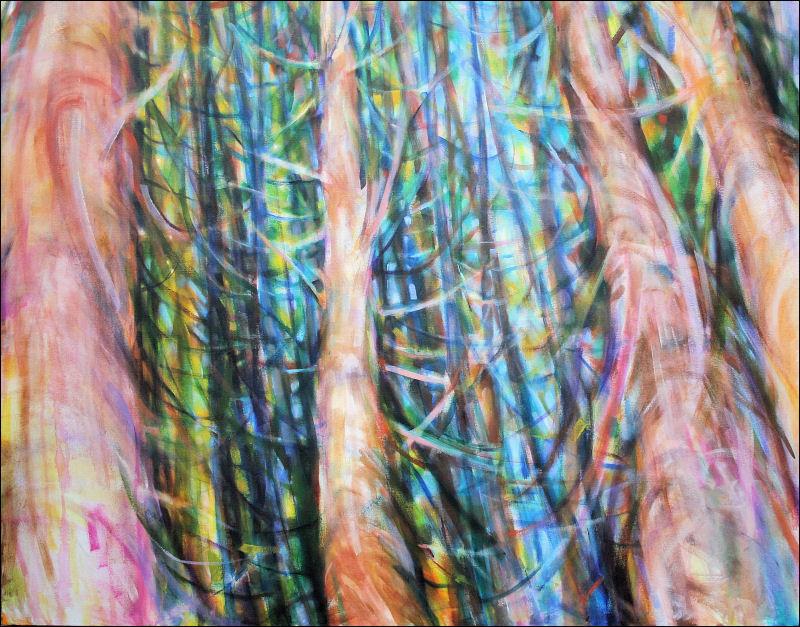
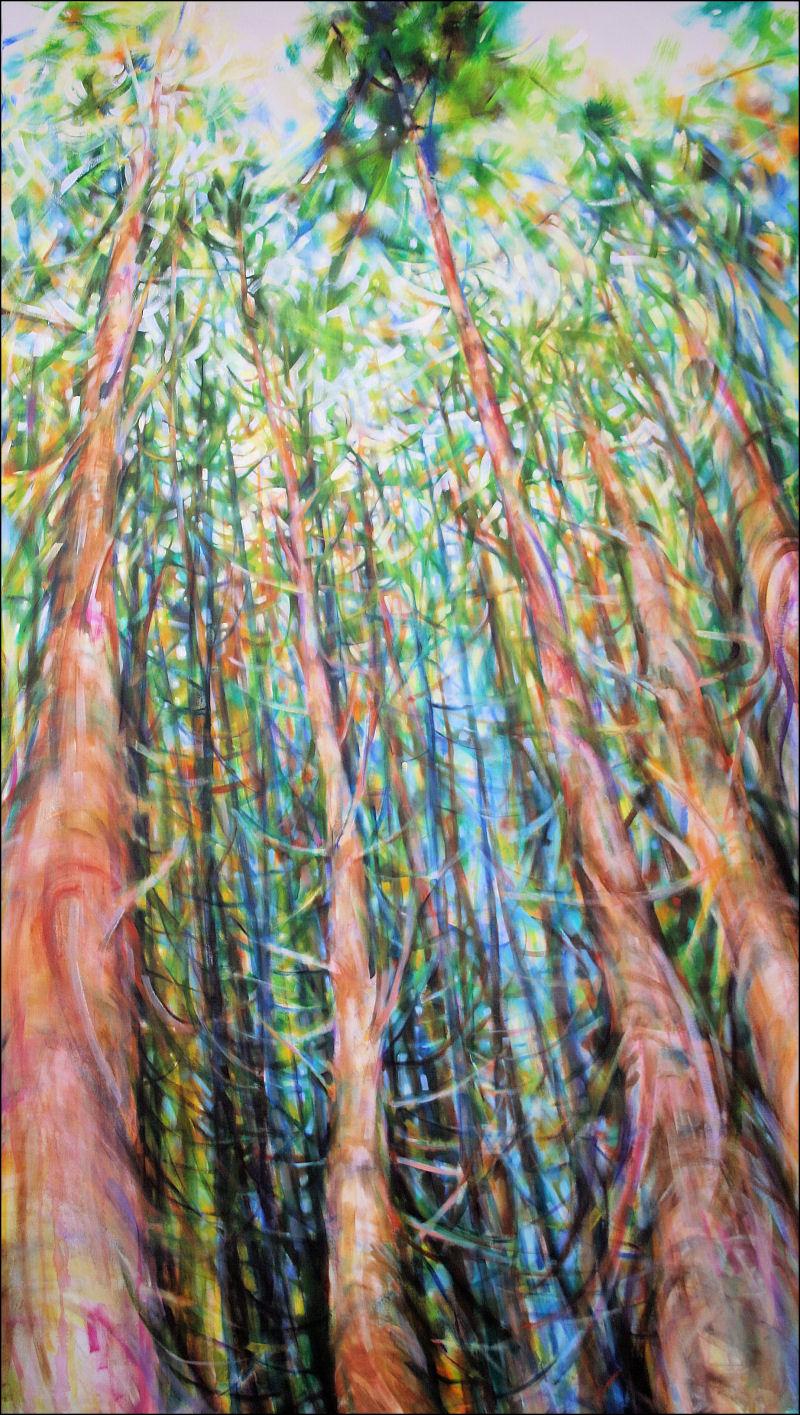
Dancing With Trees 03, 85H x 45W x 3D inches acrylics on canvas, wrapped sides painted, trim frame. Signature piece for the Dancing With Trees exhibition, formerly entitled ‘The Majesty of Trees’. There is no black in this painting; the darkest areas are dioxazine purple. Aside from a couple of areas that are still questionable this painting is now finished. Specifically: I’m not sure about adding shadows and contrast on the bark of the main trees because it may take away from the cheerful expression of colors.
Progress in previous posts: January 19th and 30th
The name of the exhibition changed to ‘Dancing With Trees’ to avoid plagiarizing the title of a book, ‘The Majesty of Trees’.
End of Tulip Season
Wednesday, February 18th, 2009
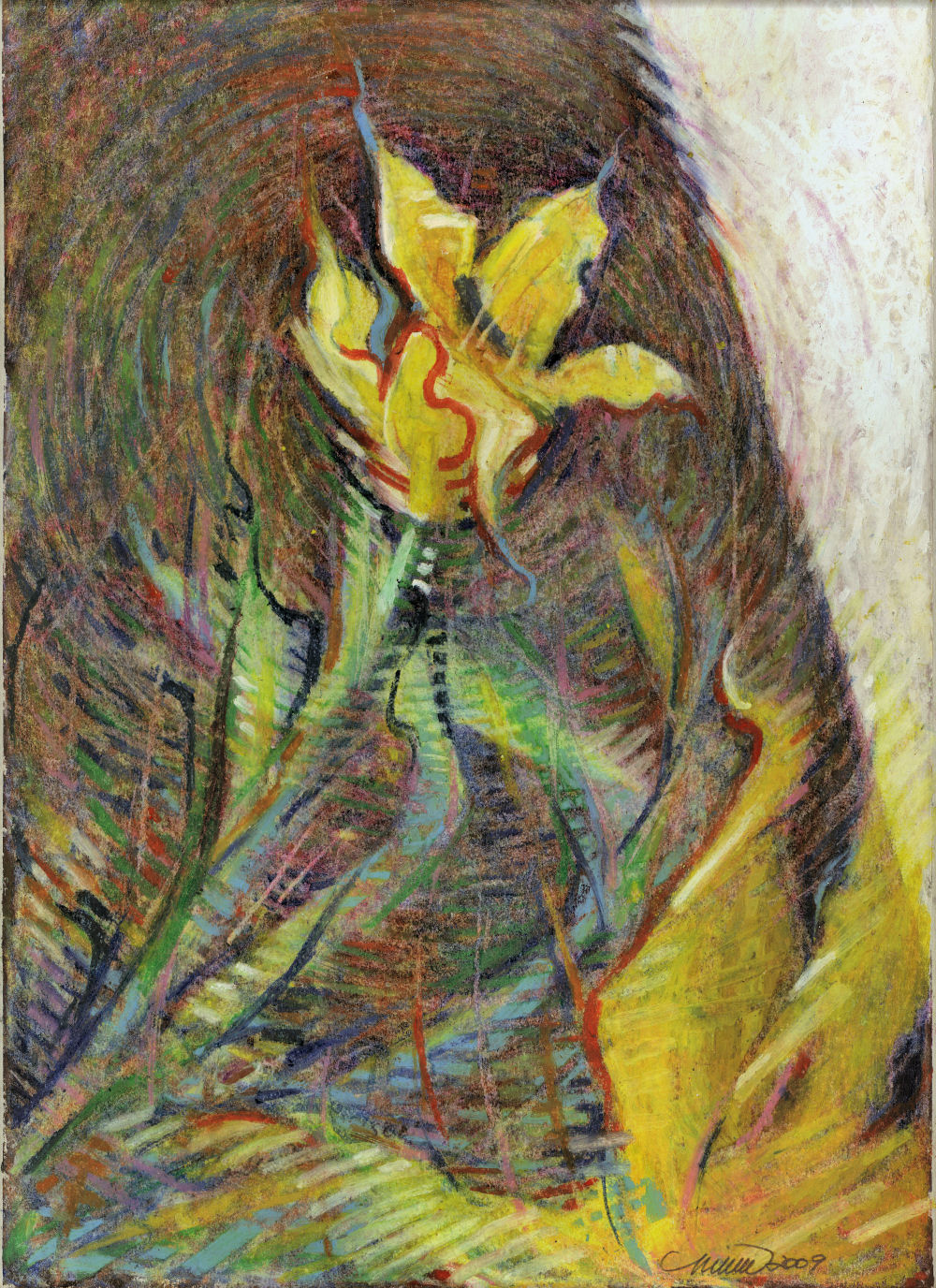
Finished today: added some life to End of Tulip Season, 14H x 11W oil pastels on paper.
Images of progress
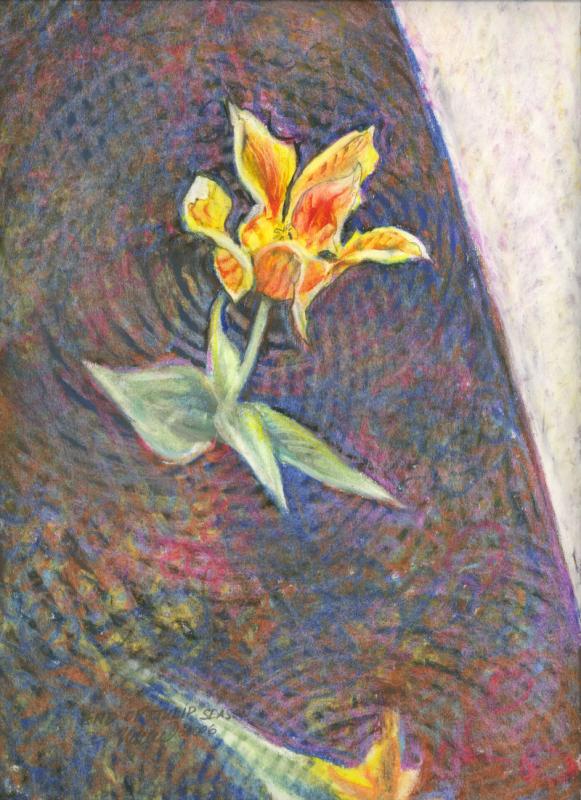
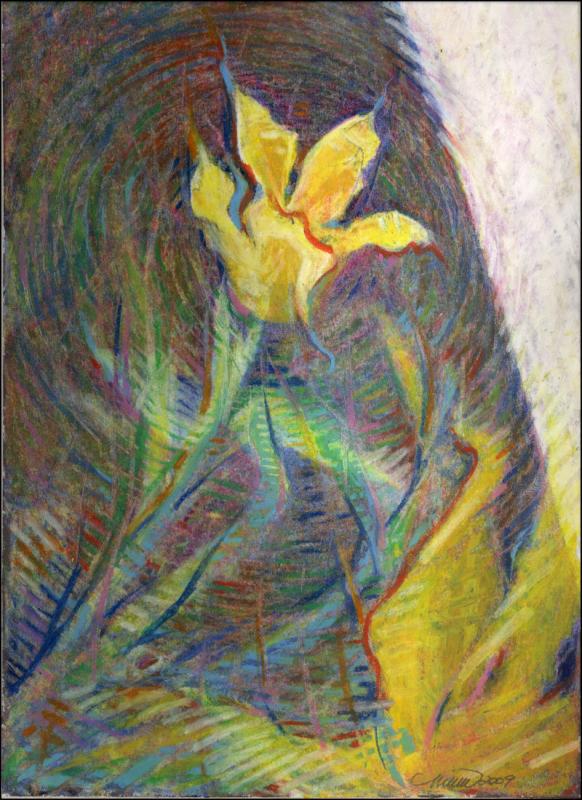
Except for the fact that paper has a limit to how much it can be reworked before it starts stretching, I could keep revising these drawings in the Paper Places series continually! Some of them are finished in a day, and truly finished. Some drawings seem OK when they are finished, but have areas that are not quite there yet, so they are left for a month or a year or two then taken out and reworked. It’s great exercise playing with color and composition. Some are taken too far, but with regard to learning, effort is never wasted. Change characterizes this series too; change of place, change of time, change of styles, changing what’s already been changed.
Method reflected by purpose
Friday, January 30th, 2009
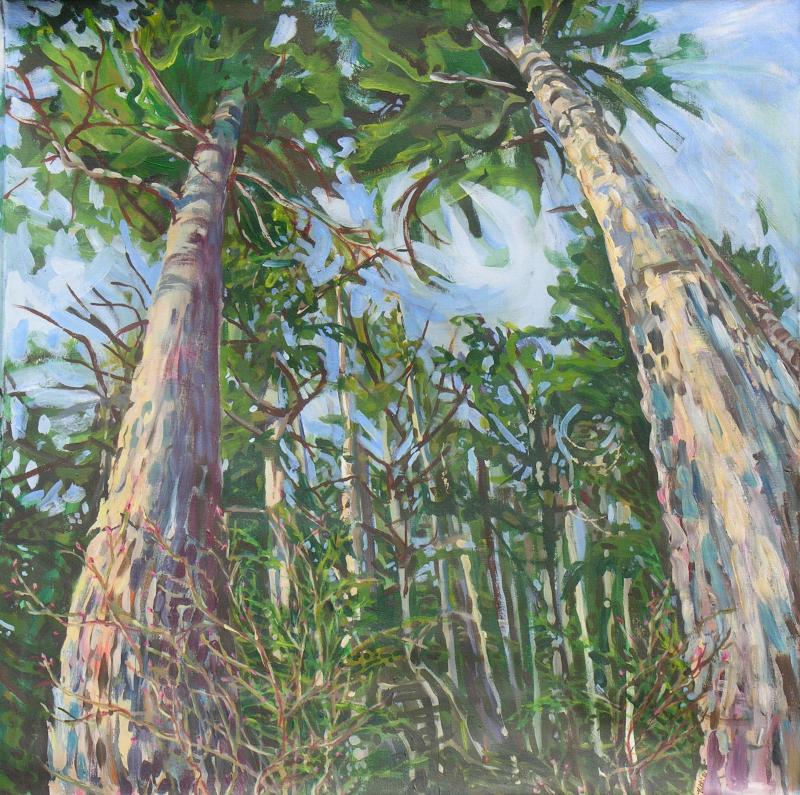 Left: Hemlocks, Queen Charlotte Island, 1980 – 48 x 48 x 2 inches
 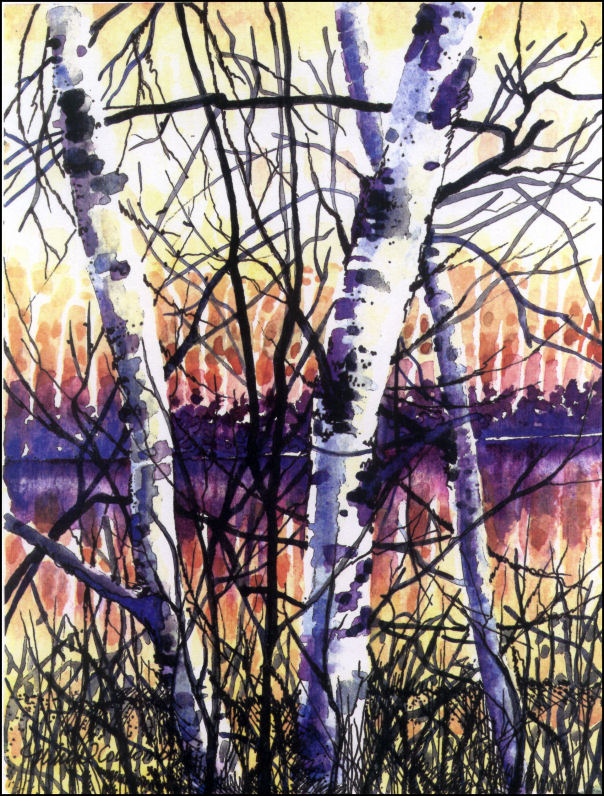 acrylics on canvas, painted plein air. Right: Birch, 1993 – 6 x 4 watercolors. I have been trying to return to the same carefree approach I painted with during the earlier years. While some of my first paintings were a little on the sloppy side, the look and feeling of life in the work comes through the first reactive sloppy-looking brushstrokes. Too much refining tones down that energy. It has taken about six years to rid myself of a lot of habits that developed by painting murals, like tidying up too much and mixing colors on the palette as opposed to just throwing the color onto the canvas. Not that mural painting is valued as less than canvas paintings, but they require entirely different methods, and because their intended purpose is slightly different, so is the approach to painting them. Switching back to canvas now, even if the surface is large it’s taken six years to re-adapt to the process of painting on canvas. All that I think I know can get in the way sometimes. In Dancing With Trees 03 I’m rediscovering some of the joy that pushed everything forward in the first place. Virginia, you say that this sings and dances…well, that’s exactly how I feel while painting this one.
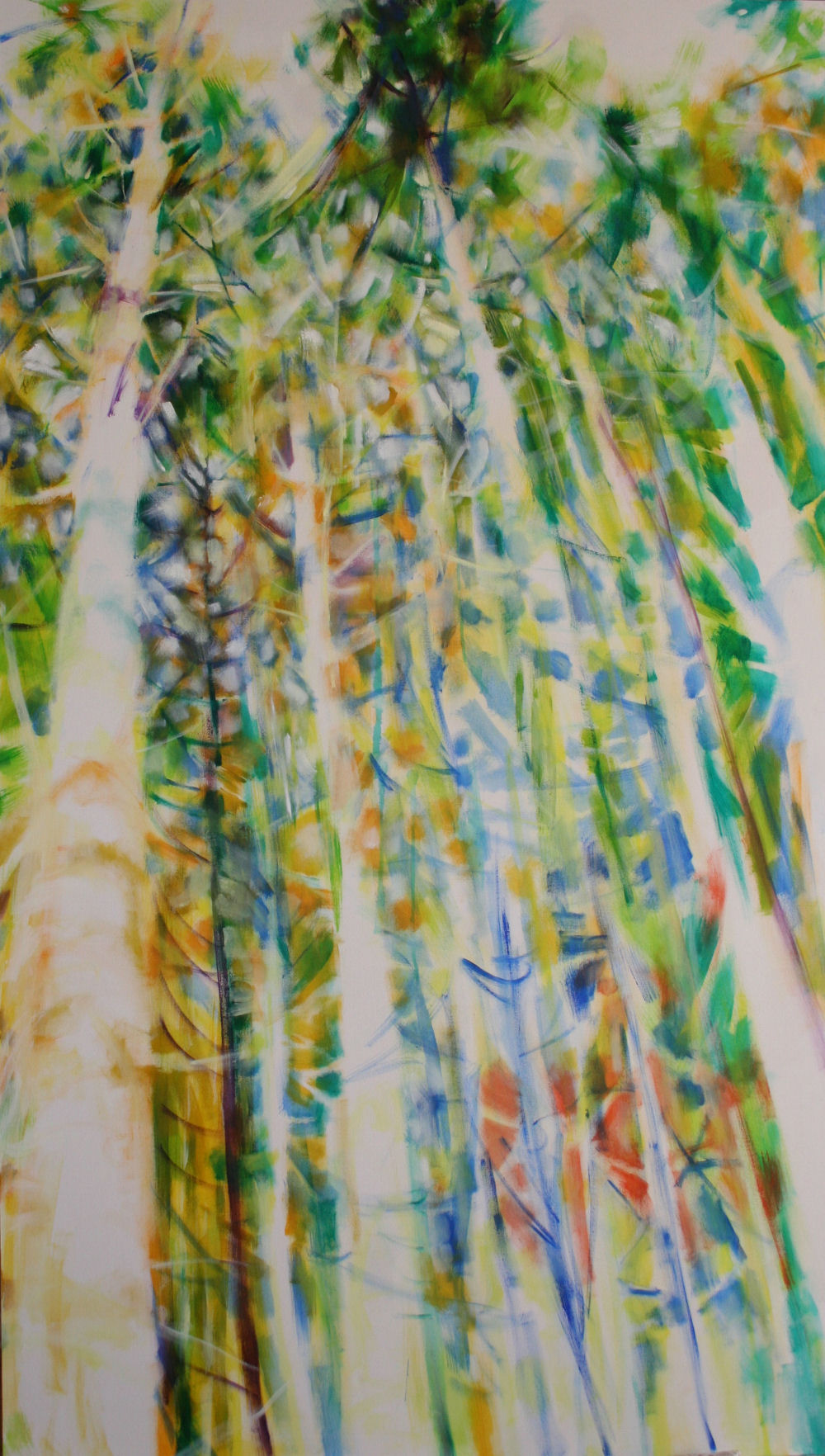
Dancing With Trees 03 work in progress, 85H x 45W x 3D inches acrylics on canvas, sides painted
Salish Spindle Whorl Chair finished
Saturday, December 20th, 2008
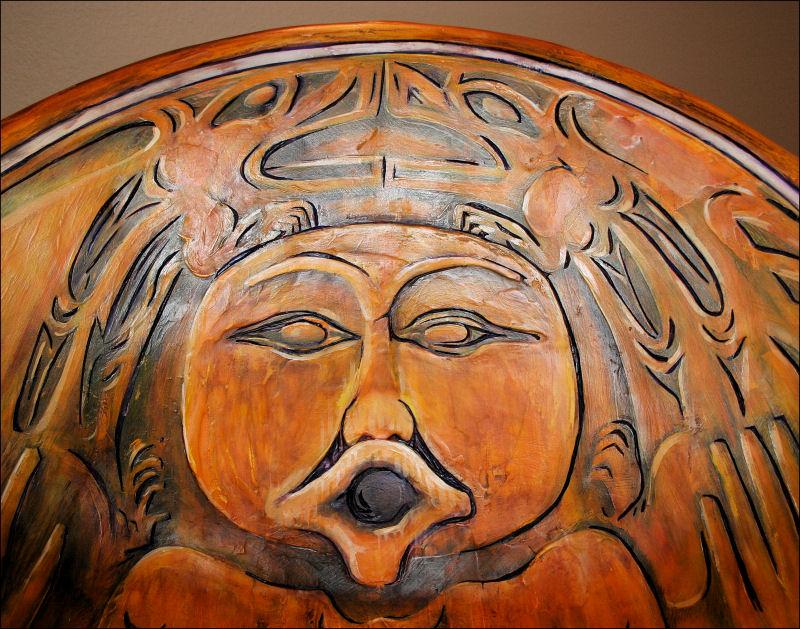
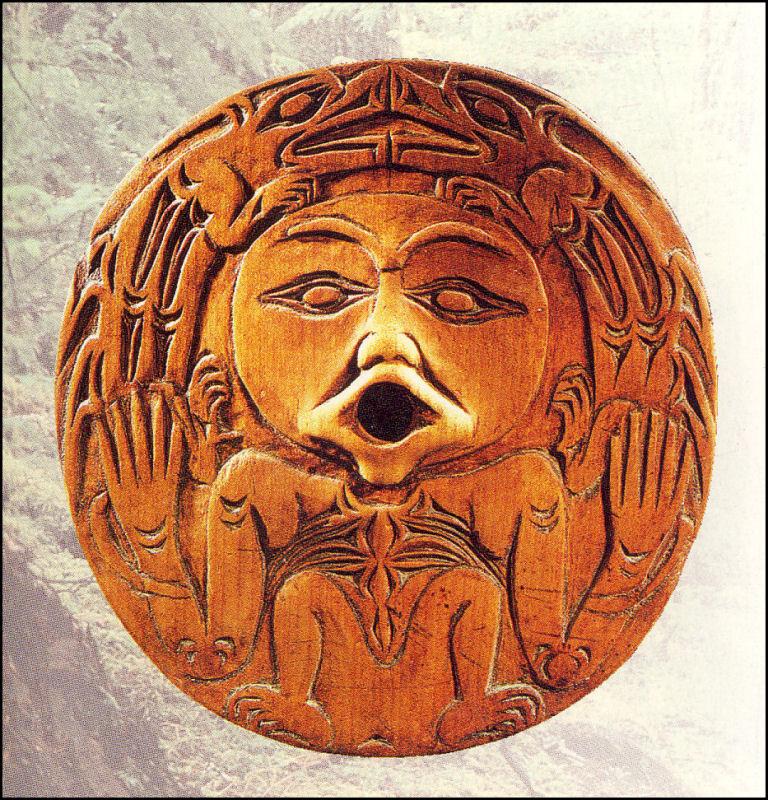 About the chairs: Art on Art on Art – A Tribute to Creativity
Each functional, comfortable 29 x 29 x 29 inch replica of ancient Art or artifact re-utilizes vintage plastic lawn chairs that were considered Art during the 1960’s. The original structures, damaged or unusable were refurbished by a process of weaving canvas strips along with white glue paper-mache style over the entire plastic top and bottom, and multiple layers of drywall compound sanded in between coats. Designs are drawn with graphite, painted with acrylics and a few coats of varnish for durability, then waxed to finish and enrich the colors. Two more Solaire chairs and other styles of chairs are in various stages of completion yet to be embellished with historic Art themes from other cultures. Other styles of chairs are also in progress.
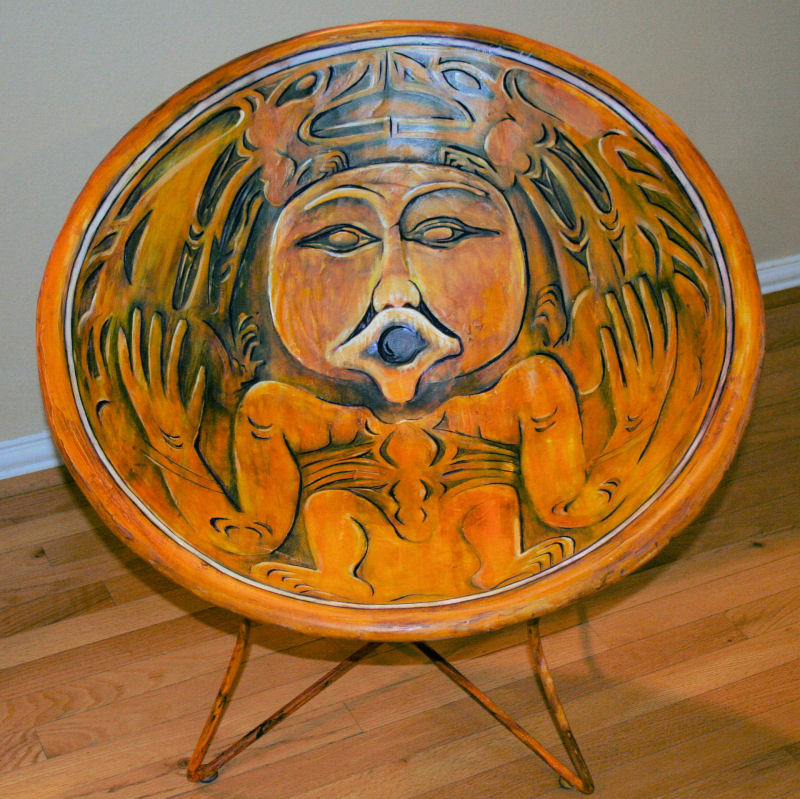 The skeletal structure of these chairs, called Solaire chairs, were manufactured during the 1960s and 1980s. Art in their own day, these particular ones were unusable; in poor condition they were bound for the landfill sight. Originals designed by Fabiano and Panzini, a French Canadian team, the Solaire chairs are now collectors items, some selling for $500.
The first chair to be up-cycled was a large replica of a Mayan bowl. The Mayan culture (Mexico, Guatemala, Belize and parts of Honduras, 900 B.C. – 900 A.D. Common Era) developed a very complex written language using pictographs. Many of these were facial expressions and hand gestures. The bowl displays the birth of the Maize God, and along the top edge the name of the bowl’s owner is written, as well as possibly what it was used for.
Salish Carved Wood Whorl
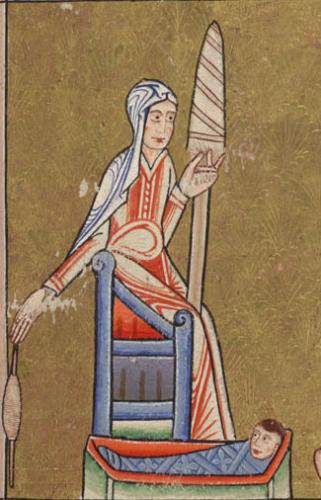 Whorls are weights that stabilize used for spinning yarn. The yarn in this case would have been wound just above the whorl. Spinning yarn and weaving fabric are some of humankind’s oldest technology. Left: example of a spindle with whorl, Eve Spinning Illuminated Manuscript c. 1170 A.D.
Historically everywhere wood has been used for tools, utensils and everyday items, they were often carved. The original spindle whorl that was the inspiration for this chair was used by a Salish Northwest Pacific coast community living south and east of Vancouver Island. Here a central human figure holds two otters. A Kwakiutl (also living in Vancouver Island territory) prayer to a Cedar tree prayer was very much a part of the inspiration for this chair. It reads: “Look at me friend! I come to ask you for your dress, since there is nothing you cannot be used for. I come to beg you for this, Long-life maker”.
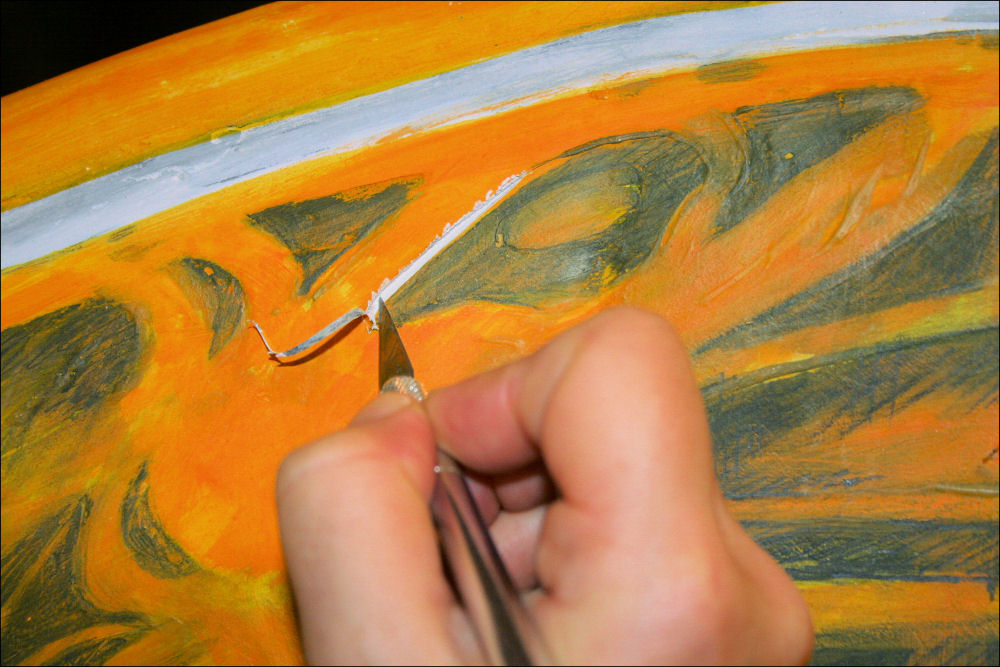
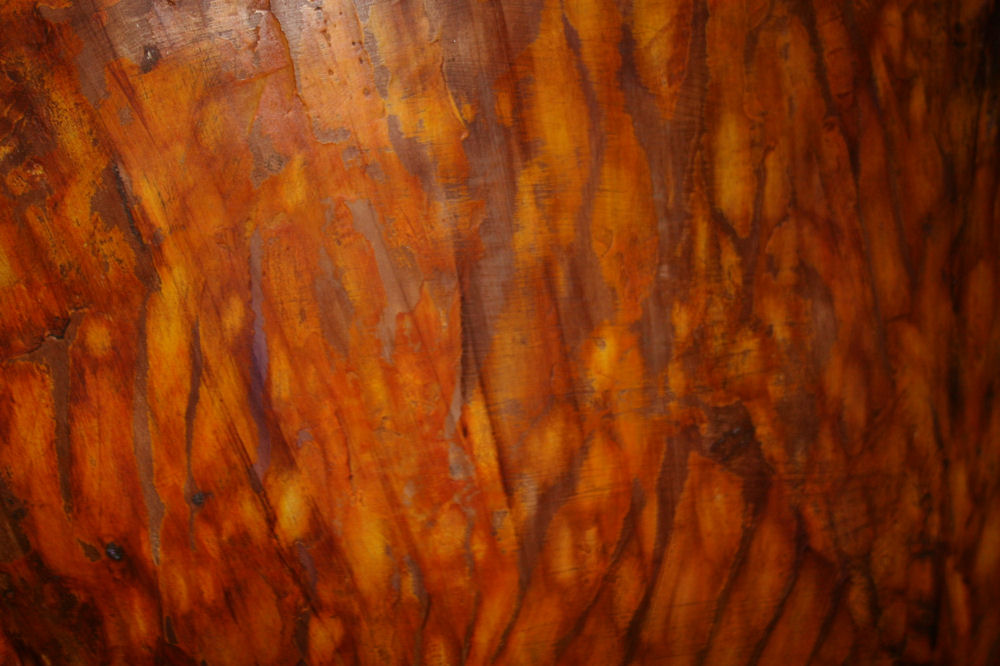
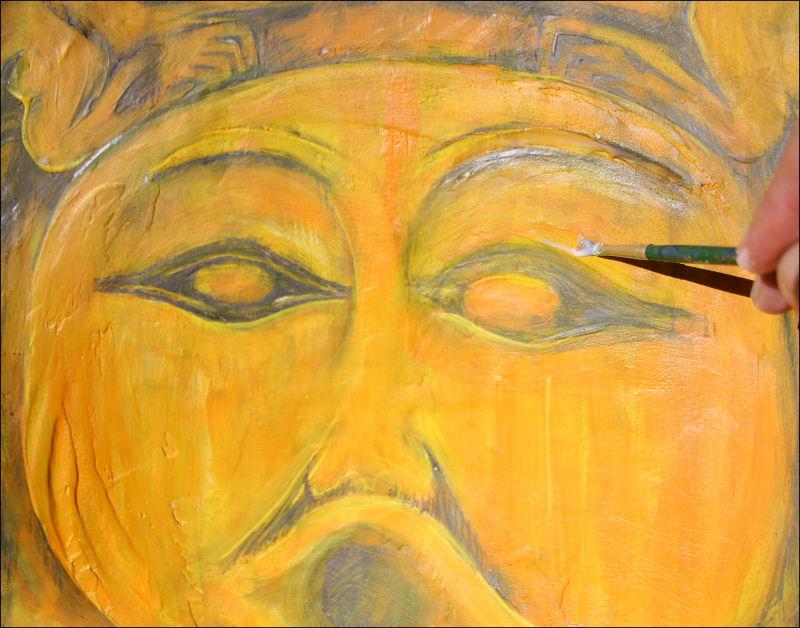
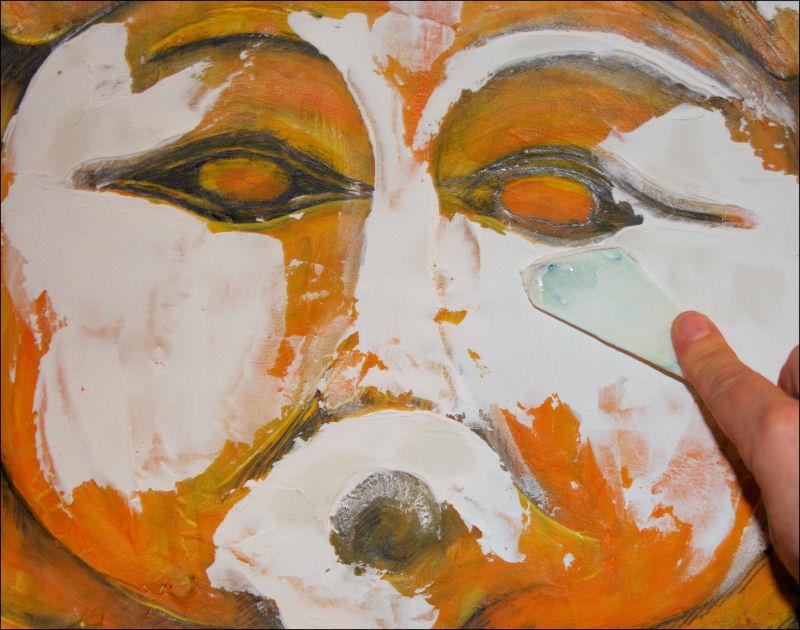
December 18th: Finishing details, further definition with acrylics and two coats of varnish, waxed. Decided against the decoupage of the Kwakiutl prayer to a Cedar tree because it does not look as good as hoped. December 16th: Carved the plaster in areas then inlaying purple for contrast rather than black. Purple glazes also make yellows much richer.
The back and under-side of the chair is painted to look carved. The undercoat of yellows shines through succeeding layers, and carved wood textures are created with varnish leaving raised brushstrokes, and am trying whatever else I can think of to make it look like wood! More modeling with plaster and light sanding, then redrawing with graphite, and the design is continually adjusted.
New chair started: Salish Wooden Whorl
Sunday, December 14th, 2008
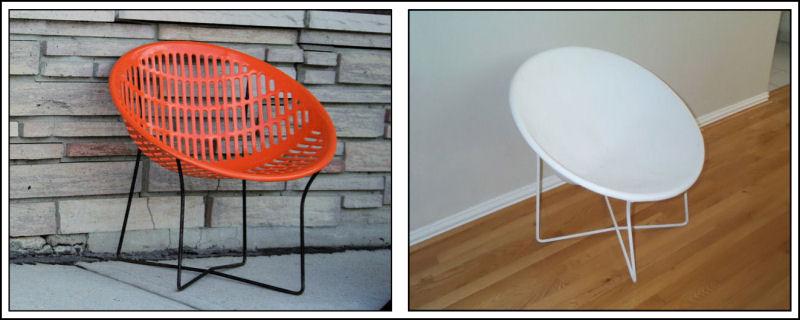
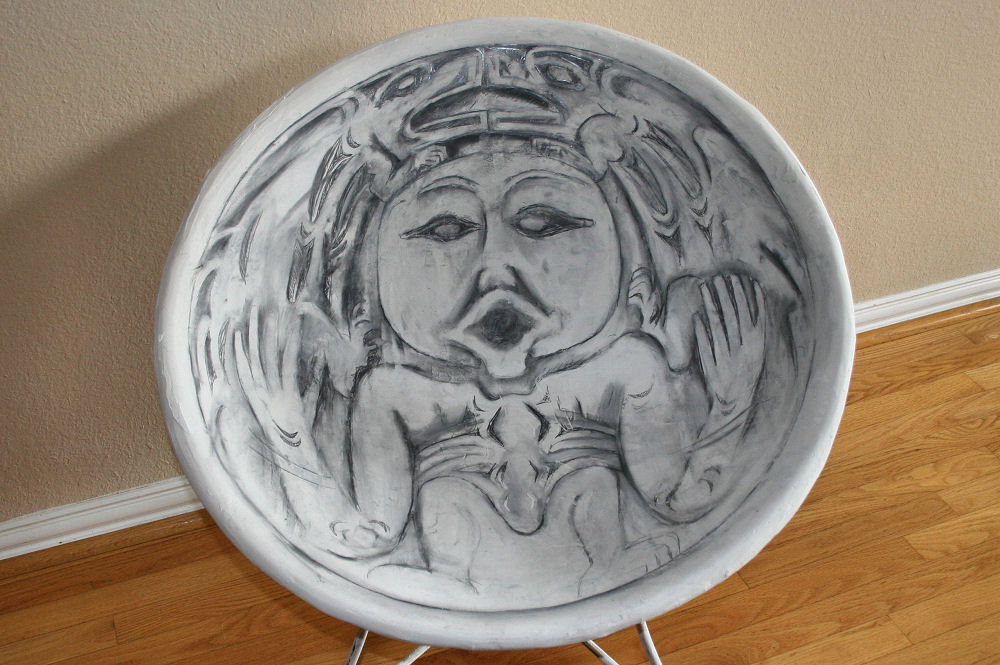
This functional replica of a Salish Carved Wood Whorl re-utilizes a 1960’s plastic lawn chair, 29H x 29W x 29D inches that was considered Art in its own day. The refurbished chair has woven canvas strips and white glue applied paper-mache style over the entire plastic top and bottom. Multiple layers of wall plaster are sanded in between coats. The design is sketched with graphite then painted with acrylics, and drawing is continually adjusted as layering of materials continues.This is the second chair of four in the historic Art-themed series. The other two chairs are in the earlier stages of progress.
Approaching Winter
Sunday, December 7th, 2008
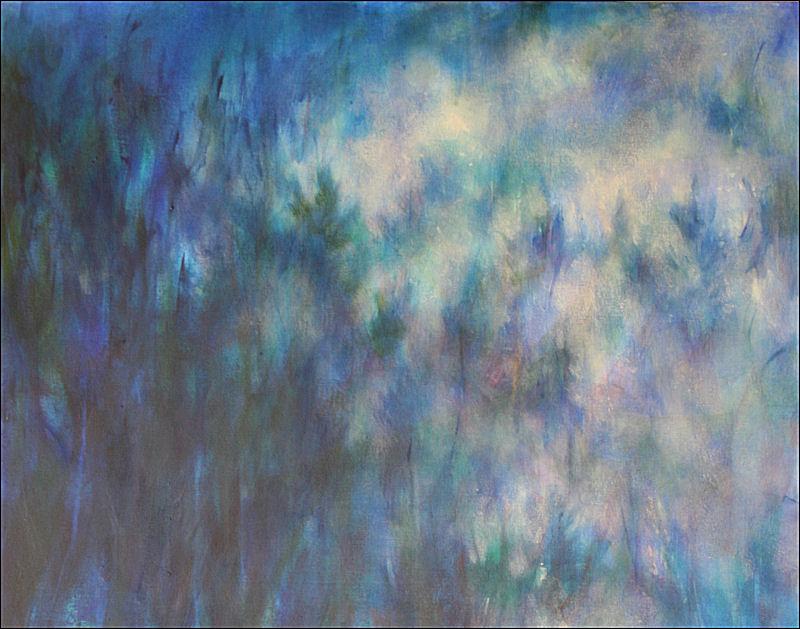
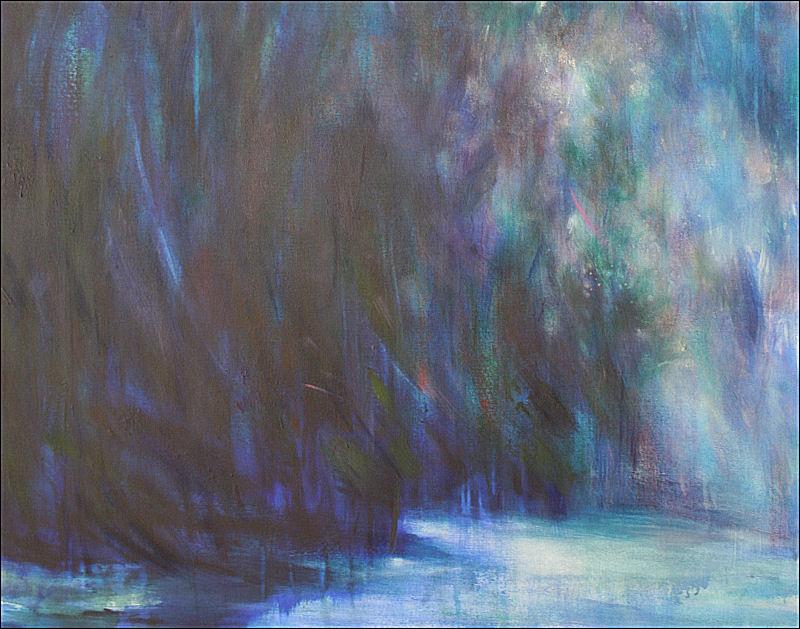
Approaching Winter finished today, 60H x 40W x 3D inches acrylics on canvas. More contemporary than my usual work, thought I’d try a new approach to painting…with more attention to editing rather than overworking. Shown in two detail images above, and full view shown in right thumbnail. Large paintings don’t show as well on computer screen, so there are two detail images that were sharpened 2X to reveal the actual texture as it is close up. Post-dated note: on exhibit at Oxide Gallery in Denton TX until February 28th, 2009.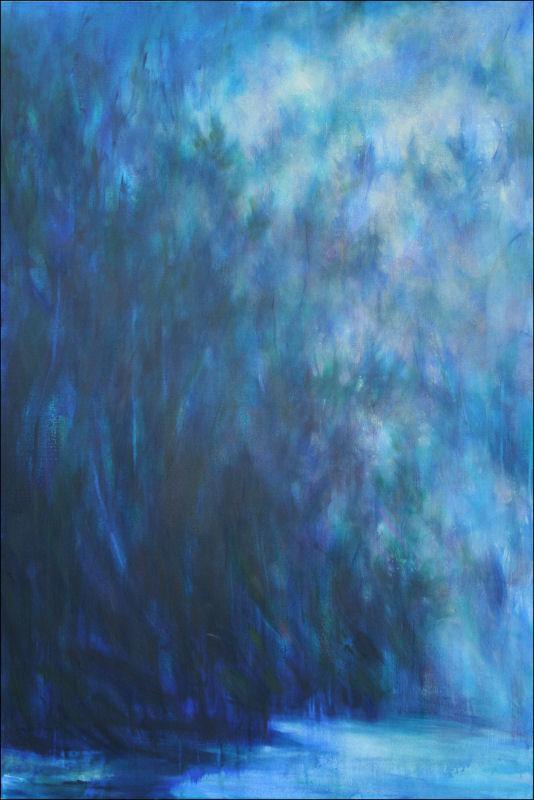
Dec. 6th: Colors mixed with matte medium: Ultramarine, Pthalos Blue, Prussian Blue, Cobalt Blue, Pthalos Green, Sap Green, Unbleached Titatium, Alizarin Crimson and Cadmium Red Deep, Mars Black (rarely use black). This morning I scrubbed and washed away a lot of paint in areas then reapplied more. Trying to stay with the less is more principle. Hope to wrap this one up by the end of the weekend if not before.
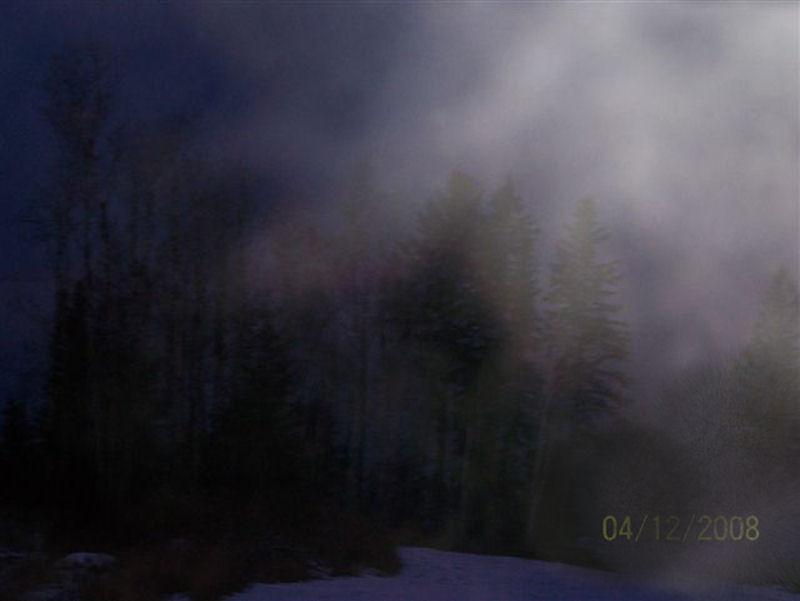
Dec. 5th: Stage 1, first coat of Ultramarine Blue and matte medium, very watered down, then applied thick in places. Inspired by photos taken by my good friend Ray Muskego in my home town, Cold Lake, Alberta during sunrise December 4th as misty fog drifted off the lake.
Shadows of Summer update
Monday, September 22nd, 2008
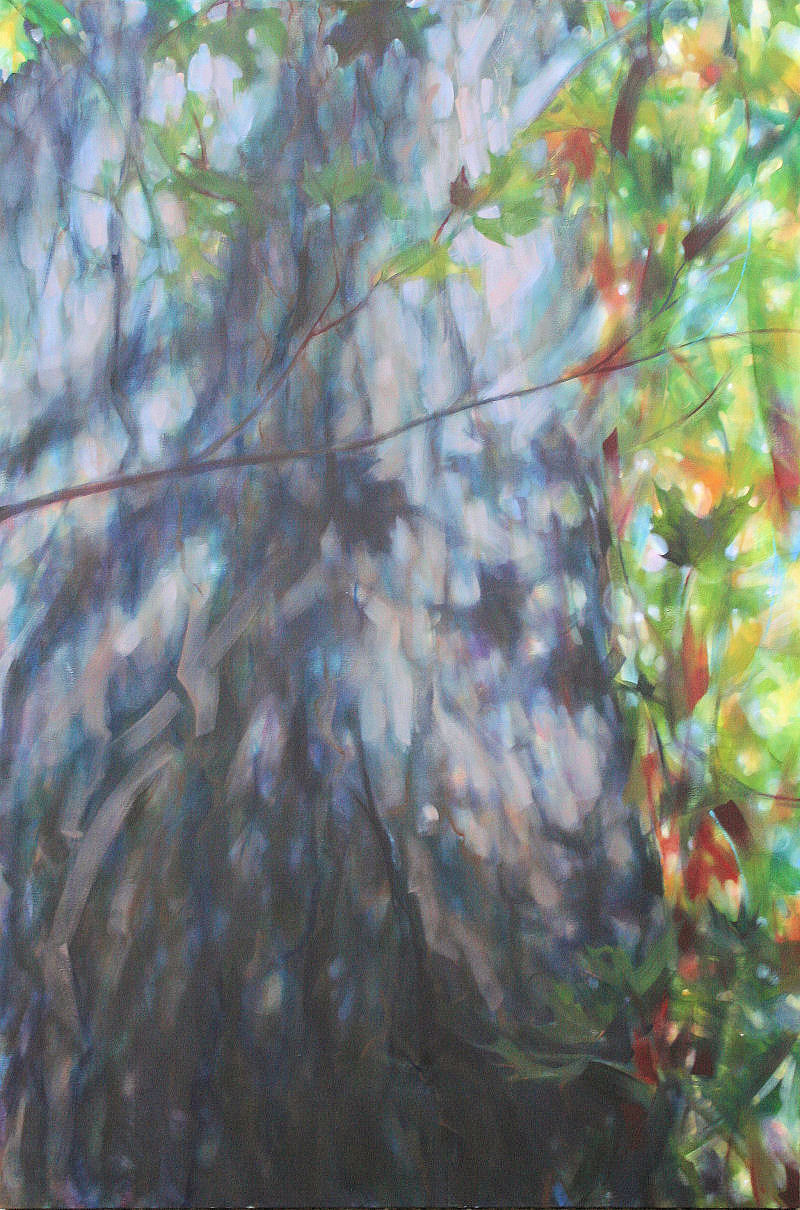
Shadows of Summer, 60H x 40W x 3D inches acrylics on canvas.