
birds
« Previous Entries Next Entries »Bird Party
Tuesday, November 17th, 2009
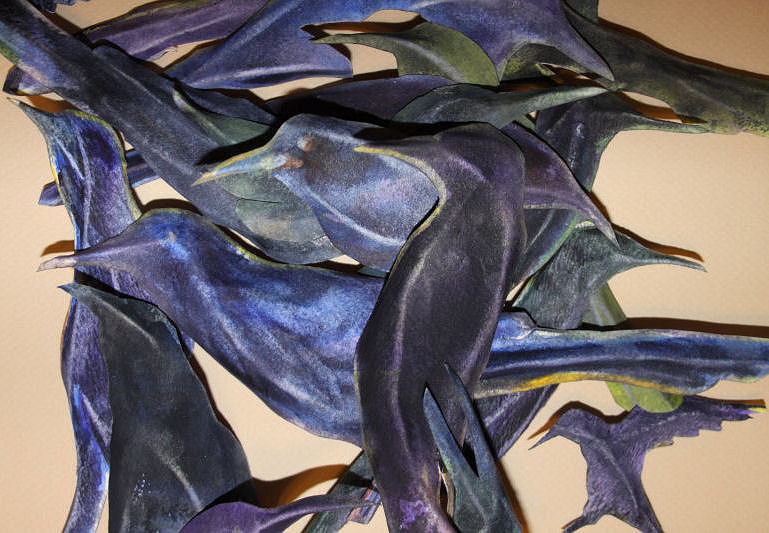
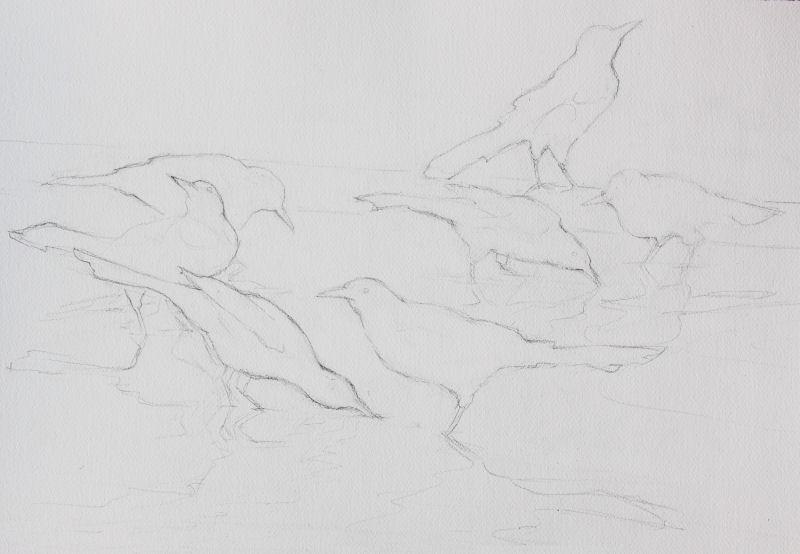
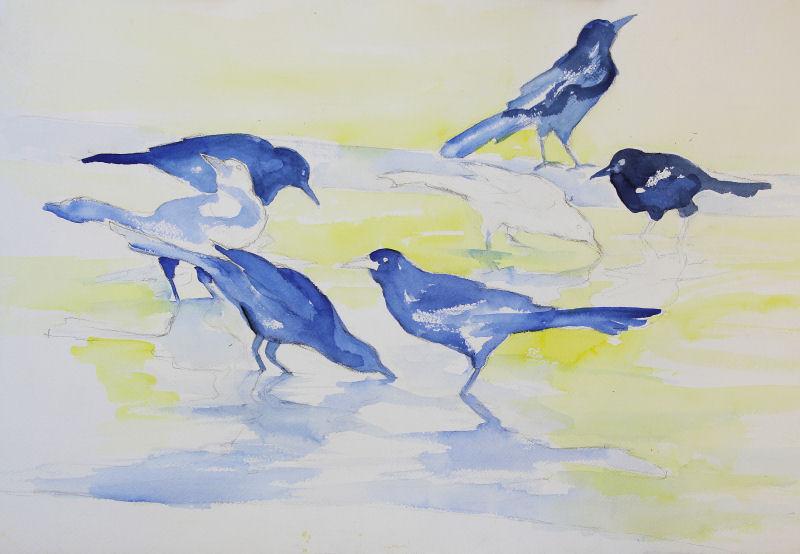
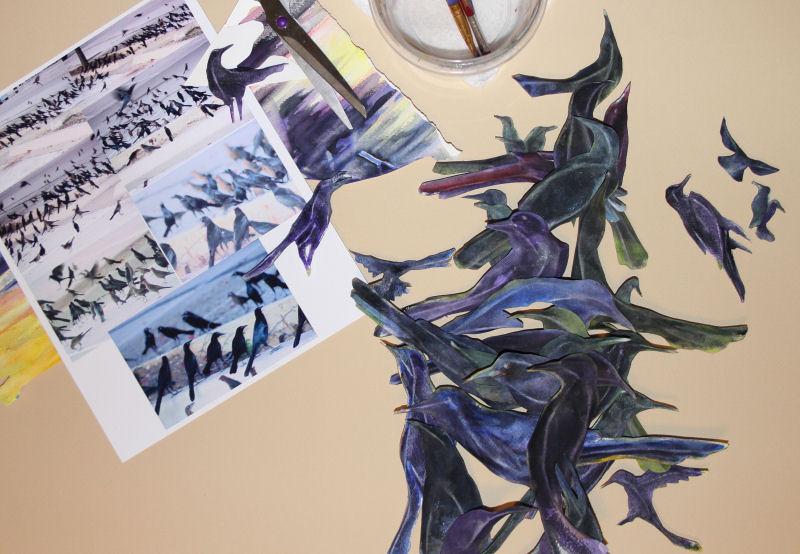
Bird Party, watercolors on molded 140 lb watercolor paper, work in progress.
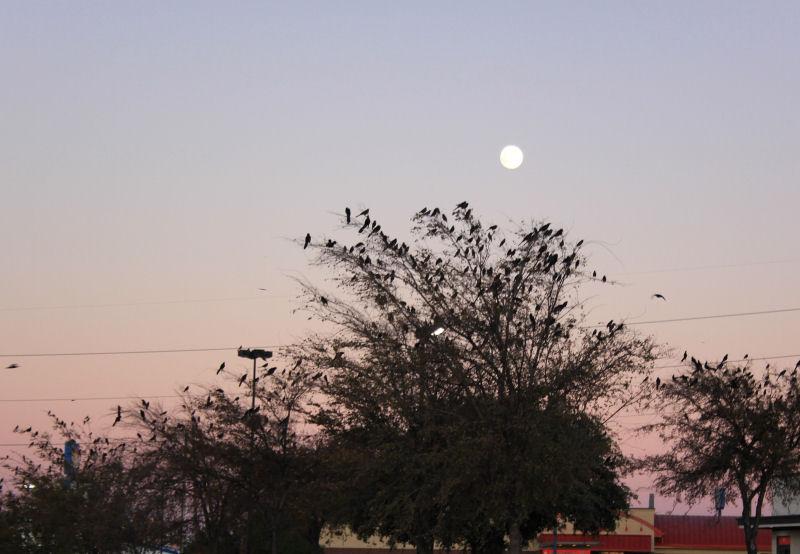
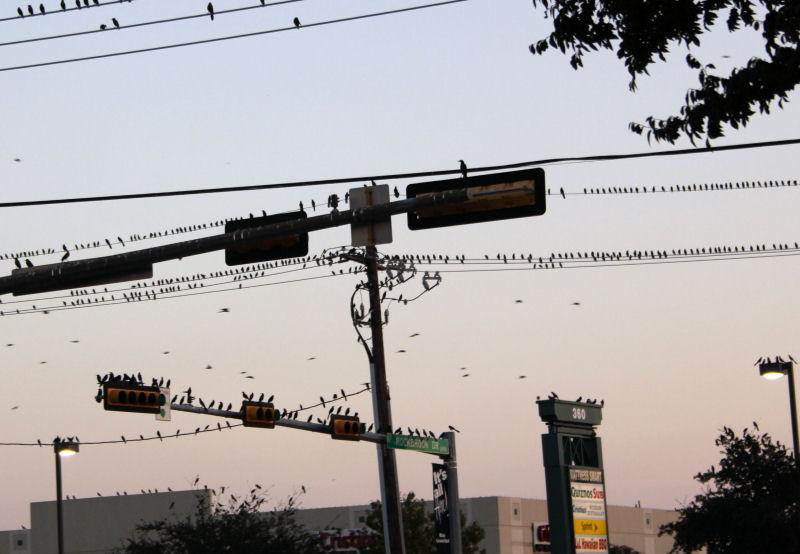
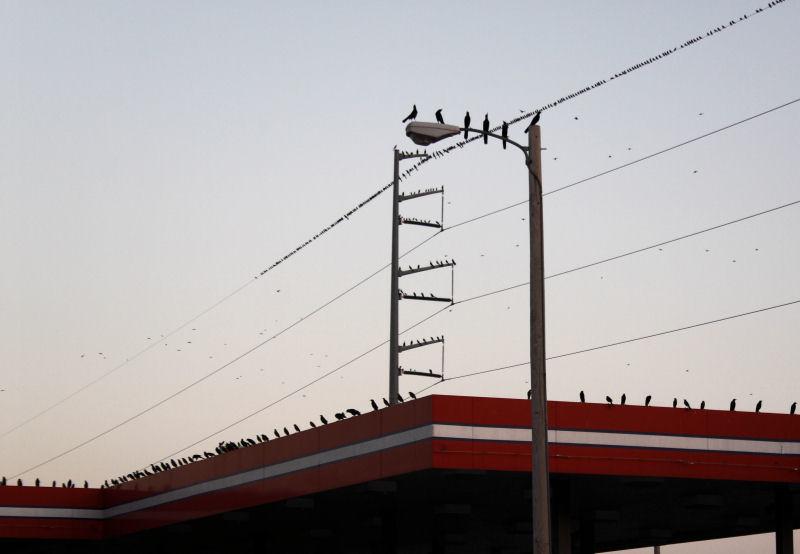
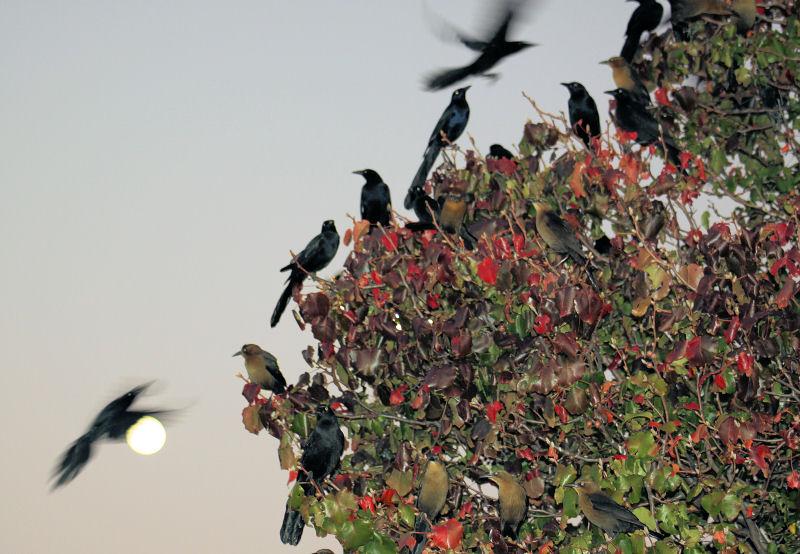
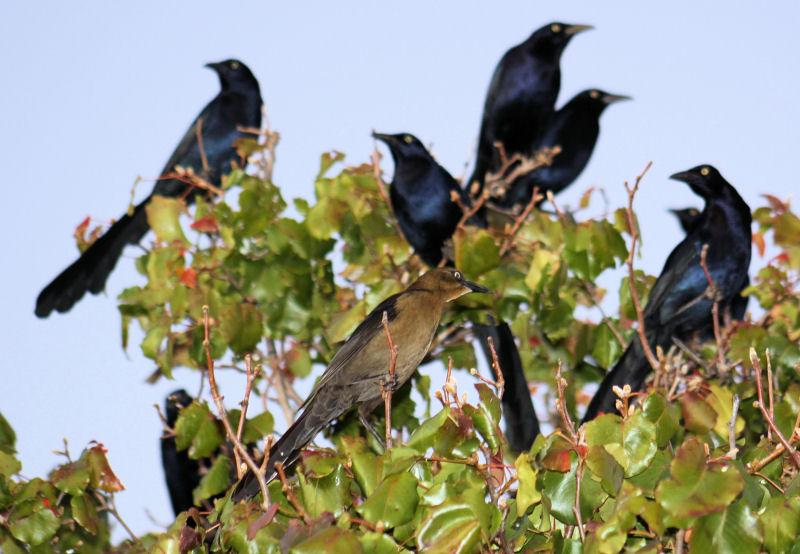
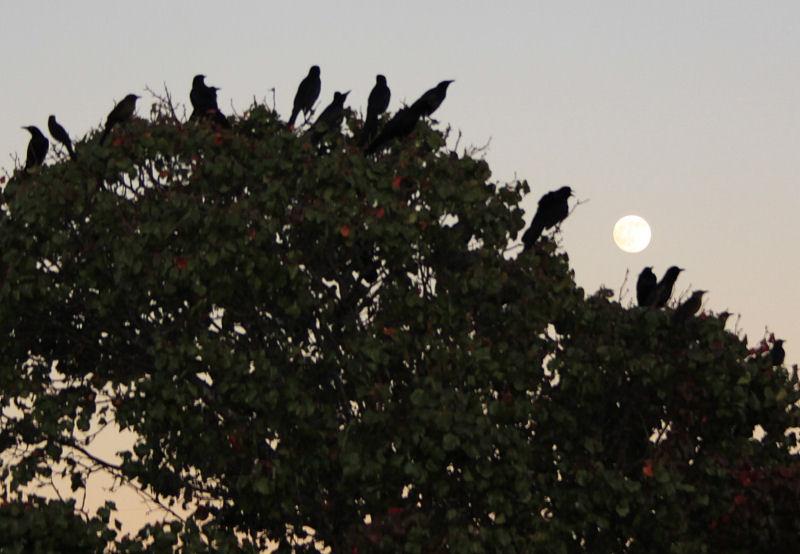
I’m not exactly sure where this is headed, but shapes were cut out of the painting, the paper drenched, folded, stretched and sculpted. Every evening just before sunset in the Dallas-Fort Worth area Grackles, blackbirds, Starlings and pigeons gather on lawns, parking lots, overhead wires and cables, roofs and trees. The event is unique to this area as far as I know, and exciting beyond words to be amongst the thousands and thousands of birds. Here is a previous piece on the subject.
Basic pricing strategies: Artists and the economy
Thursday, September 17th, 2009
How do artists price their work? How do artists price their work honestly, consider themselves as legitimate business persons, still with equal regard to the buyer looking for quality and a fair deal? How do artists price their work reasonably while acknowledging the responsibility we have to our trade; that is, respecting that we, in many cases, base our prices on each other’s? How do artists price their work while competing other artists, when for some, savvy marketing skills yield profits far higher than the quality of their art? (Subjective as art is, we all recognize quality…or do we?). How do artists price their work to sell in a dicey economy? How do artists price their work to sell in a dicey economy that’s dependent on the moral and ethical whims of public spending, and the consequential extremes of society?
 I have just reluctantly slashed the prices on my artwork. I’m not going to soften the announcement with a less violent description, because compromising what I feel are well-earned wages, whether adapting to economic conditions or sharing a percentage of it for any reason, is brutal. My canvases are not the only ones feeling the brush of reality these days though; I see, hear and read that a lot of artists are reevaluating how much they ask for their work. Still, I applaud those artists who continue to stand up for the principles of the unspoken “Artist’s Code”, as Homer Simpson might put it. I’m not fond of unsold art accumulating and spilling out into every room of my home though. The hope is that it will resonate with someone else besides me. It must be seen and it must be shared.
Andy Warhol said: “Art is what sells”.
Maybe the average art enthusiast doesn’t know how we derive prices for our work. Maybe many artists don’t stop to dissect their decisions either. The prices of art in galleries worldwide are inconsistent, confusing and often irrational, and who is authorized to price artwork like that anyway? (Ideally it should be the artist). There are so many variables. I’m probably going to miss naming a few here because methods for pricing vary from artist to artist, hobby or career, and if their art is in the form of products or services. Costs of materials and time spent are considered, and price differences with regard those two factors have everything to do with the quality of time spent and quality of materials. Skill levels, concepts, originality, to some extent size, (ie. sculptures, murals), and if it’s for sale in a home studio in Rocky Mount, North Carolina or a high-end gallery in New York City…and most artists will tell you that above all, the final price has to “feel” right. For some strictly structural Art-minds, feelings in art don’t have a leg to stand on – but in actual fact they have two legs (the human thing). The most unpredictable, nonsensical thing is that even if the artist makes an impact while alive, their older work may be worth much less than the most recent, but when the artist dies, prices of their earliest works may increase.
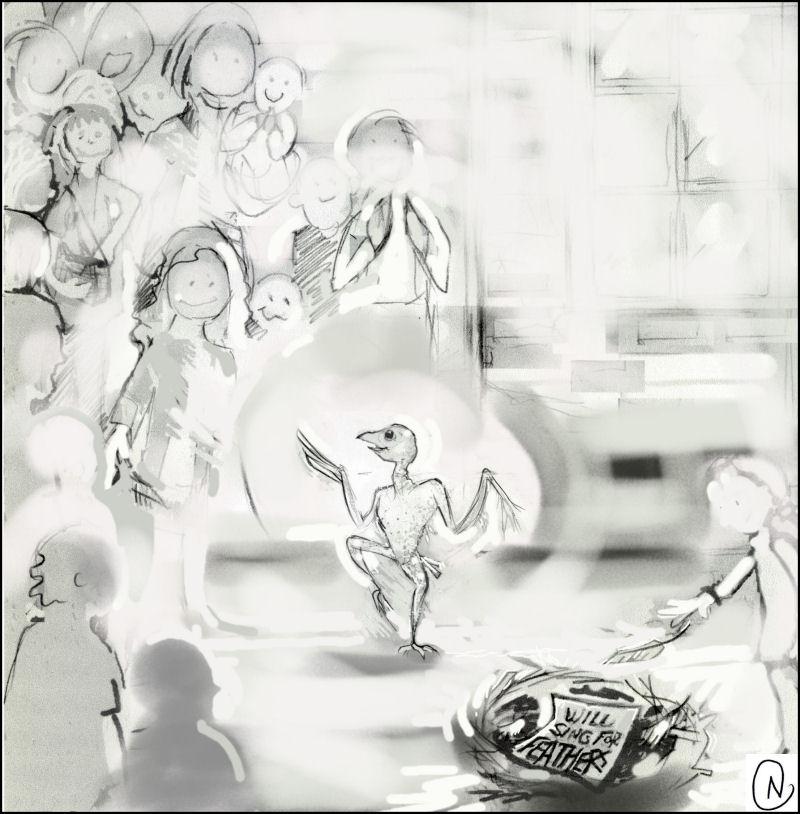
Will Sing For Feathers, 8 x 10 inches, traditional graphite drawing scanned, drawn digitally, printed, process repeated
As we gain experience, confidence toward change and experimentation, and progressively improve our development as Artists, theoretically we should be able to charge more, which is why “mature” artists naturally feel they deserve to be paid more. Case in point: me. The price I initially wanted to charge for “Dancing With Trees” was $7,500.
It seems like a lot to be asking for those unfamiliar with all that painting or other forms of artwork involves. Time seems to be the most accountable factor in producing it. After viewing the artwork and the price, the most common question is: How long did that take you? It’s a fair question, because for most jobs, time input equals amount charged; a predictable amount of money is paid in exchange for a certain amount of labor within a set amount of time. If only it were that simple.
Using that system to price then, Dancing With Trees is my very best work to date, and it took almost 50 years to learn how to paint it. The price was reduced from $7,500.00 to $5,500.00. Assuming I don’t have to share a percentage of that figure with a gallery, and assuming it sells in the next year, that works out to approximately .7638888888888889 cents per hour. I feel confident that it’s worth that much. That’s a wage about as kookoo as a bird dancing for its own feathers. One day someone will come along who has an extremely large wall and agrees that the painting is worth .7638888888888889 cents per hour, and they will buy it. Each year work hangs around with me though, I decrease the asking price as new pieces are created.
Sometimes I wish I was just a bird!
The vocation of Artist is a calling, and a journey of personal growth. Who doesn’t want to do what they love, learn all the time, contribute the best they have to offer to the world, and earn a living as well? Creativity is not only what we love to do; it is a deeply-rooted habit, a compulsion and an addiction of the very best kind. Art is connected intimately with our lives so we continue to make “stuff” no matter what, and preferably, the artists’ judgment of its’ value will be trusted. In my revised Price List I’ve made a good effort to be fair to the buyer while at the same time remaining true to myself.
Post script, 2016: Well, such is life — due to the economy, and a taste of humble pie, I have since lowered the price of Dancing With Trees 03 to $1,100. It’s still substantial enough to pay for my time and material costs, and perhaps more in tune with the reality of art sales expectations these days.
Grackles
Thursday, June 18th, 2009
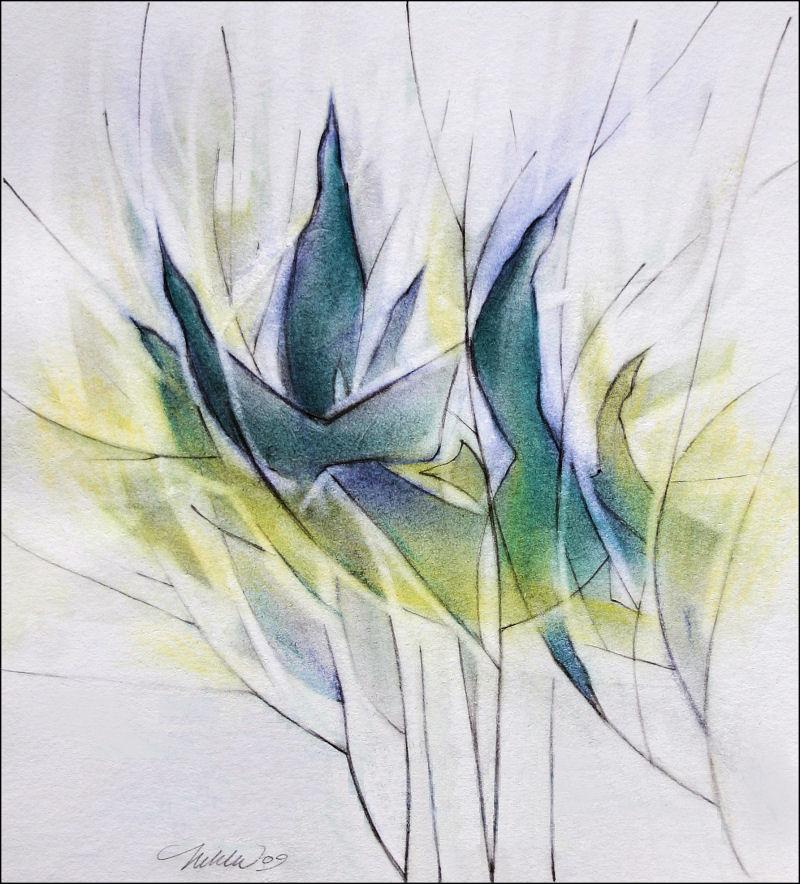
Grackles, 11 x 10 inches soft pastels and graphite on paper. 20H x 16W” framed.
The Dallas area is notorious for its Grackles. In some places they gather in flocks by the thousands. I’m not exaggerating – they are especially notable during evening just before sunset; bird parties I call them, lined along telephone poles and wires, sitting perfect wingspans apart from each other, and packed full in the trees. Photos can’t capture it all, because the experience also includes their loud calls. It’s fantastic! I love it, but they’re a nuisance in public places like near restaurants and malls. Park your black car under a tree if you don’t mind driving away with a fairly white one when you leave.
Kookaburrahs
Saturday, May 23rd, 2009
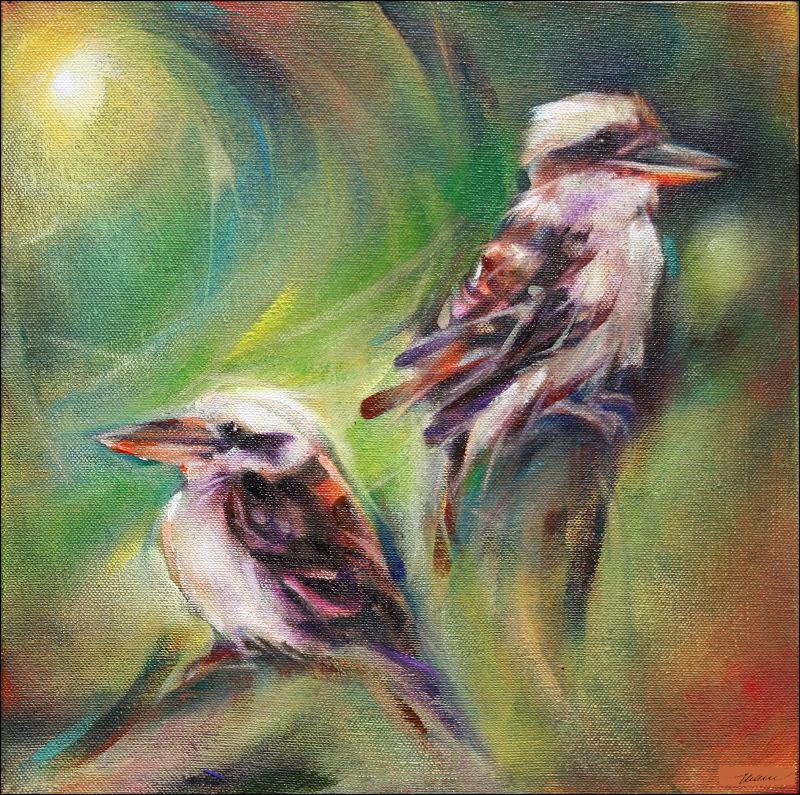
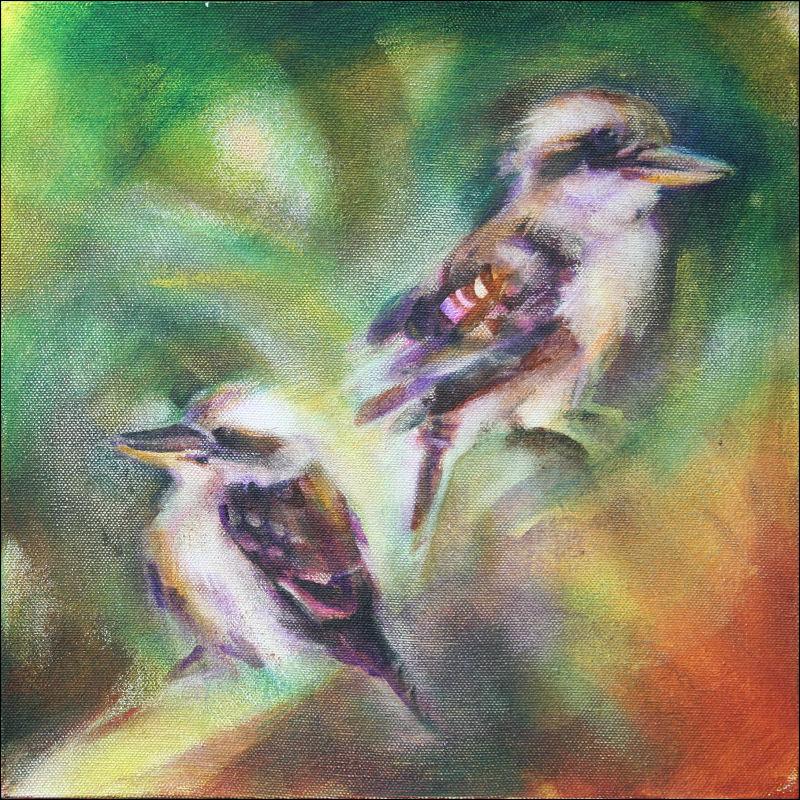
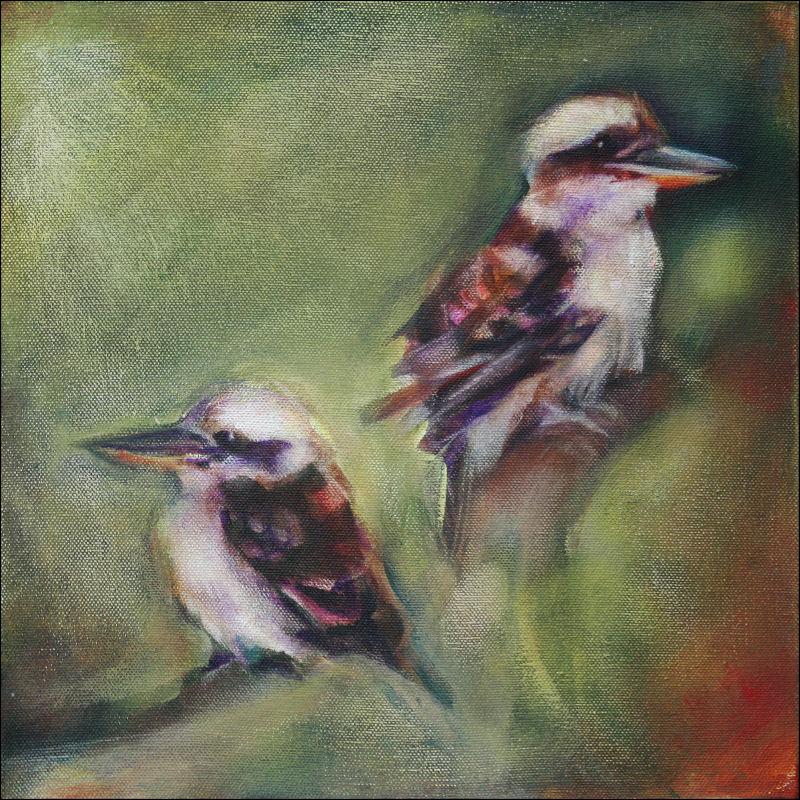
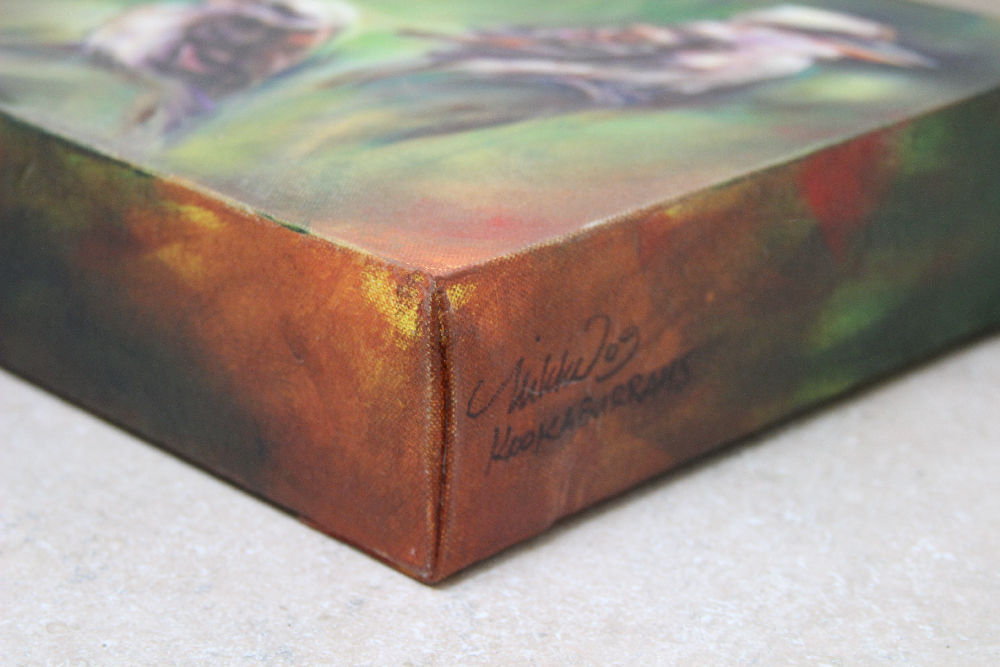
Kookaburras, 11H x 11W x 3D inches acrylics on canvas, wrapped sides painted. Frame unnecessary. Hang on the wall or display on a flat surface. Most of the Magic Square series are signed on the side so as not to impose on the composition. Seen here, the signature is added digitally on the front.
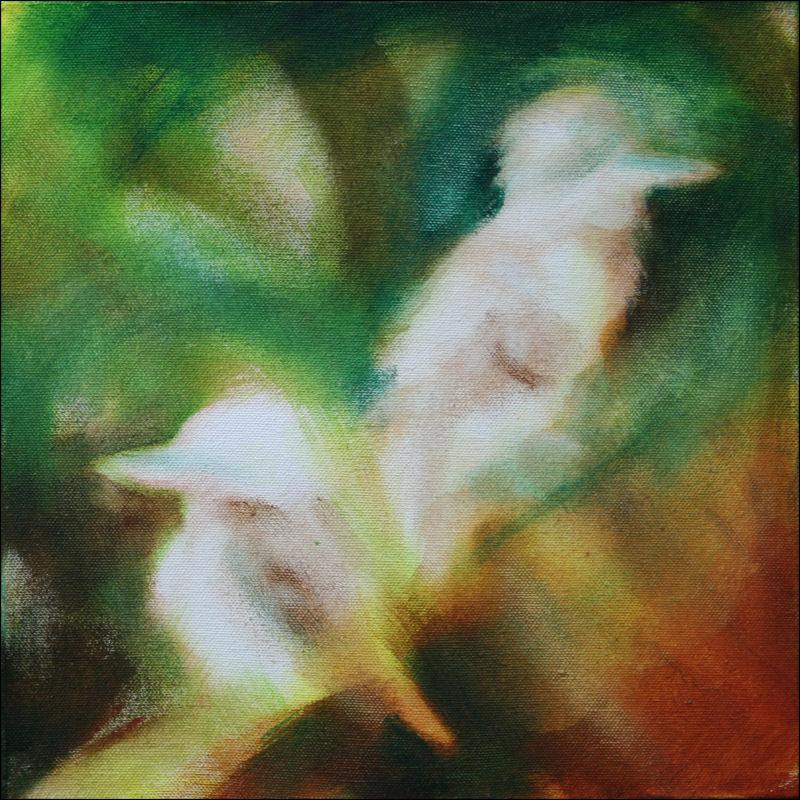
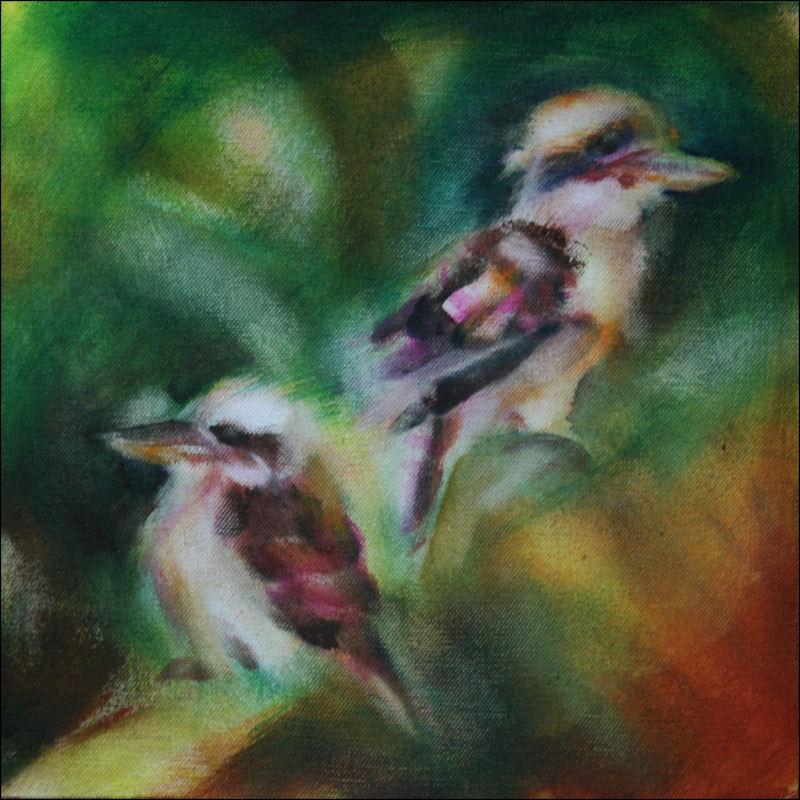
March 13th, 2009 work progress blog post: This painting could have been left at phase 3, but the decision to give the birds more definition and sense of realism created a whole new set of problems. For example, the composition, which was unbalanced from the start, is now exaggerated and more noticeable, so a third element needs to be added in the upper left corner. Not necessarily another object but color or shape that would shift the weight and attention away from the lower left areas.
| Progress details: | |||
 |
 |
||
 |
 |
||
There is a work phase where, once details are added or changes made to one area, every other thing in the picture needs to be brought to the same level of quality: quality meaning style and feeling of the features. I don’t regret proceeding, but it does mean extra effort to solve all the new challenges, and usually while attempting to solve those new ones arise. Other professionals would say this is overworking, but it really depends on what your intentions are as an Artist, and what motivates the work. If risks are not taken sometimes, a painting may never be all that it could be. Phrases we tend to cling to like “less is more” are not written in stone; sometimes more is more…learning is a good thing!
In landscapes details are best left for the imagination, whereas painting animals, birds or other creatures, a purpose needs to be clearer. Is the intention to portray character through shape and silhouette? other traits? specific markings? Is it the main focus or only a part of the whole? Computer tools are also useful in playing with colors and other possibilities.
Neighborhood Heron
Thursday, March 19th, 2009
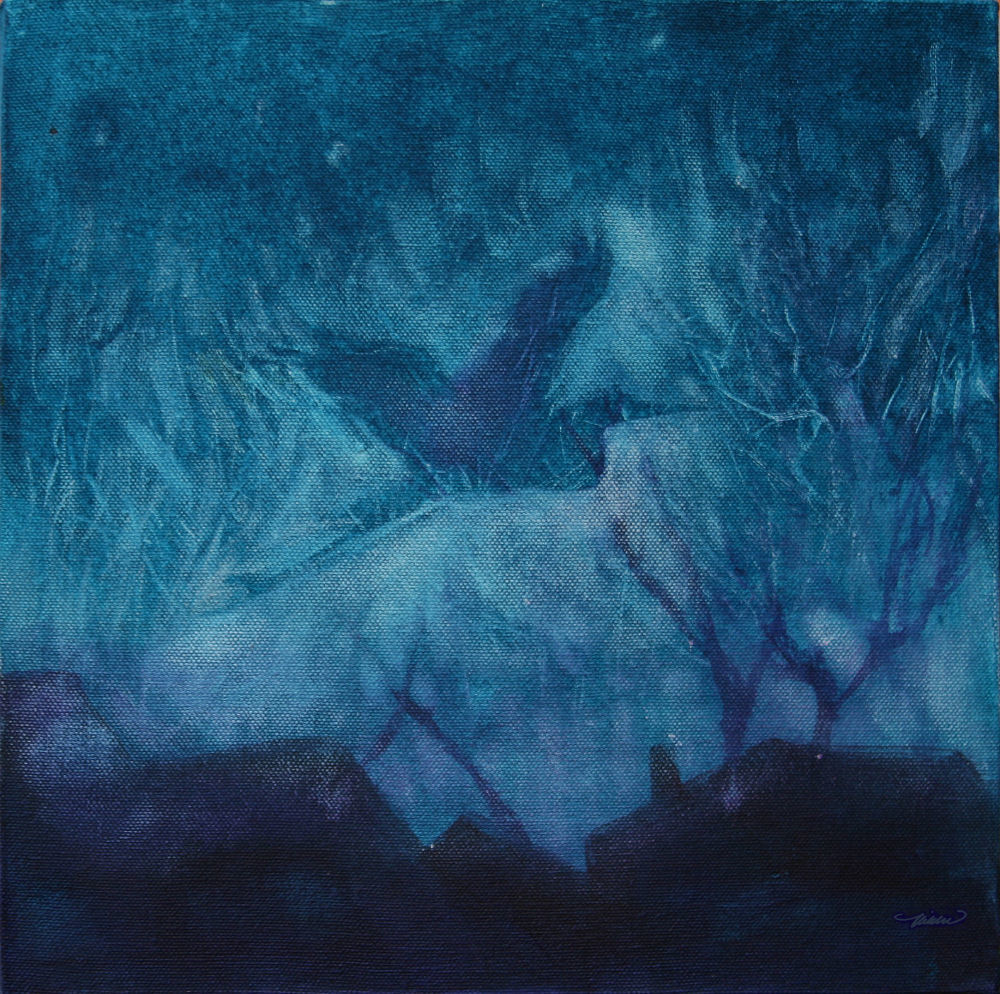
Neighborhood Heron, 11H x 11W x 3D inches acrylics on canvas, wrapped sides painted. Frame unnecessary. Hang on a wall or display on a flat surface. Signed on the side so as not to impose on the composition.
Sold but a similar piece can be recreated upon request. Please allow 7 days to paint before shipping.
Started with a base coat of very watered down translucent pthalos green mixed with cerulean blue. Spraying rubbing alcohol over a damp painted water-based surface then allowing it to dry without moving it will create starry, spotty textures. Salt shaken over wet paint allowed to dry, then wiped off with a dry cloth will produce similar effects.
Alcohol loosened up the entire surface of paint, so using fingernails under a damp smooth t-shirt cloth, I rubbed off areas to shape the heron and winter trees. This represents a super argument for the wingin’ it methods!
In college I took a pottery course for one semester, and the thing I remember most is the instructor saying how it’s a good idea to allow some of the raw characters of the materials we work with to remain and “speak” without trying to smooth over and perfect everything. She was of course referring to clay, but over the years I’ve found that it applies to many other mediums also. In Heron, the branches extend into the body of the bird, connecting it to its environment. The effect also does a subtle play on the motion of its flight too.
Showcased in the J. Mane Gallery’s Fins, Feathers and Fur 2020 exhibition.
Wrens Move In
Saturday, August 2nd, 2008
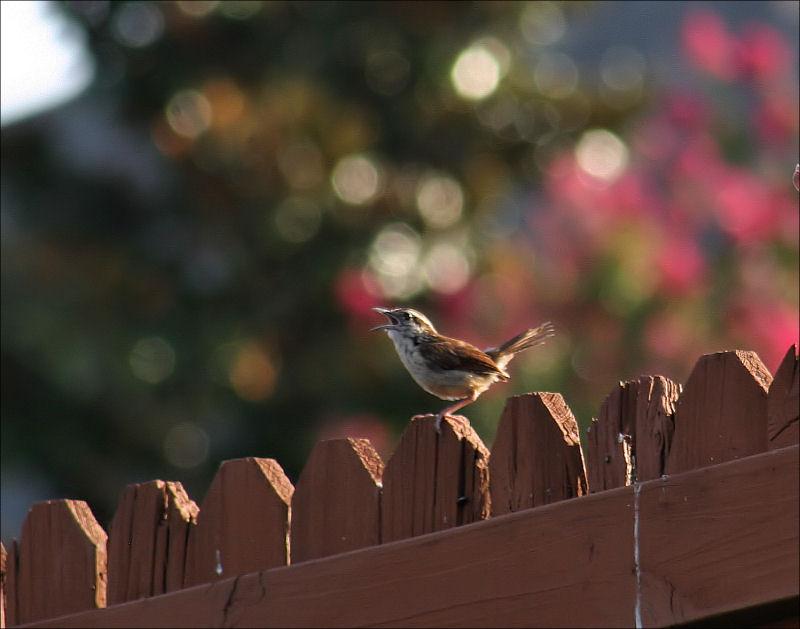
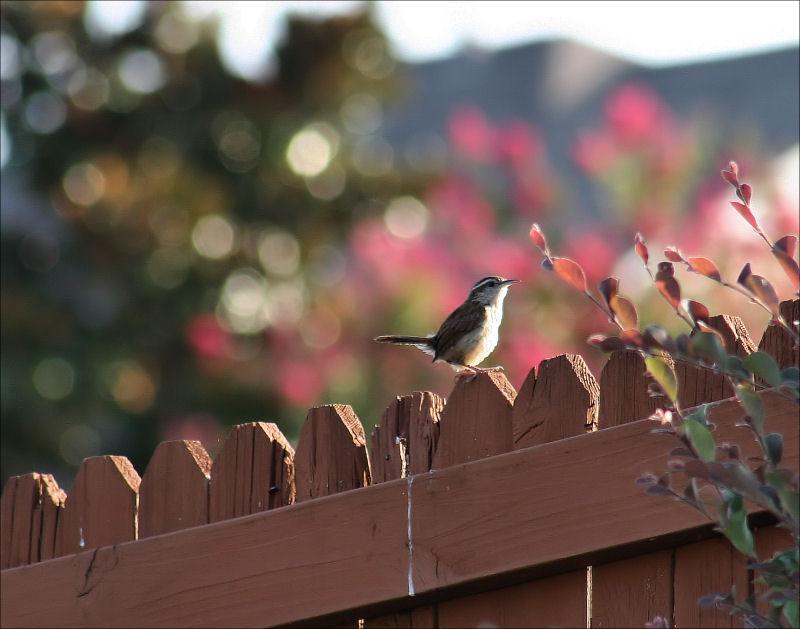
Alain built a birdhouse during Spring hoping to start a bird-cam, but no luck until today when these little wrens moved in. We’re really excited to get the bird-cam working and hopefully watch them raise their family. According to the Peterson Field Guide they look like Carolina Wrens.
Thunder, Sunset, and Herons
Saturday, May 31st, 2008
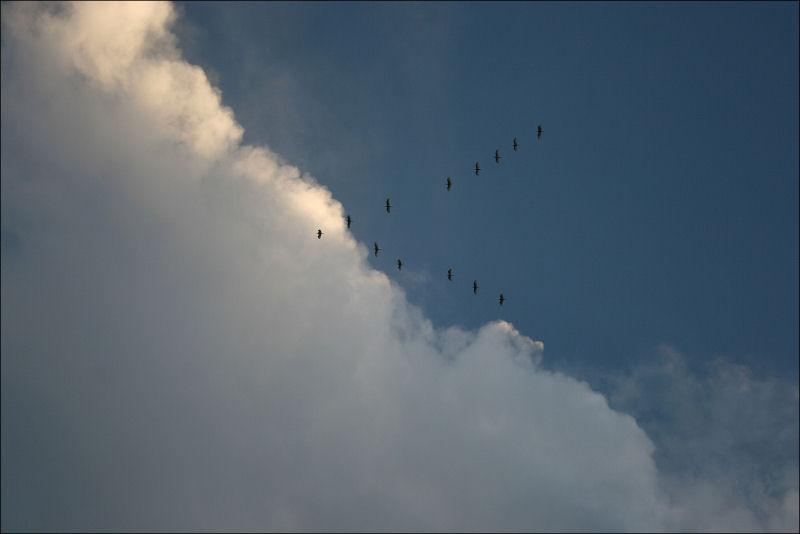
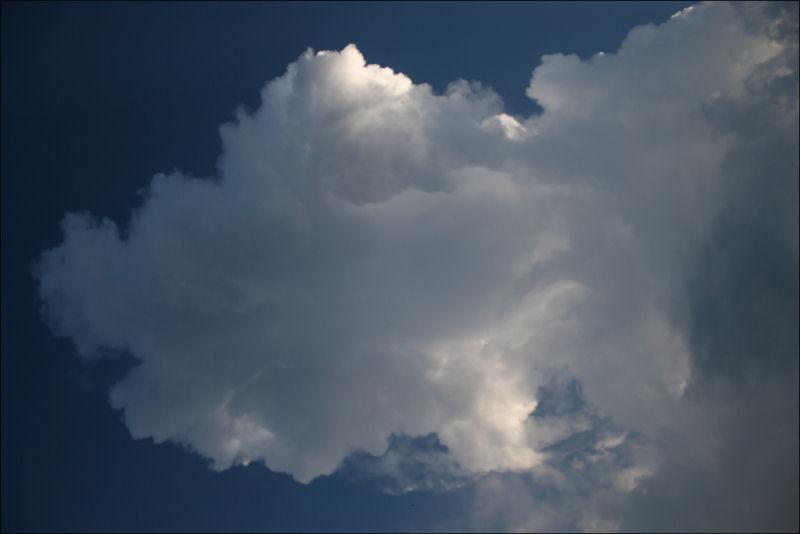
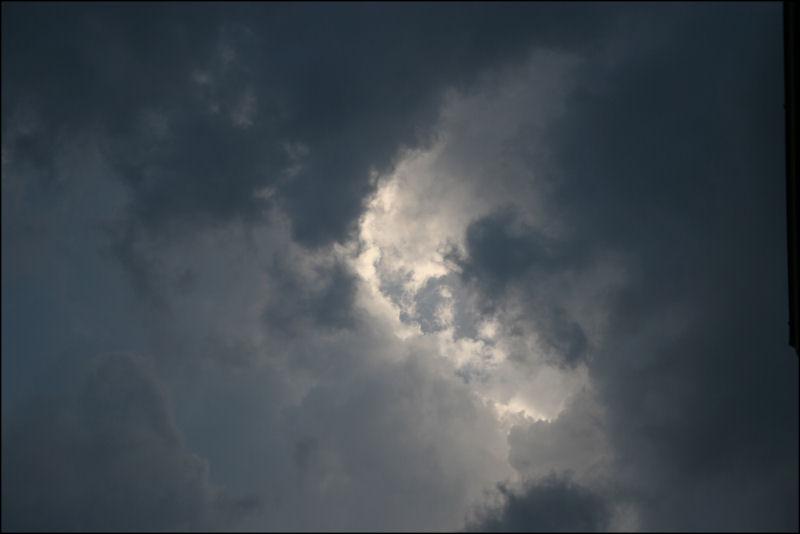
Three nights ago, I was out taking photos of storm clouds in the setting sun, and flock of herons crossed by.
Plans for Sun Shower 04
Saturday, May 17th, 2008
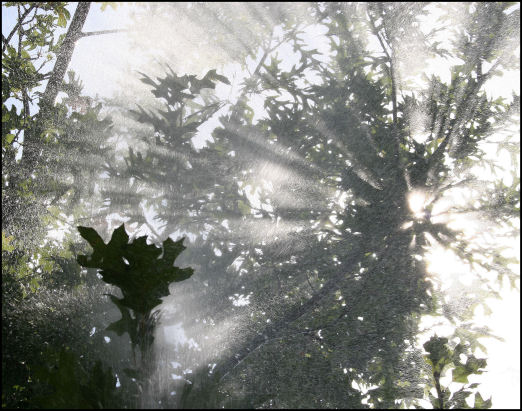 I inadvertently leaned the large painting of Maple Leaves near the framed photo of Sun Shower 03 that hasn’t made its way to storage yet after a show.
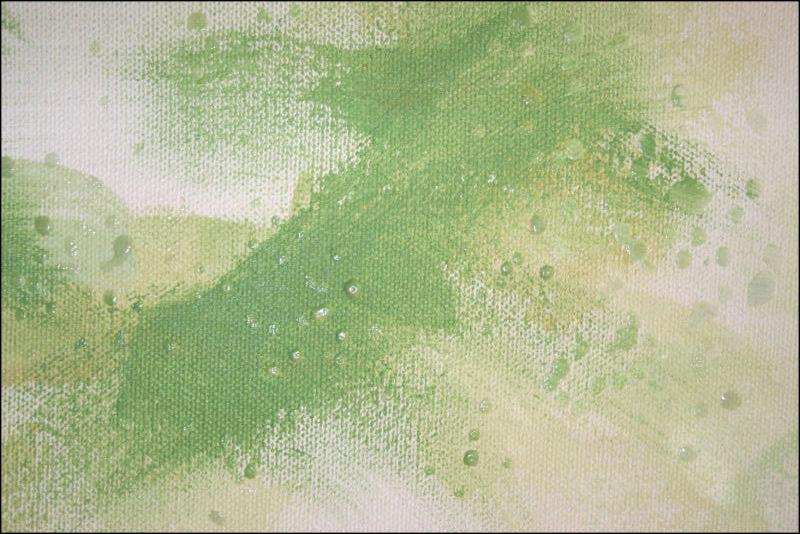
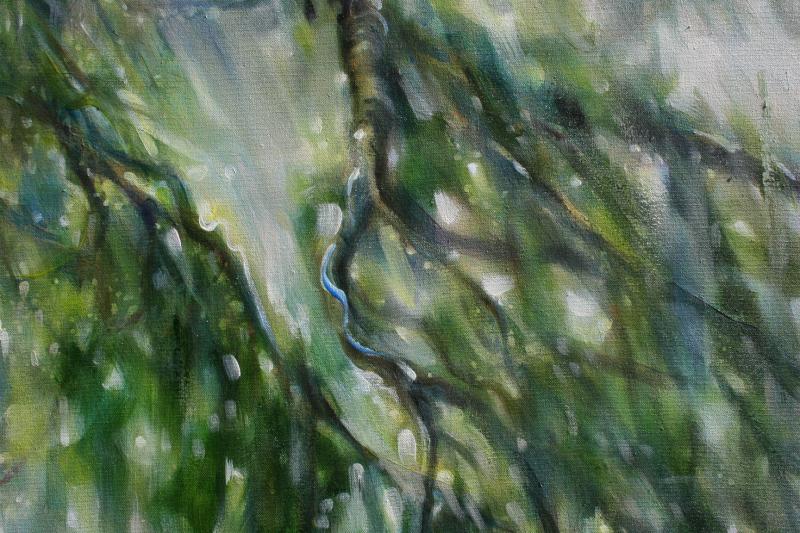
Ever since I took that photo, left, last summer I have wanted to use the idea of dramatic light rays in a painting, but not until this morning did I think to use it in Maple Leaves. One idea leads to another; I’m also going to use some tricks I learned during the painting of Sun Shower 01 (2007) where Watercolor masking medium was dotted on the canvas with a toothpick in areas where I wanted water droplets to remain white or lighter in color.
The thumbnails here are details of that work. It worked great but I removed it too soon before finishing and the results weren’t as obvious as I had hoped, so this is another chance to try again. This time it will be creating small streaks, left it on much longer so the vibrancy of all the colors will show through when the medium is pulled off.
The painting could be left as ‘Maple Leaves’ which is how it started out, but it has that bright glare acrylics are notorious for and I see a lot of potential in trying something fantastic with this painting. It’s one of those huge decisions made at key moments in the life of a painting – to risk or not? The 84 x 45 x 3 inch Maple Leaves title is now changed to Sun Shower 04.
New marketing strategies
Sunday, May 11th, 2008
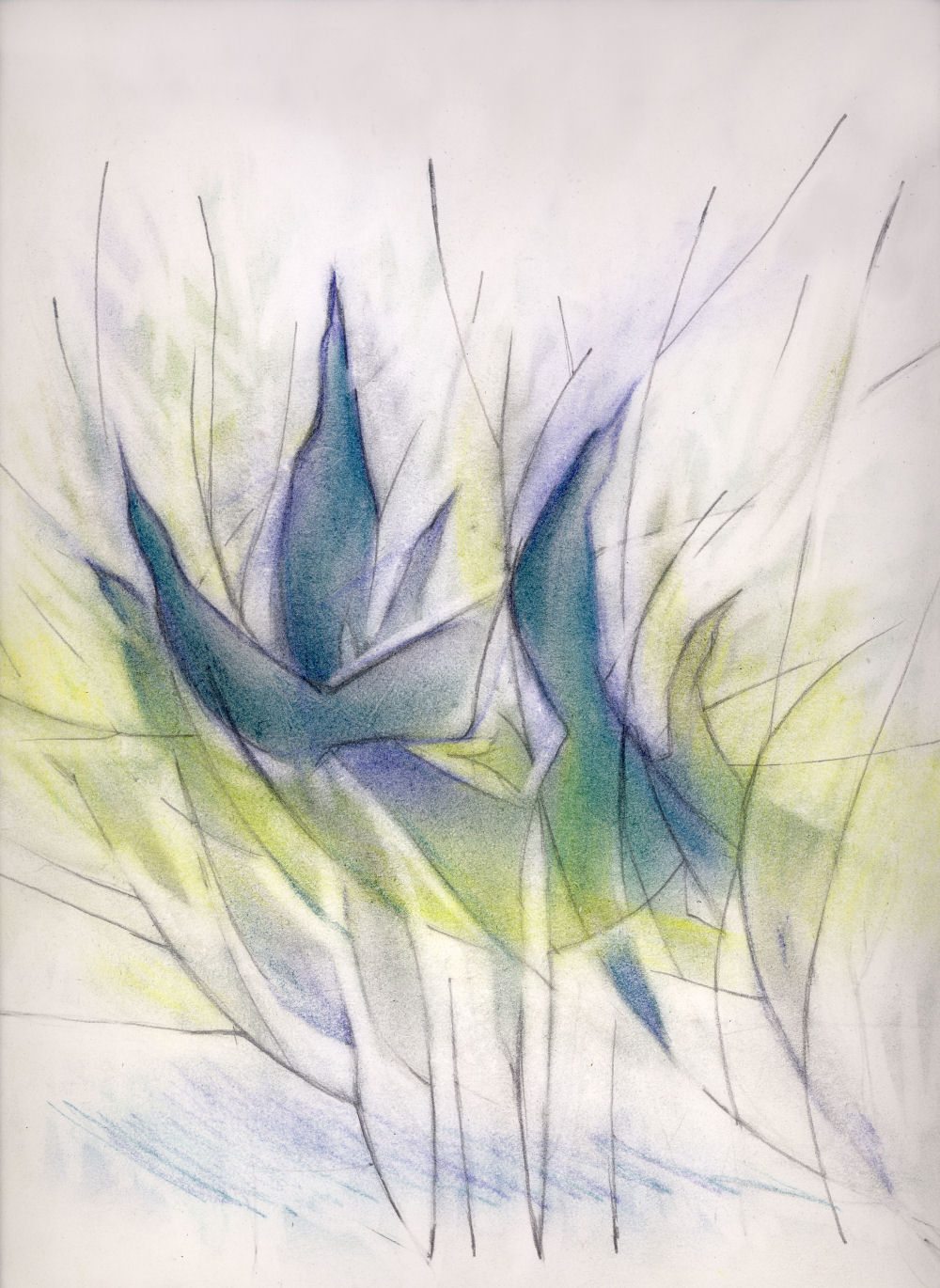
Grackle Party, Dallas Texas, 11H x 9W inches graphite and colored pencils, white double mat, white frame with crackle finish
In her Wed. April 30th blog post, my friend Chris Bolmeier writes about an older painting she revitalized, and in this case it improved dramatically. Surprise 2 supports what I wrote in yesterday’s post: many paintings need a period of rest before we know how to solve them. In any Artist’s home/studio there are at least ten or so paintings hanging around or put away in unfinished states. If it isn’t sold immediately, chances are 50/50 it will continue to change as we attempt to improve it until we know it’s truly finished.
Chris is trying new marketing strategies, and offering anyone who sells her work a 20% cut. A little out of the ordinary to show and offer another artist’s work for sale on my own website, but this is a brilliant idea she has, and I don’t mind trying to help promote her work. Good Luck with your sales, Chris!
Mockingbird ritual
Thursday, March 6th, 2008
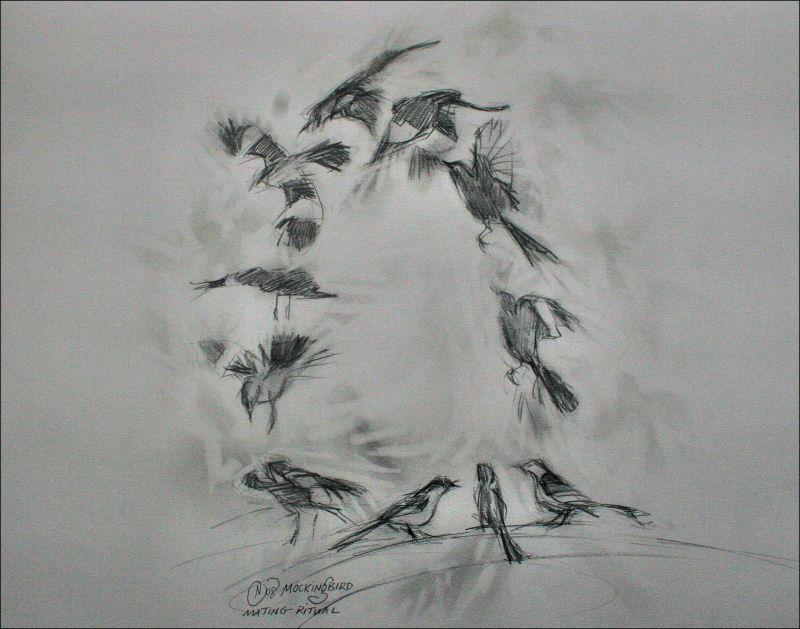
Mockingbird mating flight ritual – 10 x 10 inches study in graphite, eraser, paper
Last night it was especially noticeable that the Mockingbirds have started their mating season. Pronouncing himself at the highest peak on a rooftop, the male mocks other birds’ calls, repeating each 3-4 times before changing to another call. Then in a ritual flight dance he flies up a short distance and does graceful flip in the air, flashing the white wing stripes, back to the perch and repeats the pattern over and over.
After listening to them quite a bit, there are some that have a larger repertoire of calls and a louder, determined, clearer song…I’m guessing that those are the most mature and attractive.
« Previous Entries Next Entries »