contemporary
« Previous EntriesExhibition: Emptiness
Friday, December 16th, 2022
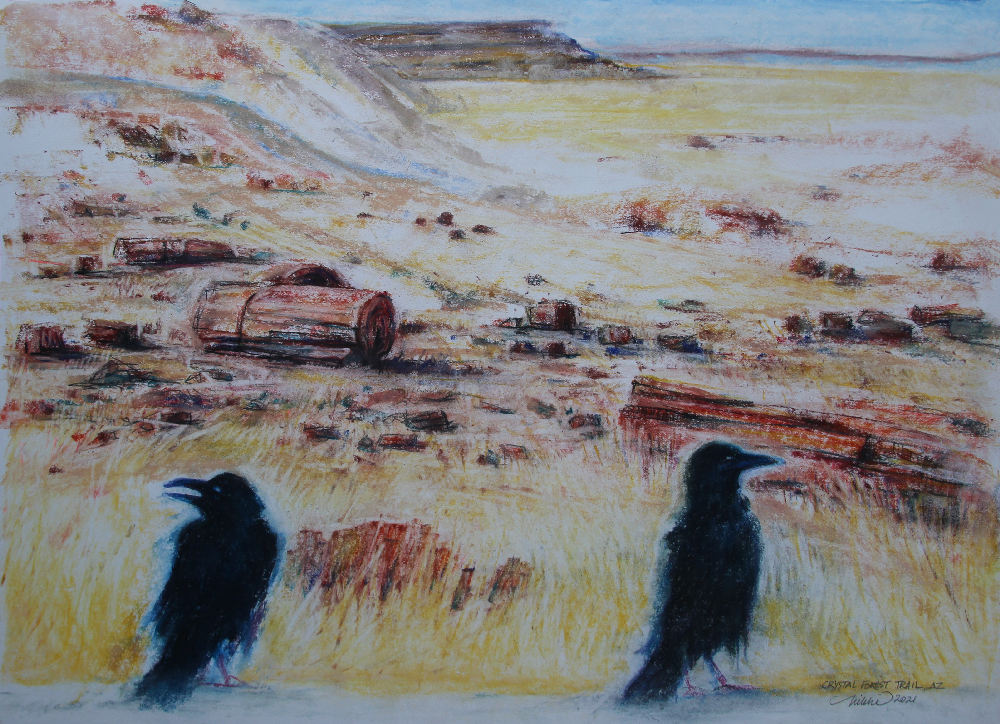
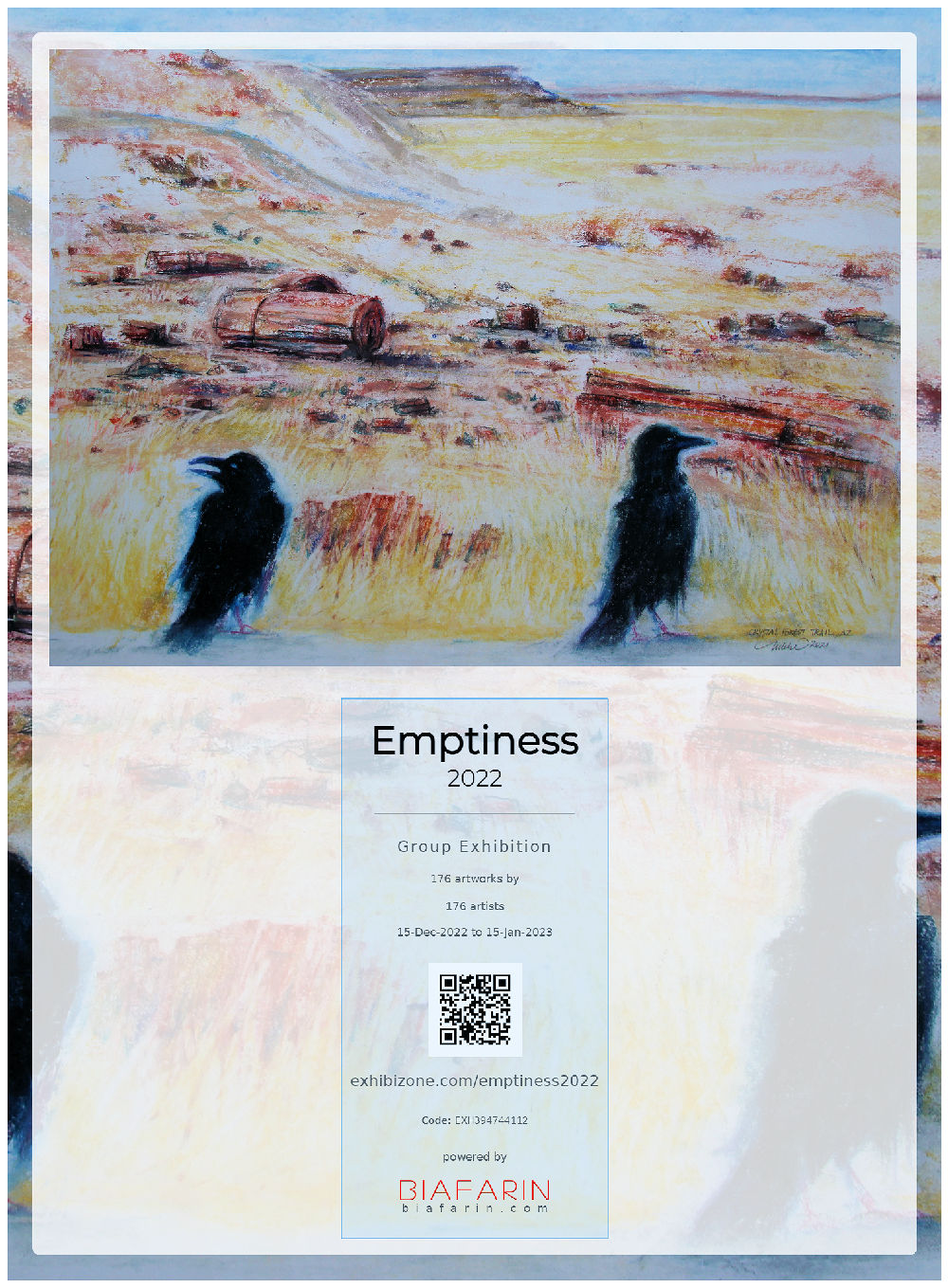 Showing online Dec. 15 – Jan. 15, 2023, Exhibizone’s “Emptiness” – Petrified Forest – Crystal Forest Trail, AZ – 18H x 24W inches soft pastels on paper. White frame with crackle finish, total size 27H x 33W inches.
This piece also won a merit award in Contemporary Art Room’s exhibition, “Trees and Fields”, showing online in December, 2021.
Artavita Contest finalist
Saturday, June 1st, 2019
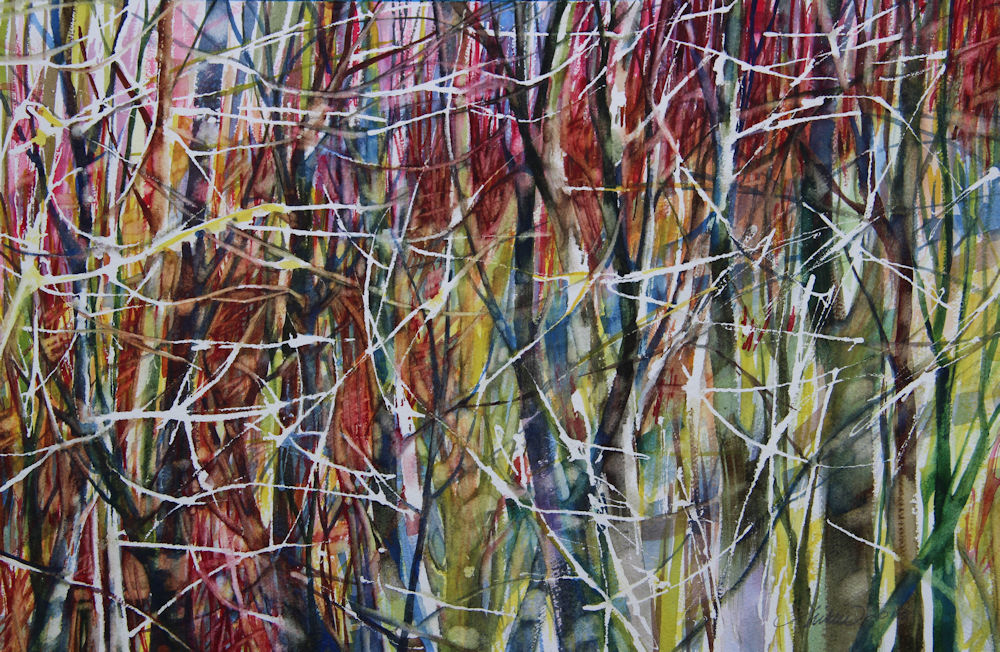
 This piece was a finalist in the Artavita competition for the front and back covers of the International Contemporary Masters Volume 13, June 2019.
Winter Forest: Dogwood, 14H x 20W inches watercolors on 140 lb cold pressed, 21H x 26″ framed size. In the beautiful, organized chaos of a winter forest in Pacific Northwest, rain brings out the subtleties, in particular the red branches of wild Dogwood complimented by the surreal green colors of moss on every tree.
Special Orders
Thursday, February 11th, 2016
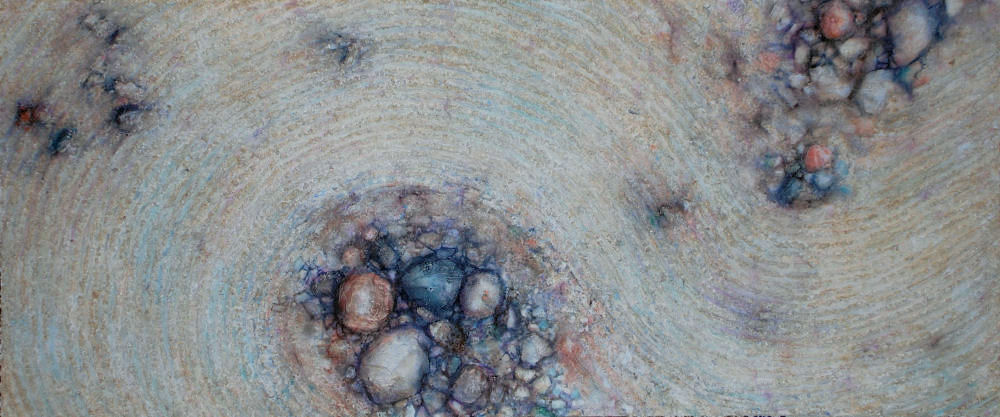
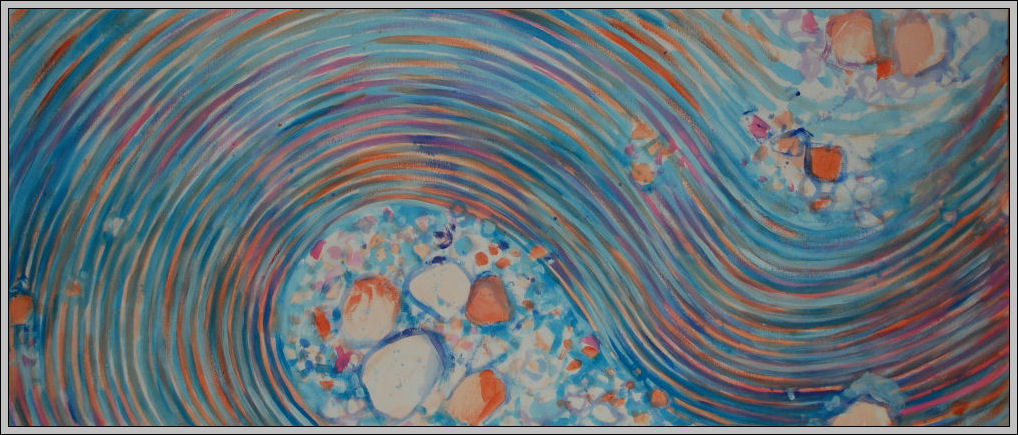
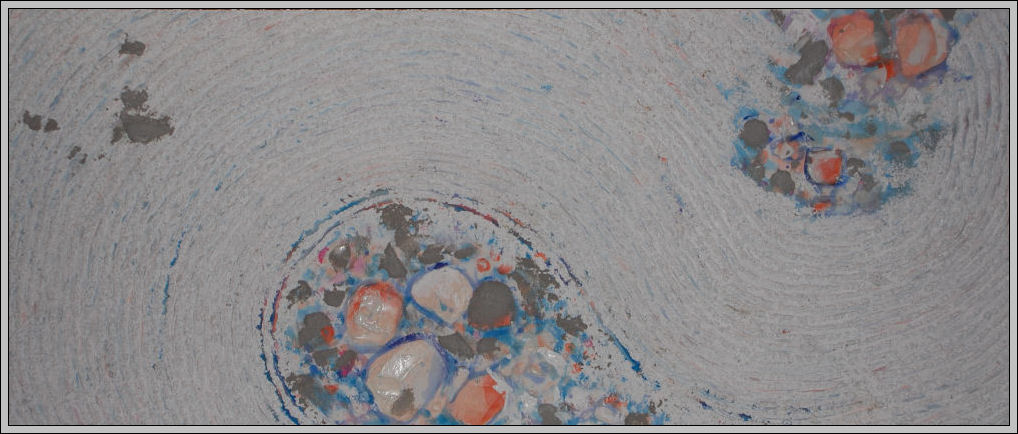
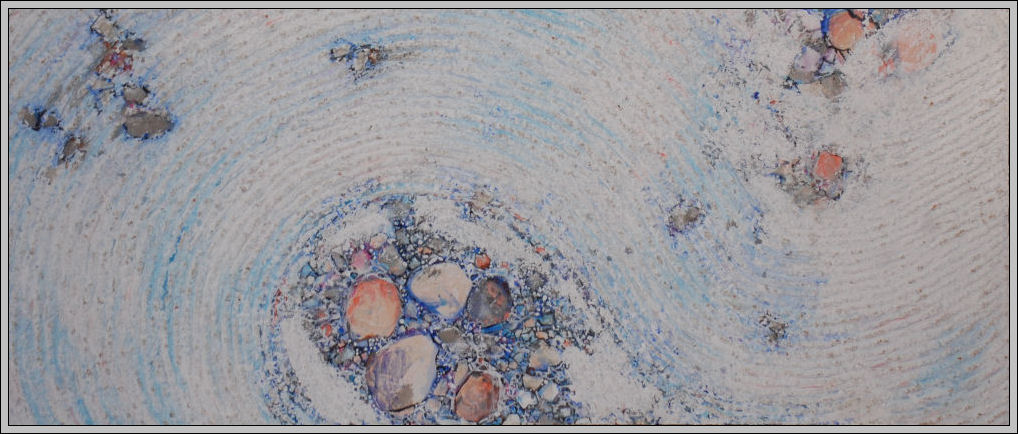
Special order, Zen Garden 02, replicated 24H x 59W x 1D inches mixed media on canvas, special order finished, sent and received. Replications are unique from the originals.
Chrysanthemums Chair finished
Thursday, January 14th, 2016
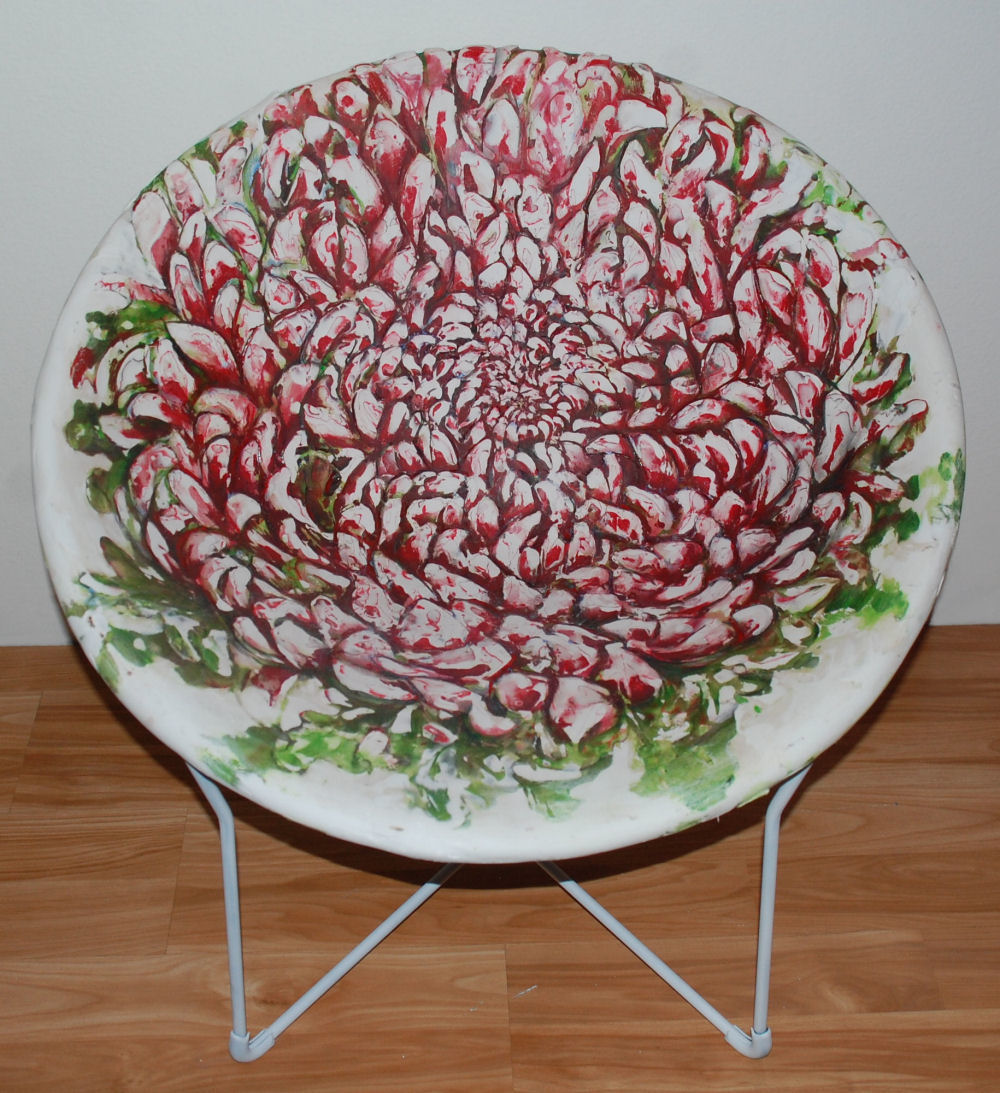
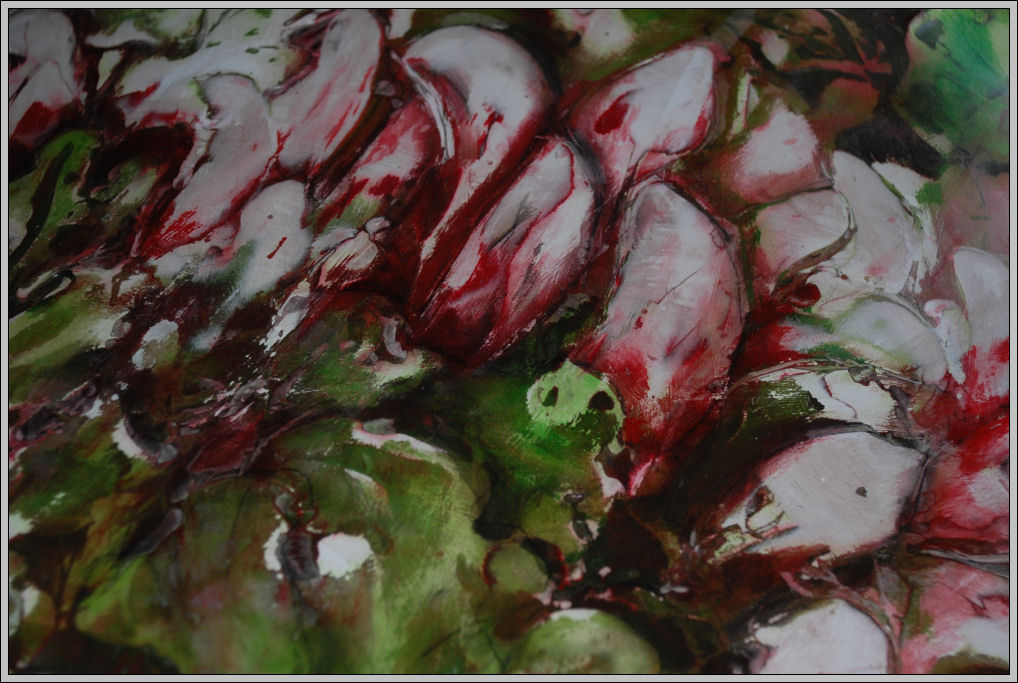
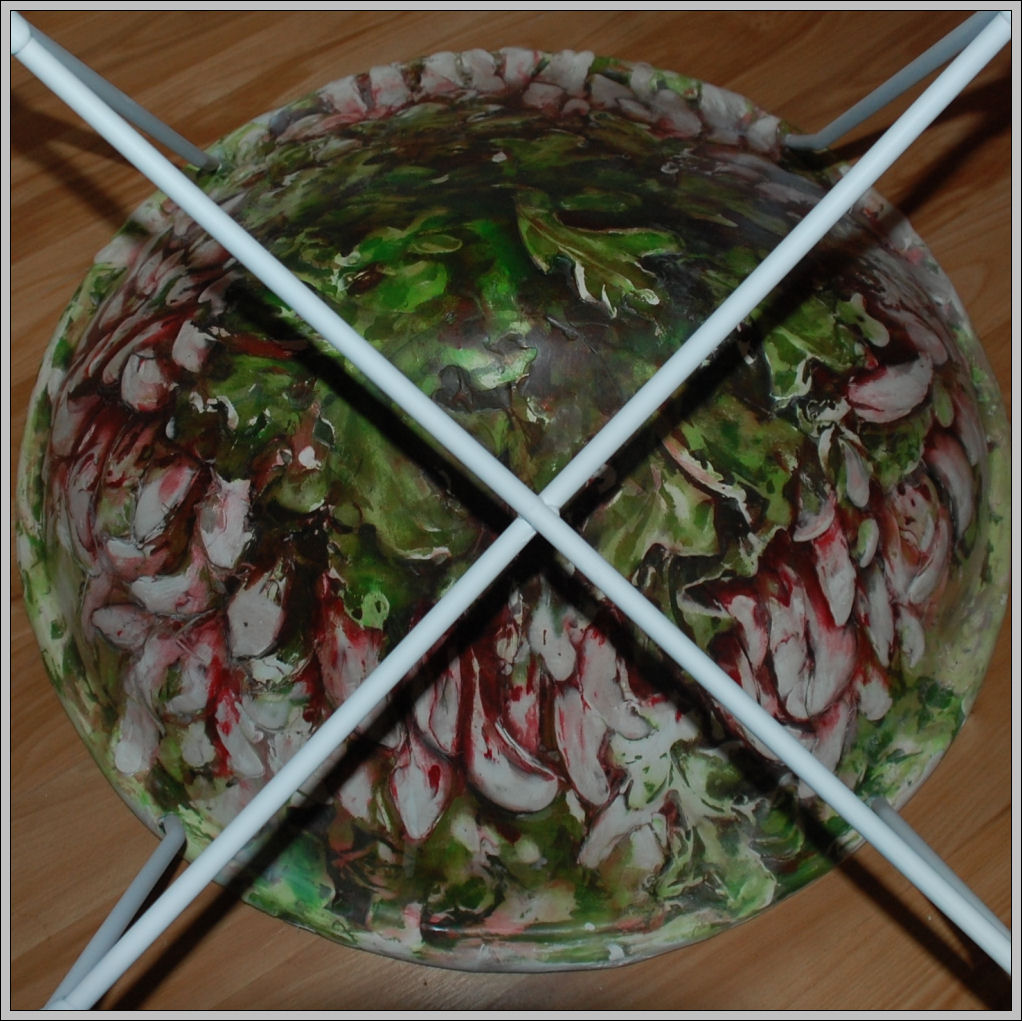
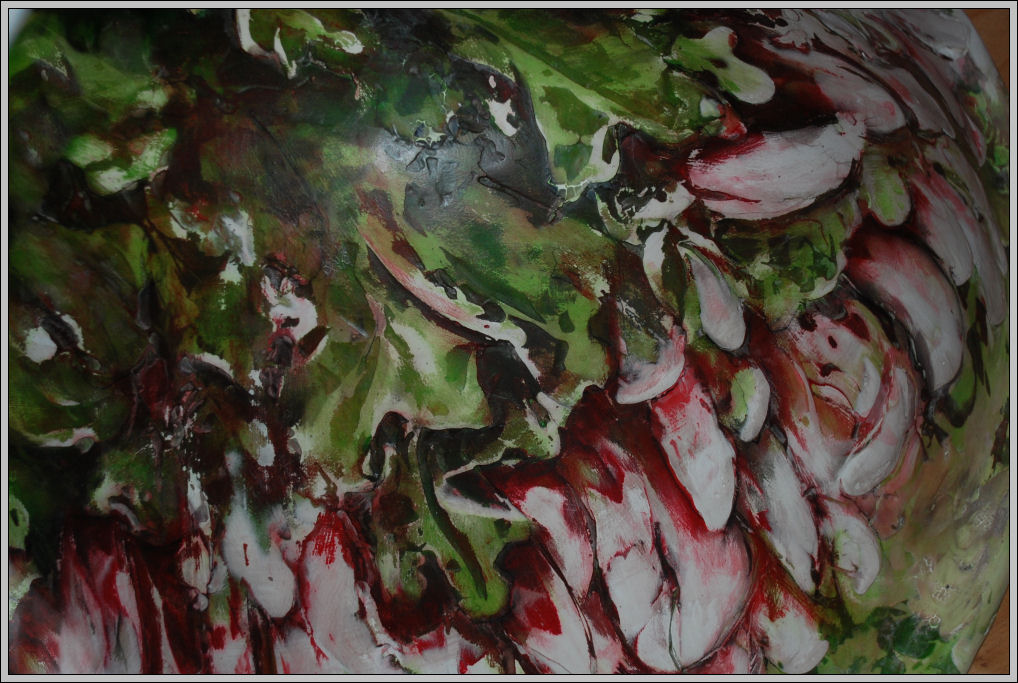
Chrysanthemums Chair, finished front and thumbnails of underneath/back details, 29H x 29W x 29D inches one-of-a-kind refurbished vintage chair as a base, woven canvas strips, layers of plaster cured, sanded and carved. Painted with acrylics, finished with varnish and waxed to enhance colors. Durable, functional.
Chrysanthemums Chair Update
Sunday, October 18th, 2015
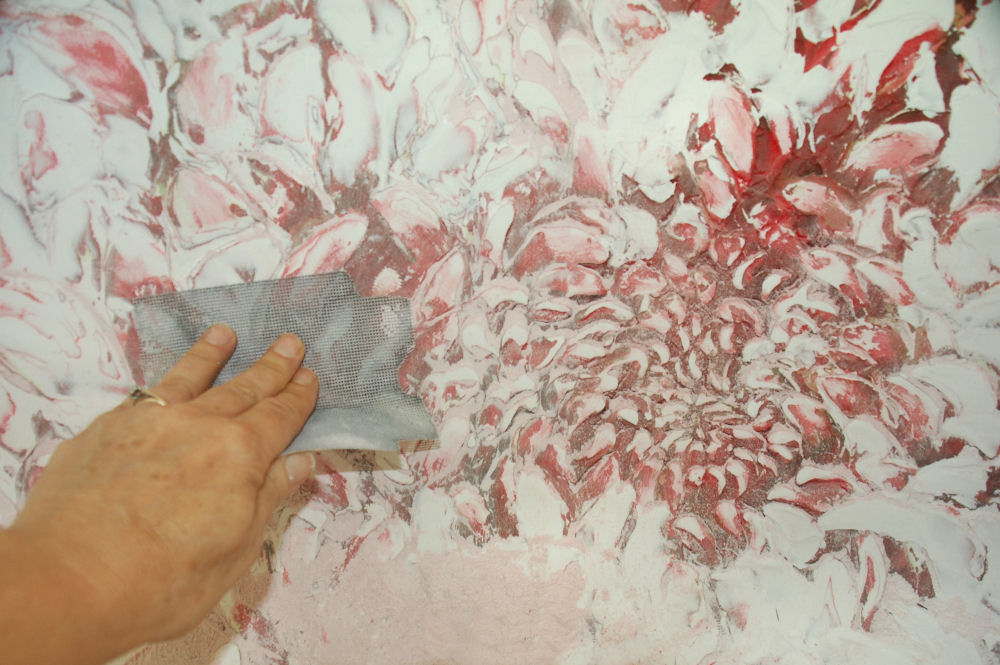
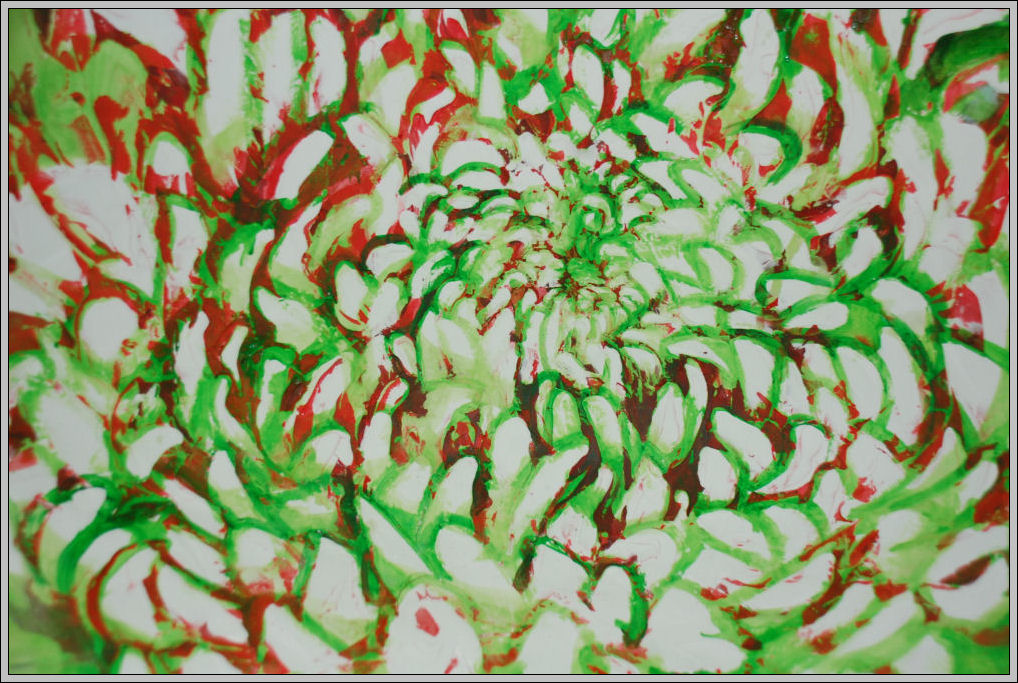
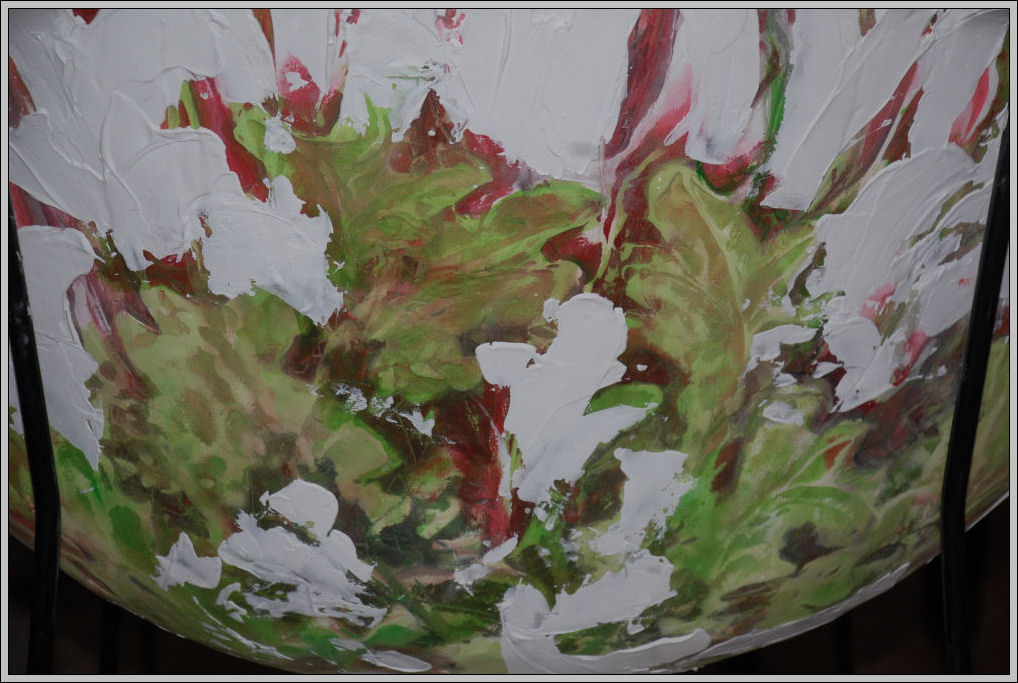
Chrysanthemums Chair front and back: plaster layering, sanding and painting in progress
Chrysanthemums Chair
Thursday, September 10th, 2015
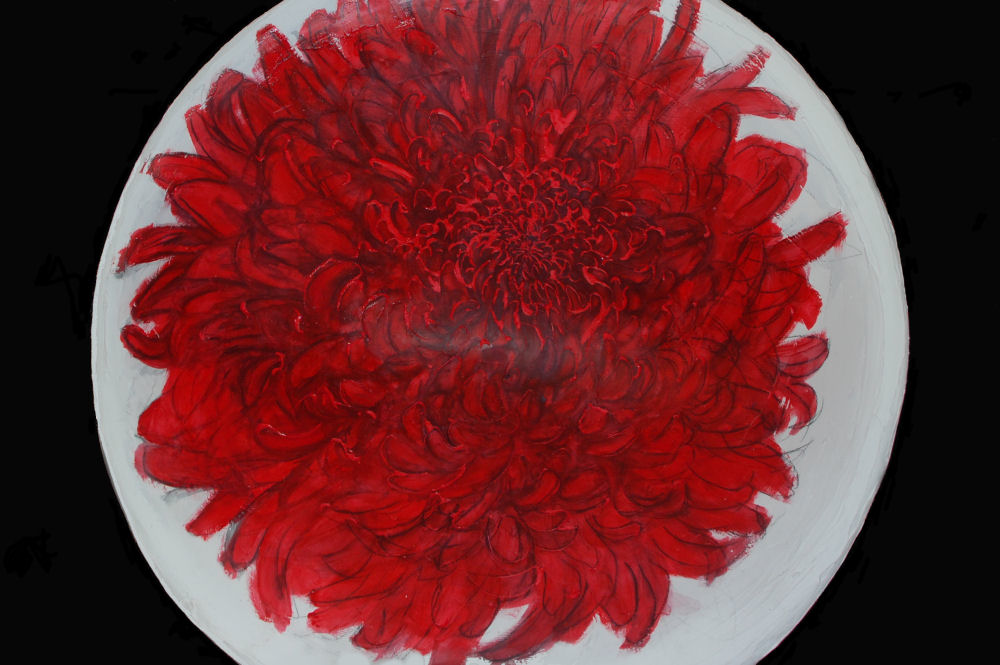
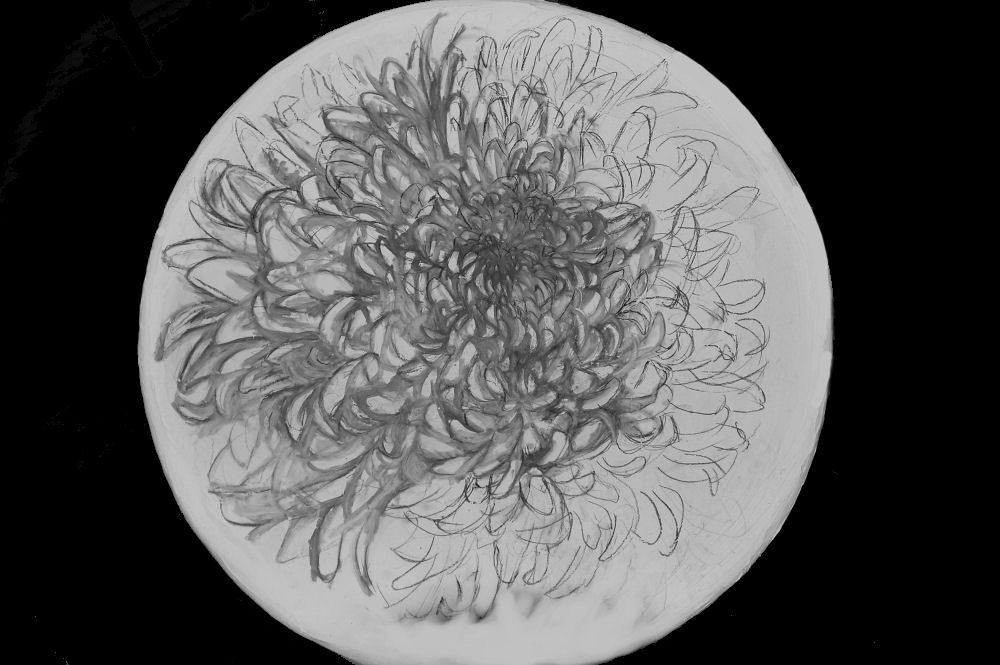
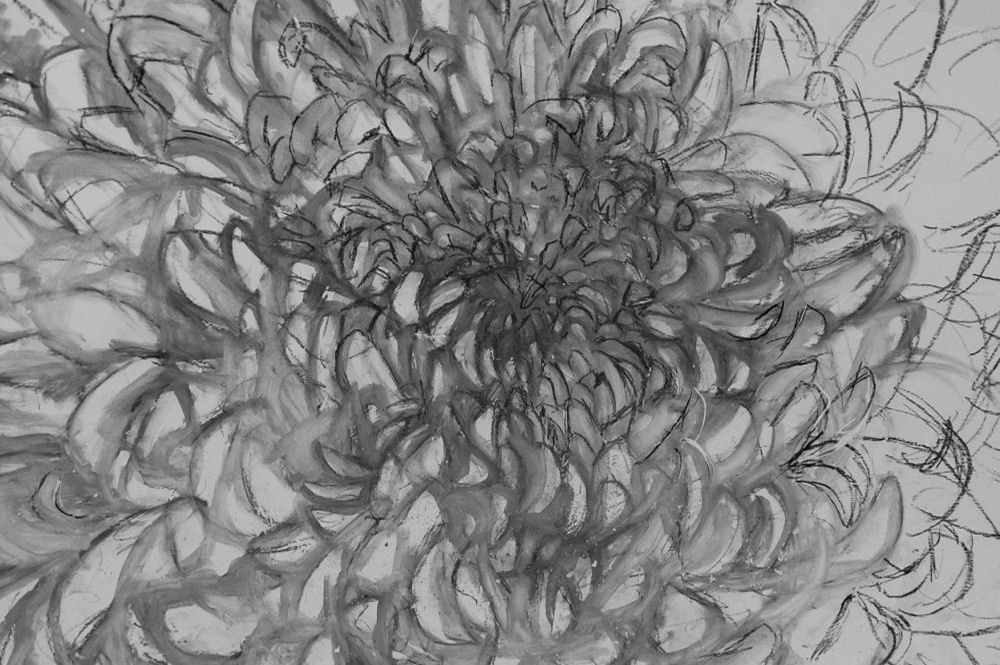
Chrysanthemums Chair Work in progress. 29L x 29W x 29D inches refurbished chair, canvas, plaster, acrylics. Thumbnails: graphite sketch, acrylics, carving detail. Above: first application of paint over carved surface. Next, plaster will be applied to petal areas to raise the surface. When dry, the whole process will be repeated; sanded, carved and painted again. I like the white background, so may not add much green or any other color except as contrast and in shadows. This chair will coordinate with the large Chrysanthemums painting.
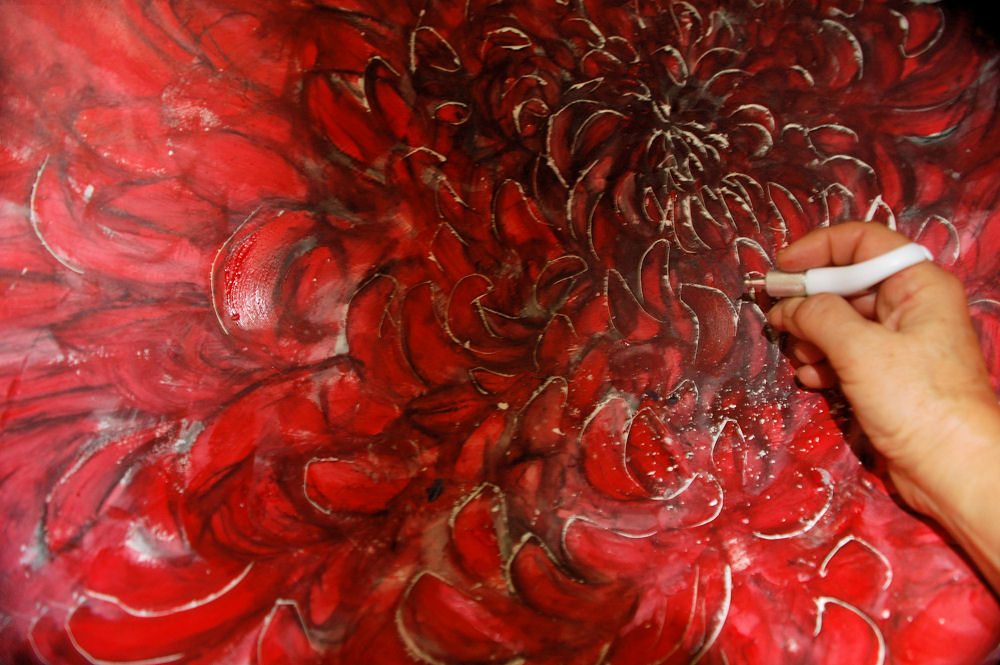
Symbolism and Significance of Chrysanthemums
With a history that dates back to 15th century B.C., first cultivated in China, where it is symbolic of honesty. In Egypt, Tutankhamen was reportedly buried with chrysanthemums. The plant is thought to have been introduced in Japan by Buddhist monks around the fifth century. Initially forbidden to grow except by nobility, the chrysanthemum is now a showy garden perennial common in gardens the world over, in a vast array of cultivars, shapes and sizes, with colors ranging in shades of purple, pink, red, white, yellows and greens.
In terms of design, the mandala formation demonstrates unfurling petals spiraling outward in succession from the center, like fireworks. It is easy to see why chrysanthemums symbolize optimism and joy.
A few states and sororities in the U.S. claim it as their official flower. Many European countries and parts of North America use white chrysanthemums in funeral arrangements, as they are associated with grief and mourning, whereas in Japan holds a “Festival of Happiness” to celebrate this flower each year, attributing it to the sun and happiness. There, it is a symbol of the Emperor and the Japanese Imperial Family. In Canada and the United States, the floral industry thrives on the notion that every flower has unique characteristics, and we communicate our sentiments through specific bouquets according to occasion. For example, the chrysanthemum is the November birth flower and also appointed to the 13th wedding anniversary.
Certain species of the plants are edible and contain medicinal properties. Leaves and roots can be cooked, used mainly in Asian dishes, and flower petals are boiled to make tea. Extracts of the plant, pyrethrins, are processed and preferred as an earth-friendly, biodegradable commercial insecticide.
In cold northern climates they are planted as annuals, whereas here in the Pacific NW coast they are winter- hardy, blooming each Fall. If the plants get leggy before blooms appear, they benefit from being cut back and are easily propagated. Colorful new “mums” add liveliness to flower gardens as seasons change, and they are some of the first to entice us at stores during Spring. Chrysanthemums are perfect in home bouquets, lasting longer than any other cut flower.
Birch Stand
Friday, November 30th, 2012
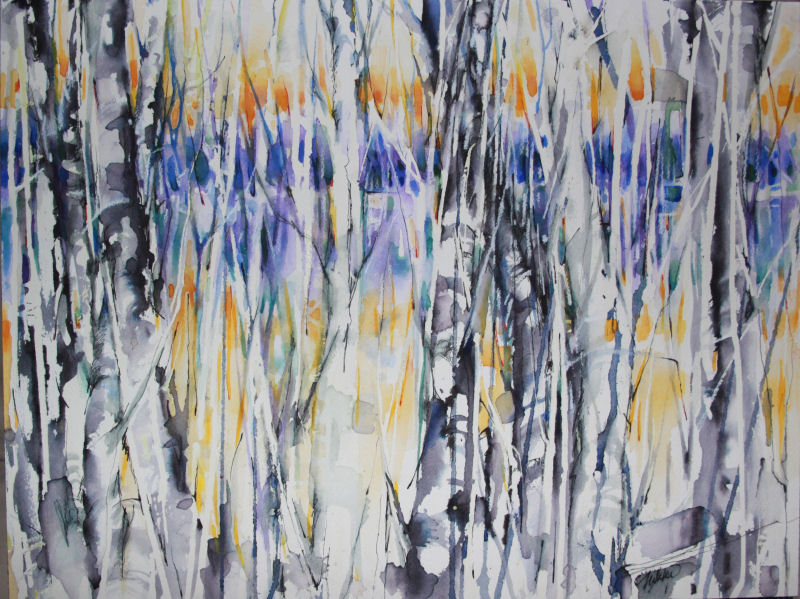
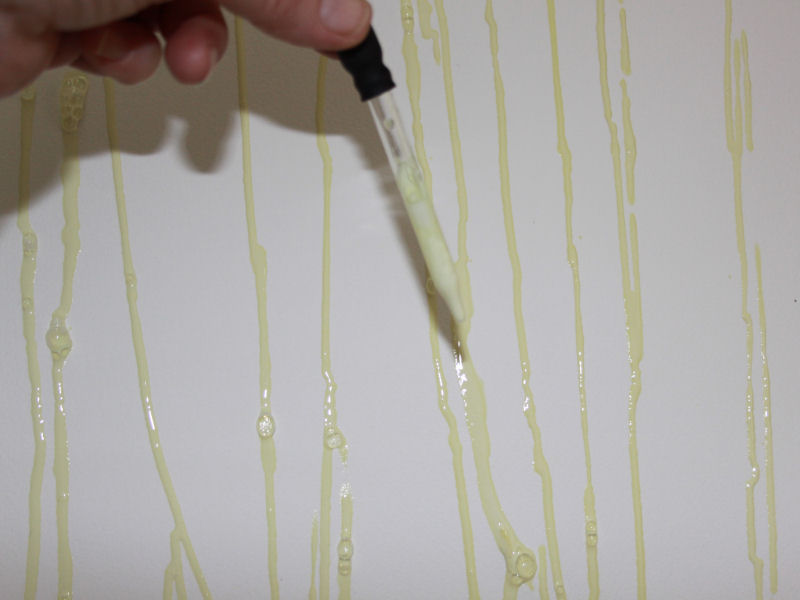
Work details: 1. applying resist medium 2. working with the challenge of a limited palette, watercolors were also dripped down the page. Tomball watercolor pen adds more details.
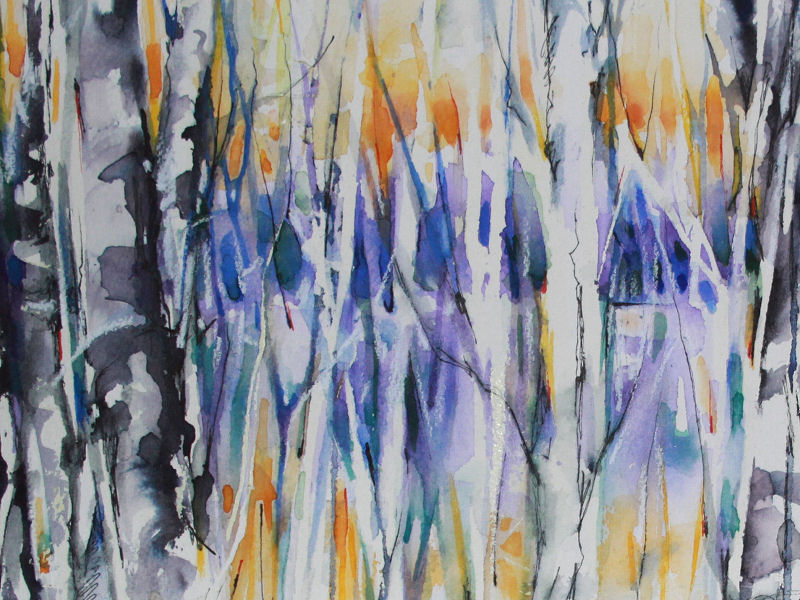
Birch Stand, 12H x 16W inches watercolors on 120 lb cold pressed 100% cotton paper. Framed size 22H x 26W inches.
Chrysanthemums
Tuesday, June 26th, 2012
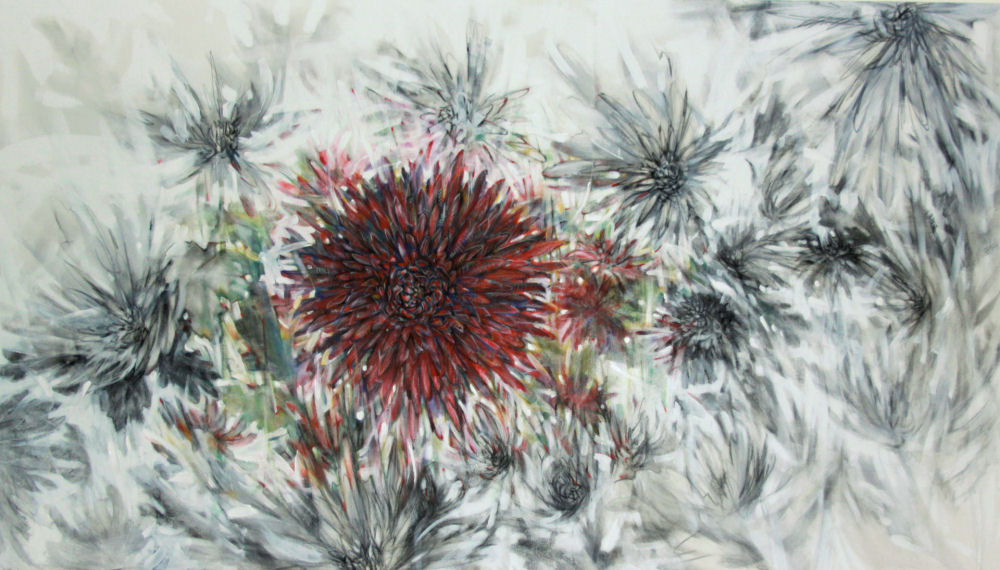
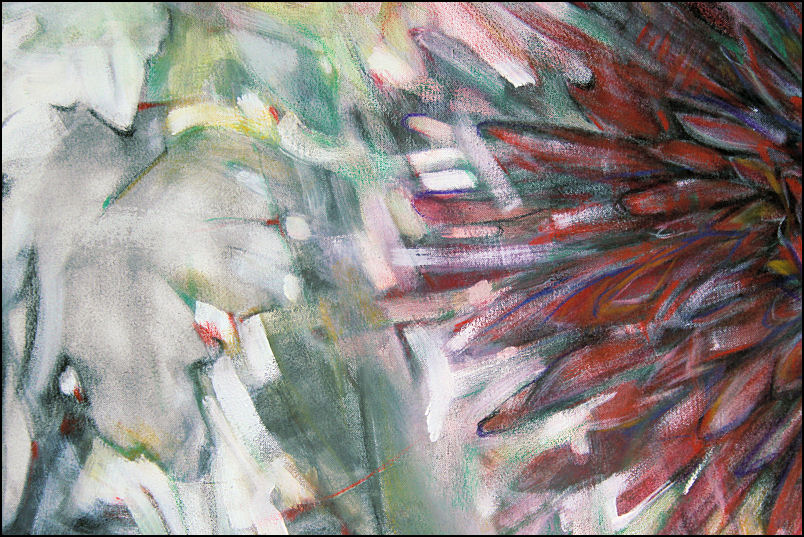
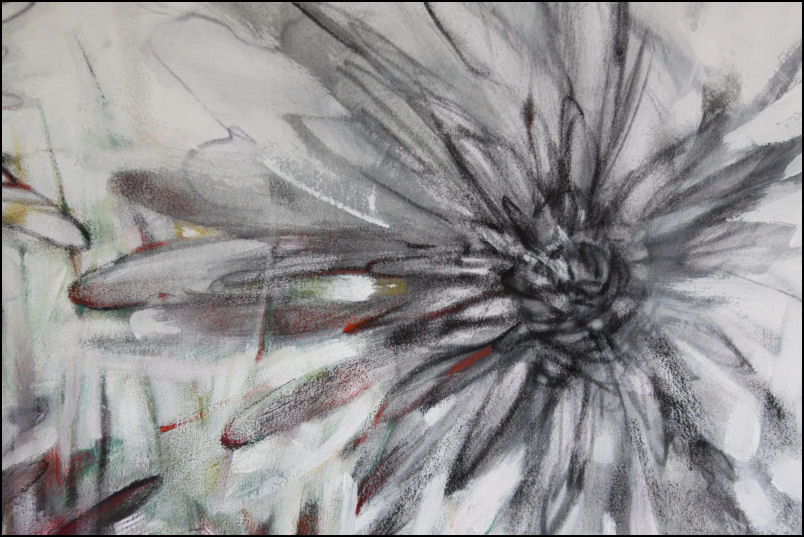
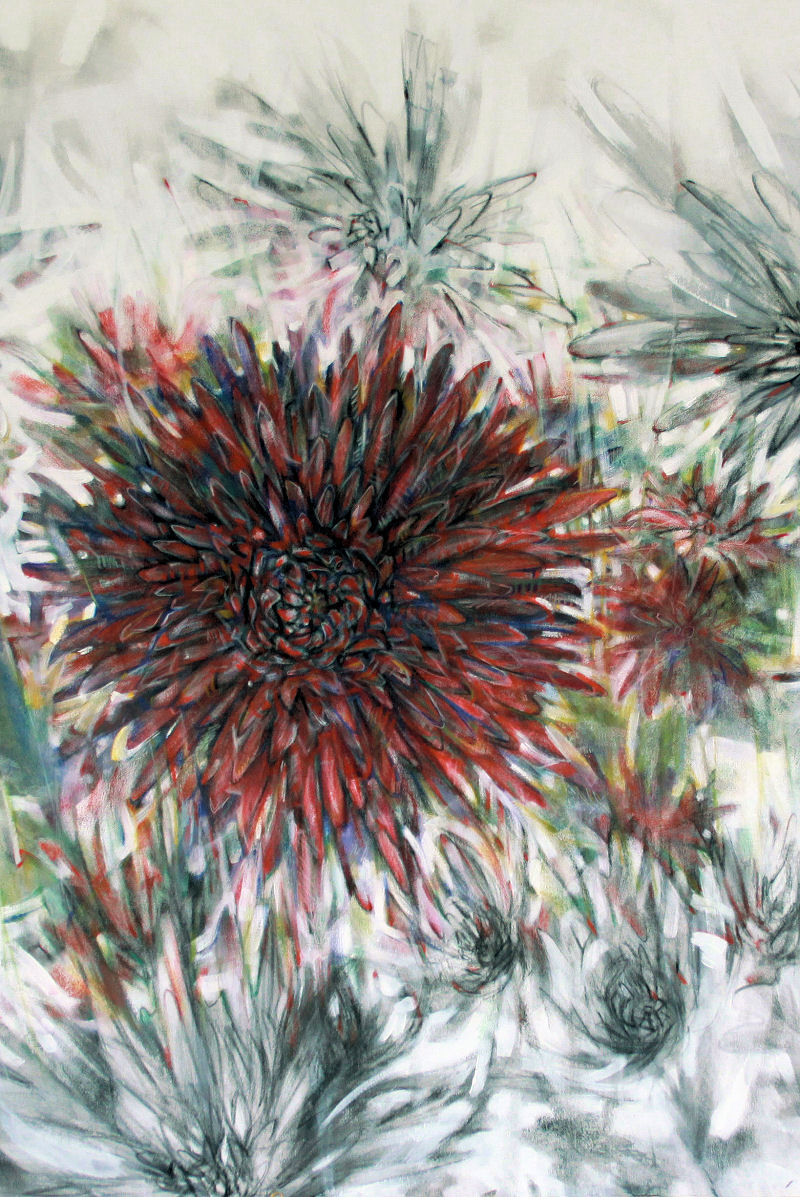
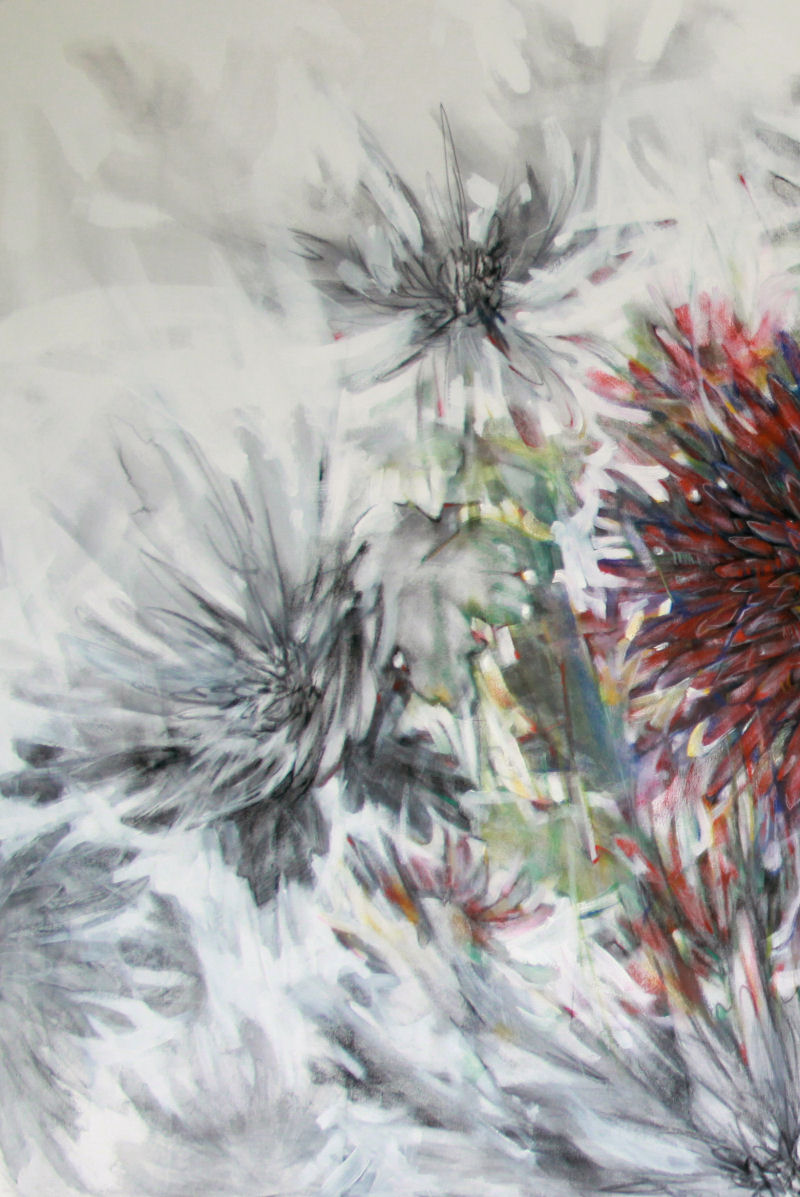
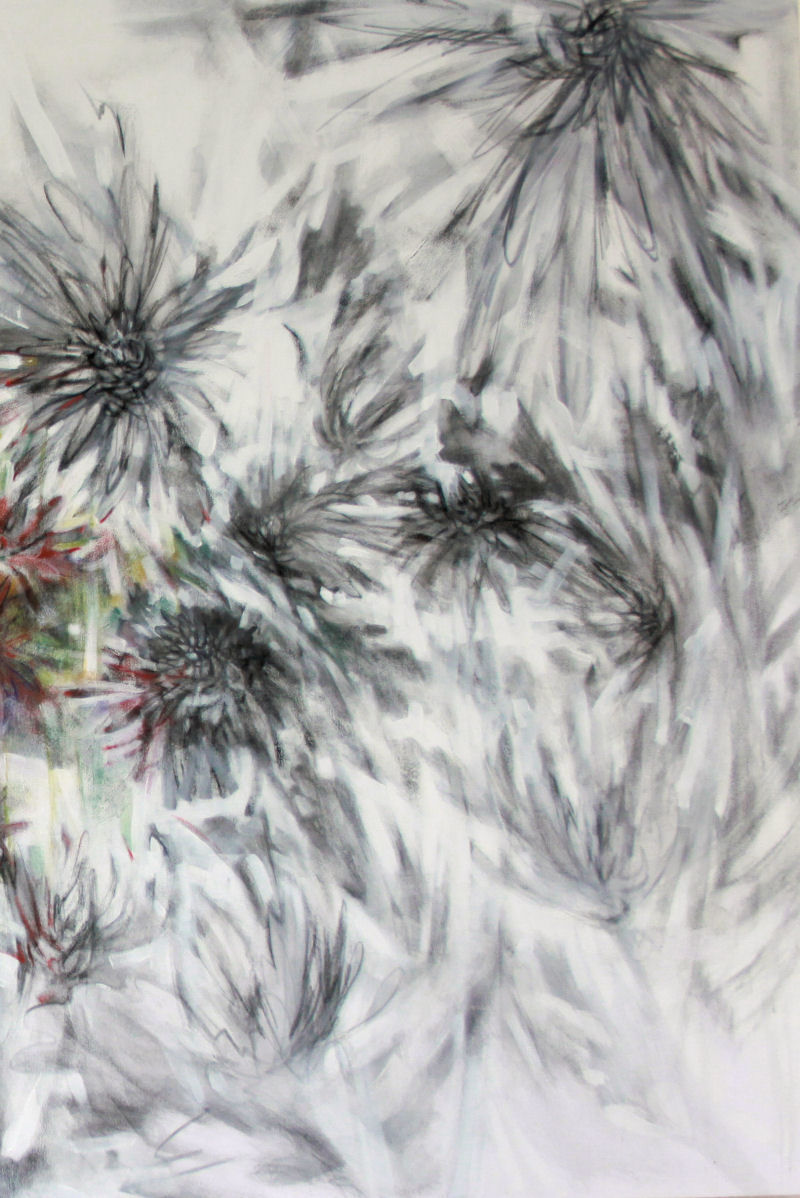
Chrysanthemums, 85W x 45H 3D inches graphite, charcoal, soft pastels, fixative with primer used as paint on white 100% cotton. Grey narrow frame. This is a beautiful painting, impressive because of its size and the expressionistic style of the flowers. The small photo doesn’t do it justice, so some detail images are provided below. It’s hanging in our family room on a grey wall beside the Chrysanthemums Chair. They do look great together!
| Detail images: | 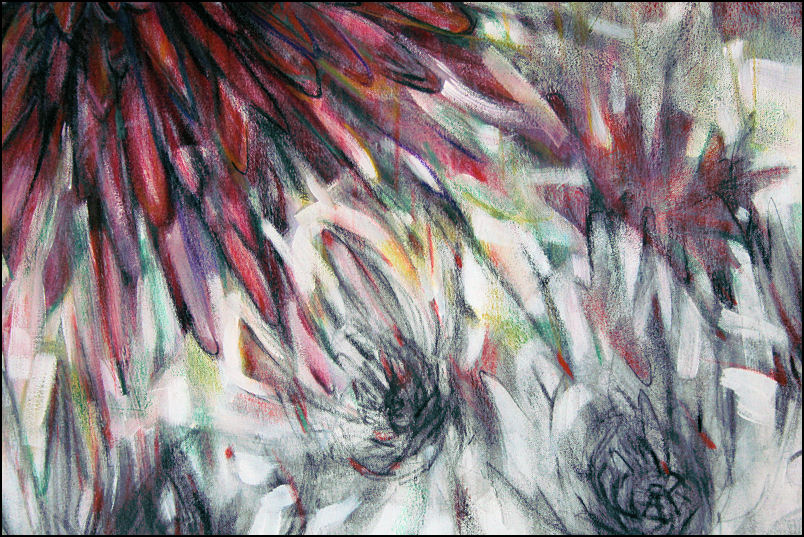 |
 |
 |
||
 |
 |
 |
Practical design
Tuesday, December 21st, 2010
“Necessity is the mother of invention.”
Aesop’s Fables
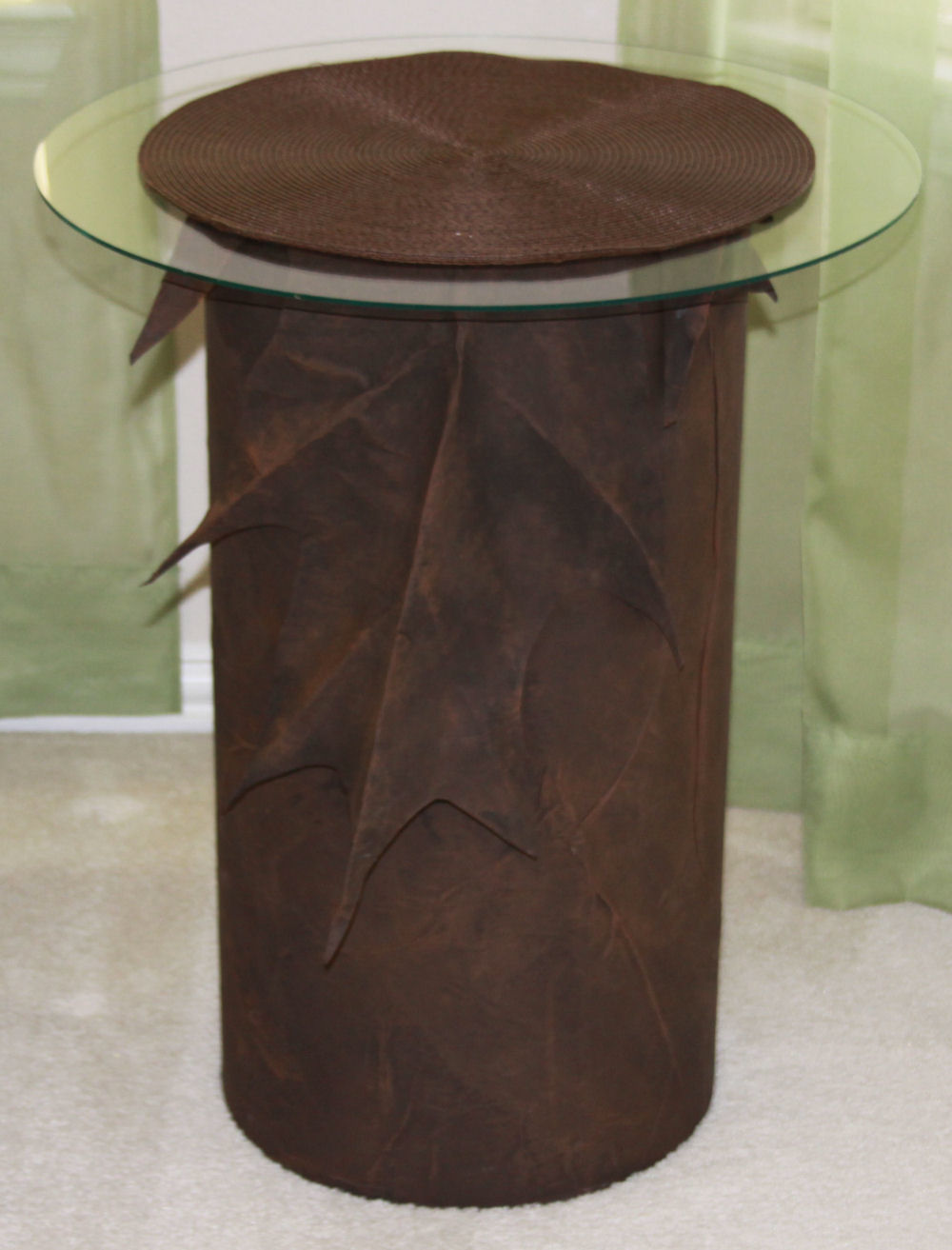
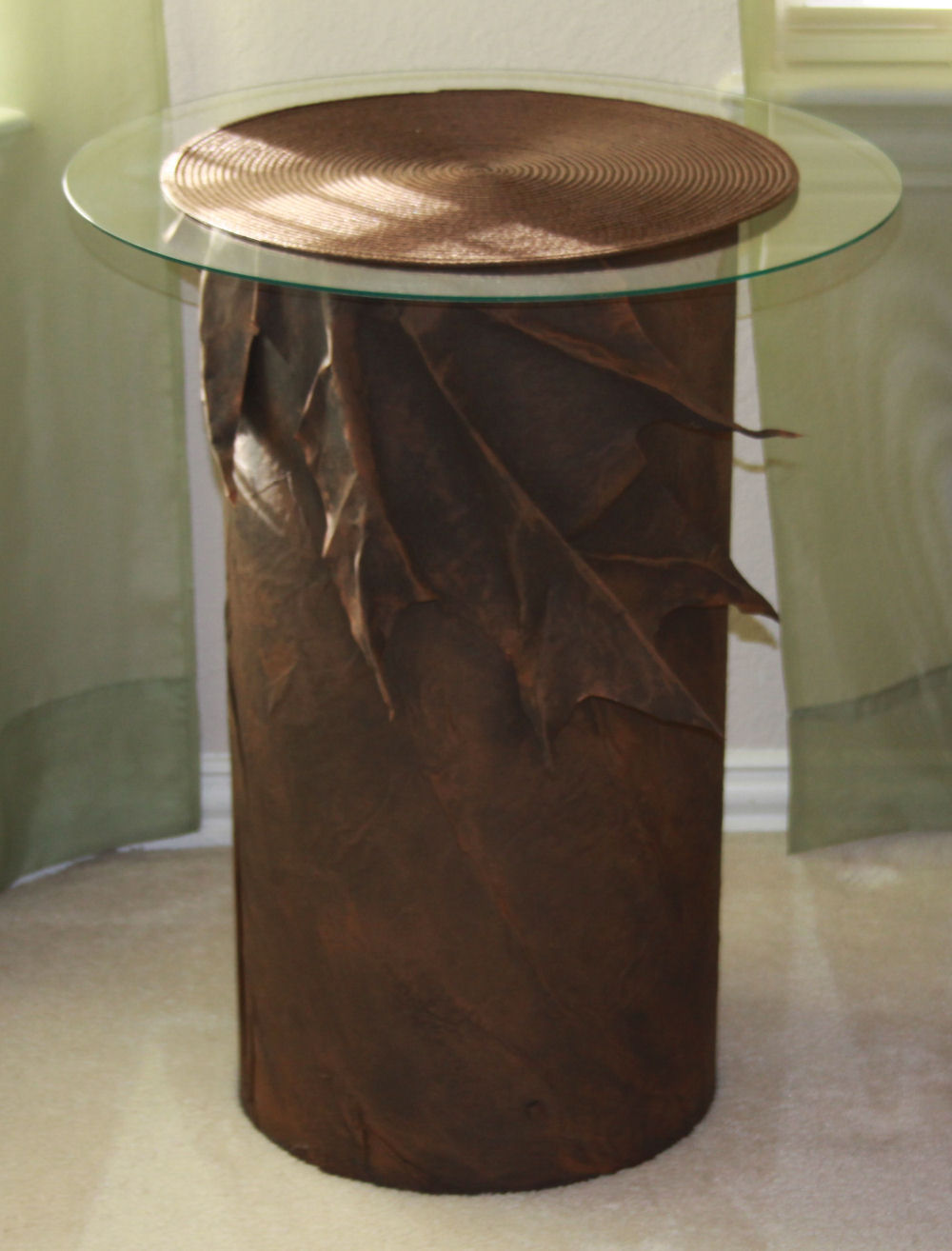
Oak Leaf bedside tables, 24H x 12W inches with a 20-inch glass top. Large, crinkled paper mâché leaf-shapes are creased, folded and arranged over the top of heavy cardboard tubes. The tubes are available in a variety of dimensions, sold in hardware stores as use for cement foundations.
I’ve had this idea to make bedside tables for a few years now, and selling the house, prepping it in a minimalist way for viewing has motivated me to finally make them. Faux suede effects were the intention here, and I’m pleased with the results. it really does look like suede. A brown circular woven mat covers the glass and hides the space looking into the tube.
Zen Garden #10 almost finished
Wednesday, November 10th, 2010
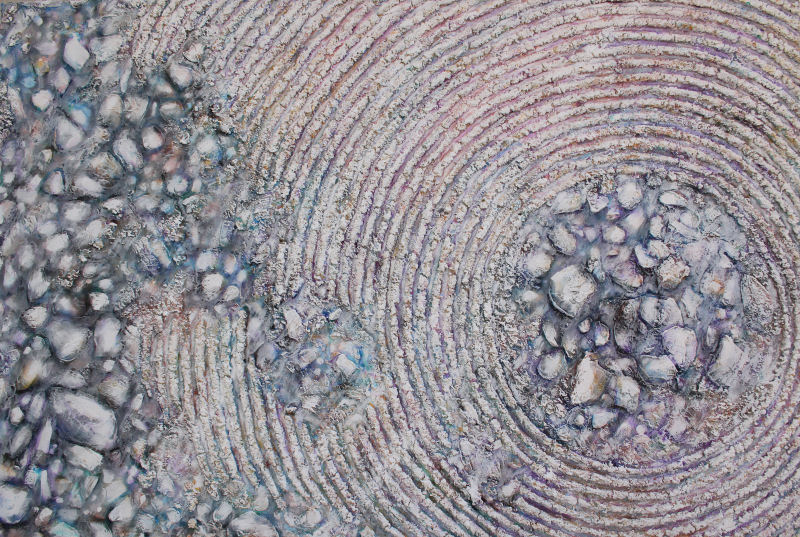
Zen Garden 10, 40 x 60 x 3 inches mixed media on canvas.
The final stages of this paintings will be finished as it hangs on a wall. As seen in a realistic room setting, it will be easier to spot whatever might make the composition more interesting. Some colors may need to be re-enhanced to add more depth and definition, but I also like the overall faded look, so we’ll see. The texture continues around all 3D edges. This painting is extremely heavy, as it is on a home-built canvas stretcher, so it will be transferred onto a lighter-weight stretcher if it sells. It will still be stable, but practical. All paintings in the Zen Garden series are wired to hang in any of 4 orientations: vertically or horizontally. Below: details of left central portion as seen in the above.