
3D
« Previous EntriesTurn tomato cages into festive trees
Saturday, December 7th, 2019
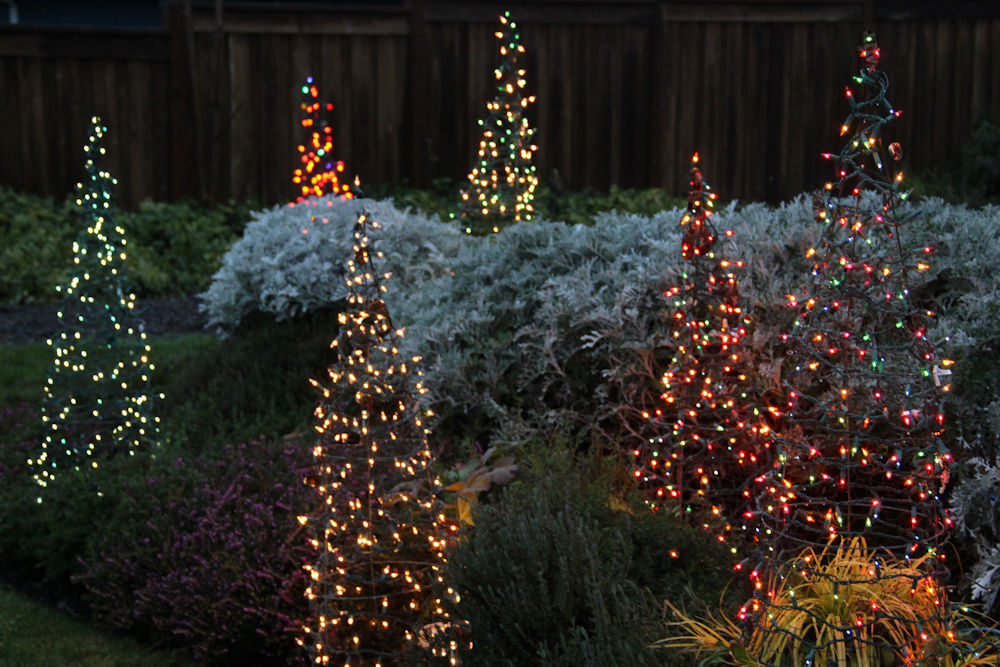
Use tomato cages to create festive trees. Turn upside down – 2 together make a stronger structure. Wrap with lights.
Decorative vine balls
Monday, July 30th, 2018
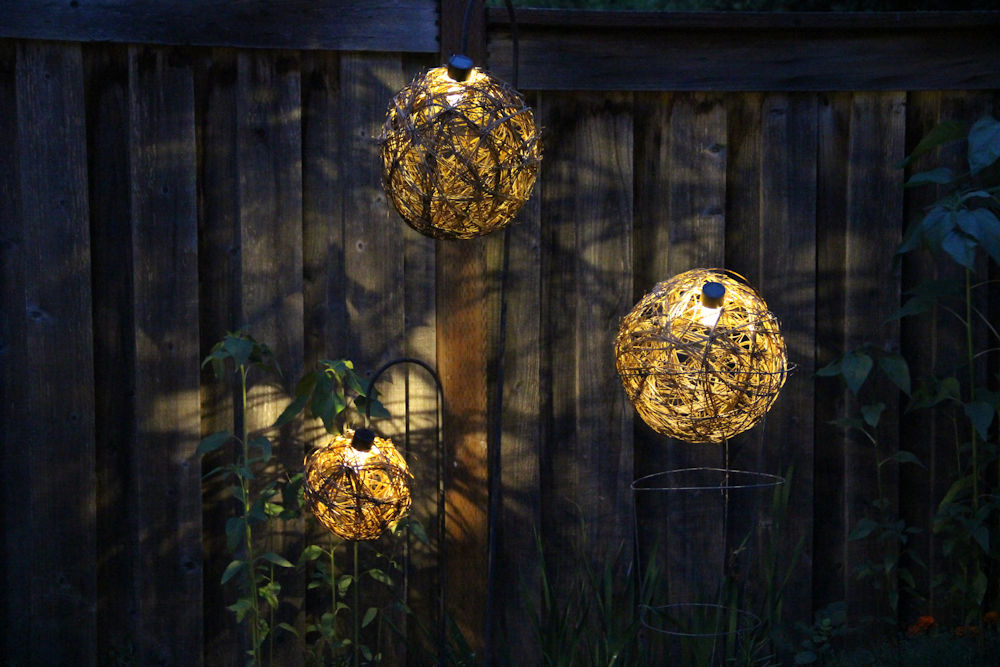
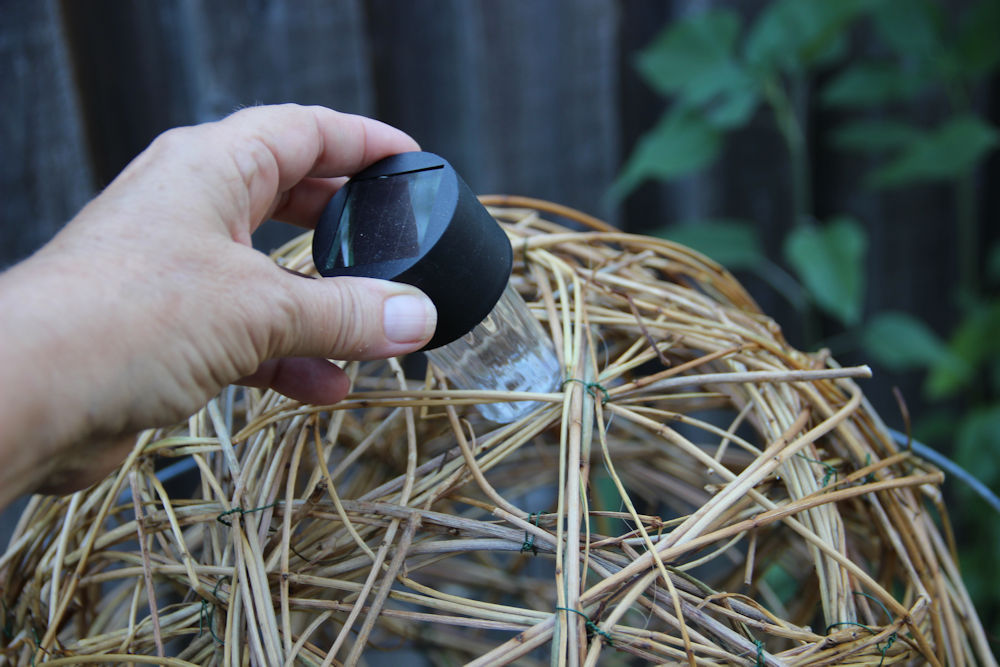
Tidying up the garden mid-season, the periwinkle benefit from an aggressive cut-back, so these decorative balls were made with the vines that would otherwise end up in the yard waste bin. These vine balls can be created any size and the larger ones don’t require much more effort than the small. Tomato cages prop up larger balls perfectly if you don’t have hooks. Inexpensive solar lights were removed from the stakes and snuggled into the top of each woven ball where they emit a peaceful glow at night.
_______________________________________________________________
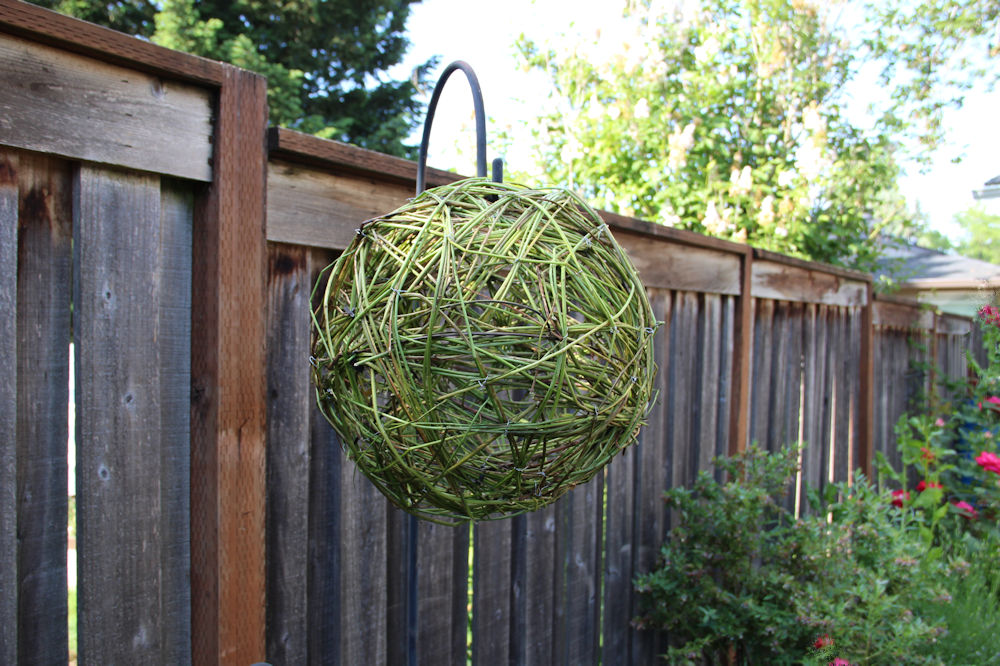
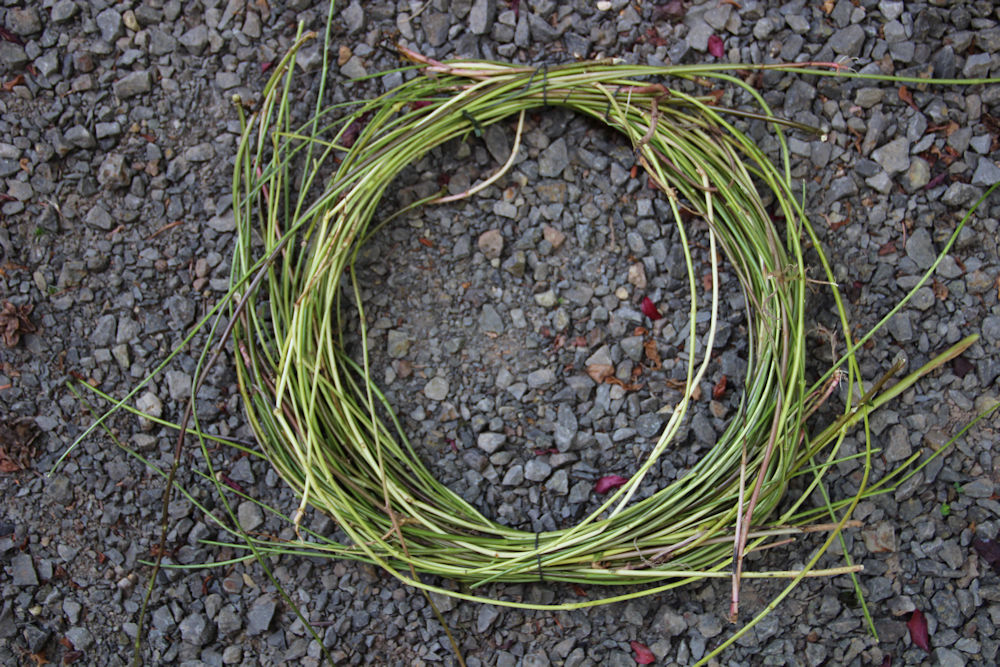 How to create: use fresh periwinkle vines stripped of leaves. Dried vines are difficult to work with, and even soaking does not reconstitute them satisfactorily, so plan to make balls the same day vines are harvested.
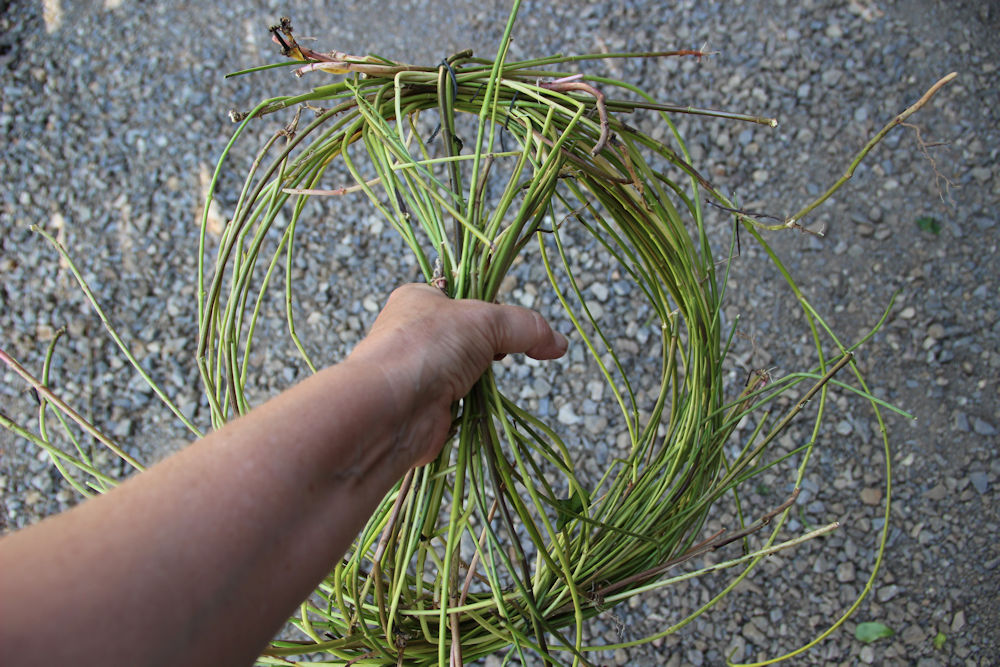 Make a loose wreath, wire-wrapped at opposite ends. Pull out 1/4 of the vines from the main section to each side, wrapping centers with wire. You will then have 2 wreaths interlocked. Continue adding and weaving in extra groups of vines in a symmetrical fashion. Keep pulling smaller groups of vines together until the ball is compact, constantly judging and defining the shape.
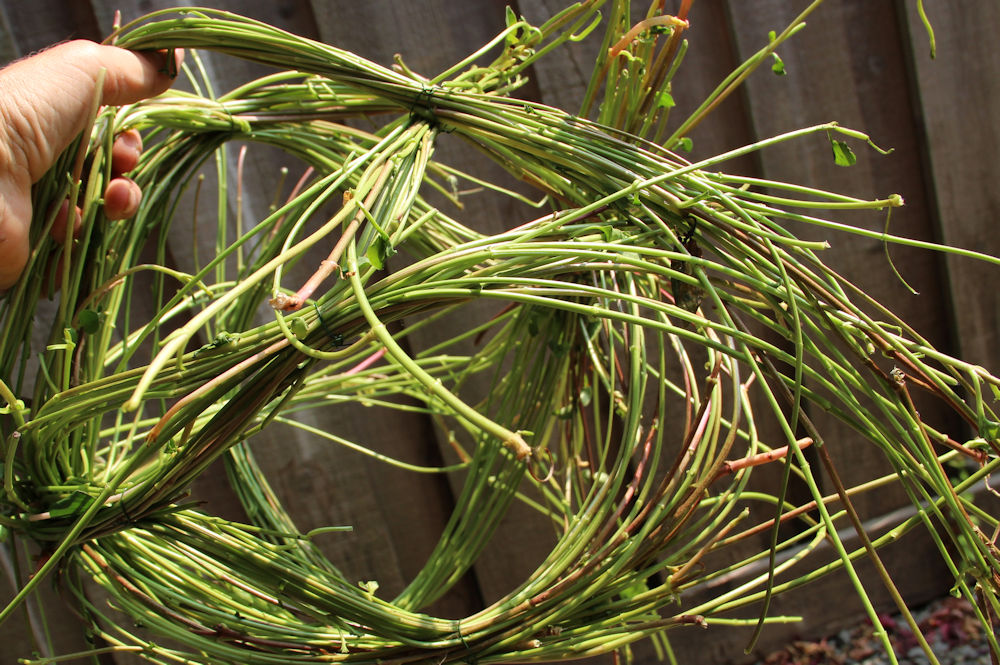 Like anything made by hand, the first stages are most difficult and may seem like a chaotic mess, but stick with it and you’ll be happy you did.
Tips: 1) 24 gauge florist wire is most finger-friendly 2) the solar lights don’t sufficiently recharge if dropped inside so are placed on top where they still show off shapes nicely in the dark. 3) Virginia Creeper is excellent for this except it irritates the skin, so check into that if experimenting with other materials. 4) don’t use blackberry vines.
_______________________________________________________________
Progress on the Shiva and Moche Earplug Replica Chairs
Tuesday, May 24th, 2016
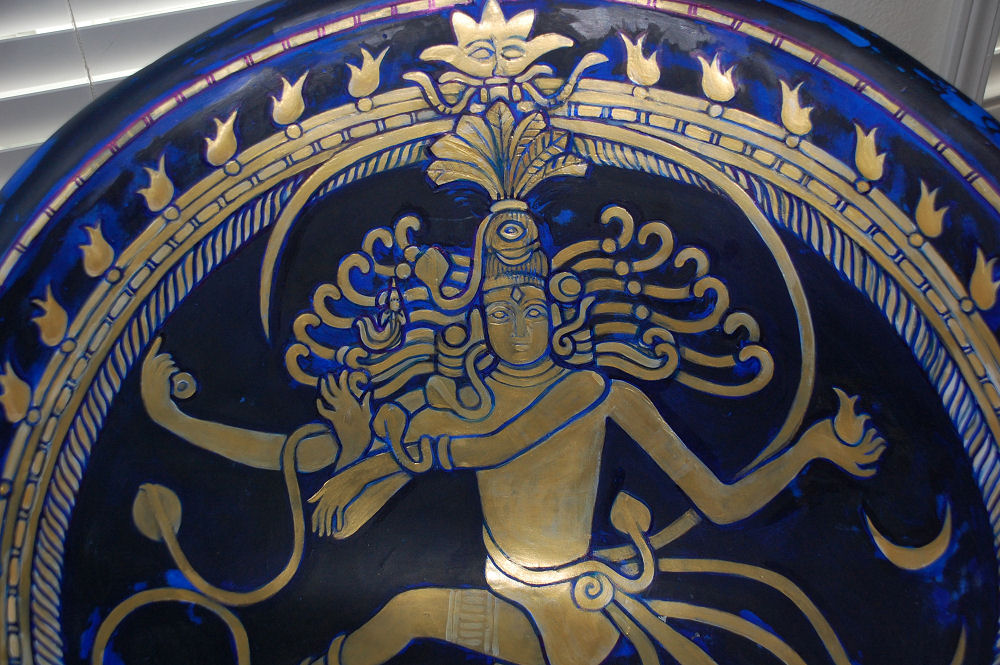
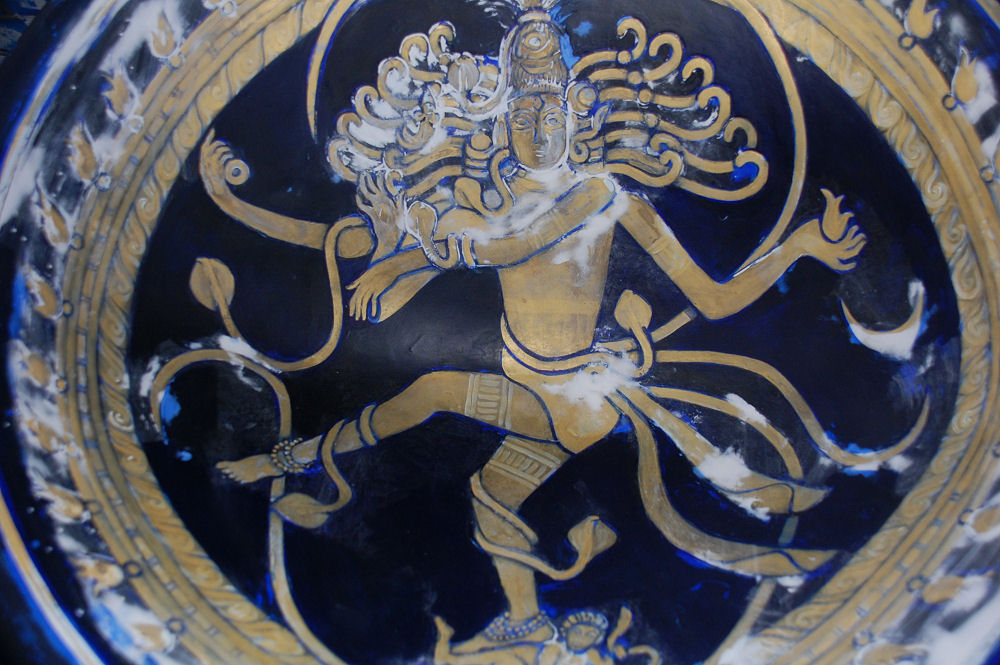
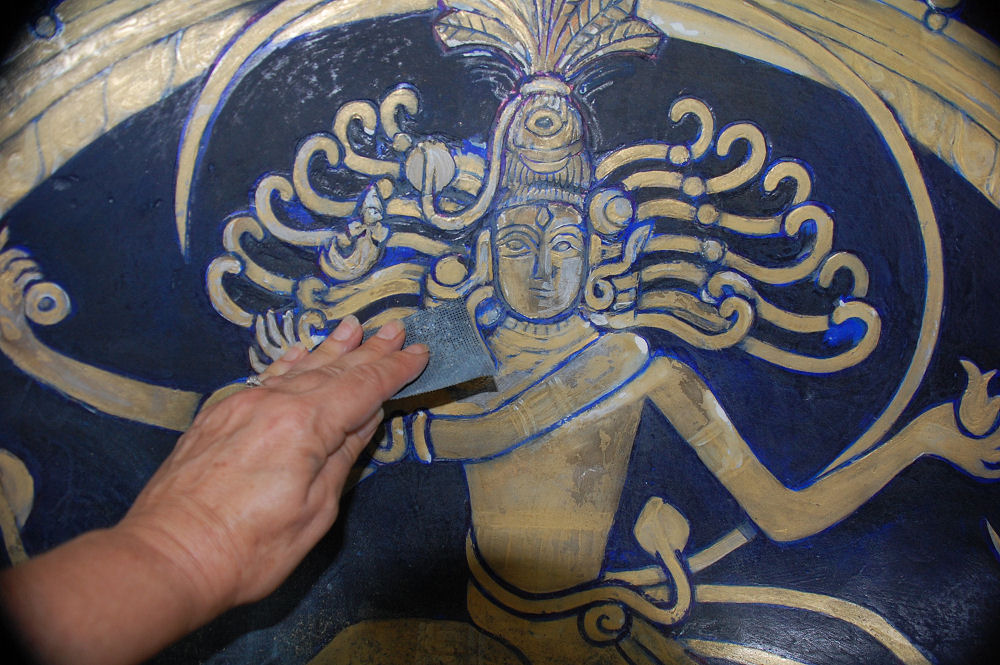
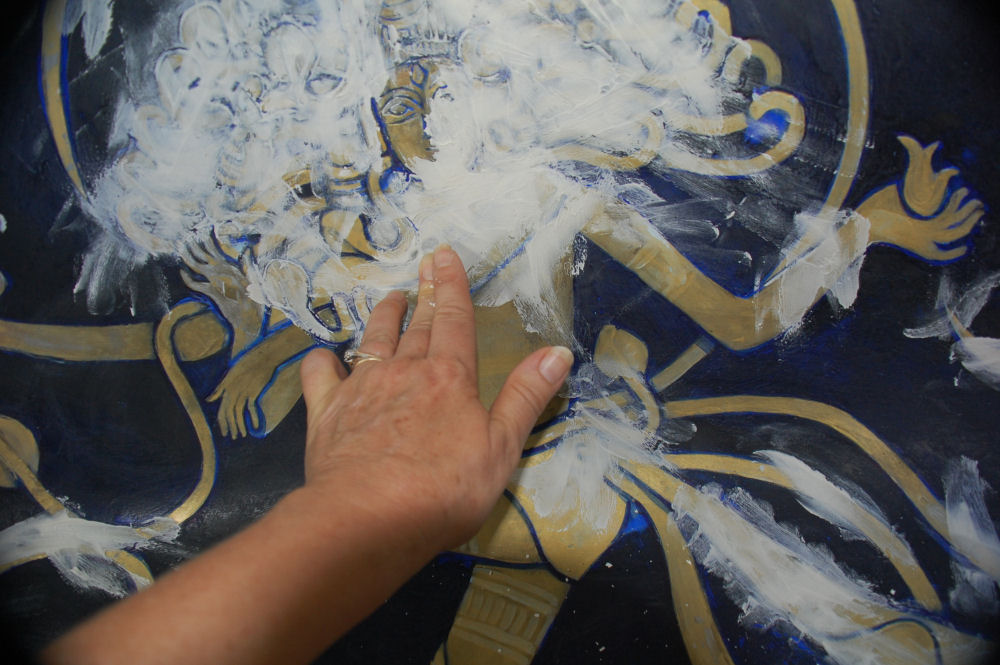
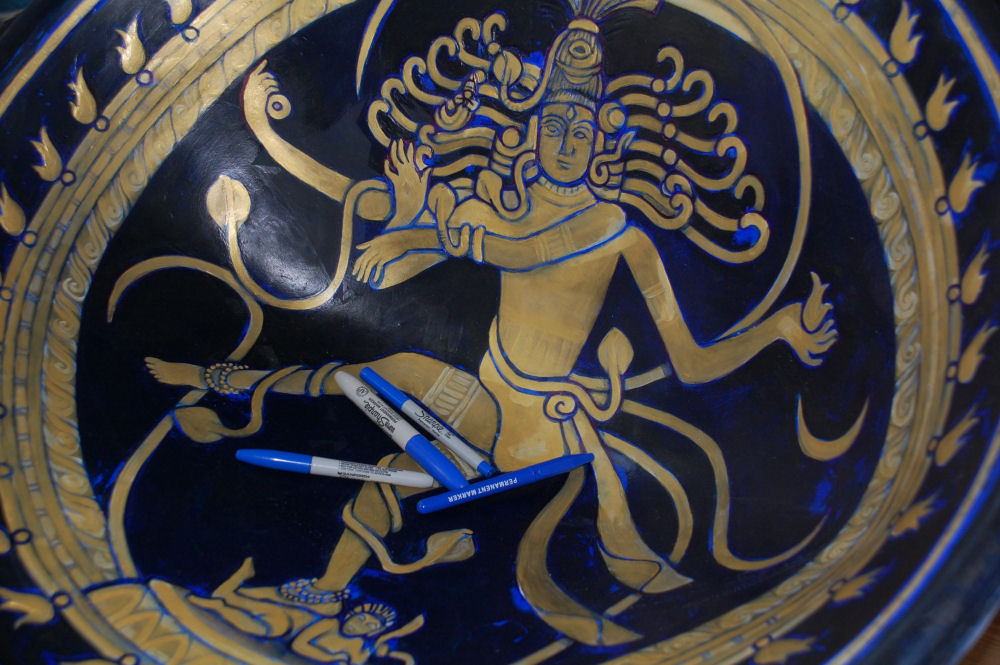
The extra time working on each the Shiva, Lord of the Dance and Moche Earplug replica chairs means 1) increasing familiarity with the authentic originals, and 2) layers of color and contrast add patchy timeworn impressions which might not have otherwise occurred.
The Shiva statue design is so complex, in retrospect it might have been enough to paint it on a flat surface, like the Mayan Bowl replica chair. Certainly it would have been easier and might be finished by now, but in artwork, I am not always necessarily seeking the easiest way through. Ease is usually the result of something already learned. The point is to discover how to do something, learn how to resolve issues that are presented and/or self-imposed, and the energy is driven by those challenges.
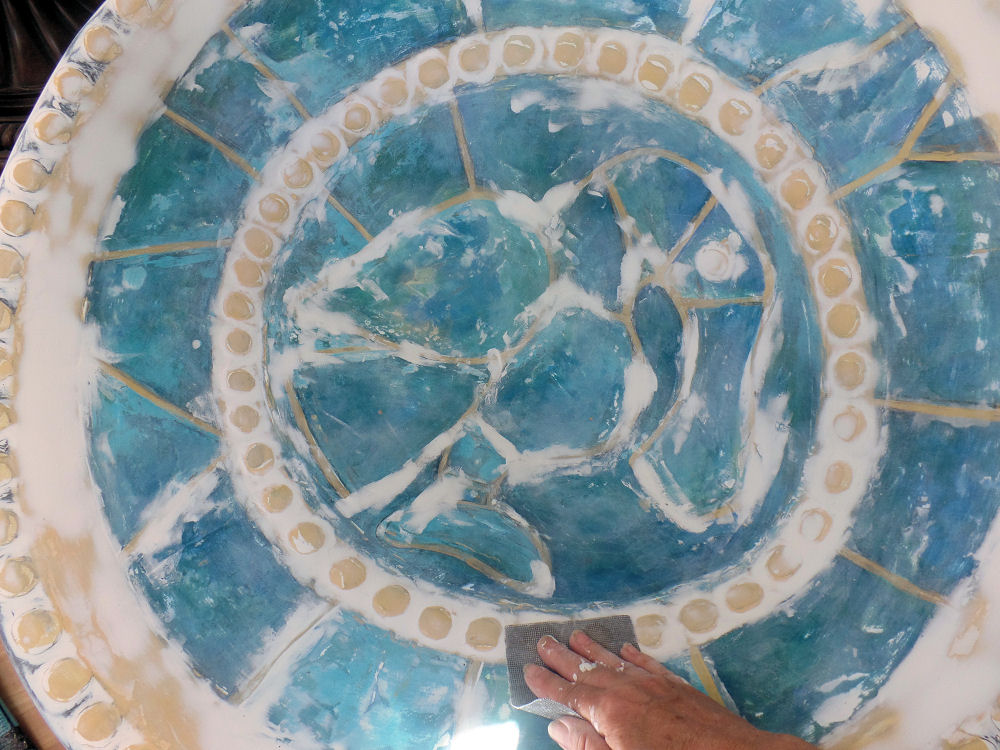
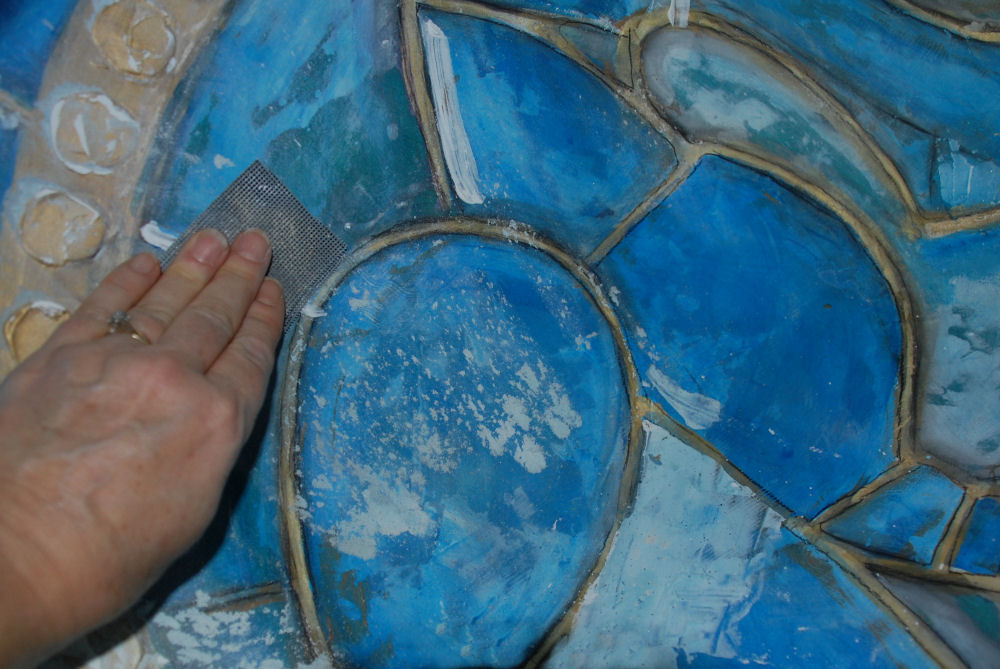
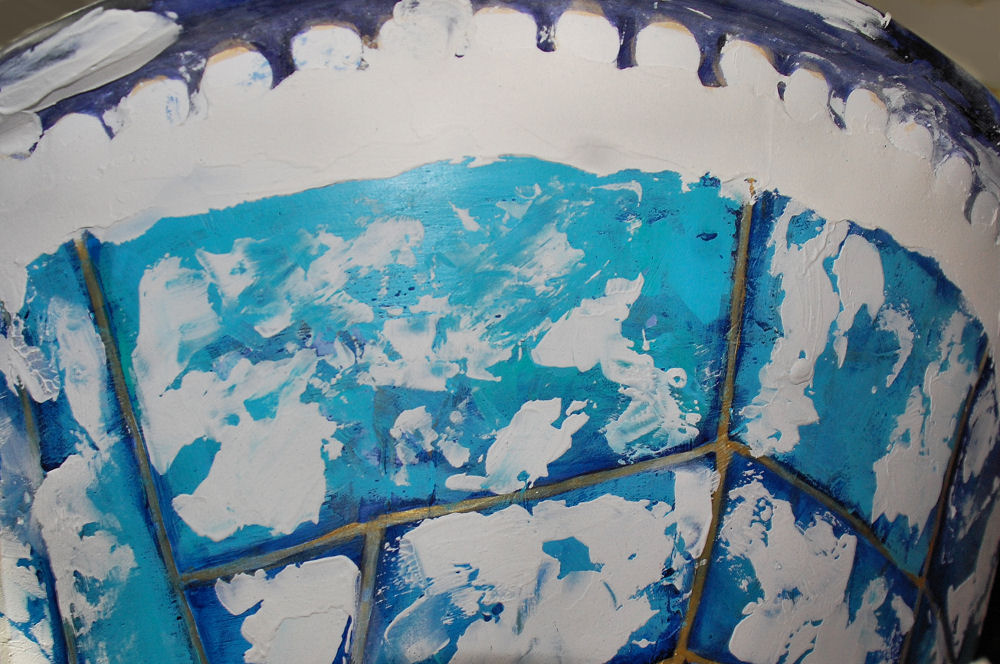
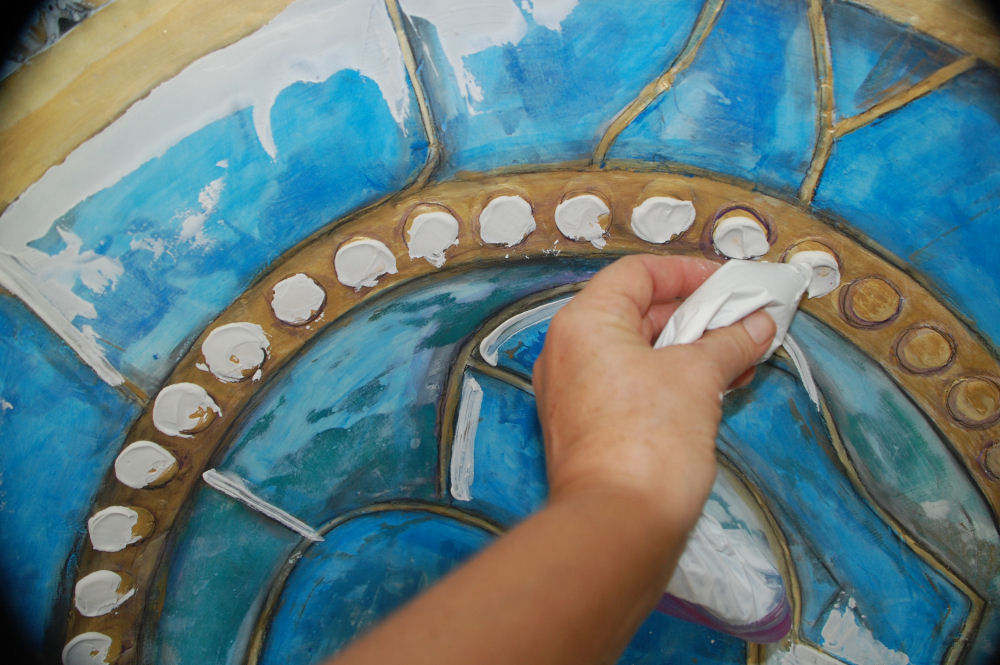
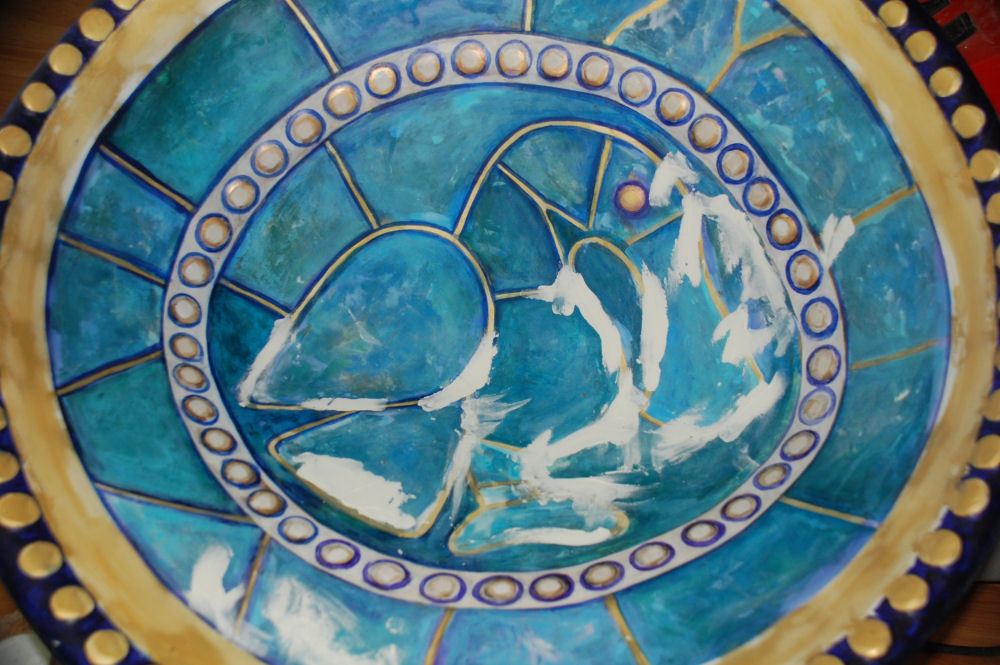
While staying true to the original concepts, I also applied artistic licence since the chairs are unique interpretations in their own right, so some of the designs are improvised slightly, like the ring of fire around Shiva, and the faux turquoise inlay design on the back of the Moche Muscovy Duck chair.
Some issues I’ve encountered: The water-based metallic gold paint reflects off every bump, dries and clumps quickly, and does not spread evenly compared to other acrylics colors even with additives, and the effects of build-up require extra sanding to keep the surface smooth. The overall sculpted effects of carving didn’t seem to make a difference aesthetically so I finally abandoned the idea last week. A lot has been filled in, but some carving is left to keep the hand-worked appeal.
Special Orders
Thursday, February 11th, 2016
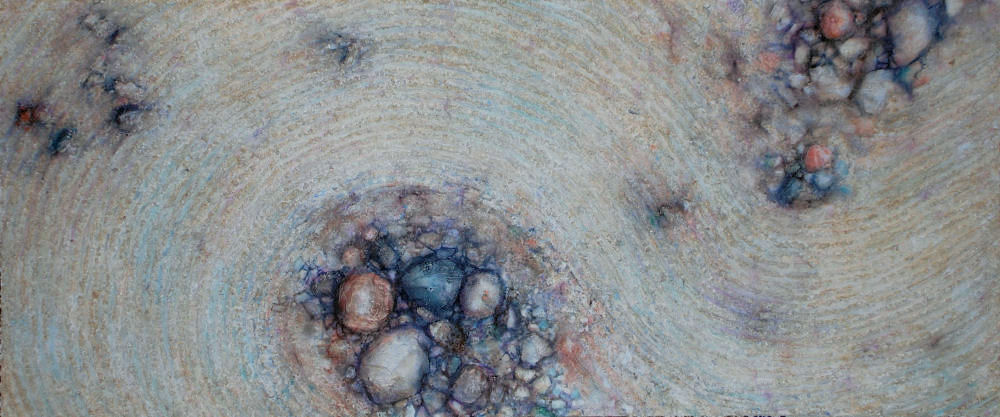
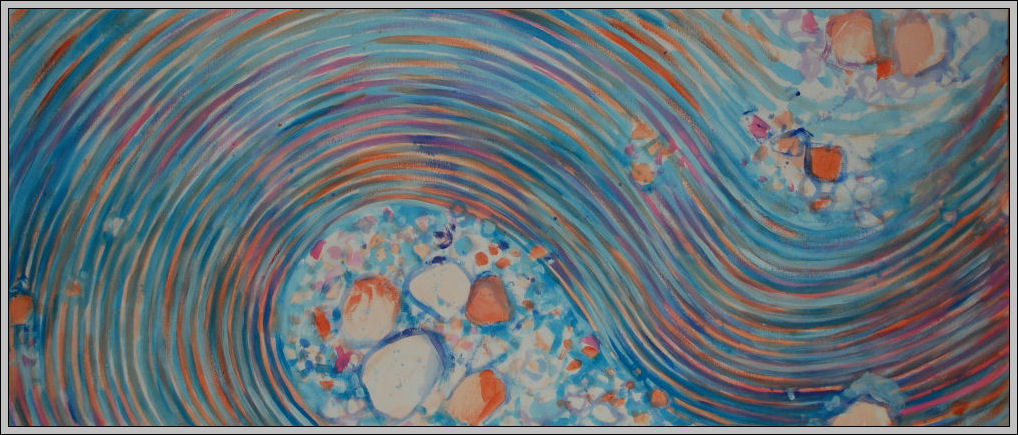
Special order, Zen Garden 02, replicated 24H x 59W x 1D inches mixed media on canvas, special order finished, sent and received. Replications are unique from the originals.
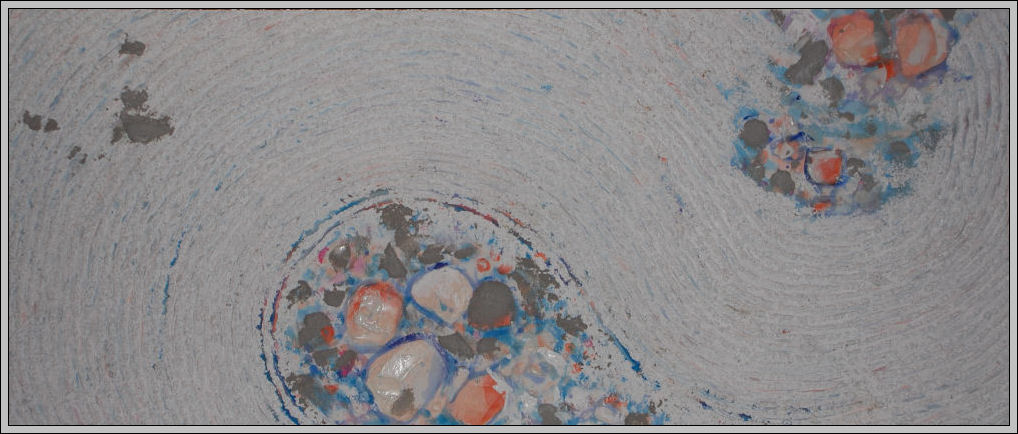
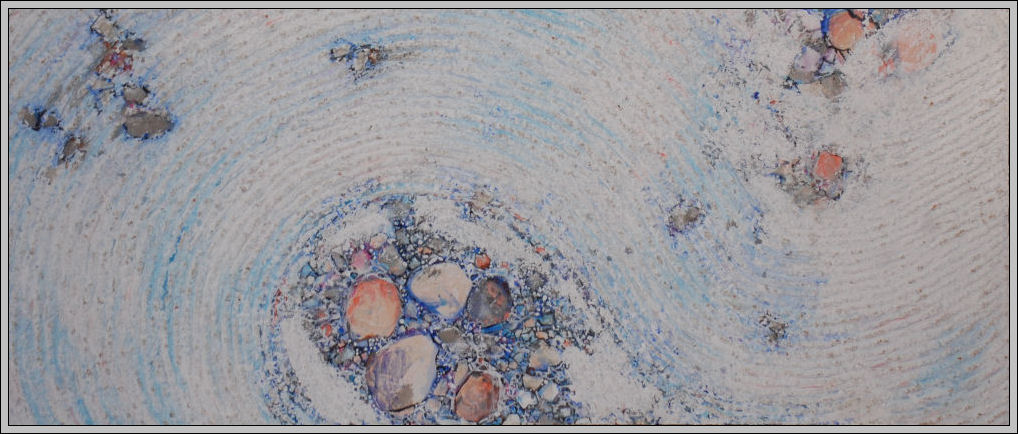
Chrysanthemums Chair finished
Thursday, January 14th, 2016
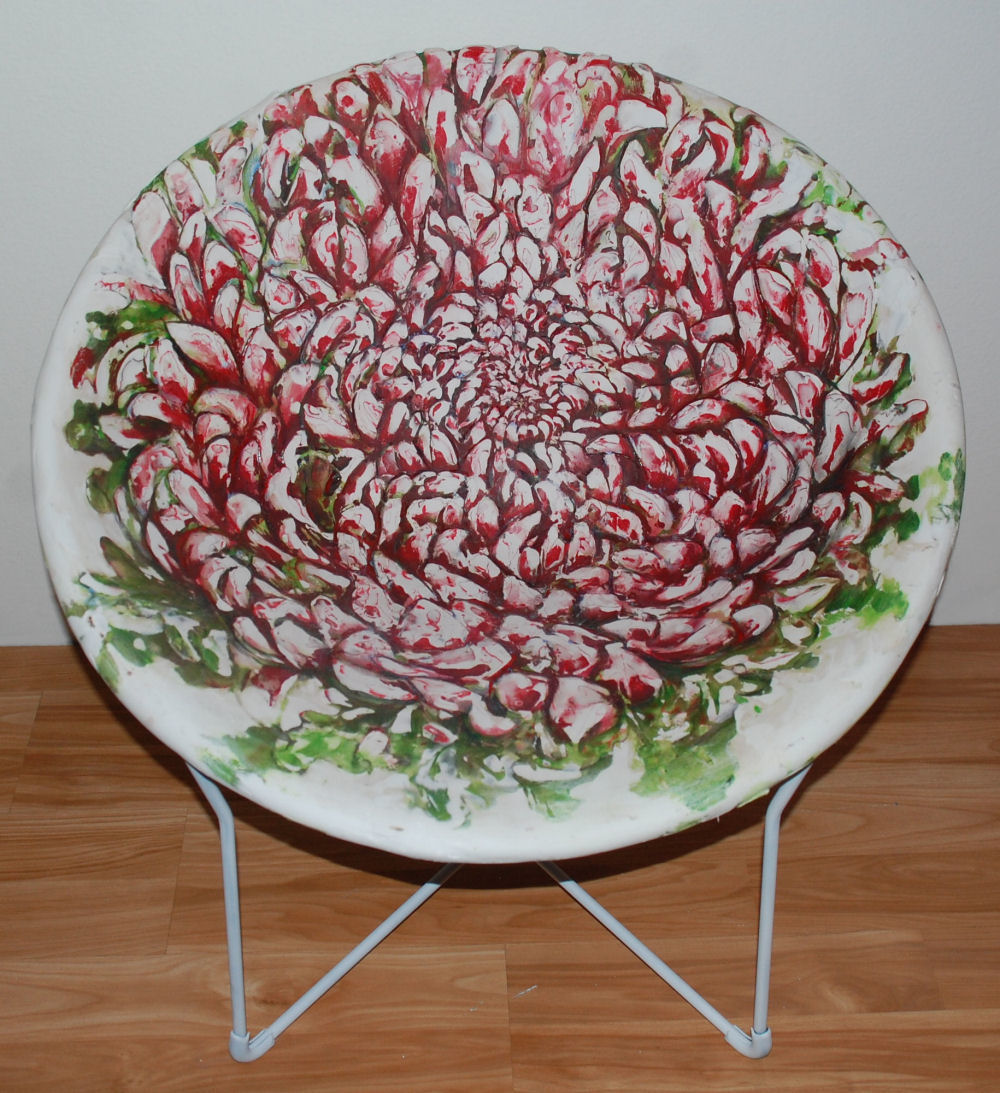
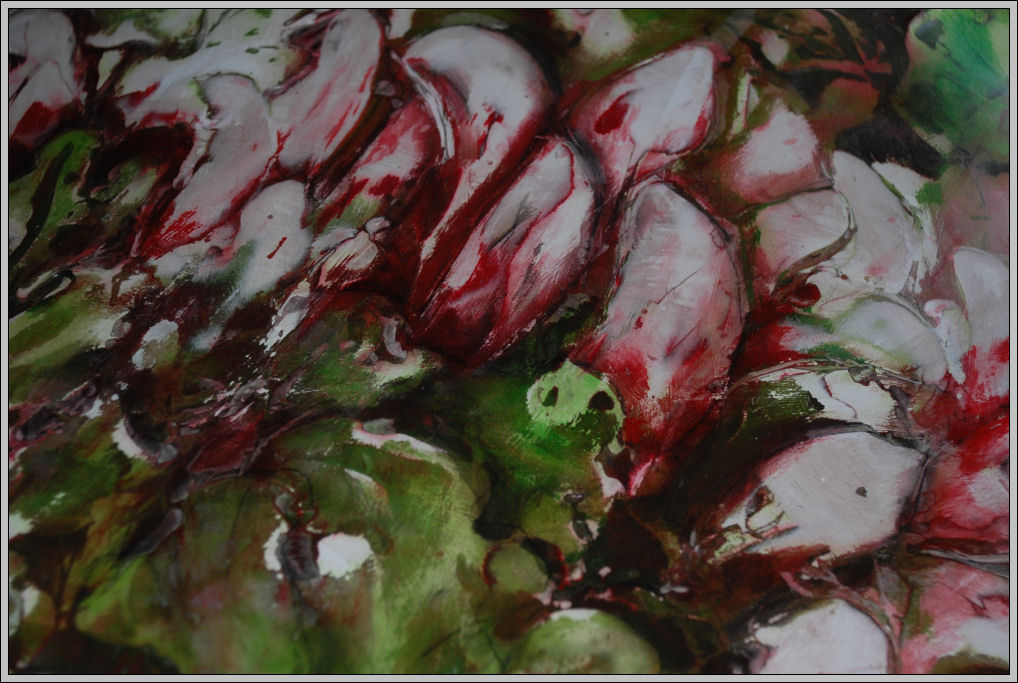
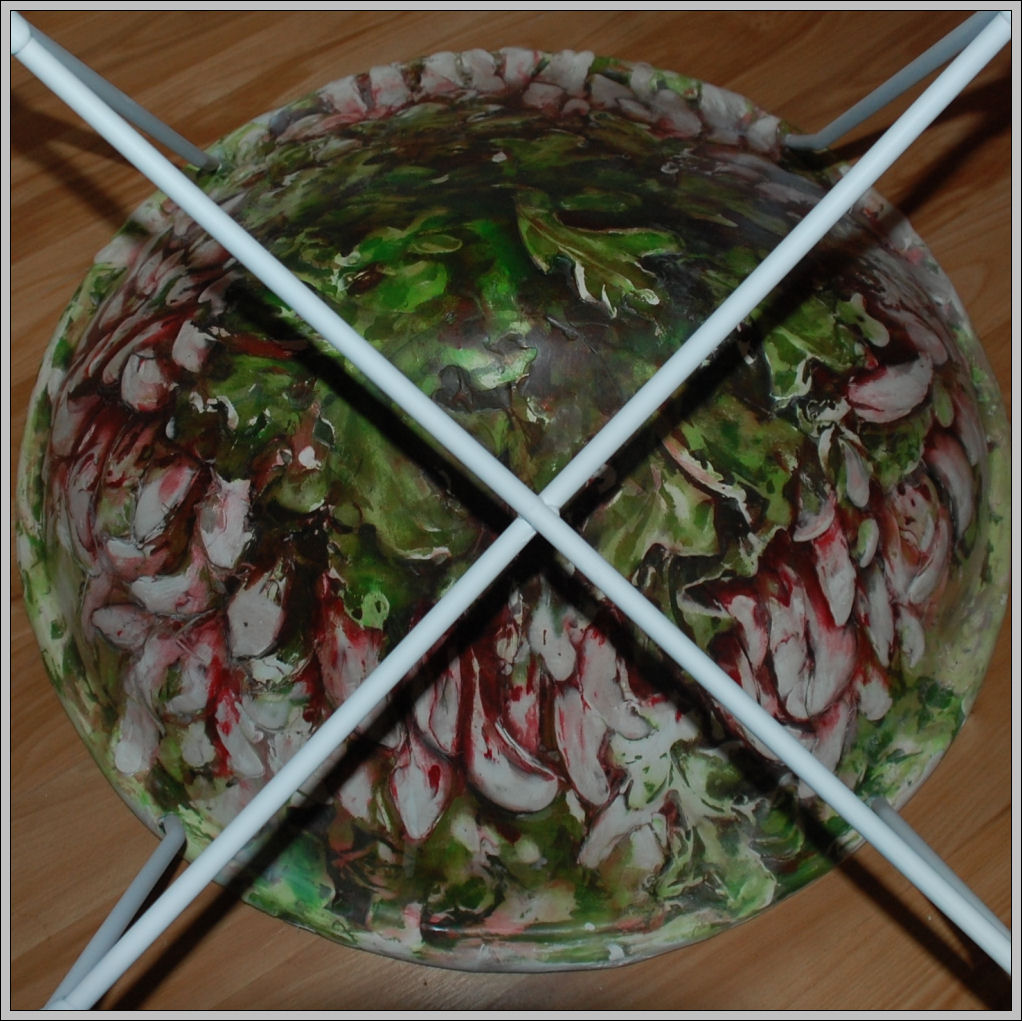
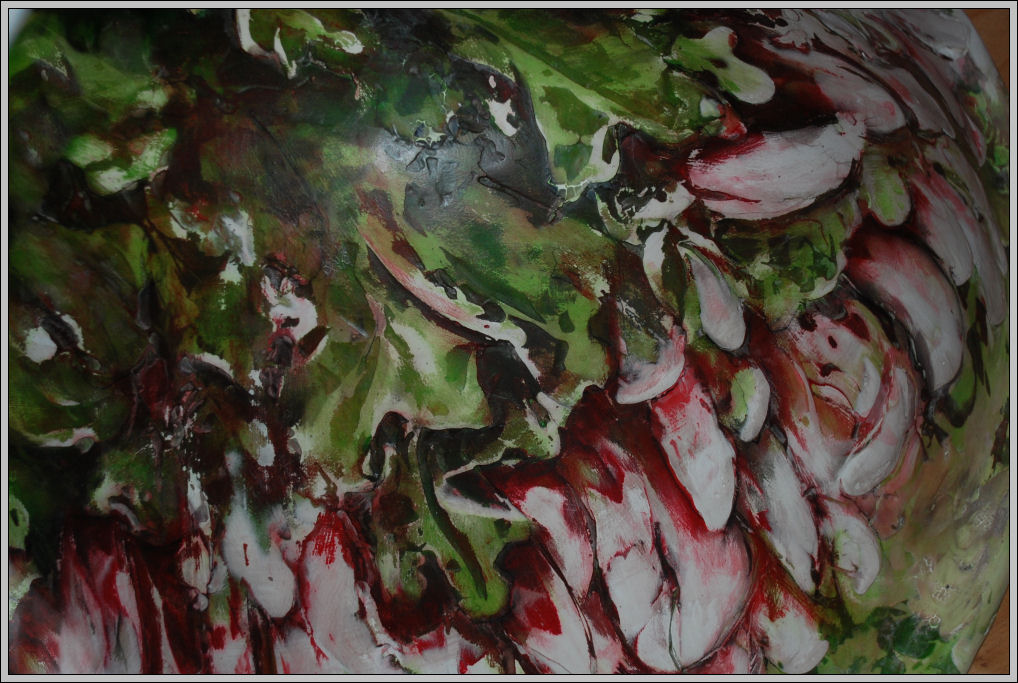
Chrysanthemums Chair, finished front and thumbnails of underneath/back details, 29H x 29W x 29D inches one-of-a-kind refurbished vintage chair as a base, woven canvas strips, layers of plaster cured, sanded and carved. Painted with acrylics, finished with varnish and waxed to enhance colors. Durable, functional.
Chrysanthemums Chair Update
Sunday, October 18th, 2015
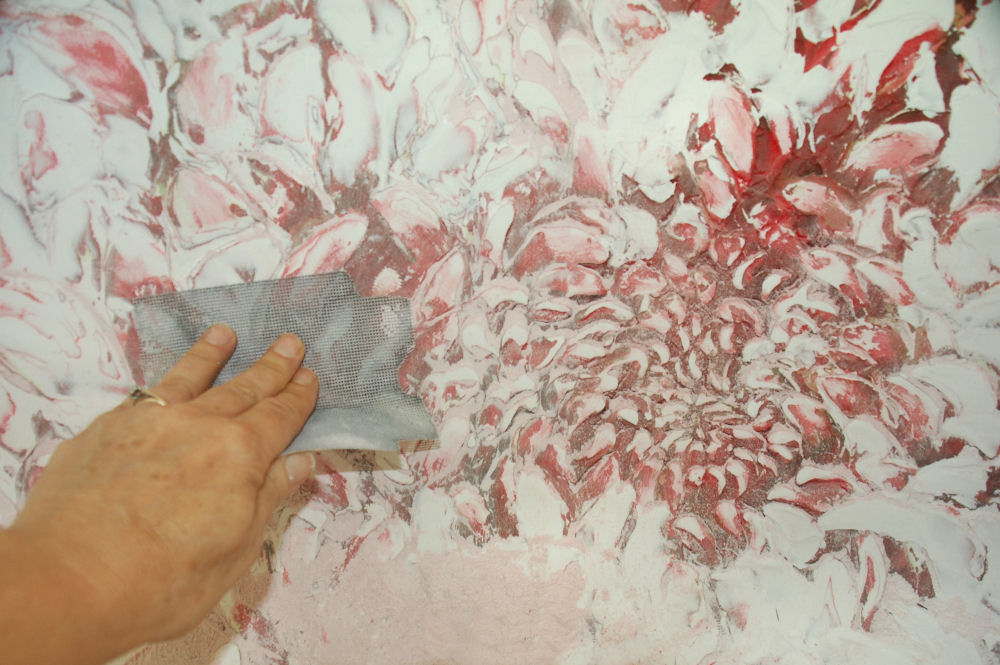
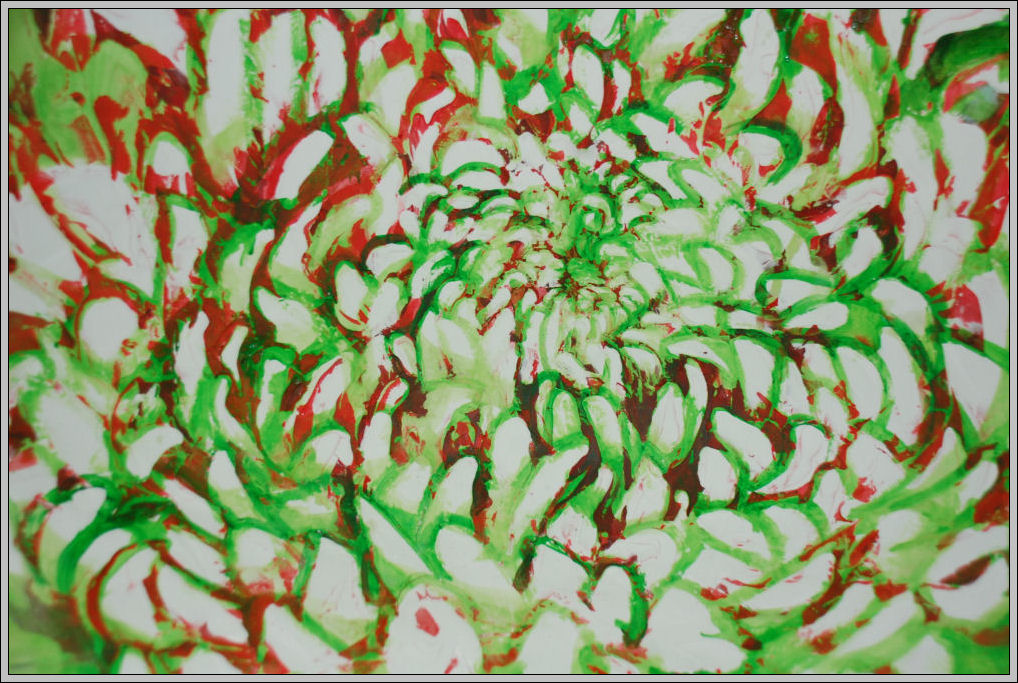
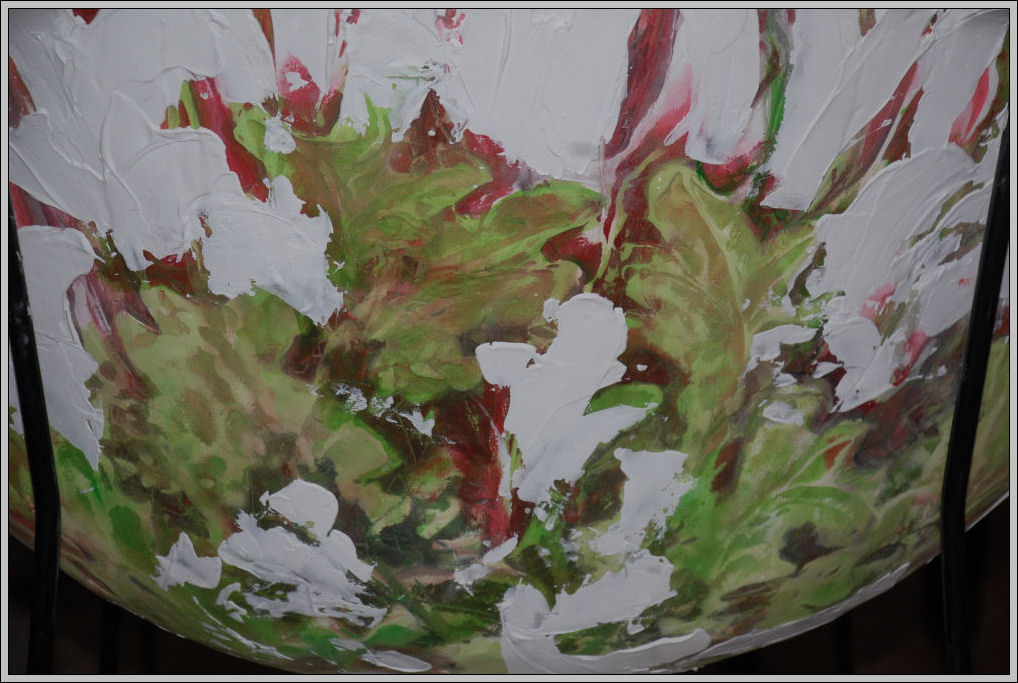
Chrysanthemums Chair front and back: plaster layering, sanding and painting in progress
Chrysanthemums Chair, work in progress
Tuesday, September 29th, 2015
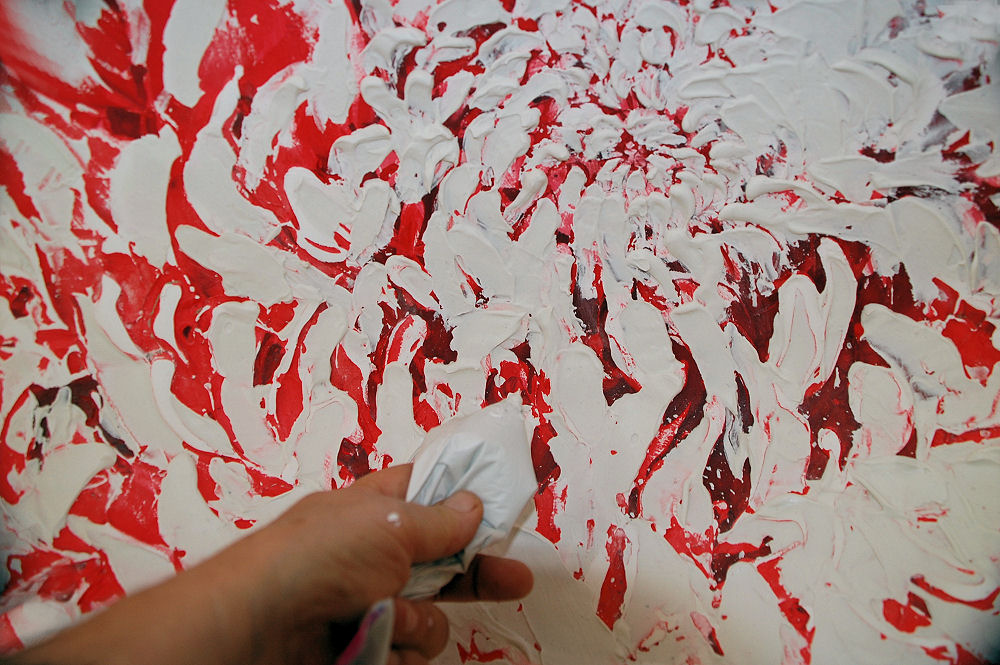
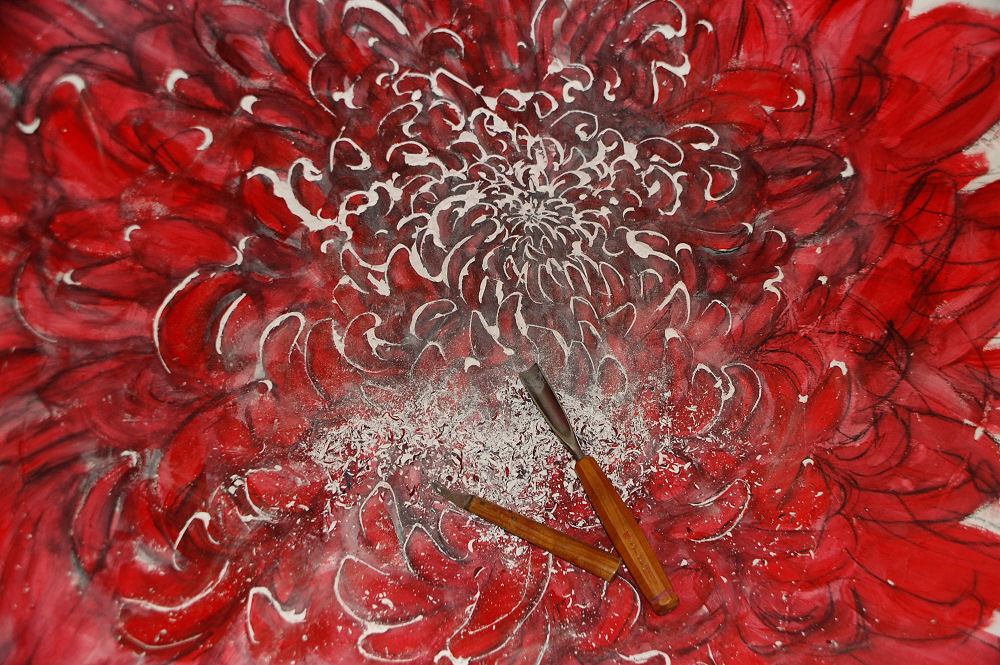
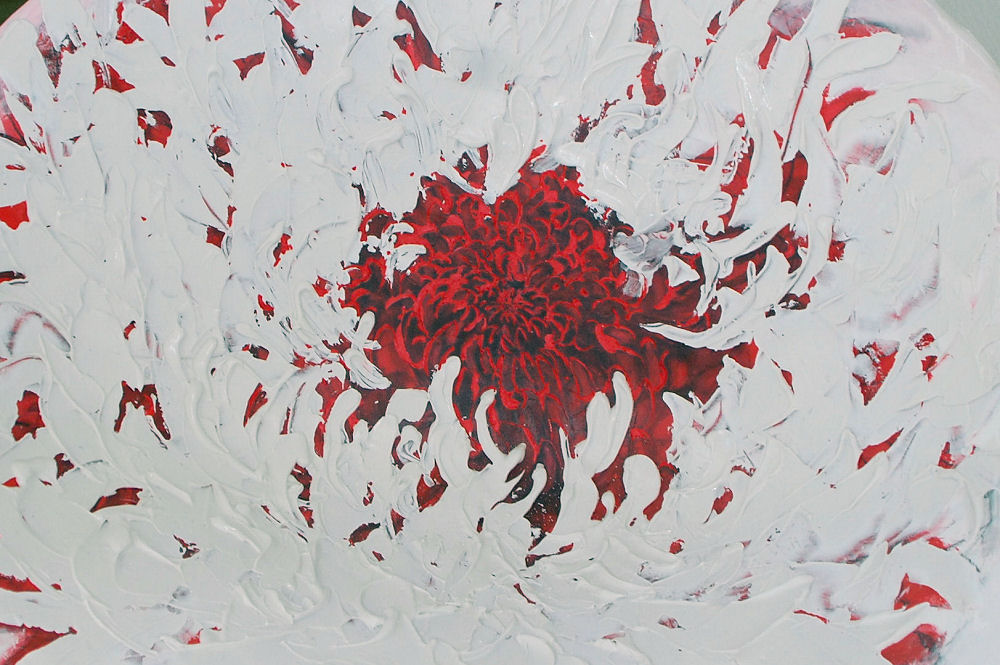
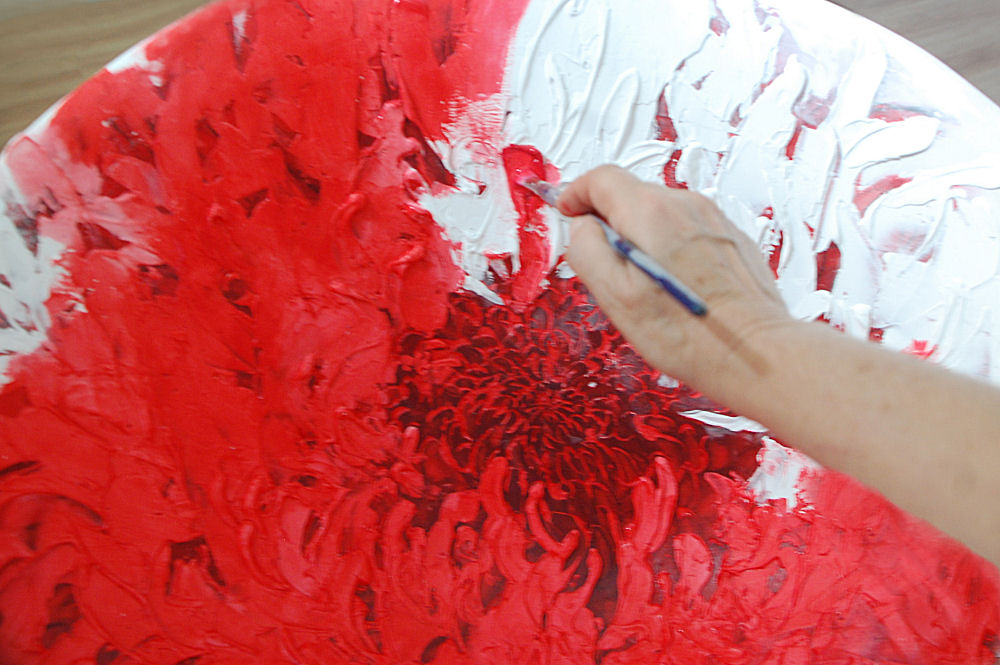
Using knives and chisels, areas are carved away. The flower design is continually rebuilt by applying modeling paste and plaster, sanding, painting, and carving. Material is easier to control by squeezing out of baggies, like icing in a pastry bag.
Chrysanthemums Chair
Thursday, September 10th, 2015
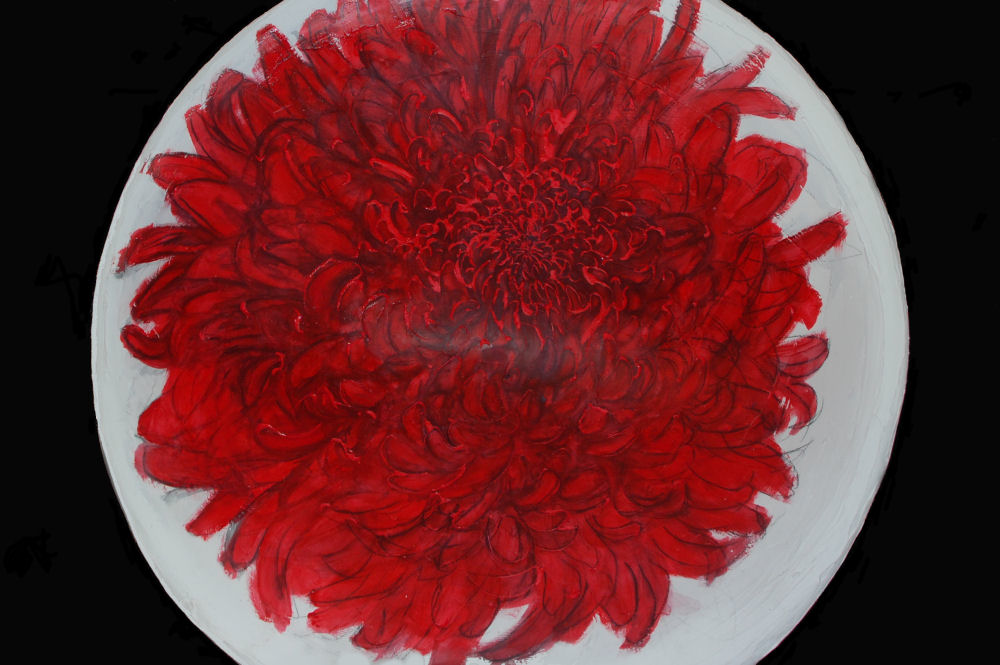
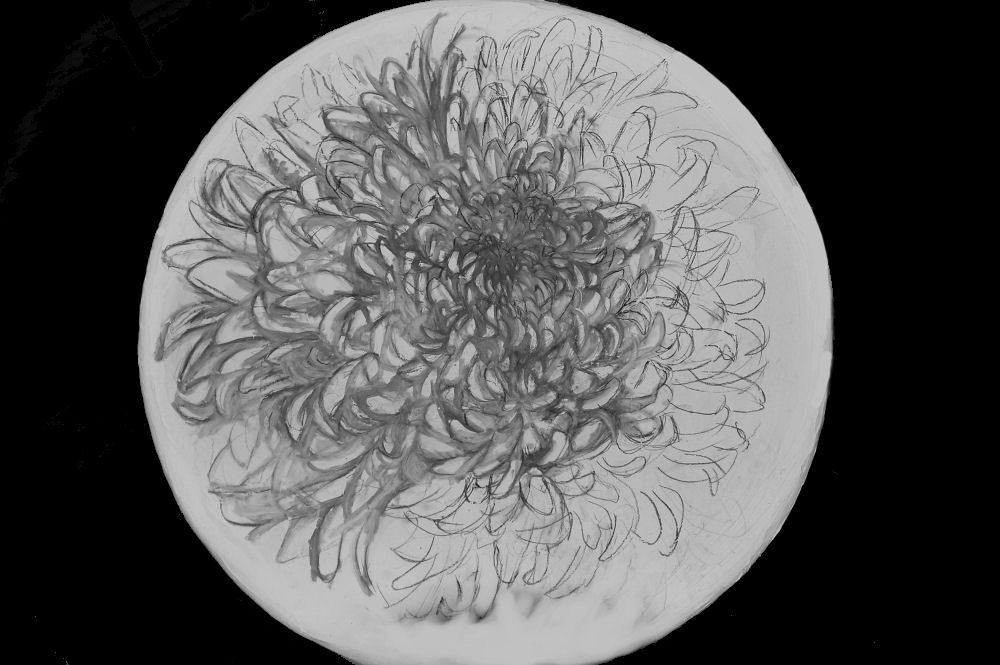
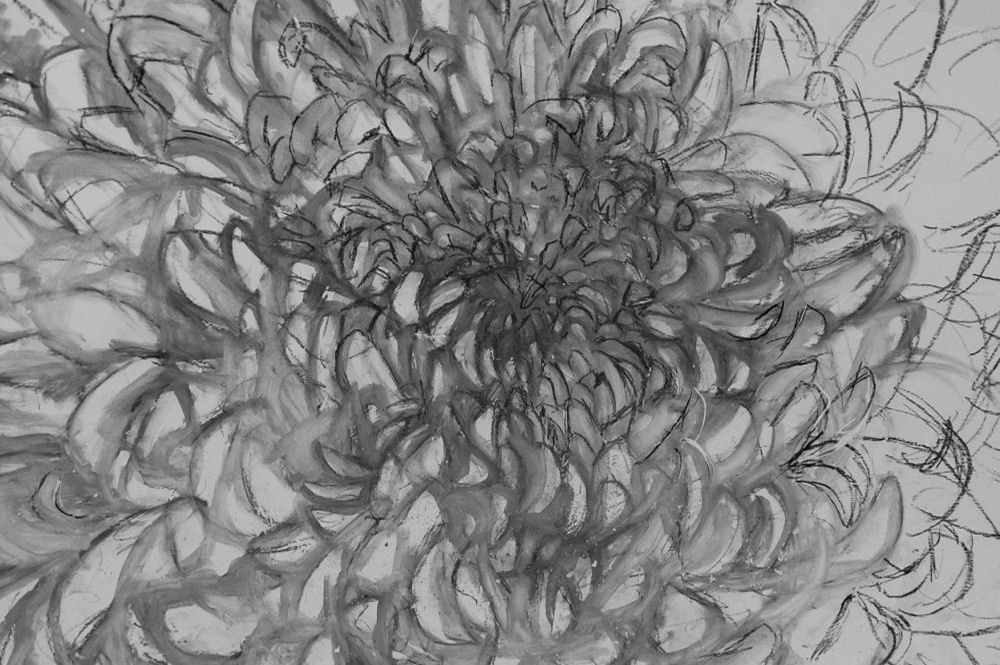
Chrysanthemums Chair Work in progress. 29L x 29W x 29D inches refurbished chair, canvas, plaster, acrylics. Thumbnails: graphite sketch, acrylics, carving detail. Above: first application of paint over carved surface. Next, plaster will be applied to petal areas to raise the surface. When dry, the whole process will be repeated; sanded, carved and painted again. I like the white background, so may not add much green or any other color except as contrast and in shadows. This chair will coordinate with the large Chrysanthemums painting.
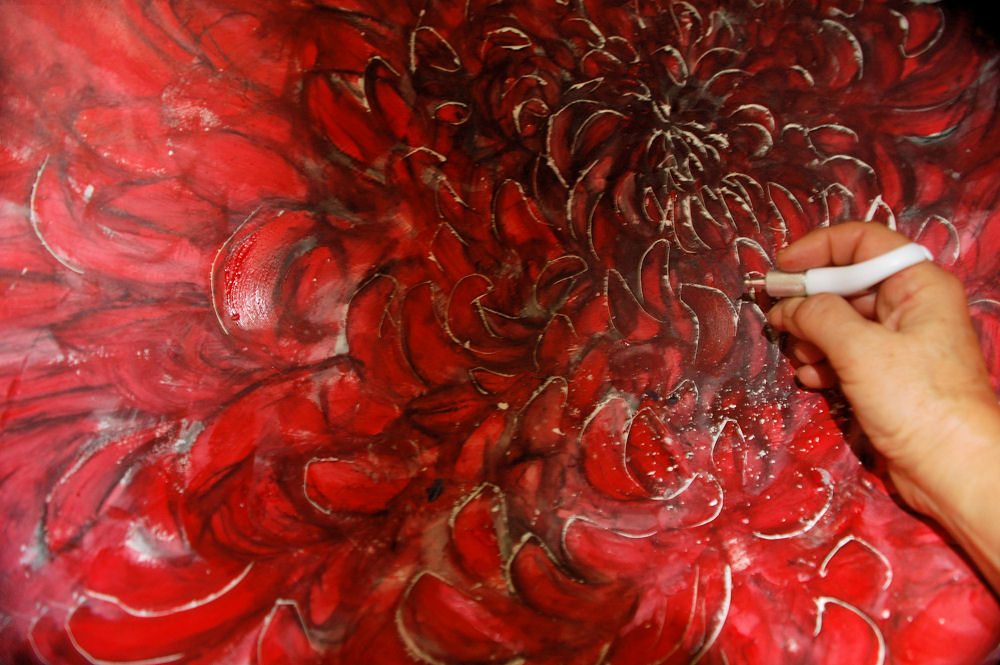
Symbolism and Significance of Chrysanthemums
With a history that dates back to 15th century B.C., first cultivated in China, where it is symbolic of honesty. In Egypt, Tutankhamen was reportedly buried with chrysanthemums. The plant is thought to have been introduced in Japan by Buddhist monks around the fifth century. Initially forbidden to grow except by nobility, the chrysanthemum is now a showy garden perennial common in gardens the world over, in a vast array of cultivars, shapes and sizes, with colors ranging in shades of purple, pink, red, white, yellows and greens.
In terms of design, the mandala formation demonstrates unfurling petals spiraling outward in succession from the center, like fireworks. It is easy to see why chrysanthemums symbolize optimism and joy.
A few states and sororities in the U.S. claim it as their official flower. Many European countries and parts of North America use white chrysanthemums in funeral arrangements, as they are associated with grief and mourning, whereas in Japan holds a “Festival of Happiness” to celebrate this flower each year, attributing it to the sun and happiness. There, it is a symbol of the Emperor and the Japanese Imperial Family. In Canada and the United States, the floral industry thrives on the notion that every flower has unique characteristics, and we communicate our sentiments through specific bouquets according to occasion. For example, the chrysanthemum is the November birth flower and also appointed to the 13th wedding anniversary.
Certain species of the plants are edible and contain medicinal properties. Leaves and roots can be cooked, used mainly in Asian dishes, and flower petals are boiled to make tea. Extracts of the plant, pyrethrins, are processed and preferred as an earth-friendly, biodegradable commercial insecticide.
In cold northern climates they are planted as annuals, whereas here in the Pacific NW coast they are winter- hardy, blooming each Fall. If the plants get leggy before blooms appear, they benefit from being cut back and are easily propagated. Colorful new “mums” add liveliness to flower gardens as seasons change, and they are some of the first to entice us at stores during Spring. Chrysanthemums are perfect in home bouquets, lasting longer than any other cut flower.
New Chairs in progress – first, Shiva as Nataraja
Friday, May 1st, 2015
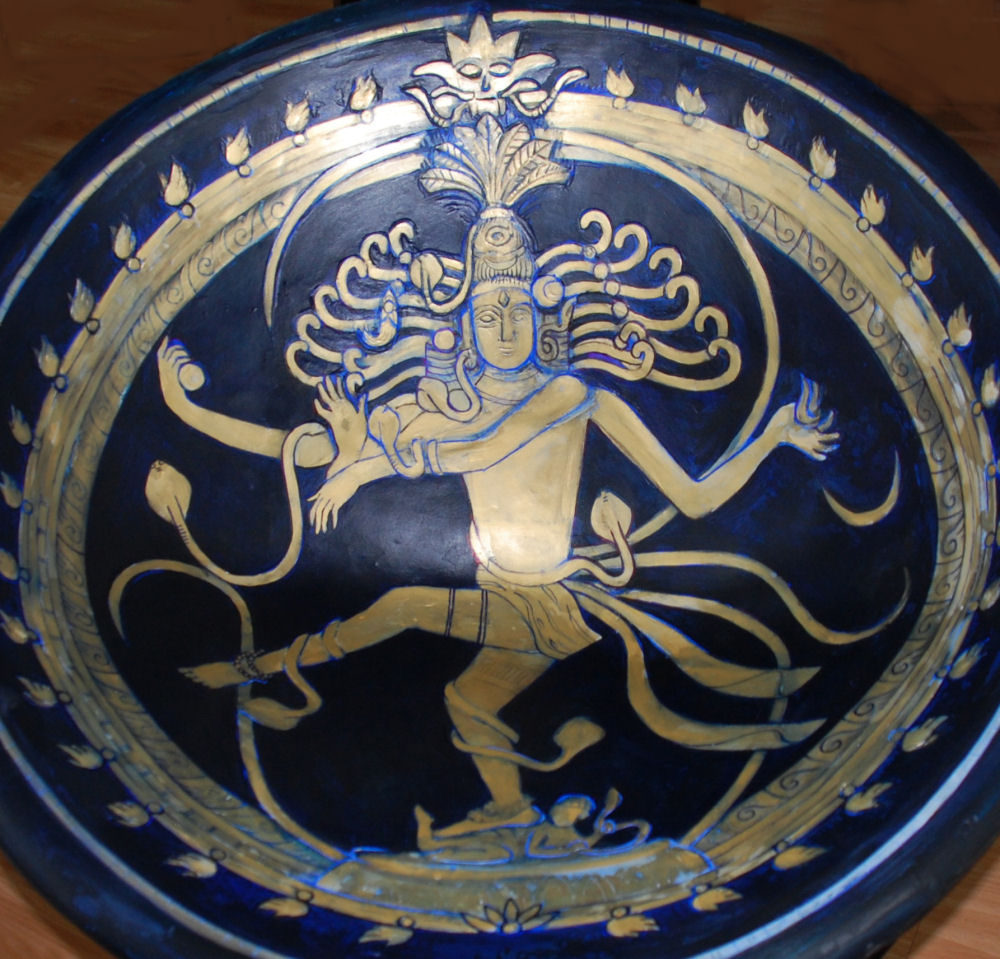
Shiva as Nataraja chair in progress
The Lord of Dance symbolism
Eastern philosophy is full of symbolism for concepts much deeper than words could ever express. The teachings are so complex but beautifully simple at the same time. Divine concepts are depicted in human forms with worldly items to help us identify somewhat, and increase our understanding toward making healthy decisions in our lives – for mind, body, and soul.
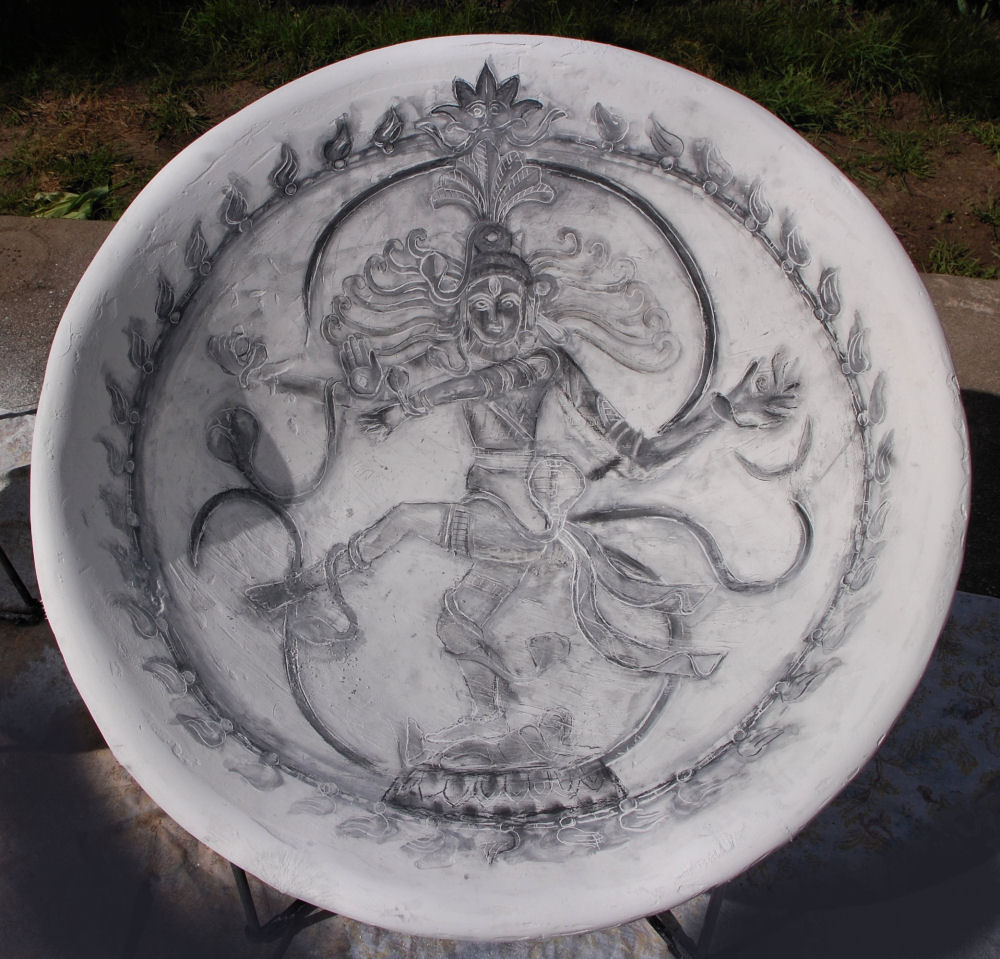 Sculptures, pictures, and literature are charged with multiple meanings and contradictions conveying the extremes in Life, like the existence of intense joy and pain, and the importance of balance in day to day living, and practicing a middle road of contentment. The interpretations here only outline the more prominent symbolism of this famous icon. As research continues, this article will elaborate on the most important symbols of this sculpture.
The purpose of the dance is to release us from our ignorance and entanglement in the world of opposites, all set within the circular, rhythmic motion of the universe. We are to acknowledge, yet remain detached by their effects. It is said that Truth requires detachment and at the same time, knowledge and acceptance.
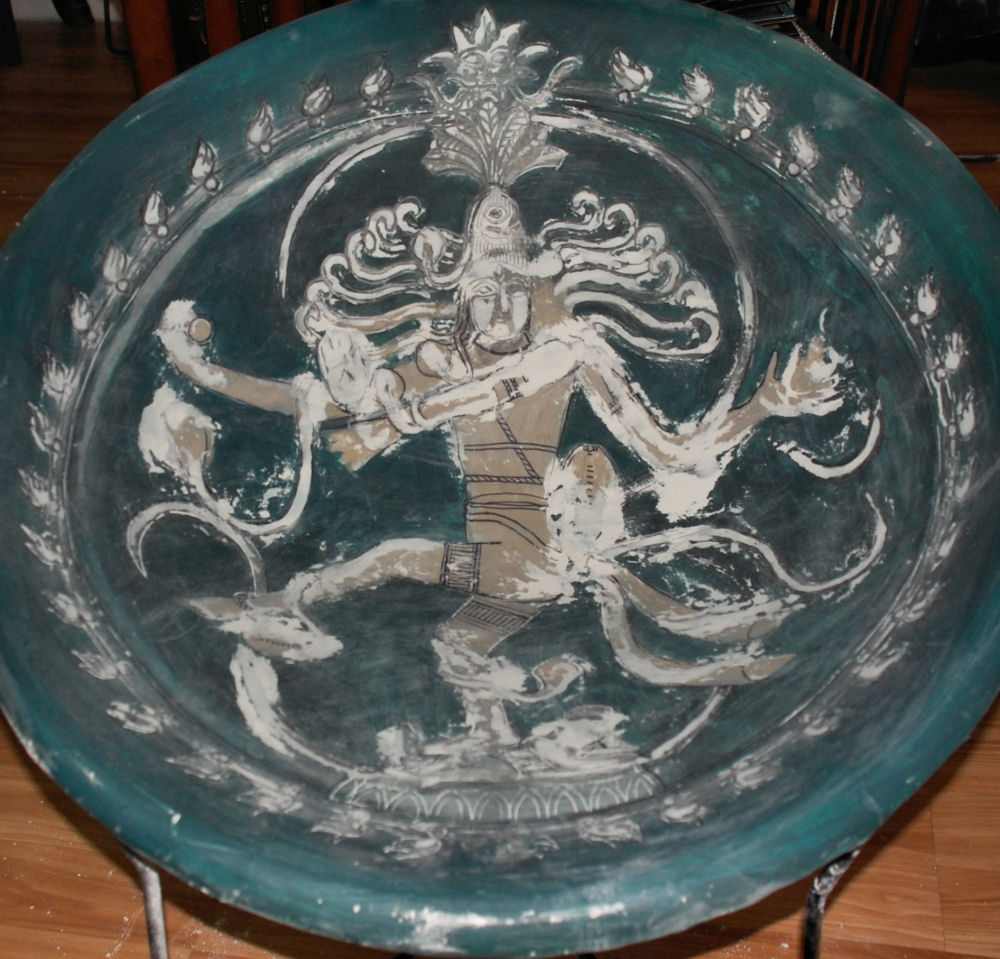 There are different names for the Hindu god, Shiva in his various forms. Though an ascetic, Shiva’s role is as householder, implying that we need not leave society to be devoted to following principles of Dharma; conduct; right way of living. In the aspect depicted here, Lord Shiva creates, sustains, and destroys life. As The Nataraja, he dances within the world of illusion, represented by an outer ring of fire. There is an inner ring of water, and some statues show multiple rings of fire and water. As he victoriously dances upon the demon of ignorance, Shiva’s matted dreadlocks whirl about him, capturing a number of heavenly bodies, like the physical representation of the sacred river Ganges, which fell from heaven to earth, first landing in Shiva’s hair so as not to destroy it. The moon is symbolic of many things, such as seasonal changes, life’s rejuvenation and love, all kept active with this dance.
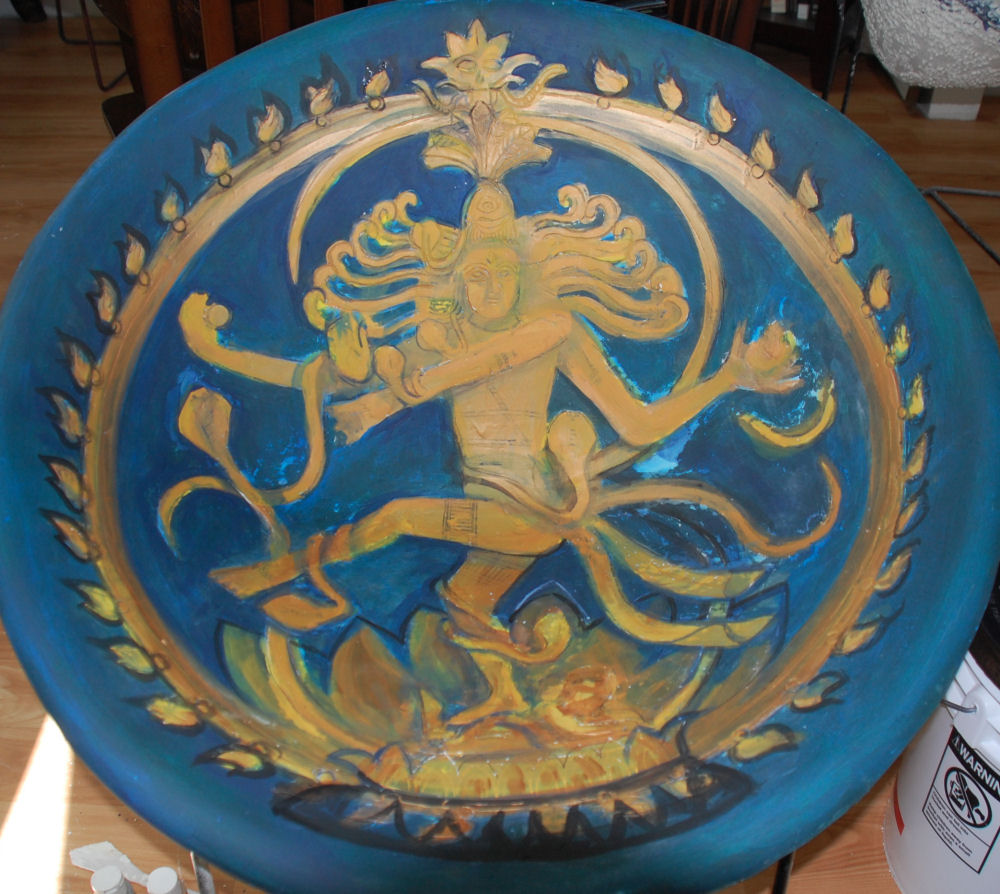 The gestures of the dance represent Shiva’s five activities: creation – symbolized by the drum, protection – the “fear-not” pose of the outward-facing hand, destruction – by the fire, embodiment – by the foot planted on the ground, and release – by the foot held above ground. Snakes coiling about his body symbolize the life force within all of us – the Shakti or kundalini – and display his power over the most deadly of creatures. Also, as snakes shed their skin, so do our souls reincarnate, according to Hindu beliefs.
The first four first four Chairs were up-cycled second-hand store original Solaire Chairs, but I have found a decent source for newer ones, so finally some ideas I’ve had for years can be realized, and special orders can now be filled. With thin applications of plaster then sanding and waiting for successive layers to dry, four new Chairs, 29H x 29W x 29D inches, started April 5th are now in progress, concentrating on the details of two while the others cure. One chair, the priority, is of Shiva as The Lord of Dance, and one chair is an addition to the Zen Garden series. The third is a large replica of a Moche culture (1st century Peru) earring/ear plug, and the fourth chair will portray an Easter Island theme, something I’ve had in mind since I bought the very first chairs in the 1990’s. Until refining stages, the four can be worked at the same time while plaster is added, cures and is sanded down.
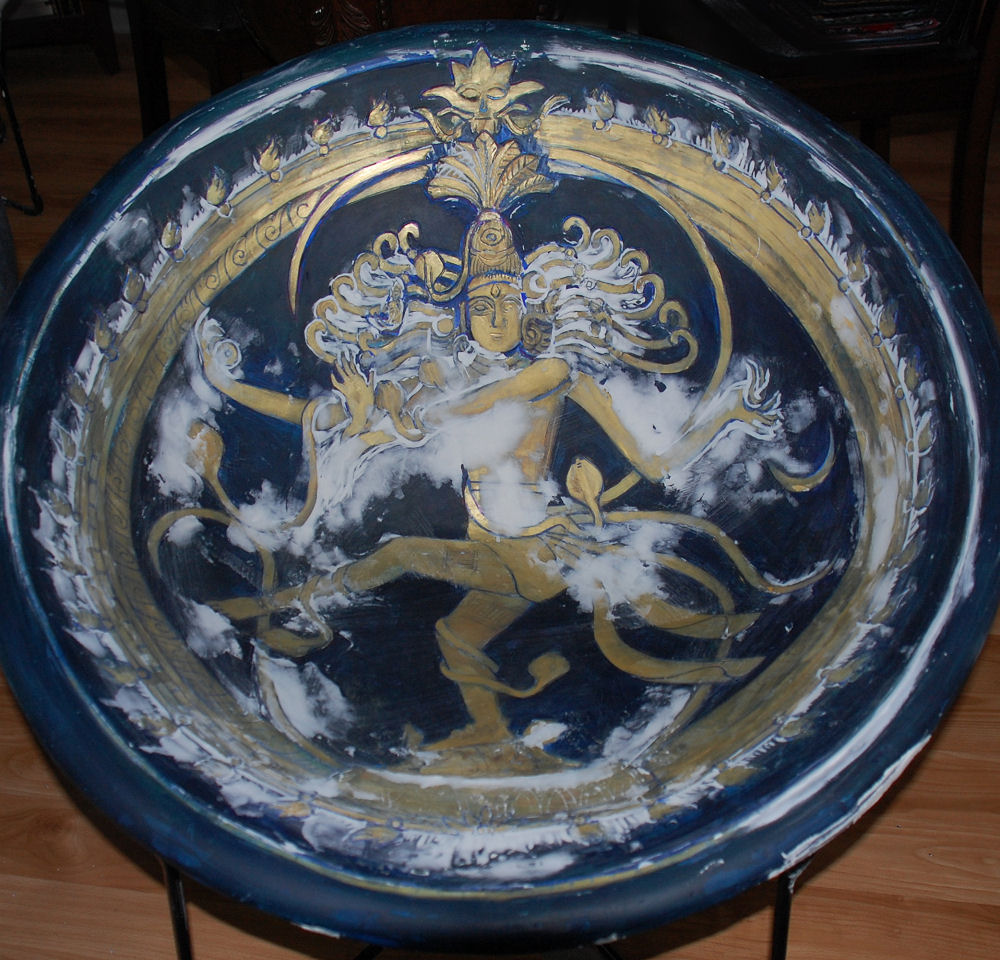 In this visual translation, the symbol of Om, first sound uttered in the Universe, weaves throughout, as if to involve a complete sensory understanding. All hand gestures have specific meanings, like the open front right hand facing us in “abhayamudra” gesture, denoting reassurance and safety for all who follow a righteous path. The drum in his right hand beats ceaselessly and infinitely, “Om”, while the universe is created, destroyed and recreated. The back left hand holds flames of fire, with both destructive and cleansing properties. The front left arm is held across the chest like an elephant’s trunk, with the hand pointing to the left leg and foot, lifted as a sign of liberation as the sacred elephant leads the way through jungles of ignorance.
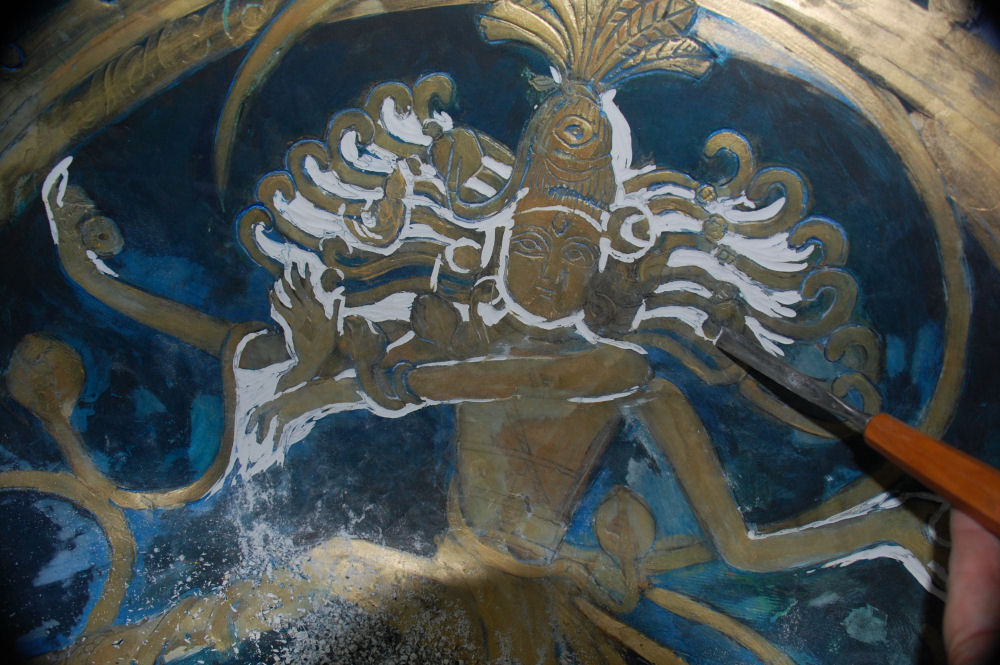
The graphite design is first partially engraved with pencil in damp plaster, helping to show which areas to raise and hwich to recede. The addition, removal by sanding and carving gradually refine the design along with successive layers of paint which, when finished, the combination shows through as a mottled sort of patina, perfect for this subject. The icon on the finished chair will be gold-bronze colors, as the Shiva as Nataraj sculptures are traditionally made of bronze. Plans are for the background to be antiqued cobalt blue or teal.
Zen Garden #16 Chair started
Monday, April 6th, 2015
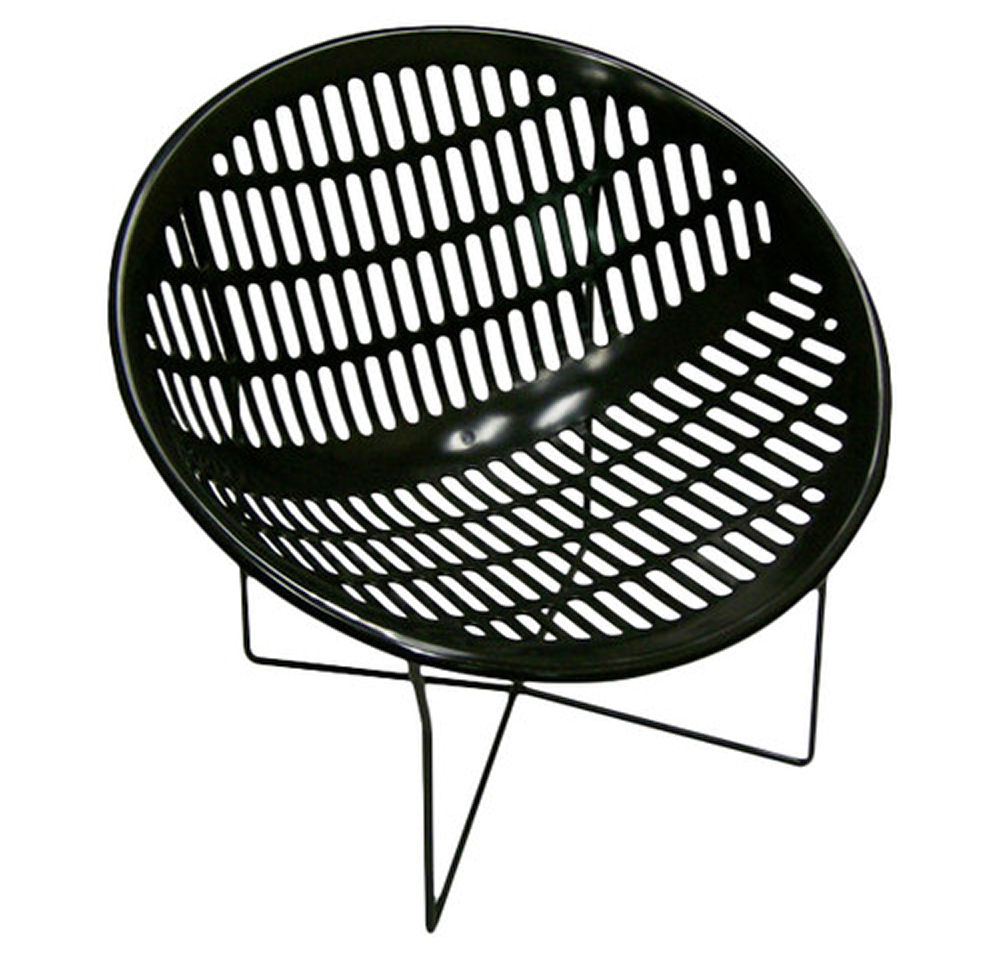
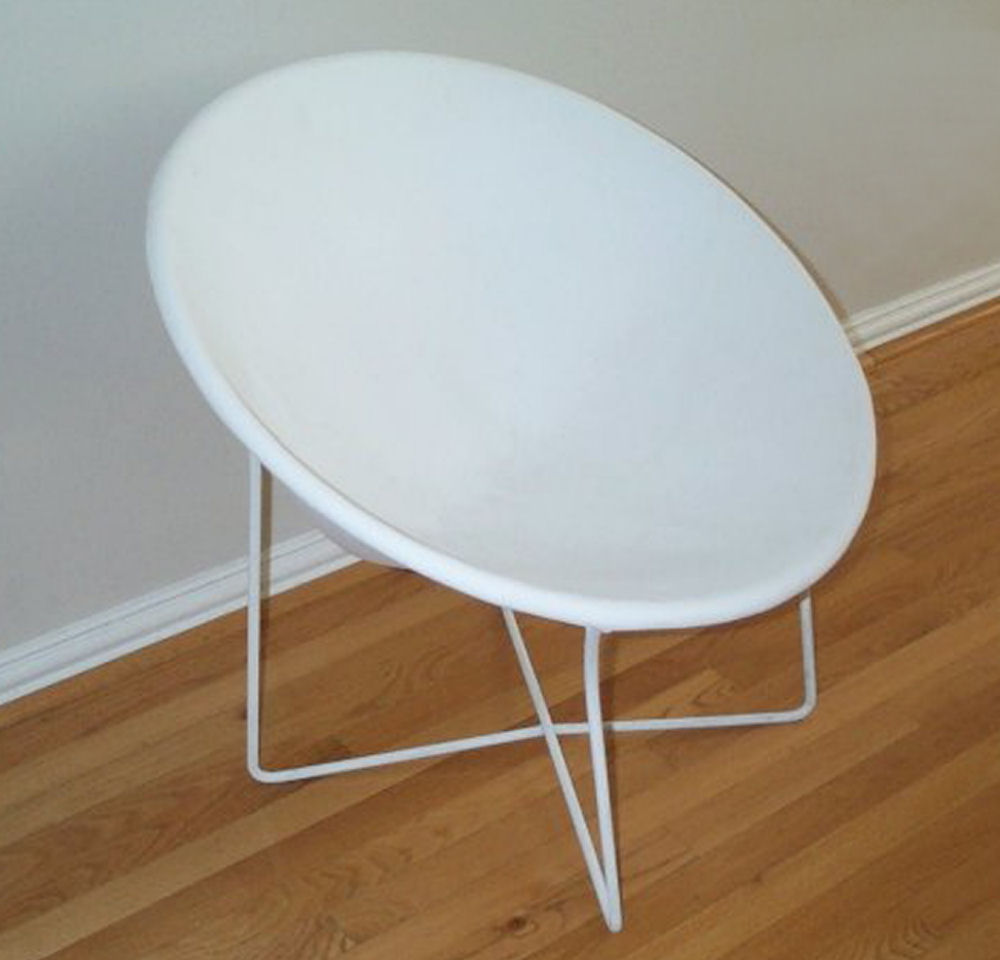
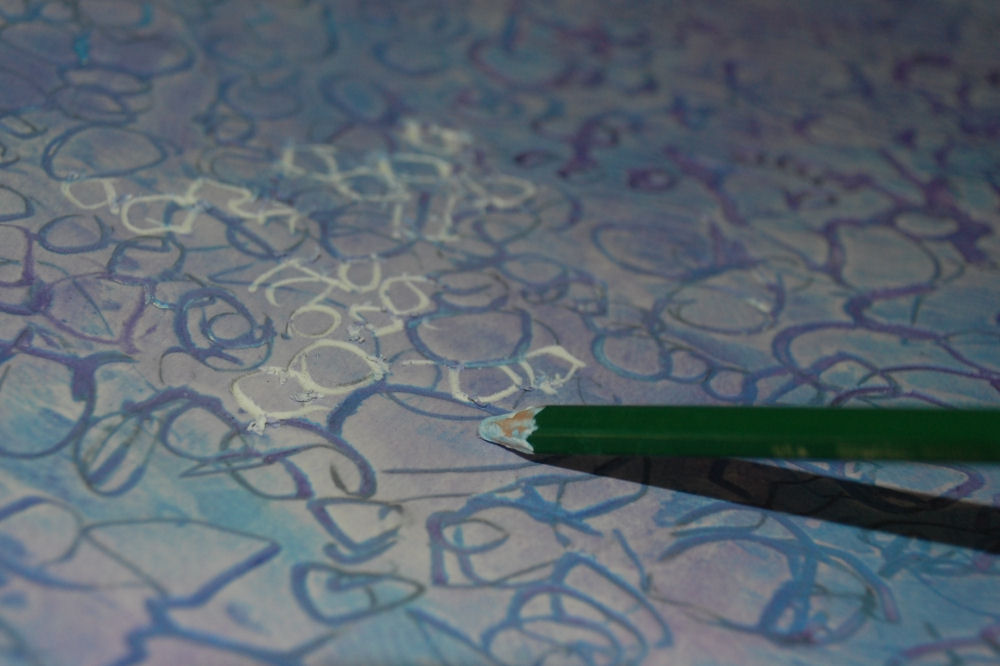
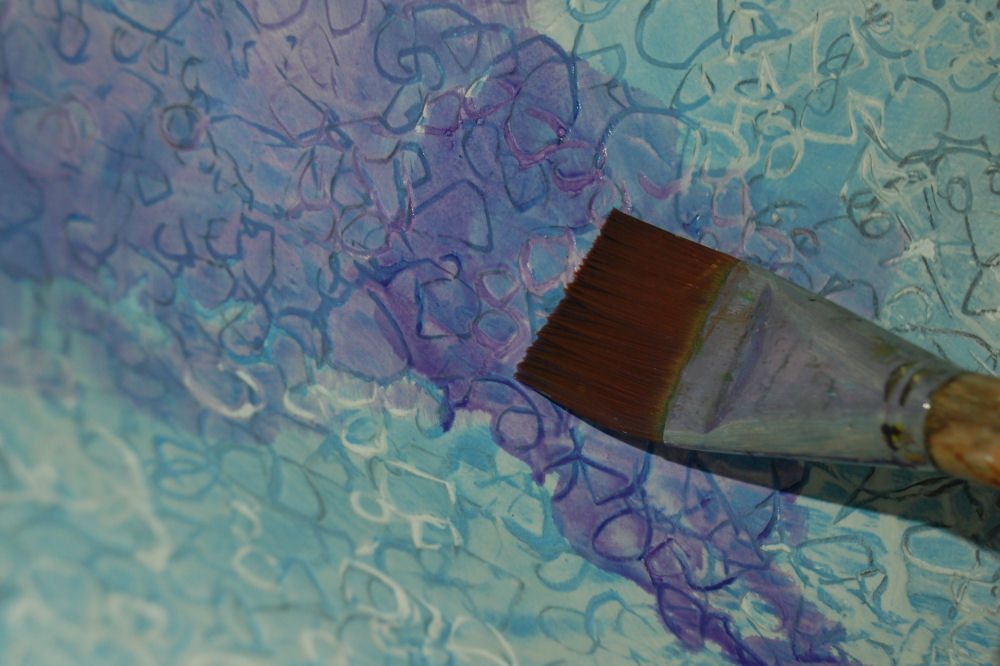
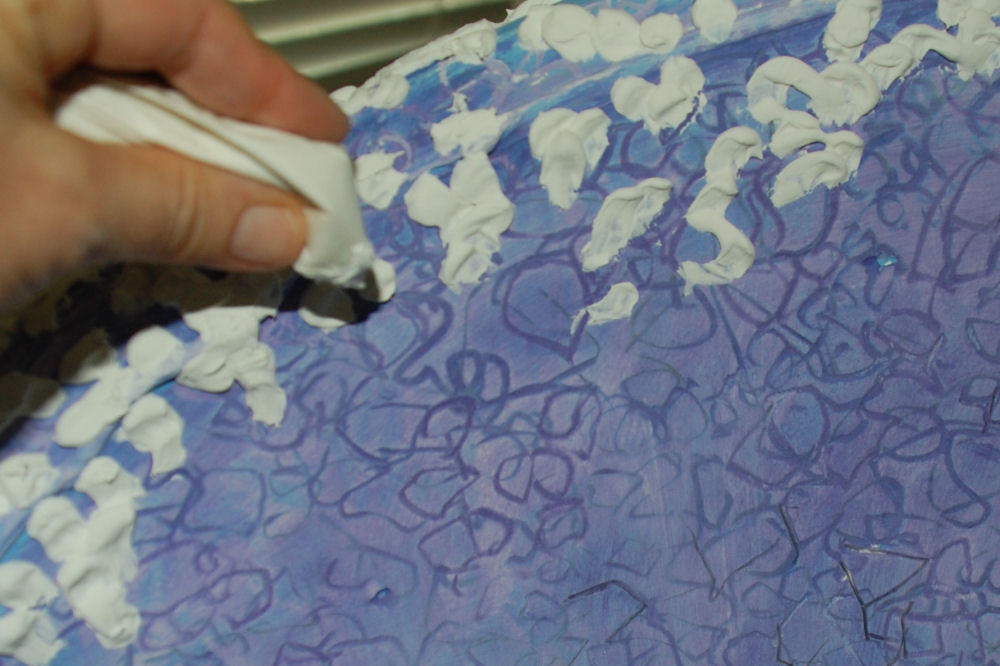
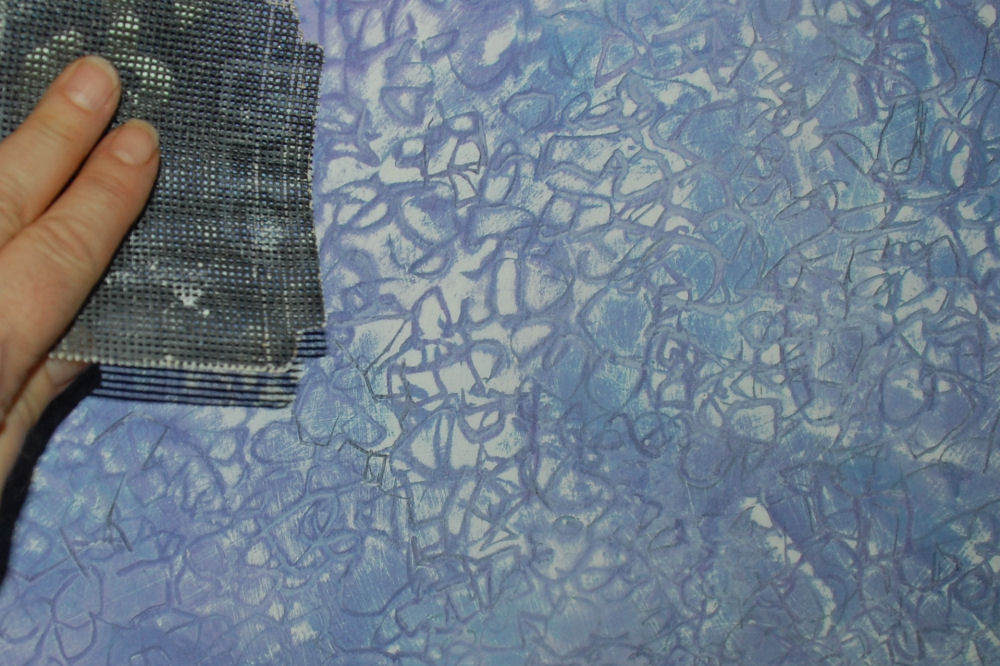
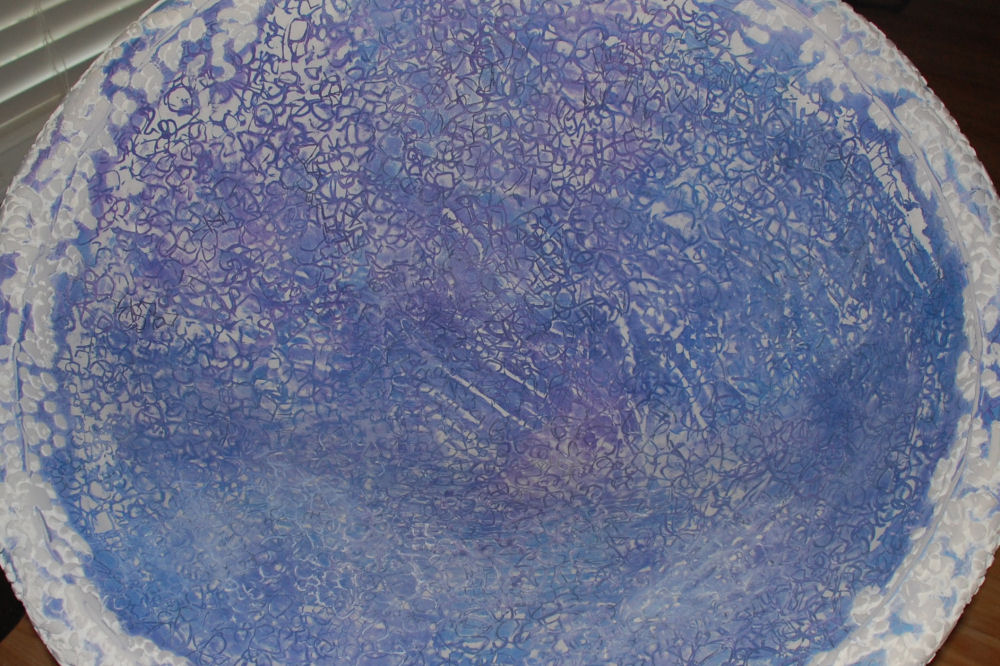
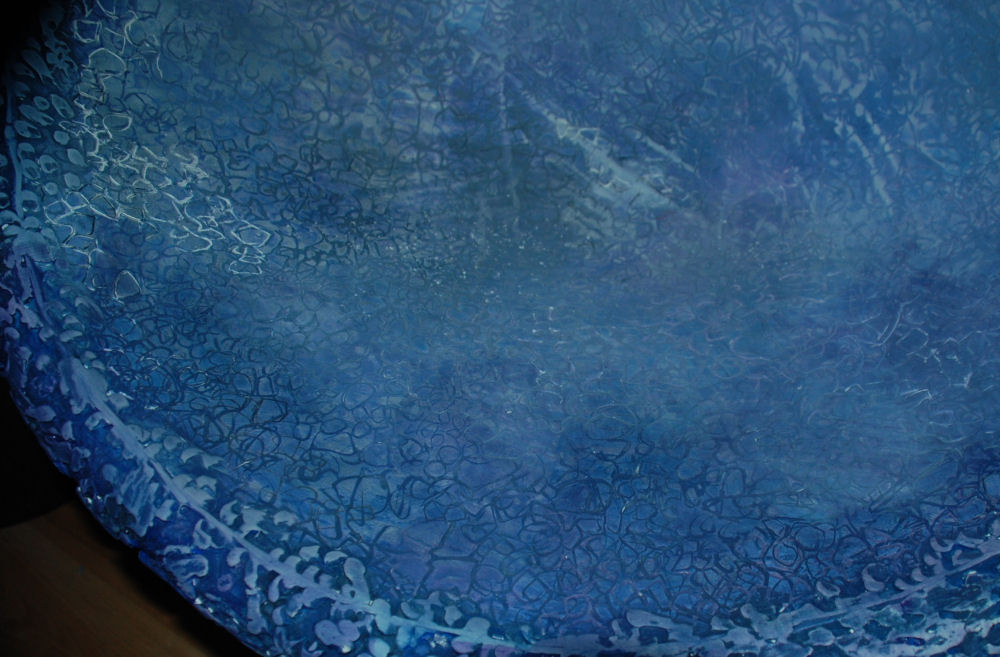
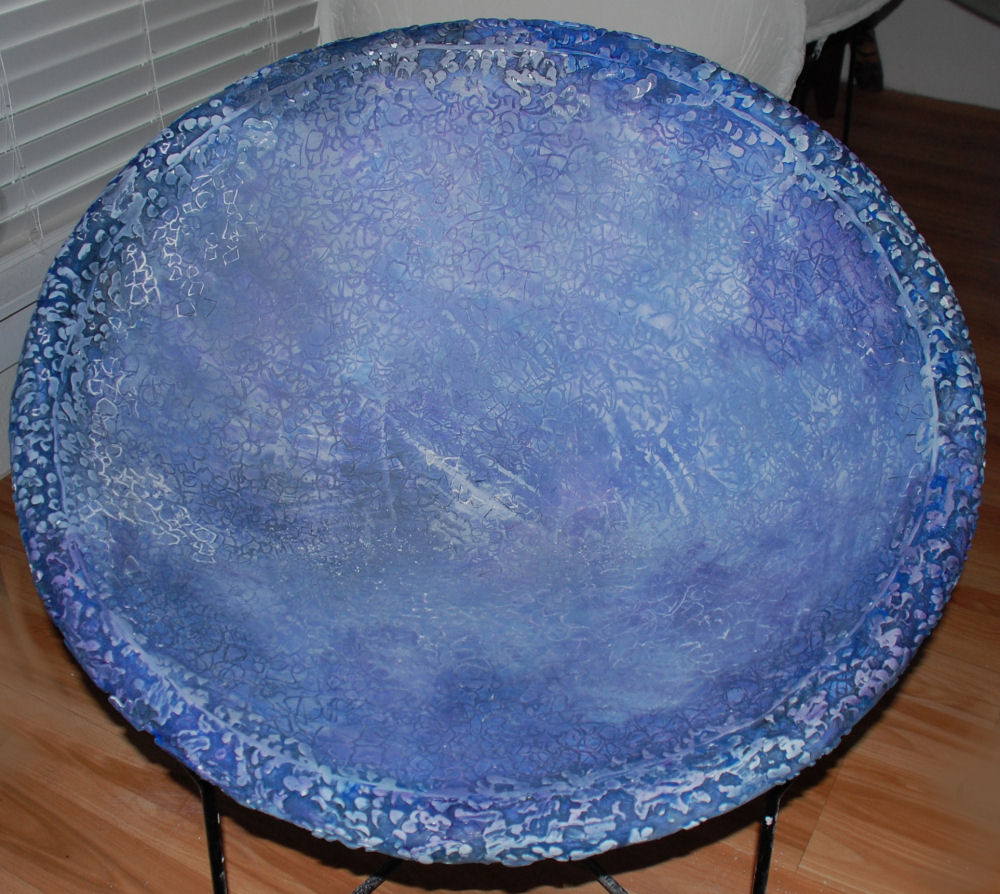
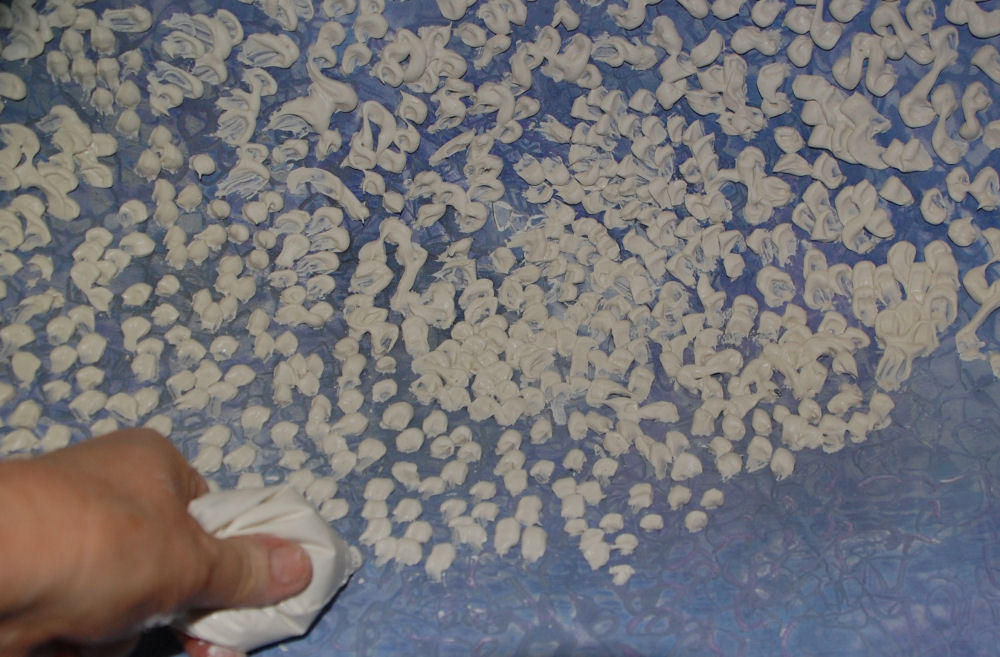
Zen Garden #16, most recent of the Zen Garden series 29 x 29 x 29 inches mixed media on vintage Solair chair, in progress.
Initially the plan was to engrave pebble designs in the chair’s plaster surface, but since the circumference patterns turn out so interesting, I decided to continue the pebbles all over, front and back/underneath. They will be sanded down to almost flat, so the finished chair will still be comfortable to sit in.
« Previous Entries