December 10, 2009
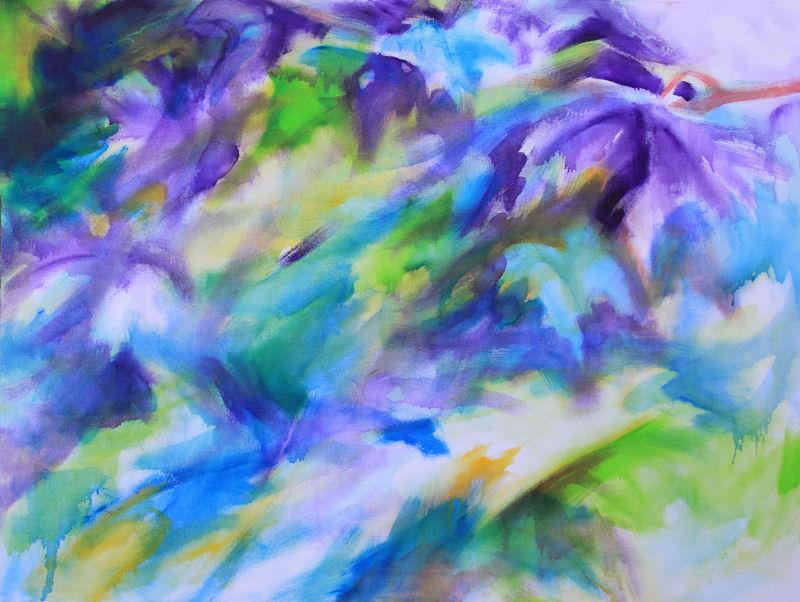
 Norway Maple, work in progress: 36H x 48W x 2D inches acrylics, will sculpt edges of leaves with modeling paste medium on canvas. Gallery wrapped sides painted. The watercolor classes really helped with awareness of color choices, keeping those colors pure and marks fresh, and also a desire to leave more abstract elements alone; less realism and more expressionism. All of those things will be magnified in this painting.
After today, blogging and Artwork will be infrequent until mid-January. Driving up to western Canada, there will be plenty of snow-covered trees and winter photo opportunities along the way to Alberta, B.C. and back. Working up until the last possible moment, I started this painting of purple Maple leaves that were seen in Madison, WI during late August. Modeling/Molding paste will be applied, then painted with acrylics when dry, this will be a 3 dimensional-ish painting.
Happy Holidays everyone!
Categories: acrylic painting, leaves, Seasonal, semi-impressionist, summer, trees, work in progress | No Comments »
December 9, 2009
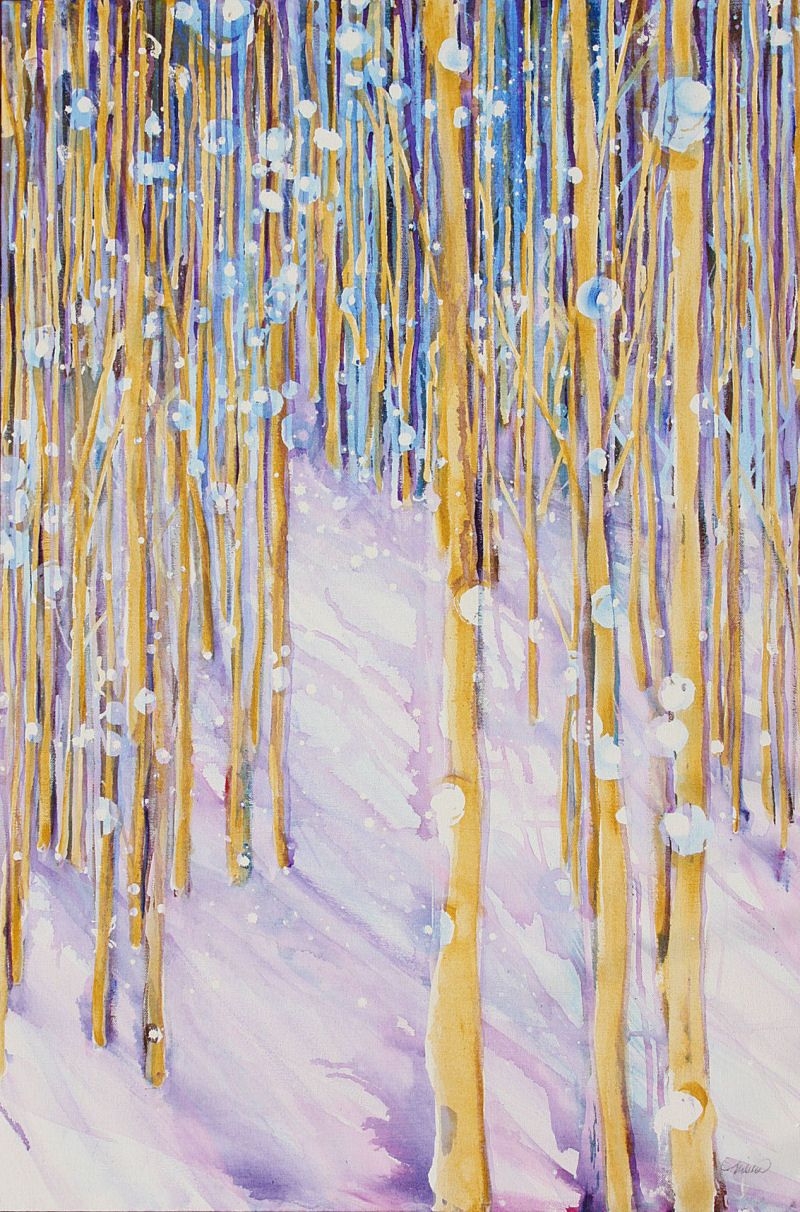 Creating Art and talking about are truly two different ways of seeing; the theory of right and left-brain thinking is matter of fact. As an Artist it takes some effort to “switch brains” and reflect on the processes and progress of work in order to accompany my Art with writing on this blog, so I’m really impressed with the mature quality of the critiques given by students at Olive Stevens Elementary School of paintings on their school Art blog every month.
In collaboration with Oxide Gallery, the Denton school has started a blog where students – or anyone else actually – can give a critique of a different work of Art each month. This month the comments regard the recently finished Sounds of Silence, which is also at the gallery.
Categories: acrylic painting, Art for sale, Dancing With Trees Collection, elements, exhibitions, landscapes, Seasonal, trees, Winter | No Comments »
November 30, 2009
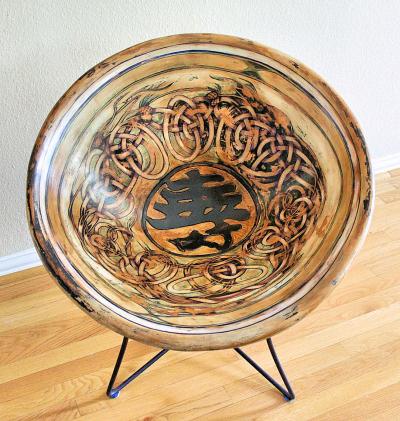
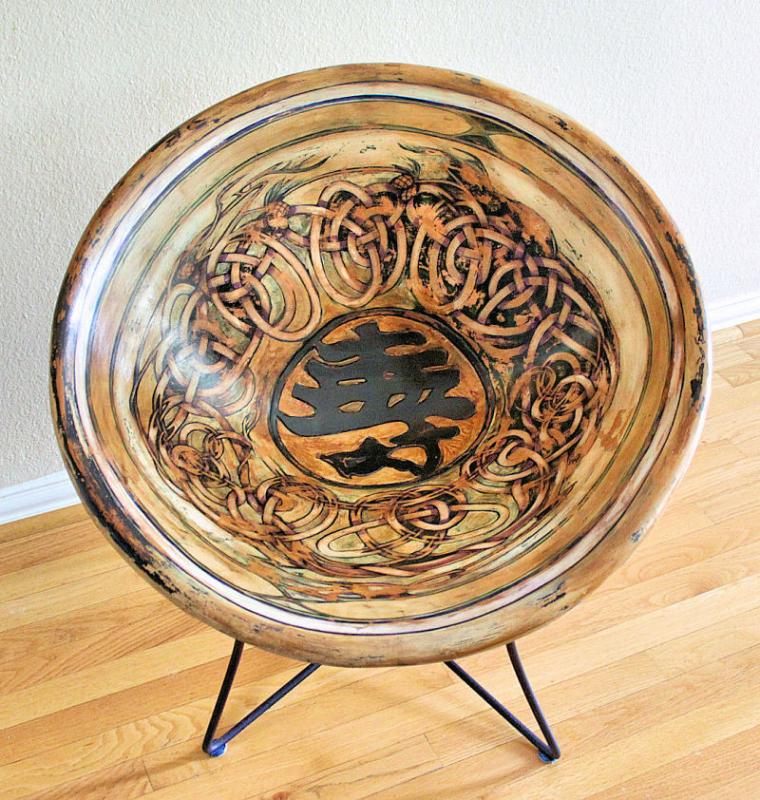
The Tree of Life, 29H x 29W x 29D inches mixed media; refurbished vintage plastic lawn chair, woven canvas strips and white glue, thin layers of drywall compound: cured, sanded, carved, acrylics paint, varnish. Durable, completely functional.
There was an interesting buildup of colors after a lot of changing colors and repainting the design many times, so the impressions of this chair are created like the other chairs in this series; ancient artifact replicas. The other chairs are listed here.
Categories: 3D, Art for sale, Dancing With Trees Collection, design, furniture, history/multicultural theme, innovation, mixed media, series, The Chairs series | No Comments »
November 25, 2009
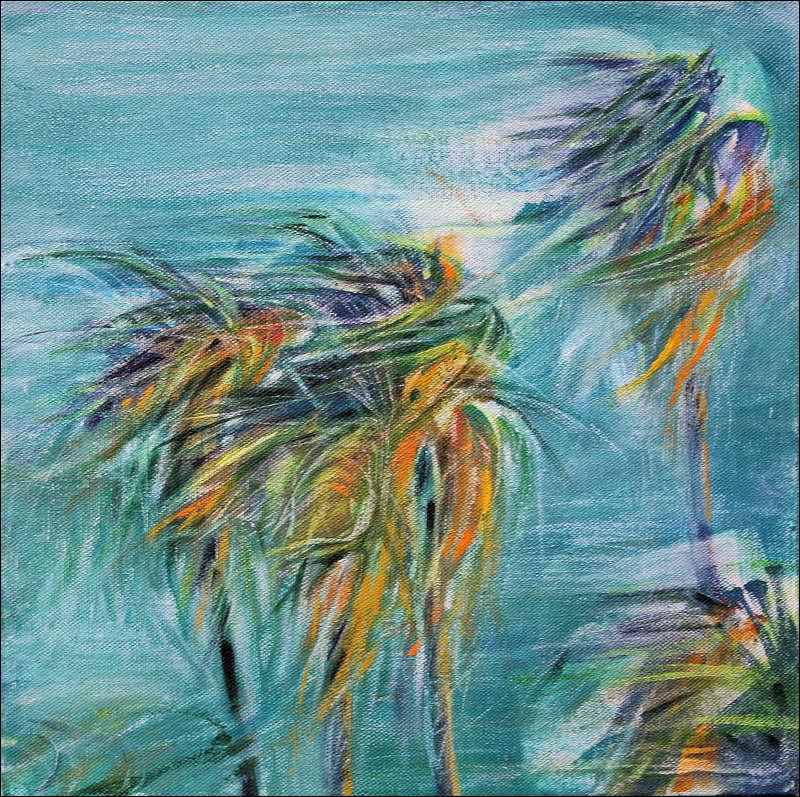
Chapala Wind, 11H x 11W x 3D inches acrylics on canvas, wrapped sides painted
Upcoming exhibition: monthly featured artist at Oxide Gallery in Denton, TX. Among the items on exhibit: most of the Magic Square series, Dawn at Bell Rock, Sounds of Silence, Polypore Fungi, Shadows of Summer, Eastern White Pine, and three of the vintage chairs. Opening Reception Tuesday, December 1st, 6:00 p.m. – 8 p.m., and the show runs until December 31st.
Categories: acrylic painting, animals, Art for sale, Canada, Dancing With Trees Collection, exhibitions, Seasonal, series, summer, trees | No Comments »
November 22, 2009
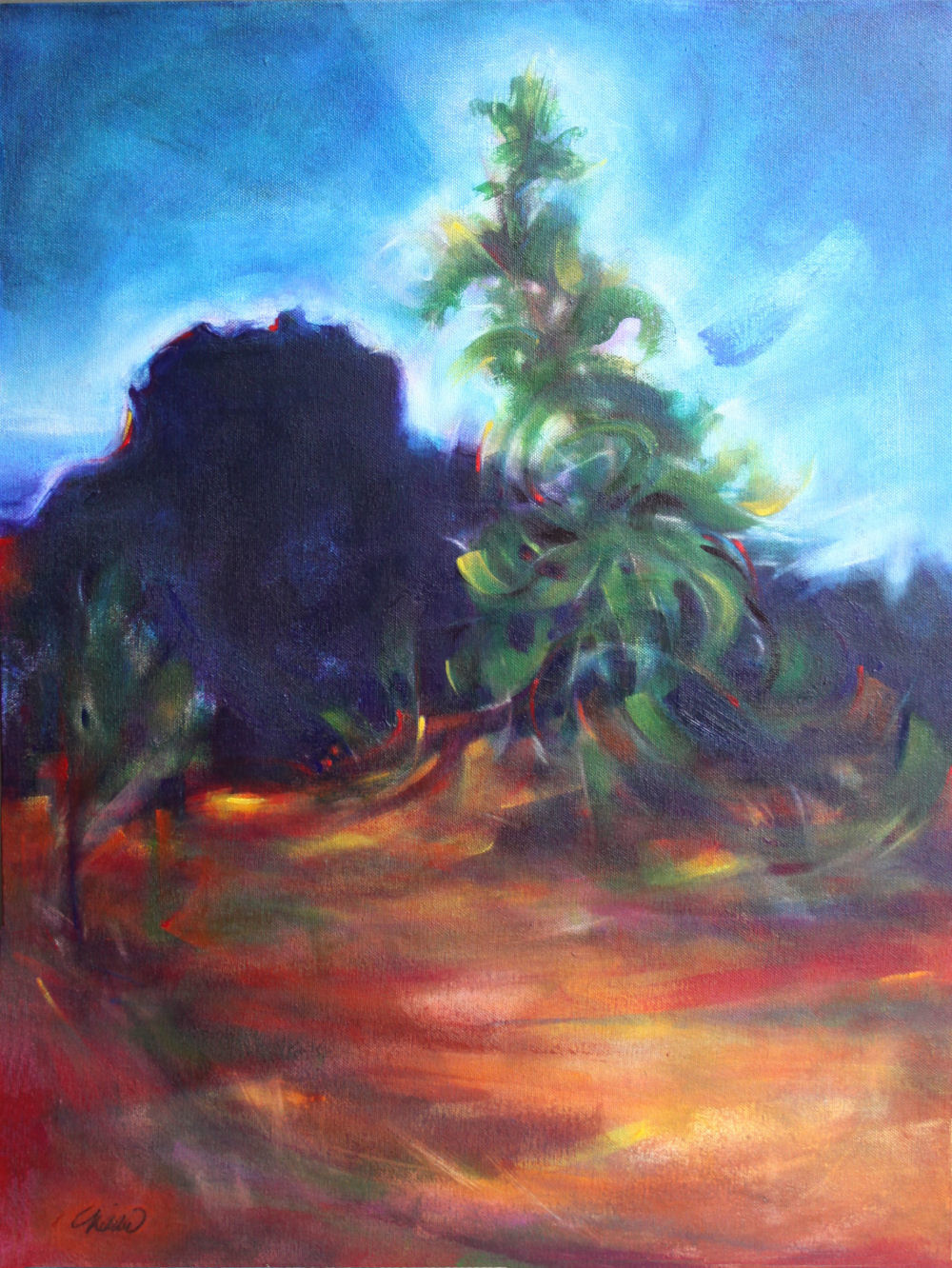
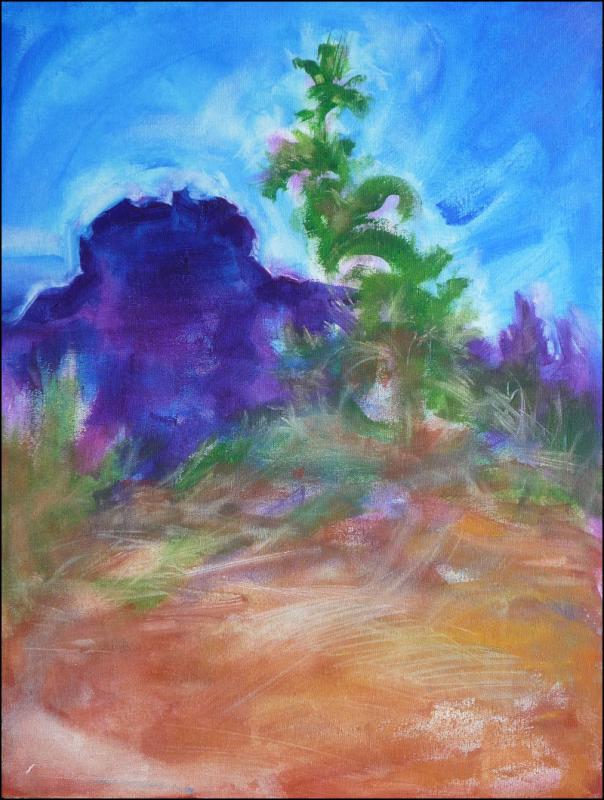
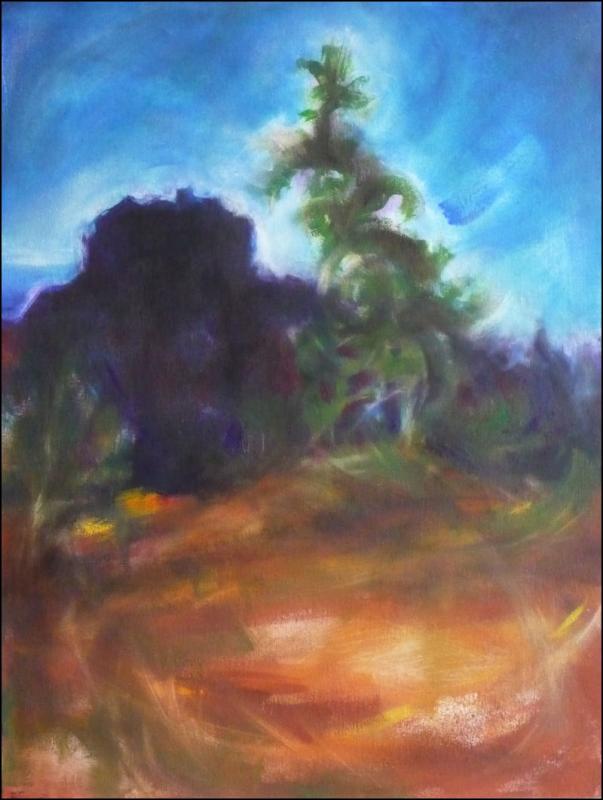
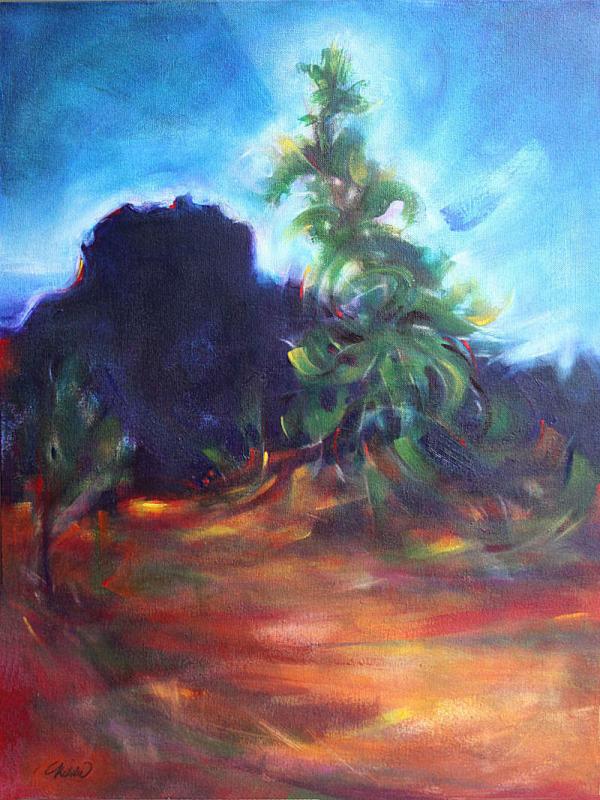
Dawn at Bell Rock, Arizona – 24H x 18W x 2D inches acrylics on canvas, wrapped sides painted, trim frame. Below: phases 01, 02 and 07
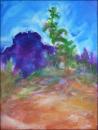
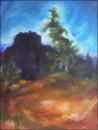
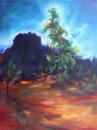
Categories: Abstract/Realism, acrylic painting, Arizona, Art for sale, Dancing With Trees Collection, expressionistic, landscapes, rocks, semi-impressionist, sky, summer, sunrise, travel, trees | 3 Comments »
November 21, 2009
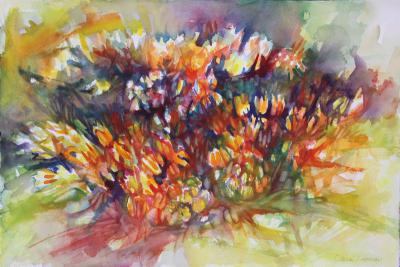
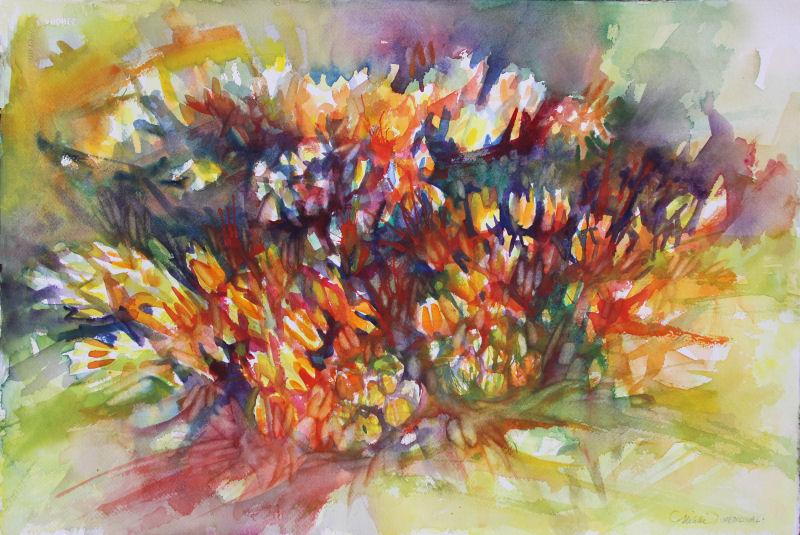
Orange Milkweed, Kentucky 15 x 22 inches watercolors on paper, sold
Driving from Texas to Ontario one summer I had to pull over to take photos and a closer study of the vivid orange bouquets growing beside the highway in southern Kentucky. The colors are irresistible, and this is not the first or last time I’ll portray this subject. All plants and trees contain medicinal and useful chemical properties in their leaves, stems, roots and flowers.
I looked up Orange Milkweed in the most informative books about plants, The Encyclopedia of Herbs and Herbalism edited by Malcom Stuart, which contains details about every plant I have ever sought to find information for. According to it, Appalachian Indians made a tea from the leaves to use during religious ceremonies. One common name for this plant is “Pleuracy Root”, as it is still useful to treat infections of the respiratory tract including pleurisy It is used as a diaphoretic, antispasmodic, carminative, expectorant. Color also has enchanting, supernatural energizing properties!
Categories: flowers, Kentucky, landscapes, Seasonal, summer, travel, watercolors, Wildflowers, work in progress | No Comments »
November 17, 2009
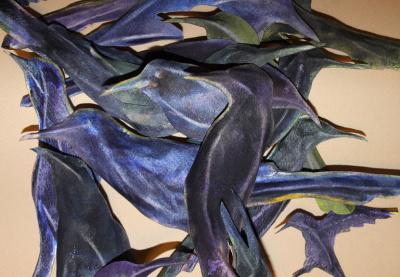
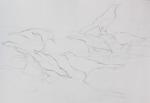
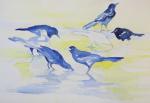
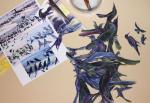
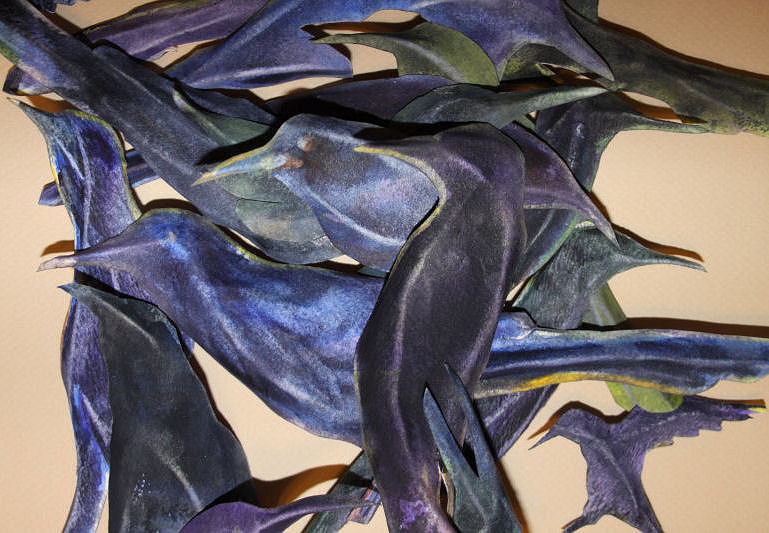
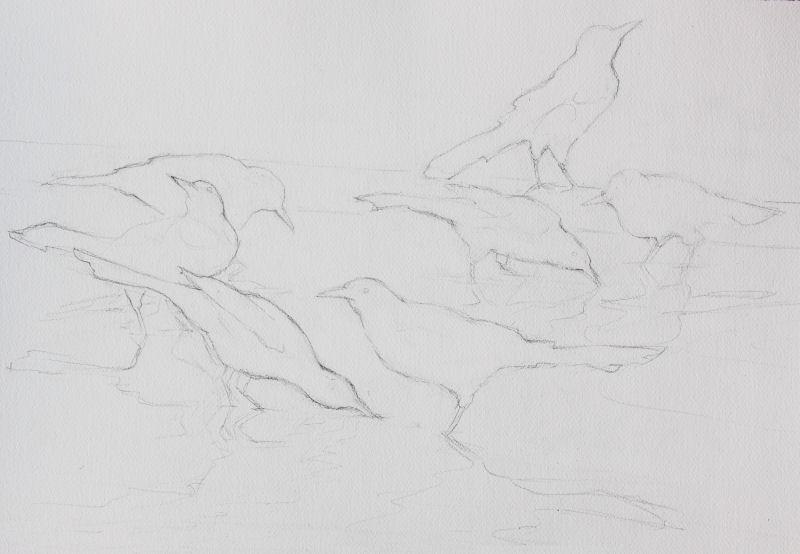
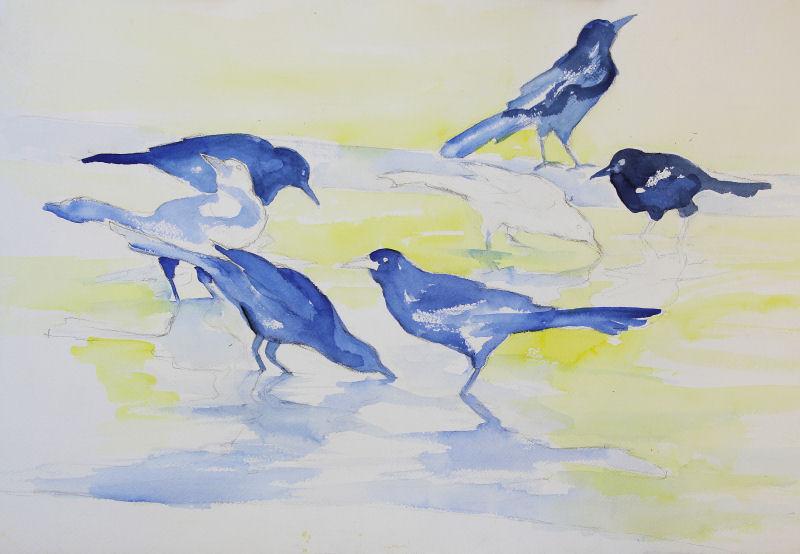
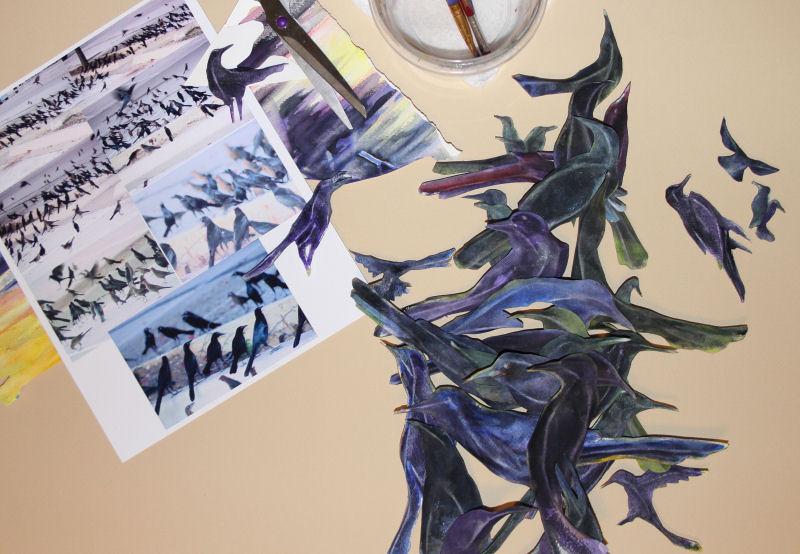
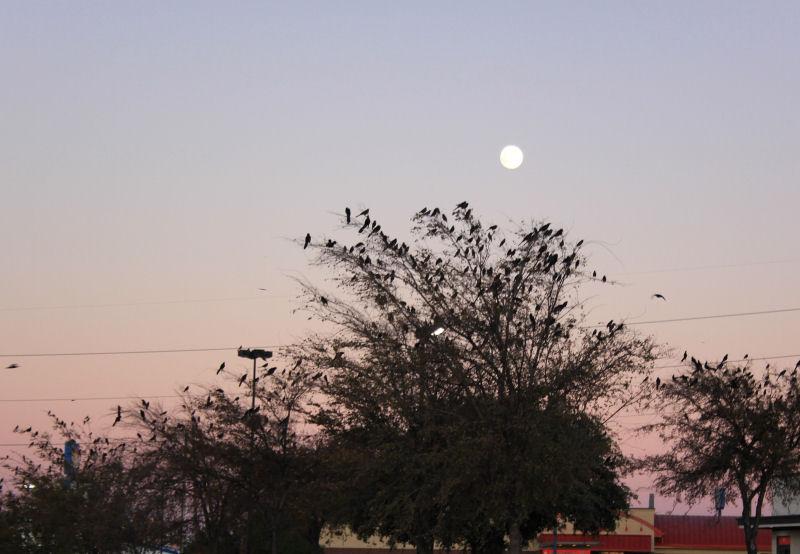
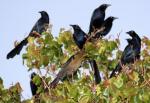
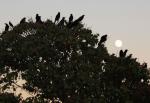
Bird Party, watercolors on molded 140 lb watercolor paper, work in progress.
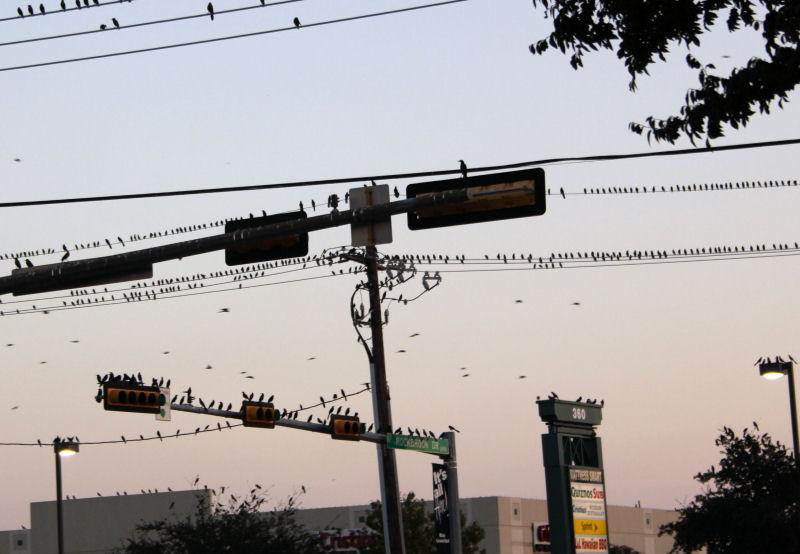
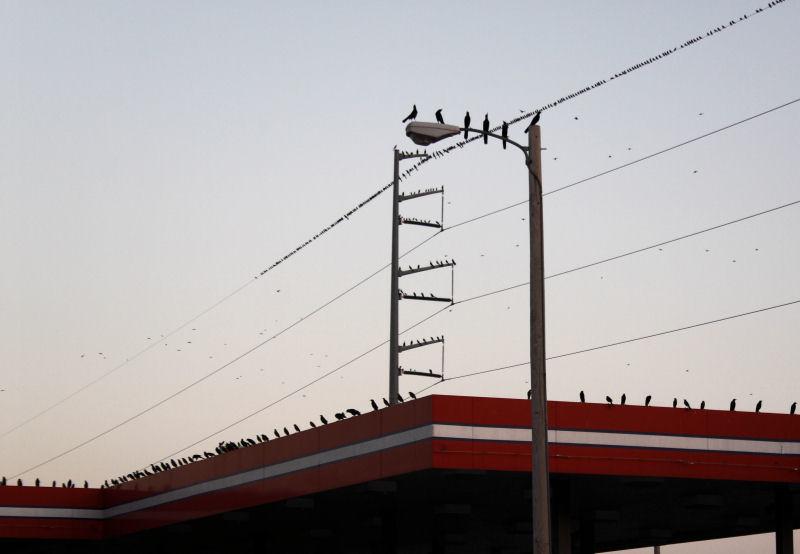
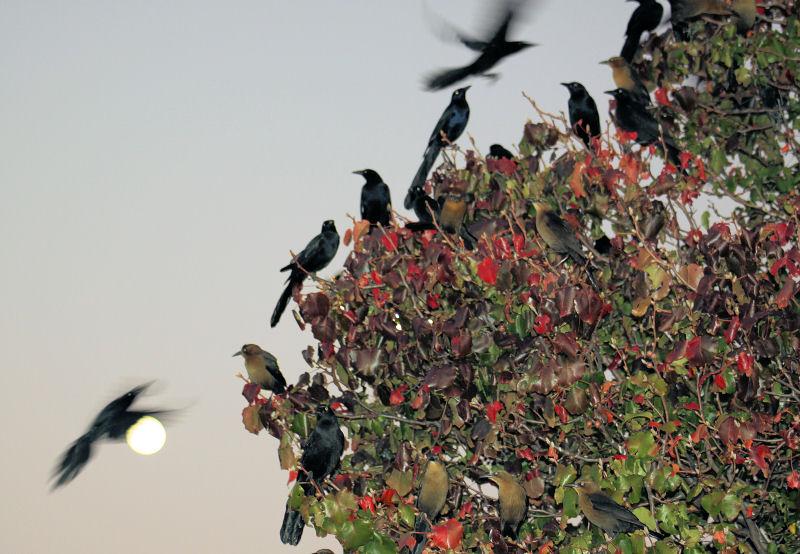
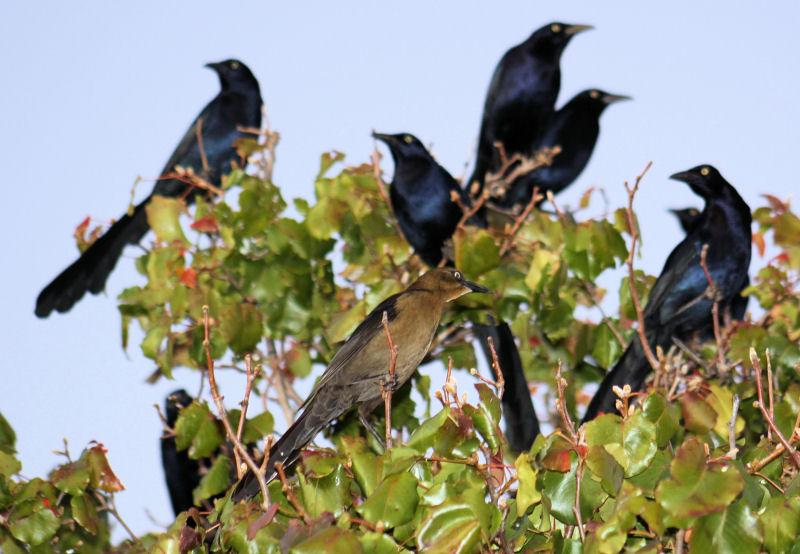
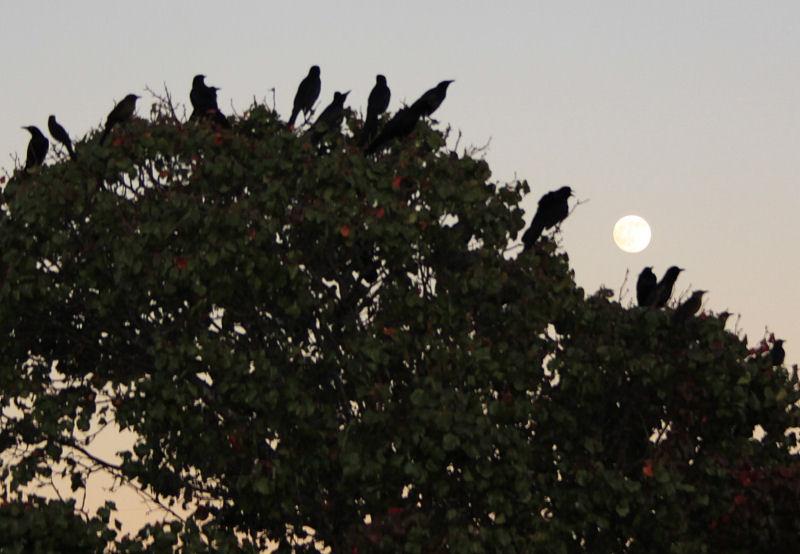
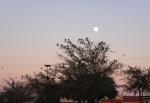
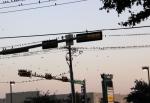
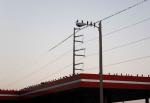
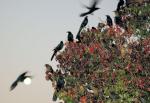
I’m not exactly sure where this is headed, but shapes were cut out of the painting, the paper drenched, folded, stretched and sculpted. Every evening just before sunset in the Dallas-Fort Worth area Grackles, blackbirds, Starlings and pigeons gather on lawns, parking lots, overhead wires and cables, roofs and trees. The event is unique to this area as far as I know, and exciting beyond words to be amongst the thousands and thousands of birds. Here is a previous piece on the subject.
Categories: 3D, birds, city streets, design, experimental, mixed media, Texas, watercolors, work in progress | No Comments »
November 10, 2009
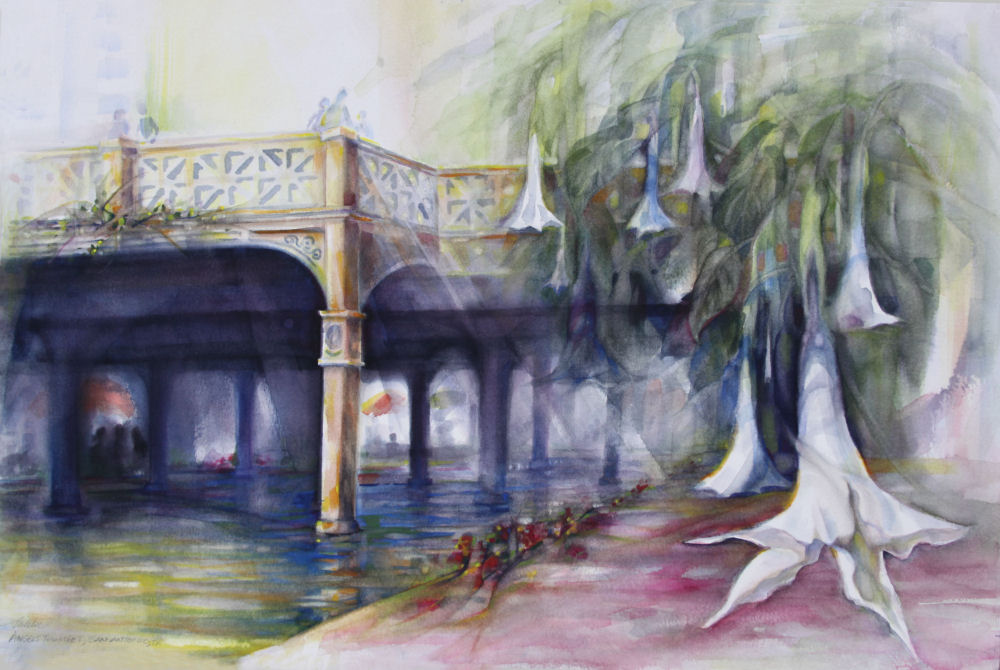
Angel’s Trumpet (Brugmansias) San Antonio Riverwalk, Texas – 14H x 22W inches watercolors on 140 lb. cold pressed premium, white mat
Categories: flowers, flowers and leaves, Seasonal, study, summer, Texas, water, watercolors | No Comments »
November 5, 2009
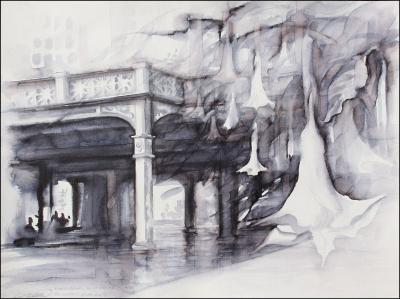
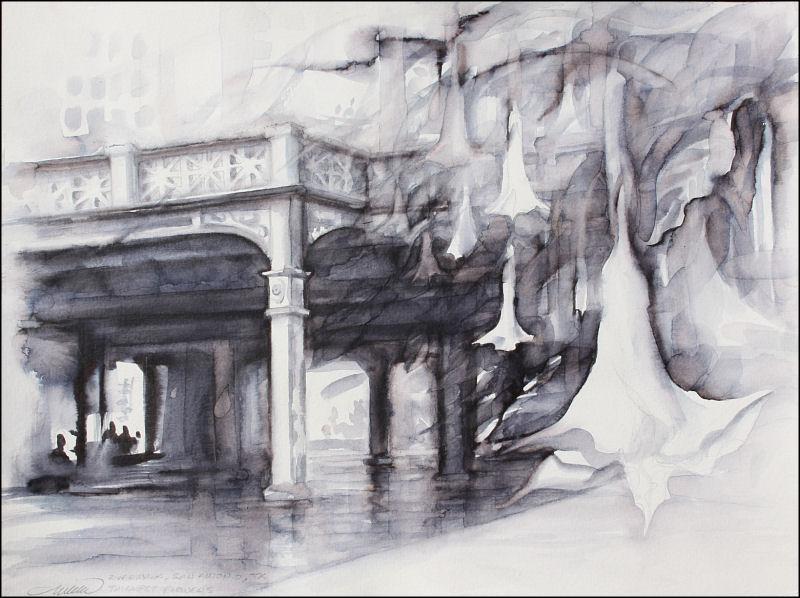
Angel’s Trumpet value study, San Antonio Riverwalk, Texas –12 x 16 inches Tombo pen wash on 140 lb. WC paper.
The Tombo pen is a two-in-one water-soluble marker available in colors as well as black. One tip is medium-fine and the other looks and behaves like a Chinese paintbrush, where thickness of lines can be controlled. What’s more difficult to control is that black once it’s on the page! It’s something to pay attention to when painting the colored version.
Preliminary studies are useful with watercolors because if, in trying to correct and re-work areas, the integrity of the paper is easily lost, especially on inexpensive papers. Still, on a traditional watercolor a lot can be done by adding water to pull out the dark where it’s not wanted, and push out areas of paint with dry brushes. Some places in this study have built-up 3D edges created by the paper bits because I pushed them around so much with a stiff brush to correct things, but traditionally this is not acceptable.
Actually, come to think of it, that might be interesting to deliberately sculpt the paper in strategic areas – like objects in the foreground – by saturating it with too much water, then while painting, brush the resulting paper bits into piles and mold them with a stiff brush. I may try that in the final colored painting of this scene. This proves once more that every single painting is an experiment to find ways to turn disadvantages and limitations into advantage and innovation.
Even though WC and Acrylics are water-friendly and watered-down acrylics is the method I use to start most canvas paintings, I’m noticing a few outstanding differences : 1) an off-balance composition seems to be more noticeable with WC, definitely not as correctable 2) improved attention to drawing, details and ultra-conscious 3) requires pre-planning and foresight to keep the work fresh and clean 4) commands enough confidence to swish the paint on quickly as if it was not planned.
Categories: Abstract/Realism, city streets, flowers, flowers and leaves, Seasonal, study, summer, Texas, water, watercolors | 1 Comment »
November 3, 2009
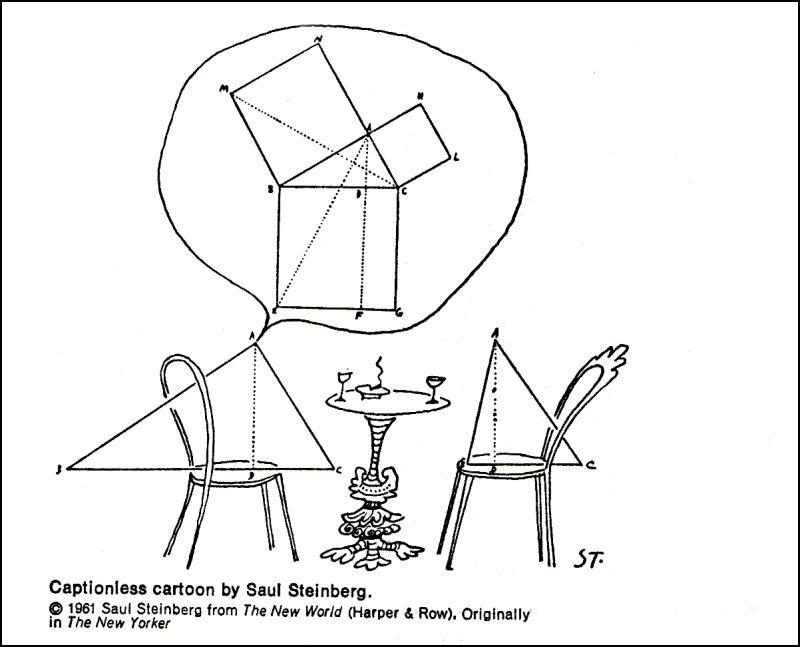
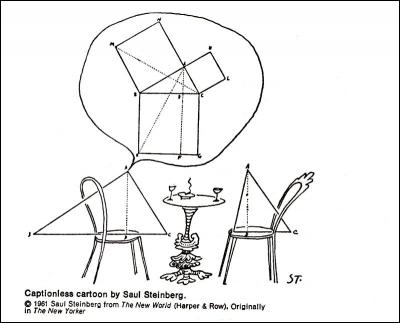 The title of a work of art can help sell it, and captions can complete our understanding of a picture, but the most successful works of Art manage well without an explanation. Our visual senses – sight and insight – have a language of their own. Upon viewing anything, multitudes of information are presented and understood simultaneously, almost instantly. With or without color, images are powerful, possibly even more than words, because with the development of human communication, pictures came first. It’s now widely accepted that symbols marked the origins of written language across the world.
It takes much less time to perceive than it does to write about it. For a hands-on illustration of this, draw a simple Smiley Face, and note the time that it takes to draw it. Afterward write down everything that comes to mind about that icon; what it means, other general impressions and associations. Although this is a familiar icon with clear connotations, possibly something we see every day now, plus almost all of us have drawn it at some point, within seconds of describing it you will realize how much longer it takes to interpret as quickly into words. Harvey Ball, the original artist of the Smiley Face icon must be flabbergasted that succeeding generations would come to coin the term, “emoticons”, based on an indefinite number of facial expressions that spawned from the first, including animated ones that wink and cry, and more.
Essentially, full comprehension in any language relies on those aspects of our mind’s eye: memories and imagination in order to be fully effective. Pictures appeal to our abstract, multidimensional experiences and through the emotions, allowing for individual’s interpretations. There are higher expectations for words. We assume that they alone are qualified when we’re talking on the phone and participating in online computer groups, for instance, but it actually takes extra effort for our intent to be clear when we don’t have access to the visual side of our statements. Even if we speak the same language, the words we choose and their meaning can be misinterpreted and misunderstood.
Relying on the visual aspects of learning, subjects in school are traditionally taught using chalkboards and eraser-boards, stimulating audio and visual senses. Likewise, motivational speakers often use diagrams to help get the point across. The use of imagery is rampant everywhere now. It’s extremely effective in all forms of advertising, and despite all attempts to hold on to all copyrights, if the art is relatable it spreads like wildfire on the internet. Artists of every kind are more vulnerable than ever to fraud.
Harvey Ball’s Smiley Face is a perfect example of how artists are not really in control of what they create. Generally though, any exposure is good exposure, because most people who borrow other people’s graphics or ideas still want to know who the source is. As artists it’s beneficial and constructive for us to continue moving on to the next best project and keep progressing with a lifetime of work. We have to learn to let go of the strong bond we have with the art we create. It’s personal, to be sure, but a good motto is, “There’s more where that came from”.
Along with the resources available to us now, in our progressive age of high technology and wireless everything, it’s still the Human factor that needs refining. We only need to trust intuition as much as logic, with as much emphasis on communicating our emotions as openly and explicitly as we do words and speech. Fortunately there are infinite forms of expression, and inevitably it’s a good thing that creativity is available to everyone, not just artists. Creativity thrives on challenges to communicate effectively; it always has and it always will.
More about Artists and history in the article, The Influence of History.
~
Credits: Above cartoon by Saul Steinberg (1914 – 1999) was a Romanian-born American cartoonist, best known for his work in the New Yorker magazine. Harvey Ball, Wikipedia, Smiley Face
Categories: cartoon, history/multicultural theme, inspiration, Other Artists, Smile | 2 Comments »
� Previous Entries Next Entries �