trees
« Previous Entries Next Entries »Kookaburrahs
Saturday, May 23rd, 2009
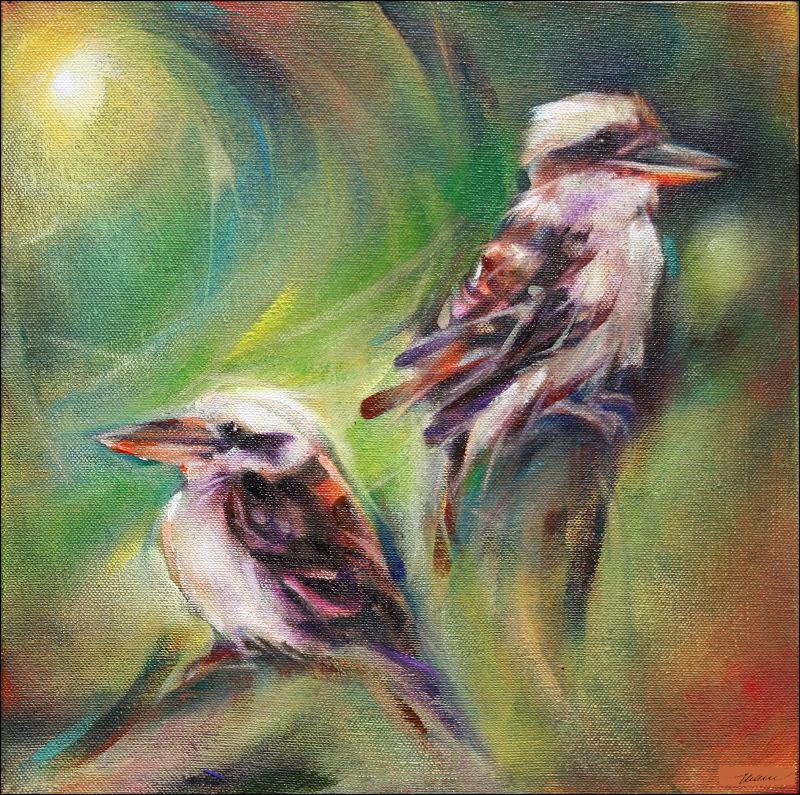
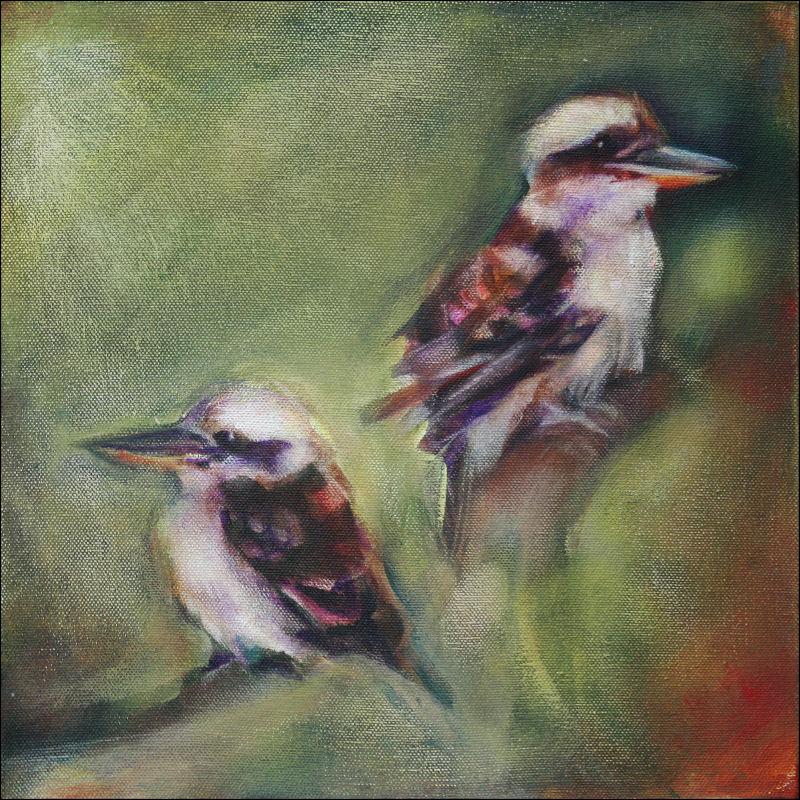
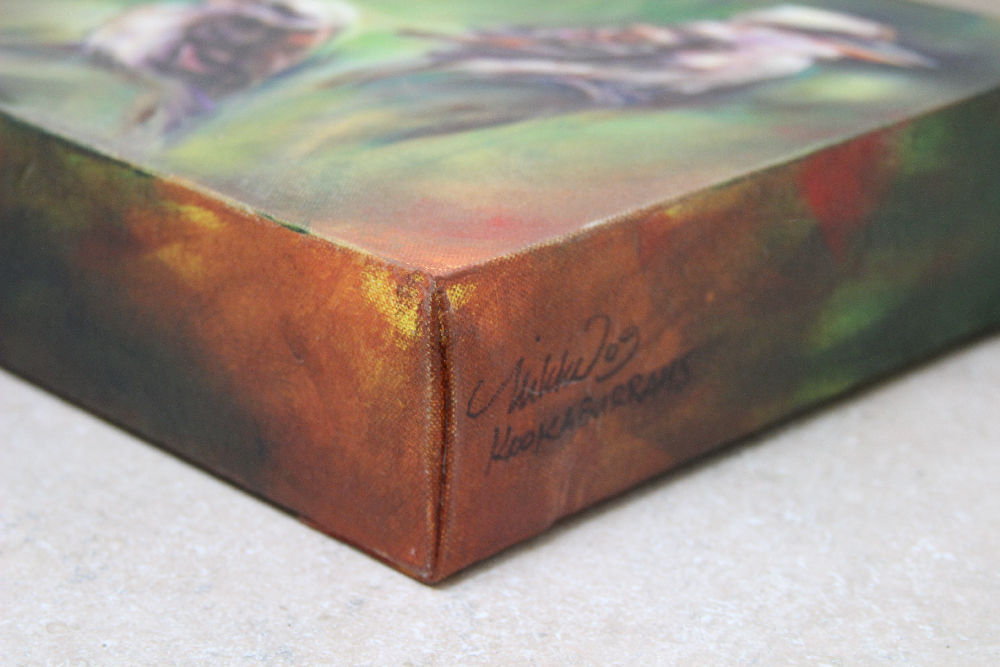
Kookaburras, 11H x 11W x 3D inches acrylics on canvas, wrapped sides painted. Frame unnecessary. Hang on the wall or display on a flat surface. Most of the Magic Square series are signed on the side so as not to impose on the composition. Seen here, the signature is added digitally on the front.
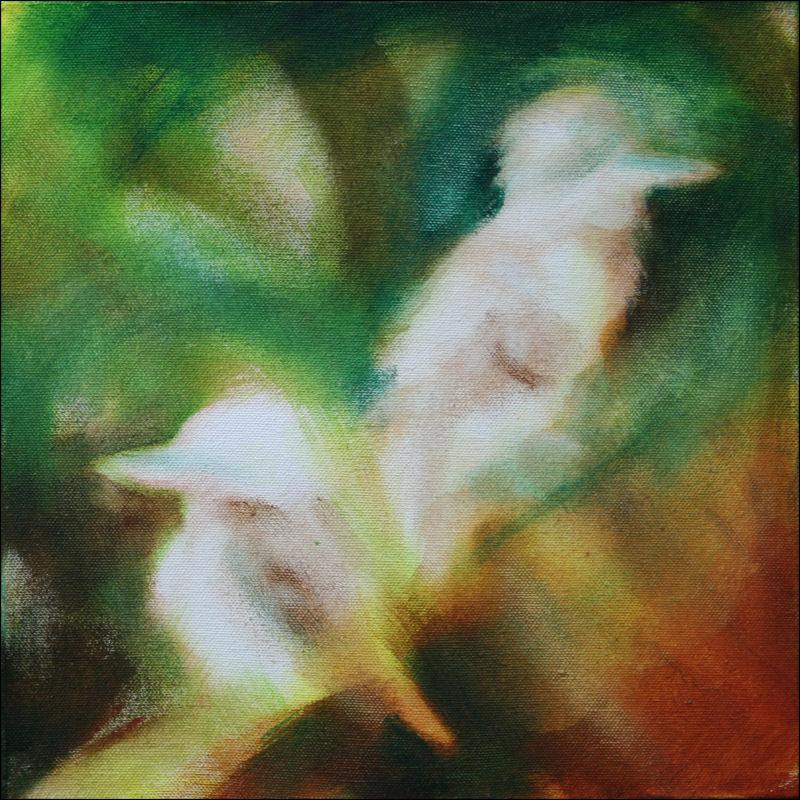
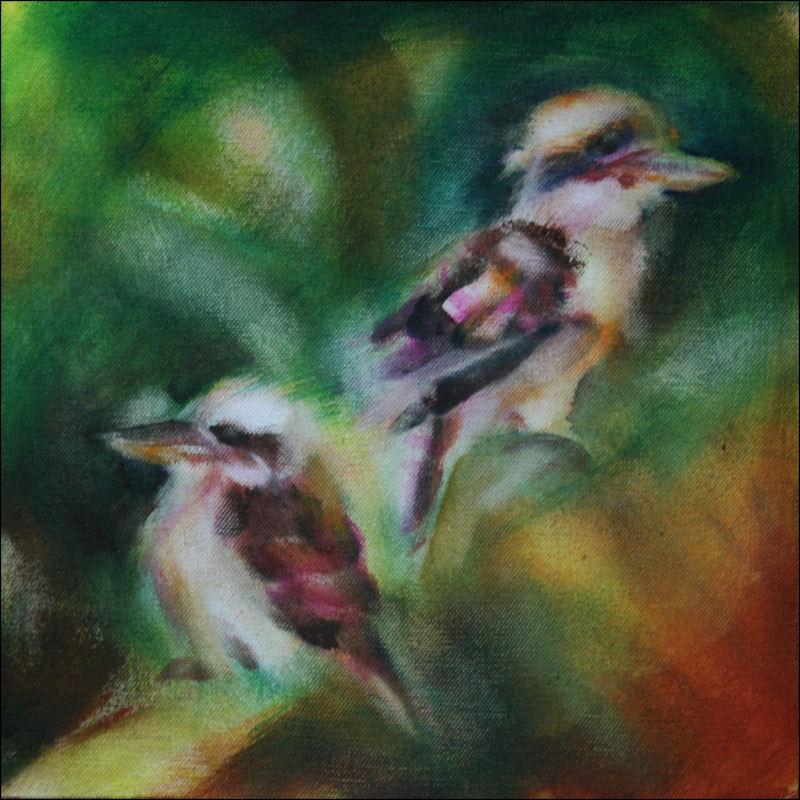
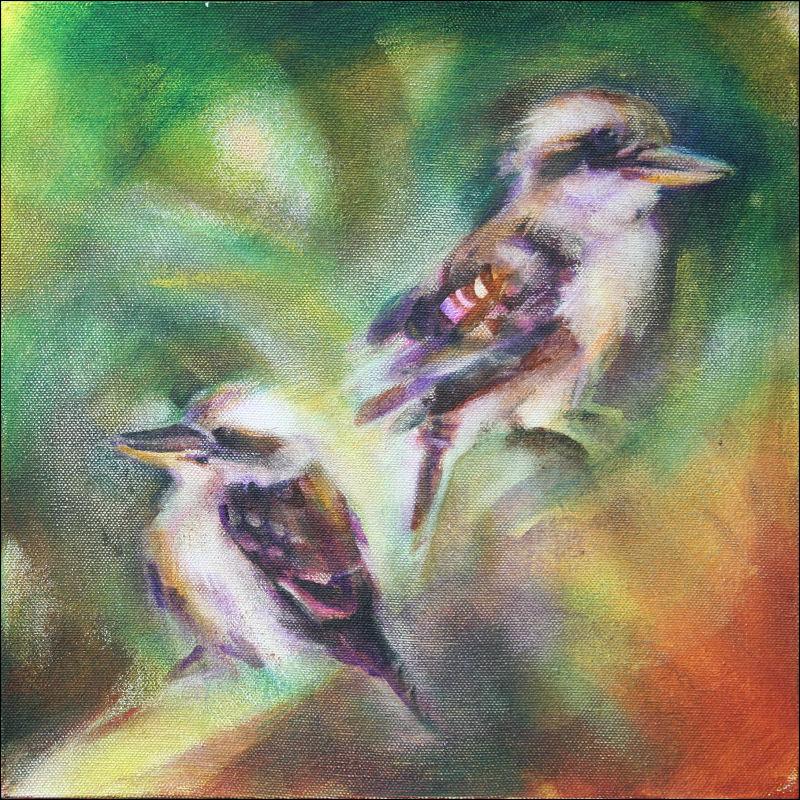
March 13th, 2009 work progress blog post: This painting could have been left at phase 3, but the decision to give the birds more definition and sense of realism created a whole new set of problems. For example, the composition, which was unbalanced from the start, is now exaggerated and more noticeable, so a third element needs to be added in the upper left corner. Not necessarily another object but color or shape that would shift the weight and attention away from the lower left areas.
| Progress details: | |||
 |
 |
||
 |
 |
||
There is a work phase where, once details are added or changes made to one area, every other thing in the picture needs to be brought to the same level of quality: quality meaning style and feeling of the features. I don’t regret proceeding, but it does mean extra effort to solve all the new challenges, and usually while attempting to solve those new ones arise. Other professionals would say this is overworking, but it really depends on what your intentions are as an Artist, and what motivates the work. If risks are not taken sometimes, a painting may never be all that it could be. Phrases we tend to cling to like “less is more” are not written in stone; sometimes more is more…learning is a good thing!
In landscapes details are best left for the imagination, whereas painting animals, birds or other creatures, a purpose needs to be clearer. Is the intention to portray character through shape and silhouette? other traits? specific markings? Is it the main focus or only a part of the whole? Computer tools are also useful in playing with colors and other possibilities.
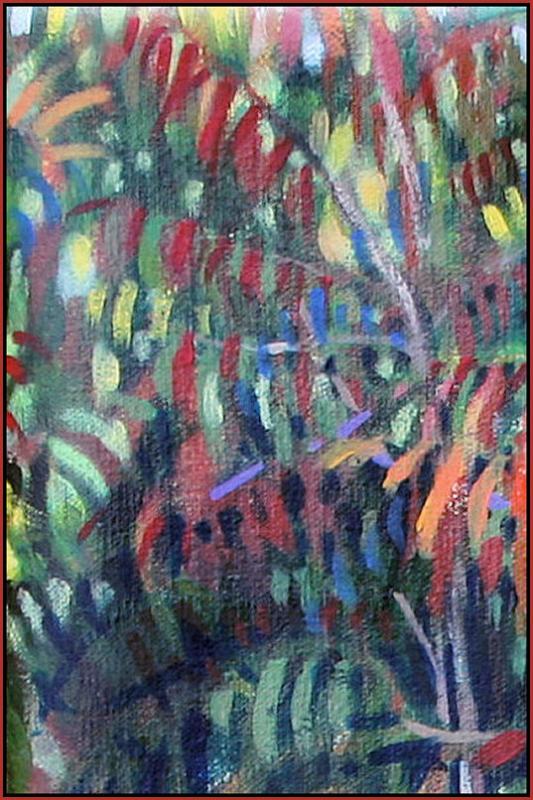
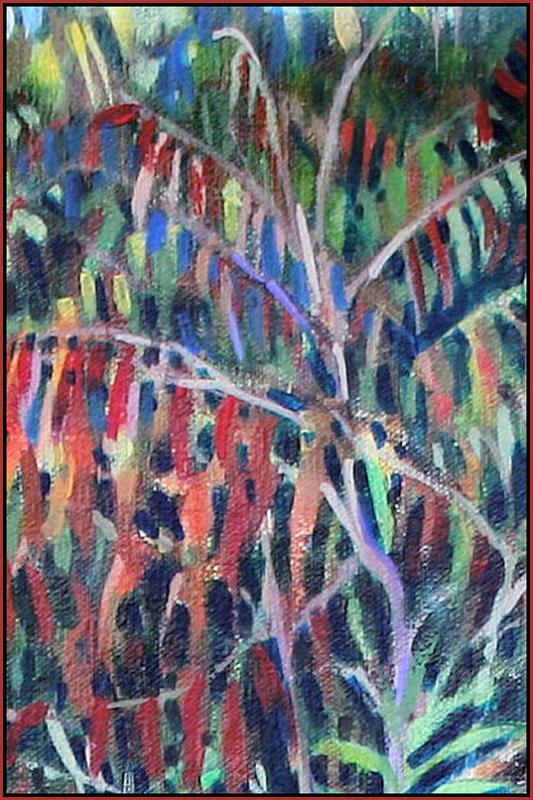
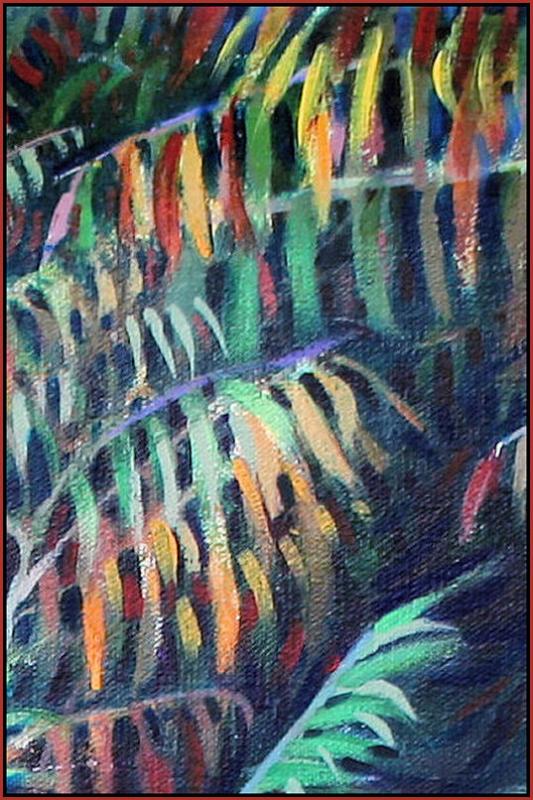
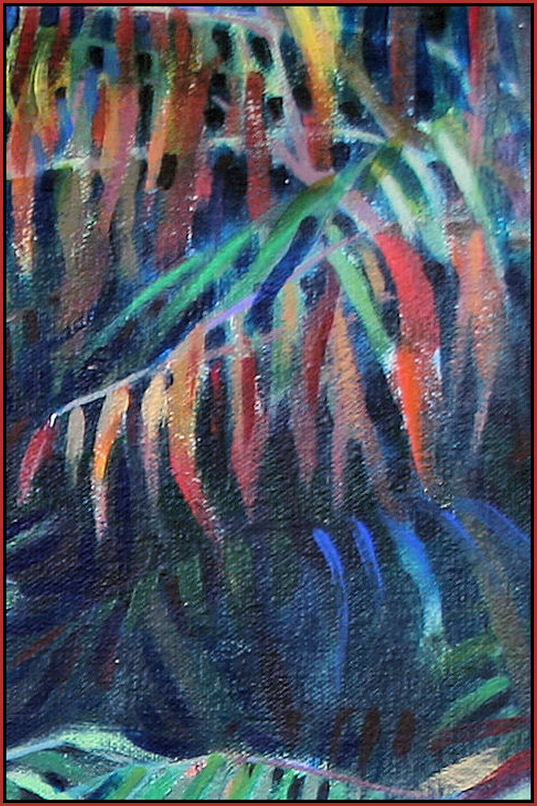
Sumac Bushes Chair finished
Tuesday, May 5th, 2009
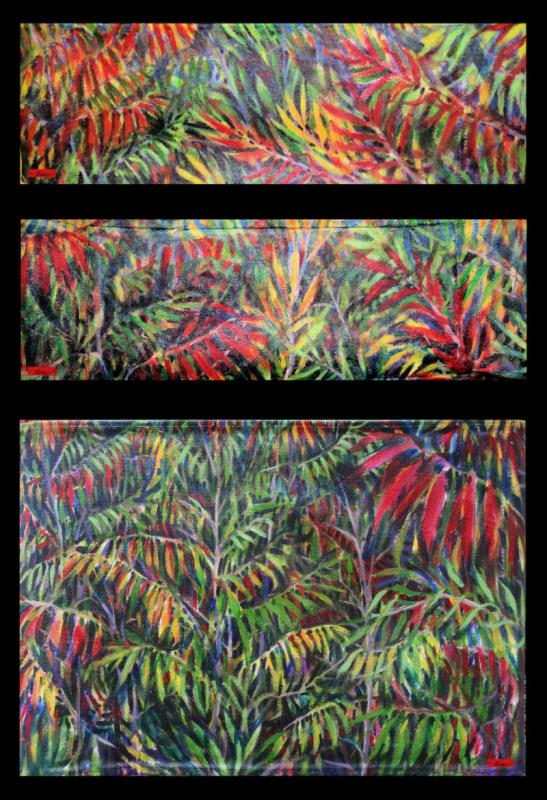
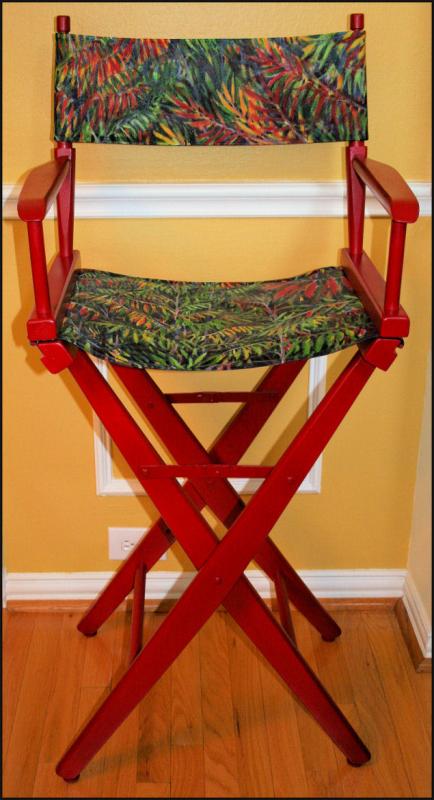
Sumac Bushes, 47H x 22W x 16D inches refurbished Director’s Chair, acrylics on canvas.
Four cropped pieces of the 1999 painting that inspired this chair hang above it, updated and framed with red narrow plastic w/glass frames. The chair and small paintings are a set.
Fossils Chair, Homage to The Earth – finished
Wednesday, April 22nd, 2009
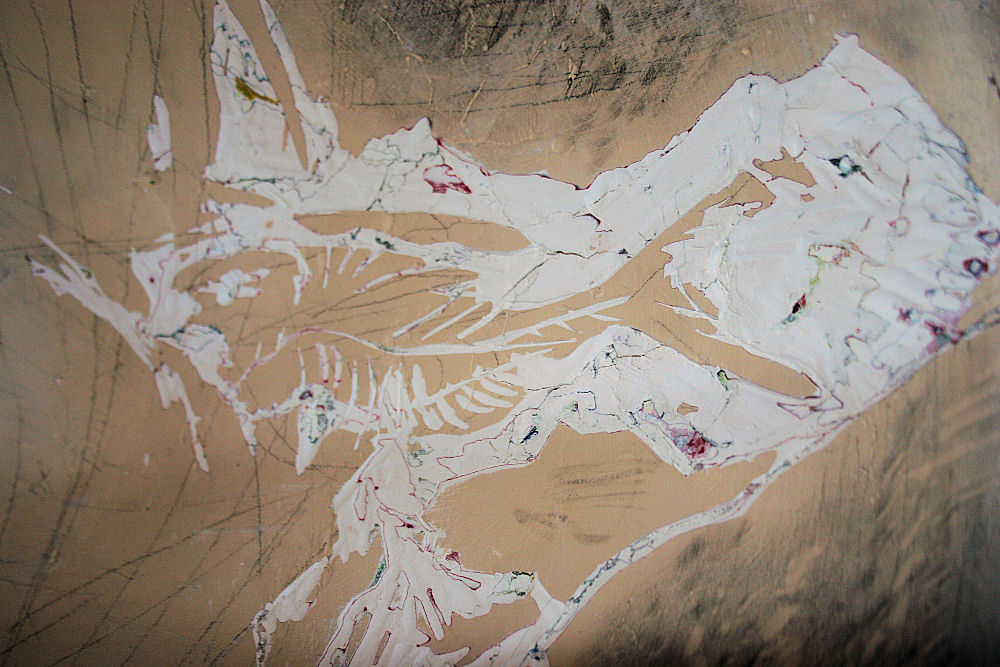
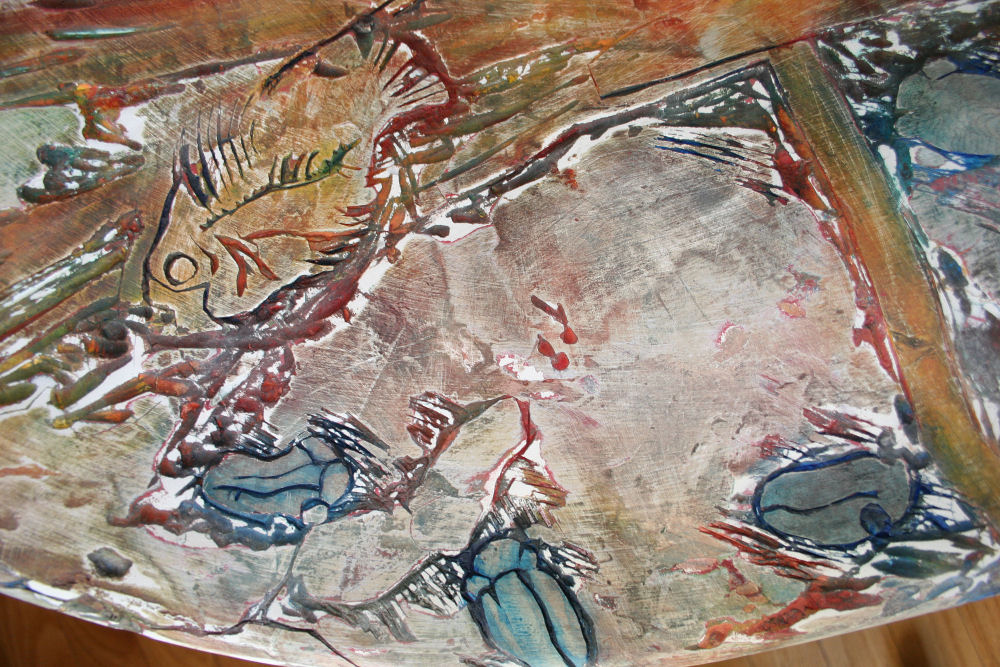
January 12th: While sanding the wood for the Sumac Bushes Chair during coffee breaks, I have started the Fossil Chair, paying homage to the fact that without trees, all life on Earth would not be so prolific, and might not exist at all. Fish and Trilobites are carved into the plaster on the front surface of the chair as well. in this series.
January 13th: Lower detail of Fossil Chair, carved plaster, acrylic paint inlay, sanded. In progress. Trilobites will have painted detail.
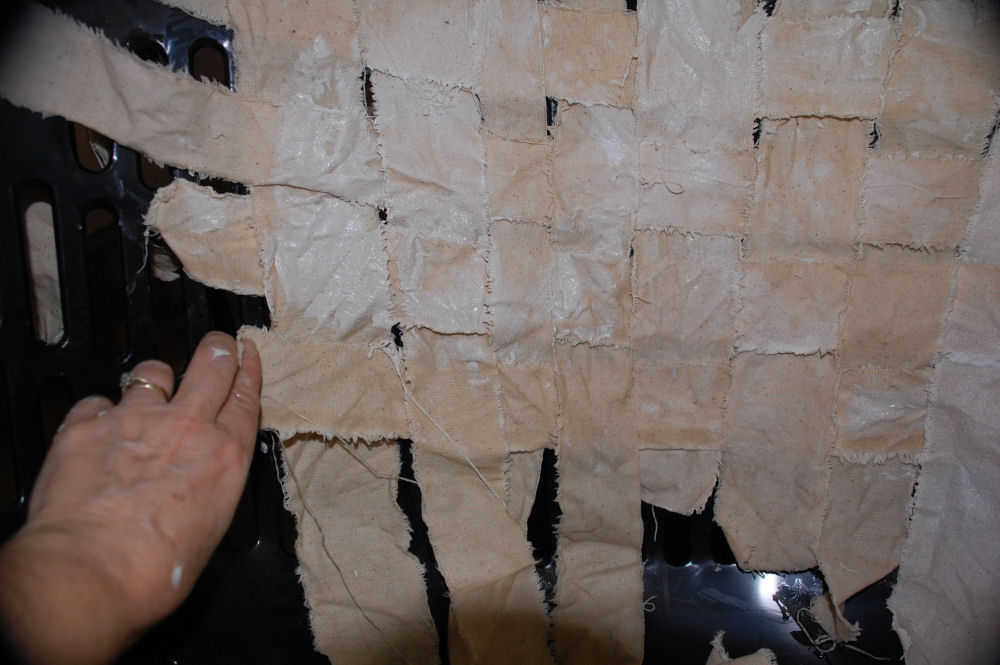
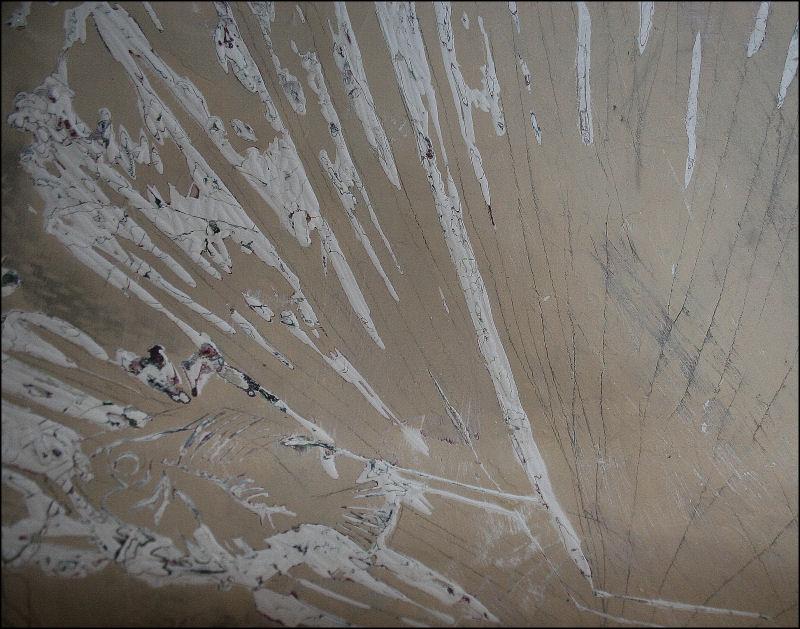
Jan. 14th and Jan. 24th updates, below: front details, work in progress on back/underside of the chair. After this stage, all details will continue to be refined with more carving and layers of acrylics. Haven’t done many details on the trilobites yet. The colors in the palm leaf still are too vibrant for a fossil, but are a perfect underlying color because it shows through when layers of blues and black are wiped away with a cloth.
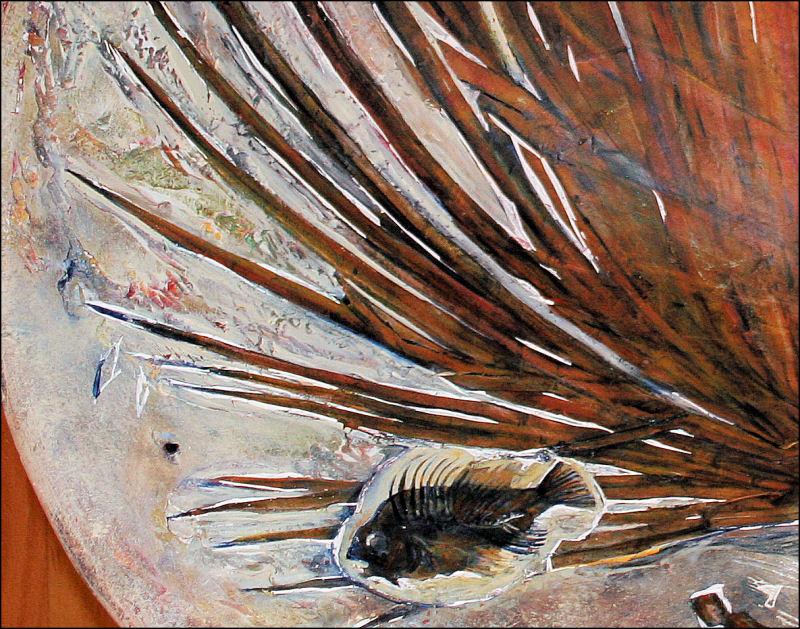
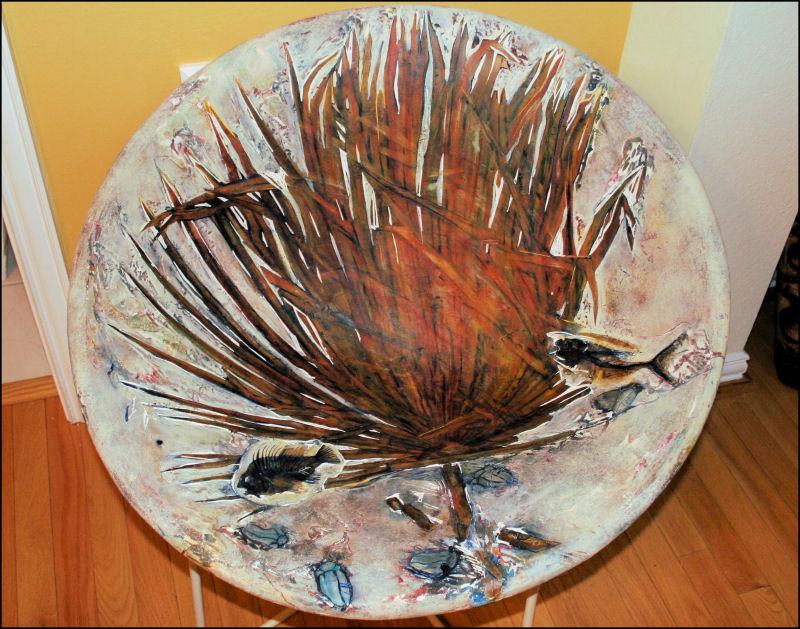
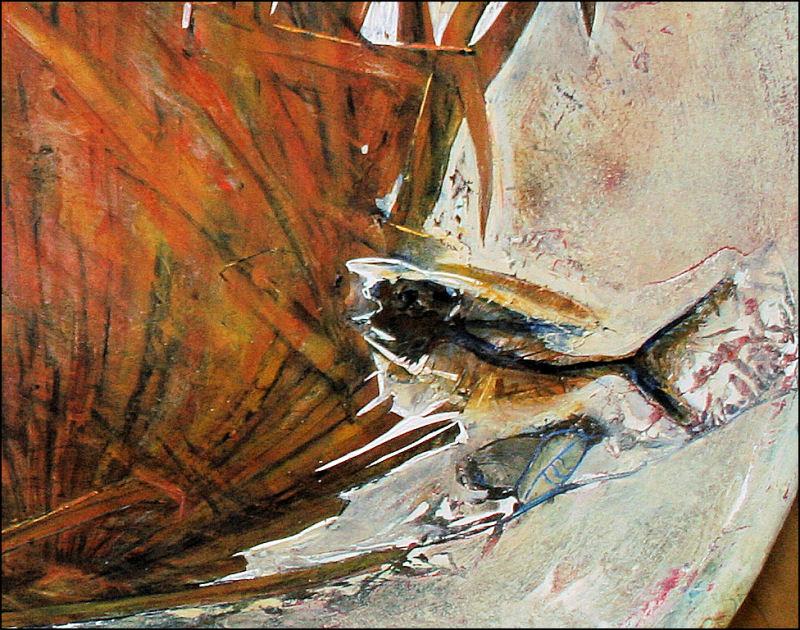
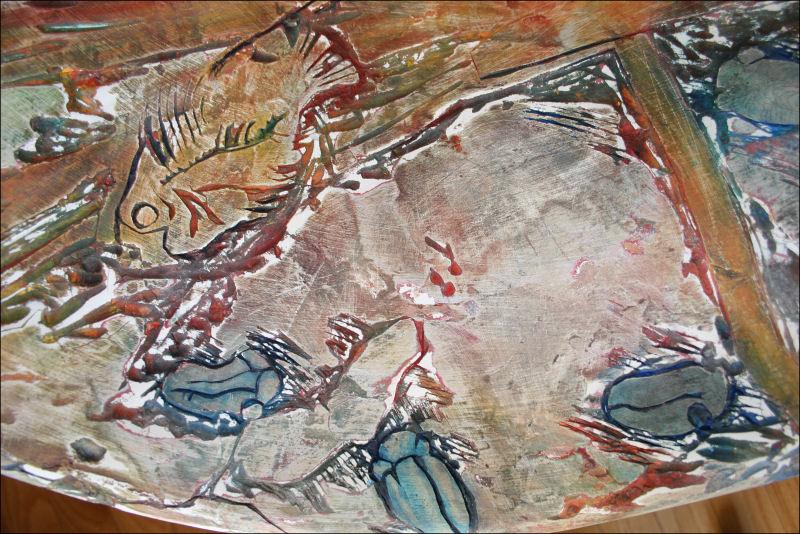
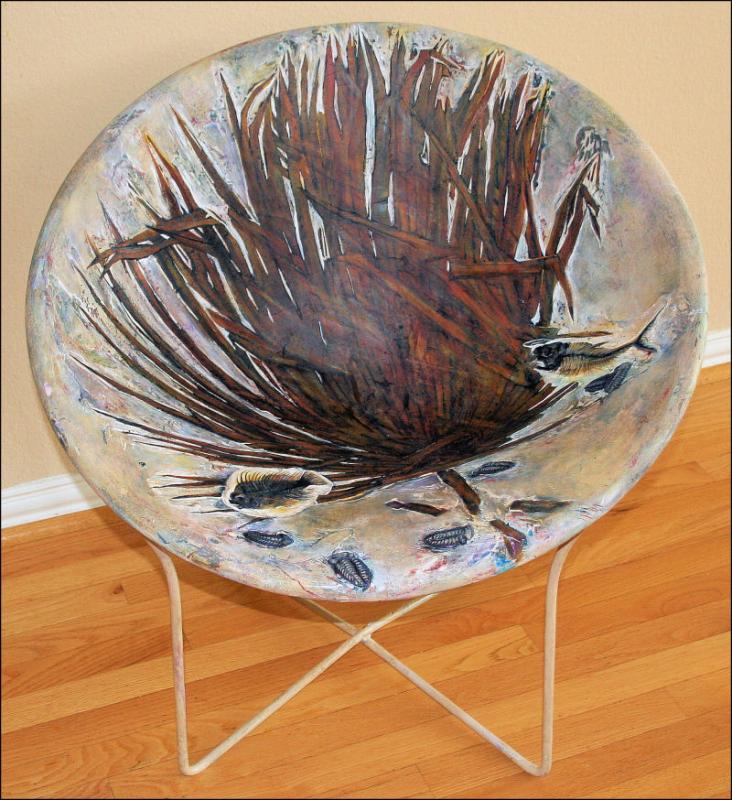
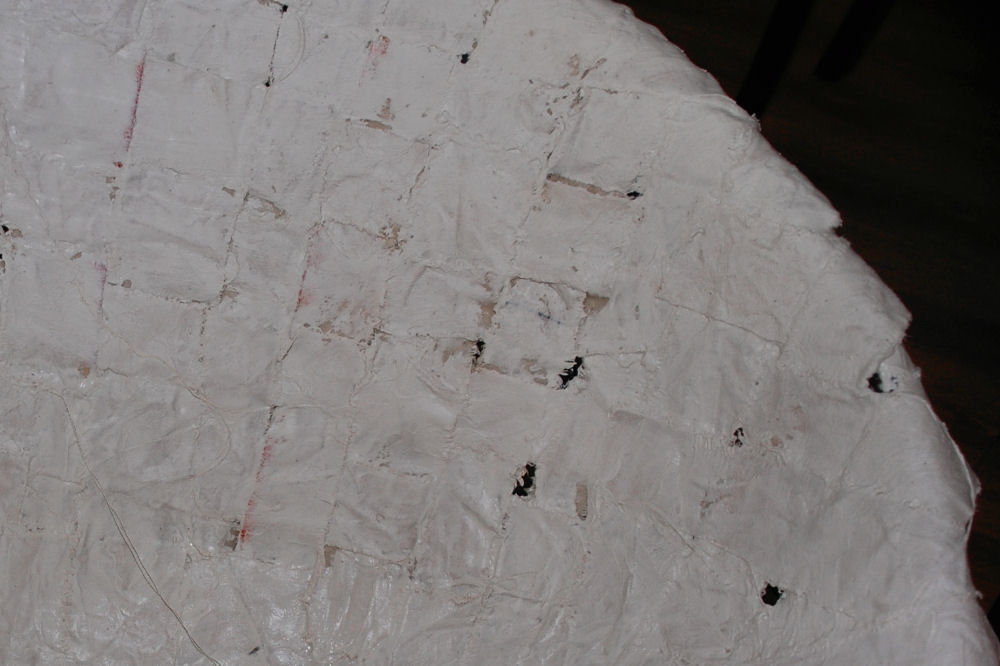
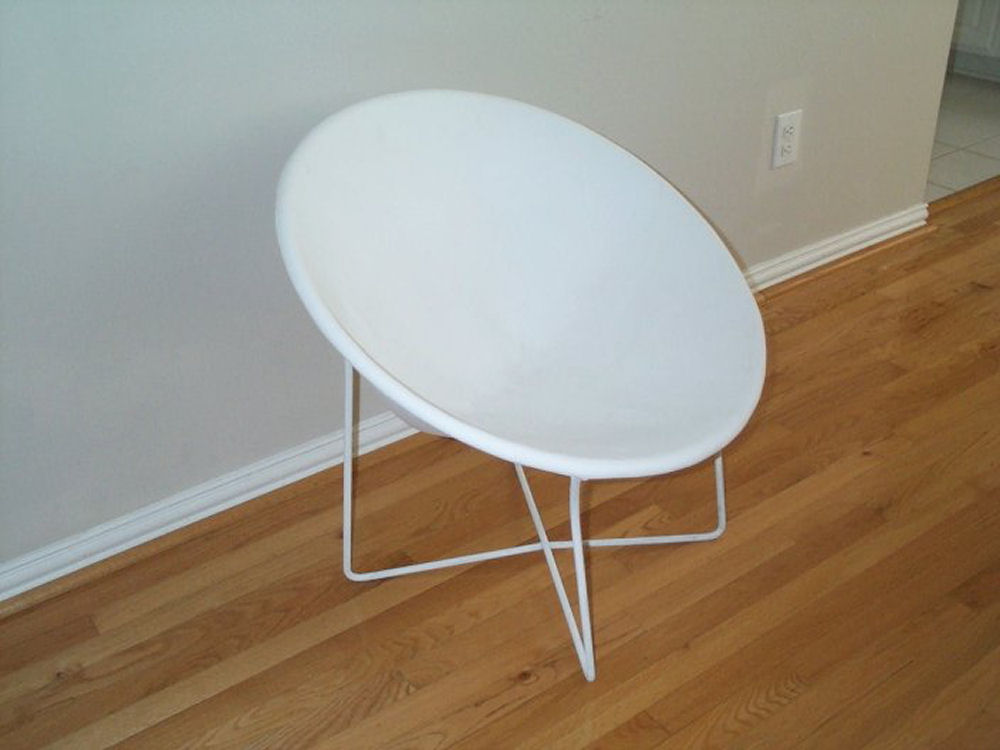
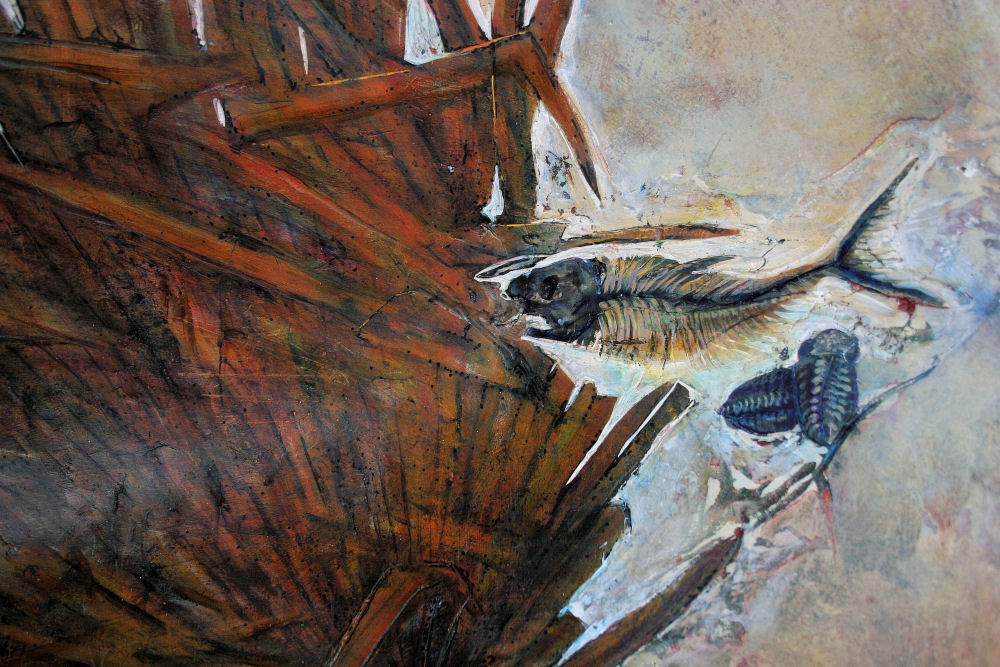
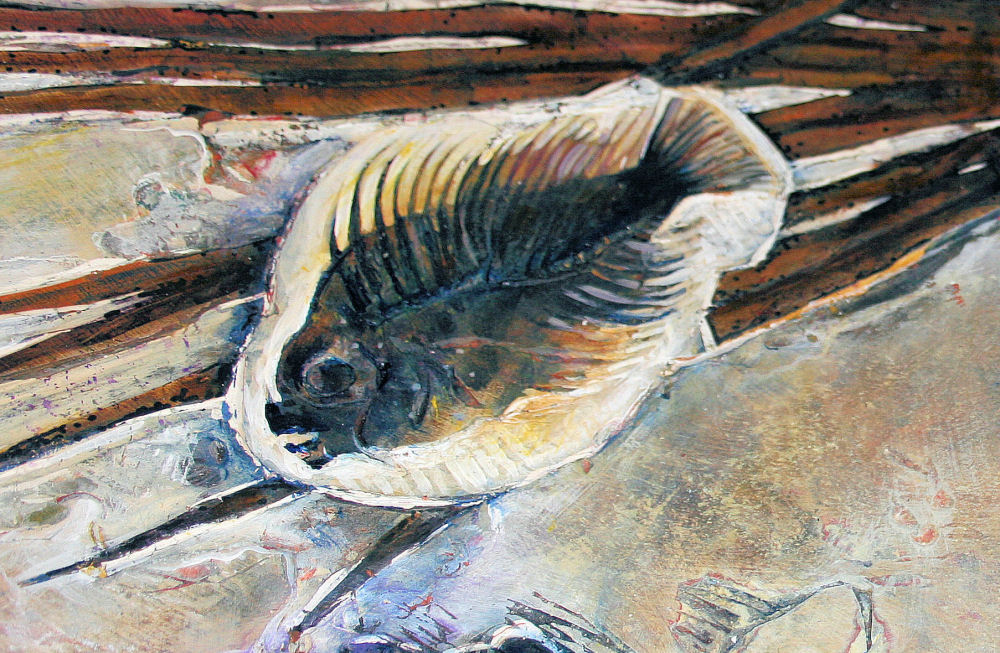
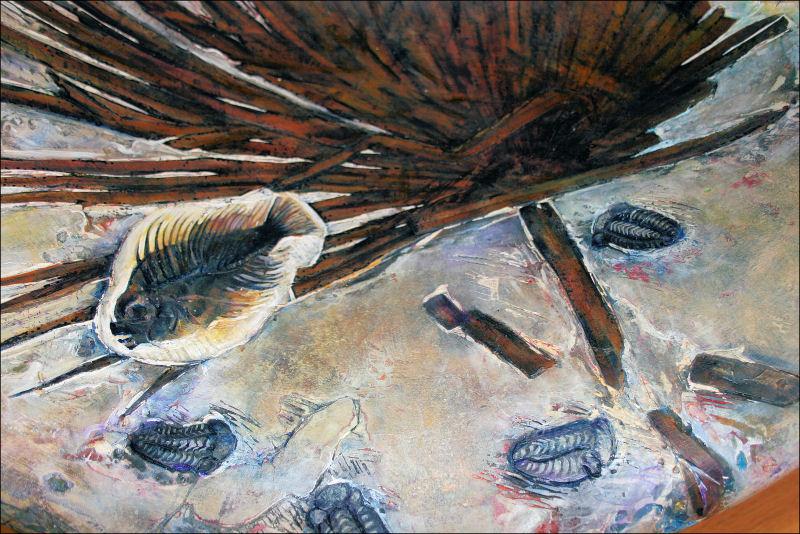
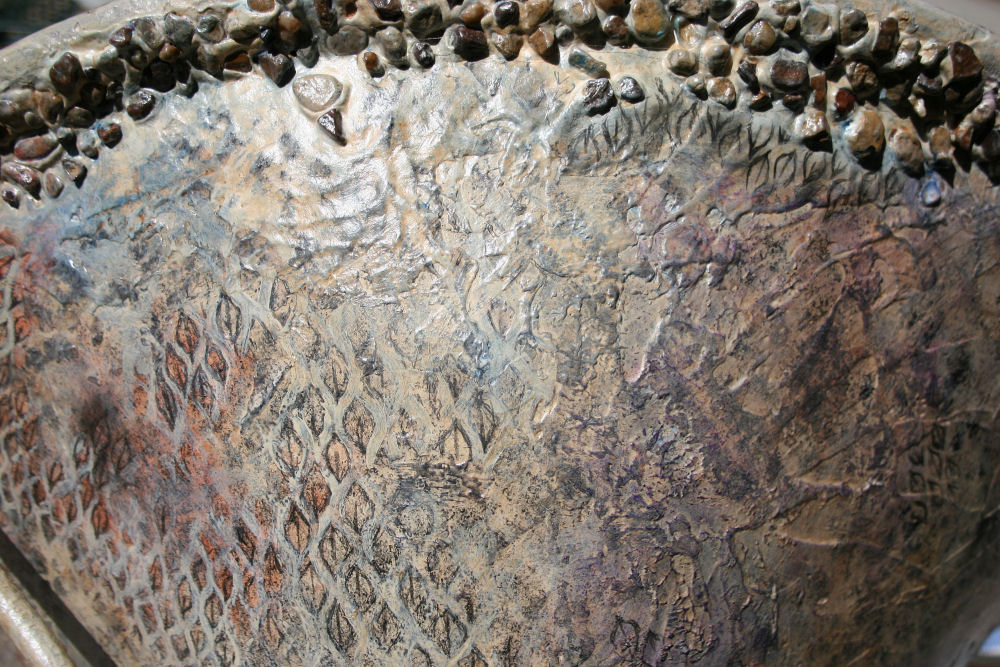
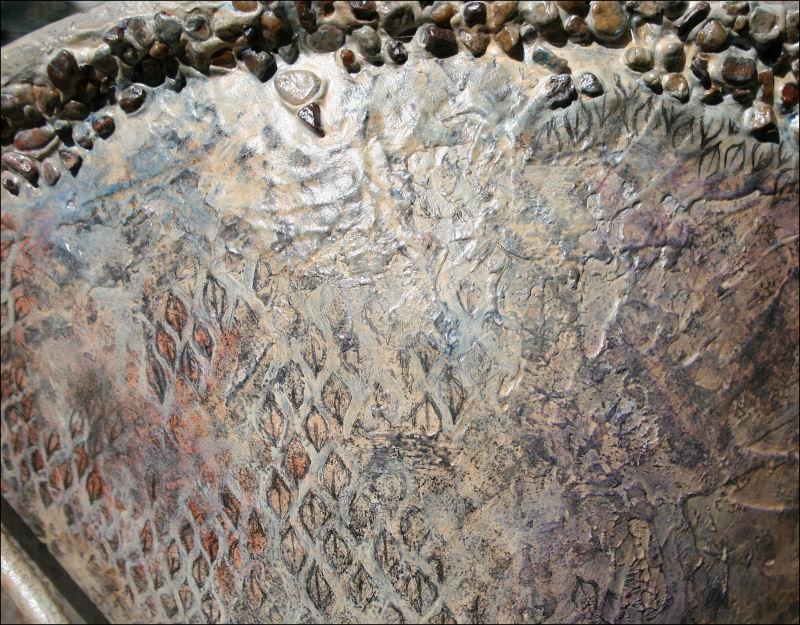
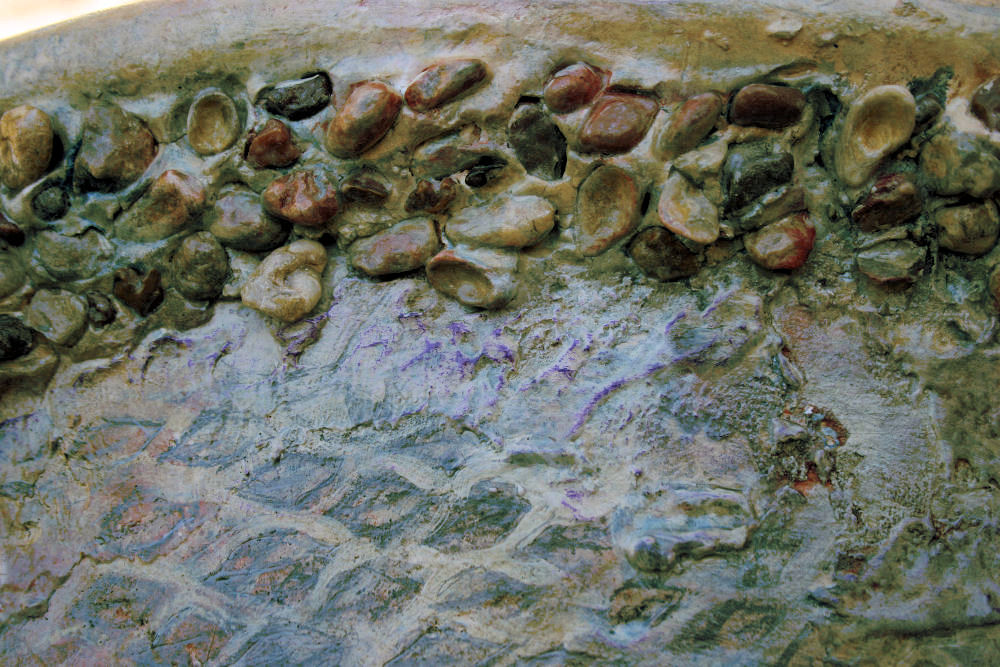
 Fossils Chair, Homage to The Earth, started in January and finished today, except for refining the bark fossil patterns on the back/underside. 29 x 29 x 29 inches refurbished vintage chair, canvas strips, plaster, carved, acrylics, varnish, waxed.
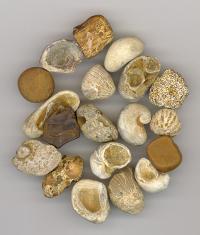
The back of this chair has authentic 225 – 345-million-year-old fossilized clam shells embedded around the circumference. Next, the Encyclopedia Britannica listing. The fossils were found in a mixture of playground pebbles in Dallas, TX.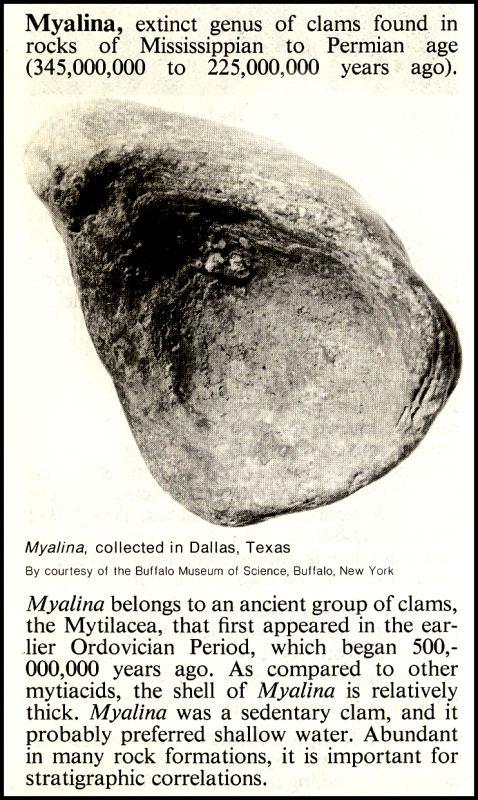
The Cycad leaf fossil replica original was discovered in a Wyoming, USA river basin. Portrayed on the front of the chair is the fossil of a Cycad, the first of palm-like trees that grew about 50 million years ago in a Wyoming riverbed. The first trees on Earth were actually nothing more than woody stems standing in and absorbing nutrients from water. Patterns of fossilized Paleozoic Lepidodendron bark- leaf scars are painted on the underside of the chair. Lepidodendron were a primitive species of the very first trees on earth, reaching heights of 130 feet (40 m) tall around 400 million years ago. Can we even relate to those numbers? That’s what I love about fossils – holding one and contemplating Earth’s timeline is mind-blowing.
| Progress details: | |||||
 |
 |
 |
|||
 |
 |
 |
|||
| Finished details: | |||||
 |
 |
 |
|||
 |
 |
 |
$2,200.00 
The perfect place for masking fluid
Monday, April 13th, 2009
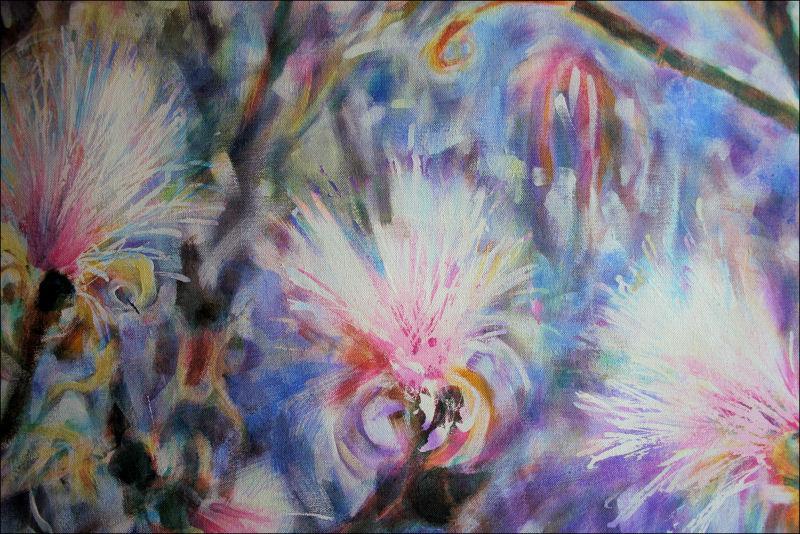
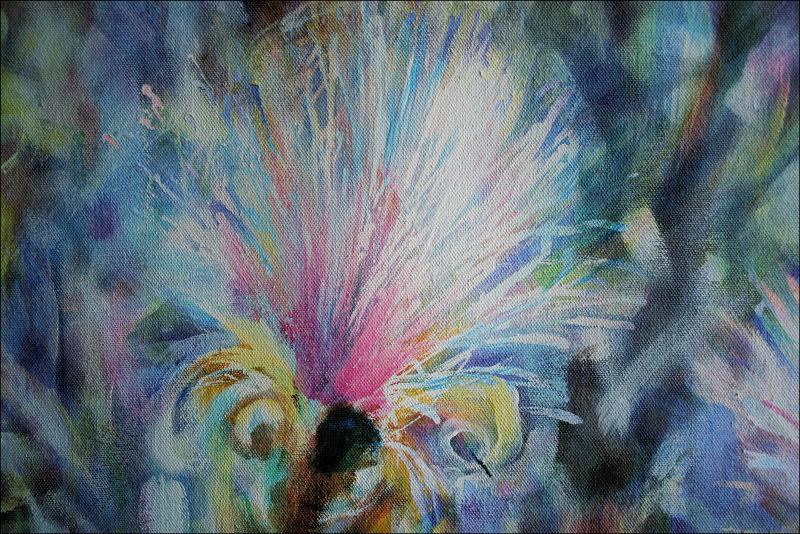
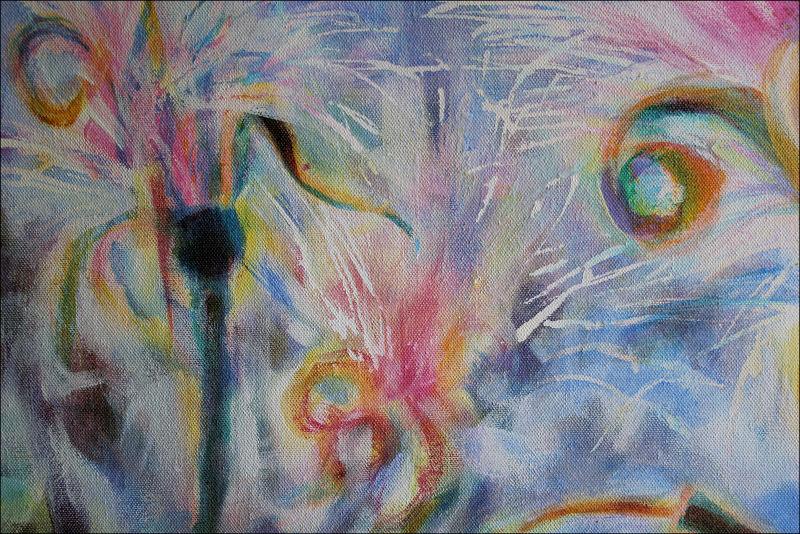
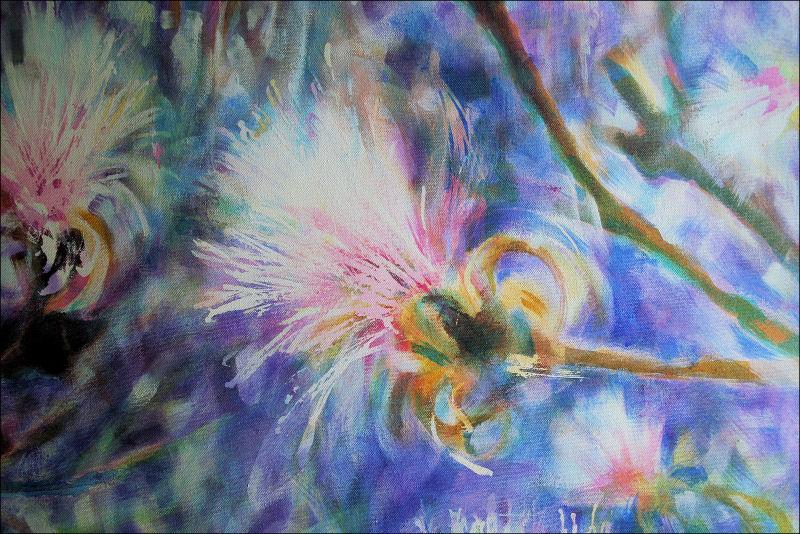
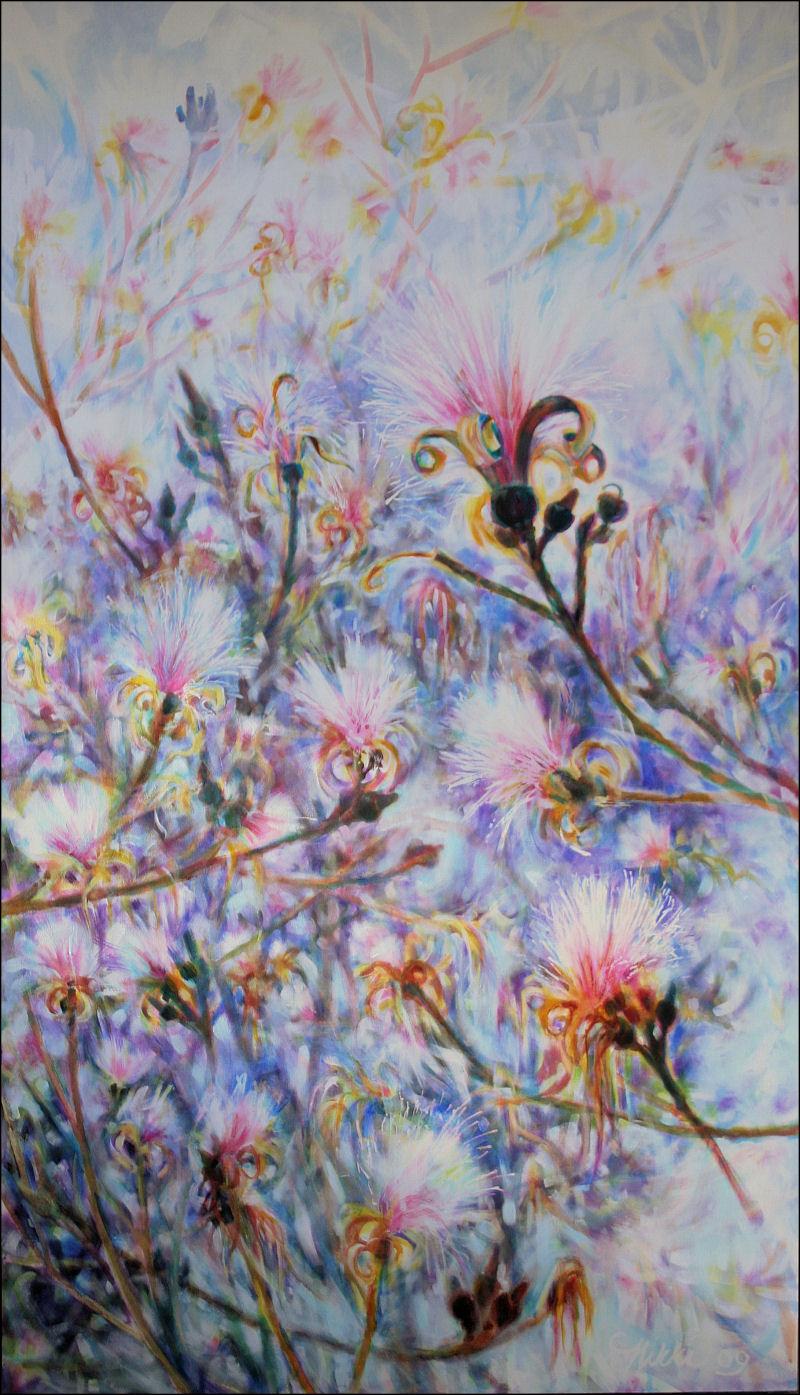 Flowering Shavingbrush Tree, April 11th above: details of 85H x 45W x 3D inches acrylics on canvas,wrapped sides painted, trim frame. Still in progress, but the rubberized mask was removed in order to see exactly what stage things are at before continuing. The painting overall still has a few areas to open up; very little work tomorrow should finish it. Shortly after starting the painting I turned it upside down and applied the masking fluid with a toothpick and let it drip. Gravity can be used as a tool!
April 13th, Left: The top third will still leave as much of the primed canvas as possible; a gradation of unfinished space toward more finished at the bottom. I was hoping to leave it as seen here giving an airy illusion, but it does need to develop along with the rest of it…still not as much, but enough to show the main flower better. This means I’ll be once again dripping masking fluid on the piece upside down to preserve the interesting marks that occurred from the 1st application, and also create some new ones with any further work. For previous posts on earliest progress of this painting click here.
Merging Visions
Saturday, April 11th, 2009
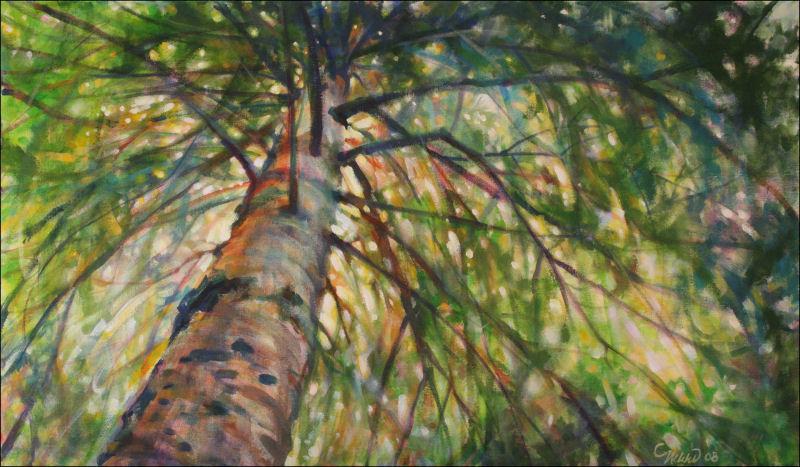
White Pine Bows, 18H x 30W x 2D inches acrylics on canvas, 2008. Sold.
Now on exhibition at Merging Visions, Creating a Unique Experience with Art and Poetry, April 1st – 30th at Emily Fowler Library and North Branch Library, Denton TX. Poems are written by members of the Denton Poets Assembly for existing Art works by members of the Visual Arts Society of Texas.
White Pine Bows by Debby Davis, October, 2008
Fragile notes fracture light into rainbow,
Bouncing branch to bough within stiff white pines,
finding my eyes uplifted; what a show!
Violinist gently pulls; taut bow whines.
Bouncing branch to bough within stiff white pines,
like the beat of an orchestra playing.
Violinist gently pulls; taut bow whines
raining harmonies; colors displaying.
Like the beat of an orchestra playing,
my thumping heart strings tug me into now!
raining harmonies; colors displaying,
I am an audience of one somehow.
My thumping heart strings tug me into now!
It is the secret that only I shall know.
I am an audience of one somehow.
Fragile notes fracture light into rainbow.
Eastern Redbuds
Saturday, April 11th, 2009
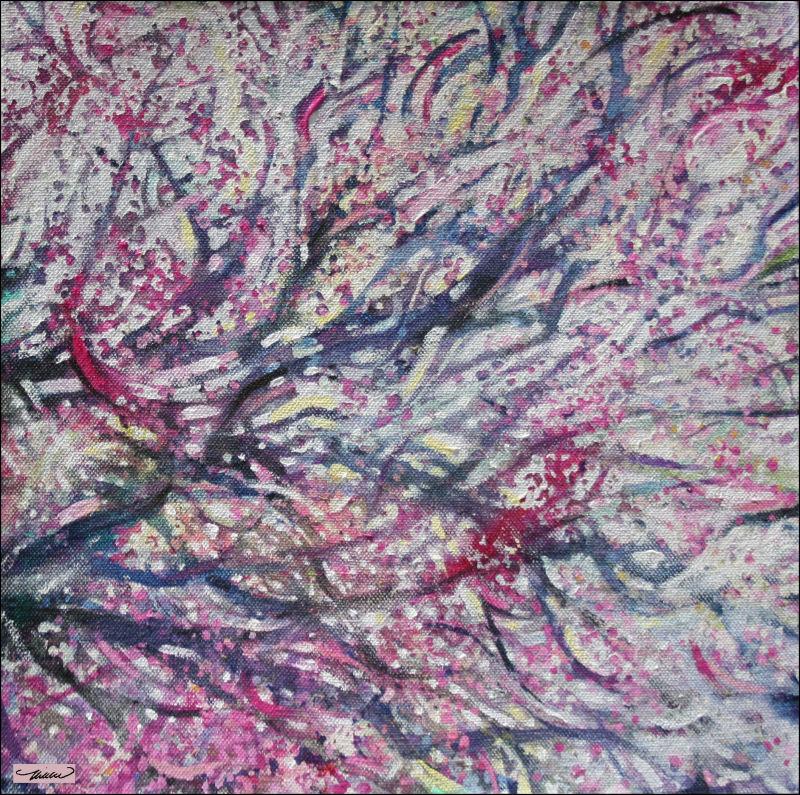
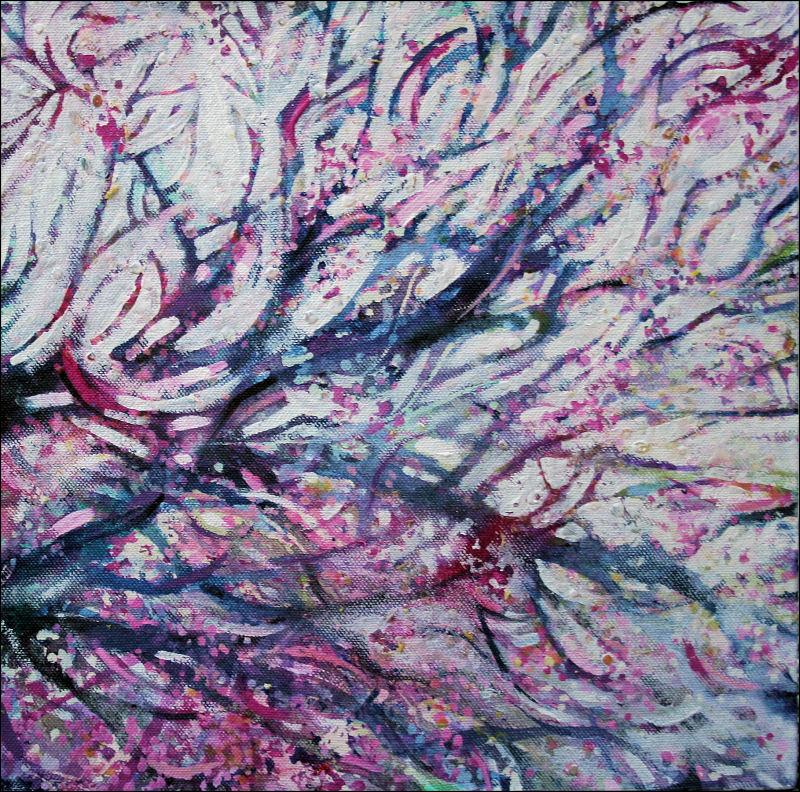
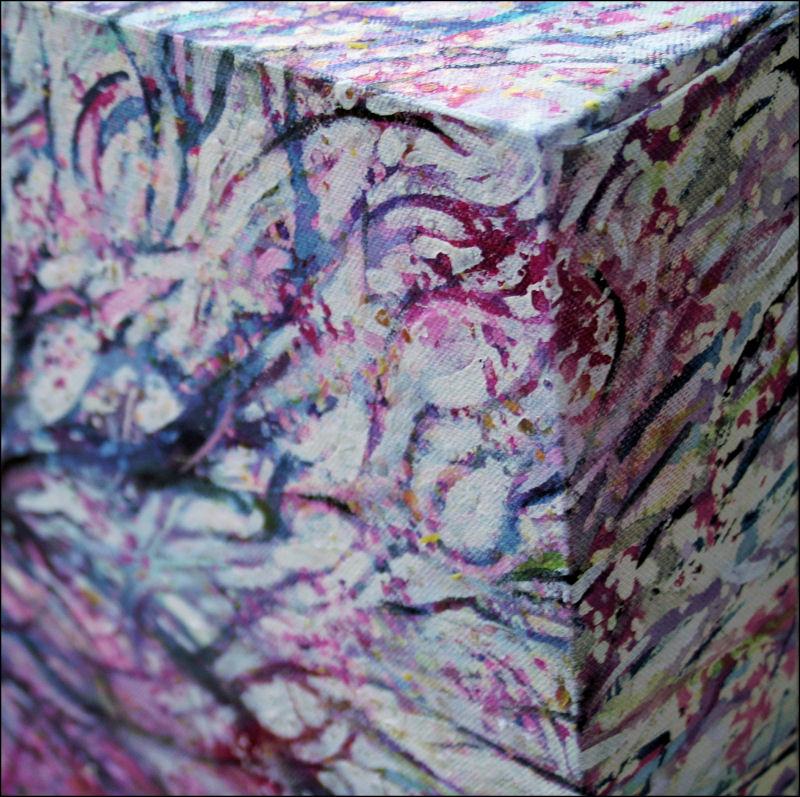
Eastern Redbuds – Spring in Dallas, TX – finished April 11, 2009, took off all remaining masking fluid. 11H x 11W x 3D inches, acrylics on canvas, wrapped sides painted. Signature is on the side, so one is superimposed here on the front. Hang on a wall or display on a flat surface.
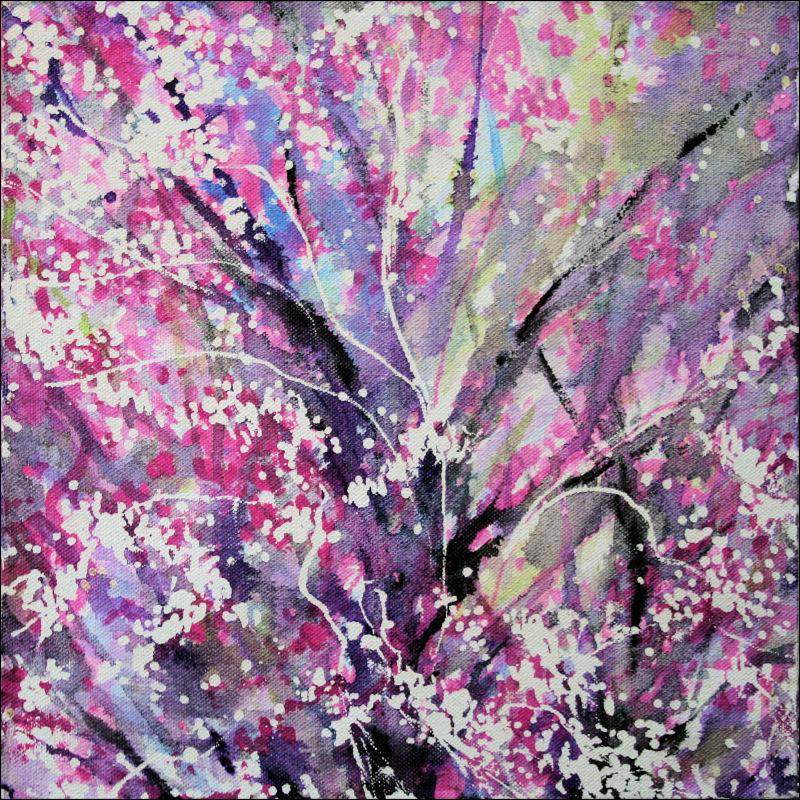
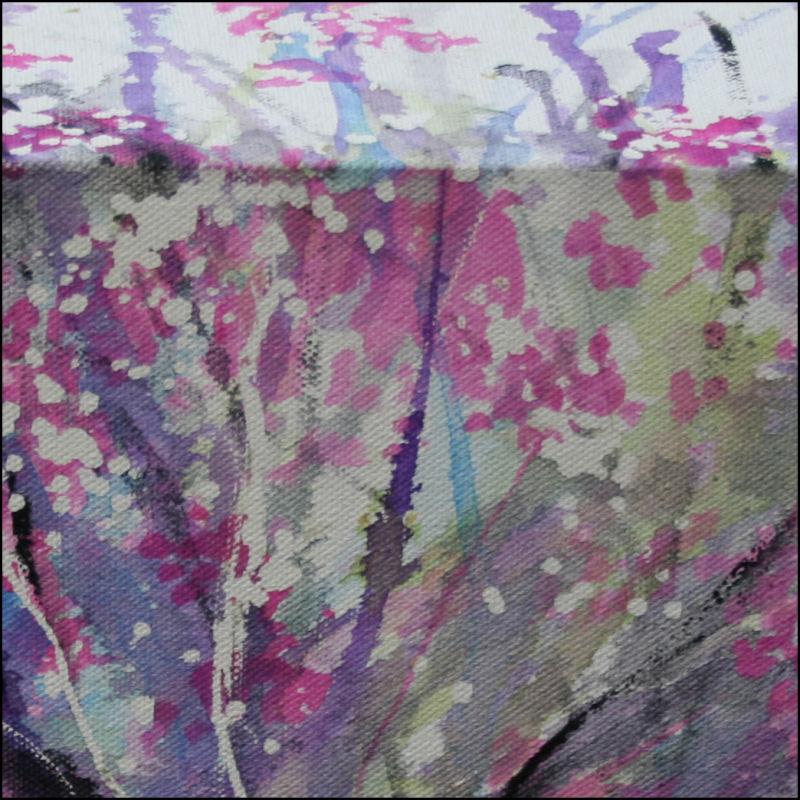
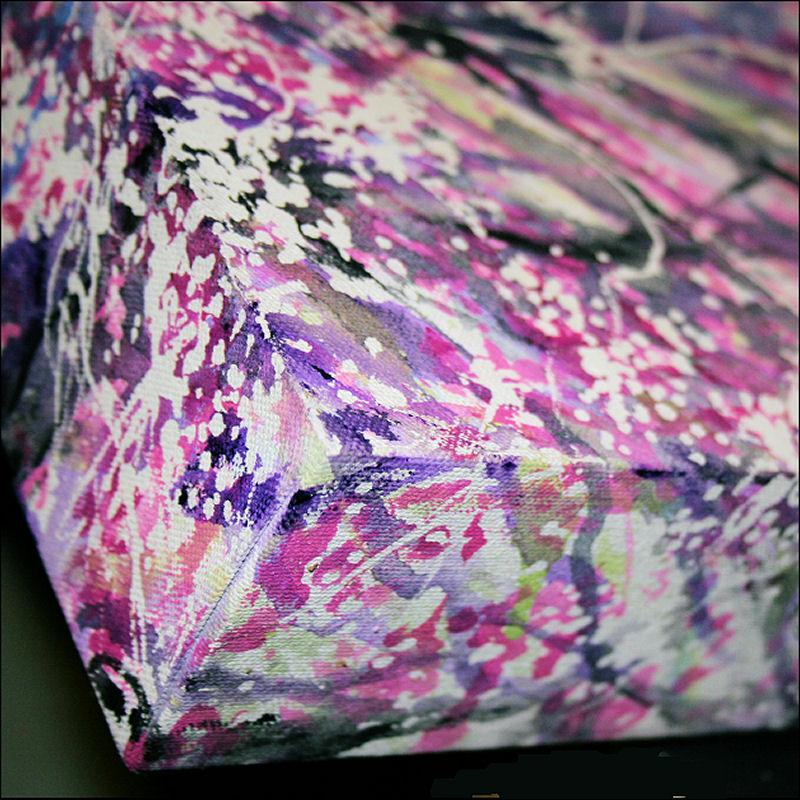
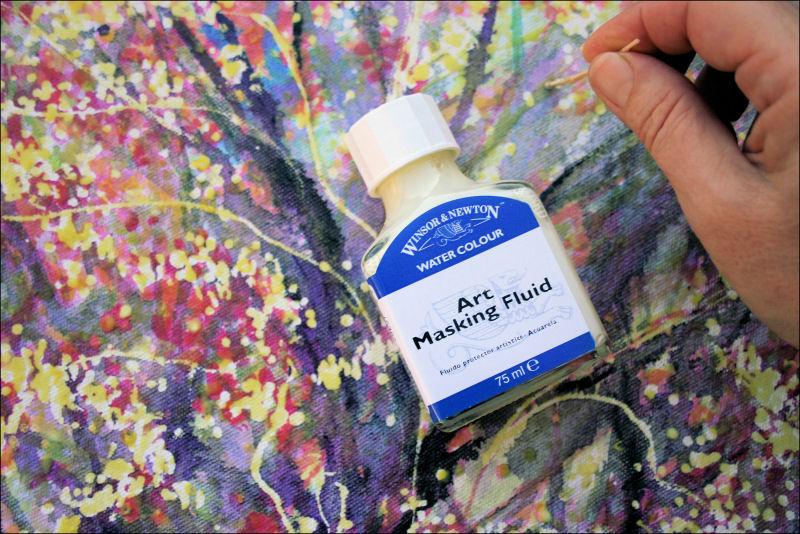 Eastern Redbuds is the first of sixteen 11H x 11W x 3D inches acrylics on canvas paintings of various aspects of trees, to hang together as a group or flanking other paintings. This one uses masking medium to block out areas of white. The first layer of dried medium was removed in the above thumbnails. Afternoon post, left: Adding another layer of masking fluid, seen as yellow.
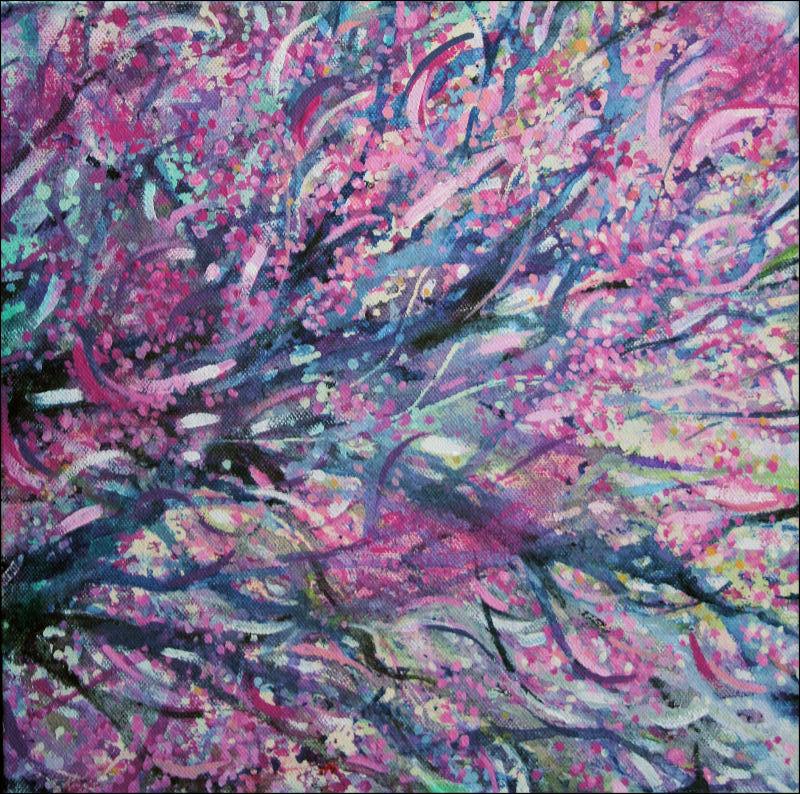
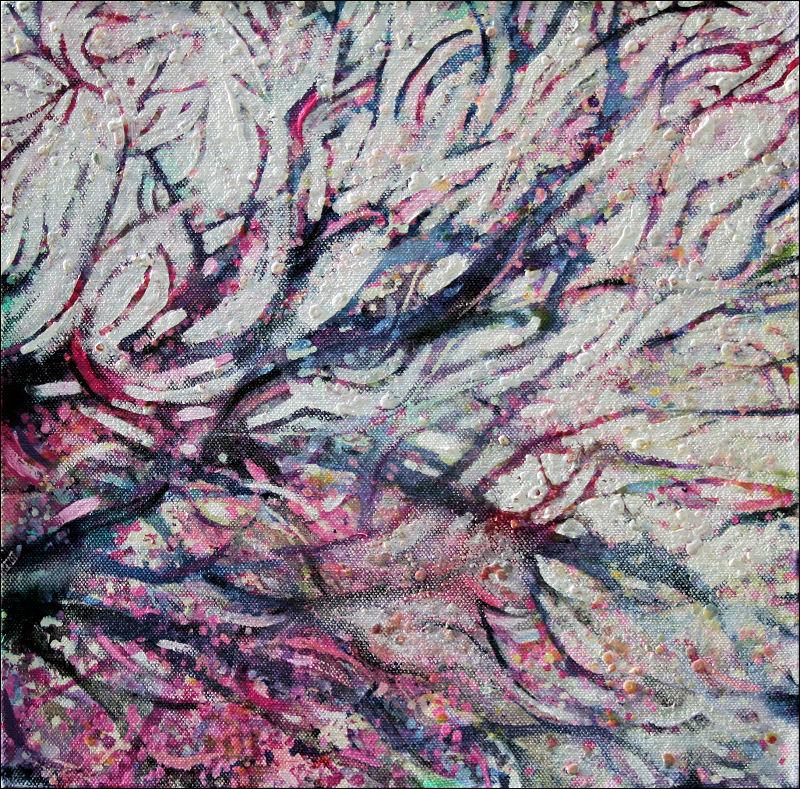
Feb. 25th: below left, looks better turned on its side but it could be hung either direction, mask was removed then the painting was overworked unintentionally – all the marks that were the whole point of using masking fluid are hardly visible.
So on Feb. 26th: below right, more mask was applied, then white painted between branches, tore away a few select areas of the dried mask and left the rest on as texture.
$350.00
Using masking medium
Friday, March 27th, 2009
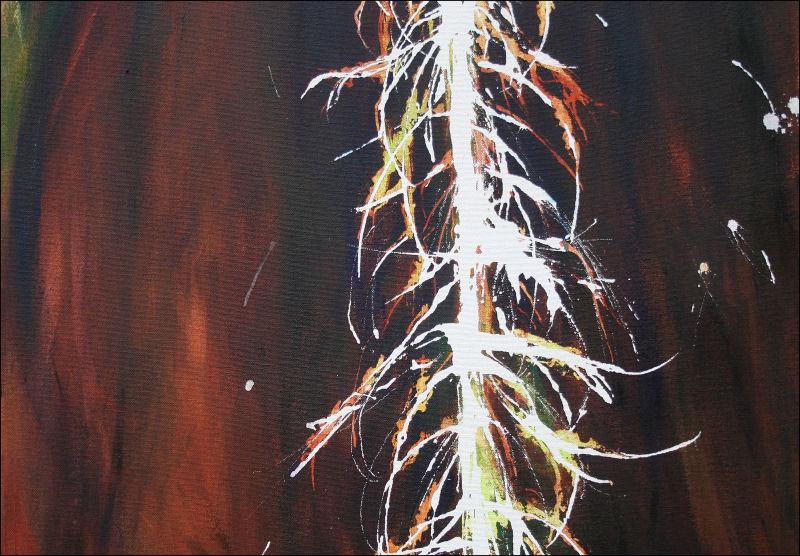
Grand Fir in front of a giant Sequoia, 48H x 24W x 2D inches acrylics on canvas, using masking medium to outline the mossy dead branches.
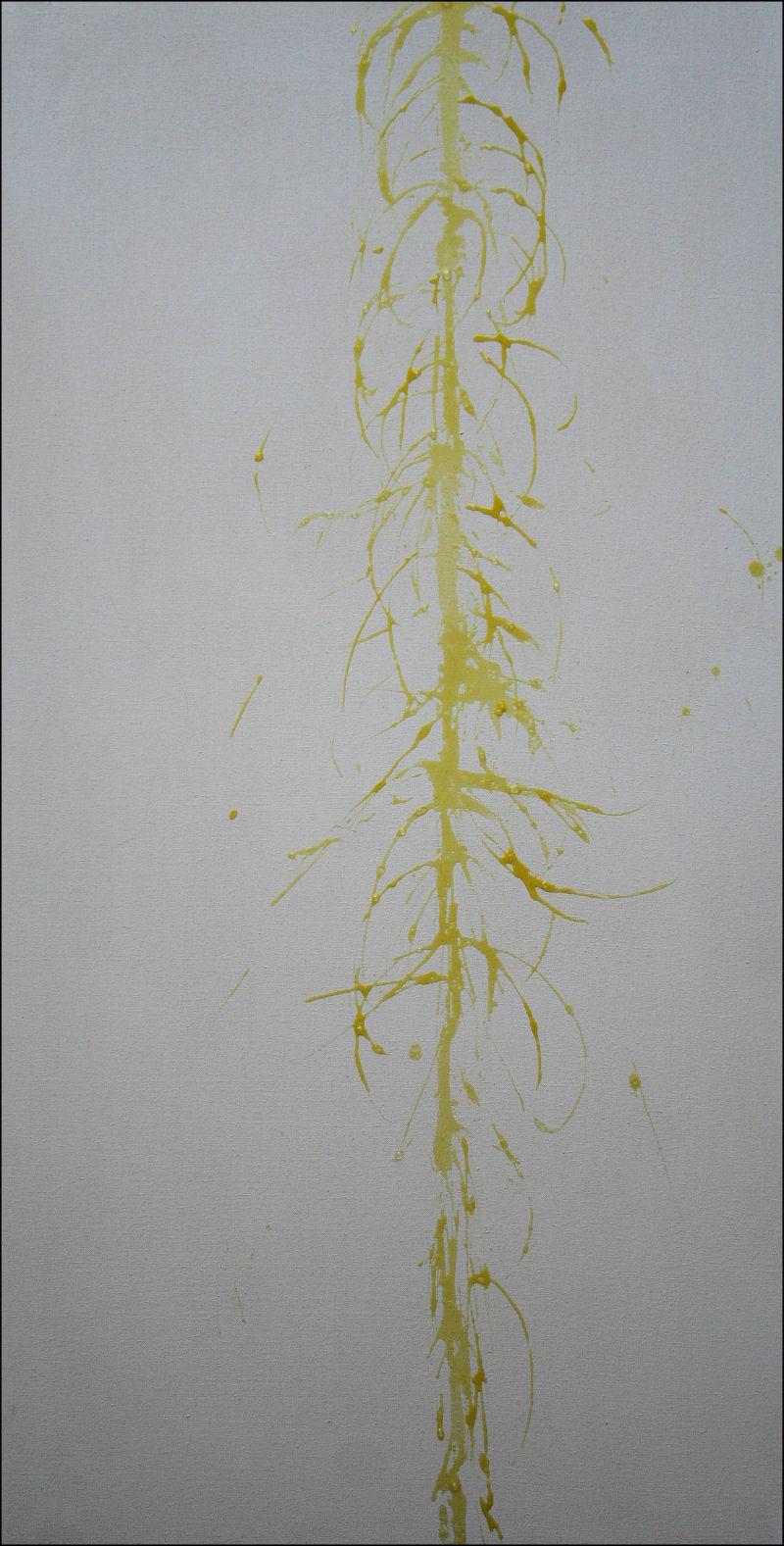
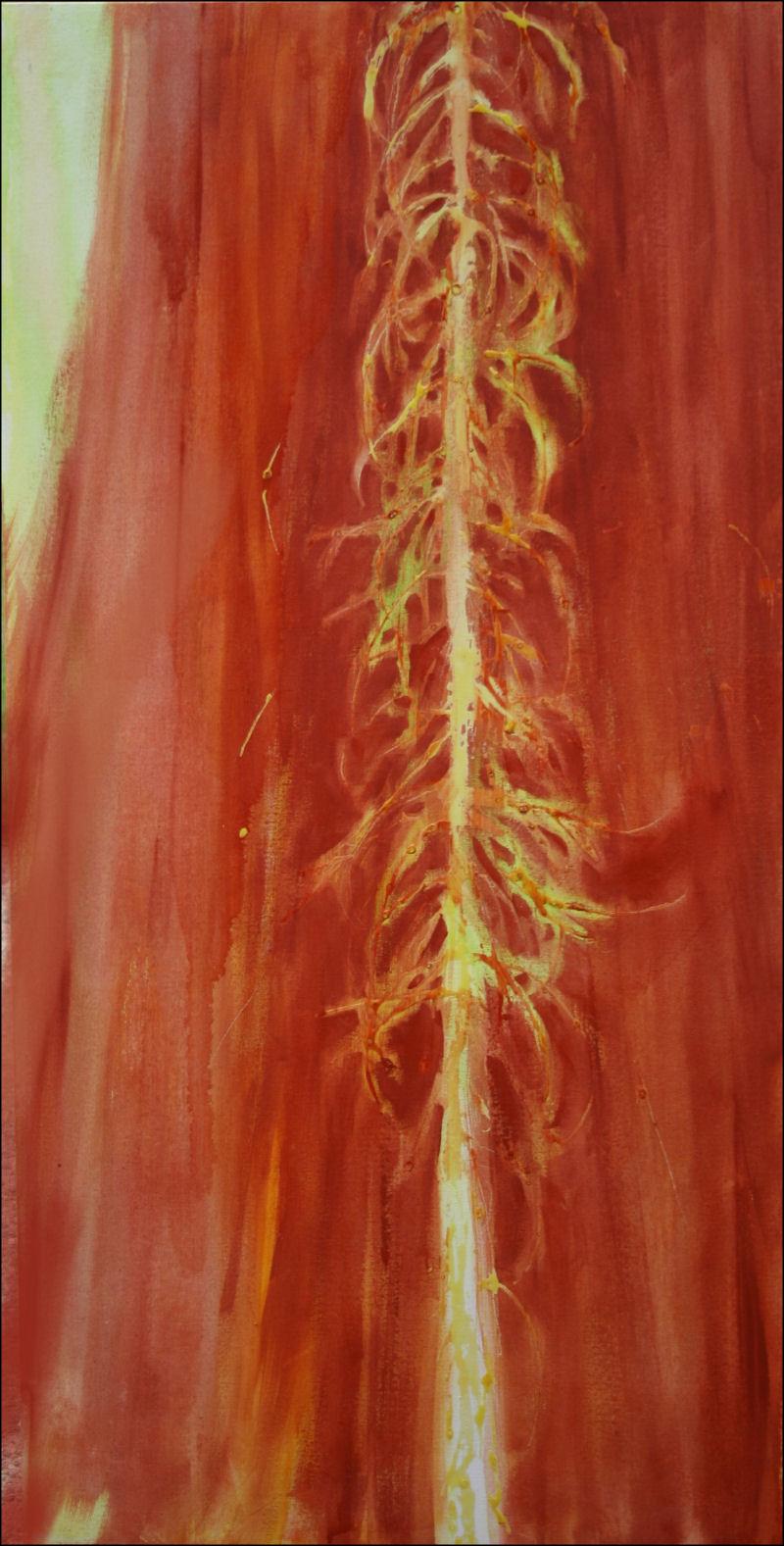

Some work, some don’t, but I haven’t given up on it yet; work still in progress, but since this won’t be in the Raleigh show in 7 weeks I can’t afford to spend more time on it now. I hoped the flat white would work against a fairly realistic background, but it doesn’t. This could go a few ways: 1) flatten the whole surface and make the painting an abstract 2) downsize the sequoia, add shadow and color to the fir then create a more realistic forest scene 3) block out more dead firs with more masking fluid, echoing the main one, still as an abstract or realistic or 4) ditch it! Some paintings are worth spending time exploring when they reach a certain stage, and with others chalk it up as experience, re-cover the stretcher frame and move on.
Paint Arson
Thursday, March 26th, 2009
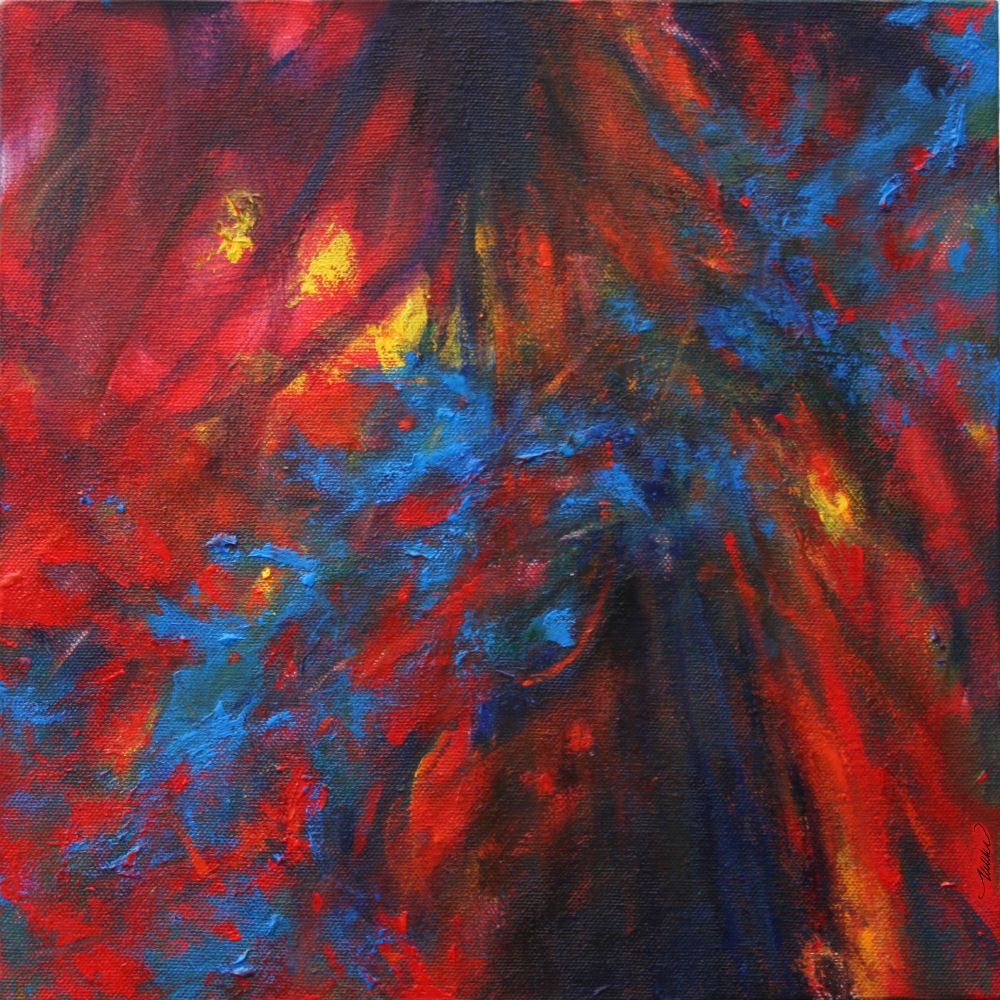
Paint Arson, 11H x 11W x 3D inches acrylics on canvas, wrapped sides painted.
Frame unnecessary. Hang on a wall or display on a flat surface. Signed on the side so as not to impose on the composition.
Progress and process phases 1 and 2 images.
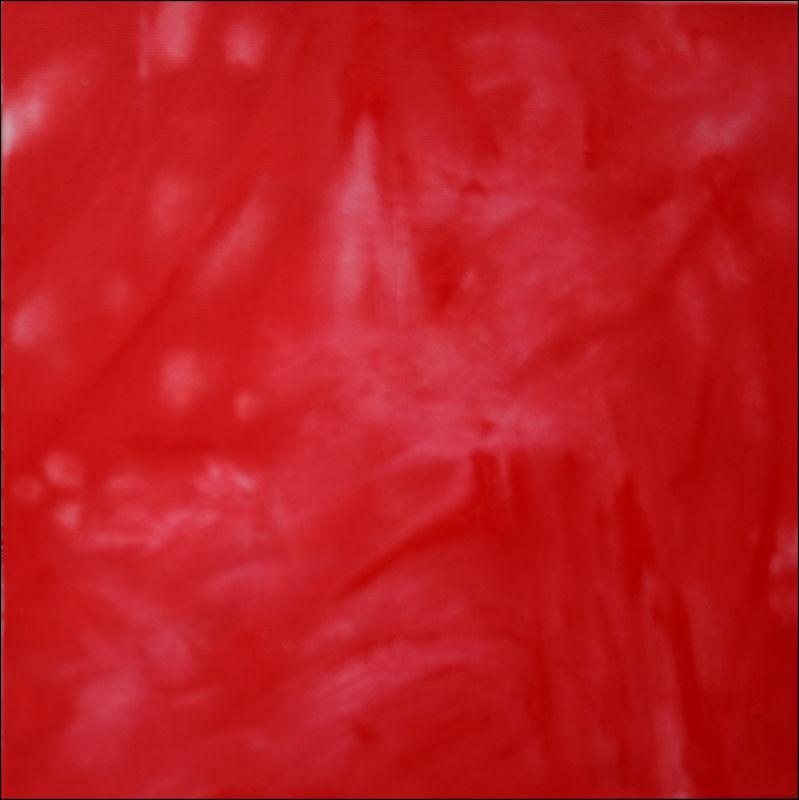
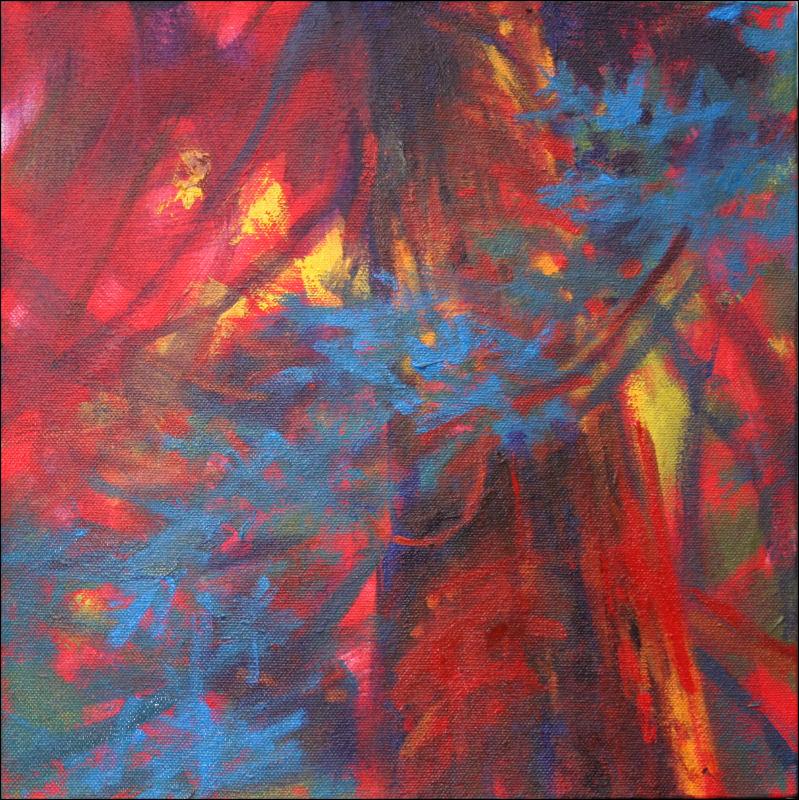
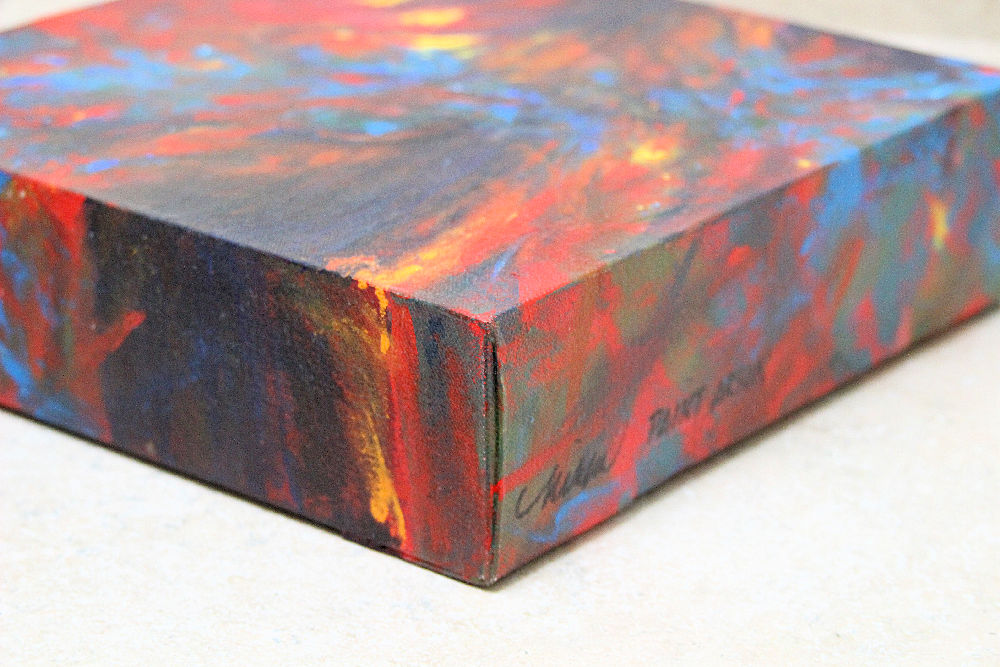
Painting, whatever the subject may be, is a journey through all kinds of unanticipated thoughts and associations; some are short and sweet, ending within 1 – 6 hours and not much more than a visual, but some are packed full of adventure that isn’t even realized until surfacing from a few hours of work.
A new jar of Cadmium Red medium hue was just the thing to reboot, then re-route some old habits I was falling back into, like over-working paintings. Trying a new color invigorates the work process like nothing else can, adding certain life to the results as well. Incorporated as a base, straight out of the tube or mixed with your usual palette, a new color can change everything.
Branching Out
Friday, March 20th, 2009
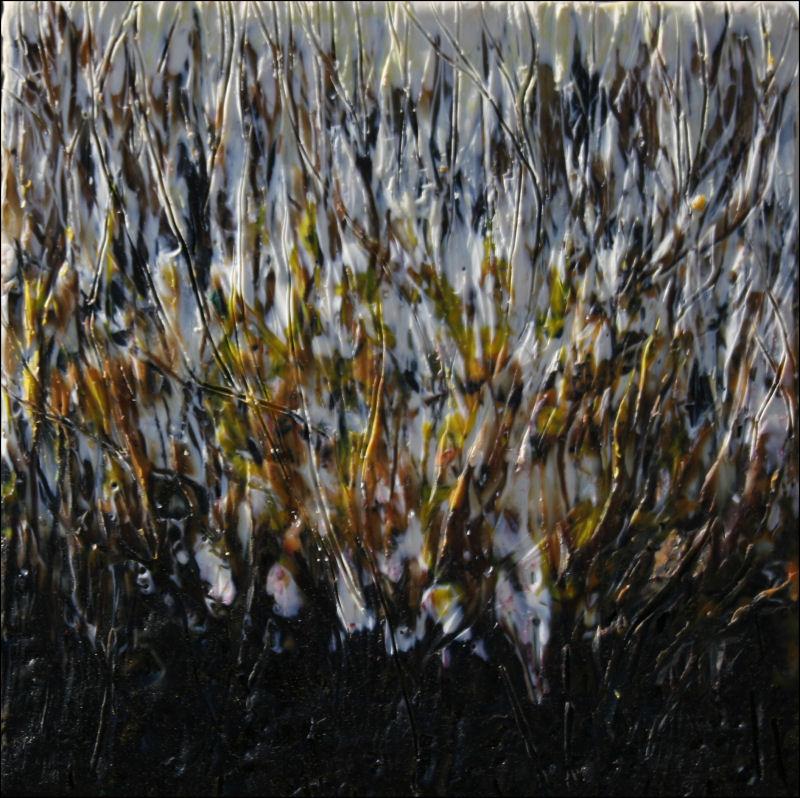
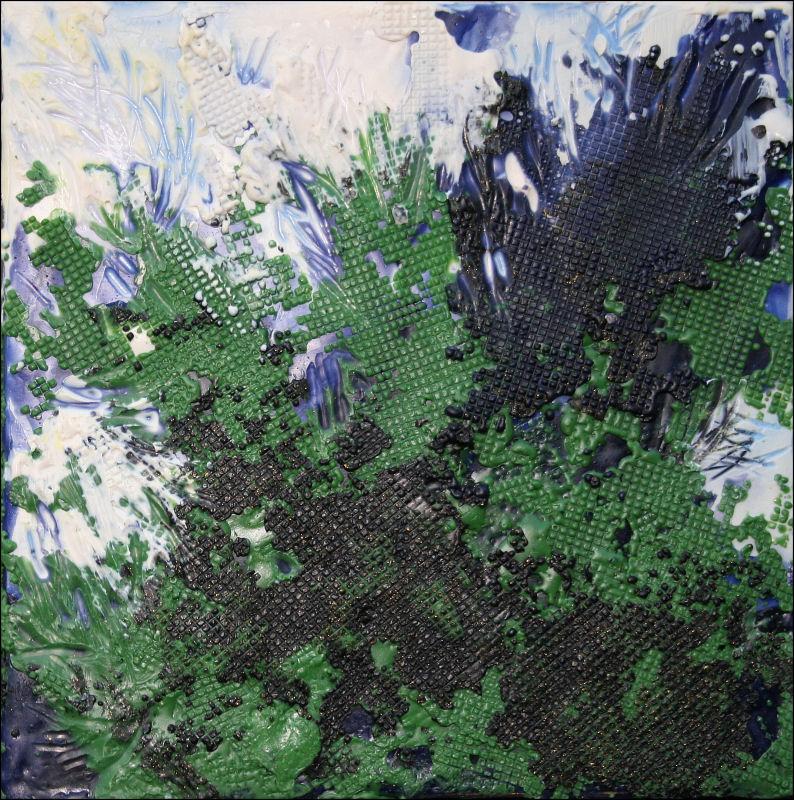
Branching Out and Conifer, each 6H x 6W x 2D inches Encaustic, side surfaces also done.
Encaustic is designing/painting with beeswax. I’m not usually intimidated by trying any new medium, but wax is so unique and there are so many possibilities for it, I was a little overwhelmed when I took an introductory course with Deanna Wood. She offers her students workshop days where they can use her supplies to continue experimenting with the medium. Although I’d love to have my own supplies to work at home, the encaustic process is so messy, not to mention expensive to get started, so that is a generous offer. Today’s studio work produced 4 small encaustic paintings, and 2 are successful. Compared to other media, wax is so versatile it can be scraped off to whatever degree, reworked, layered, carved and manipulated as much or as long as you wish. It’s a lot of fun!
Iguana and Strangler Fig
Wednesday, March 18th, 2009
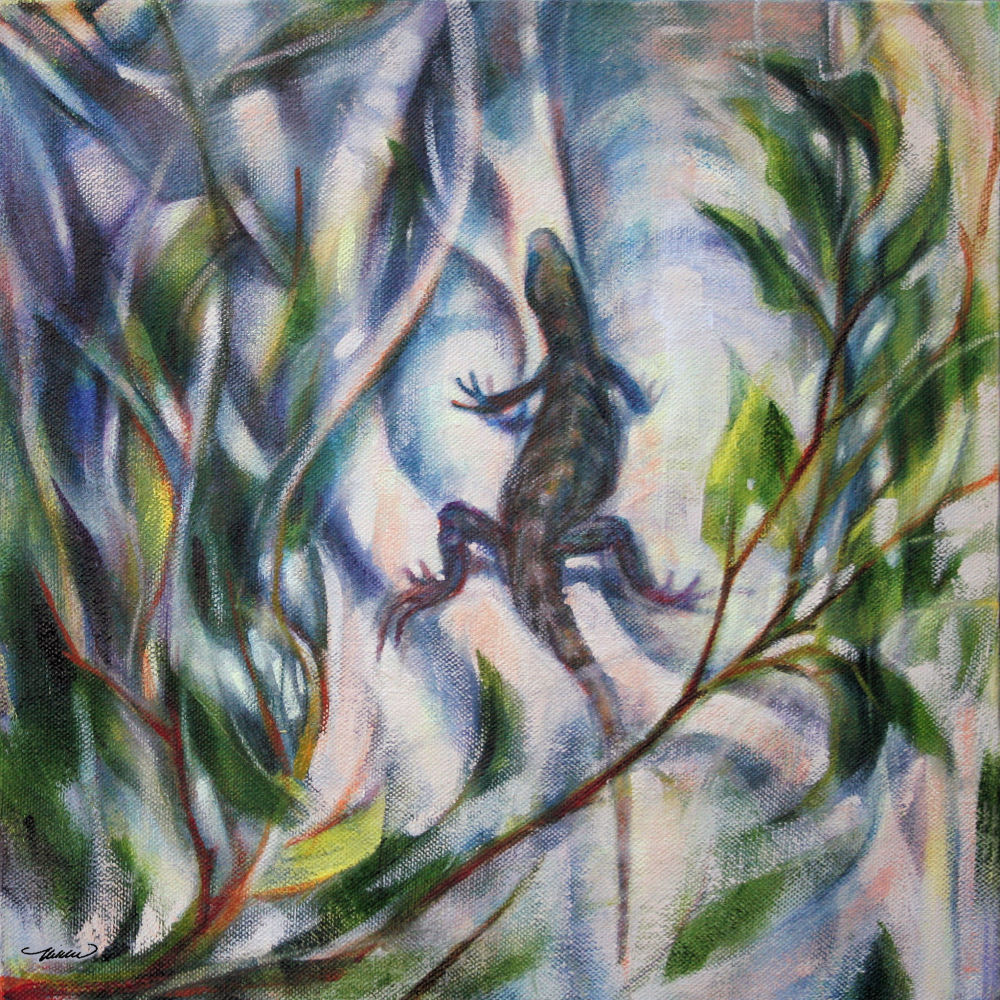
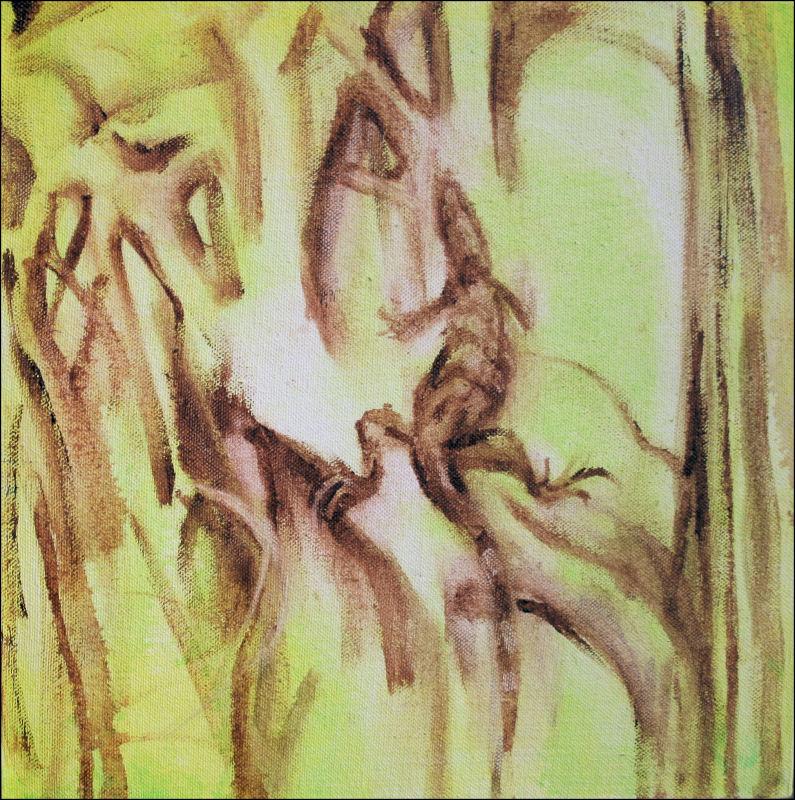
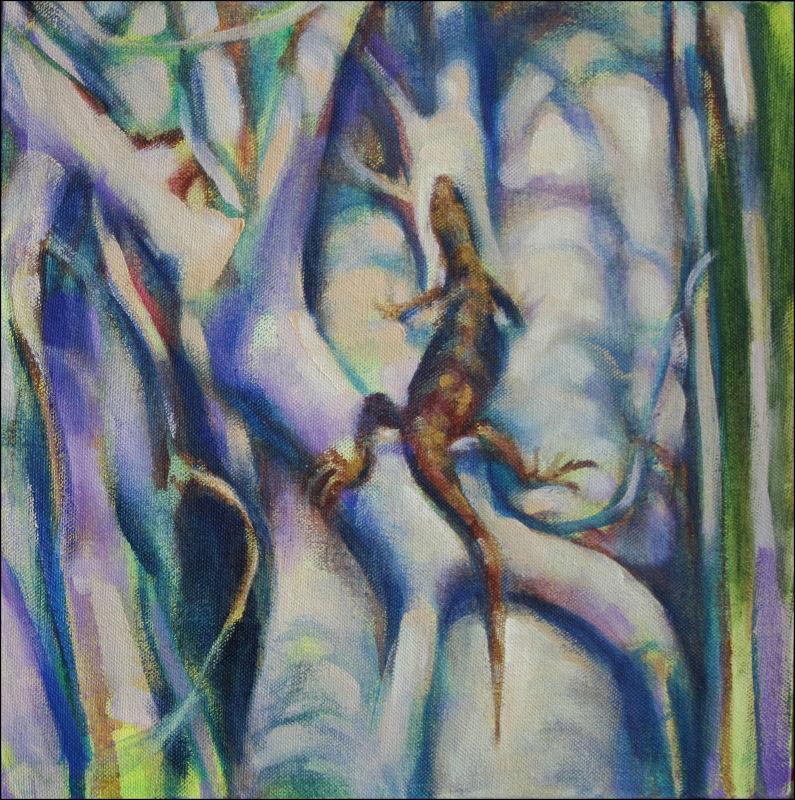
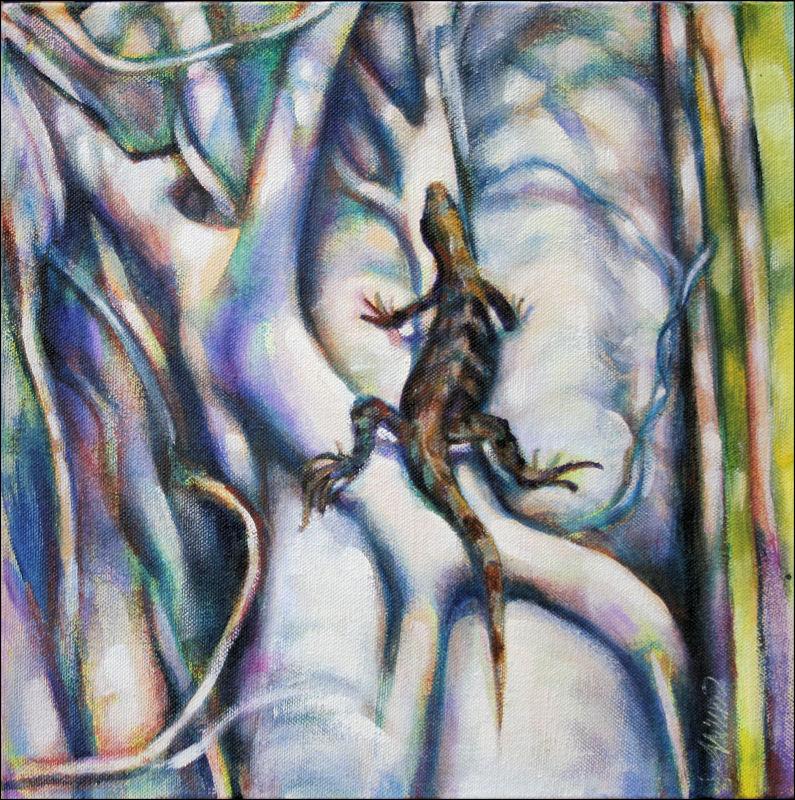
Iguana and Strangler Fig, Costa Rica, 11H x 11W x 3D inches acrylics on canvas, wrapped sides painted. Frame unnecessary. Hang on a wall or display on a flat surface.
The Strangler Fig is a parasite. Seeds sprout in moss or decaying matter among the branches of rain forest canopies. Roots gradually extend downward and over time completely surround the host tree, which dies while nourishing the Strangler Fig growing in its place.
March 14th, March 13: Phases 1, 2 and 3 earlier progress in thumbnails below. Today layering thin washes of pale yellow, placing the iguana more into the background. Some of the details of the Strangler Fig growth that are now covered up might be brought back into focus since this is more about the tree than the iguana. Posting the painting on the blog is helpful because it’s viewed differently than while painting or studying it. It’s somehow easier to see areas that still need change when looking at it on-screen.