
Texas
Next Entries »Jabiru
Friday, September 1st, 2006
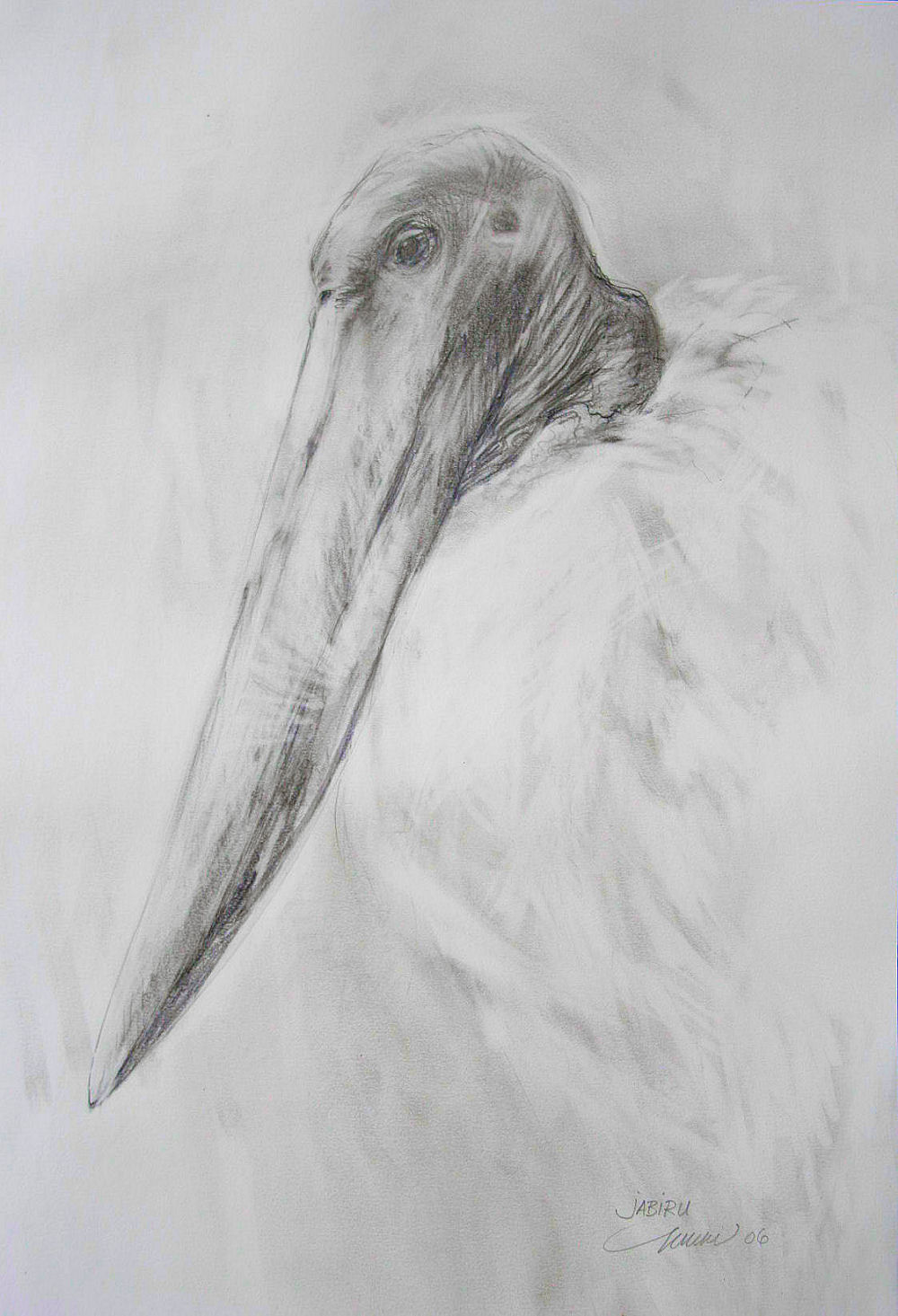
Jabiru at the Dallas World Aquarium, 24H x 18W inches graphite on paper
Post-dated note: Accepted in the J. Mane Gallery’s Fins, Feathers and Fur 2020 exhibition, unfortunately no longer shown in the gallery archives in 2022.
“Drawings have a job to do: to provide viewers with more than just a pretty picture. There are tones implied through those tones!”
Jabiru are large South American prehistoric-looking birds standing 4-5 ft. high. Reference photos for ‘Jabiru’ were taken at the Dallas World Aquarium, where I’ve spent many visits watching a pair of them interact. Fortunately, I can usually study them in silence, because everyone else’s attention is on the flashy coral-colored flamingos just down the aisle.
Before starting I envisioned a drawing based on Japanese principles of using fewer lines and shading, with empty spaces considered as much a part of the drawing as every mark.
This is not the prettiest subject, precisely one of the reasons I chose to keep the drawing soft. By purposely compromising the values and using a lighter touch, my hope was that the viewer’s response might be pleasant before thinking “ugly bird”. To explain further, the Jabiru’s feathers are pure white and its head including beak are very dark grey, almost black. I was stubborn about the style staying gentle and simple, having negative space speak as much.
Whereas a photograph utilizes the whole range of dark and light values, copying everything, a person chooses the amount and quality of dark and light values to apply in order to attain the intended the effect on our emotional impressions.
The Jabiru’s huge beak strikes a strong silhouette by shape alone, so to lessen the impact of the large, odd shape on a fairly empty page, extremes were avoided even though the bird’s beak is quite dark in reality.
I really want stress here that a drawing is not a photograph, and a photograph is not a drawing. Photographs might be the source of inspiration and for details that memory has missed or forgotten. Illustrations that are copied with attempts to produce an exact visual likeness, relying purely on the photo, lack a certain warmth no matter how well rendered they are. Art involves the human factor. A photo is a product of a machine; the visual details are copied with no sense or emotion; it does what it’s been designed to do. Drawings are subjective representations of all that we sense as well as see.
We interpret character of a subject not only visually, but also through our multidimensional senses.
At The Alamo
Tuesday, May 30th, 2006
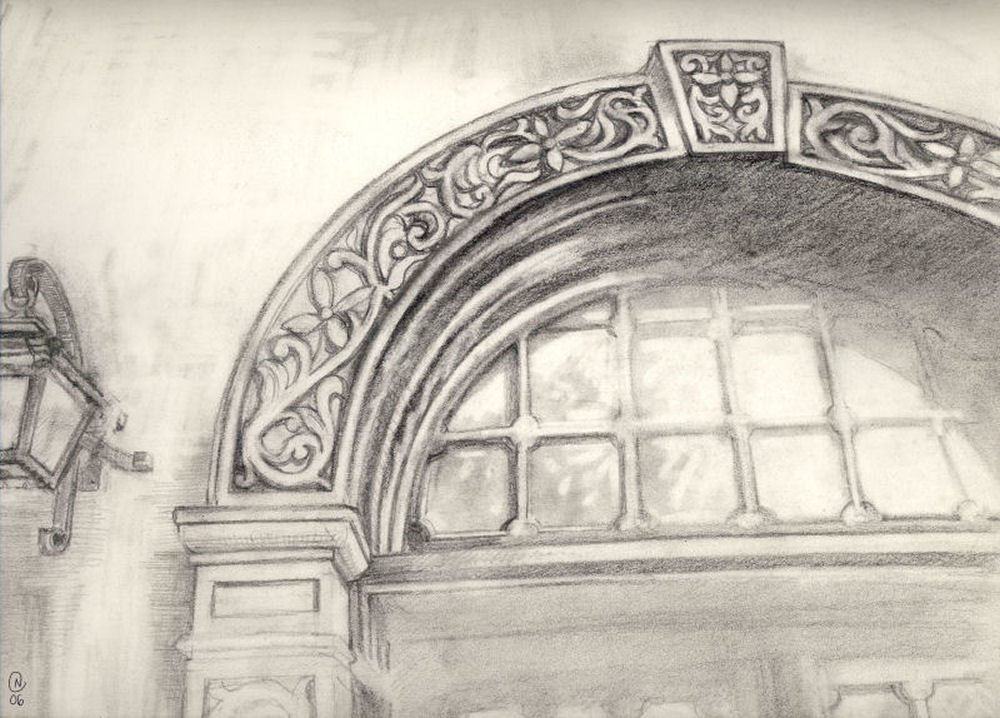
At The Alamo, carved stone detail on a window of the main building at The Alamo, San Antonio, Texas – 11H x 14W inches oil pastels, 3-inch-wide white double mat and 26H x 22W inch white custom-built white wood frame with crackle finish.
Texas Paintbrush
Saturday, May 6th, 2006
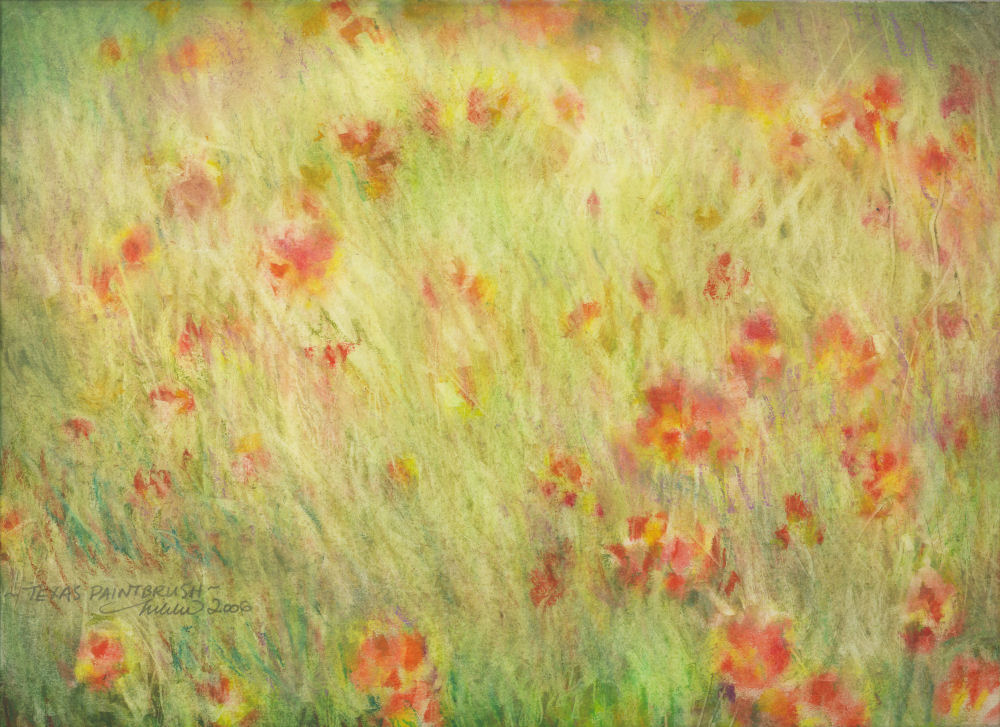
Texas Paintbrush, Fort Worth, Texas, 14H x 11W inches oil pastels on paper, framed with 3 inch white double mat and white wood frame with crackle finish, total size 26H x 22W inches. Impressionistic style using soft, blended technique with the pastels, portrays the feeling of walking in a dry sandy field on a warm Spring day in northern Texas. Sold.
Southern Spring – Scurvy Pea
Friday, May 5th, 2006
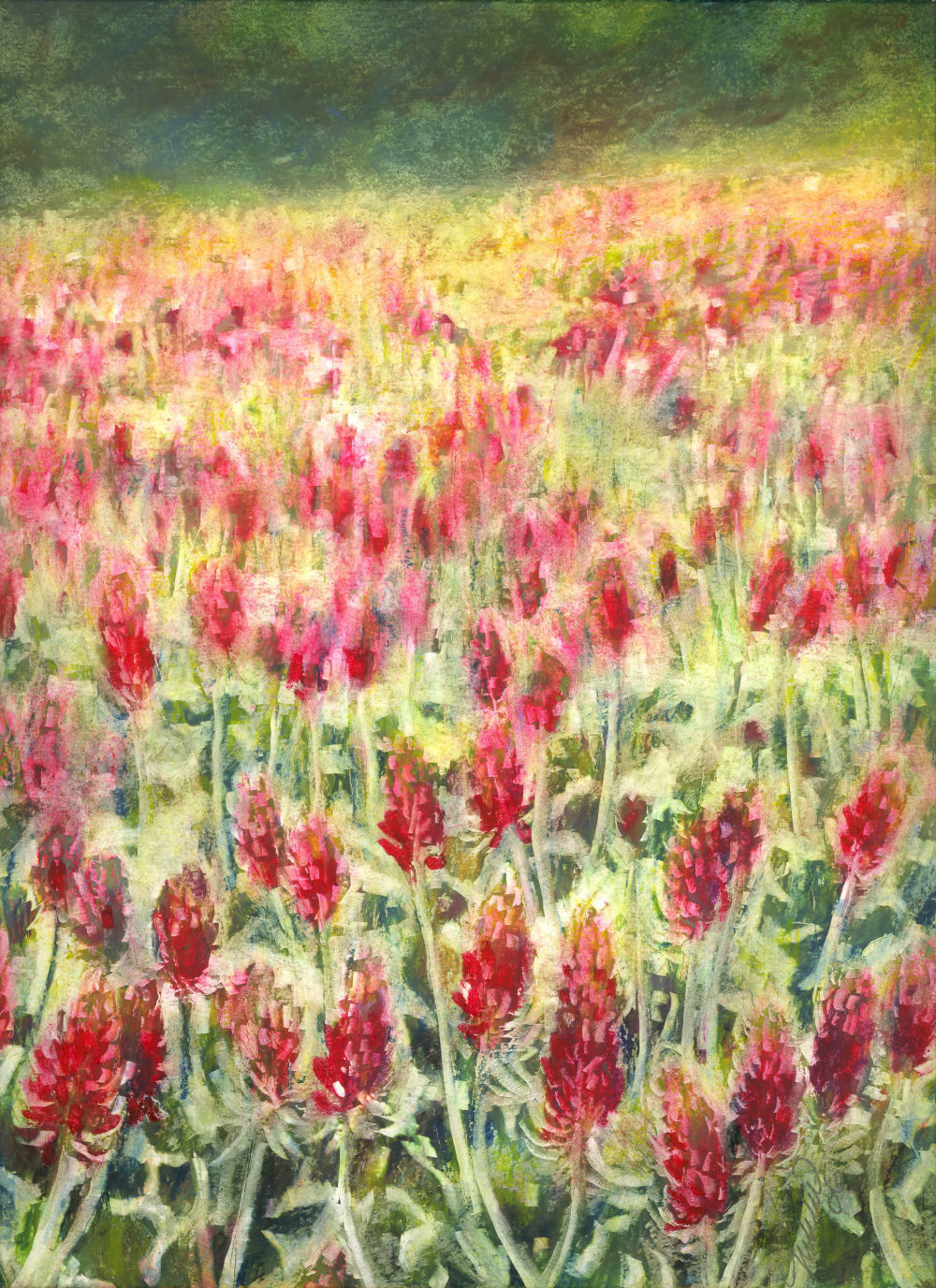
Southern Spring – Scurvy Peas, Grapevine, Texas USA. During April, chubby spikes of deep red and red-brown clover-like herbs called Scurvy Pea sweep across dry fallow fields and roadsides in the southern United States (Genus Psoralia cuspidata), 14H x 11W inches oil pastels on paper, framed with 3 inch white double mat and white wood frame with crackle finish, total size 26H x 22W inches. 3 days of sculpting; oil pastels were applied, removed, reapplied and reworked. Sold.
Bluebonnets – Four Abstracts
Thursday, March 23rd, 2006
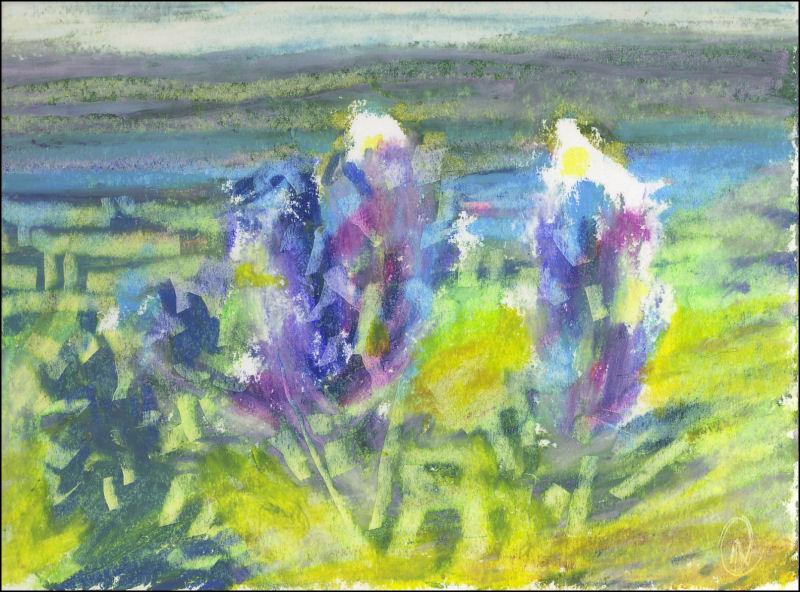
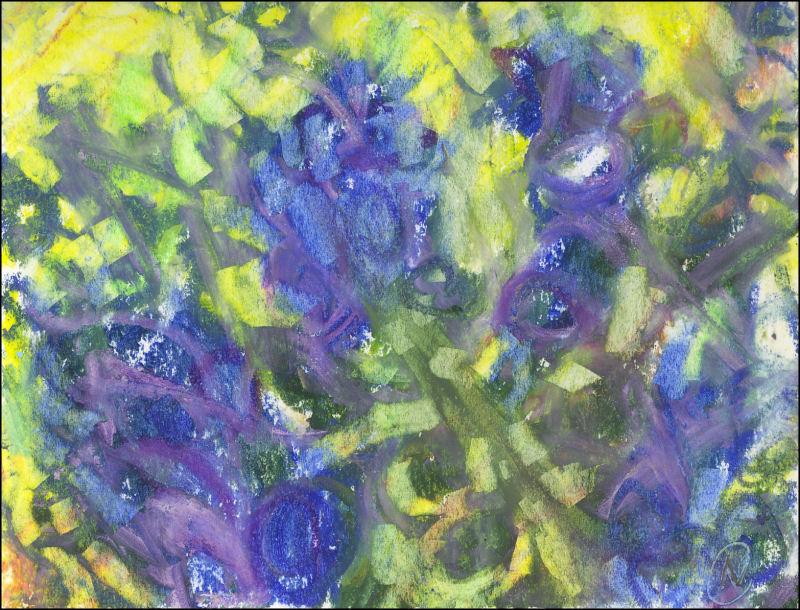
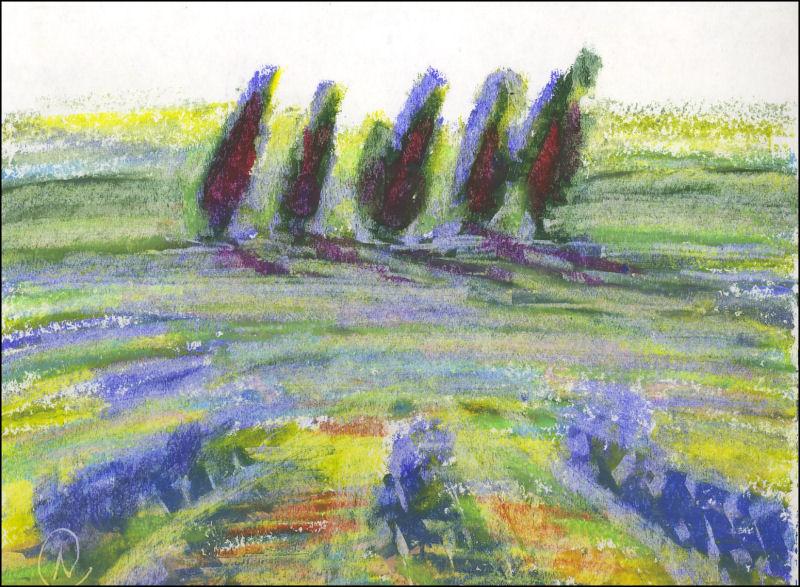
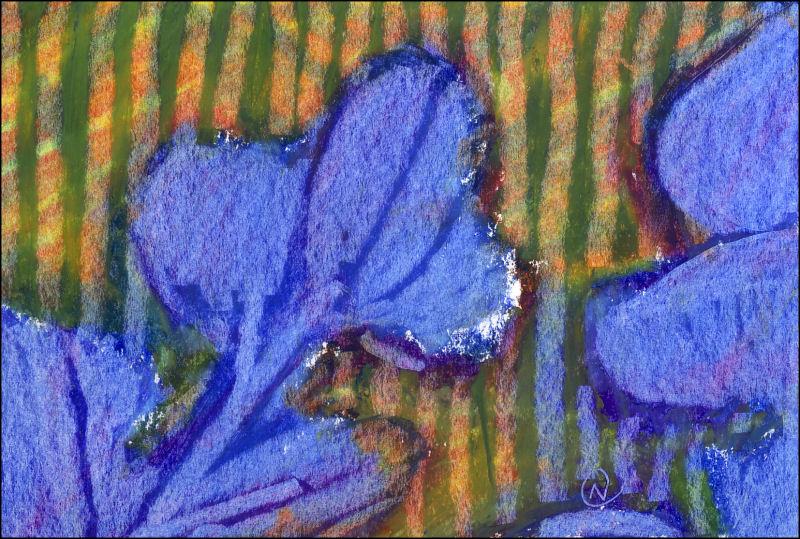
Bluebonnets Abstracts, set of four 3 x 4 inches oil pastels studies on paper.
These studies are based on Springtime scenery along Beltline Road in Irving, Texas three years ago. The amazing fields of Bluebonnets are now replaced by a major housing and commercial development. I can say, ‘I was there when…’.
Bluebonnets 03
Wednesday, March 22nd, 2006
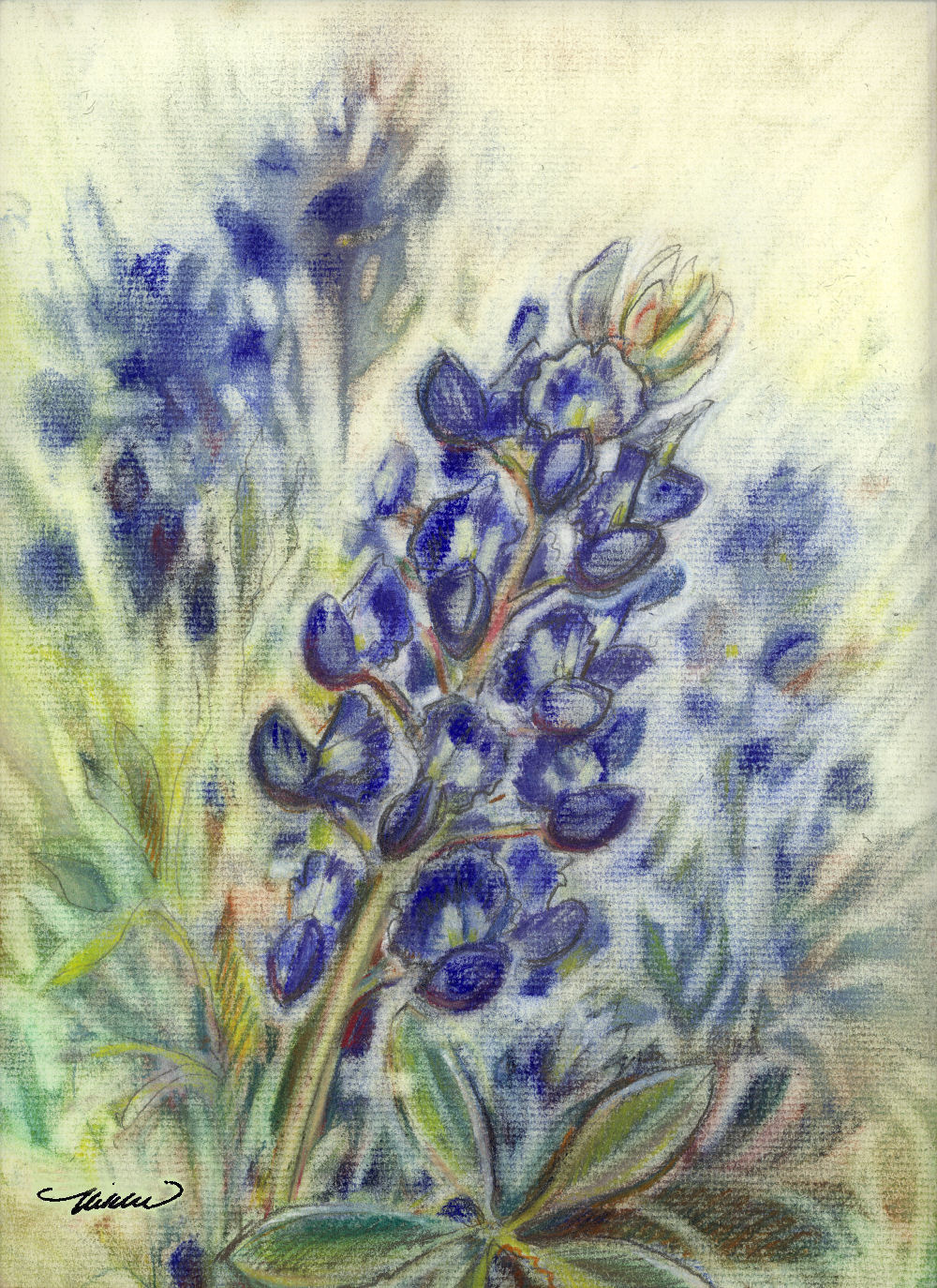
Texas Bluebonnets, 16H x 12W inches dry pastels on charcoal paper, unframed, off-white mat.
Bluebonnets Abstract
Monday, March 20th, 2006
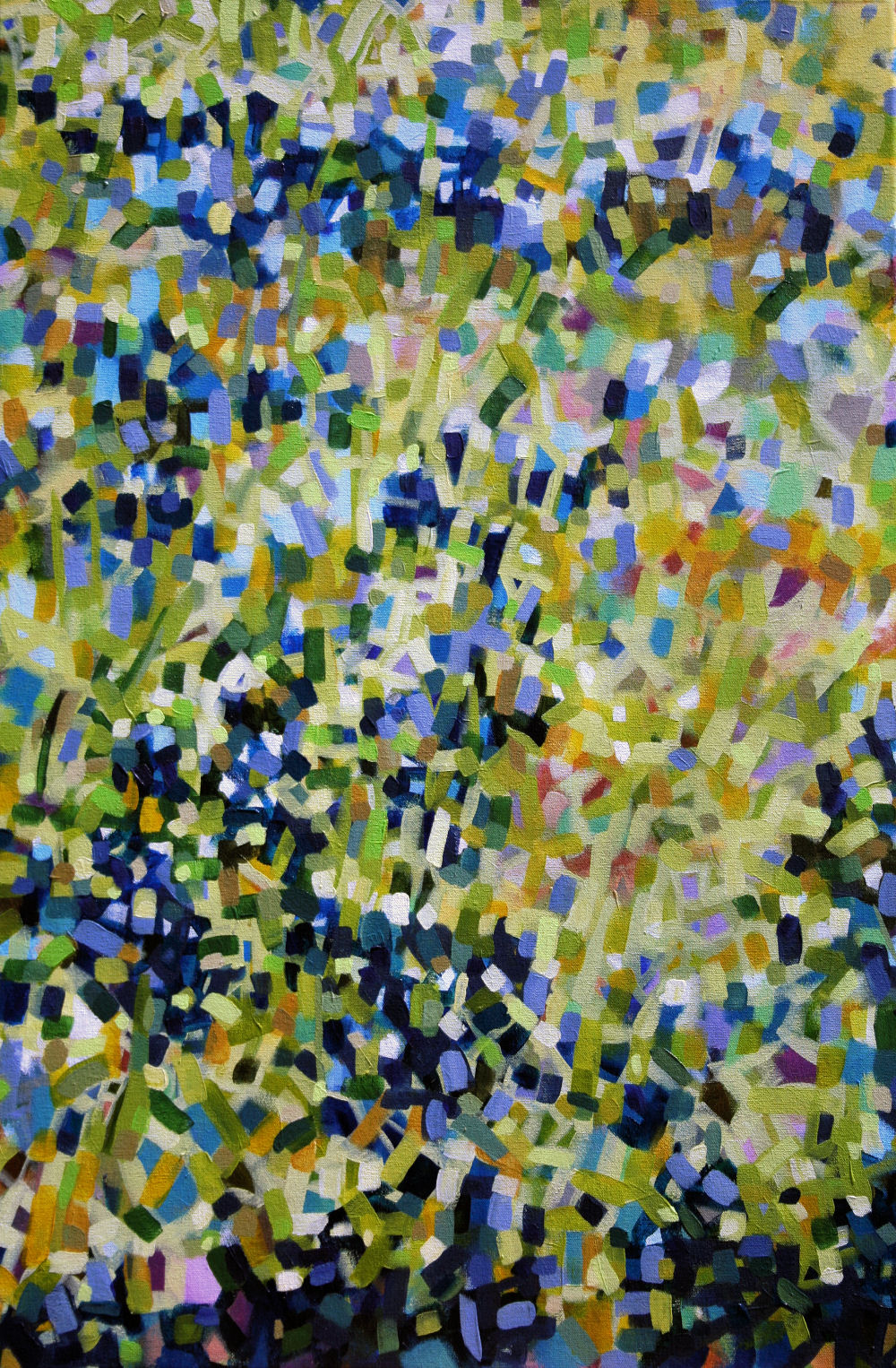
Bluebonnets Abstract, 36H x 24W inches acrylics on canvas, trim frame. I’m trying a new angle on the subject, and kept my glasses off for this one so I can see abstract better!
Bluebonnets, Marble Falls, Texas
Saturday, March 18th, 2006
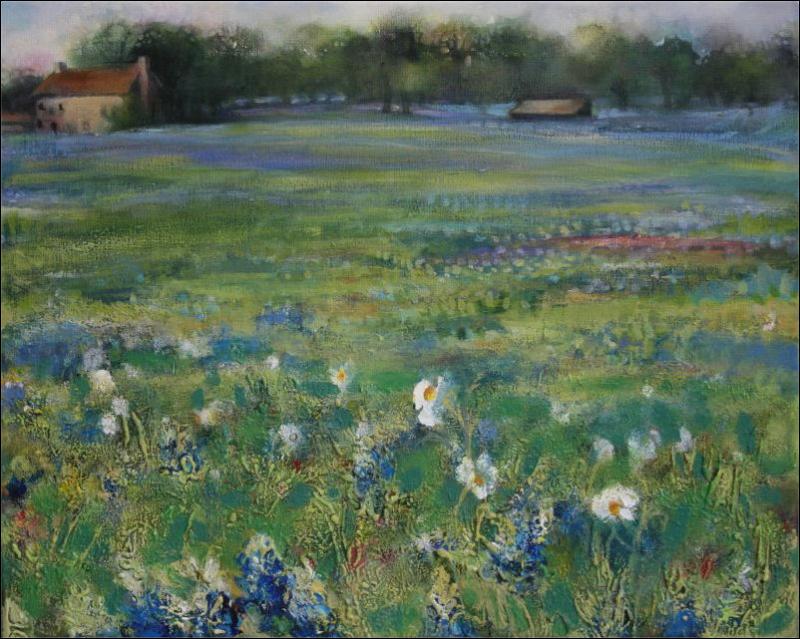
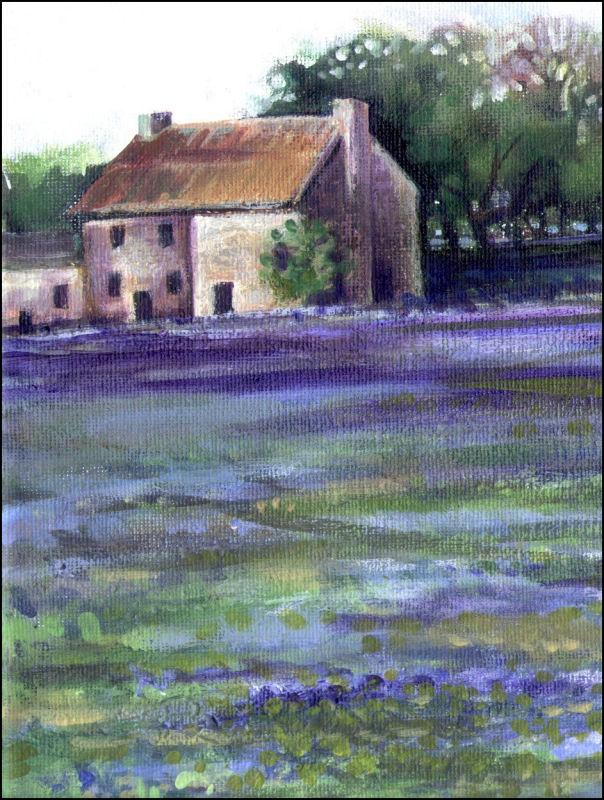
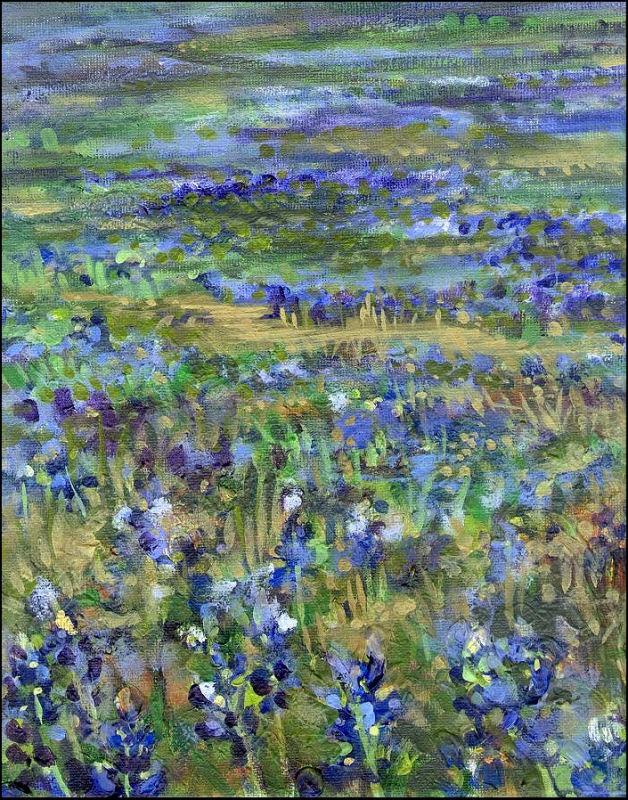
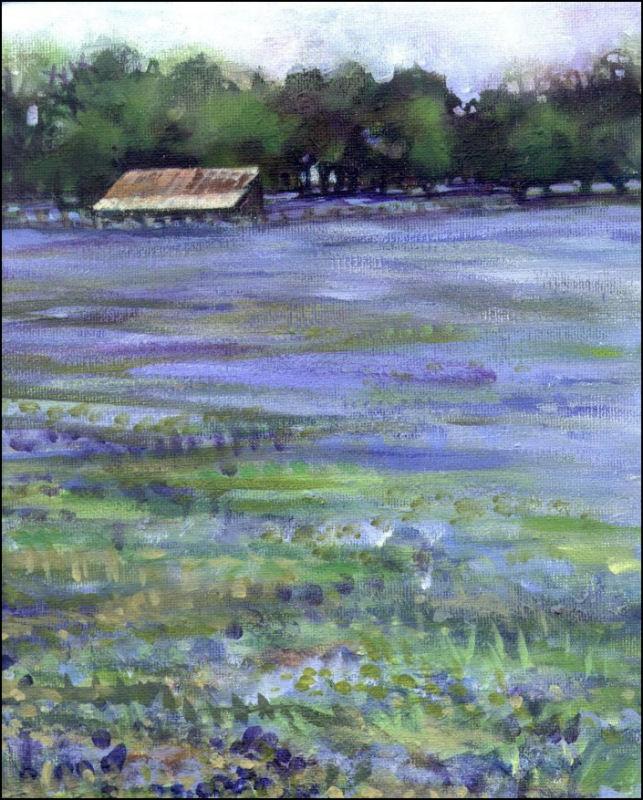
Bluebonnets, Marble Falls, Texas, 16 x 20 inches acrylics on canvas, framed. Donated to Engineers Without Borders.
One of the unexpected experiences with this painting was adapting to a small-sized, slippery store-bought canvas, whereas I’m most comfortable painting on large home-built frames at least 3 ft. wide with stretched with canvas that has more texture. Trying to find the right colors of blues and greens was also a bit of a challenge. The painting has been reworked many times; I scratched and scrubbed off days of work and began again many times. For that reason, it took over two years to complete. A few images of earlier stages:
Guanaco Family Portrait
Friday, March 3rd, 2006
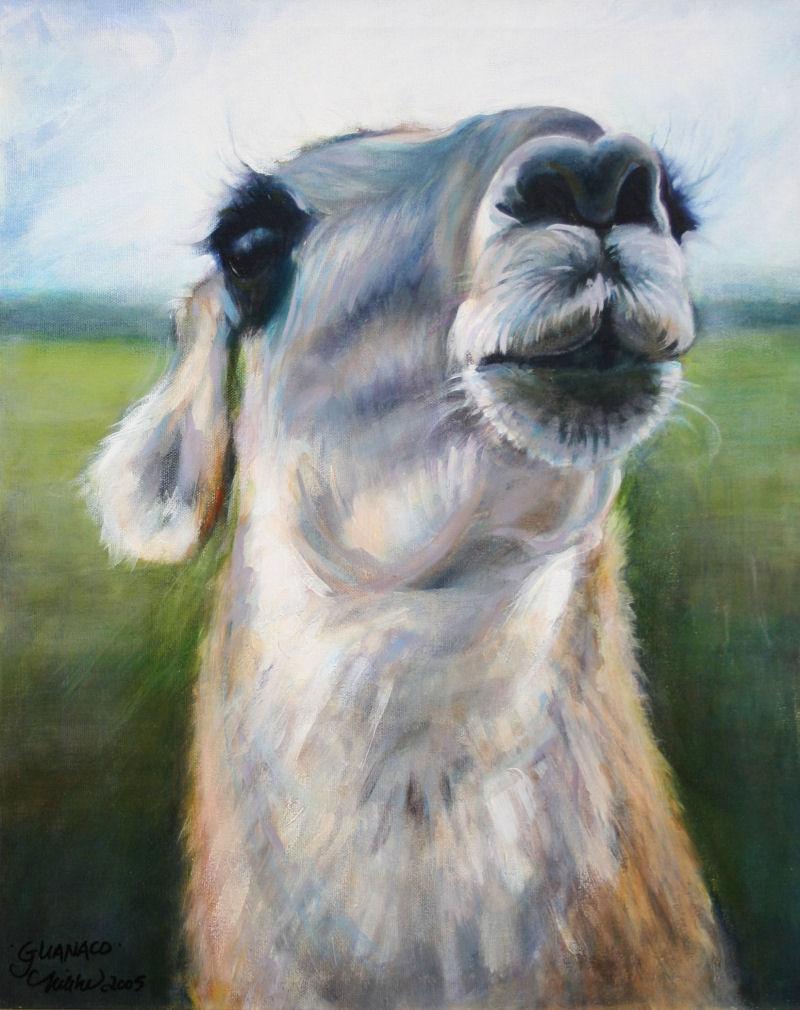
Guanaco, 20H x 20W inches acrylics on canvas, framed
The Guanaco, pronounced “won-a-co”, is a member of the camel family and native to South America. This particular Guanaco greets visitors who drive through Fossil Rim Wildlife Park in Glenrose Texas. Sold.
Next Entries »