
summer
« Previous Entries Next Entries »Morning Light – commission for a second version
Wednesday, September 8th, 2010
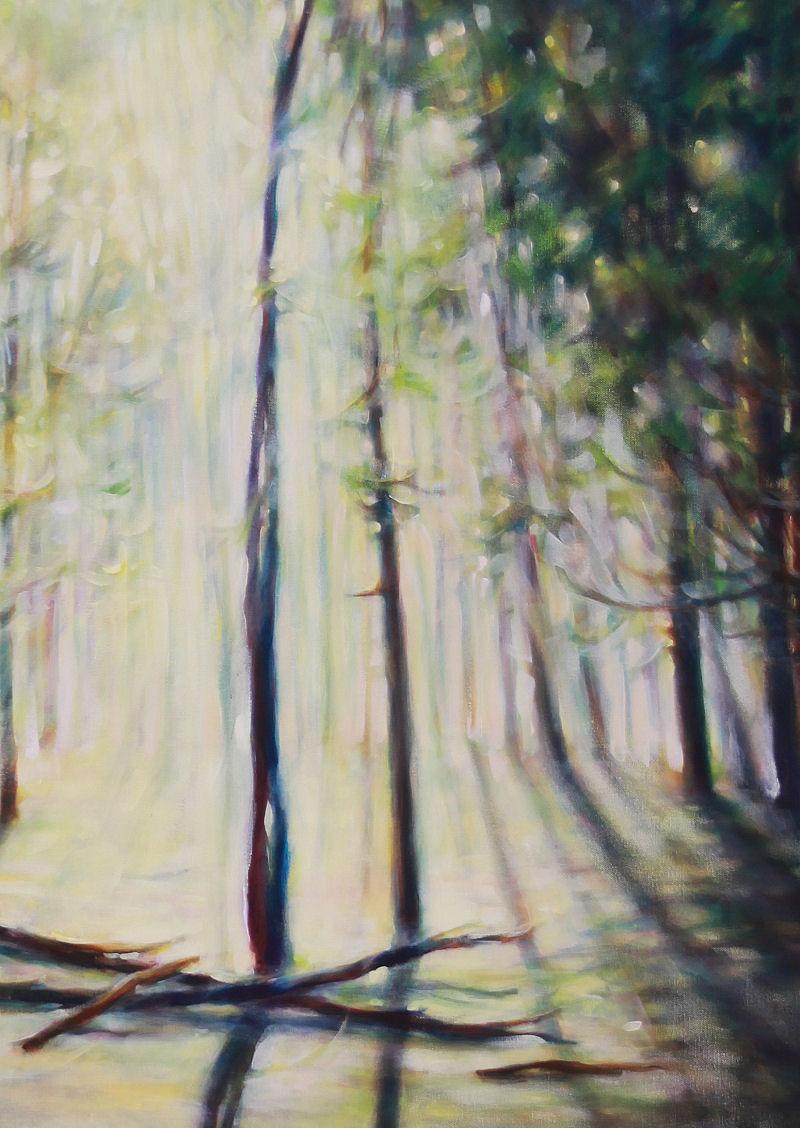
Above: Sept. 12th detail
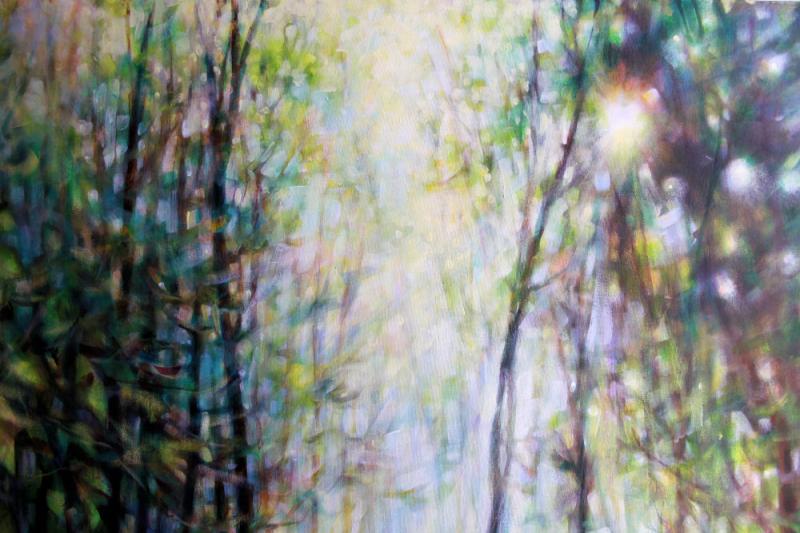
Morning Light 02, above: upper detail of 60H x 40W x 3D inches acrylics on canvas in progress, commissioned work (NFS)
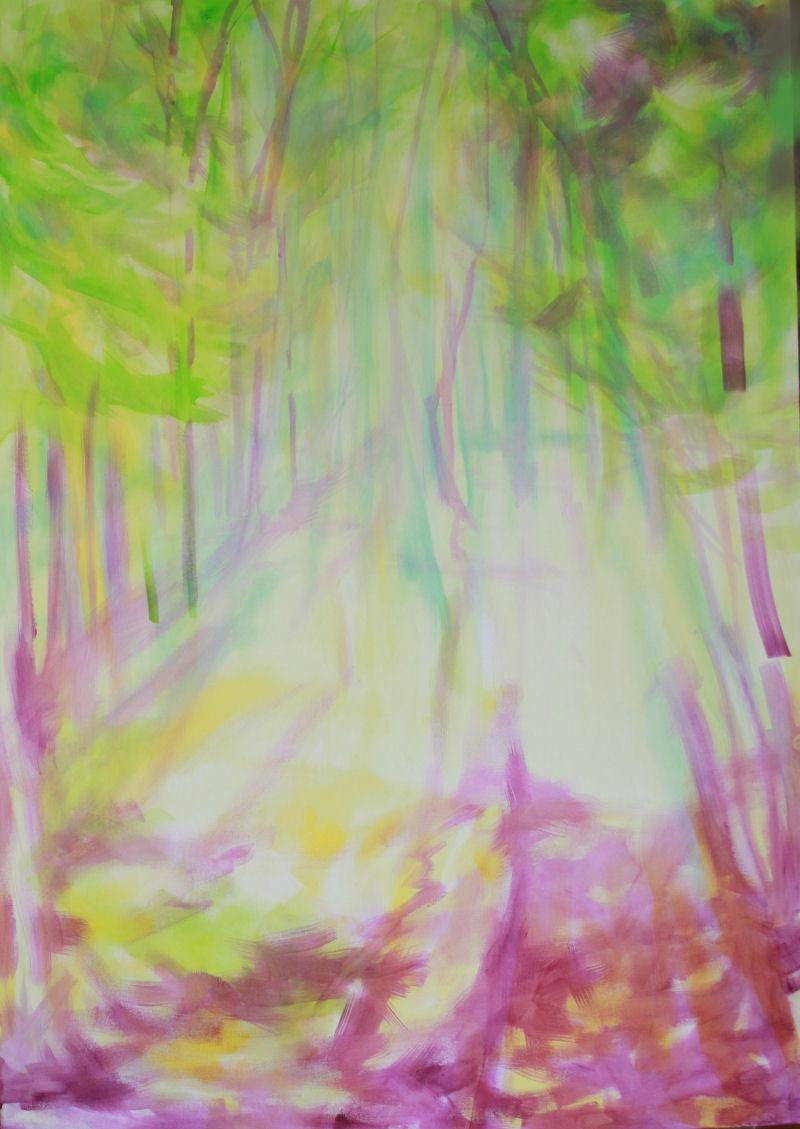
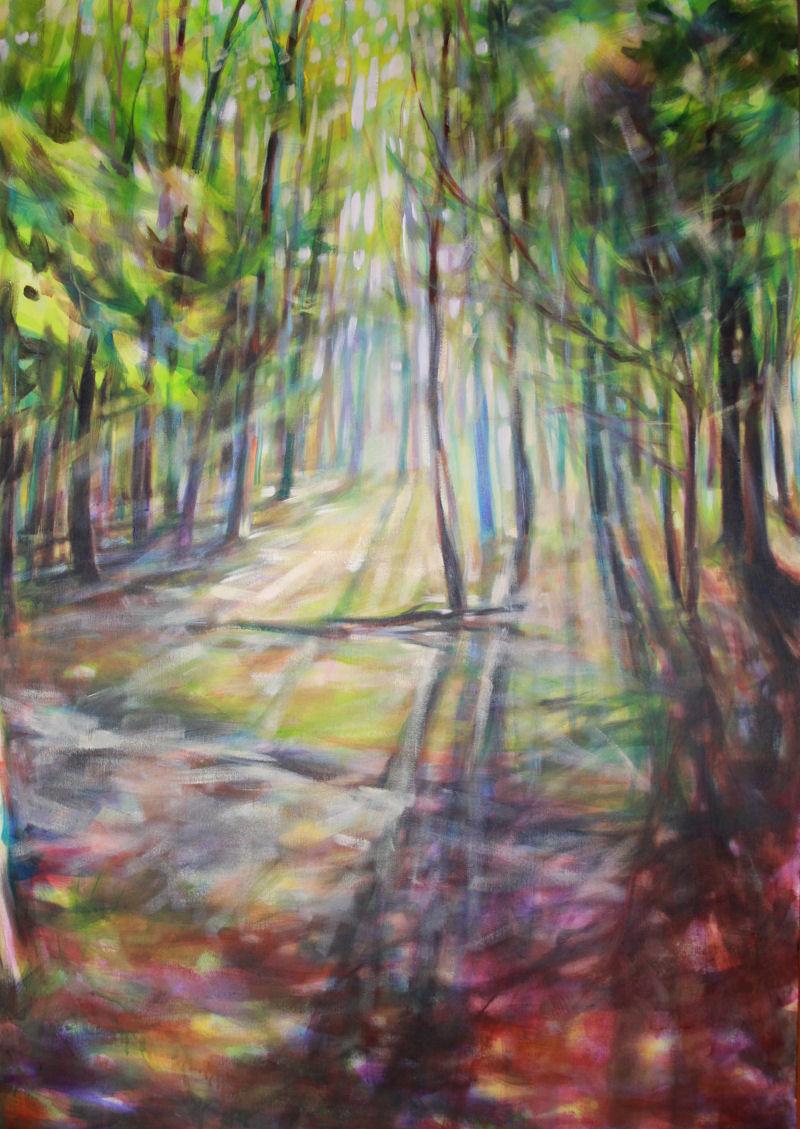
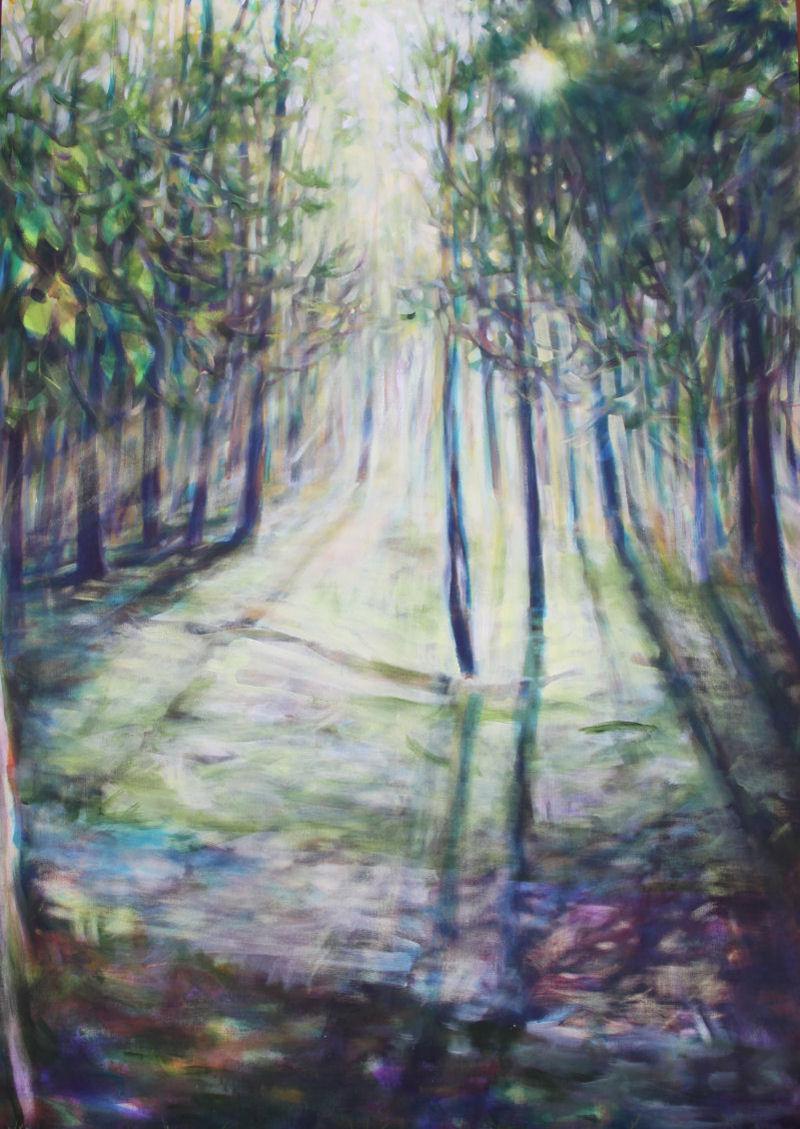
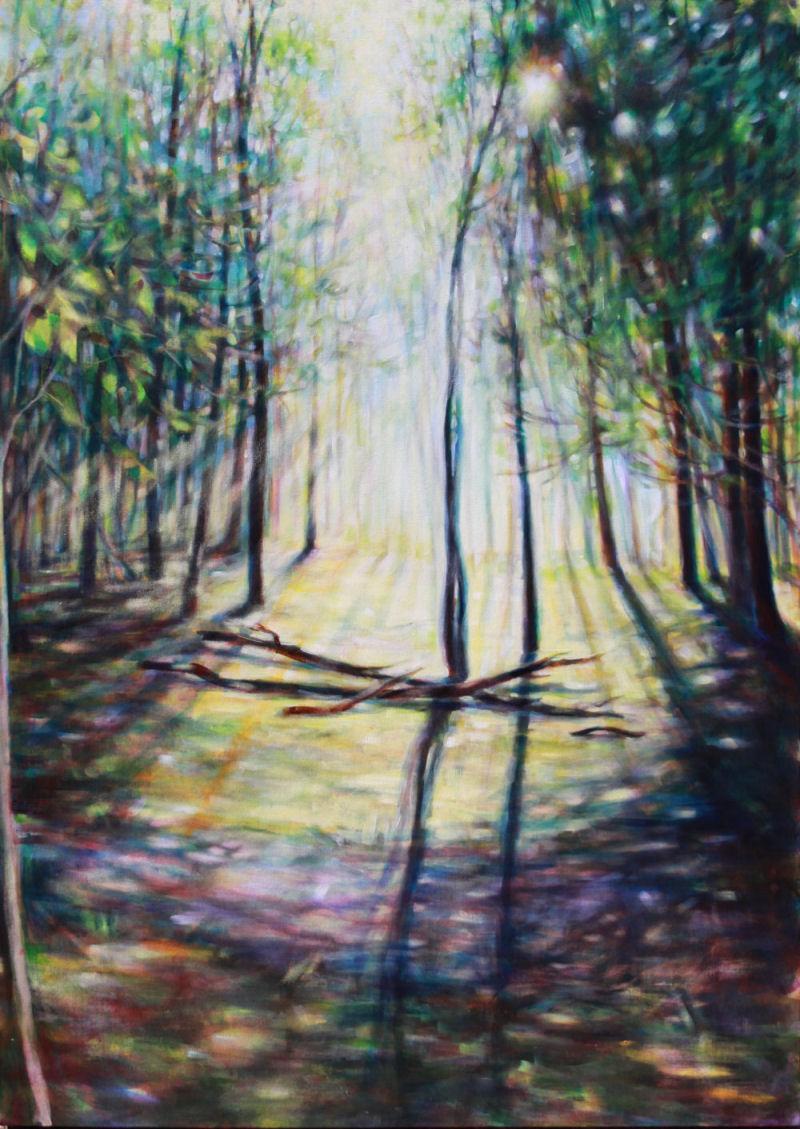
Phase 01, 03 and 07 show various changes and adjustments made as I attempt to paint Morning Light 02 as close as possible to the original version. As this is a unique individual painting in its own right, copying is not the goal. As work progresses, the most important thing is to find the same light and ethereal qualities as in the first version.
Summer travels
Friday, August 13th, 2010
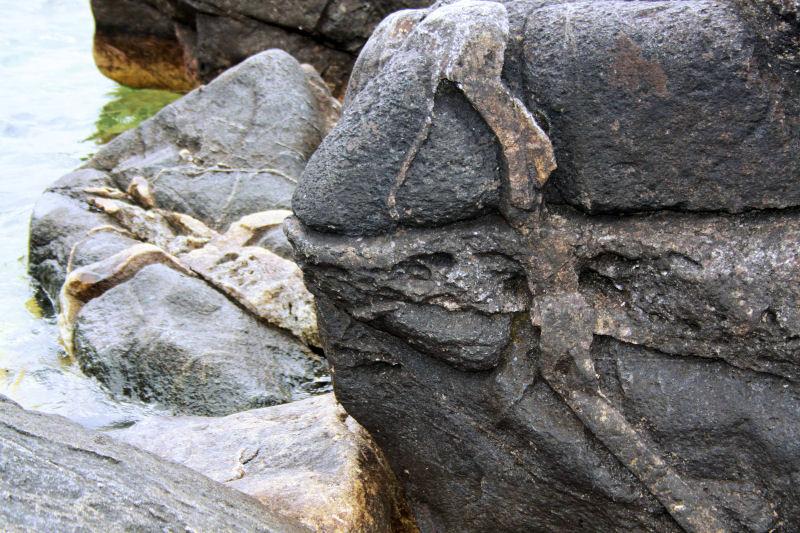
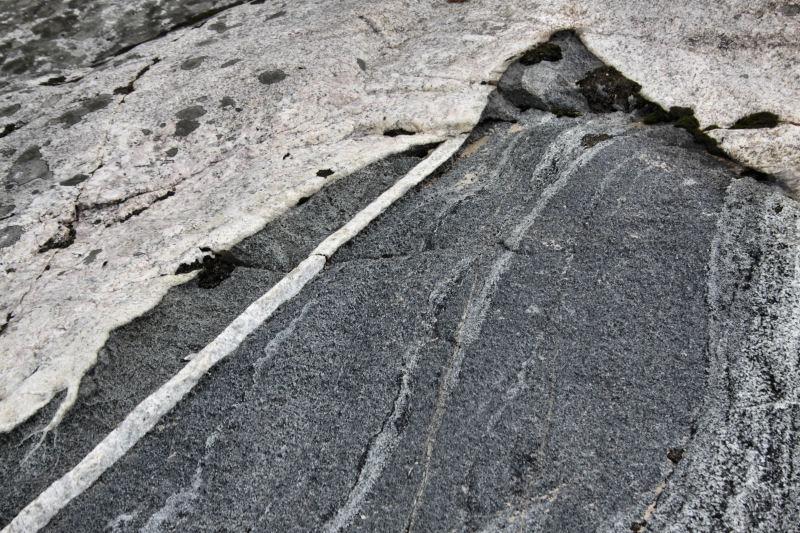
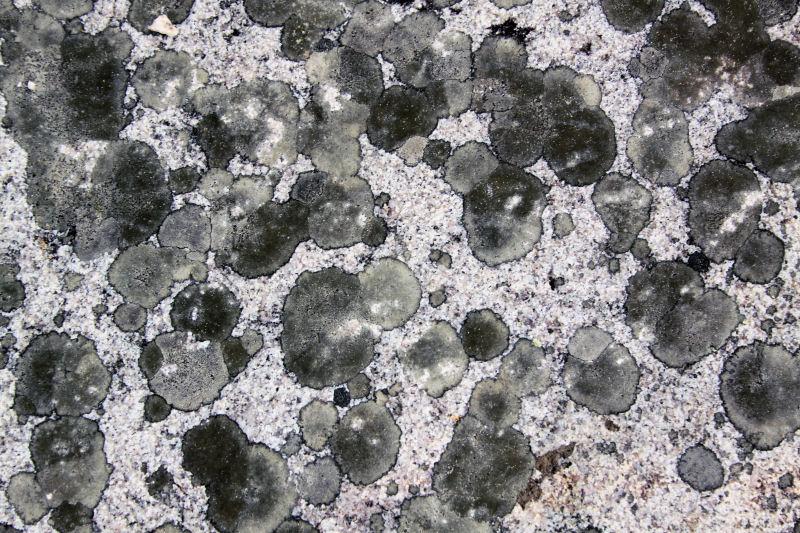
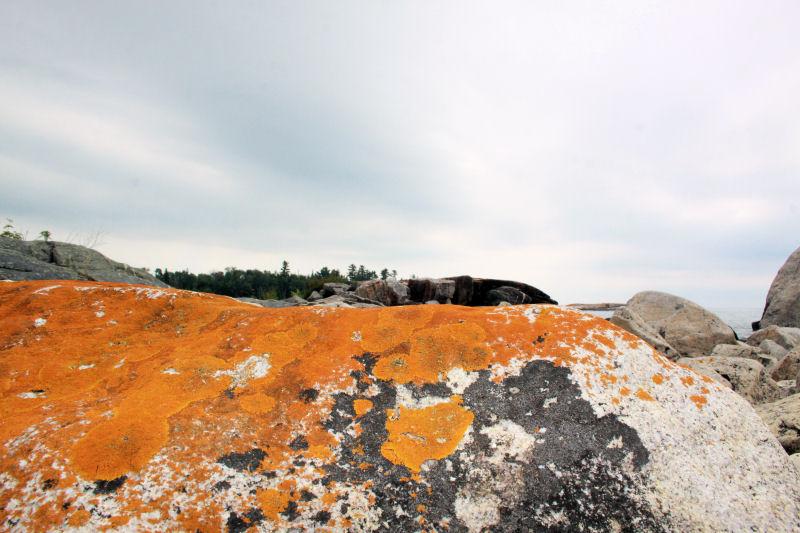
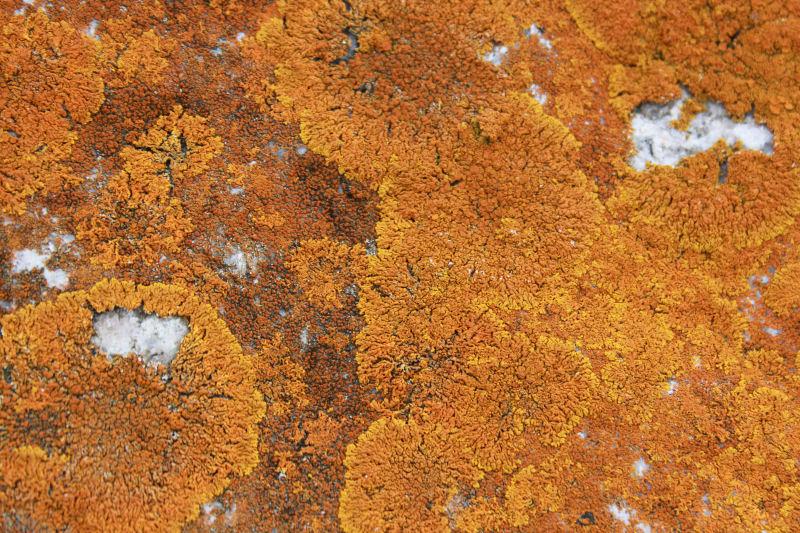
When I’m back in Dallas blogging regularly again, these photos will be posted on the photography website. An unplanned extra trip from Alberta to Ottawa; in Ontario a second time, means I won’t be back until the first week of Sept. Here are a few photos I took on the shores of Lake Superior just east of Wawa, ON.
On exhibit
Friday, July 9th, 2010
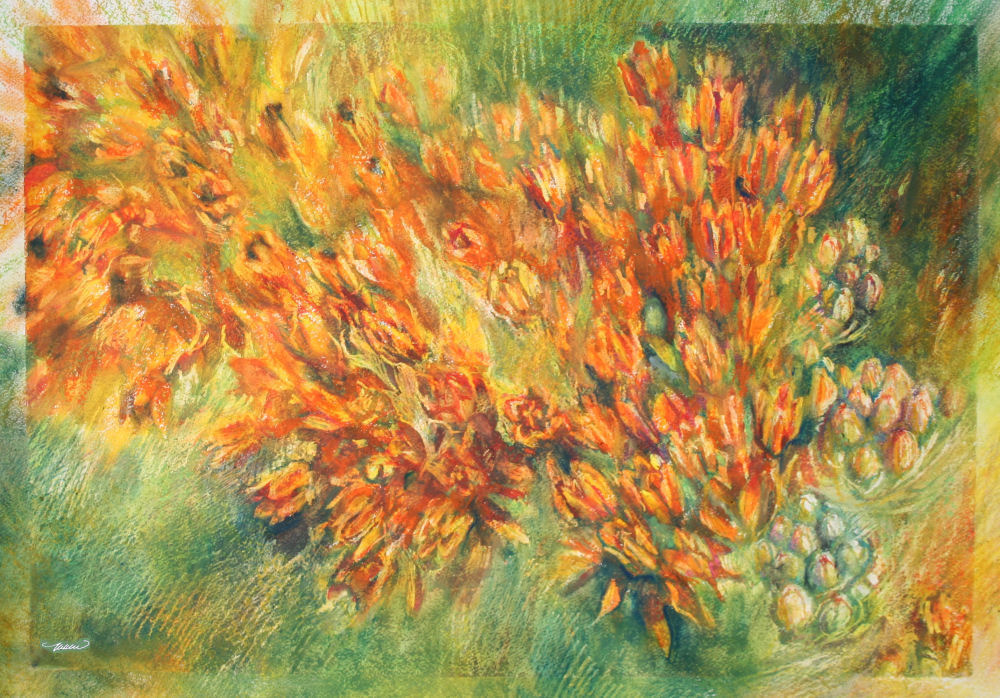
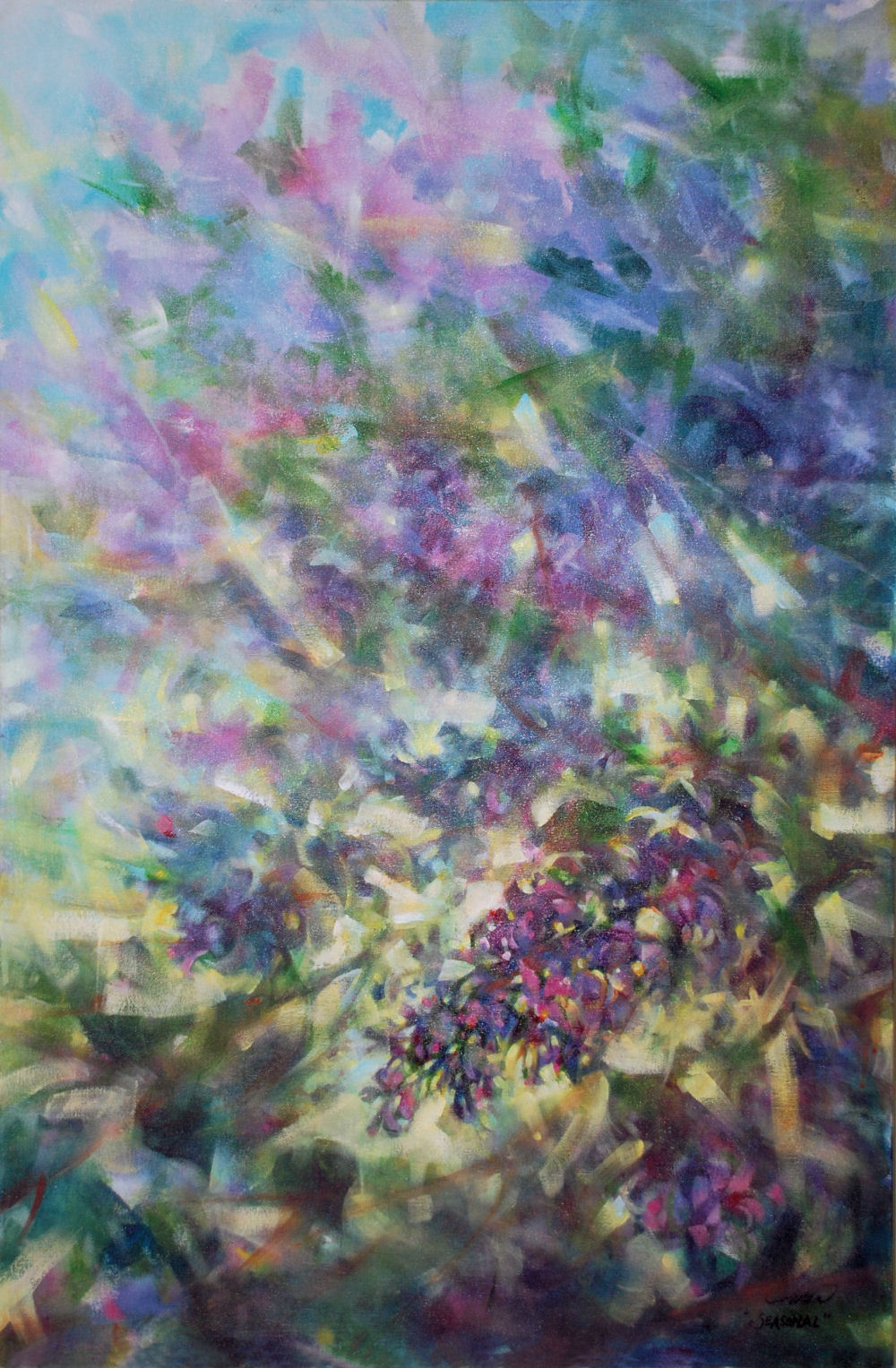
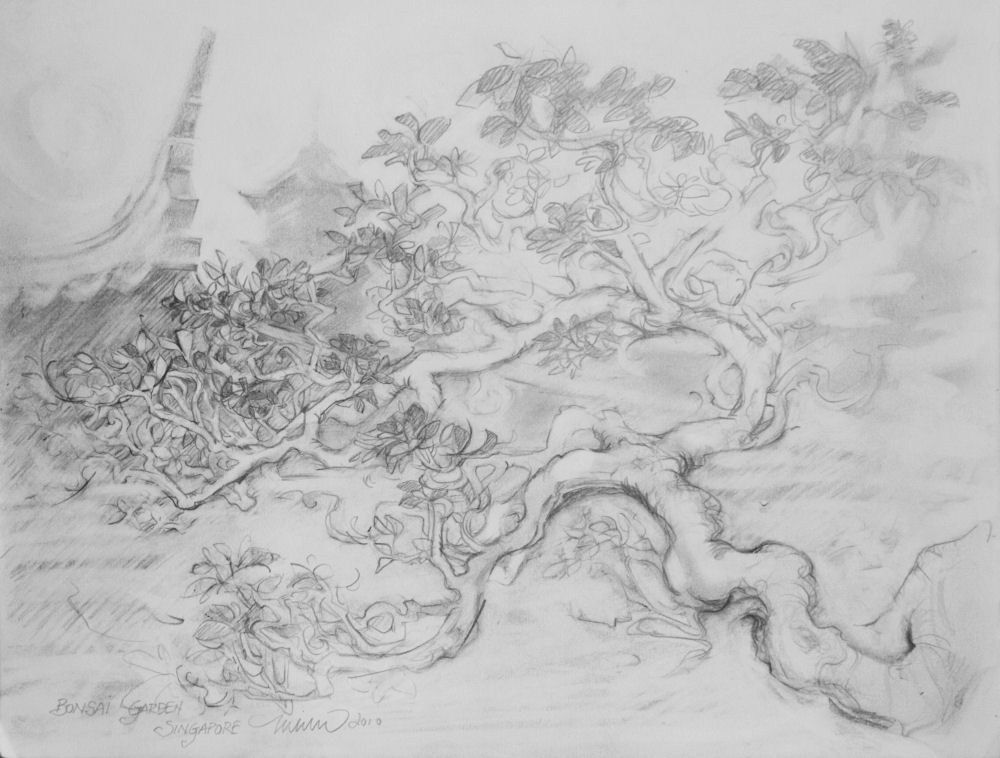 On exhibit at Oxide Gallery, Denton, TX are: Milkweed Melody, 27H x 33W inches framed Oil Pastels on WC paper, has brassy-gold frame painted with an extension of the drawing. Bonsai Garden, 12 x 15 inches graphite on paper, and Lilacs, 36 x 24 x 2 inches acrylics on canvas, gallery wrapped sides painted, narrow frame, which can be displayed horizontally or vertically.
Stars and Fireflies
Sunday, June 27th, 2010
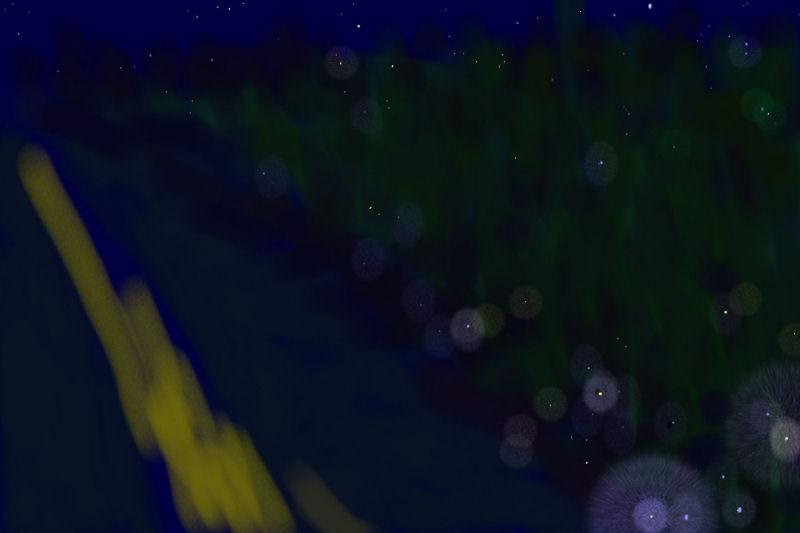
Home from Singapore for a few days, and having to go north to pack up the Dancing With Trees exhibition, I drove up to Ontario first so I could see my sons in Canada before Christmas. At night in the fields and trees from Tennessee to Michigan there are stars and fireflies in the trees – so magical! Until I can express it in paint, here is a quick photoshop impression.
Norway Maple: finished, combined posts
Friday, April 9th, 2010
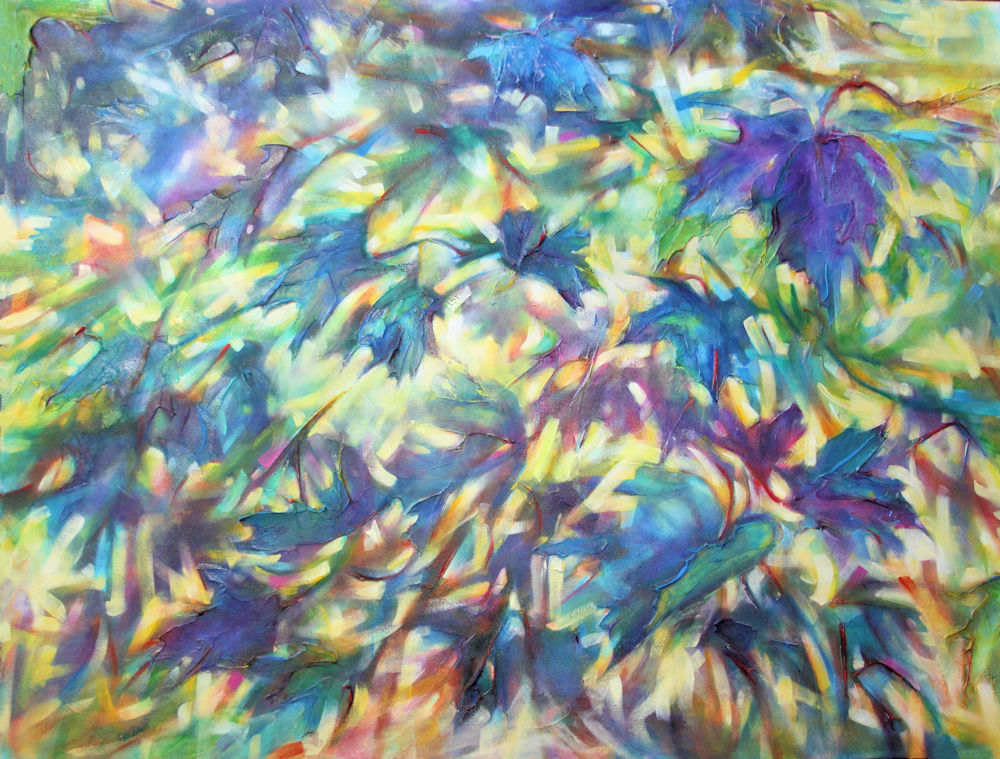
Norway Maple, 36H x 48W x 3D inches acrylics, gel paste on canvas, wrapped sides painted, navy colored narrow frame.
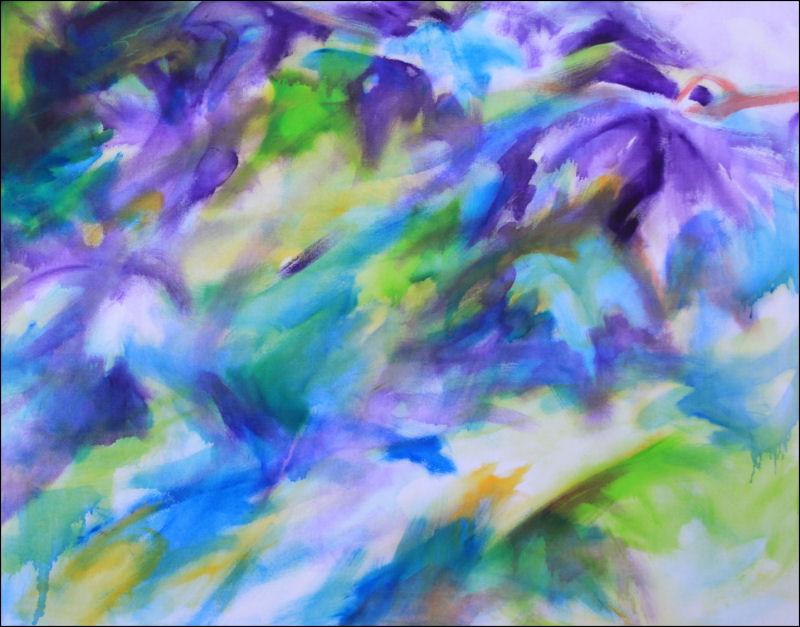
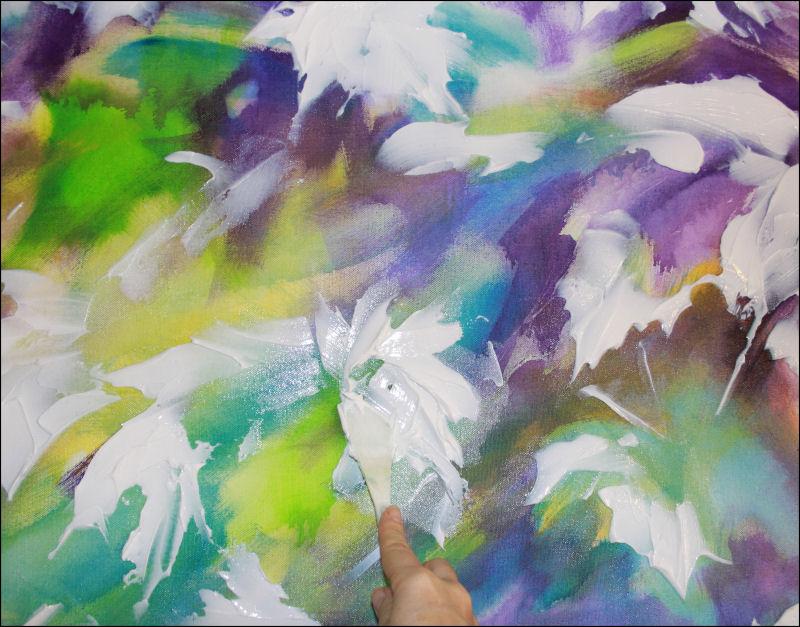
Thumbnails: Combined, edited posts of progression between Dec. 8th, 2009 – March, 2010. Started December 8th, 2009: modeling gel is available in varied textures, finishes and viscosity. Acrylics paint can be mixed with the medium or when dry paint can be applied over top. 3) January 18th, 2010: applying modeling paste to the base painting and sculpting with a small trowel.
 |
 |
 |
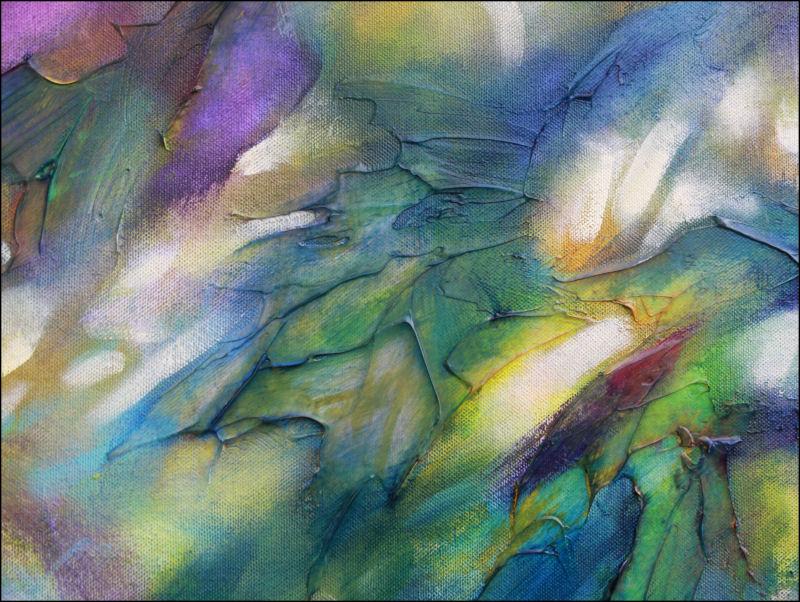 Jan. 28th:– used a dry brush so paint would catch mostly on the textures, and kept the feeling soft. Intentions are to maintain the fresh pure colors. Studied from a distance for about a week after this stage to contemplate what the next move will be.
Feb. 27th: lighter background colors were added in order to open up the space.
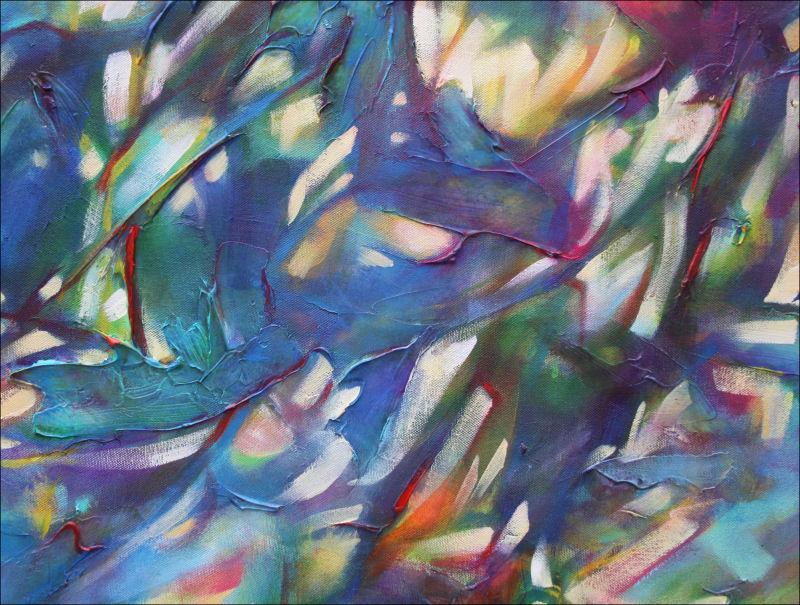
Feb. 28th: Adding a solid patch of turquoise to lower left and some tiny details like that may ground the whole thing, but that’s about it; am leaving it out of sight for a while. This really is a carnival of color, I love it!
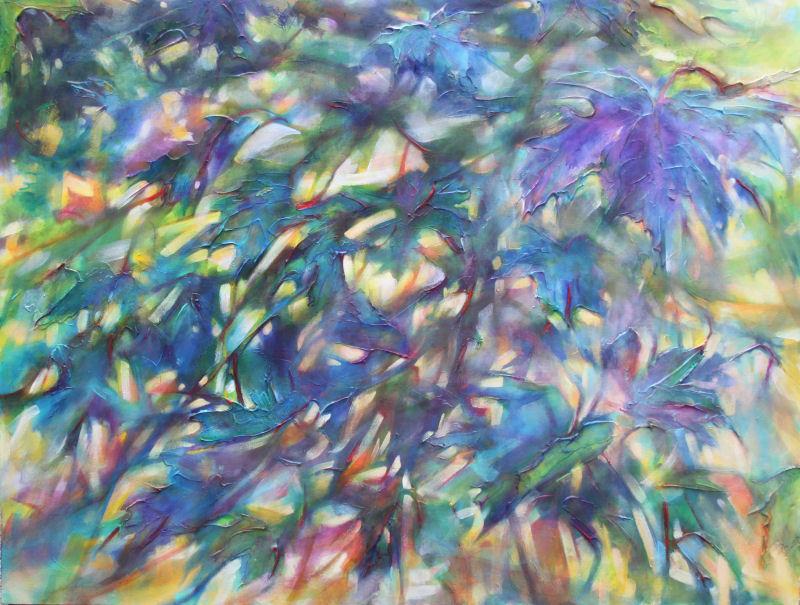 March 9th: Subtle changes since last post…have been working more on tones in the background which weren’t planned initially; I had hoped to use only pure colors without the usual layering, but it’s otherwise too hard to look at. Also am connecting a few shapes horizontally, and it’s almost “there”, but ‘2D Pinecone’ was started in the meantime to avoid overworking this.
March 6th: Thanks, Virginia for taking the time to write and digitize a detailed, objective critique. I sure appreciate your opinion about what might improve this.
Viper’s Bugloss
Thursday, February 25th, 2010
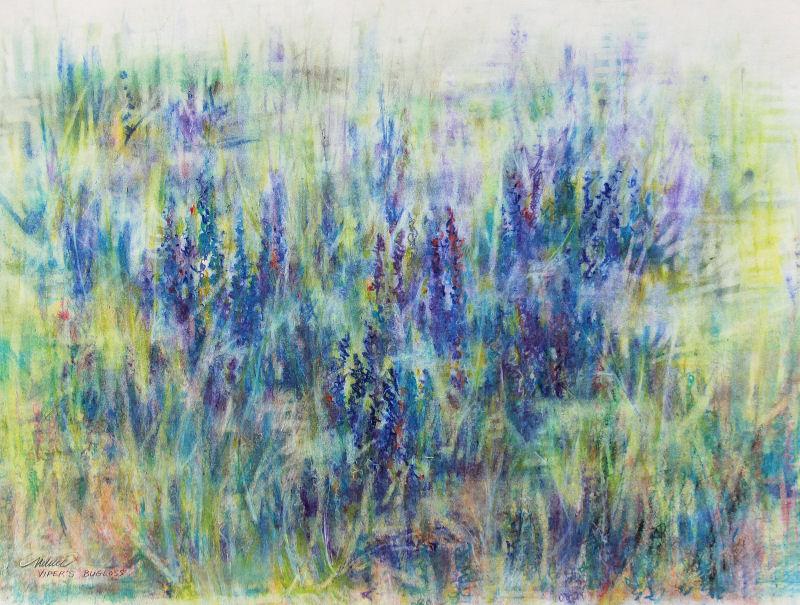
Viper’s Bugloss, 18H x 24W inches soft pastels on paper.
It’s tempting to pick these for wildflower bouquets, but the plant is very irritating to the skin, so are best enjoyed left where they are, growing en masse in summer fields beside the highways in eastern Ontario, Canada.
I was curious about the name… according to the Encyclopedia of Herbs and Herbalism edited by Michael Stuart (c. 1979, 1987 ISBN 0-9999-48911), they were formerly one of the most respected plants used for the treatment of viper’s snake bite venom.
Norway Maple, work in progress
Thursday, December 10th, 2009
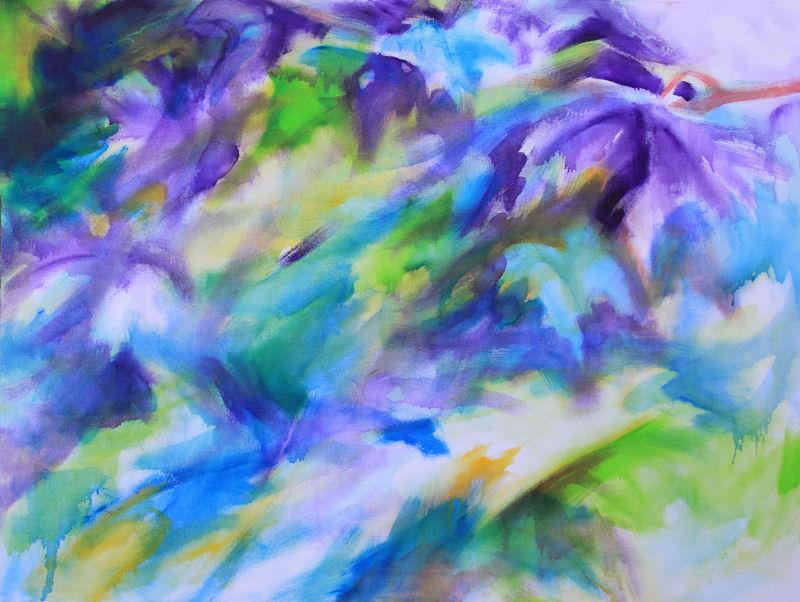 Norway Maple, work in progress: 36H x 48W x 2D inches acrylics, will sculpt edges of leaves with modeling paste medium on canvas. Gallery wrapped sides painted. The watercolor classes really helped with awareness of color choices, keeping those colors pure and marks fresh, and also a desire to leave more abstract elements alone; less realism and more expressionism. All of those things will be magnified in this painting.
After today, blogging and Artwork will be infrequent until mid-January. Driving up to western Canada, there will be plenty of snow-covered trees and winter photo opportunities along the way to Alberta, B.C. and back. Working up until the last possible moment, I started this painting of purple Maple leaves that were seen in Madison, WI during late August. Modeling/Molding paste will be applied, then painted with acrylics when dry, this will be a 3 dimensional-ish painting.
Happy Holidays everyone!
Exhibition Opening Dec. 1st
Wednesday, November 25th, 2009
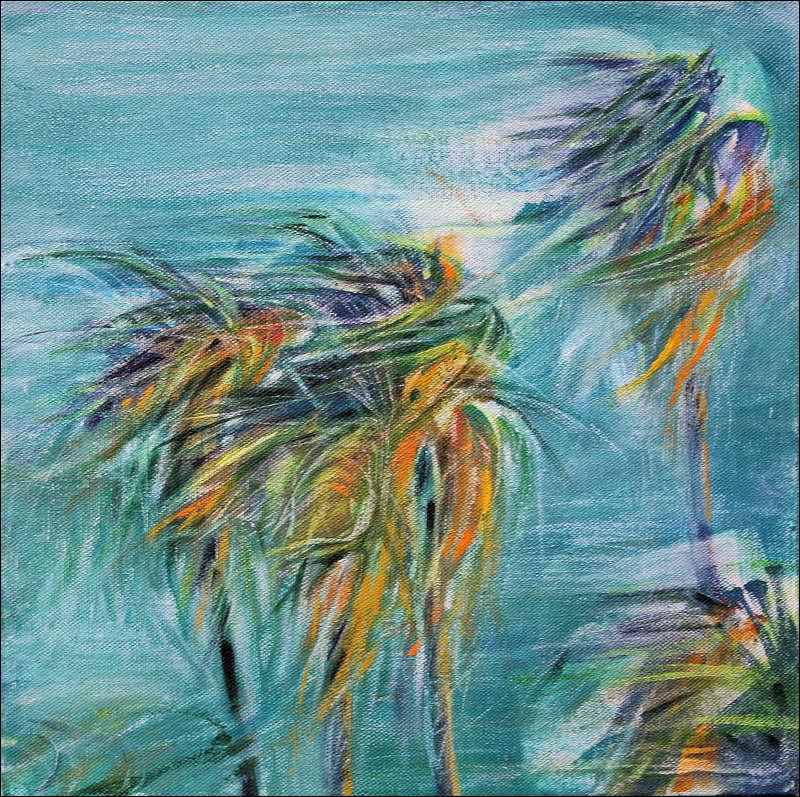
Chapala Wind, 11H x 11W x 3D inches acrylics on canvas, wrapped sides painted
Upcoming exhibition: monthly featured artist at Oxide Gallery in Denton, TX. Among the items on exhibit: most of the Magic Square series, Dawn at Bell Rock, Sounds of Silence, Polypore Fungi, Shadows of Summer, Eastern White Pine, and three of the vintage chairs. Opening Reception Tuesday, December 1st, 6:00 p.m. – 8 p.m., and the show runs until December 31st.
Dawn at Bell Rock
Sunday, November 22nd, 2009
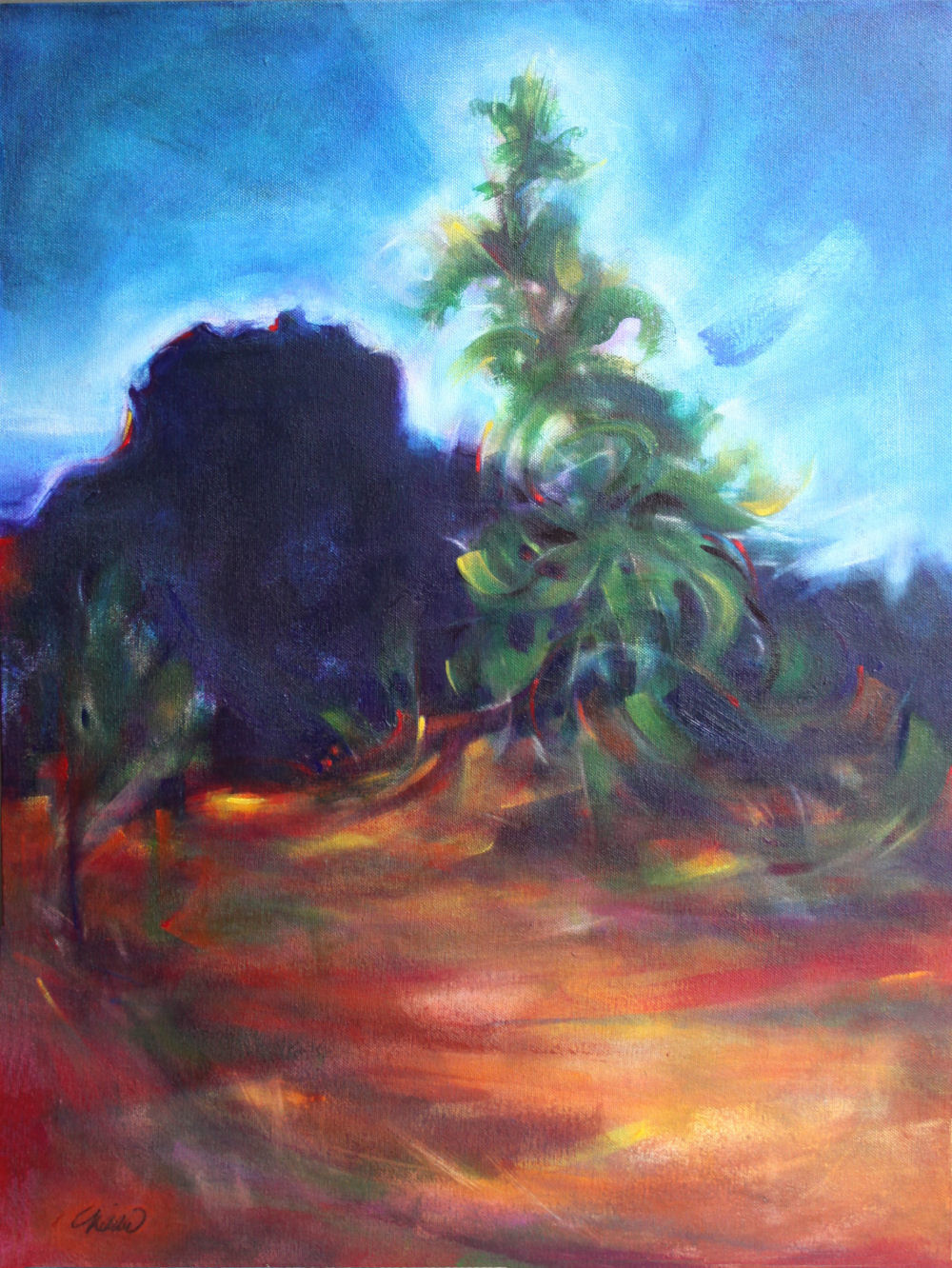
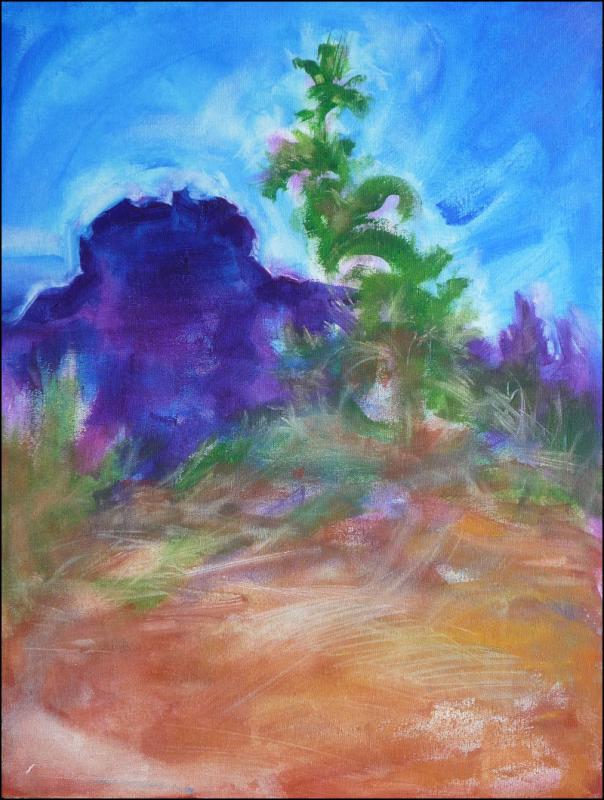
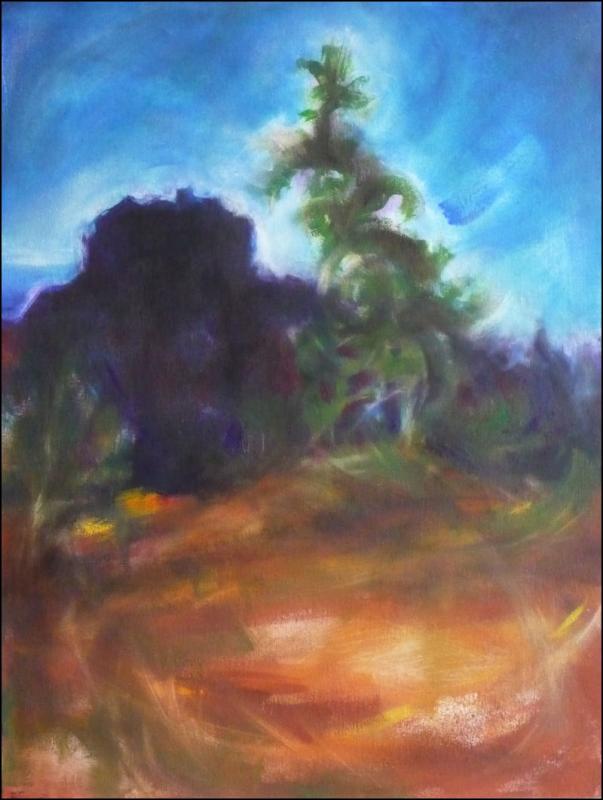
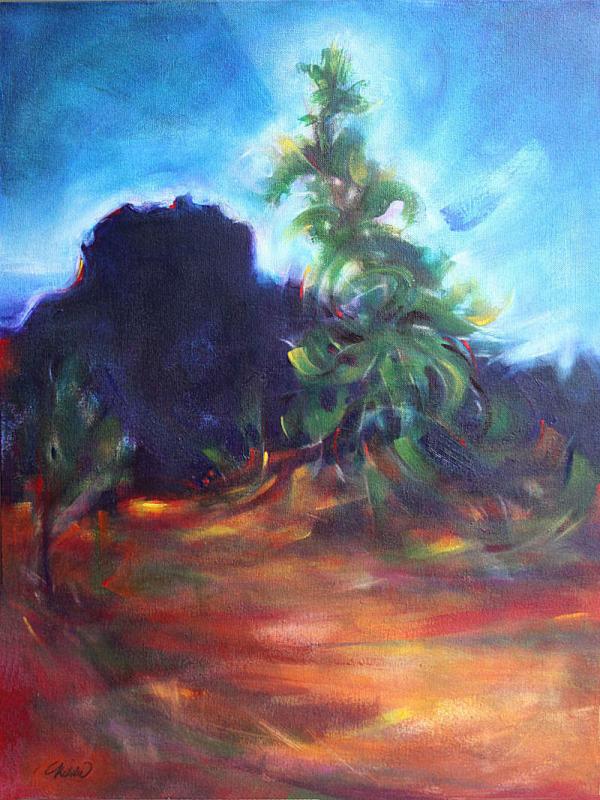
Dawn at Bell Rock, Arizona – 24H x 18W x 2D inches acrylics on canvas, wrapped sides painted, trim frame. Below: phases 01, 02 and 07
Orange Milkweed
Saturday, November 21st, 2009
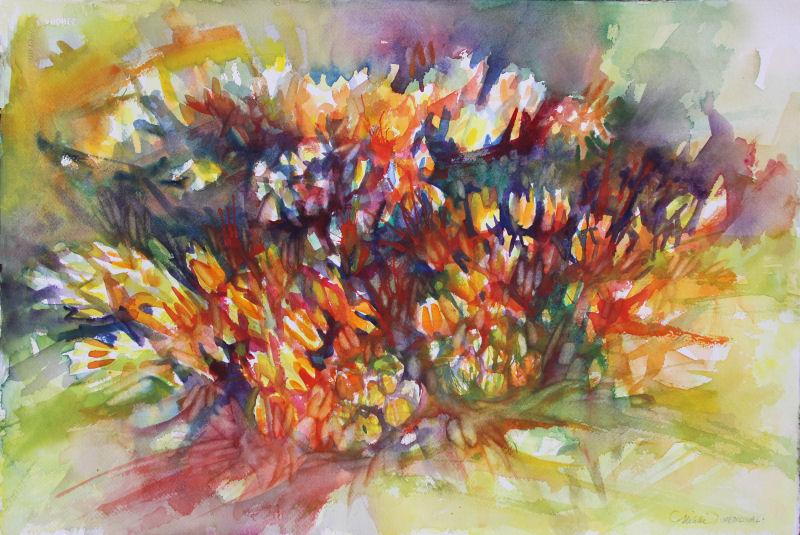
Orange Milkweed, Kentucky 15 x 22 inches watercolors on paper, sold
Driving from Texas to Ontario one summer I had to pull over to take photos and a closer study of the vivid orange bouquets growing beside the highway in southern Kentucky. The colors are irresistible, and this is not the first or last time I’ll portray this subject. All plants and trees contain medicinal and useful chemical properties in their leaves, stems, roots and flowers.
I looked up Orange Milkweed in the most informative books about plants, The Encyclopedia of Herbs and Herbalism edited by Malcom Stuart, which contains details about every plant I have ever sought to find information for. According to it, Appalachian Indians made a tea from the leaves to use during religious ceremonies. One common name for this plant is “Pleuracy Root”, as it is still useful to treat infections of the respiratory tract including pleurisy It is used as a diaphoretic, antispasmodic, carminative, expectorant. Color also has enchanting, supernatural energizing properties!
« Previous Entries Next Entries »