
history/multicultural theme
« Previous Entries Next Entries »Bonsai, Japanese Gardens, Singapore
Wednesday, July 27th, 2022
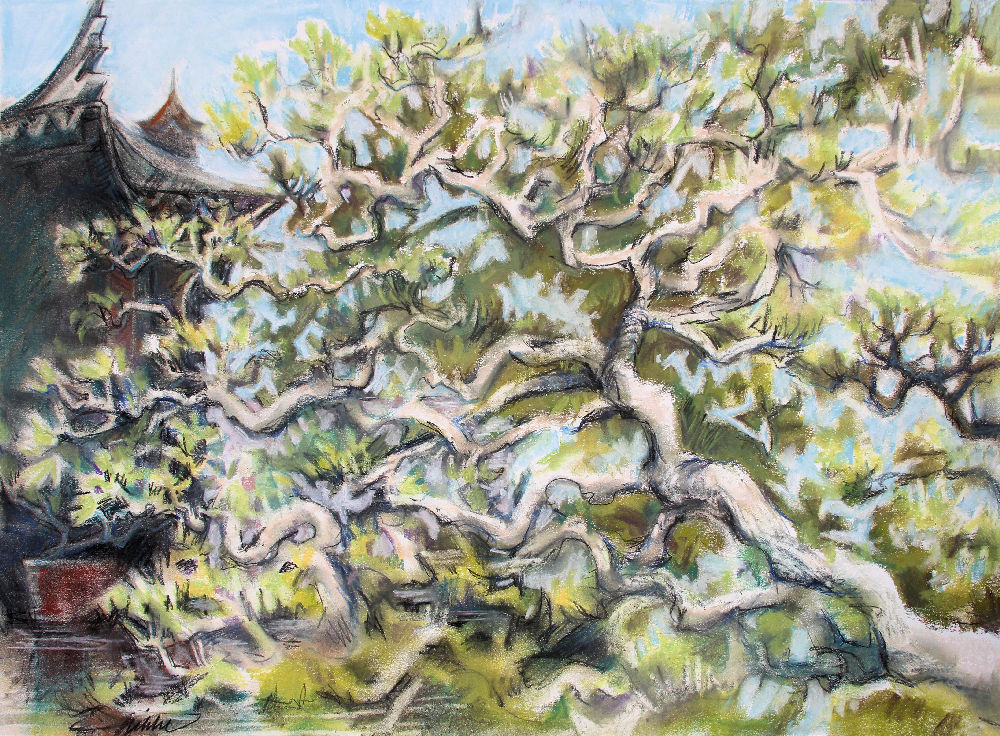
Bonsai, Japanese Gardens, Singapore – 18H x 24W inches soft pastels on paper. Framed size 27H x 33W”.
Bonsai, meaning ‘tray planting’ in Japanese, is the art of growing, pruning and shaping small plants in containers, to mimic the sculptural growth style of larger trees. The meditative practice of creating beautiful miniature tree-replicas adheres to traditions and principles.
Emphasis is on growing only the tree, whereas Chinese penjing, which influenced the art of Japanese Bonsai, imitates larger landscapes, for example, with trees and mountain scenes.
Magic Hour 02
Monday, February 28th, 2022
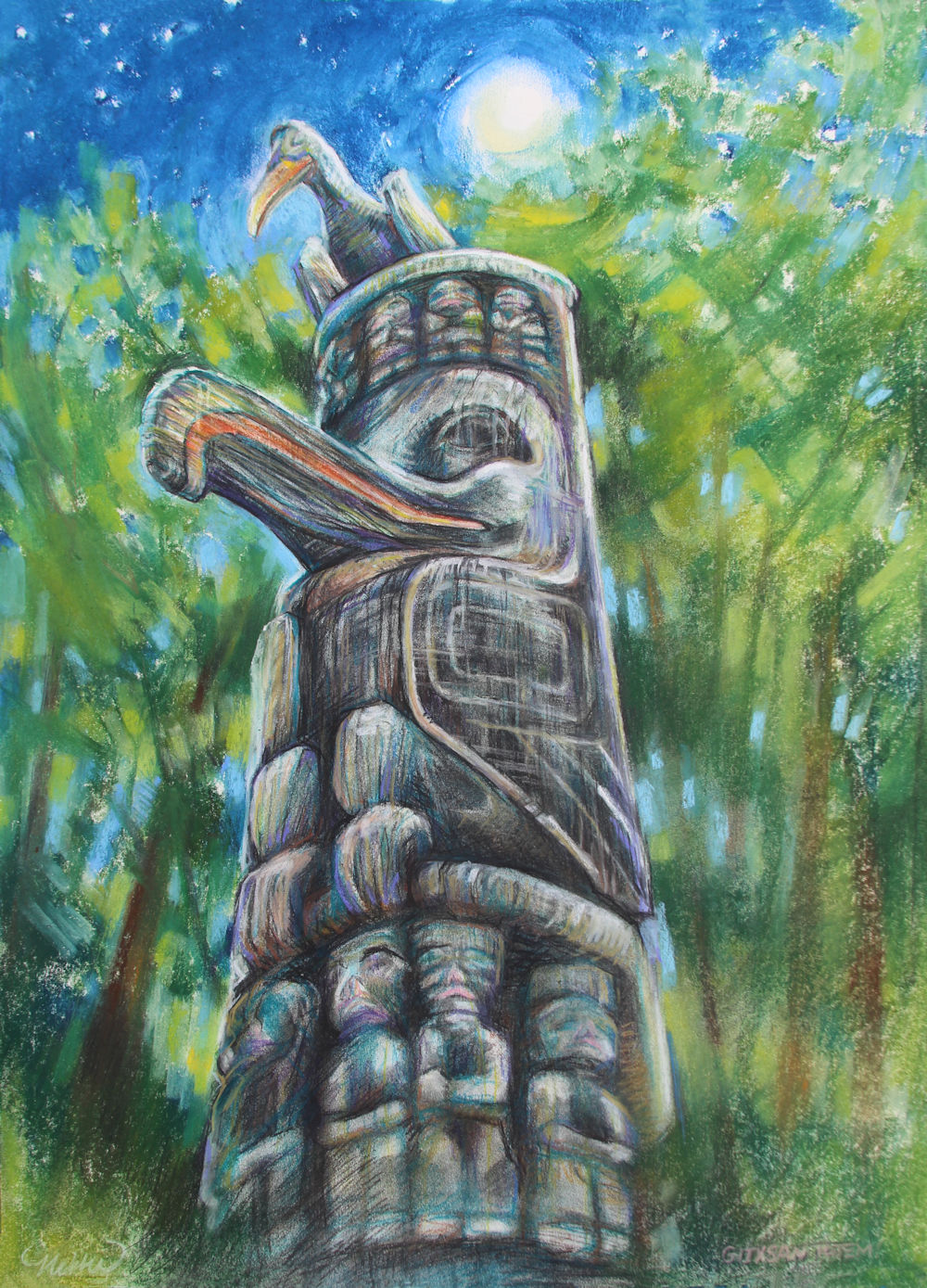
Magic Hour 02, the Gitxsan Totem, Thunderbird Park, Royal BC Museum, Victoria BC, Canada, 24H x 18W inches soft pastels on paper. Framed size 33H x 27W”.
I first painted ‘Magic Hour‘ in acrylics on canvas, started July 17th, 2008, with additional blog posts on July 24th, Aug 3rd, 6th, and 15th, 2008. The painting is 60H x 40W x 3D inches ($1,100).
Symbols/crests: The bird at the crown is a giant woodpecker (wee-get-welku). Legend reads that a female ancestor kept a pet woodpecker, feeding it so much it grew to be a giant monster that ate everything made of wood until it was killed. It sits atop 5 human figures who stand on the head of the Mountain Eagle (Skim-sim), who kidnapped and mated with a woman then devoured their offspring. The eleven small figures are humans fishing through holes in the ice. Under them and not pictured in the painting is Will-a-daugh, also known as “Person With a Large Nose”, holding her child who was conceived from a wood grub.
The Grandfather Tree
Wednesday, February 16th, 2022
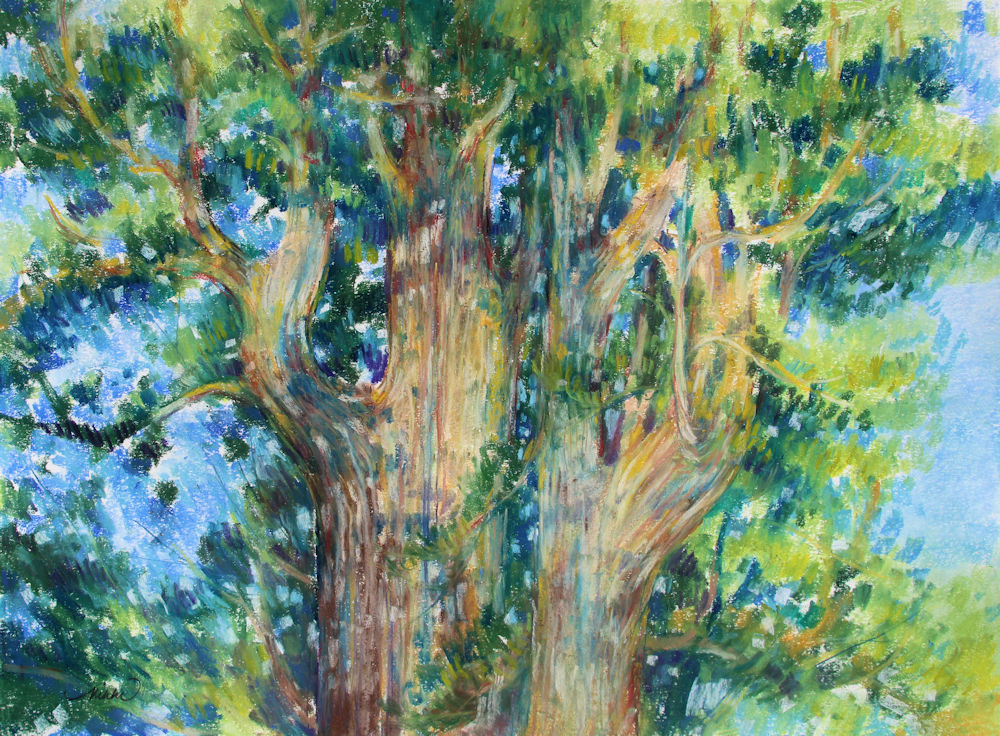
The Grandfather Tree, 18H x 24W inches soft pastels on paper. Estimated to be 1800 years old, this Redwood is 265 ‘ tall with a 24 ft. diameter, located along the Avenue of the Giants, Hwy 101 CA. Framed size 27H x 33W”.
Petrified Forest
Sunday, January 24th, 2021
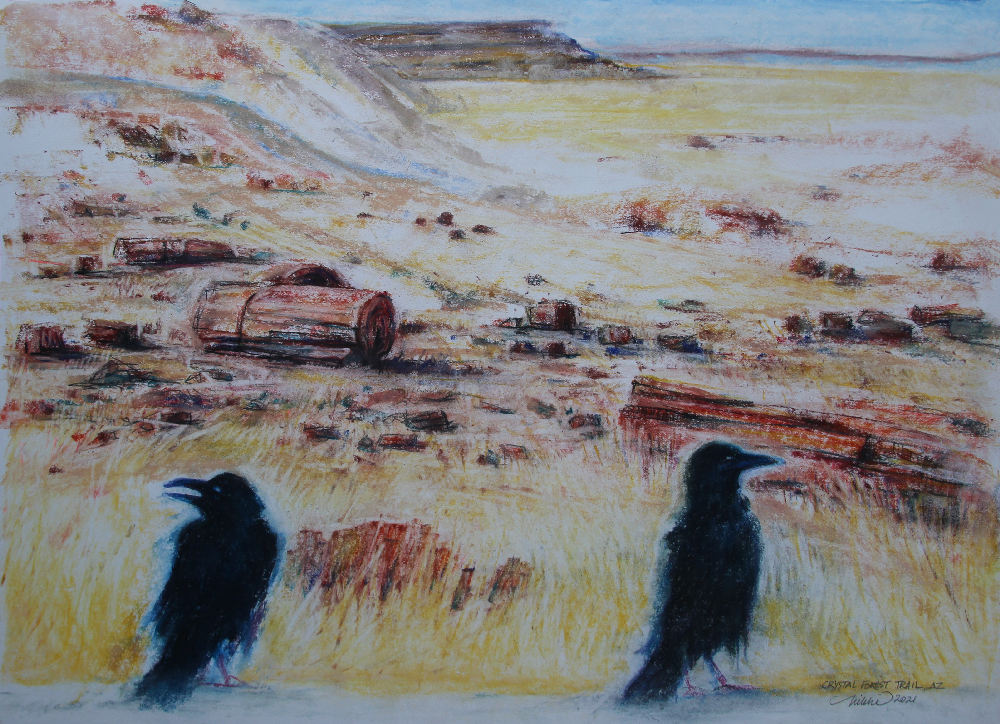
Crystal Forest Trail, Petrified Forest National Park, AZ – 18H x 24W inches soft pastels on paper.
Silent reverence for geologic history, Petrified Forest National Park, Crystal Forest Trail AZ USA. Not a whole lot more to draw here! The land is barren except for desert grass and the odd tumbleweed. This was once a lush forest, and dinosaurs roamed here. It was February, but I bet this place looks the same in July. The silence was layered with dry grasses in the breeze, ravens’ calls, and my imagination.
 I had never seen a tumbleweed up close before, so since I hadn’t seen any traffic or other people for about an hour, I hopped out of the car to take photos of one in the middle of the road before it blew away. Satisfied with the takes, I got up off the road and a bus was right there 25 ft. away, waiting for me to finish. I don’t know how long the bus was there, but was thankful the driver didn’t honk… and more thankful that he saw me.
Thunderbird Park Totems
Wednesday, August 19th, 2020
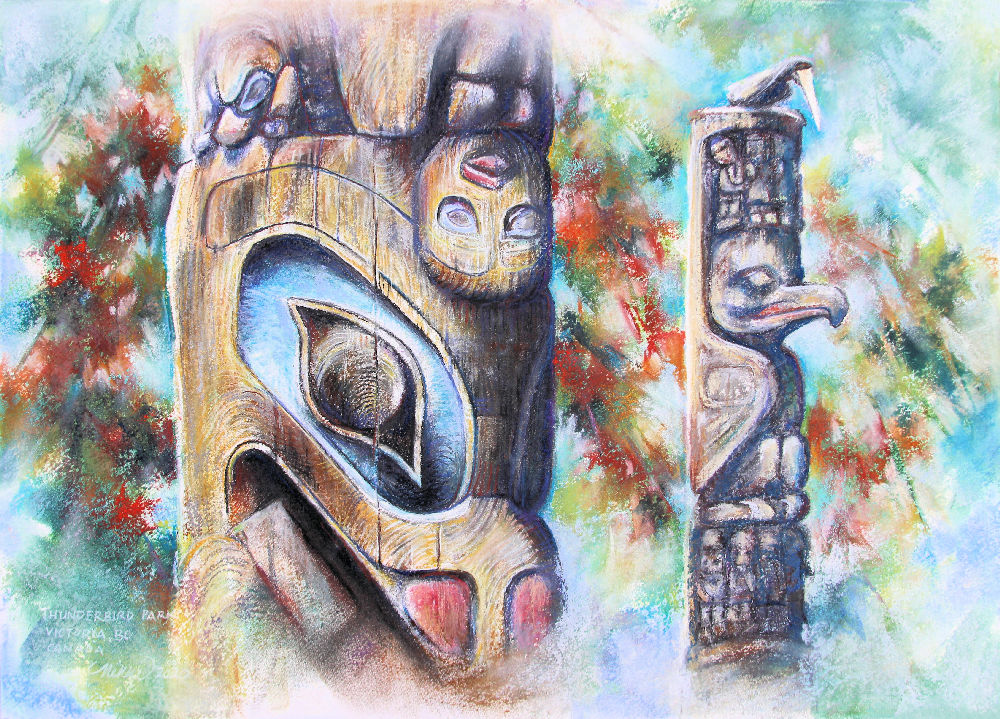
Thunderbird Park Totems, Victoria BC, Canada – 18H x 24W inches soft pastels on paper, framed size 27H x 33W”.
The Terracotta Army
Thursday, August 6th, 2020
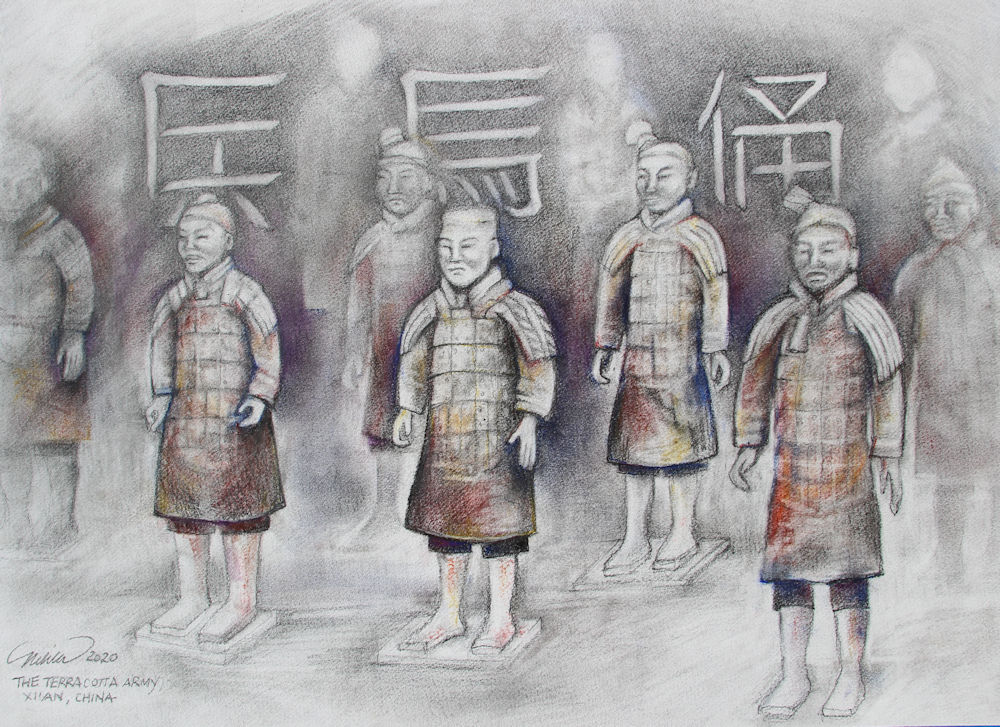
The Terracotta Army, Xi’an, China – 18H x 24W inches graphite, soft pastel on paper – work in progress. We visited China in 2016 so this is done from my own photos. The drawing looked boring so I added some stylized traditional Chinese characters that translate the title, “Terracotta Army”. Some tones and details need a bit more work. Here’s a link to Wikipedia with info about the sculptures.
Sacred Sunrise: Uluru, Australia
Monday, June 29th, 2020
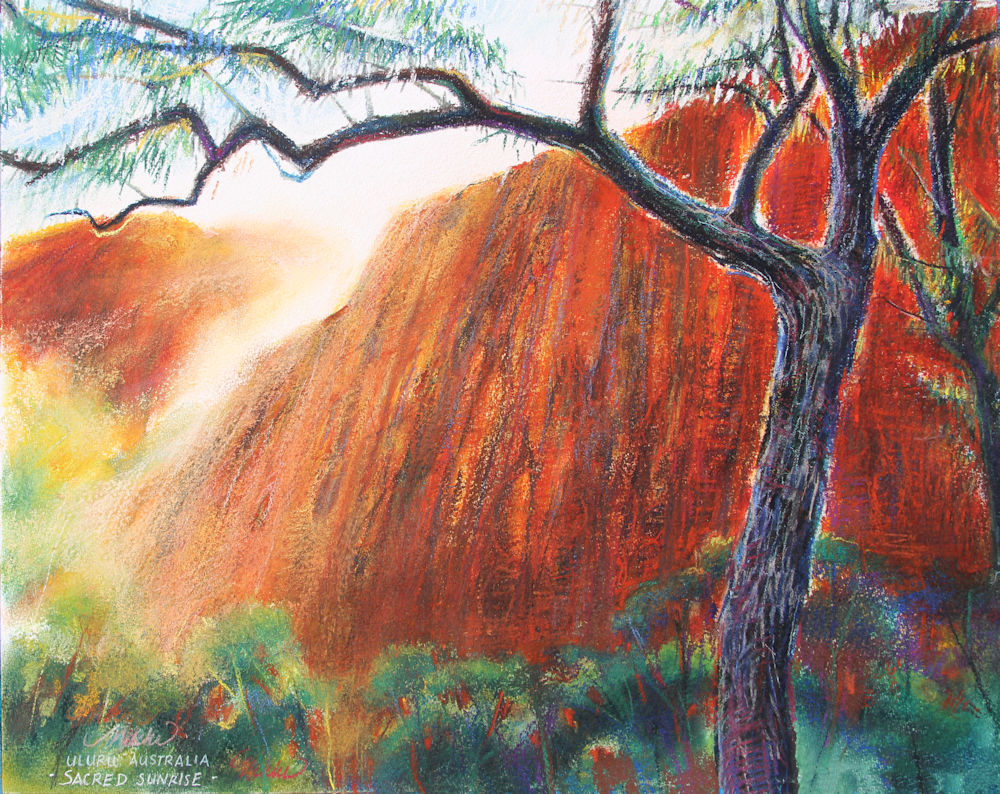
Sacred Sunrise: Uluru, formerly known as Ayers Rock, aboriginal peoples’ sacred ancestral grounds in Northern Territory, Australia. 16H x 20W inches soft pastels on 140 lb cold pressed premium watercolor paper. Framed size approximately 21H x 25W inches, white wood frame with crackle finish.
Progress on the Shiva and Moche Earplug Replica Chairs
Tuesday, May 24th, 2016
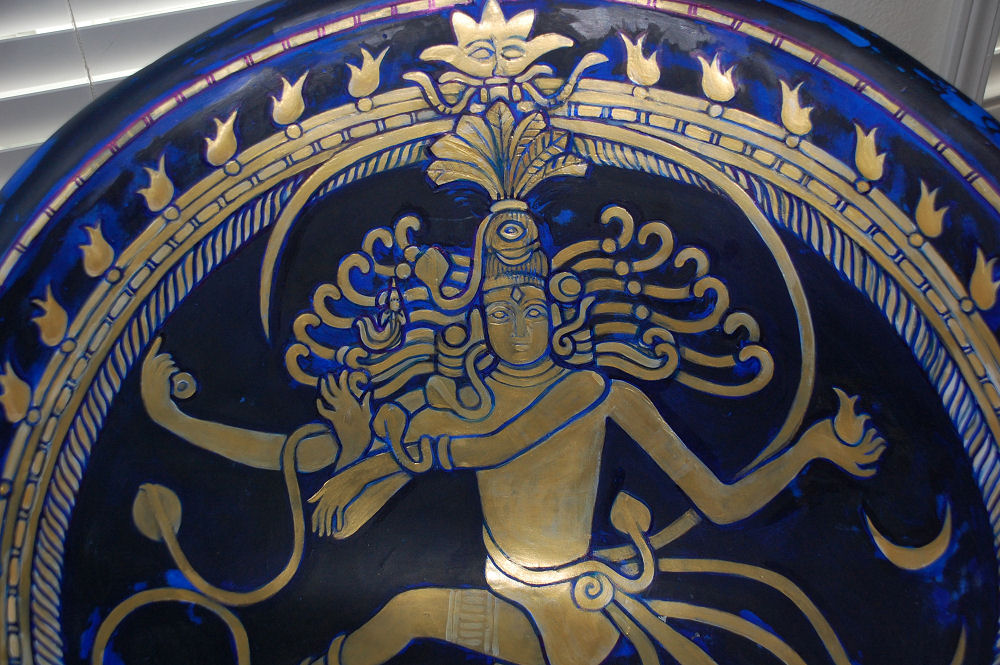
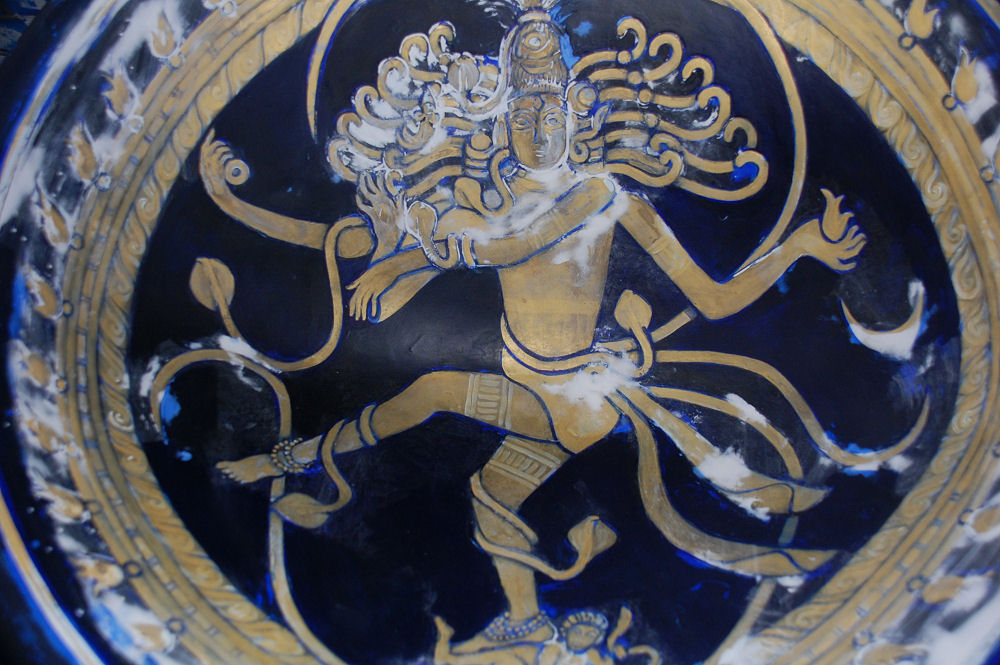
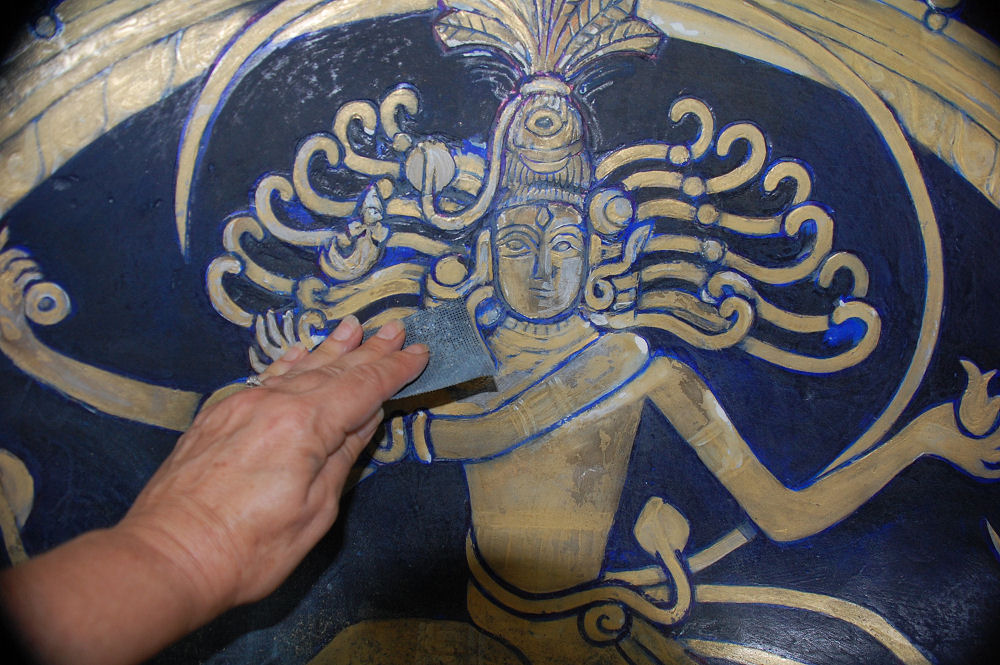
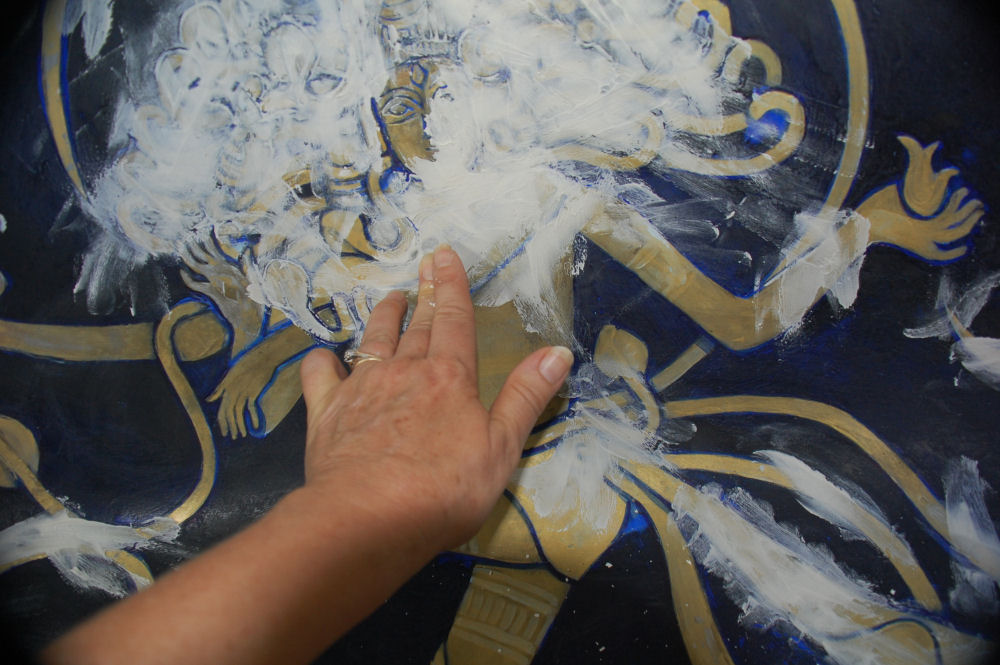
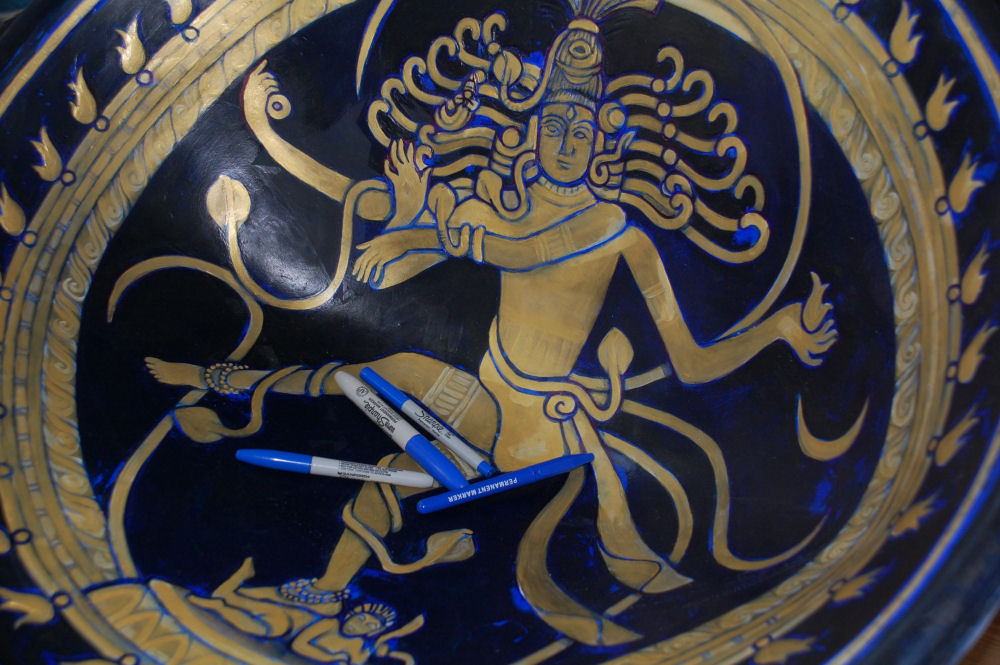
The extra time working on each the Shiva, Lord of the Dance and Moche Earplug replica chairs means 1) increasing familiarity with the authentic originals, and 2) layers of color and contrast add patchy timeworn impressions which might not have otherwise occurred.
The Shiva statue design is so complex, in retrospect it might have been enough to paint it on a flat surface, like the Mayan Bowl replica chair. Certainly it would have been easier and might be finished by now, but in artwork, I am not always necessarily seeking the easiest way through. Ease is usually the result of something already learned. The point is to discover how to do something, learn how to resolve issues that are presented and/or self-imposed, and the energy is driven by those challenges.
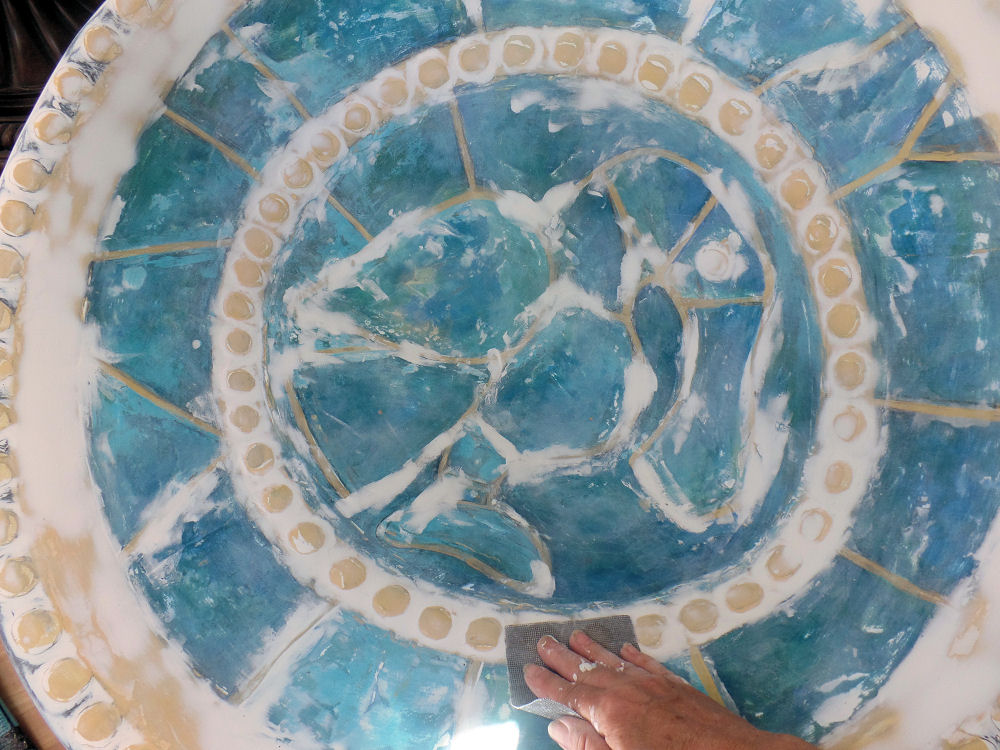
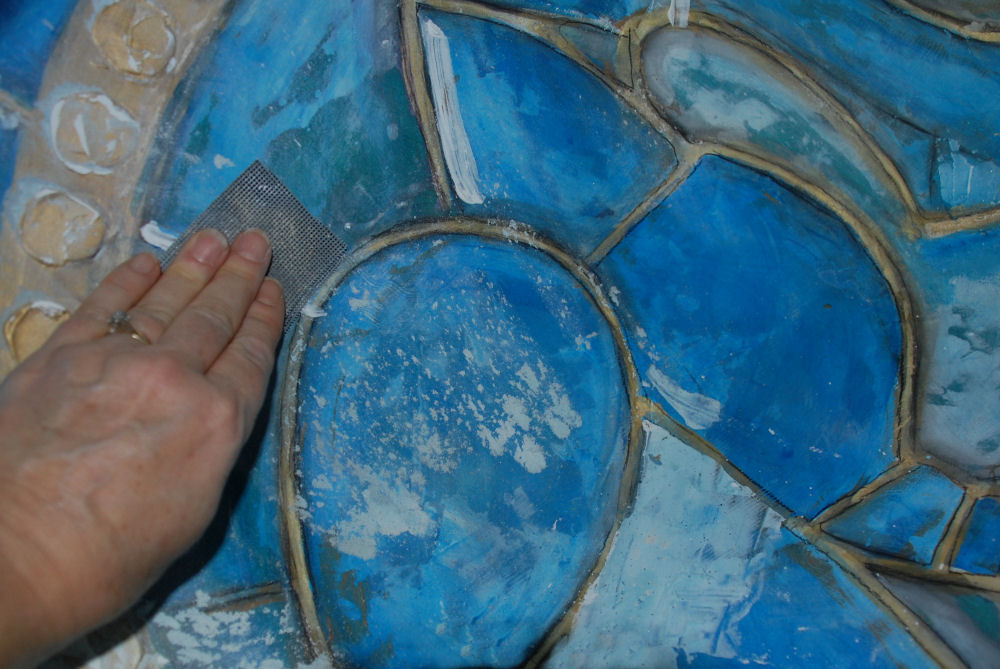
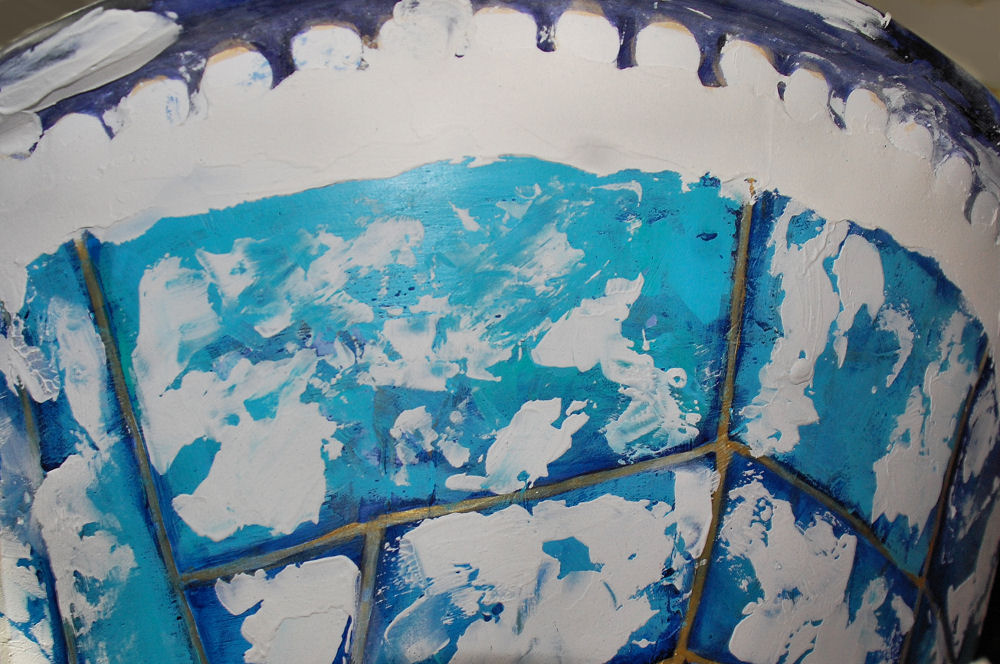
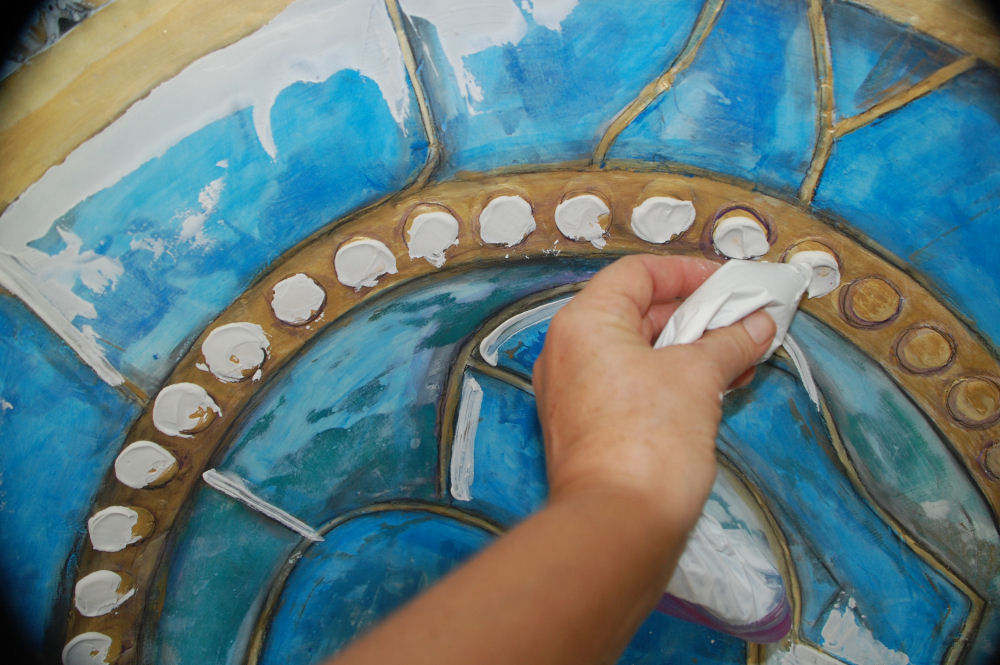
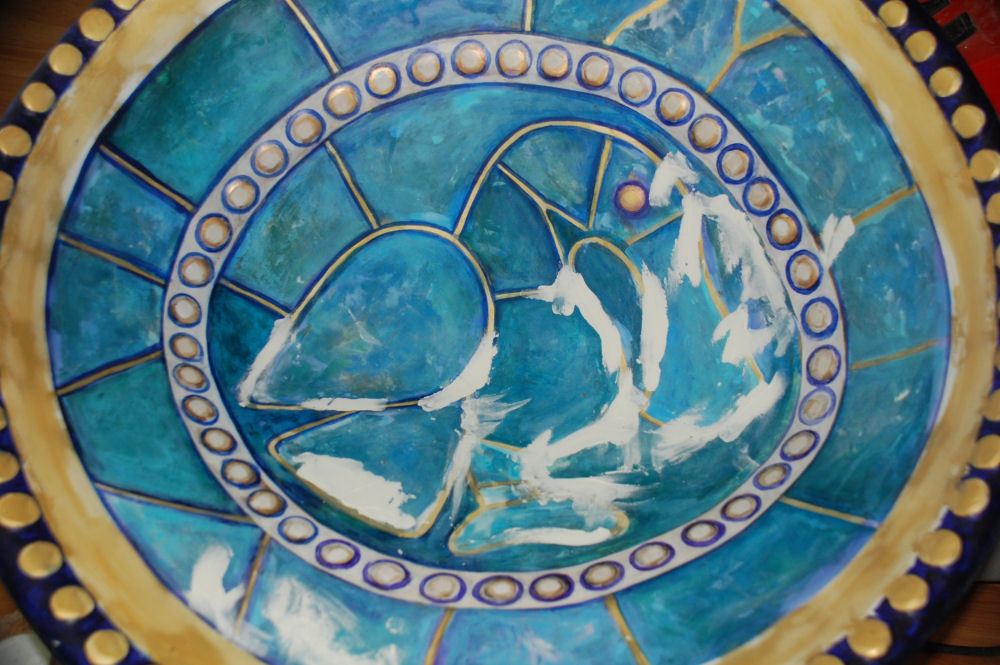
While staying true to the original concepts, I also applied artistic licence since the chairs are unique interpretations in their own right, so some of the designs are improvised slightly, like the ring of fire around Shiva, and the faux turquoise inlay design on the back of the Moche Muscovy Duck chair.
Some issues I’ve encountered: The water-based metallic gold paint reflects off every bump, dries and clumps quickly, and does not spread evenly compared to other acrylics colors even with additives, and the effects of build-up require extra sanding to keep the surface smooth. The overall sculpted effects of carving didn’t seem to make a difference aesthetically so I finally abandoned the idea last week. A lot has been filled in, but some carving is left to keep the hand-worked appeal.
Moche culture jewelry: Ear Plug replica Chair
Saturday, May 2nd, 2015
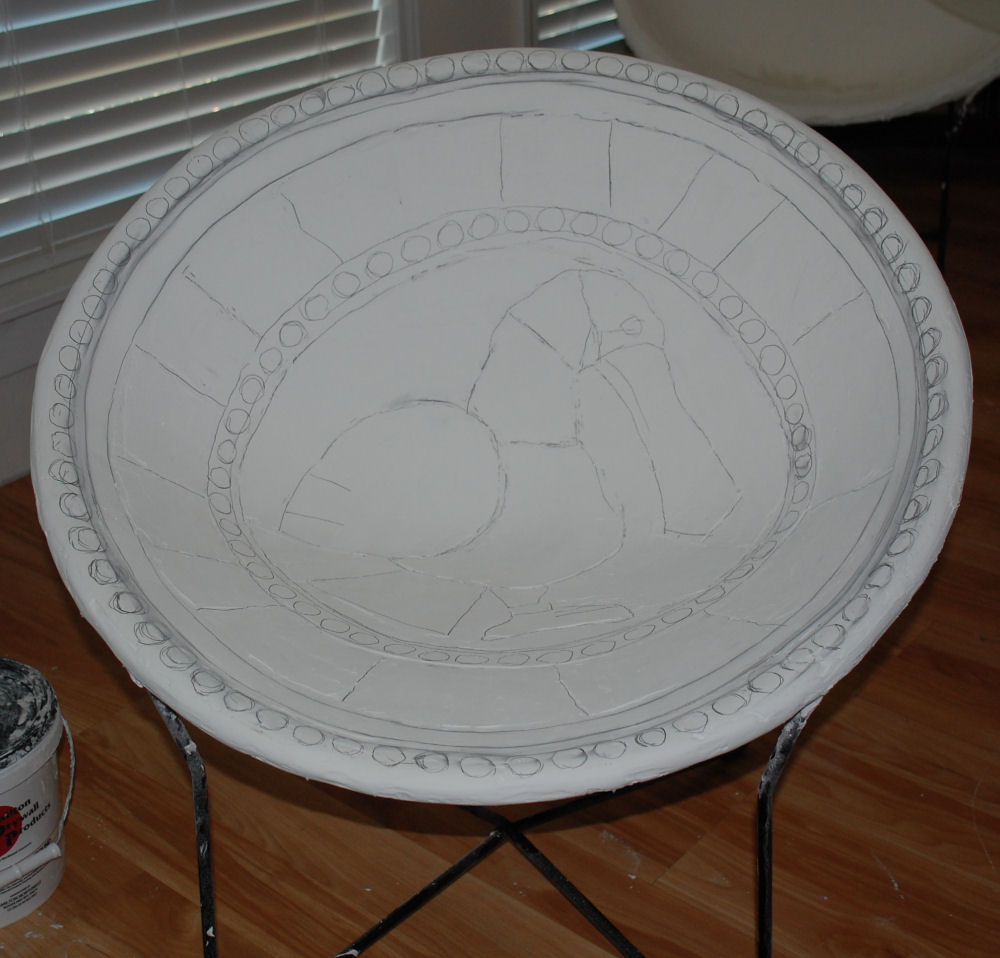
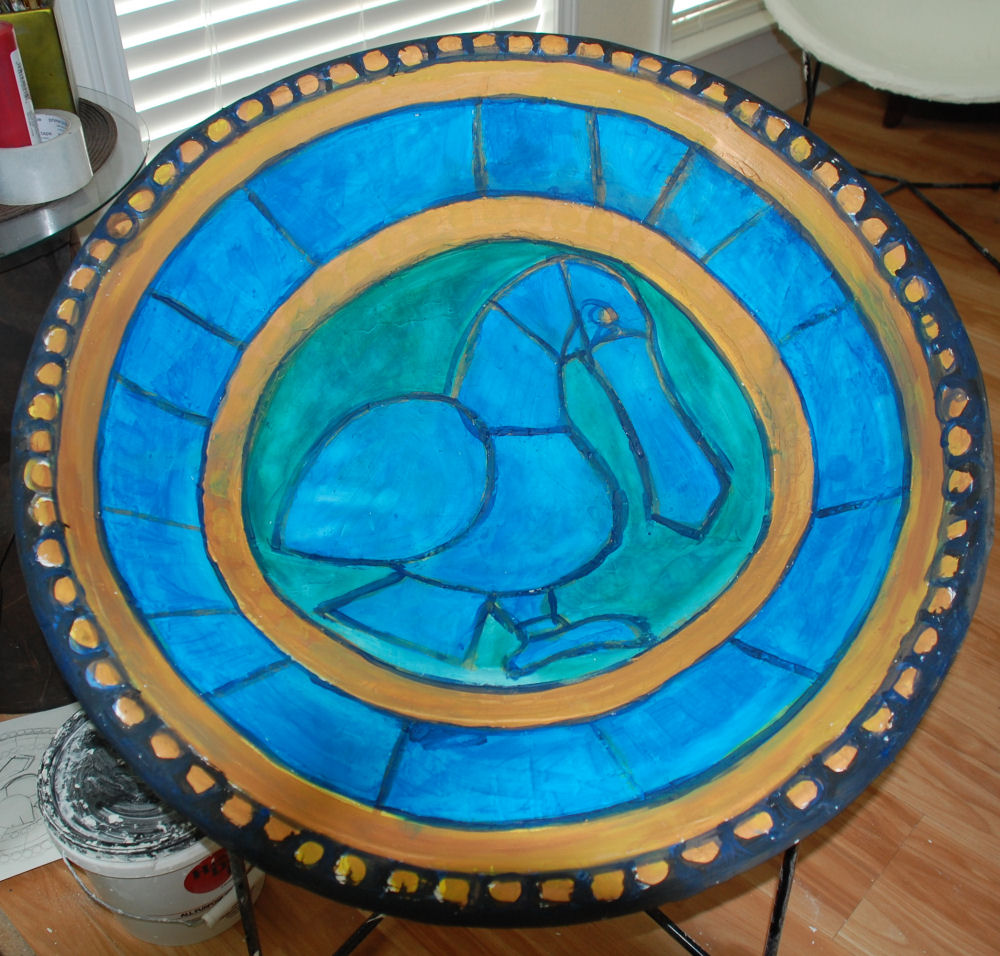
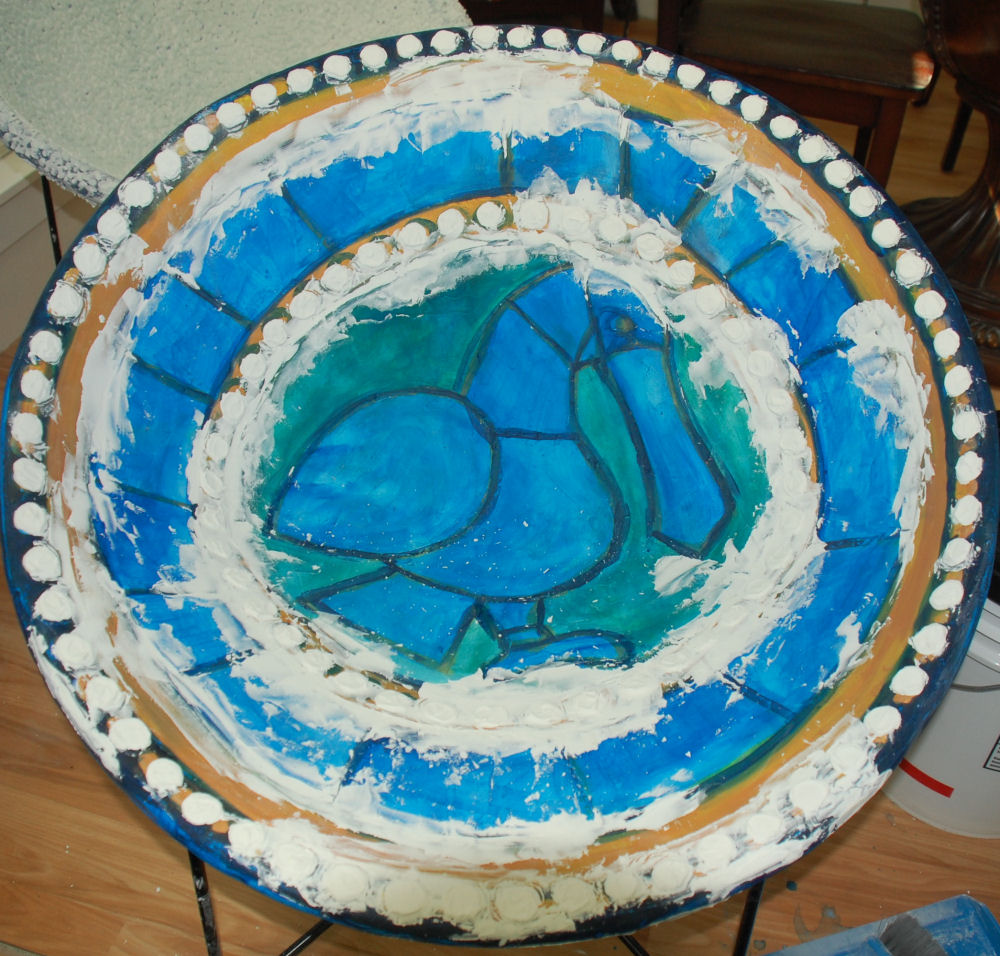
Started Moche Ear Plug replica chair, faux turquoise and gold, 29 x 29 x 29 inches mixed media furniture.
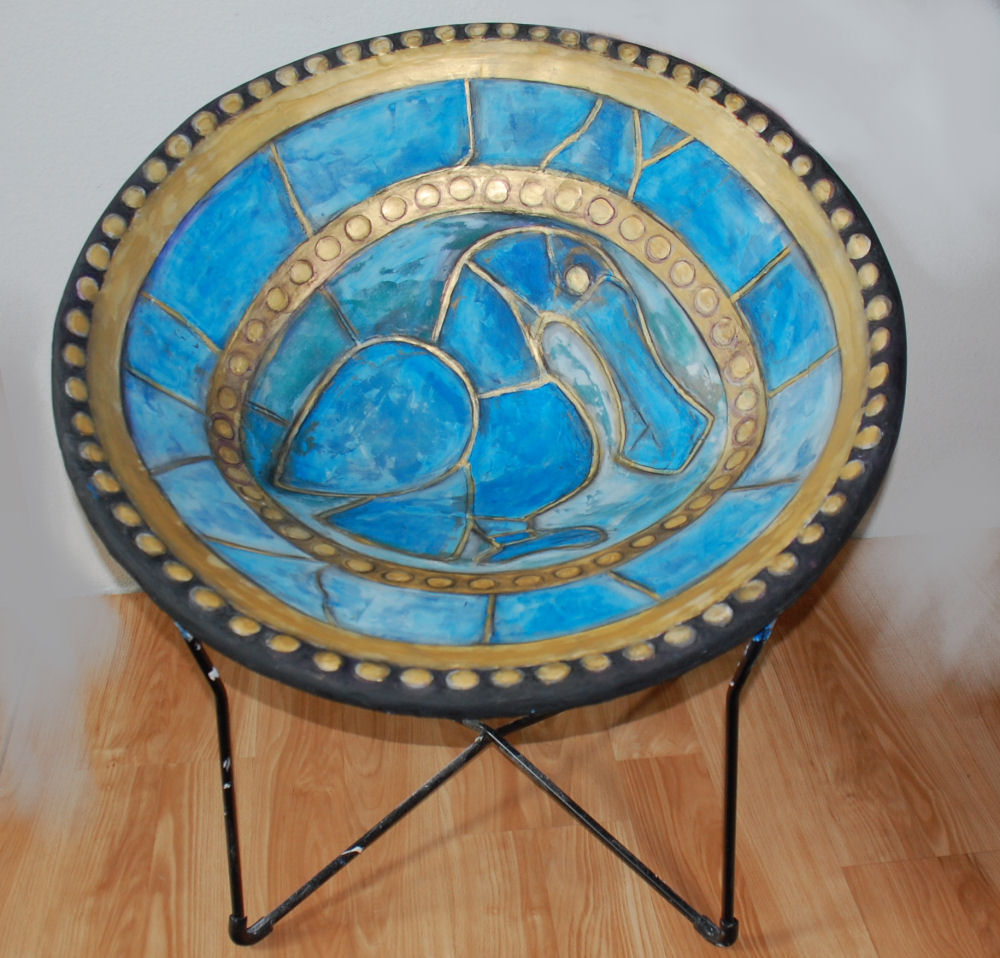
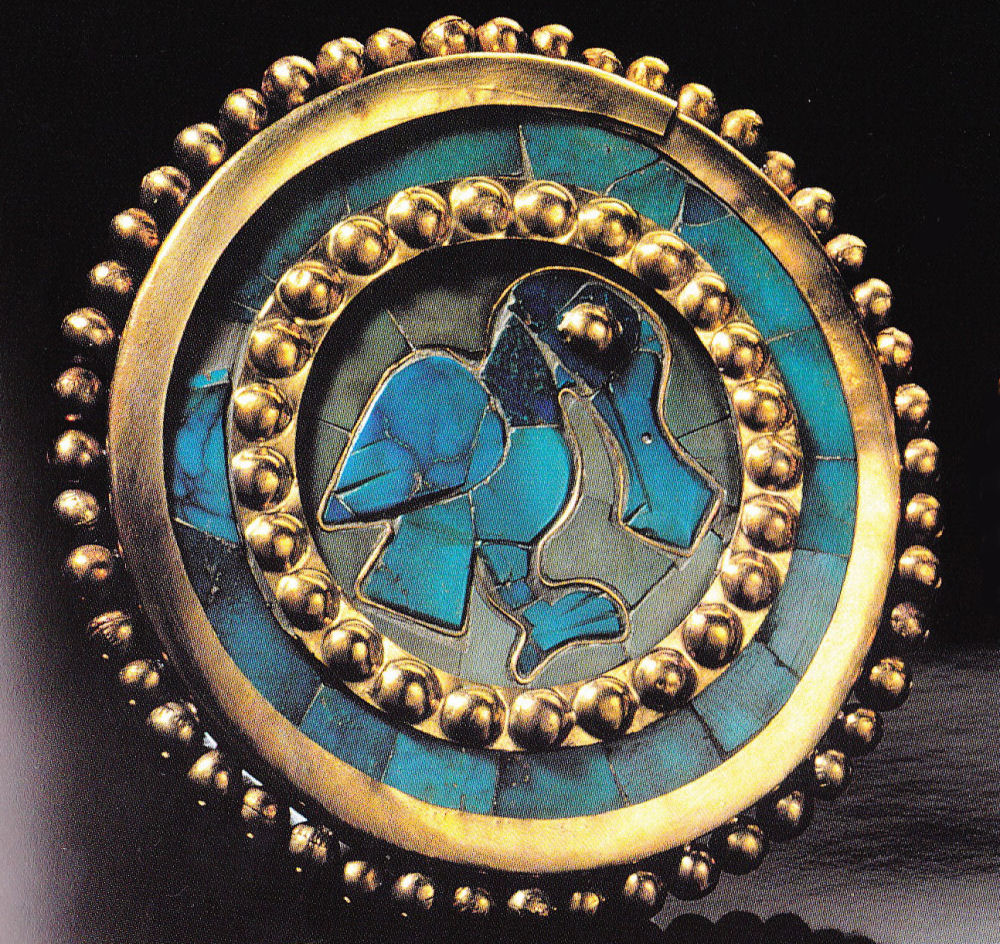 The Moche culture lived on the north coast of Peru between 100 BC and AD 700. With no writing system, they left incredible representations of their activities through art on clothing, pottery, jewelry, architecture, and hunting weapons, illustrating themes like ceremonies, supernatural beings and warfare. This chair is a replica of an Ear Plug – one from a pair found in the tomb of the Lord of Sipan, one of two large tombs discovered in 1987 just north of the village with the same name. Accompanied by sacrificed members of his court and wearing beautifully crafted cotton garments, the highly regarded king died at 30 years of age and was buried with ornaments, carefully placed crowns and various types of jewelry made of gold, gilded copper, shell, feathers, and precious gems. Over 250 ceramics were found, as well as figurines, banners, helmets, scepters and rattles.
The Muscovy duck was a symbol of water abundance to Moche society, and they revered gold as symbol of the light and sun. The color gold is associated with higher ideals, spirituality, wisdom and understanding. For thousands of years, Turquoise mining and adornment has spanned all cultures, prized as a symbol of nobility, invoking luck, protection, and the power of immortality.
I love the idea of incorporating arts and cultural history in my work somehow. The up-cycled chairs are the perfect place to do this. Here are some examples of the influence of history on previous art work.
New Chairs in progress – first, Shiva as Nataraja
Friday, May 1st, 2015
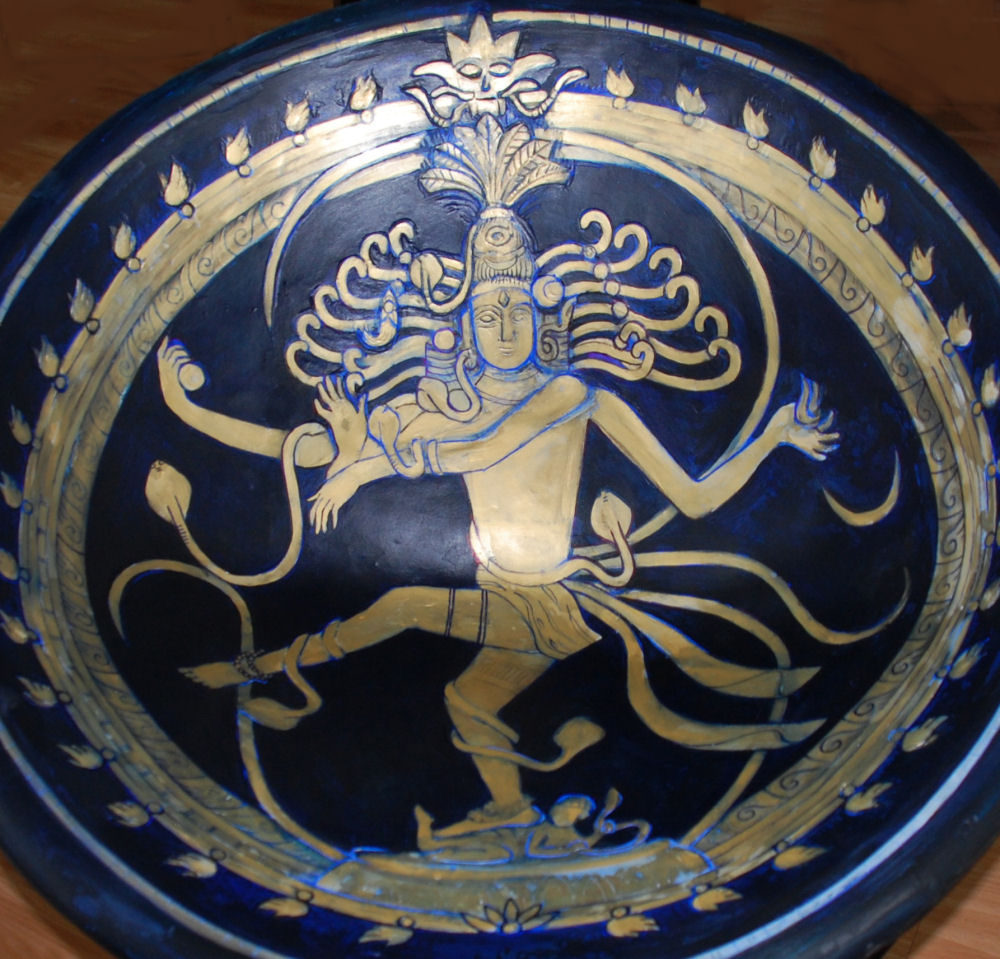
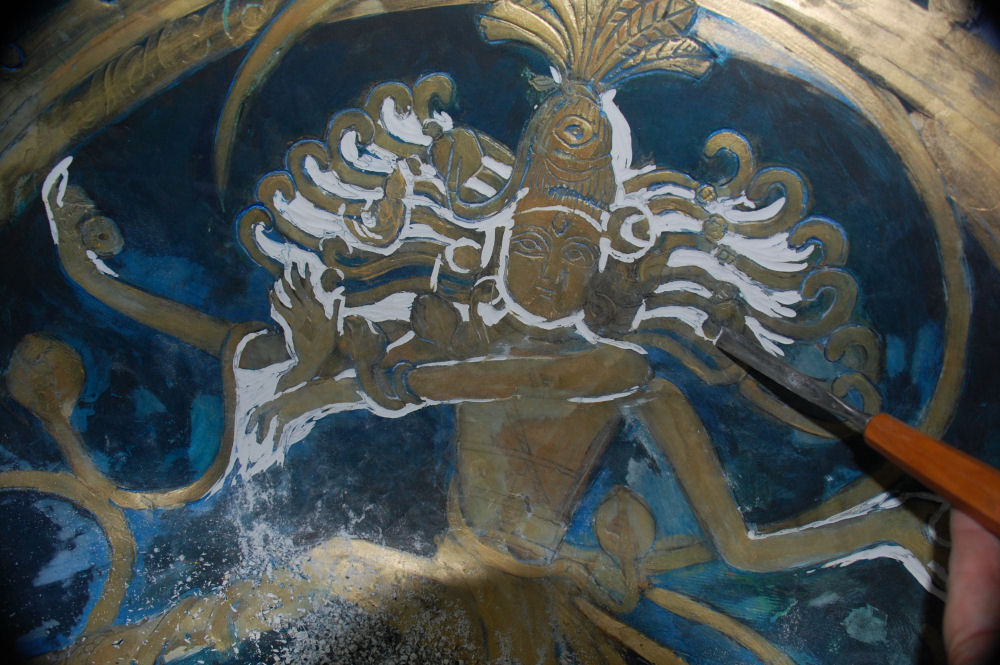
Shiva as Nataraja chair in progress
The Lord of Dance symbolism
Eastern philosophy is full of symbolism for concepts much deeper than words could ever express. The teachings are so complex but beautifully simple at the same time. Divine concepts are depicted in human forms with worldly items to help us identify somewhat, and increase our understanding toward making healthy decisions in our lives – for mind, body, and soul.
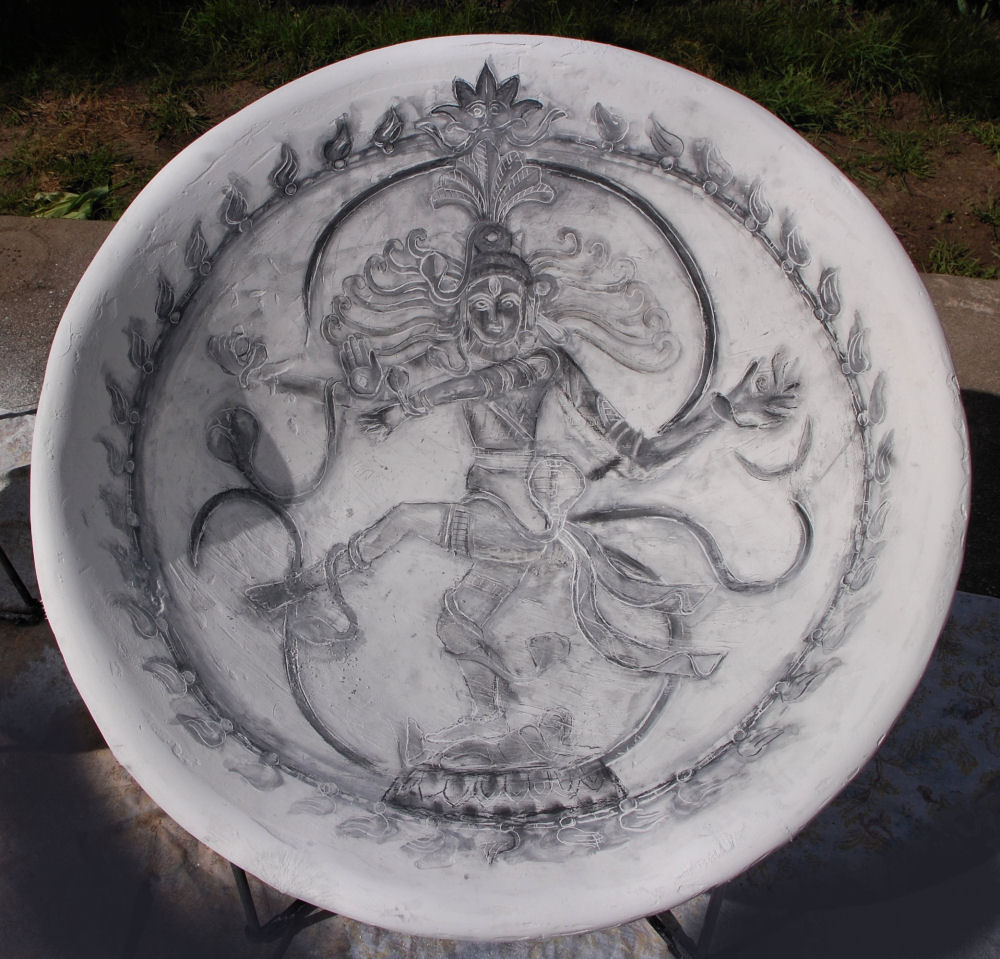 Sculptures, pictures, and literature are charged with multiple meanings and contradictions conveying the extremes in Life, like the existence of intense joy and pain, and the importance of balance in day to day living, and practicing a middle road of contentment. The interpretations here only outline the more prominent symbolism of this famous icon. As research continues, this article will elaborate on the most important symbols of this sculpture.
The purpose of the dance is to release us from our ignorance and entanglement in the world of opposites, all set within the circular, rhythmic motion of the universe. We are to acknowledge, yet remain detached by their effects. It is said that Truth requires detachment and at the same time, knowledge and acceptance.
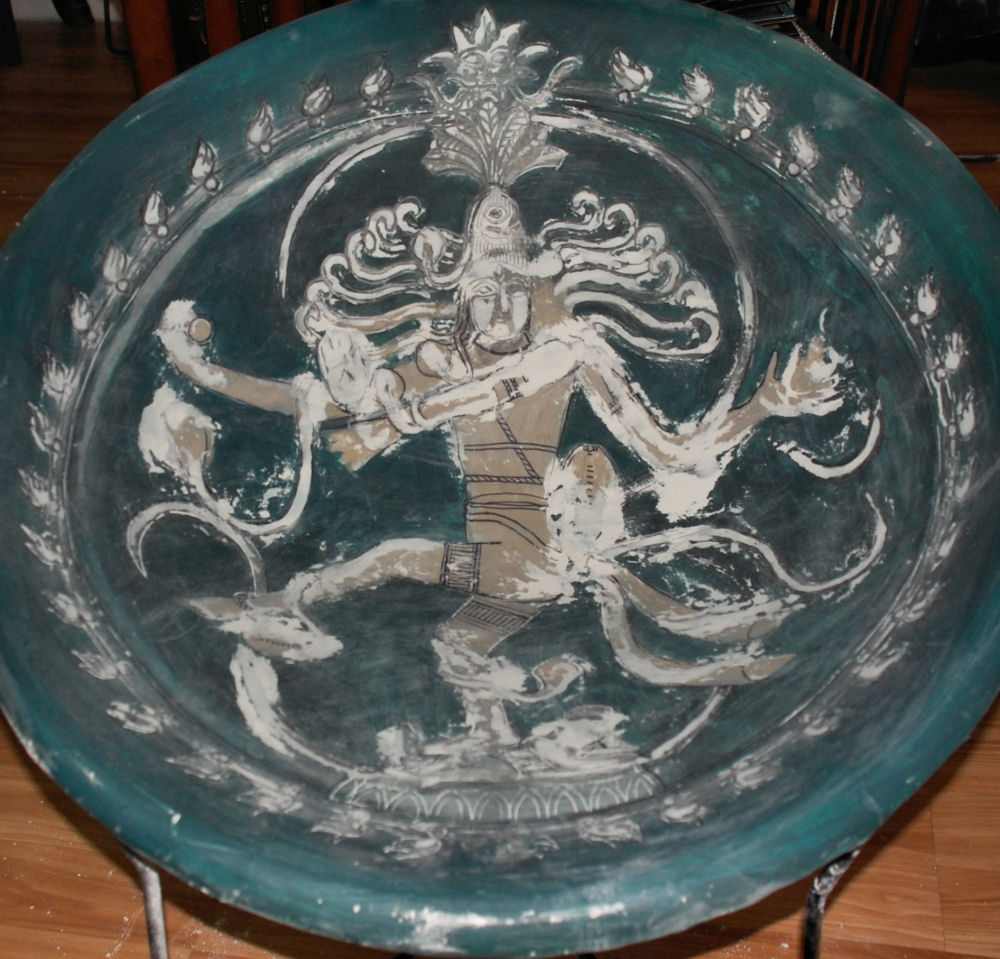 There are different names for the Hindu god, Shiva in his various forms. Though an ascetic, Shiva’s role is as householder, implying that we need not leave society to be devoted to following principles of Dharma; conduct; right way of living. In the aspect depicted here, Lord Shiva creates, sustains, and destroys life. As The Nataraja, he dances within the world of illusion, represented by an outer ring of fire. There is an inner ring of water, and some statues show multiple rings of fire and water. As he victoriously dances upon the demon of ignorance, Shiva’s matted dreadlocks whirl about him, capturing a number of heavenly bodies, like the physical representation of the sacred river Ganges, which fell from heaven to earth, first landing in Shiva’s hair so as not to destroy it. The moon is symbolic of many things, such as seasonal changes, life’s rejuvenation and love, all kept active with this dance.
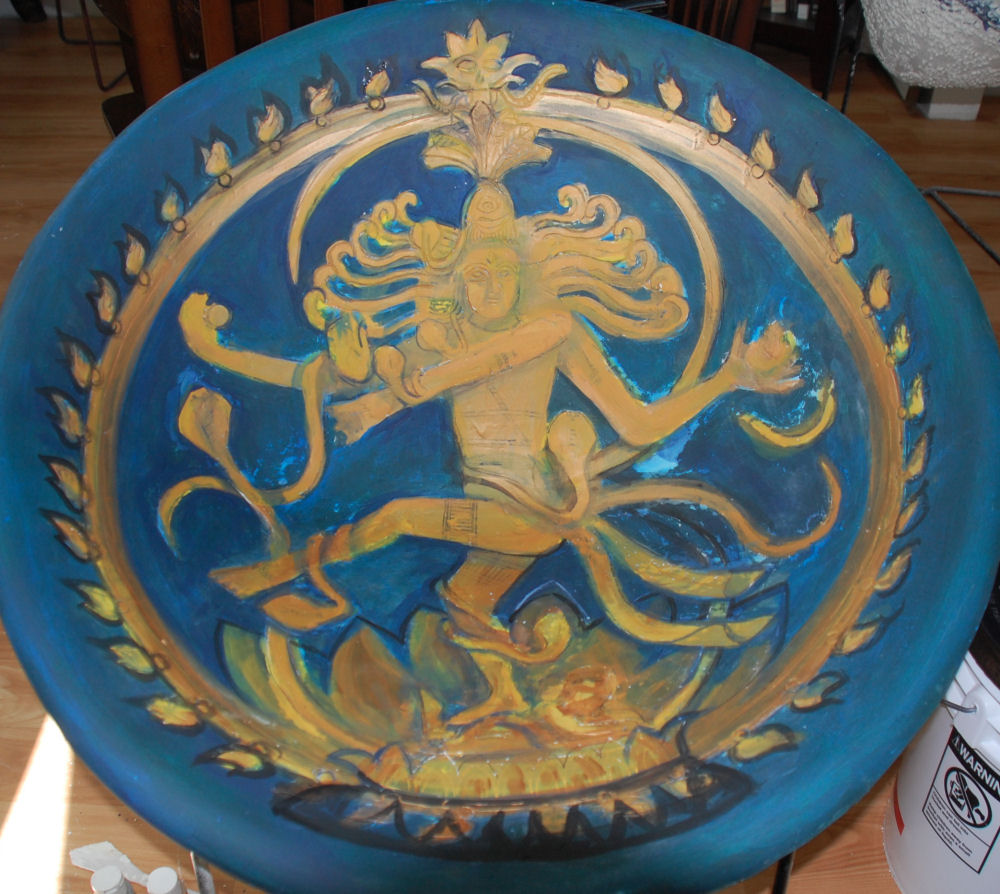 The gestures of the dance represent Shiva’s five activities: creation – symbolized by the drum, protection – the “fear-not” pose of the outward-facing hand, destruction – by the fire, embodiment – by the foot planted on the ground, and release – by the foot held above ground. Snakes coiling about his body symbolize the life force within all of us – the Shakti or kundalini – and display his power over the most deadly of creatures. Also, as snakes shed their skin, so do our souls reincarnate, according to Hindu beliefs.
The first four first four Chairs were up-cycled second-hand store original Solaire Chairs, but I have found a decent source for newer ones, so finally some ideas I’ve had for years can be realized, and special orders can now be filled. With thin applications of plaster then sanding and waiting for successive layers to dry, four new Chairs, 29H x 29W x 29D inches, started April 5th are now in progress, concentrating on the details of two while the others cure. One chair, the priority, is of Shiva as The Lord of Dance, and one chair is an addition to the Zen Garden series. The third is a large replica of a Moche culture (1st century Peru) earring/ear plug, and the fourth chair will portray an Easter Island theme, something I’ve had in mind since I bought the very first chairs in the 1990’s. Until refining stages, the four can be worked at the same time while plaster is added, cures and is sanded down.
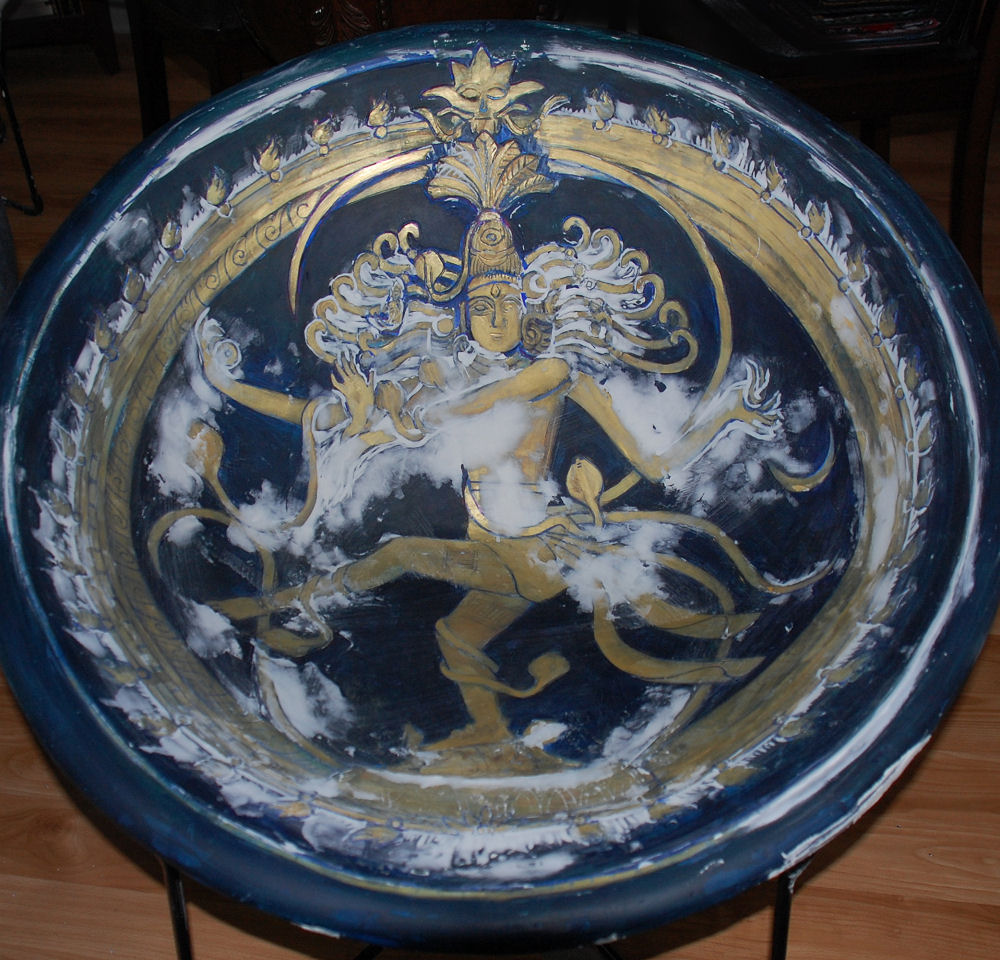 In this visual translation, the symbol of Om, first sound uttered in the Universe, weaves throughout, as if to involve a complete sensory understanding. All hand gestures have specific meanings, like the open front right hand facing us in “abhayamudra” gesture, denoting reassurance and safety for all who follow a righteous path. The drum in his right hand beats ceaselessly and infinitely, “Om”, while the universe is created, destroyed and recreated. The back left hand holds flames of fire, with both destructive and cleansing properties. The front left arm is held across the chest like an elephant’s trunk, with the hand pointing to the left leg and foot, lifted as a sign of liberation as the sacred elephant leads the way through jungles of ignorance.
The graphite design is first partially engraved with pencil in damp plaster, helping to show which areas to raise and hwich to recede. The addition, removal by sanding and carving gradually refine the design along with successive layers of paint which, when finished, the combination shows through as a mottled sort of patina, perfect for this subject. The icon on the finished chair will be gold-bronze colors, as the Shiva as Nataraj sculptures are traditionally made of bronze. Plans are for the background to be antiqued cobalt blue or teal.
« Previous Entries Next Entries »