
Conservation
« Previous EntriesOur Power, Our Planet
Friday, April 17th, 2026
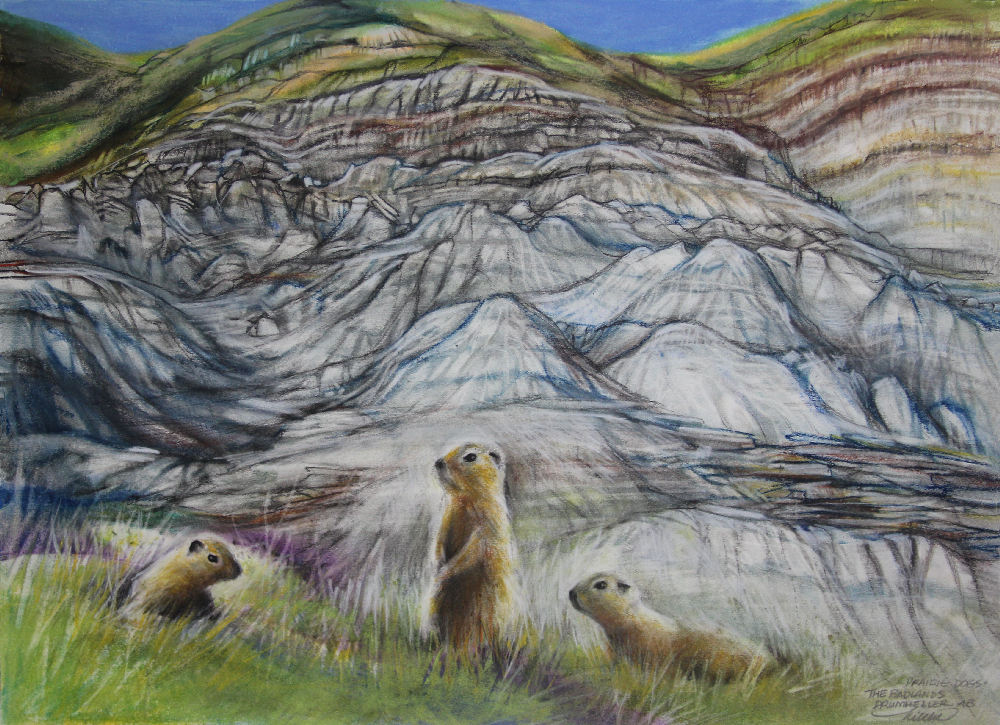
Prairie Dogs, the Badlands Hoodoos near Drumheller, Alberta Canada. 18H x 24W inches soft pastels on paper, 27H x 33W” framed size – white mat and custom-built white wood frame with crackle finish. Showcased online at KBM Art Gallery, presenting “Our Power, Our Planet 2026” April 18th through May 29th.
The Canadian Badlands in Alberta and Saskatchewan are recognized for unusual mudstone and sandstone landscape formations, and also for having the largest deposits of dinosaur bones in the world. The geography in Horseshoe Canyon, Alberta is ancient, unique and incredible, and the prairie dogs – locals call them “gophers” – are an impactful part of prairie ecology, having extensive influence on vegetation and animal life. They live in colonies of up to several thousand, burrowing in networks of tunnels where other ground-dwelling creatures move in, various grass species are maintained, and rainwater is reserved and redirected.
They are cute to be sure, sitting up on their haunches chirping at one another, but they can be a nuisance to farmers whose horses and cattle can trip in the holes. Pest control programs during the 1900’s meant their numbers have declined, which congruently reduced acres of grasslands they helped sustain. As their own highways became populated with humans and cars, particularly during Springtime they are a road hazard.
In Torrington, Alberta, one lady has found a creative way to utilize the unfortunate casualties. You must visit The World-Famous Gopher Hole Museum located in the middle of nowhere, in a small hamlet where there is not even a gas station, along a seemingly endless dusty gravel road about an hour Northwest of Drumheller. Gophers are stuffed, sporting handmade costumes and placed in small cubicles displaying historic scenes. Completely bizarre, but actually very well done and absolutely worth the conversation-provoking side-trip if you are planning to visit Drumheller and the Tyrell Dinosaur Museum.
Still Smoldering
Thursday, May 15th, 2025
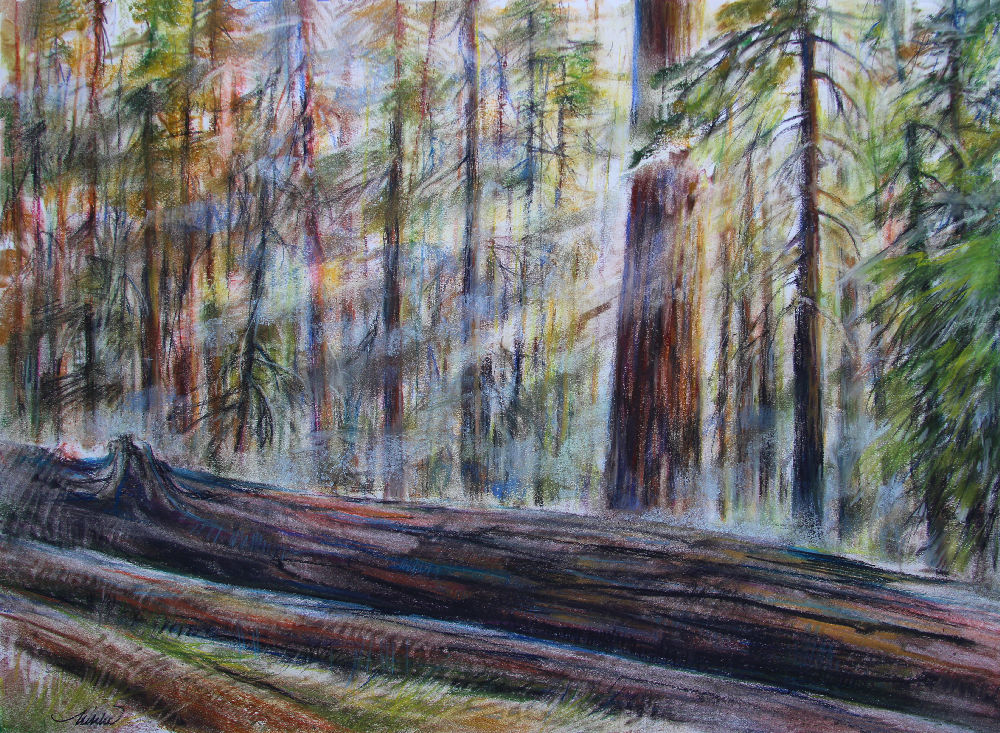
Still Smoldering, after forest fire in Sequoia National Park, CA – 18H x 24W inches soft pastels on paper, framed size 27H x 33W” white mat and white wood frame with crackle finish.
Leaves and Petals
Saturday, October 5th, 2024
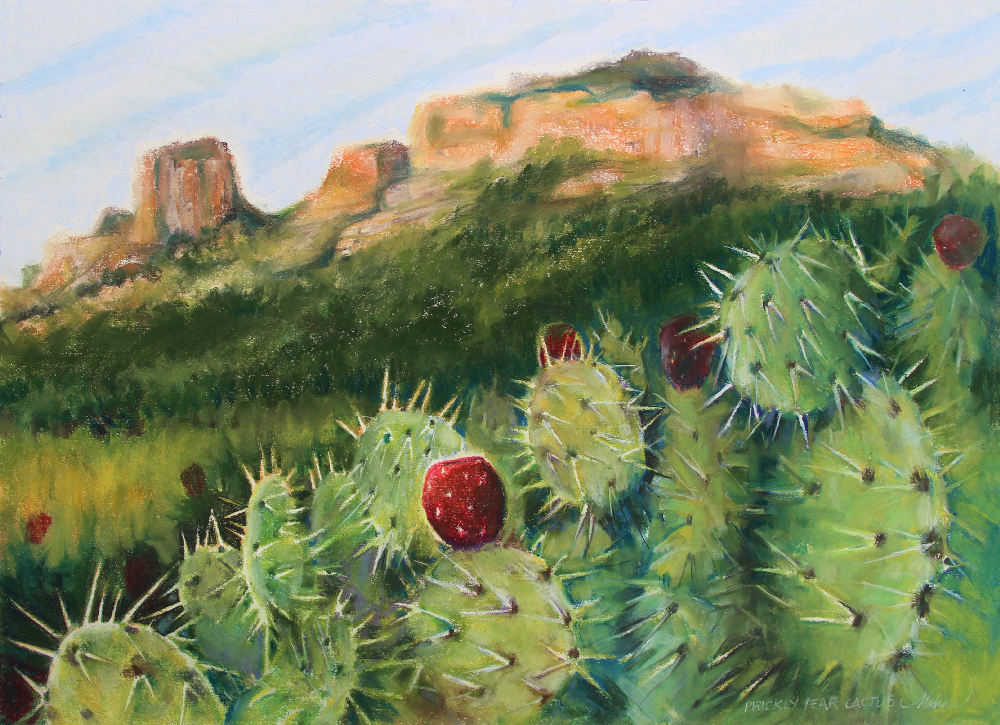
Prickly Pear Cactus (Sedona, AZ), 18H x 24W inches soft pastels on paper – 27H x 33W” framed, won Honorable Mention in Fusion Art’s 10th Annual Leaves and Petals Exhibition and competition.
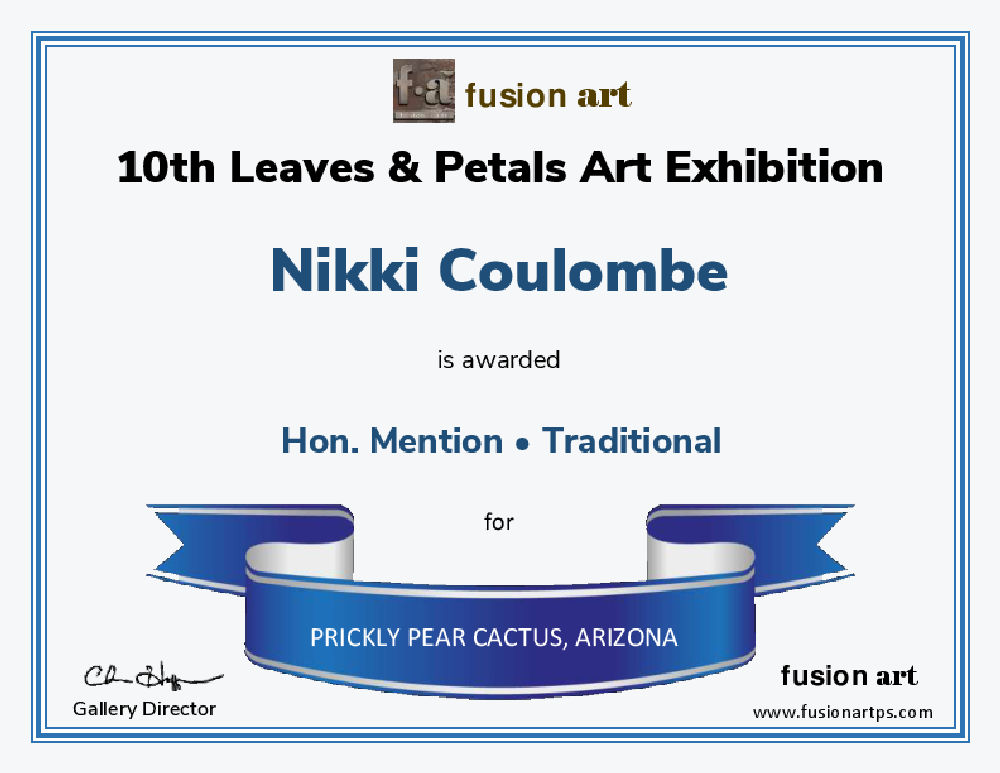 Prickly Pear Cactus is native to the Americas including Mexico, an important food source for desert animals and for humans, but now threatened to extinction by a cactus moth that has no known natural predators in the US. In 2021, a wasp was exported from South America to Texas to help control the spread of moth devastation, with some success.
Haystack Rock, Cannon Beach OR
Thursday, November 30th, 2023
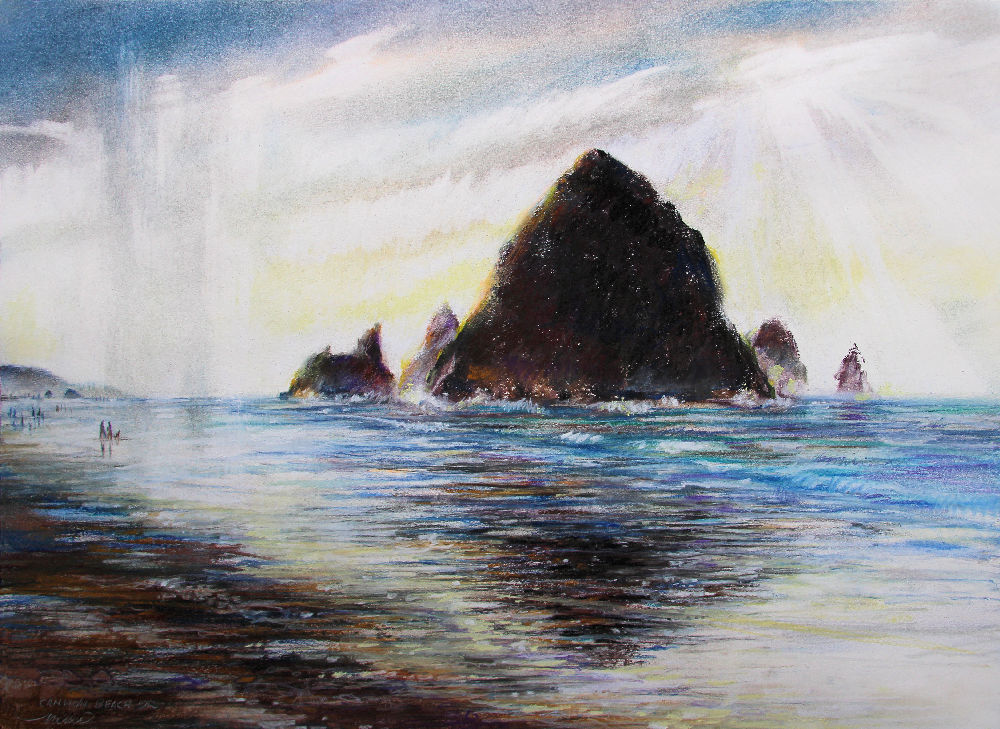
Haystack Rock, protected as part of the Oregon Islands National Wildlife Refuge, Cannon Beach OR, 18H x 24W inches soft pastels on paper. Framed size 27H x 33W”.
Kootenay National Park
Friday, June 9th, 2023
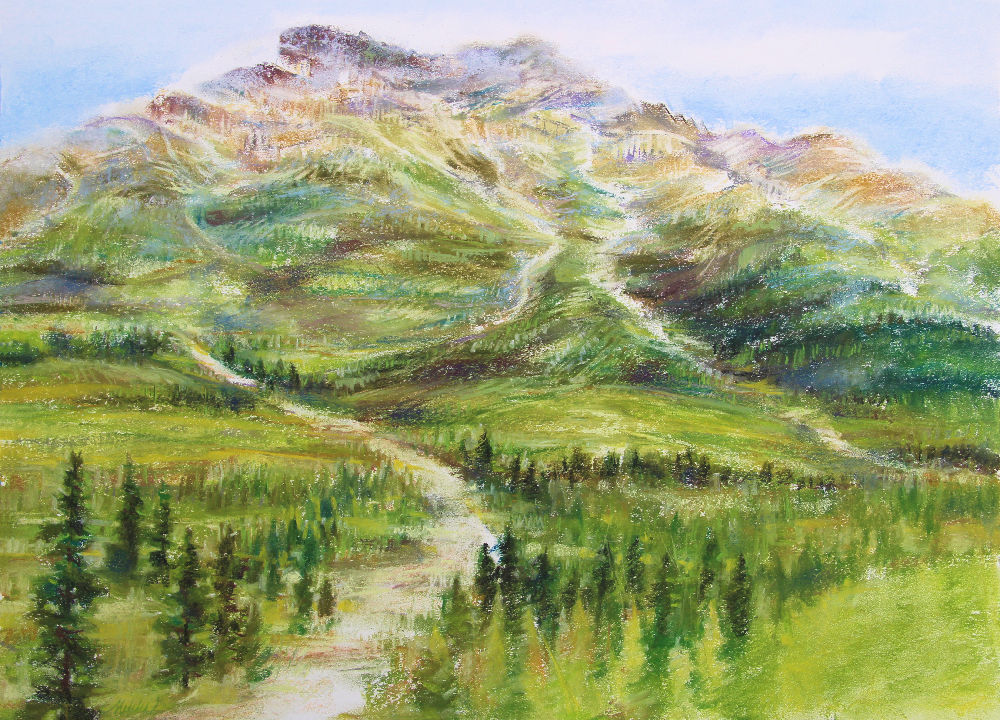
Kootenay National Park, one of seven provincial parks that form the Rocky Mountains World Heritage site in BC, Canada, 18H x 24W inches soft pastels on paper.
Exhibition: Emptiness
Friday, December 16th, 2022
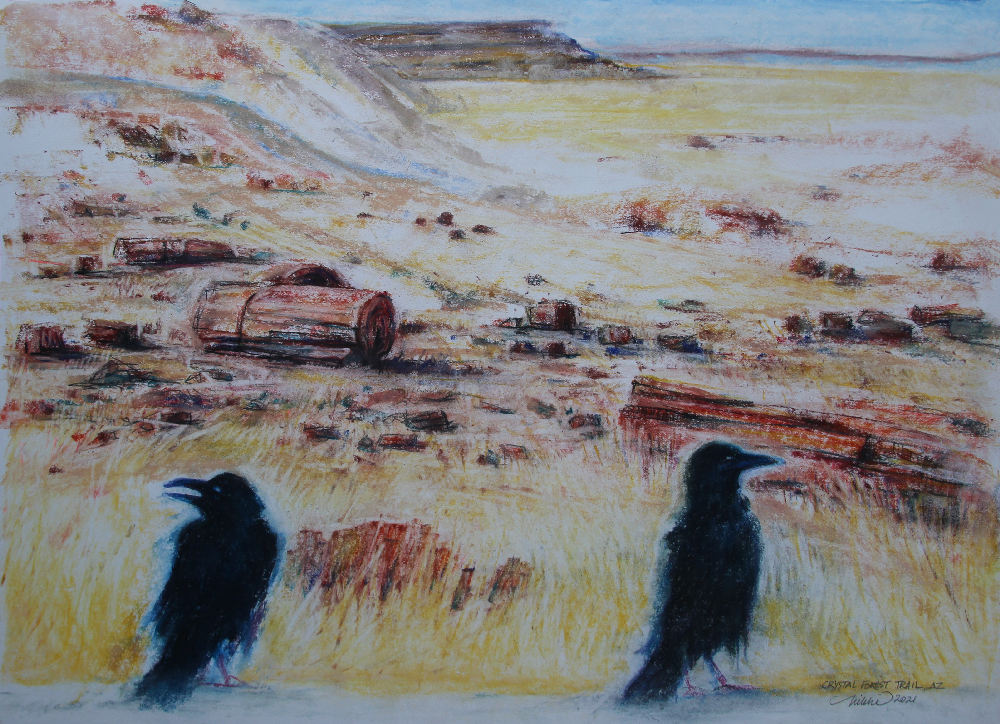
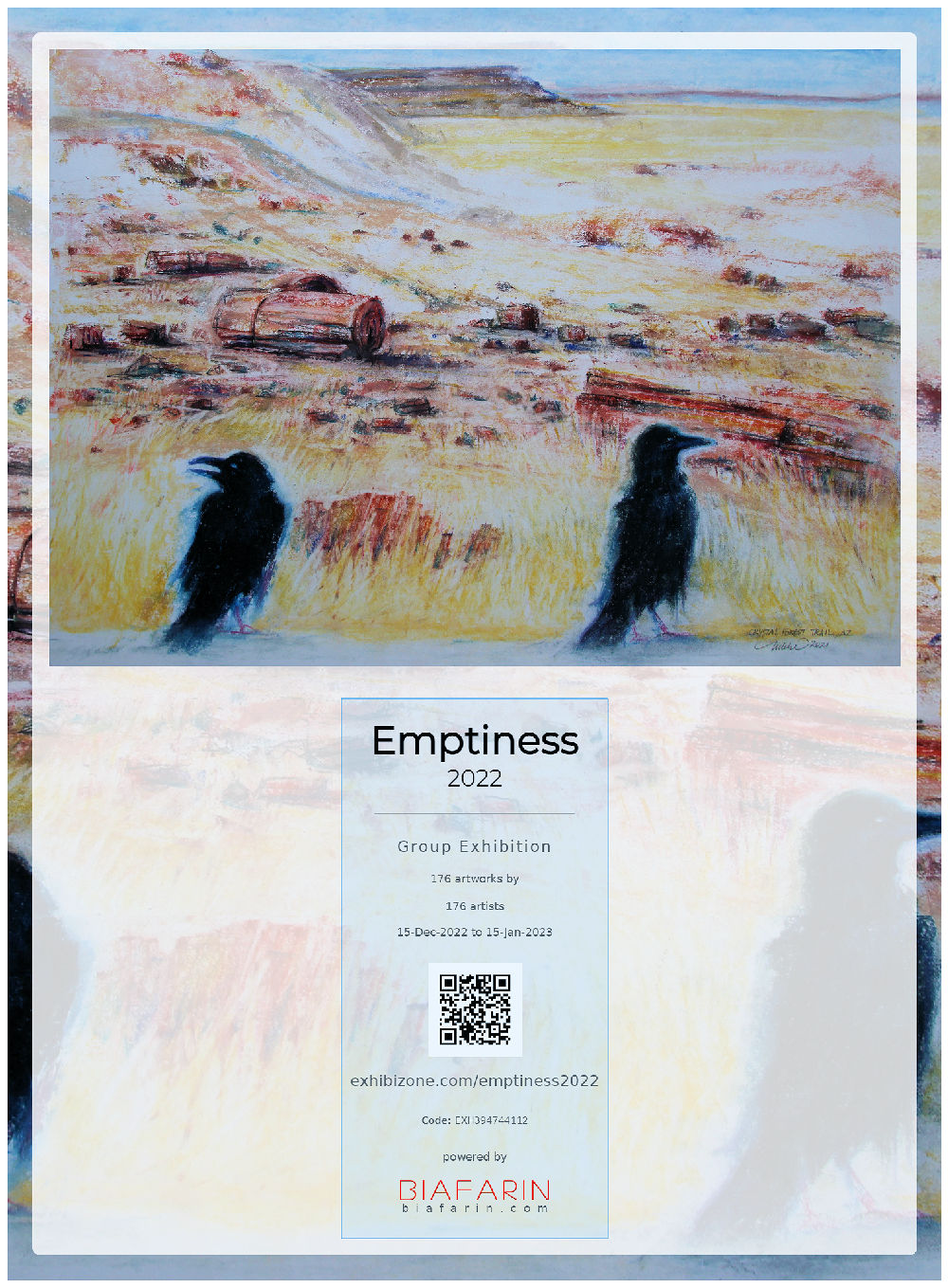 Showing online Dec. 15 – Jan. 15, 2023, Exhibizone’s “Emptiness” – Petrified Forest – Crystal Forest Trail, AZ – 18H x 24W inches soft pastels on paper. White frame with crackle finish, total size 27H x 33W inches.
This piece also won a merit award in Contemporary Art Room’s exhibition, “Trees and Fields”, showing online in December, 2021.
Douglas Fir
Saturday, July 30th, 2022
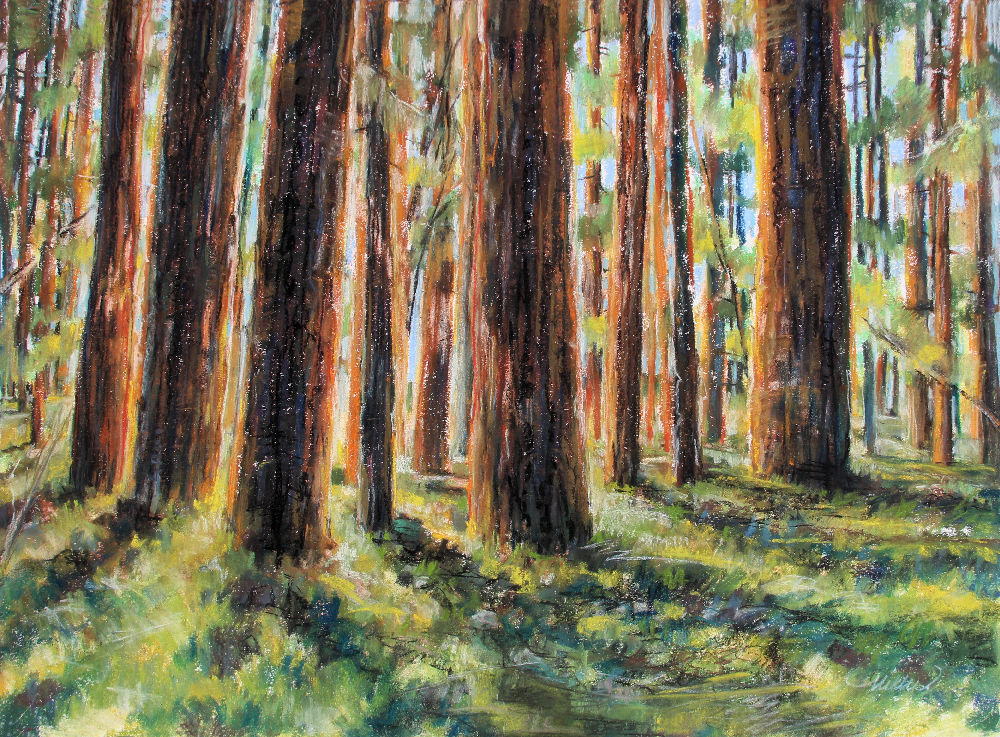
Douglas Fir, Salt Spring Island, BC – 18H x 24W inches soft pastels on paper
“The Coastal Douglas-fir (CDF) zone describes a unique set of ecosystems found only on southeast Vancouver Island, the islands of the Salish Sea, and the southwest coast of BC. CDF ecosystems are rare and highly endangered. These ecosystems include Douglas-fir forests, as well as Garry oak woodlands, wetlands, estuaries, and other unique communities of plant, animal, and fungi found nowhere else in the world.” Read more on the Islands Trust website
Camel
Saturday, April 30th, 2022
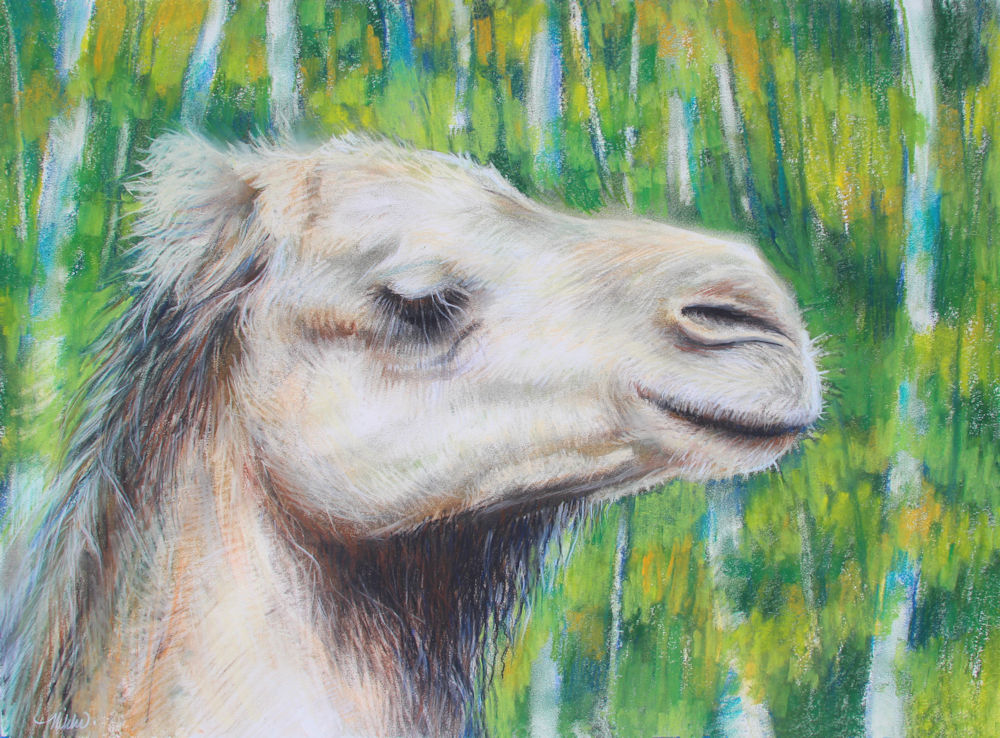
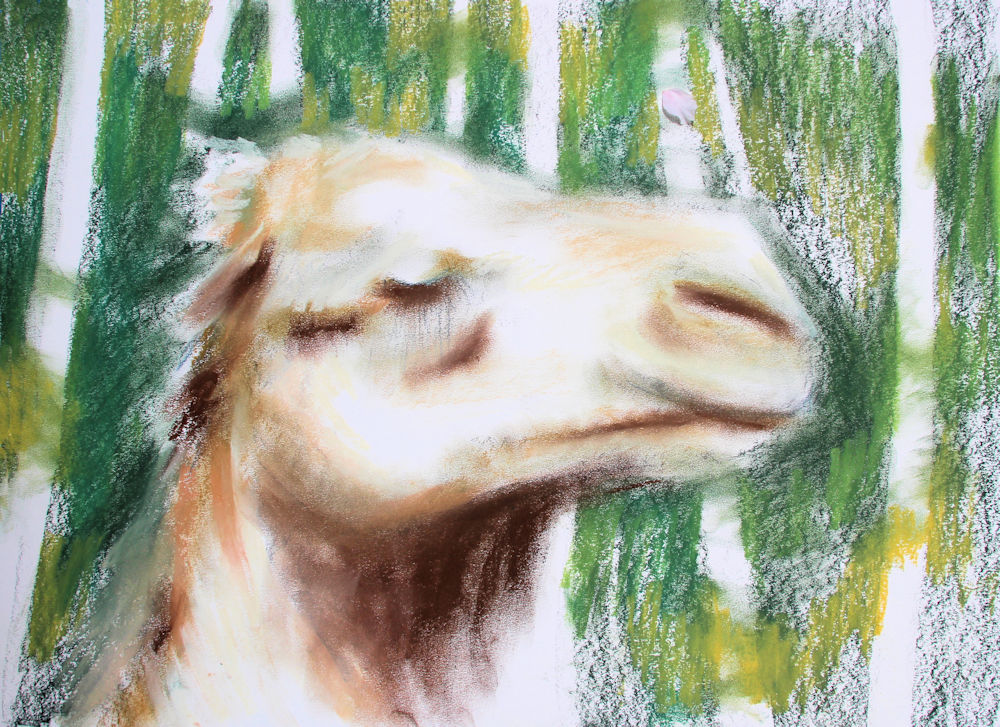 Camel at Gorge Wildlife Park, Australia, 18H x 24W inches soft pastels on paper. During the late 19th century, camels were imported to Australia from India and Afghanistan, so hundreds of thousands now roam ferrell.
Left, how I start most of my work: general shapes are outlined, and composition is roughly established.
The Grandfather Tree
Wednesday, February 16th, 2022
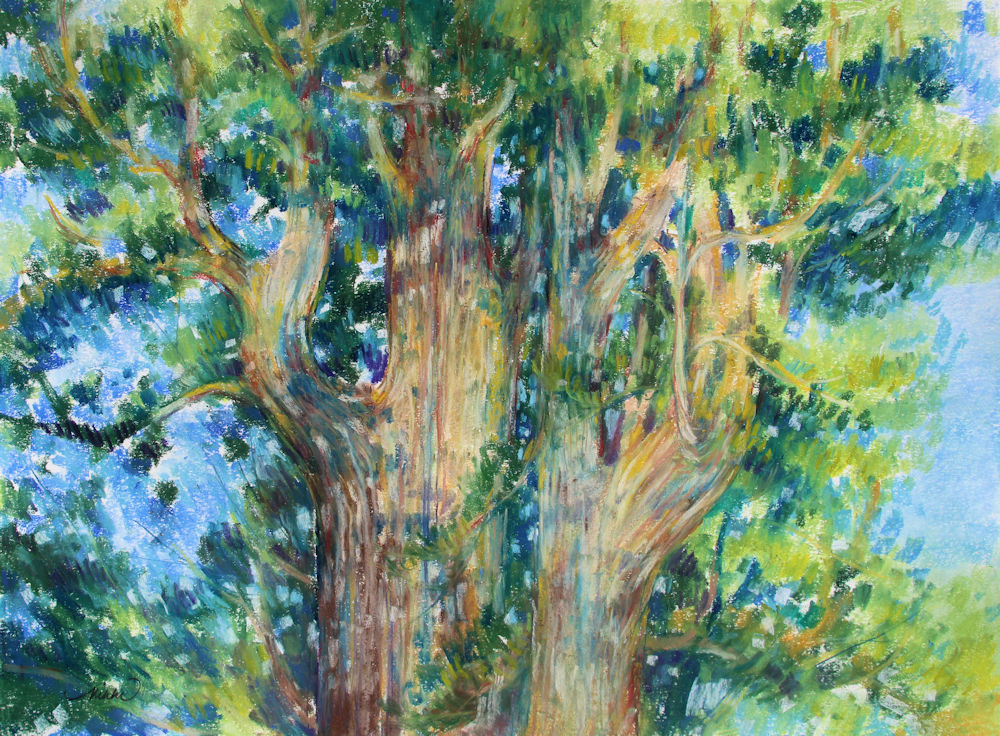
The Grandfather Tree, 18H x 24W inches soft pastels on paper. Estimated to be 1800 years old, this Redwood is 265 ‘ tall with a 24 ft. diameter, located along the Avenue of the Giants, Hwy 101 CA. Framed size 27H x 33W”.
Red Kangaroos and Wallabies
Sunday, February 28th, 2021
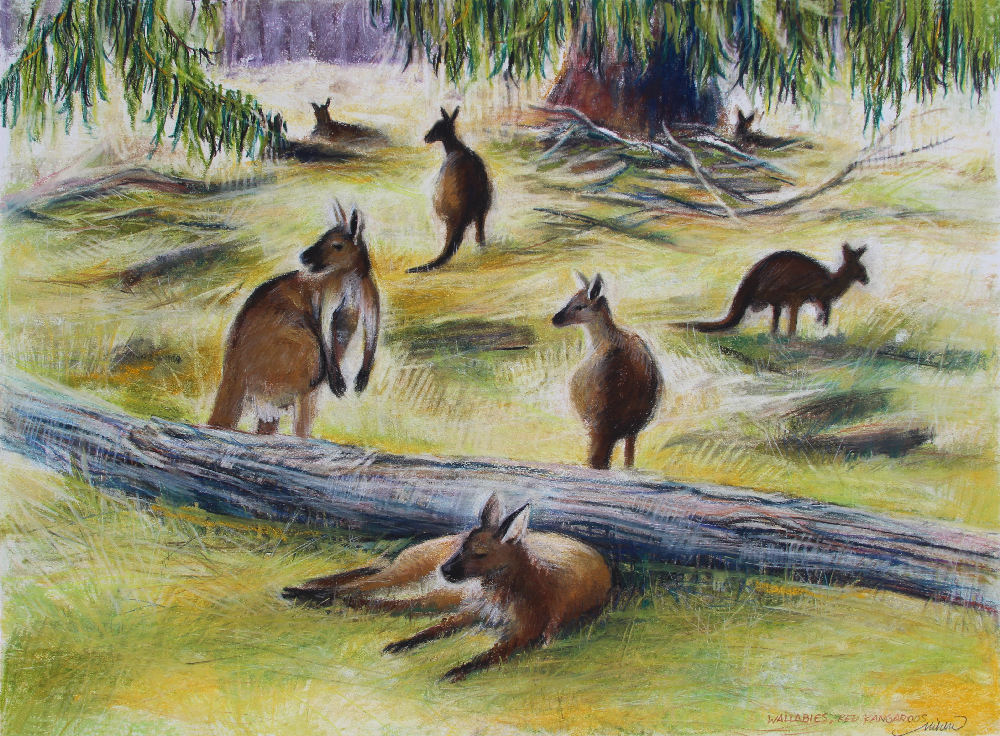
Red Kangaroos and Wallabies under a large Eucalyptus tree, Cleland Wildlife Park near Adelaide, Australia, 18H x 24W inches soft pastels on paper
« Previous Entries