
B.C.
Next Entries »New chair started: Salish Wooden Whorl
Sunday, December 14th, 2008
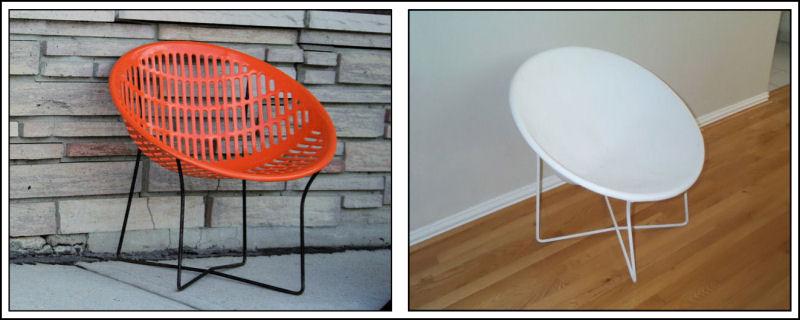
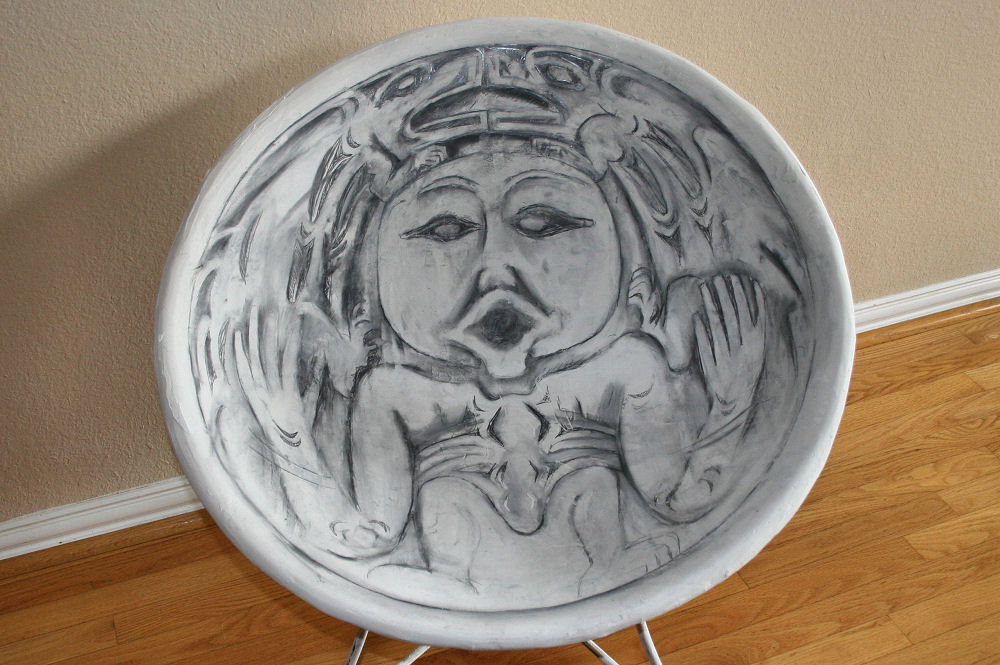
This functional replica of a Salish Carved Wood Whorl re-utilizes a 1960’s plastic lawn chair, 29H x 29W x 29D inches that was considered Art in its own day. The refurbished chair has woven canvas strips and white glue applied paper-mache style over the entire plastic top and bottom. Multiple layers of wall plaster are sanded in between coats. The design is sketched with graphite then painted with acrylics, and drawing is continually adjusted as layering of materials continues.This is the second chair of four in the historic Art-themed series. The other two chairs are in the earlier stages of progress.
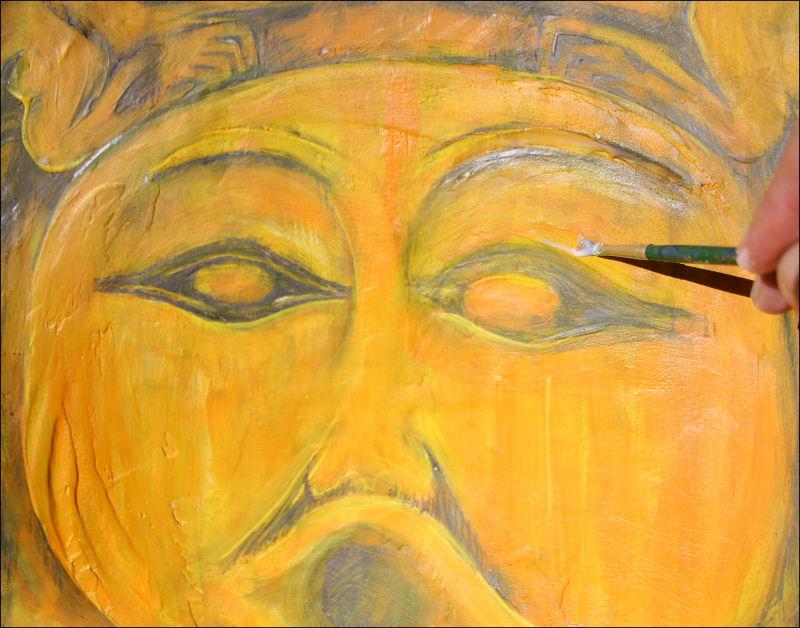
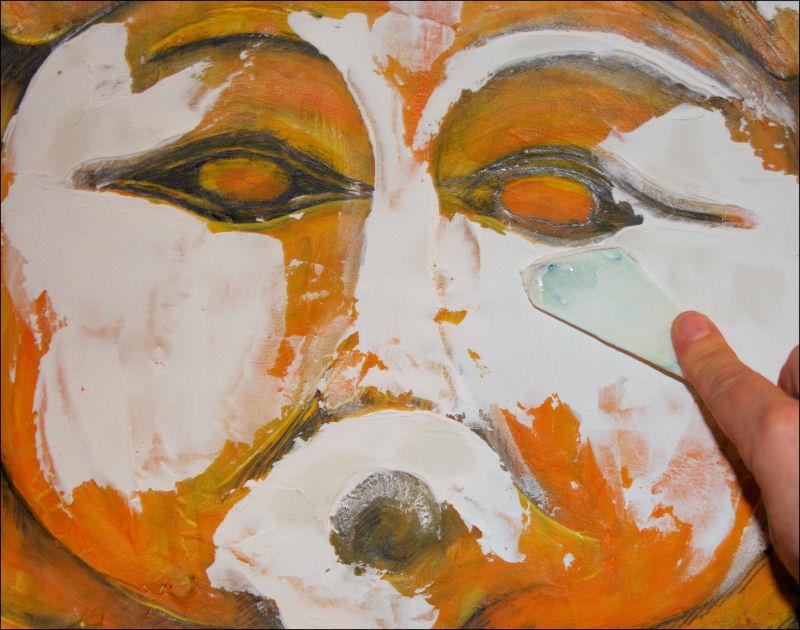
Going for the magic every hour
Friday, August 15th, 2008
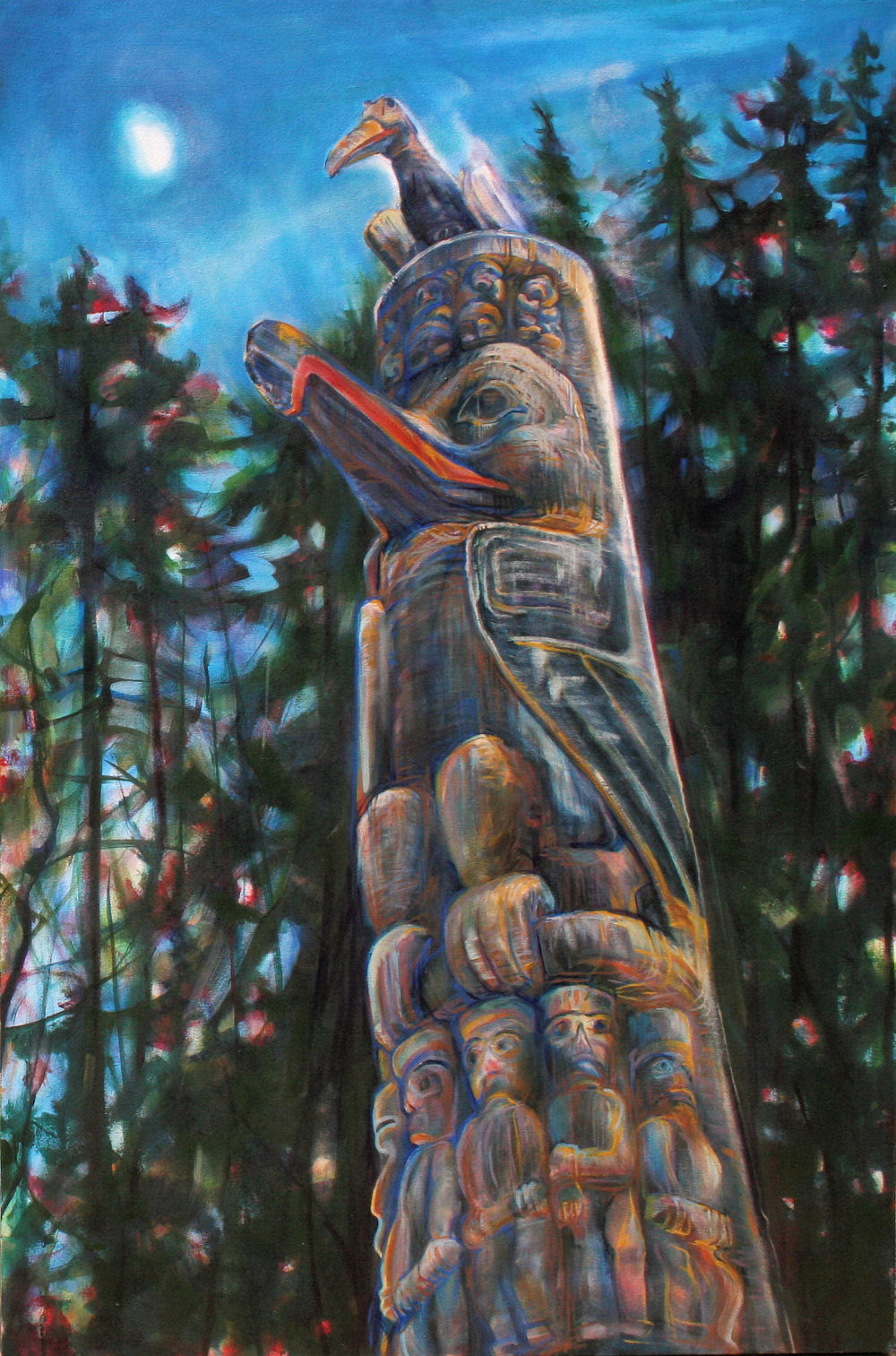
Magic Hour finished (Gitxsan Totem Pole, Thunderbird Park, Victoria, BC Canada), 60H x 40W x 3D inches acrylics on canvas, sturdy home-built stretcher frame, wrapped sides painted, narrow trim frame. Here is an earlier post with information about this totem pole.
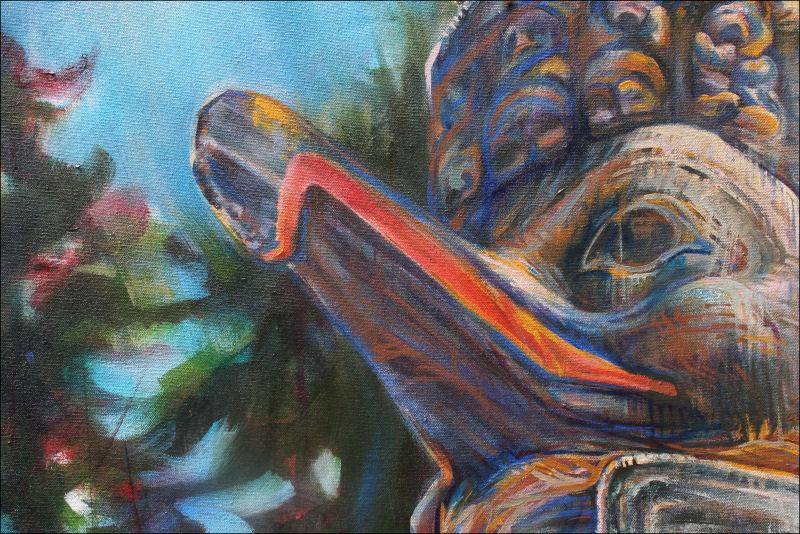 Great moments in painting are addictive, when so completely immersed in the work that time becomes non-existent… The Zone! I’ve had a good week with this one, partly because of getting past the habit of trying to control the outcome. Things happen in every painting that are not planned, and the endless choices are part of the fun.
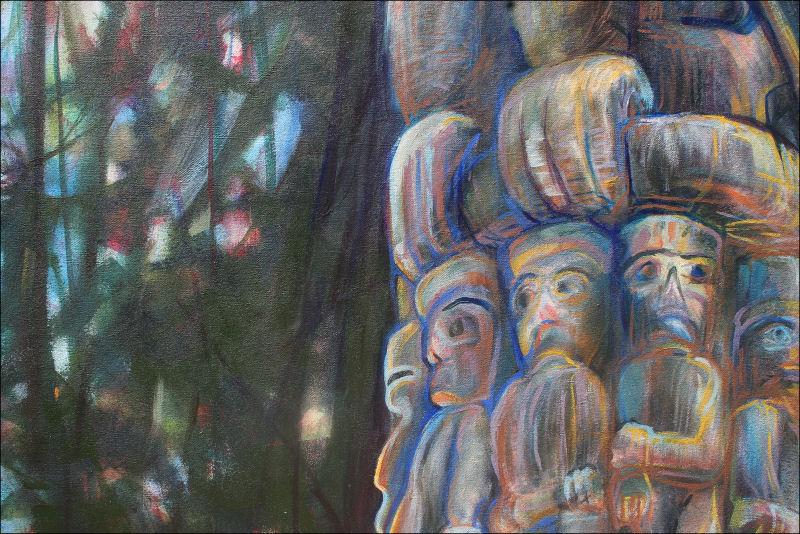
Painting is considered to be a two-dimensional undertaking, but it’s so much more. While lost in the work process, all the dimensions of the subject are explored, including the deeper dimensions of ourselves. While painting we discover our convictions and the means to ask how far we are willing to go to stand up for them.
Work every day is about continually reevaluating decisions, taking responsibility for choices made, being honest about mistakes, shortcomings and limitations of media and self, and digging deep to find compromise between technical and intuitive solutions. It’s about control of all those elements, combined with easing up on trying to control too much. All this and more translates onto a flat surface as we hope to give the illusion of depth…if that isn’t magic, I don’t know what is!
Post-dated Note: When choosing this totem pole that is erected in Thunderbird Park at the RBC Museum in Victoria, I didn’t realize that it’s the same one that Emily Carr painted in 1928. More magic! Here is a link to more information about this totem and the Gitxsan Poles moved from Gitanyow (formerly Kitwankool) B.C.
A word here about artists’ representation of First nations or any other cultural/historic works: subjects are painted with the greatest honor and respect, with purpose to study and draw interest to the importance of appreciating our multi-cultural world and the unique characteristics of each and every culture. This is what artists do. Our differences as cultures are connected across time and place, as there are many common traits and themes expressed through Art everywhere.
Robert Genn and readers of The Painters’ Keys have some very interesting comments all around the board about this topic.
Magic Hour, progress
Sunday, August 3rd, 2008
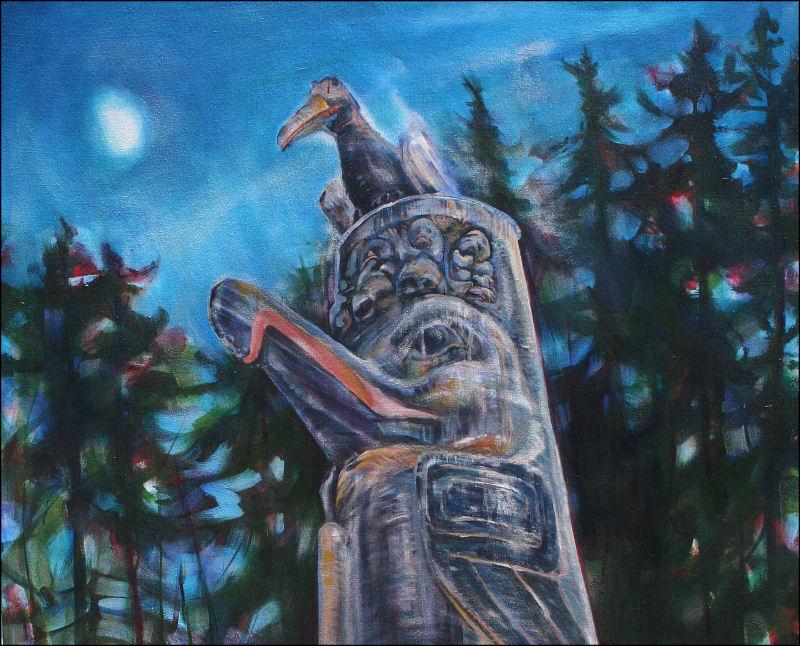
Magic Hour detail image, top half of 60H x 40W x 3D inches acrylics on canvas, sturdy home-built core stretcher frame, wrapped sides painted, work in progress. I decided not to lighten the background after all — am leaving the background as-is with loose brushwork in contrast to the totem pole which will be much clearer. To achieve the weathered look I’m using a dish-washing scratch pad to remove some of the paint.
Magic Hour – work in progress
Thursday, July 24th, 2008
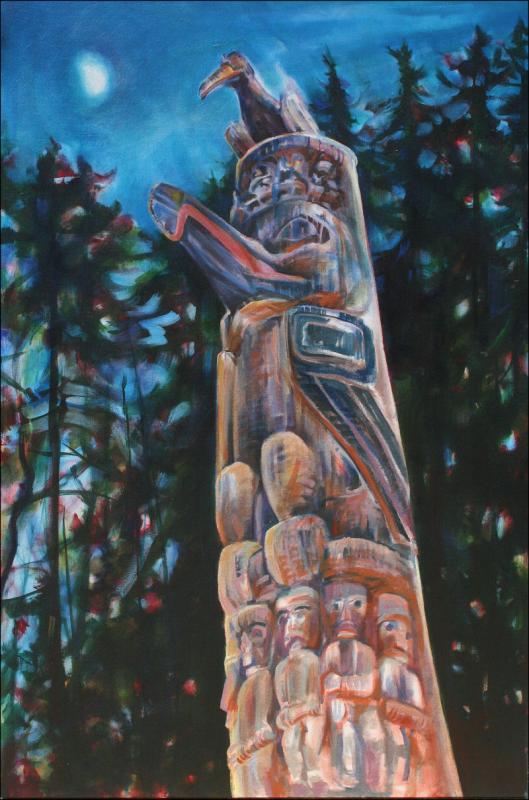
Magic Hour, 60H x 40W x 3D inches acrylics on canvas, work in progress.
Art history is human history. What we call Art is the expression of individuals finding connection with our humanity; who are we? How do we respond to our surroundings and who are we in relation the things we depend on for survival? Standing in front of the Totems I realized that the answers we sought long, long ago are the same, and the things we love now are the same things people have always loved. As Artists and Art Viewers we’ll never venture far from subjects that speak to the heart.
The originals of all the totem poles erected in Thunderbird Park on the grounds of the Royal BC Museum in Victoria, Canada are now protected from the effects of weather inside the museum. The totem portrayed in this painting is a replica of the Gitxsan Pole that was moved in 1958 from Kitwankool, BC. This version of the pole is named Skim-sim and Will-a-daugh, belonging to Chief Wiha (Wee-kha, Ernest Smith), the chief of the Wolf Clan: only the top 3/4 of the totem is portrayed. Due to deterioration caused by weather, the originals of all the totems in Thunderbird Park are now erected inside the museum and are replaced with replicas carved by Mungo Martin, chief carver, Henry, Tony and Richard Hunt (this one 1960).
Symbols/crests: The bird at the crown is a giant woodpecker (wee-get-welku). Legend reads that a female ancestor kept a pet woodpecker, feeding it so much it grew to be a giant monster that ate everything made of wood until it was killed. It sits atop 5 human figures who stand on the head of the Mountain Eagle (Skim-sim), who kidnapped and mated with a woman then devoured their offspring. The eleven small figures are humans fishing through holes in the ice. Under them and not pictured in the painting is Will-a-daugh, also known as “Person With a Large Nose”, holding her child who was conceived from a wood grub.
Salt Spring Island Fog
Monday, July 14th, 2008
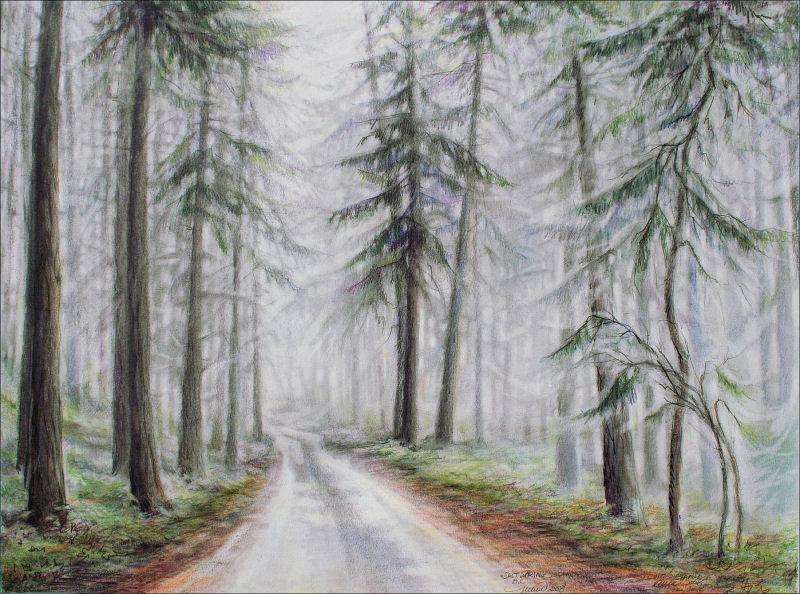
Salt Spring Island Fog, 18H x 24W inches graphite, eraser, dry pastels, colored pencils on paper, burnt umber frame size 29H x 35W x 3D inches, accepted for the Visual Arts Society of Texas 2009 Calendar. All accepted original works will be displayed. Meet the Artists and purchase a signed calendar (or more!) on November- December, 2008 at The Chestnut Tree in Denton, TX.
Post-dated Note: Article published in the Denton Record Chronicle, Entertainment section February 8th, 2009
Salt Spring Island Fog
Friday, January 18th, 2008
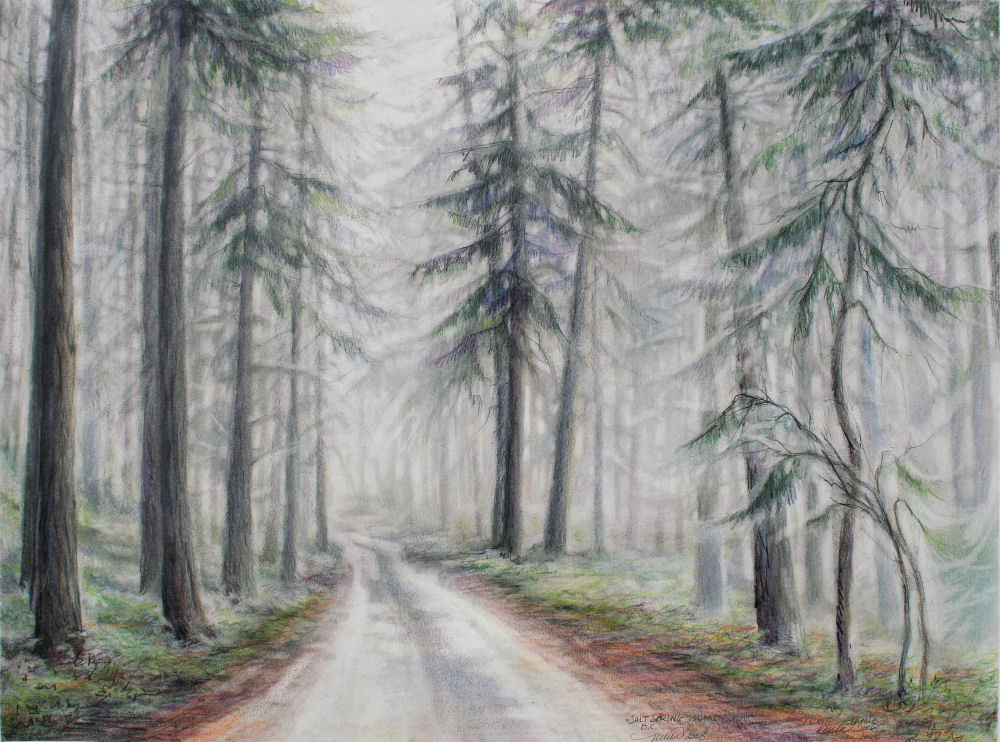
Salt Spring Island Fog, B.C. Canada, 16H x 22W inches graphite, dry pastels, colored pencils on paper, framed size 29H x 35W x 3D inches Details:
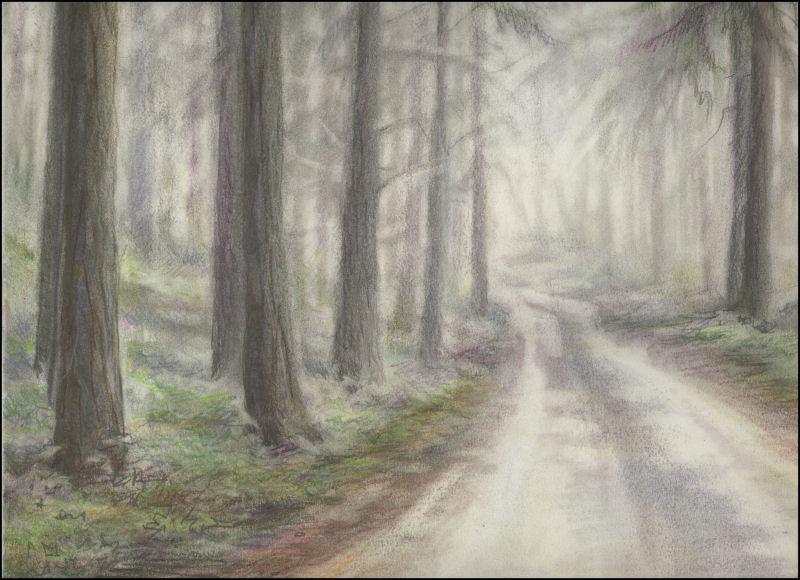
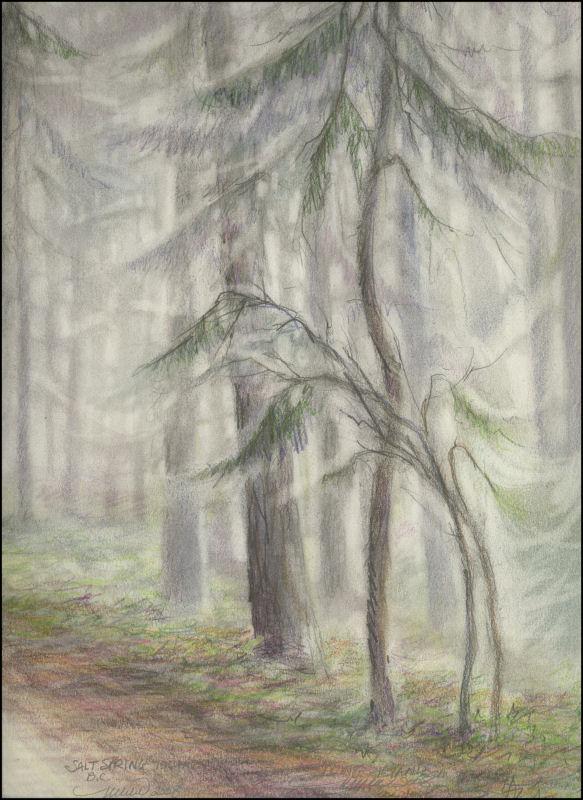
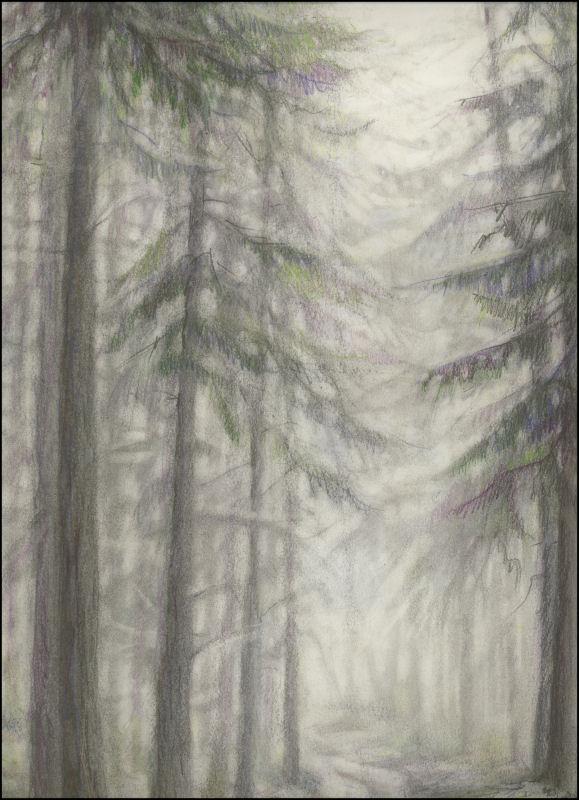
Credit to my Dad, Jim Drury for the photo references.
Salt Spring Island Fog work in progress
Thursday, January 17th, 2008
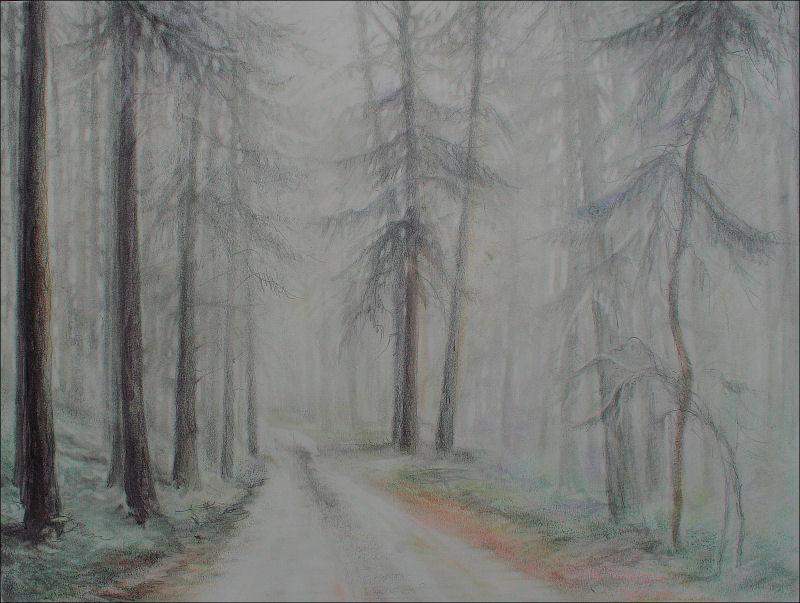
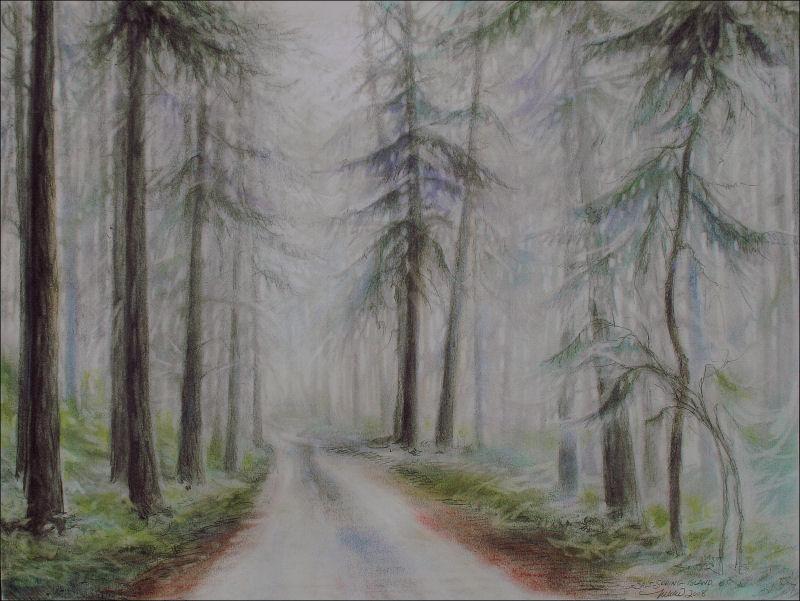
Salt Spring Island Fog, B.C. Canada, 16H x 22W inches graphite, dry pastels, colored pencils. Stages 1 and 2 work in progress
Next Entries »