Magic Square Series
« Previous EntriesPrecious
Wednesday, May 31st, 2023
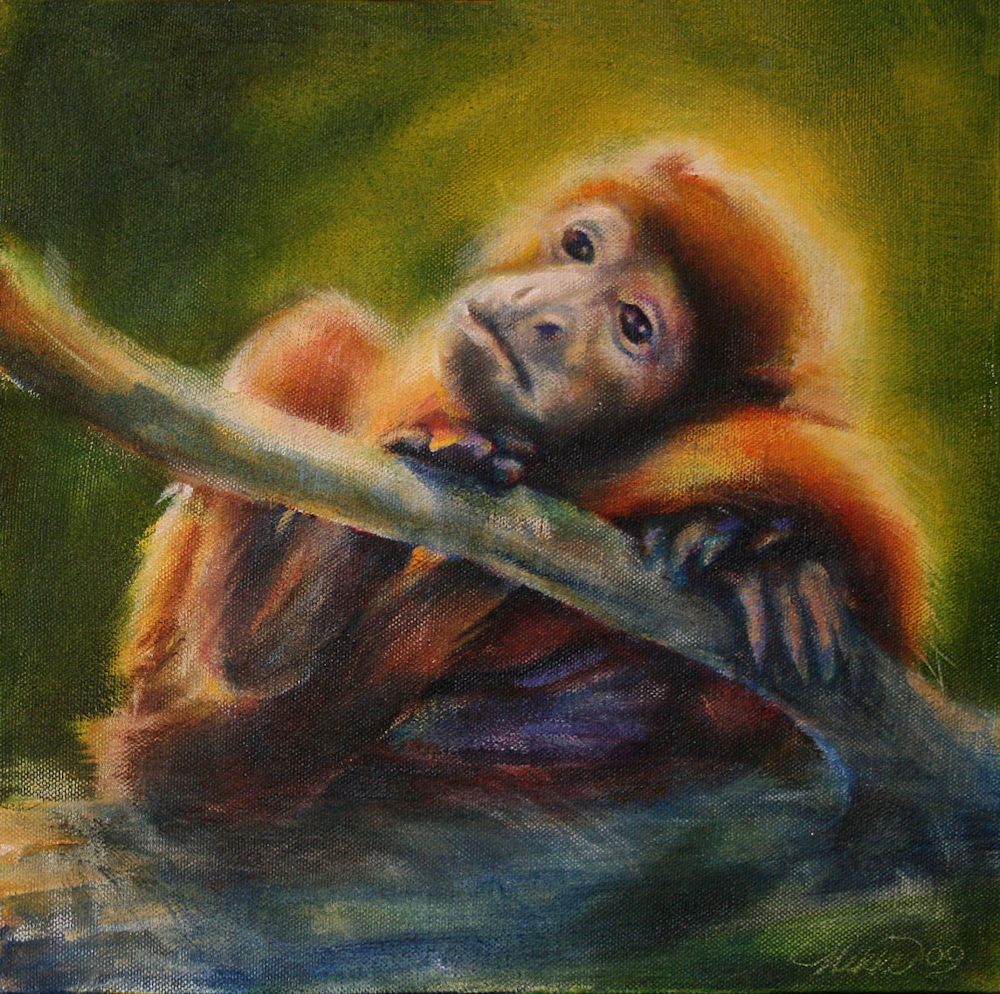
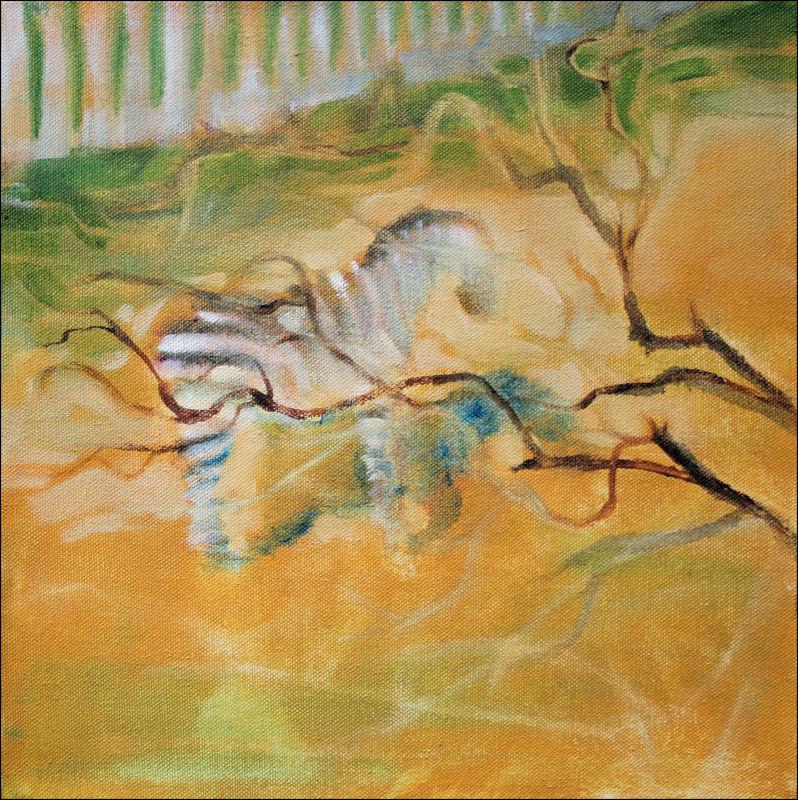
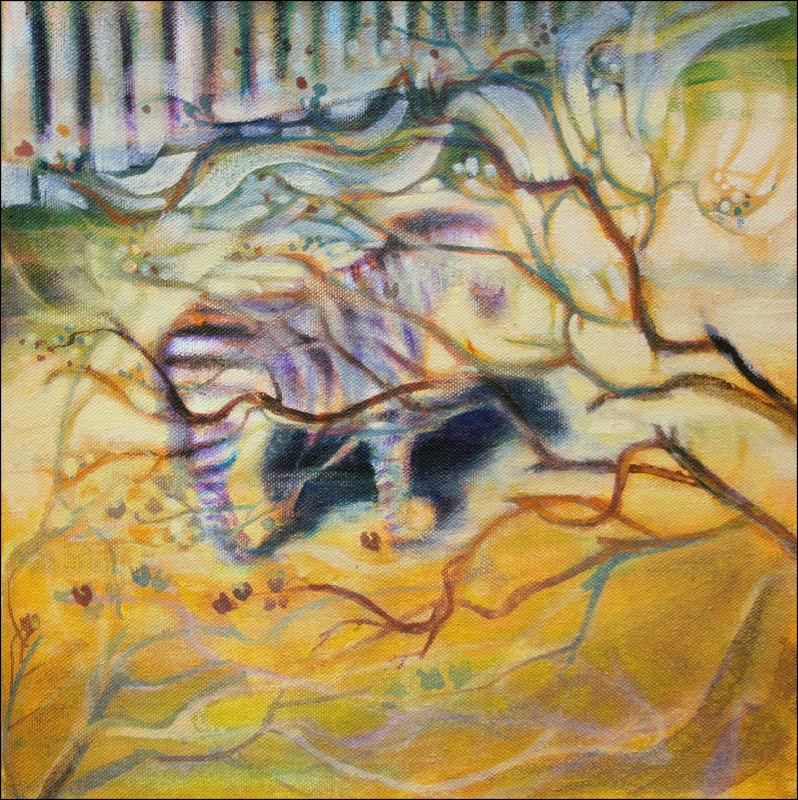
 Young Howler Monkey (2009), 11H x 11W x 3D inches acrylics on canvas. Hang on a wall or display on flat surface.
Showcased in Exhibizone’s “Precious” International Online Group Exhibition June 1st – July 31st.
Also previously showed in Biafarin / Exhibizone ‘Kingdom Animalia 2022’July 1-2022 To July 31, 2022.
Kingdom Animalia
Friday, June 17th, 2022
Young Howler Monkey (2006), 11H x 11W x 3D inches acrylics on canvas, $350. Hang on a wall or display on flat surface.
Biafarin / Exhibizone ‘Kingdom Animalia 2022’ showing online from 01-Jul-2022 To 31-Jul-2022.
500X Gallery: Landscape
Tuesday, October 6th, 2009
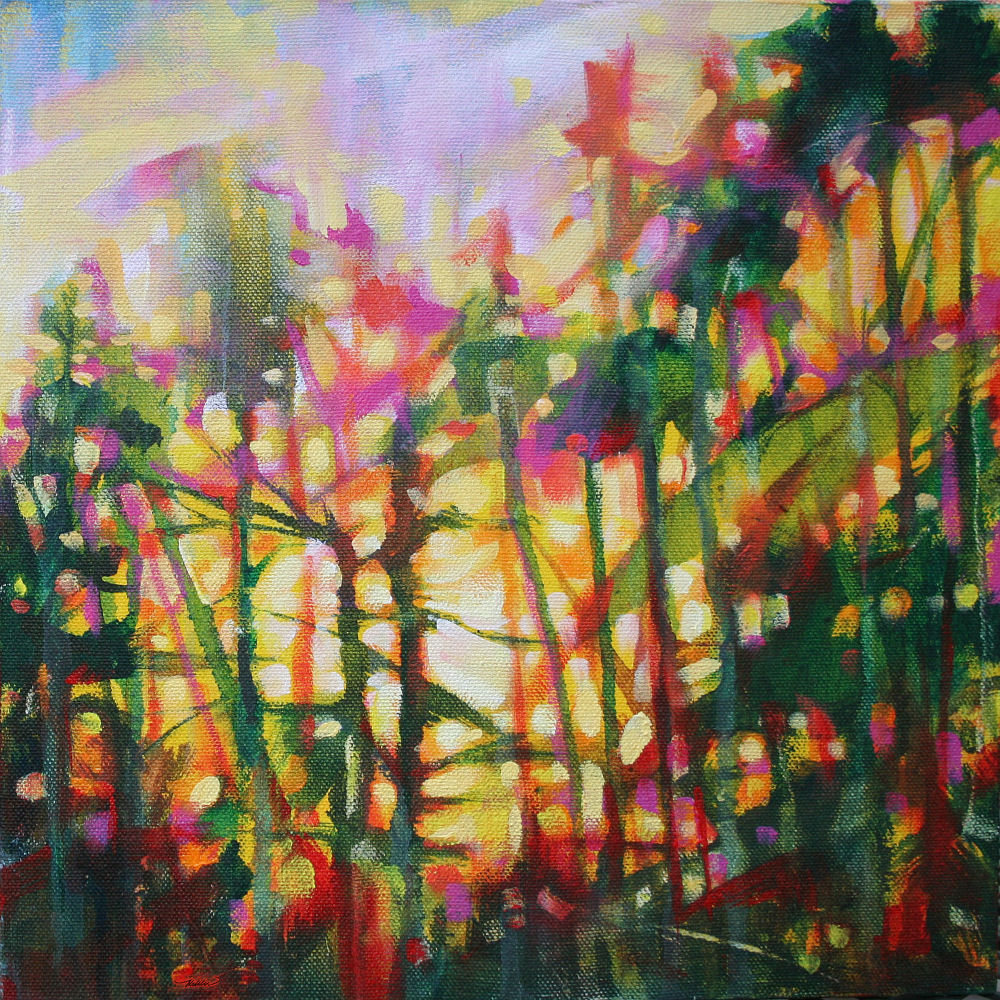
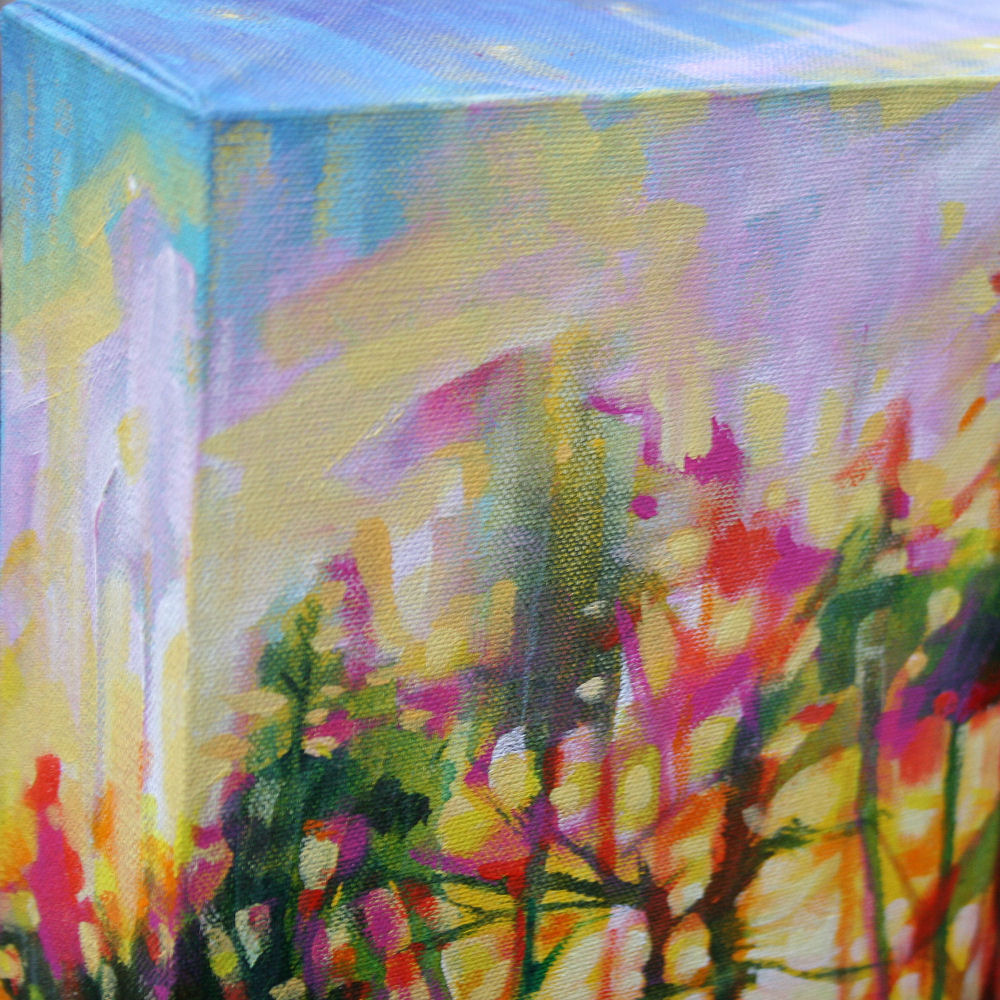
Saint Catherine’s Sunset, Ontario, Canada – 11H x 11W x 3D acrylics on canvas, wrapped sides painted, showingOctober 1 0 – 31st, 2009 500X Gallery Open Show: Landscape, 500 Exposition Ave. Dallas, TX. Opening Reception Saturday, October 10th, 7:00 p.m. – 10:00 p.m.
Oxide Gallery 1st Year Anniversary celebration today, Tuesday October 6th, 6:00 p.m. – 9:00 p.m. Happy Anniversary Oxide Gallery!
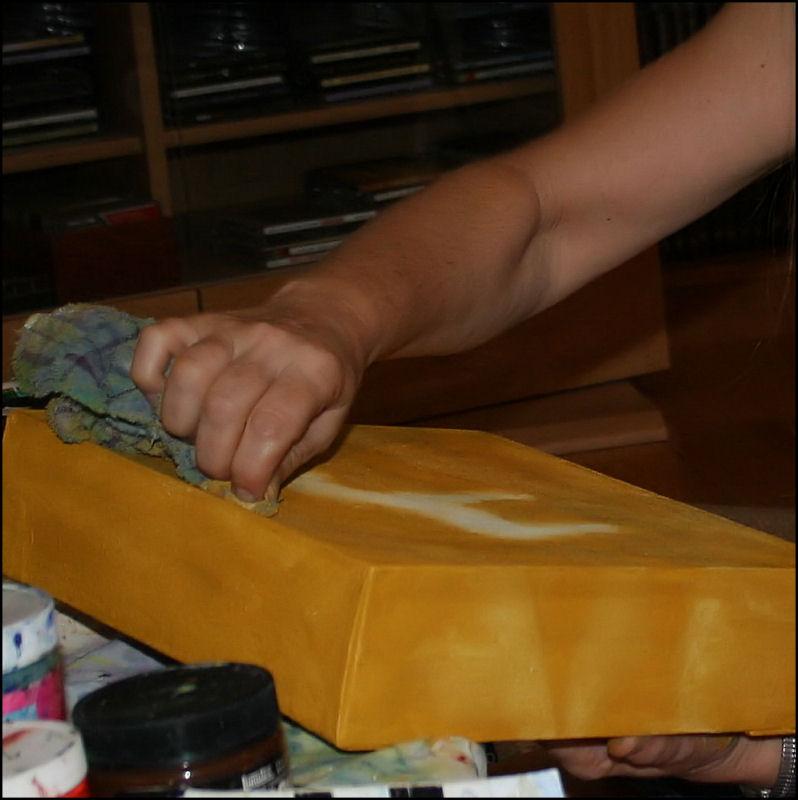
I’ll be giving a demo on the use of Masking Fluid in acrylics paintings, so come and reveal one painting by helping to peel off the rubberized mask – I don’t even know what it looks like underneath, so it will be a surprise for all of us. Techniques on applying the fluid will be demonstrated on another painting already in progress. Three pieces accepted in the current show at Oxide Gallery are:
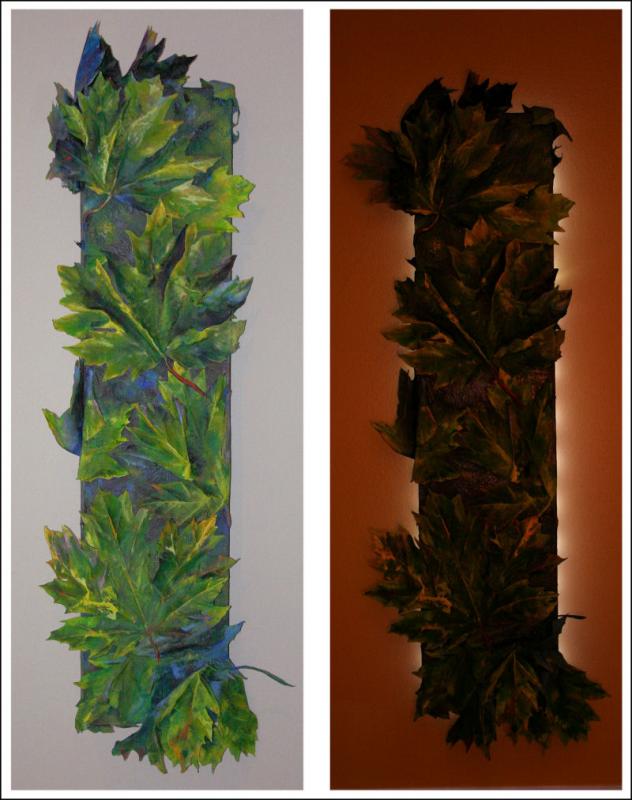
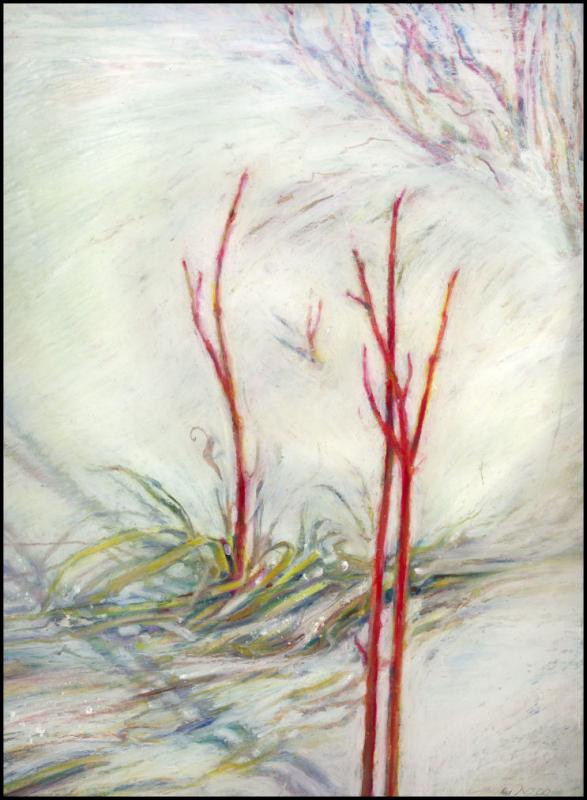
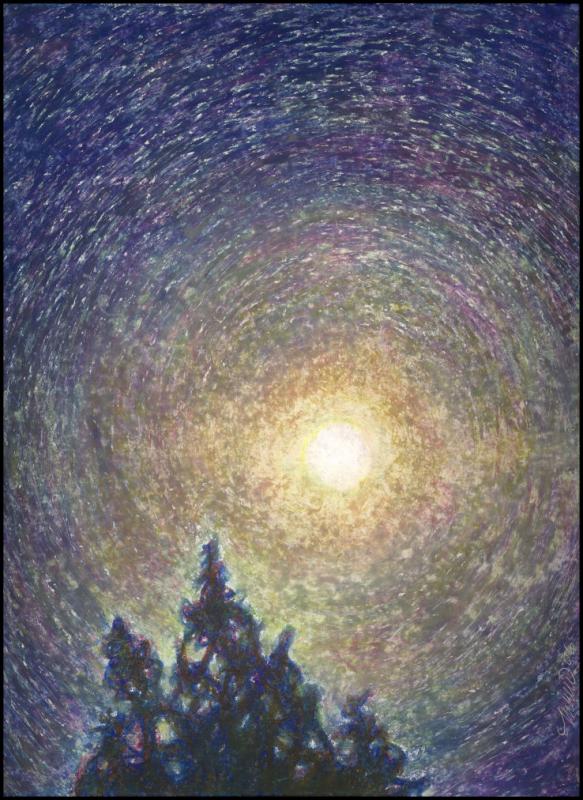
Kookaburrahs
Saturday, May 23rd, 2009
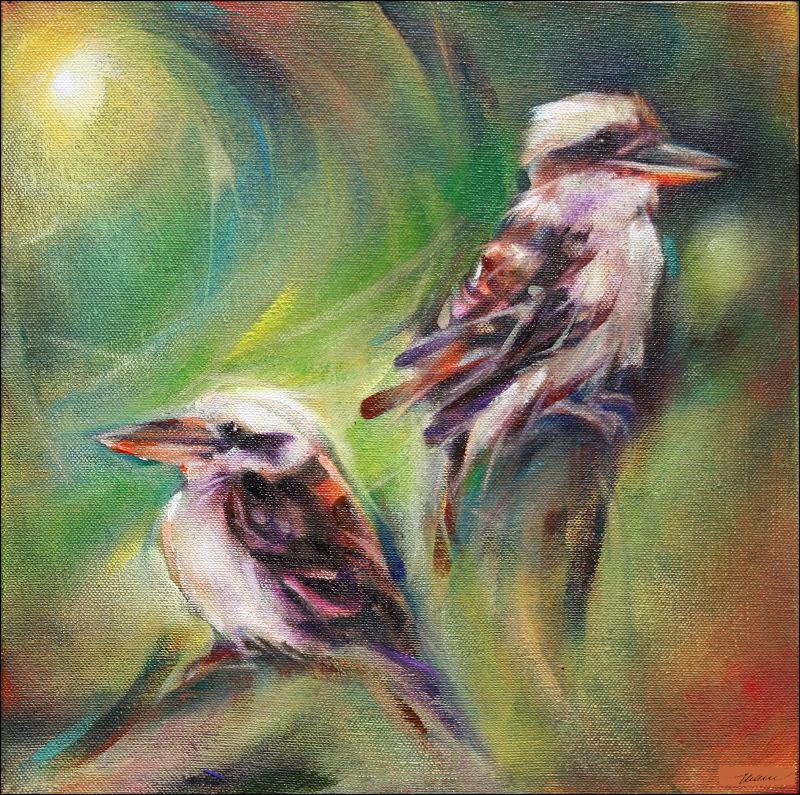
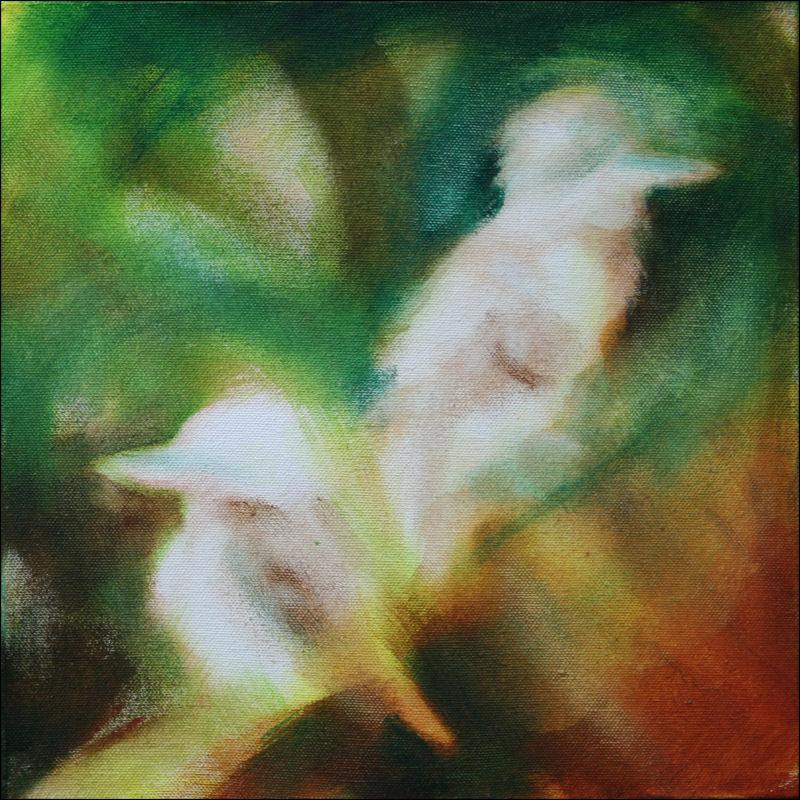
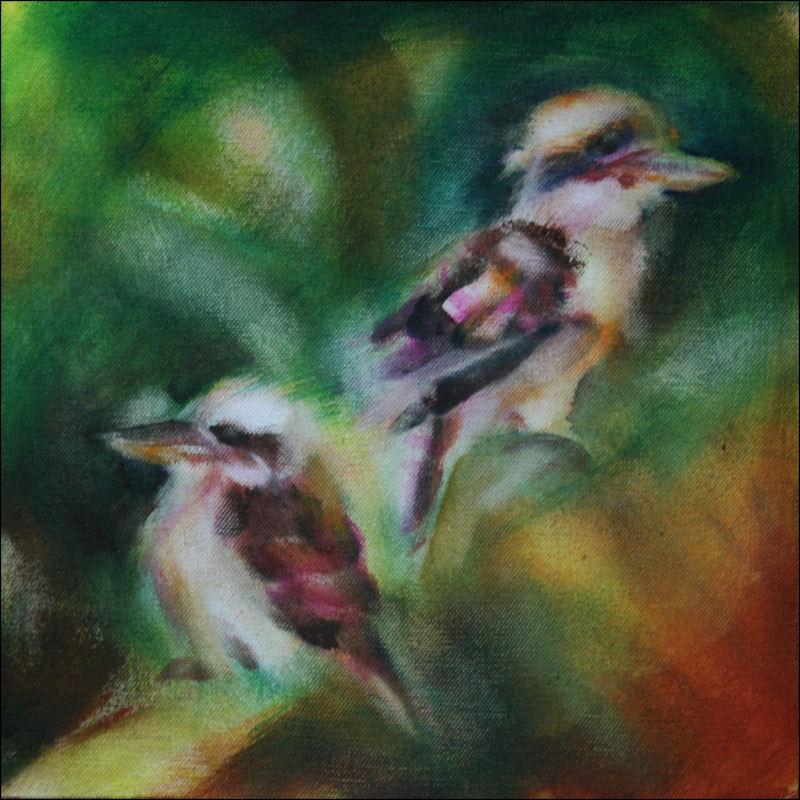
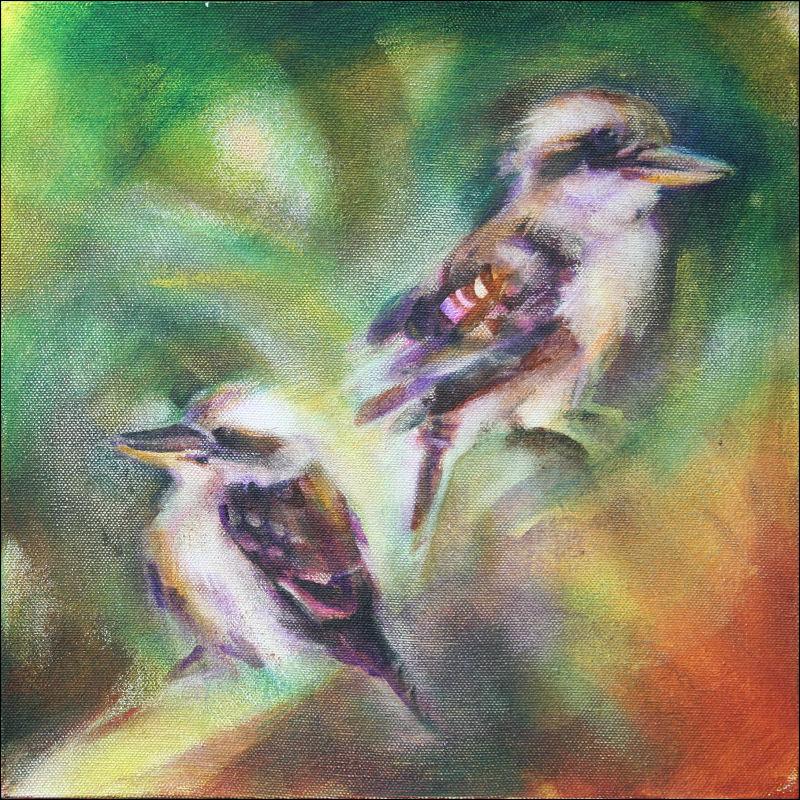
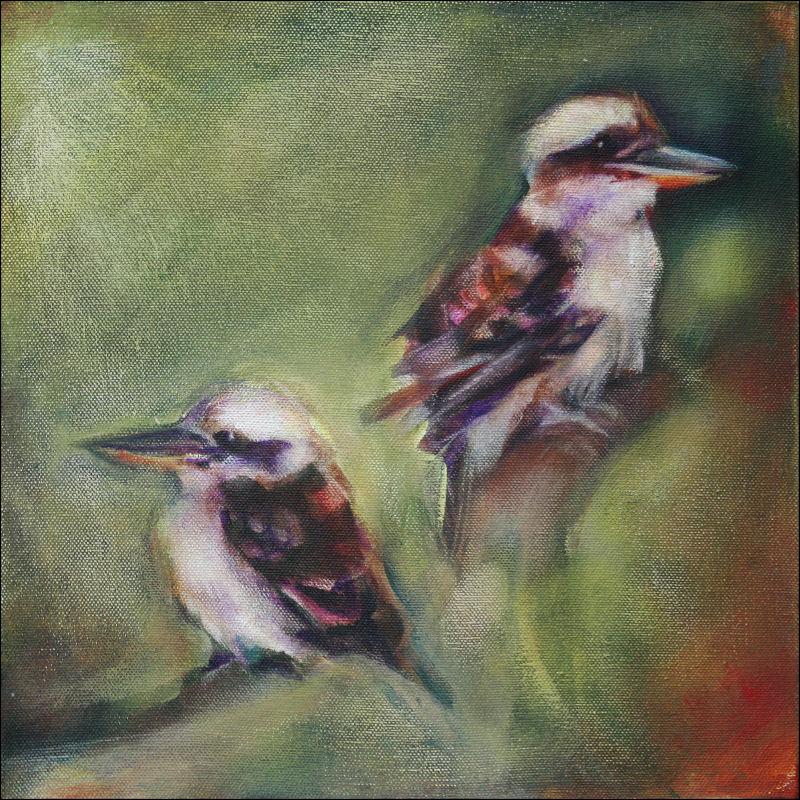
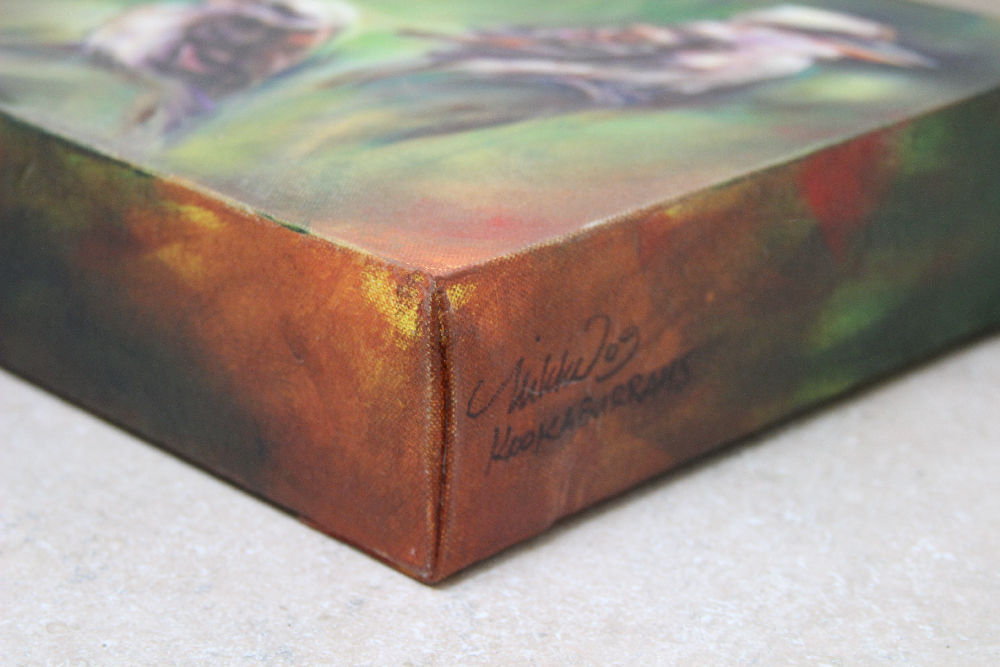
Kookaburras, 11H x 11W x 3D inches acrylics on canvas, wrapped sides painted. Frame unnecessary. Hang on the wall or display on a flat surface. Most of the Magic Square series are signed on the side so as not to impose on the composition. Seen here, the signature is added digitally on the front.
March 13th, 2009 work progress blog post: This painting could have been left at phase 3, but the decision to give the birds more definition and sense of realism created a whole new set of problems. For example, the composition, which was unbalanced from the start, is now exaggerated and more noticeable, so a third element needs to be added in the upper left corner. Not necessarily another object but color or shape that would shift the weight and attention away from the lower left areas.
| Progress details: | |||
 |
 |
||
 |
 |
||
There is a work phase where, once details are added or changes made to one area, every other thing in the picture needs to be brought to the same level of quality: quality meaning style and feeling of the features. I don’t regret proceeding, but it does mean extra effort to solve all the new challenges, and usually while attempting to solve those new ones arise. Other professionals would say this is overworking, but it really depends on what your intentions are as an Artist, and what motivates the work. If risks are not taken sometimes, a painting may never be all that it could be. Phrases we tend to cling to like “less is more” are not written in stone; sometimes more is more…learning is a good thing!
In landscapes details are best left for the imagination, whereas painting animals, birds or other creatures, a purpose needs to be clearer. Is the intention to portray character through shape and silhouette? other traits? specific markings? Is it the main focus or only a part of the whole? Computer tools are also useful in playing with colors and other possibilities.
Eastern Redbuds
Saturday, April 11th, 2009
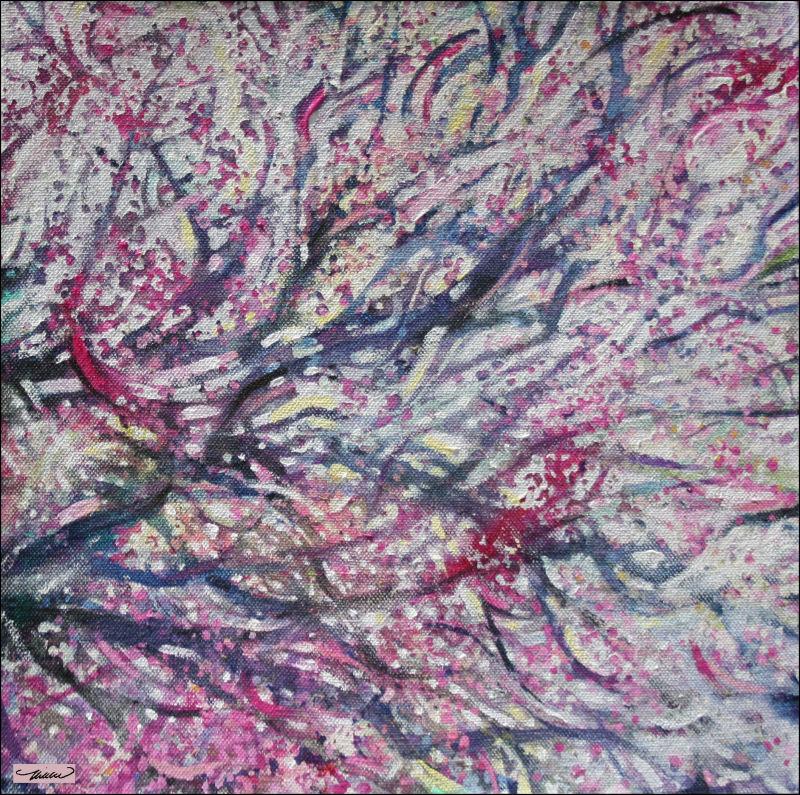
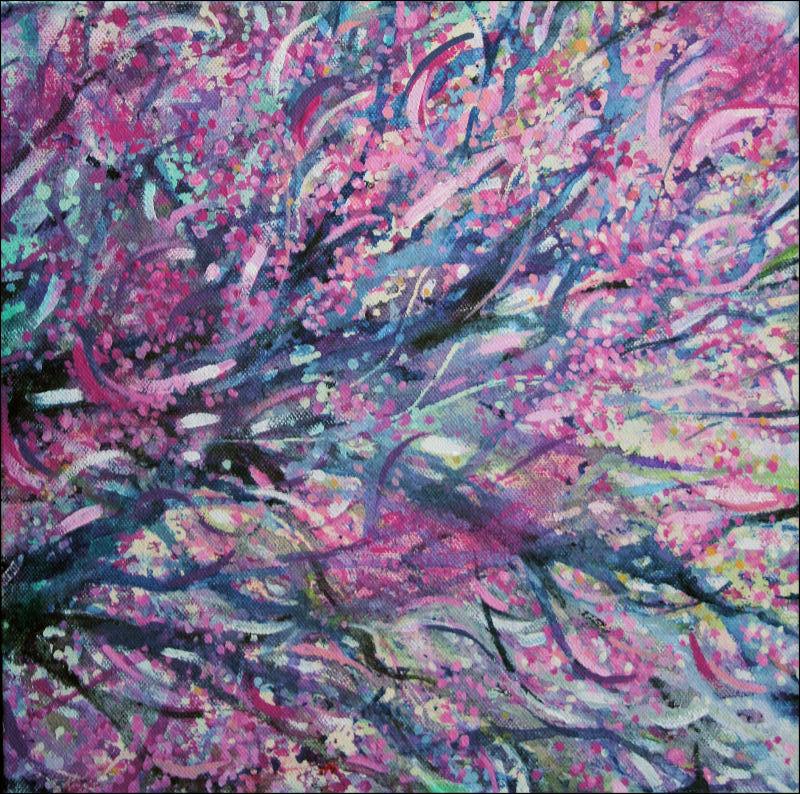
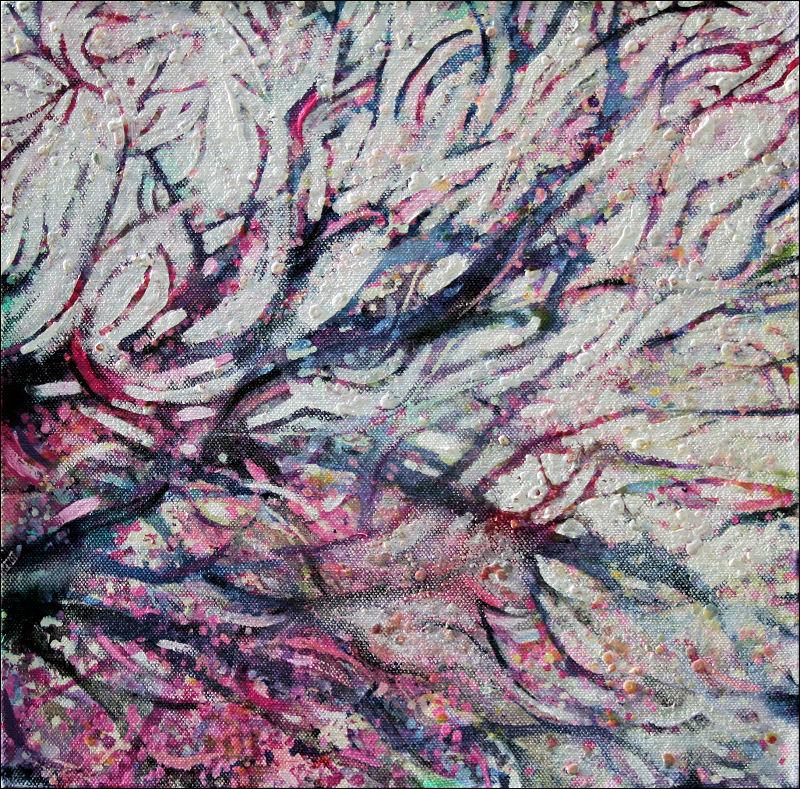
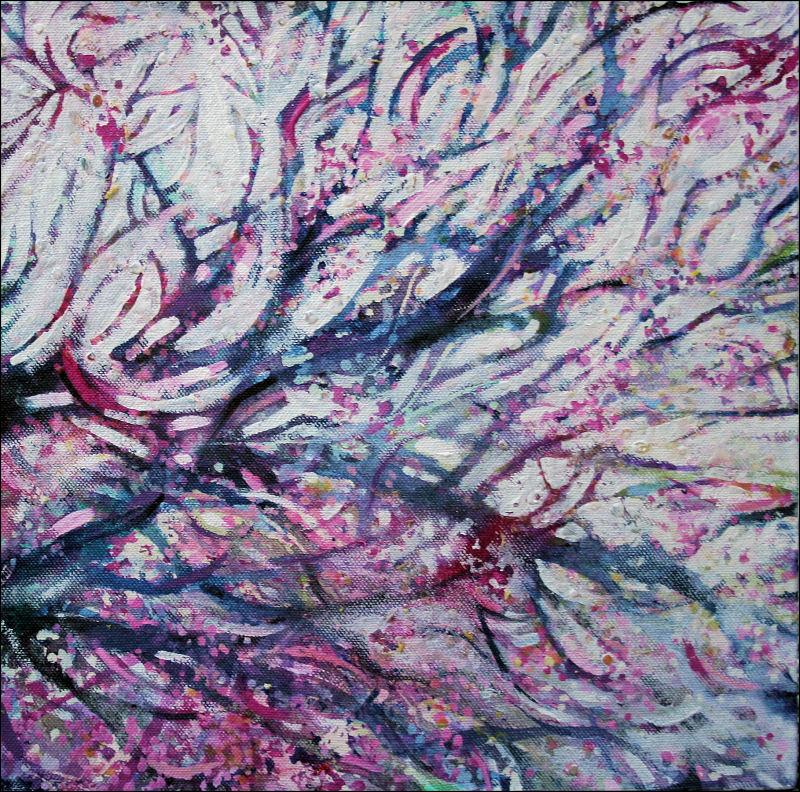
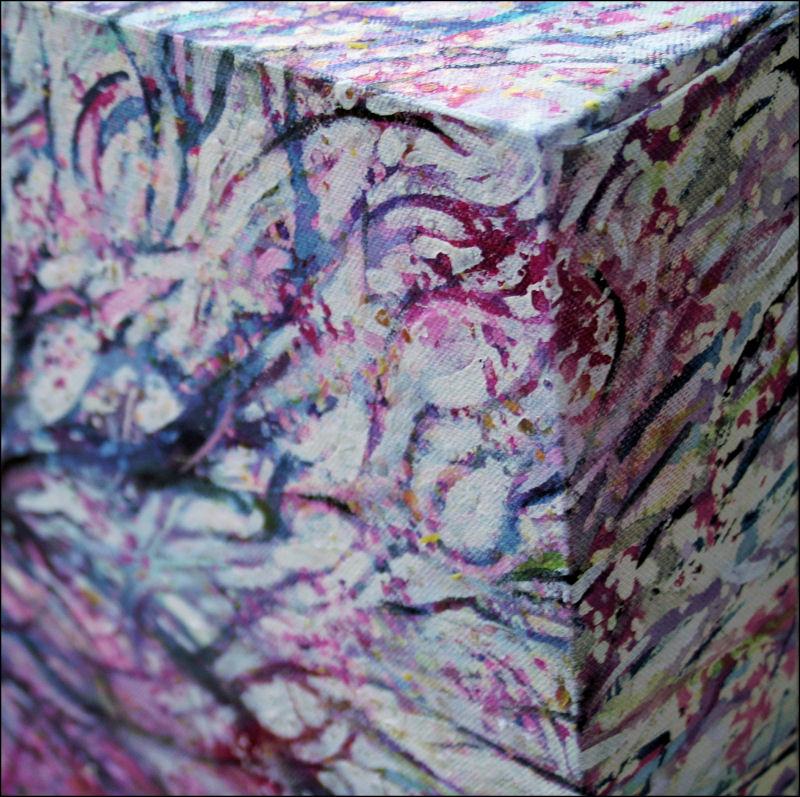
Eastern Redbuds – Spring in Dallas, TX – finished April 11, 2009, took off all remaining masking fluid. 11H x 11W x 3D inches, acrylics on canvas, wrapped sides painted. Signature is on the side, so one is superimposed here on the front. Hang on a wall or display on a flat surface.
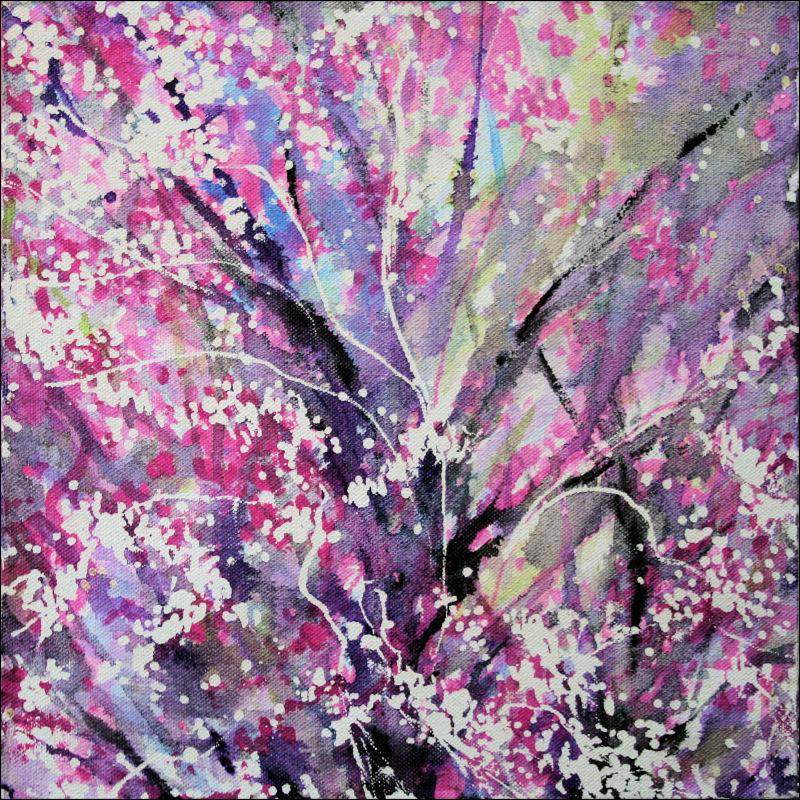
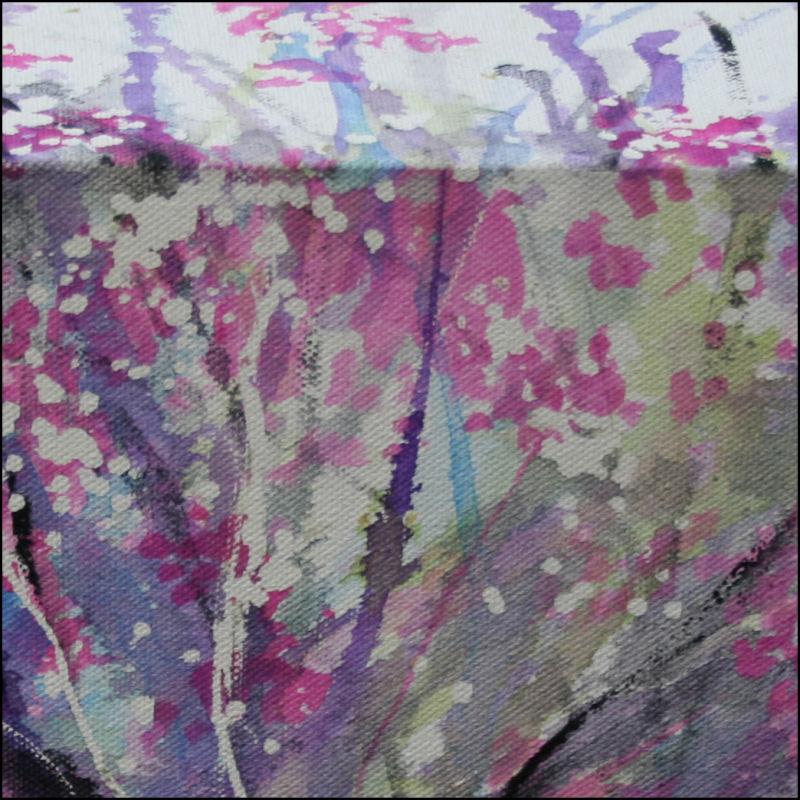
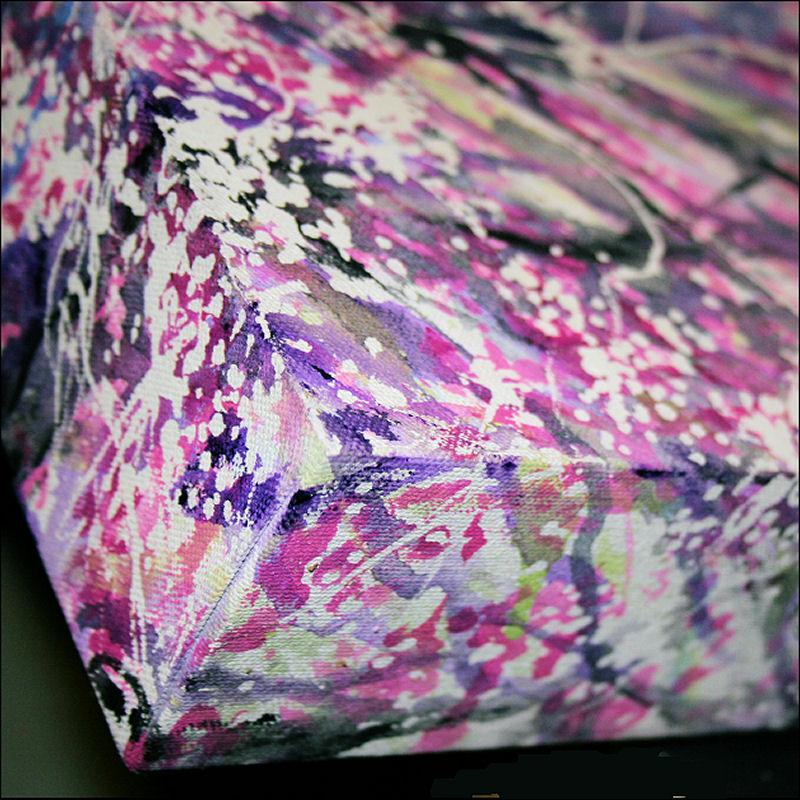
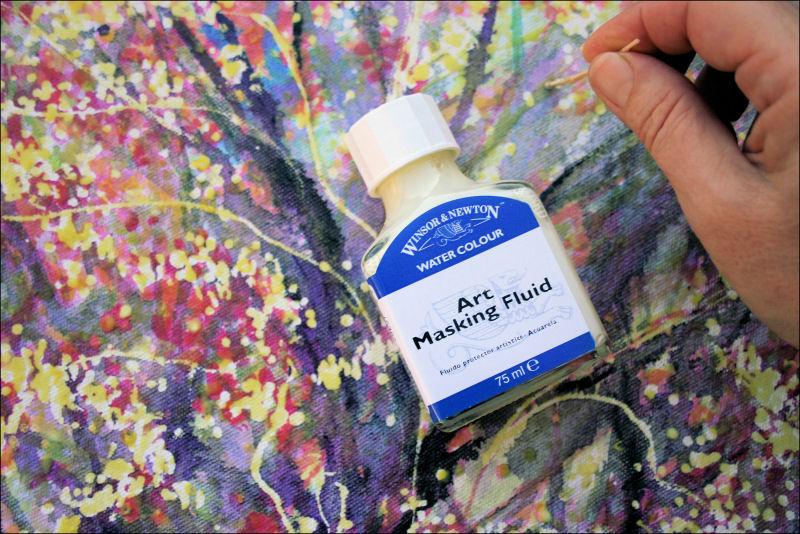 Eastern Redbuds is the first of sixteen 11H x 11W x 3D inches acrylics on canvas paintings of various aspects of trees, to hang together as a group or flanking other paintings. This one uses masking medium to block out areas of white. The first layer of dried medium was removed in the above thumbnails. Afternoon post, left: Adding another layer of masking fluid, seen as yellow.
Feb. 25th: below left, looks better turned on its side but it could be hung either direction, mask was removed then the painting was overworked unintentionally – all the marks that were the whole point of using masking fluid are hardly visible.
So on Feb. 26th: below right, more mask was applied, then white painted between branches, tore away a few select areas of the dried mask and left the rest on as texture.
$350.00 
Paint Arson
Thursday, March 26th, 2009
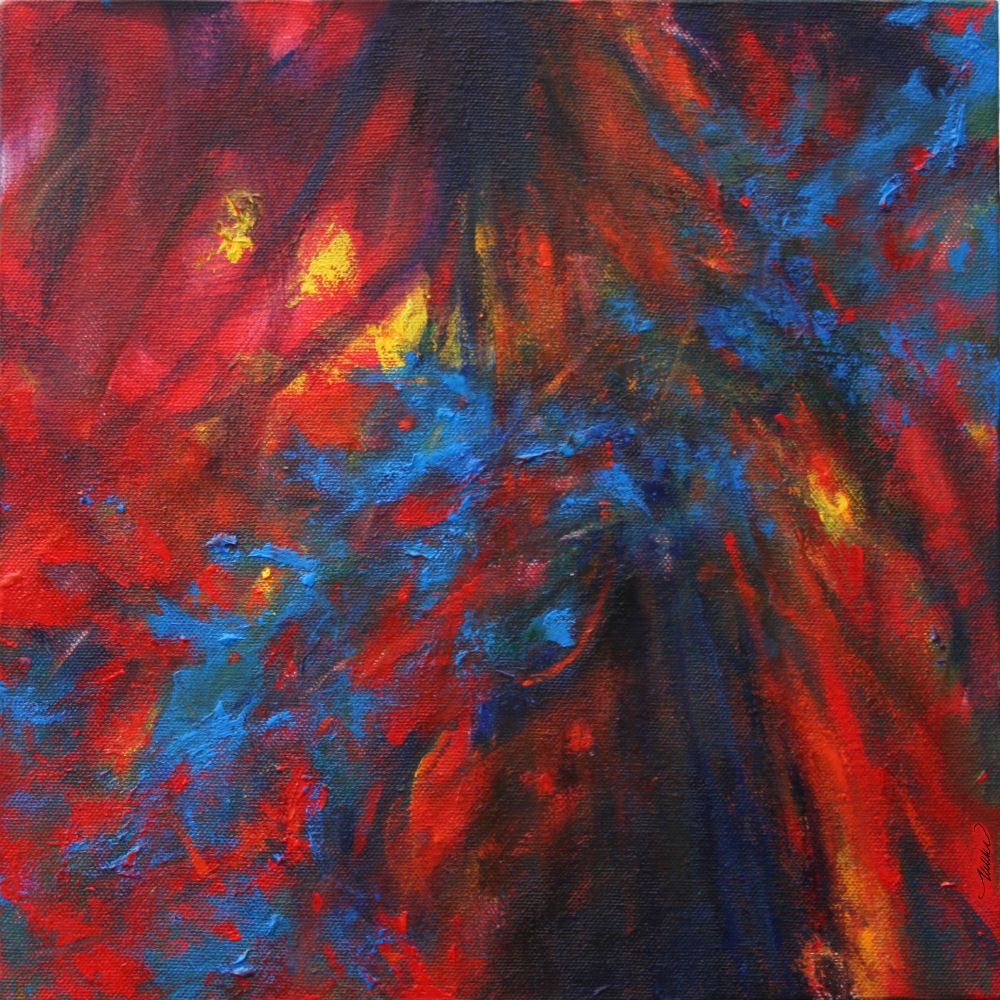
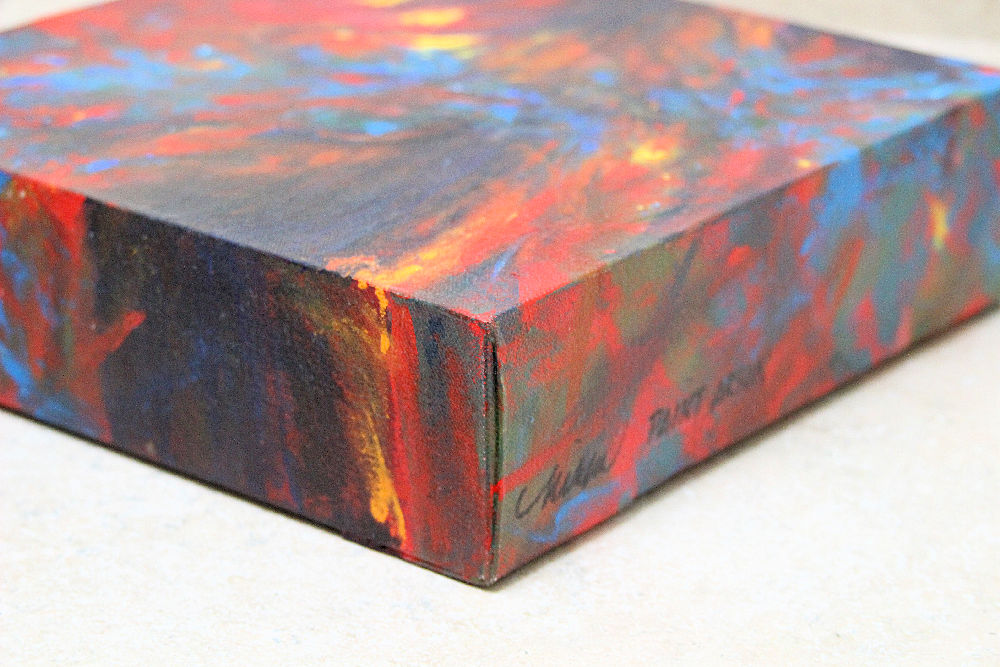
Paint Arson, 11H x 11W x 3D inches acrylics on canvas, wrapped sides painted.
Frame unnecessary. Hang on a wall or display on a flat surface. Signed on the side so as not to impose on the composition.
Progress and process phases 1 and 2 images.
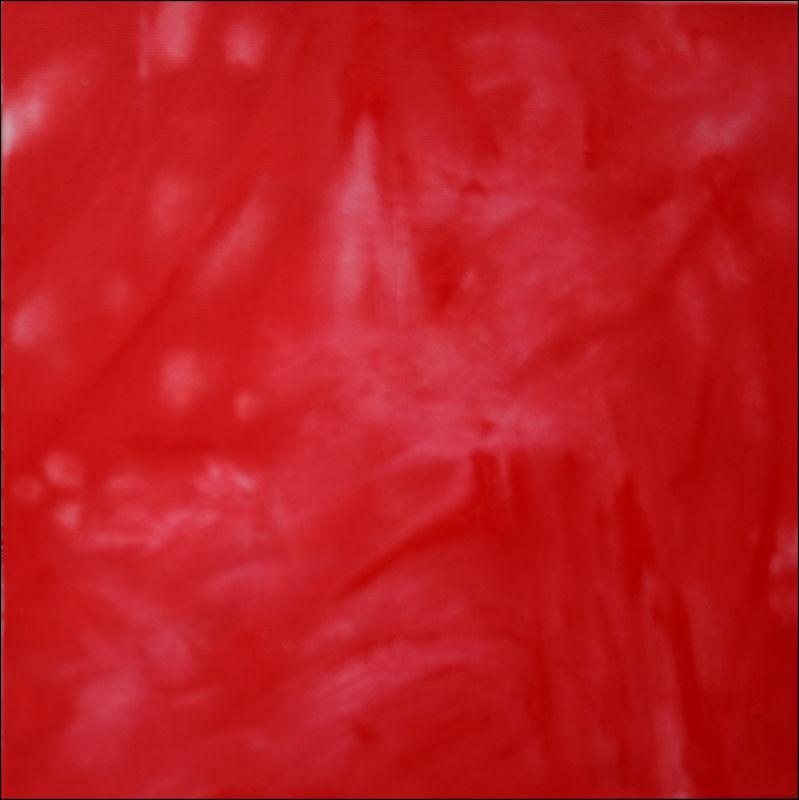
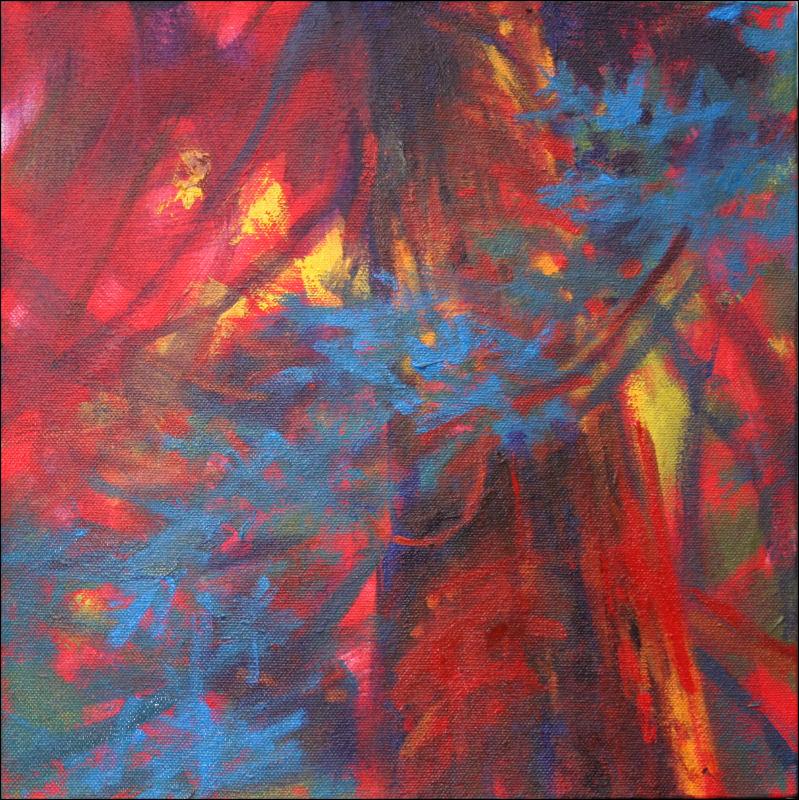
Painting, whatever the subject may be, is a journey through all kinds of unanticipated thoughts and associations; some are short and sweet, ending within 1 – 6 hours and not much more than a visual, but some are packed full of adventure that isn’t even realized until surfacing from a few hours of work.
A new jar of Cadmium Red medium hue was just the thing to reboot, then re-route some old habits I was falling back into, like over-working paintings. Trying a new color invigorates the work process like nothing else can, adding certain life to the results as well. Incorporated as a base, straight out of the tube or mixed with your usual palette, a new color can change everything.
Neighborhood Heron
Thursday, March 19th, 2009
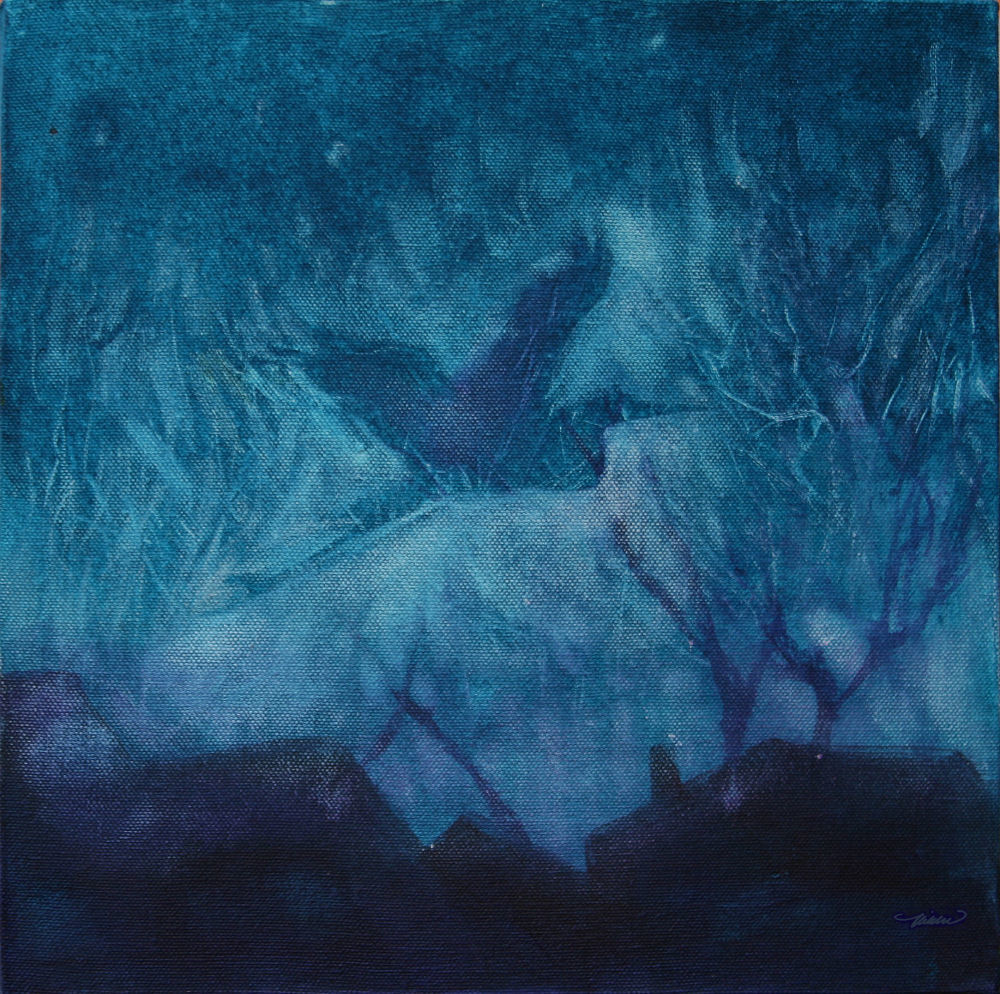
Neighborhood Heron, 11H x 11W x 3D inches acrylics on canvas, wrapped sides painted. Frame unnecessary. Hang on a wall or display on a flat surface. Signed on the side so as not to impose on the composition.
Sold but a similar piece can be recreated upon request. Please allow 7 days to paint before shipping.
Started with a base coat of very watered down translucent pthalos green mixed with cerulean blue. Spraying rubbing alcohol over a damp painted water-based surface then allowing it to dry without moving it will create starry, spotty textures. Salt shaken over wet paint allowed to dry, then wiped off with a dry cloth will produce similar effects.
Alcohol loosened up the entire surface of paint, so using fingernails under a damp smooth t-shirt cloth, I rubbed off areas to shape the heron and winter trees. This represents a super argument for the wingin’ it methods!
In college I took a pottery course for one semester, and the thing I remember most is the instructor saying how it’s a good idea to allow some of the raw characters of the materials we work with to remain and “speak” without trying to smooth over and perfect everything. She was of course referring to clay, but over the years I’ve found that it applies to many other mediums also. In Heron, the branches extend into the body of the bird, connecting it to its environment. The effect also does a subtle play on the motion of its flight too.
Showcased in the J. Mane Gallery’s Fins, Feathers and Fur 2020 exhibition.
Iguana and Strangler Fig
Wednesday, March 18th, 2009
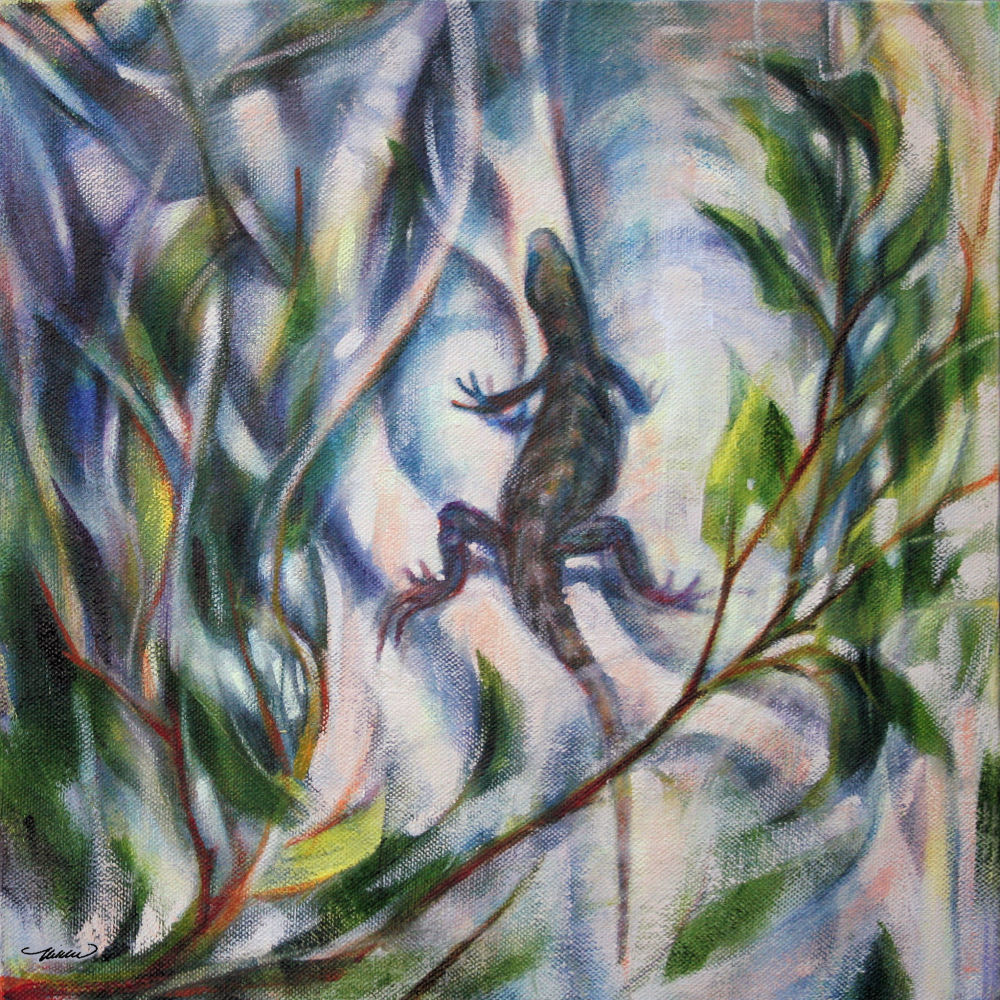
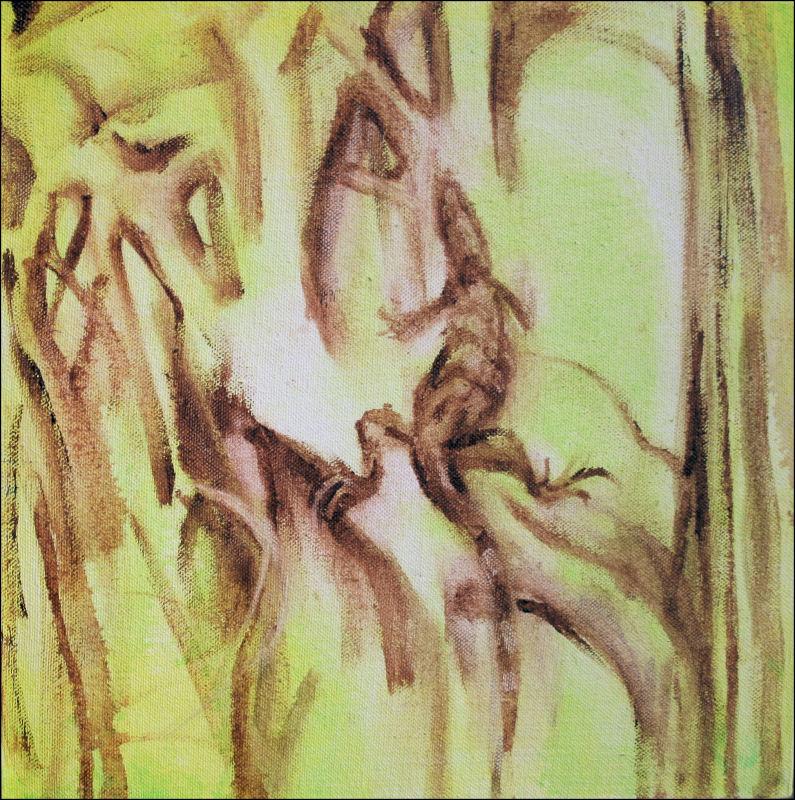
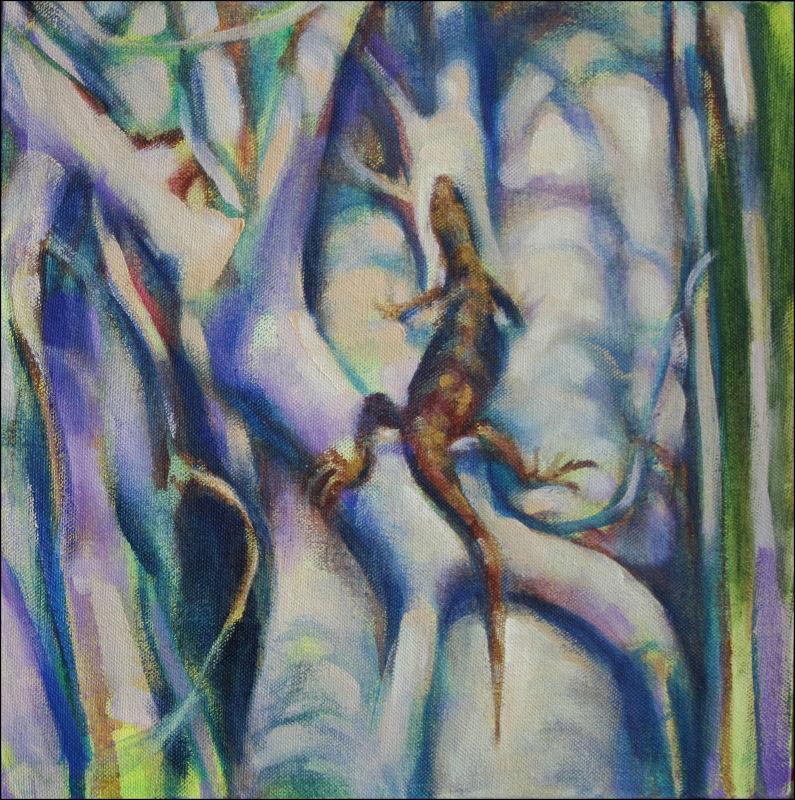
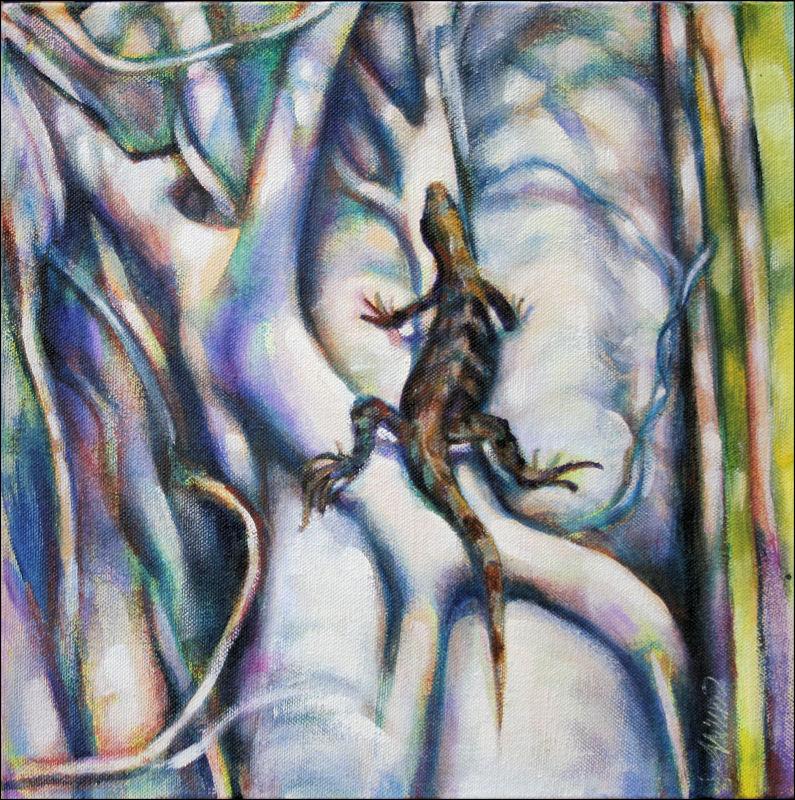
Iguana and Strangler Fig, Costa Rica, 11H x 11W x 3D inches acrylics on canvas, wrapped sides painted. Frame unnecessary. Hang on a wall or display on a flat surface.
The Strangler Fig is a parasite. Seeds sprout in moss or decaying matter among the branches of rain forest canopies. Roots gradually extend downward and over time completely surround the host tree, which dies while nourishing the Strangler Fig growing in its place.
March 14th, March 13: Phases 1, 2 and 3 earlier progress in thumbnails below. Today layering thin washes of pale yellow, placing the iguana more into the background. Some of the details of the Strangler Fig growth that are now covered up might be brought back into focus since this is more about the tree than the iguana. Posting the painting on the blog is helpful because it’s viewed differently than while painting or studying it. It’s somehow easier to see areas that still need change when looking at it on-screen.
Chapala Wind
Tuesday, March 10th, 2009
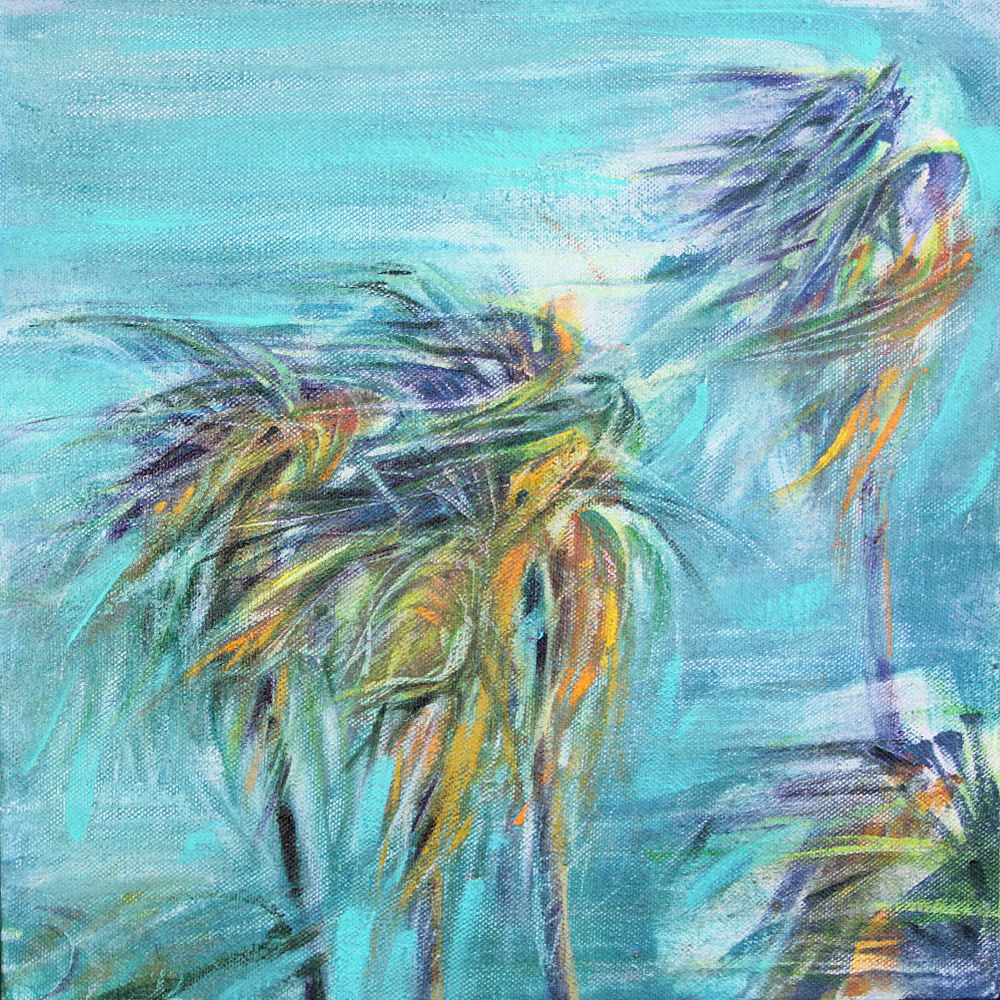
Chapala Wind – Lake Chapala, Mexico, 11H x 11W x 3D inches acrylics on canvas, wrapped sides painted. Frame unnecessary. Hang on a wall or display on a flat surface. Signed on the side so as not to impose on the composition.
Sold but a similar piece can be recreated upon request. Please allow 7 days to paint before shipping.
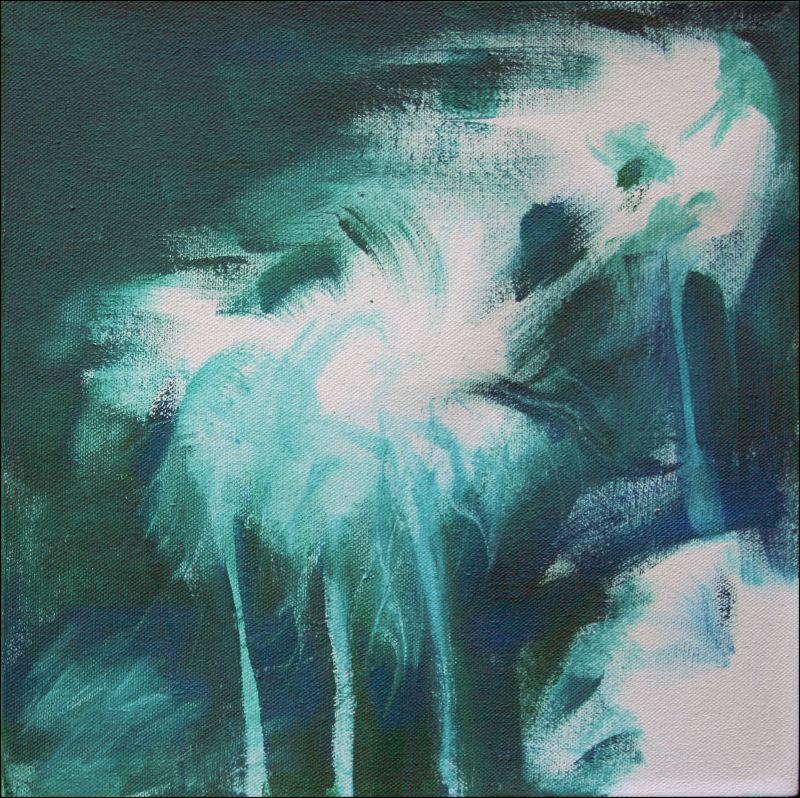
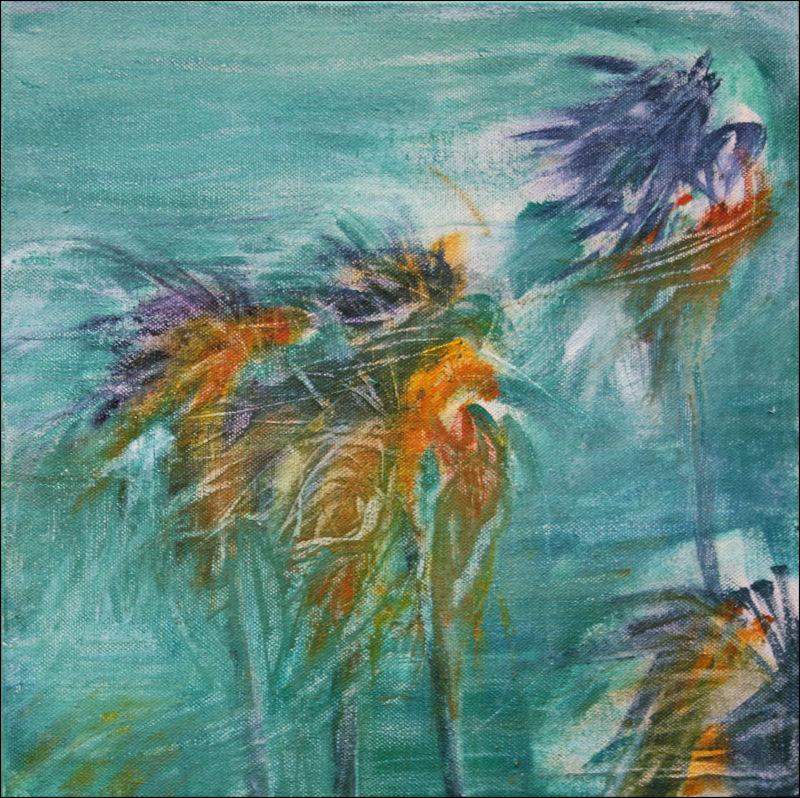
Sprayed alcohol loosened the paint and I was able to scratch it, at first with my nails and then a pottery tool. Thanks to Karen Xarchos for all the feedback and additional information. We worked together painting murals in Ottawa for a couple of years. Karen has done extensive work in restaurants and homes in the Ottawa area.Thumbnails: phase 1 and 2 in progress.
Myrtle At The Zoo
Monday, March 9th, 2009
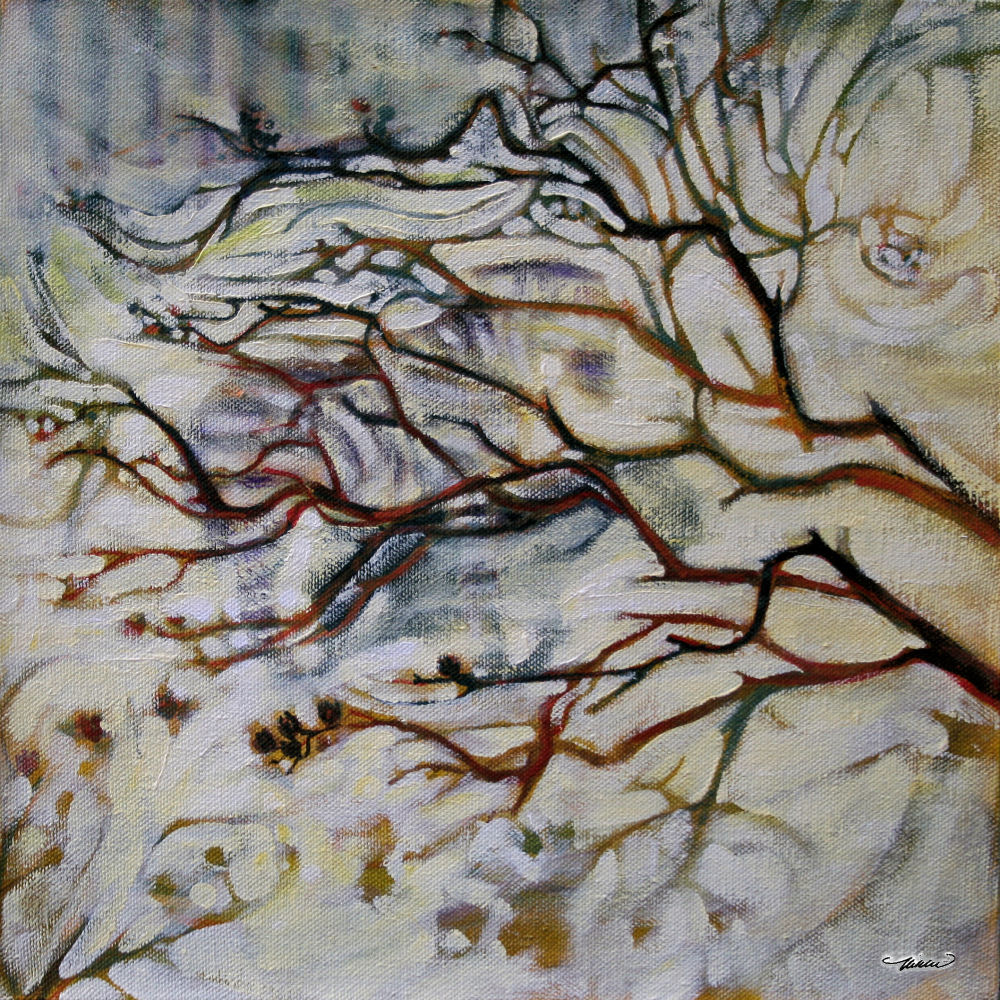
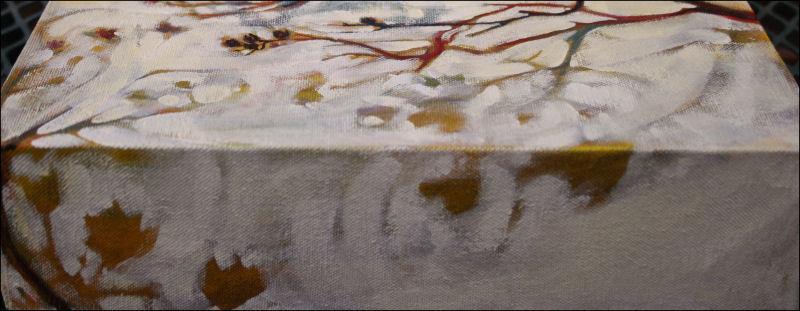
Myrtle At The Zoo – Crepe Myrtle branches and seedpods before pruning, February at the Fort Worth Zoo, Texas. 11H x 11W x 3D inches acrylics on canvas, wrapped sides painted. Signature is on the side, so one is superimposed here on the front. Hang on a wall or display on a flat surface.