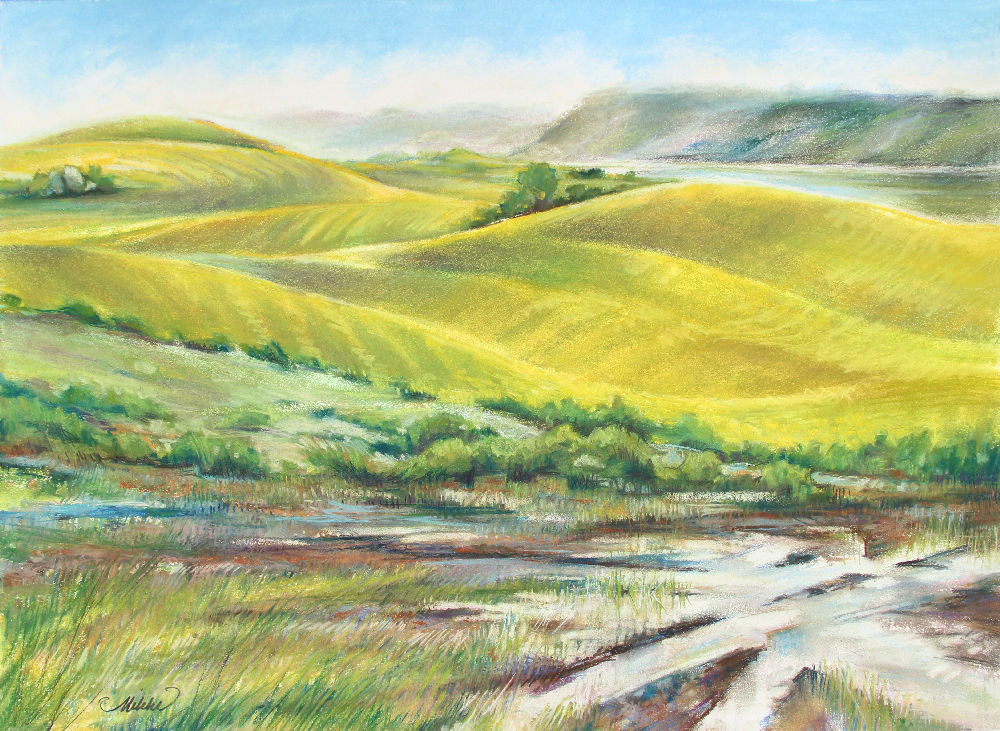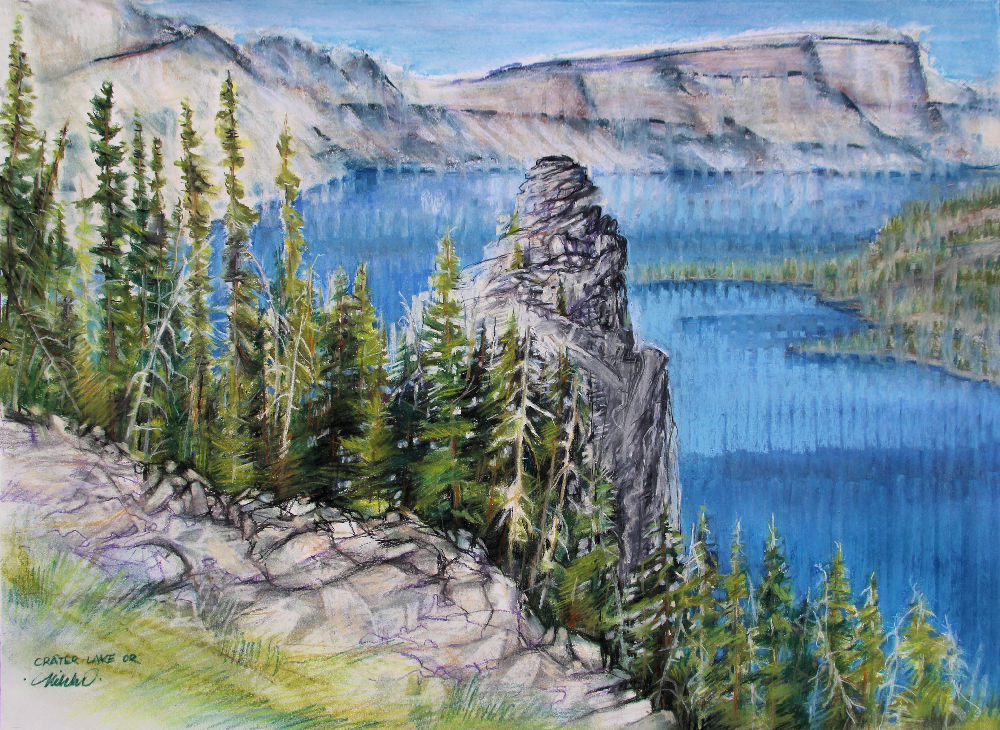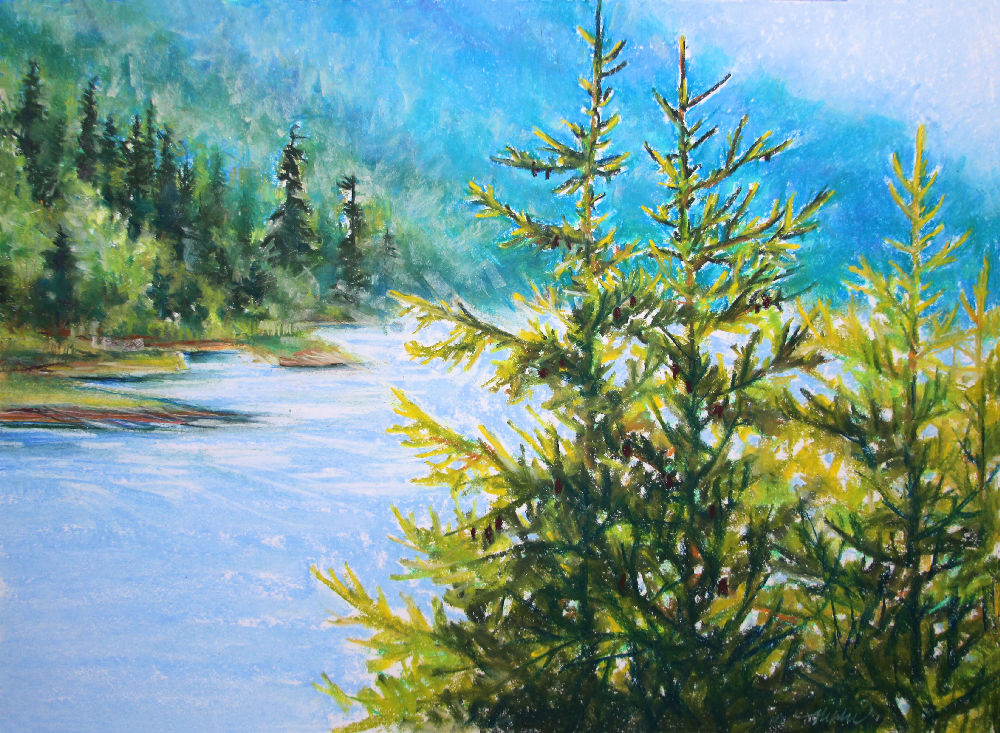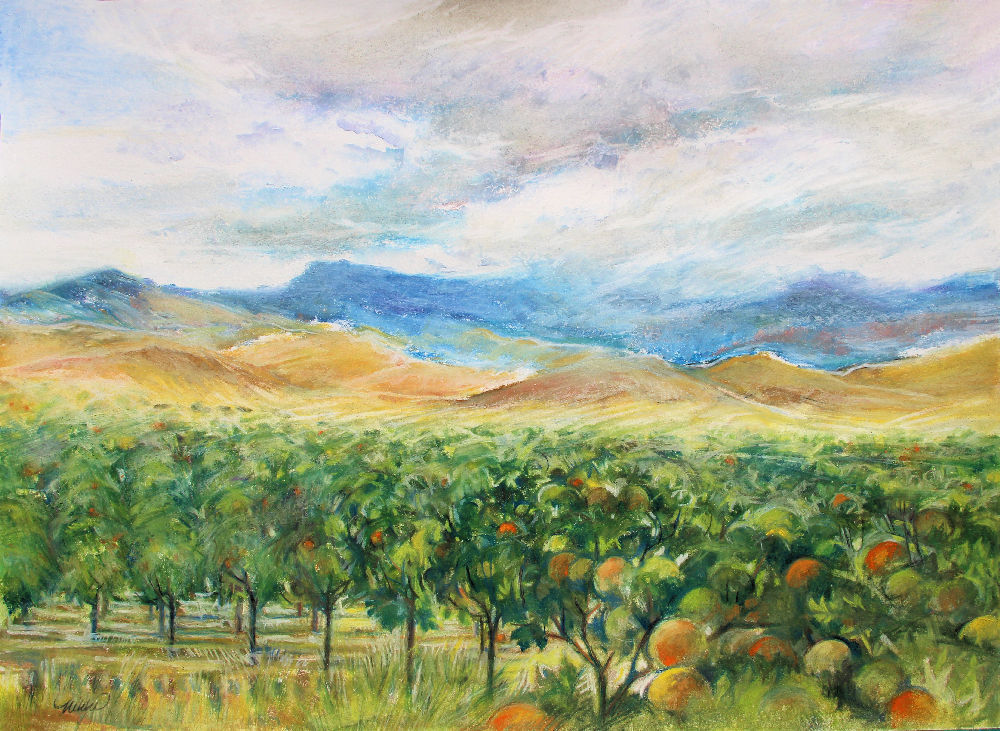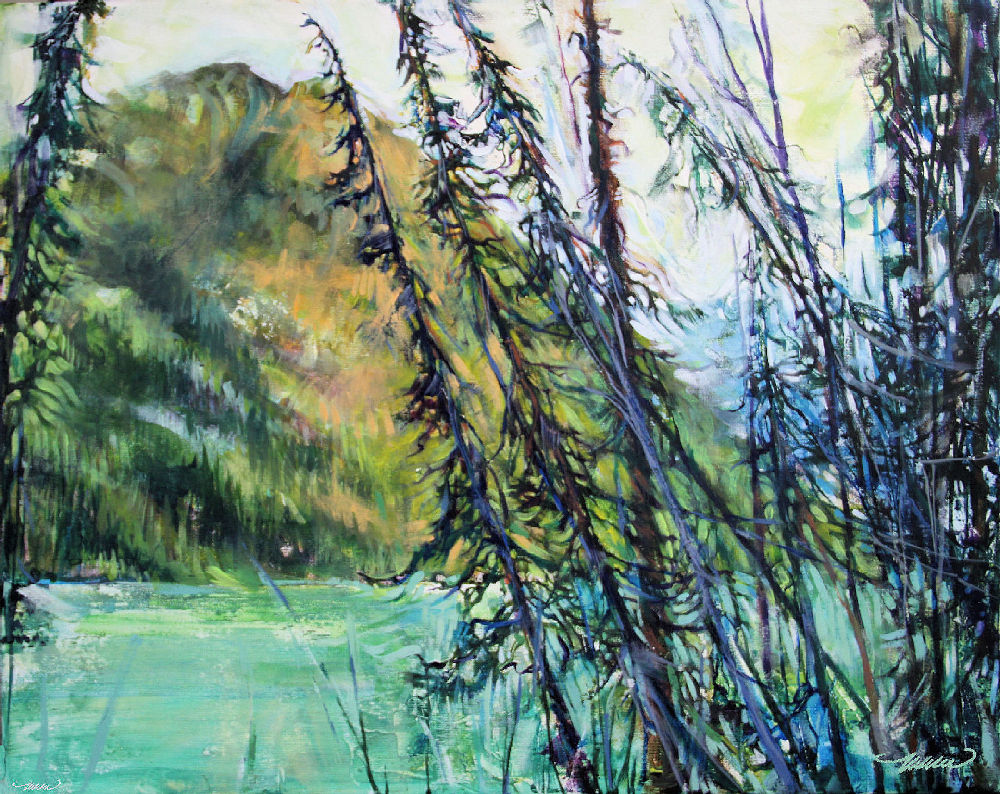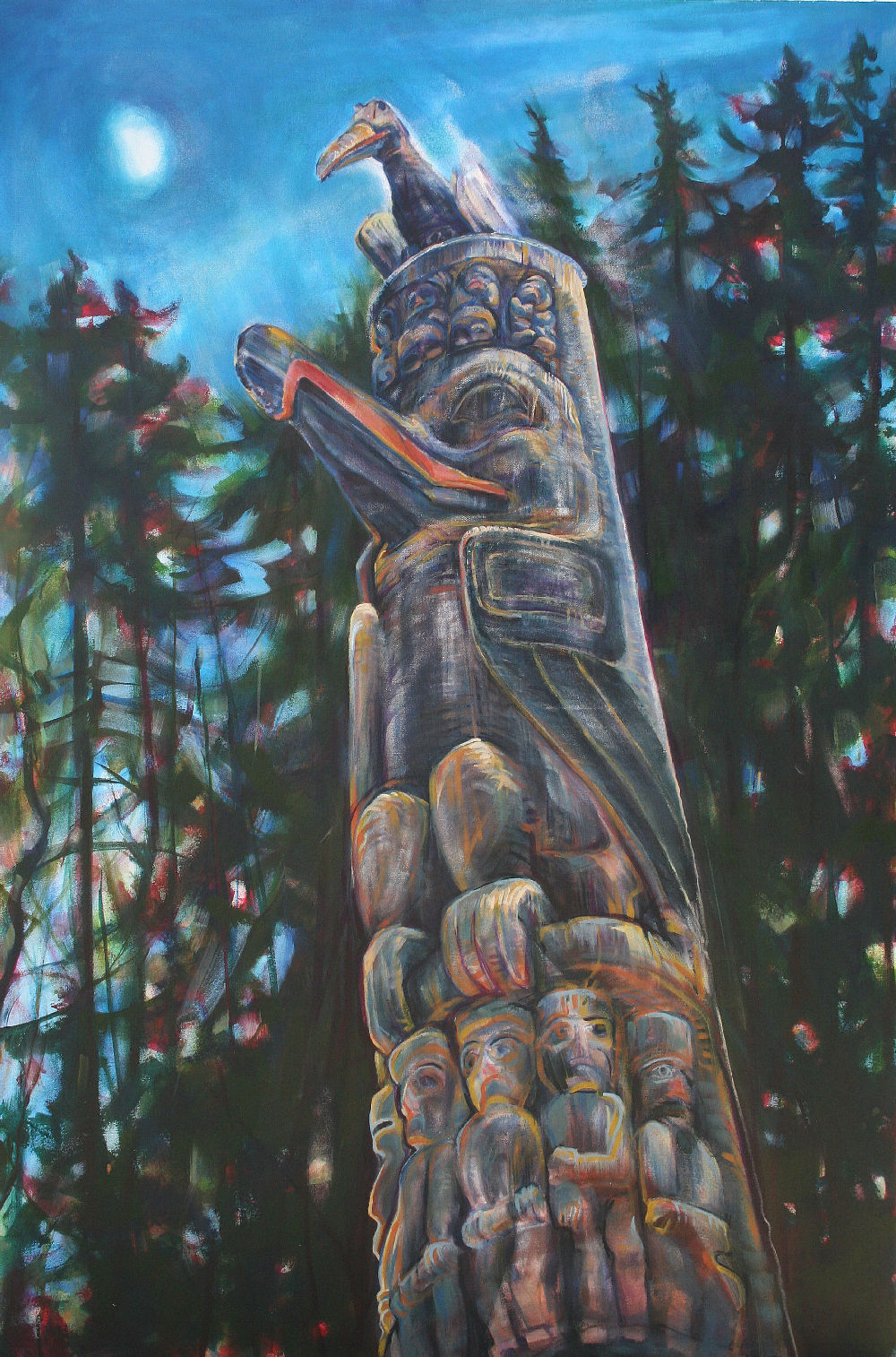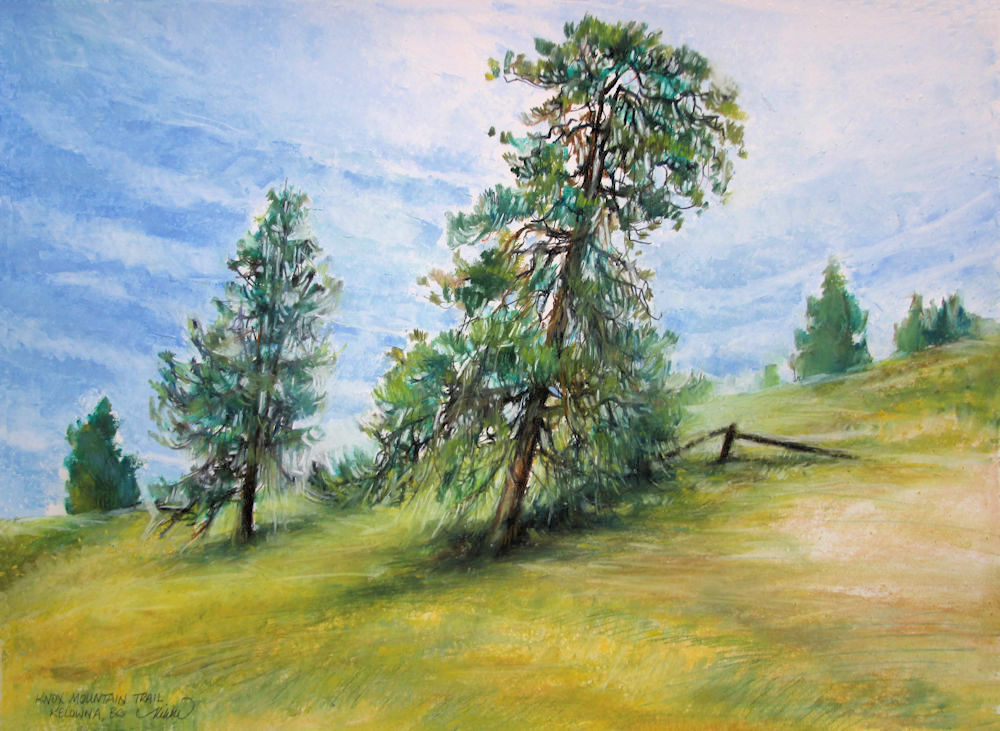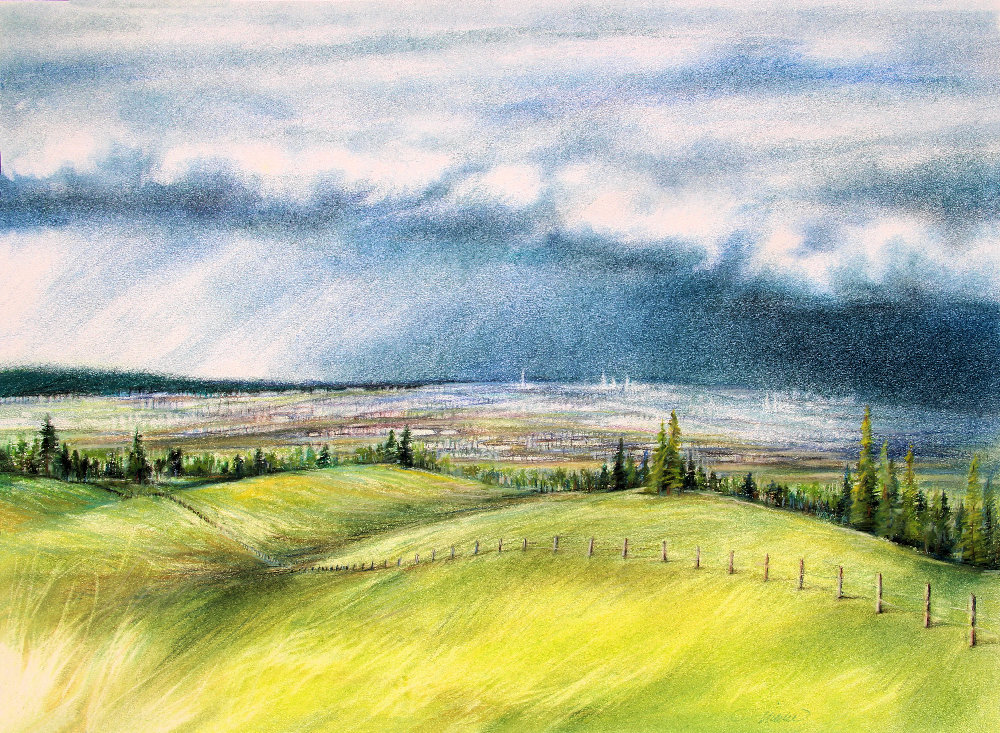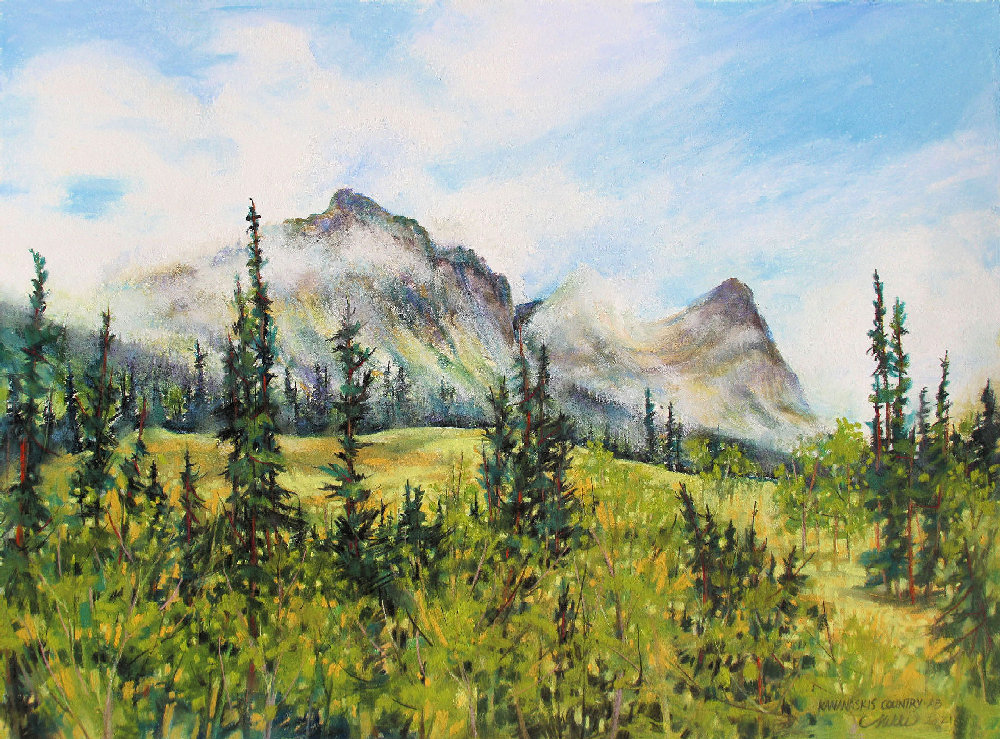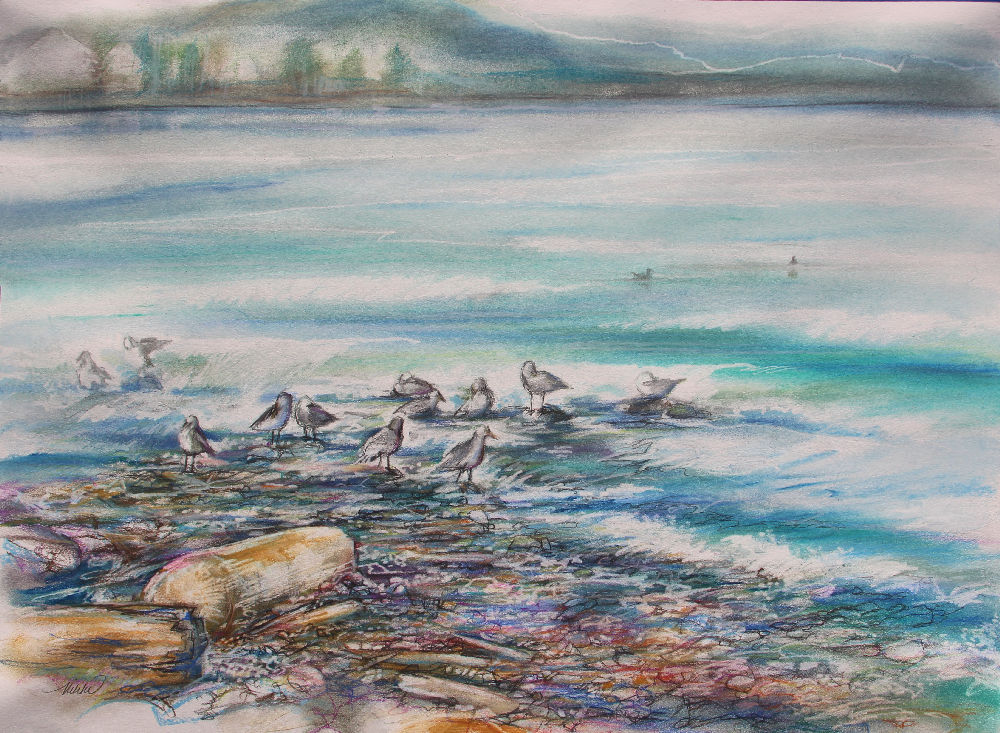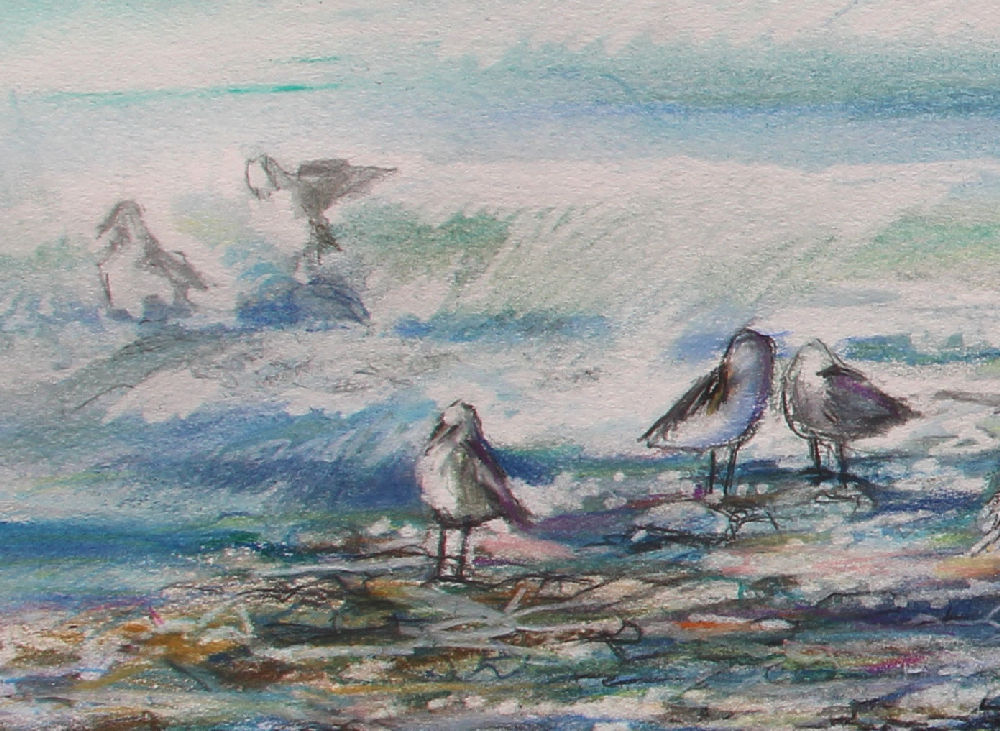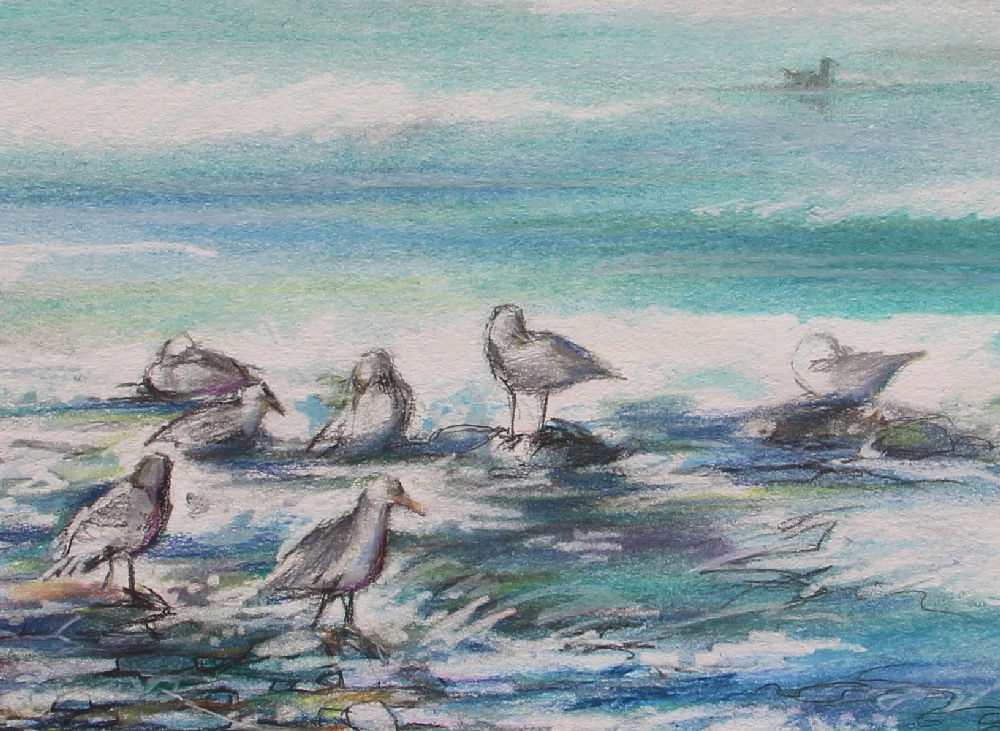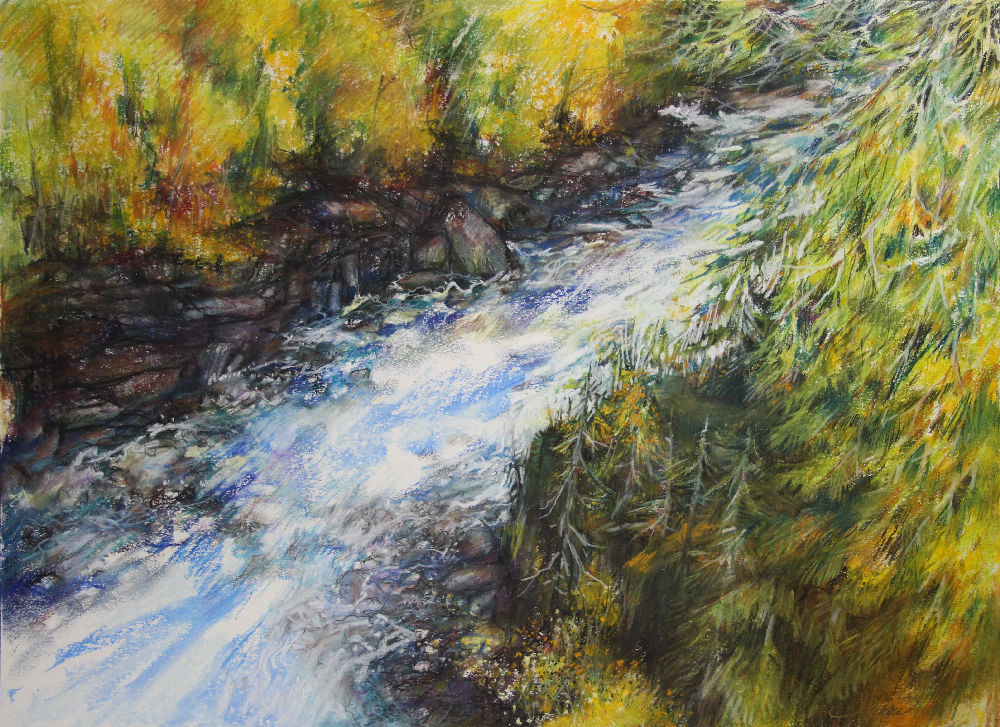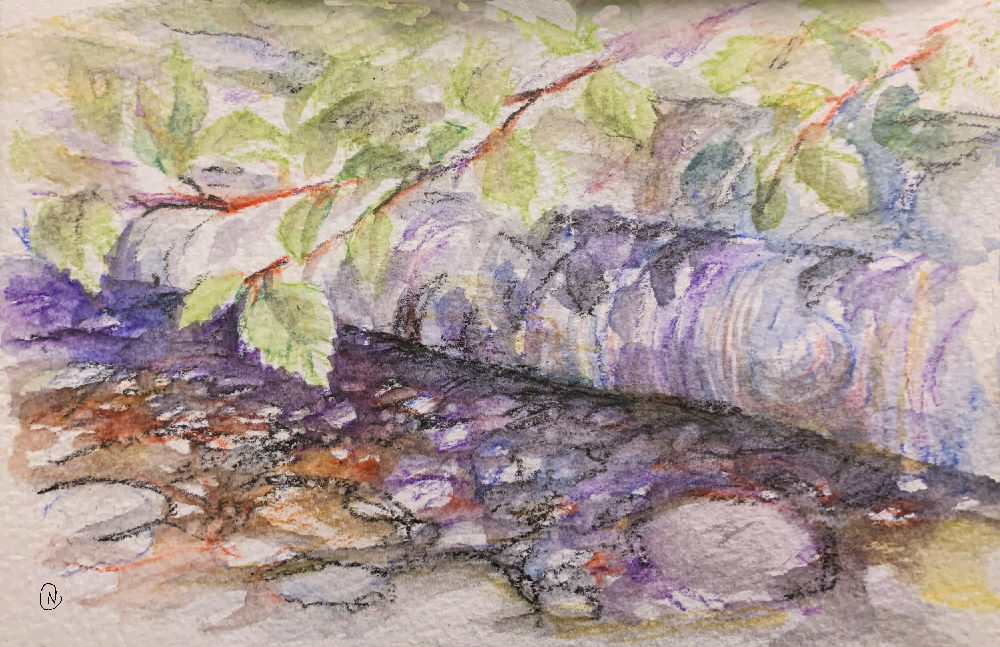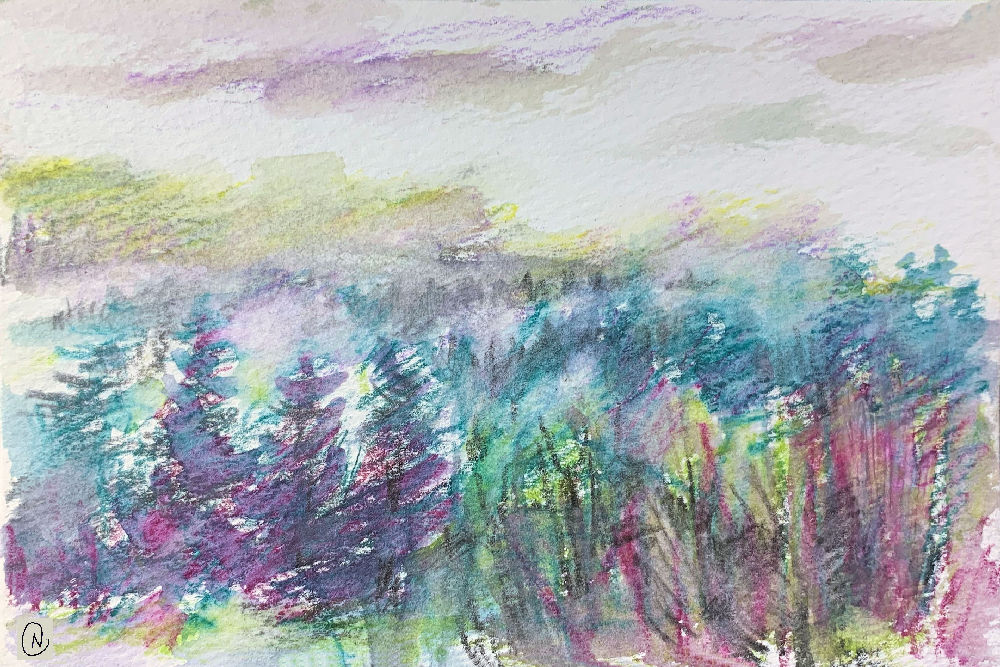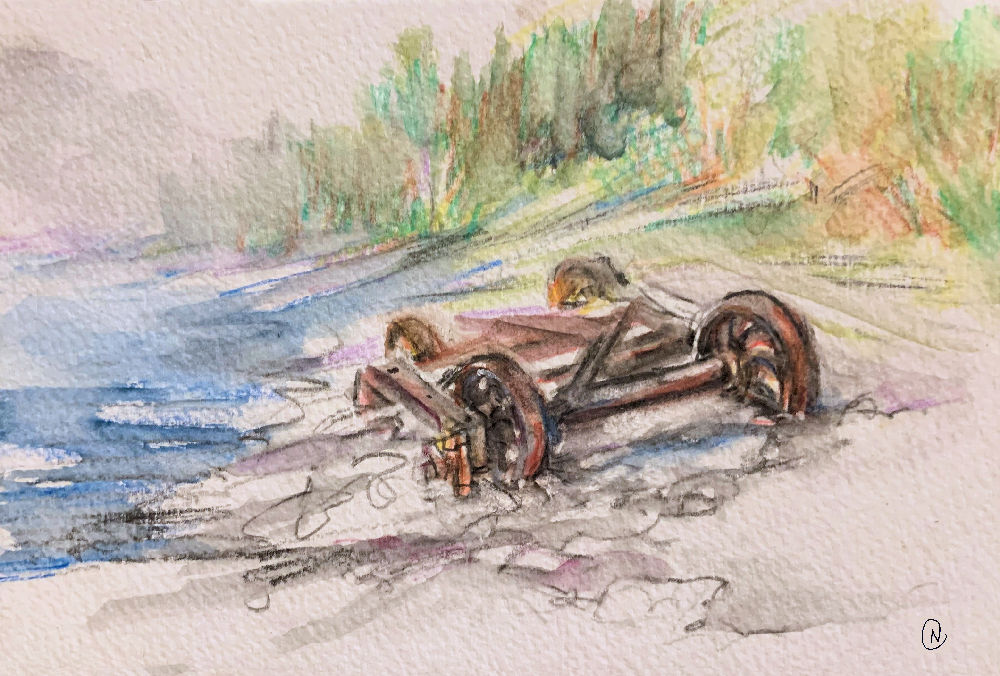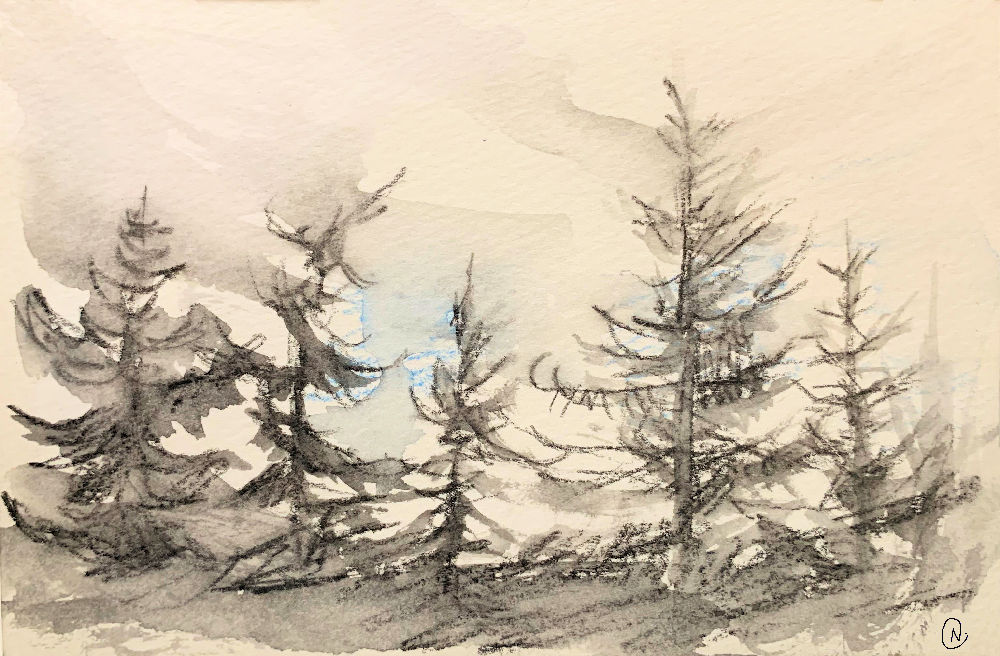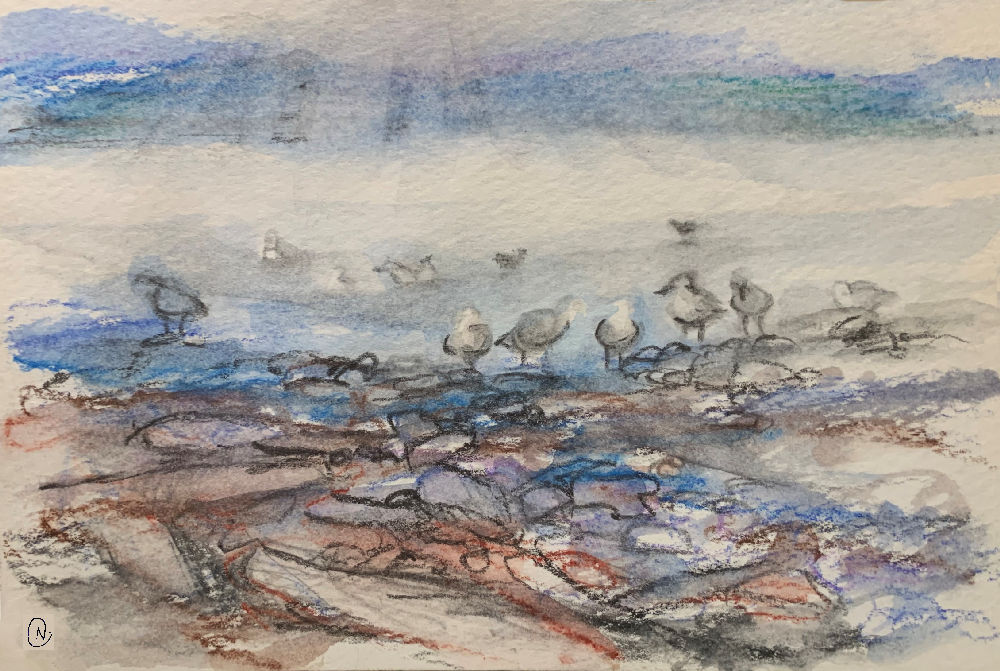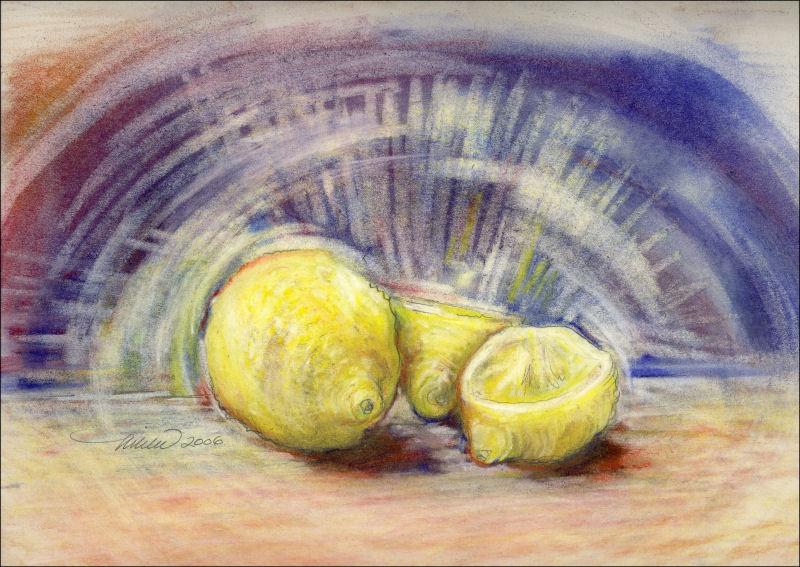
When life gives you lemons, draw them, 11 x 14 inches dry pastels, graphite on paper

"When life gives you lemons, draw them". (Nikki)

"...the painting has a life of its own. My mission is to bring forth this life". (Jackson Pollock)

"Trust your intuition, it's just like goin' fishin'; you cast your line 'til you get a bite." (Paul Simon)

Canada

« Previous Entries

Toil and Peaceful Life

Wednesday, July 7th, 2010

“Art is a human activity having for its purpose the transmission to others of the highest and best feelings to which [humanity has] risen.” 

Leo Tolstoy

______________________________________________________

Creating art is always a personal endeavour, and every so often I’m drawn to study only for the deeper experience of it; for the kind of education and understanding that can’t come through reading or any other means. Here is a painting I started in May, along with links and information about a unique culture, a group of Russian immigrants who made significant contributions to Canada and the development of the Canadian prairies. Next week I’ll be driving up to Alberta through Blaine Lake, Saskatchewan where some of the Doukhobors, whom I’ve just recently learned are part of my own heritage, settled during the 19th century. Upon returning from this final leg of summer travel there is another painting commission to complete, so I’ll be blogging regularly again and finishing this painting in about two months.

______________________________________________________

Breaking The Land: Doukhobor Women, 24 x 36 x 2 inches acrylics on canvas

“Toil and Peaceful Life” (quote, Peter V. Verigin), 24 x 36 x 2 inches acrylics on canvas. Study only, NFS, work in progress: There are harsh contrasts and colors at this stage, so am planning to paint over the whole surface with my friend Virginia’s white wash formula (1/2 guesso, 1/4 matte medium and 1/4 water), then will gradually bring out details again by scrubbing areas away with a wet cloth and repainting as well. Further layers of siennas, umbers, pale yellows, unbleached titanium washes etc. will be treated the same way. 

______________________________________________________

Doukhobor women breaking the land, Thunder Hill Colony, Manitoba, Canada, late 19th early 20th centuryWhen the light bulb on my sewing machine burnt out - it won’t work without one - I could have hopped in the car and driven three blocks to go buy another, but instead made due hemming a garment by manually spinning the wheel on the machine. I had already started the above painting referring to an old photo of 16 Doukhobor women pulling and two men directing a plow as they tilled the land in southern Manitoba, Canada’s eastern-most prairie province, during the late 1800’s. This is one of the more powerful images portraying the character of the Doukhobors, who left their homeland in Russia because of religious persecution, never allowed to return, becoming the largest mass immigration in Canadian history.  

I’ve often wondered how it must have been for women in the past, considering all of the chores that raising a family and taking care of the home must have entailed. On top of that, there was little relief from extreme weather conditions as, for example, during the heat of summer all of these responsibilities were done wearing long dresses, petticoats and bonnets. I guess it was with this in mind that I endured impatiently sewing my jeans without electricity.

The small amount of soil I turn over in the garden is planted mostly with flowers. The few veggies that  are novel to watch grow from seed to fruition are not crucual to the survival of my family. While I’m purchasing ready-wound thread on a plastic bobbin, I can select from a number of  food choices and shop during any time of day, 24 hours a day in a 7 day week. Todays’ lifestyles are so far removed from the realities that pioneers in any land must have faced. Living in small communities where all could share the work as well as morally support each other made complete sense. So it was for the Doukhobors, living a philosophy very similar to the Hutterites, the Mennonites, and the Amish.  

______________________________________________________

Photos are photos and paintings are paintings, but as traditional artists we can take advantage of the art of photography as inspiration to trigger motivation and memories, recreate impressions, and refer to for details. If photos are used as reference, very soon after painting begins I rely on and respond more to what’s happening on the canvas. For some time before putting brush to canvas, every detail of a subject adds to an internal mental picture, one that gradually envisions the painting finished to a certain degree. In some cases I’ll work from pictures of historic art or artifacts as educational studies, or from a client’s photo if they commission the reproduction of a favorite scene. Always though, the resulting art is an emotional translation.  

The first thing that strikes me in the enlarged re-re-reproduced print I’m working from is how little the quality of the image matters. The shadows on the faces of each individual say it all. Some appear curious about having their photo taken, and most are more concerned about the task at hand. Though the image is crude by modern standards, and maybe even partly due to it, we are able to share the raw truth of a moment in one of an uncountable number of cultures throughout human history who worked so physically this way. For most of our time here on earth, we, like all of nature, knew we depended on the land, and it truly was survival of the fittest.  I can only hope to capture the calibre of this story as well as the photo does.

Sometimes a painting can never be as effective as a photo, particularly when it comes to human portraits. In intances like this, there is so much value in “the journey” of your efforts. Painting such a scene, it really is like being transported. Of course the goal is to make the work successful, and artists all hope and plan for sales, but we also need to make time for creating work that feeds our soul and brings us back to the inner sources that pulled us into this not-always-externally-fulfilling vocation in the first place. When I recommend forgetting the rules and listening to your own, that’s what I mean. Even if you have never tried to paint or draw before, or you think you don’t have enough skill, you are as capable as anyone if you are spurred on by your emotions toward subjects you love, using whatever methods you enjoy. 

______________________________________________________

Facebook - group intro:

“Toil and Peaceful Life”

Peter V. Verigin

The name Doukhobor  means “spirit wrestler”. Although many of their beliefs descended from Christianity, being a Doukhobor is more of a way of life than a religion. Doukhobors are a group of pacifists that came to Canada from Russia to escape persecution for their beliefs at the end of the 19th century. The most well known leader of the Doukhobors was Peter ‘Lordly’ Verigin. The Doukhobors established communites across Western Canada, many times cultivating land that was not seen as desirable. There are still reminants of Doukhobor villages primarily in British Columbia and Saskatchewan.

 “…The settlers found Saskatchewan winters much harsher than those in Transcaucasia, and were particularly disappointed that the climate was not as suitable for growing fruits and vegetables. Many of the men found it necessary to take non-farm jobs, especially in railway construction, while the women stayed behind to till the land…”

Susan Wiley Hardwick, “Russian Refuge: Religion, Migration, and Settlement on the North American Pacific Rim”. University of Chicago Press, 1993. ISBN 0-226-31610-6. 1993. Section “The Doukhobors

 http://en.wikipedia.org/wiki/Doukhobor

The Doukhobors: 16th Century Russia to Canada, 2010 
The origin of the Doukhobors is fairly dubious, but some information dates the culture back to 16th and 17th century Russia. Deeply spiritual, the “Doukho-borets”, which literally means “spirit wrestlers”, rejected common orthodox practices of organized religions and society, including the worship of icons and individual land ownership. As pacifists, their motto was “Toil and Peaceful Life”.

After refusing allegiance to Tsar Nicholas and military service, in 1895, they burnt all of their weapons in response to this. (The date, June 28th, has become a day of celebration of their humble roots.) Facing persecution for their beliefs, over 7,000 Doukhobors sought refuge in Canada starting in 1899.

The Doukhobors’ passage across the Atlantic Ocean was largely paid for by Quakers and Tolstoyans, who sympathized with their plight, and by the writer Leo Tolstoy, who arranged for the royalties from his novel Resurrection, his story Father Sergei, and some others, to go to the migration fund. He also raised money from wealthy friends. In the end, his efforts provided half of the immigration fund, about 30,000 rubles.

* Multicultural Canada http://multiculturalcanada.ca/node/48207

With sympathy from the Canadian government, for a $10 fee each adult male was intitially provided with 160 acres of “free land” on the prairies of central Canada; present day Saskatchewan and Manitoba. They were expected to live on and break the land, plant crops, and eventually apply for a patent to own it.

During 1906, a new Parliamentary Minister revised their previous agreement to laws that commanded a pledge of allegiance to the Crown or else lose their homesteads. In 1907, 2,500 homesteads were cancelled, causing communal splits into three distinct groups. The largest group of Doukhobors, incuding  Peter Verigin, the man who had re-documented and defined their Orthodox faith,  moved to British Columbia.  The “Sons of Freedom” also went to B.C., but were radically different than the Community Doukhobors. They actively protested (sometimes nude!) issues arising from Canadian governmental control over their way of life, creating misunderstandings and negativity toward Doukhobors in general that remain to this day. The “Independents” maintained their homesteads in Saskatchewan in compliance with the new  Canadian laws.

1908 to 1912: Peter Veregin’s group purchased land in the West Kootenays, B.C. and developed large communal enterprises. The Doukhobors now call themselves the Christian Community of Universal Brotherhood (CCUB), situated in Brilliant, B.C..

Video http://www.youtube.com/watch?v=Kp5umD3HA8k

Viper’s Bugloss

Thursday, February 25th, 2010

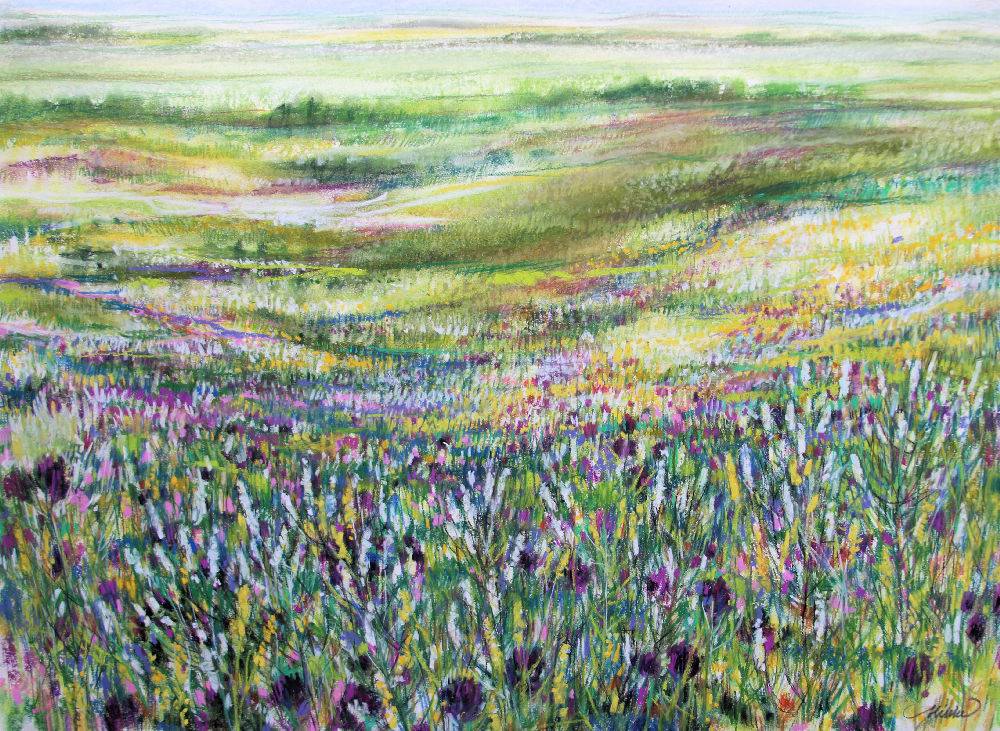
Viper's Bugloss, 18 x 25 inches Dry Pastels on paper

Viper’s Bugloss, 18 x 25 inches Dry Pastels on paper. With pink buds and blue-violet flowers along tall stems, it’s tempting to bring these wildflowers in as cut flowers, but the plants’ properties make the skin itchy and sore, so are best enjoyed left where they are, growing in masses beside the highways in eastern Ontario during the summer. I was curious about the name… according to the Encyclopedia of Herbs and Herbalism edited by Michael Stuart (c. 1979, 1987 ISBN 0-9999-48911), they were formerly one of the most respected plants used for the treatment of viper’s venom.

Little pen sketches

Thursday, February 25th, 2010

 Marie Lake campsite, Alberta, pen on paper

Marie Lake campsite, Alberta, 8 x 10 inches pen on paper

I’m trying to get a painting started that’s all planned in my mind’s eye, but have been finishing written articles and upgrading/updating the websites, so these little pen sketches are all I can manage lately; maybe a series is borne?

Alberta Spruce

Friday, February 5th, 2010

 Alberta Spruce, pen and ink, digital pen

…there are too many other things to do, but I wandered off anyway, missing the Alberta Spruce, so brought some back to Texas with a few ink-pen and digital pen scribbles.

Most websites require that you register before leaving comments, but I was hoping not to have to resort to those kind of restrictions. Are the days of trust completely gone? I sure hope not in our daily life, but on the internet it’s only wise to be careful. I deleted 348 spam comments the other day, so if you wish to leave comments you must now fill out your name and email.  Thanks!

Happy Holidays

Friday, December 25th, 2009

Snow on French Lilac

Merry Christmas from Airdrie, Alberta

столове~ Snow on French Lilac ~

Check out the Alberta/Texas phone interview for a pull-out feature in today’s Denton Record Chronicle.

Exhibition Opening Dec. 1st

Wednesday, November 25th, 2009

Chapala Winds (Mexico) 11 x 11 x 3 inches acrylics on canvas, gallery wrapped sides painted, $250.00Upcoming exhibition: monthly featured artist at Oxide Gallery in Denton, TX. Among the items on exhibit: most of the Magic Square series, Dawn at Bell Rock, Sounds of Silence, Polypore Fungi, Shadows of Summer, Eastern White Pine, and three of the vintage chairs. Opening Reception Tuesday, December 1st, 6:00 p.m. - 8 p.m., and the show runs until December 31st. Click here to view the work and price list.

http://oxidegallery.com/Flier-December.html

Left: Chapala Winds, Mexico, 11 x 11 x 3 inches acrylics on canvas, gallery wrapped sides painted, 1/16 of the Magic Square series, all painted as various aspects of trees for the Dancing With Trees Exhibition collection..

500X Gallery: Landscape

Tuesday, October 6th, 2009

October 10 - 31st, 2009   500X Gallery  Open Show: Landscape, 500 Exposition Ave. Dallas, TX

Opening Reception Saturday, October 10th, 7:00 p.m. - 10:00 p.m. 

Saint Catherine's Sunset - Ontario, Canada - 11 x 11 x 3 acrylics on canvas, sides painted Saint Catherine's Sunset, 11 x 11 x 3 acrylics on canvas, gallery wrapped sides painted  
$350.00 Buy Now Using PayPal  

______________________________  more news: ________________________________

Oxide Gallery 1st Year Anniversary celebration today, Tuesday October 6th,  6:00 p.m. - 9:00 p.m. Happy Anniversary Oxide Gallery!

I’ll be giving a demo on the use of Masking Fluid in acrylics paintings, so come and reveal one painting by helping to peel off the rubberized mask - I don’t even know what it looks like underneath, so it will be a surprise for all of us. Techniques on applying the fluid will be demonstrated on another painting already in progress. Three pieces accepted in the current show at Oxide Gallery are:

What Large Leaf Maples Do At Night, 36 x 12 x 3 inches,  January Thaw, 14 x 11 Oil Pastels on Paper, White double mat, white wood frame, total size 26 x 22 inches Moon Over Cypress, 14 x 11 Oil Pastels on Paper, White double mat, white wood frame, total size 26 x 22 inches

To purchase these and of this work please visit the Exhibitions Page.

What Large Leaf Maples Do At Night

Monday, May 25th, 2009

 What Large leaf Maples Do At Night - Day look -20 x 57 x 4 inches Muslin, white glue, acrylics on canvas, 30 LED lights systemWhat Large leaf Maples Do At Night - Night -20 x 57 x 4 inches Muslin, white glue, acrylics on canvas, 30 LED lights system

What Large Leaf Maples Do At Night, 20 x 57 x 4 inches Muslin, glue, acrylics on wrapped canvas, customized LED light system in back.

Alain signed his name on this also, because he spent last week and the weekend designing, soldering and wiring a system of 30 led lights for the back. He was disgusted with the eight inadequate push-lights I was initially going to use to create this Day and Night  Art. The electric source is a rechargable 12 volt battery placed neatly in the back, with an easily accessable on-off switch in the lower left corner. He’s not thrilled to ever create another, so it looks like I’ll be learning a little about soldering and electronics, because there are similar plans for the other two canvases exactly like this one. The original plan for it to be hung in any of four orientations had to be revised because of the battery pack in the back, but the option of lighting is much more interesting. Thank you Alain for making this piece what it is!

 High intensity LED light system on the back by Alain Coulombe

______________________The original blog posts; process:___________________

(more…)

Visitor

Thursday, March 5th, 2009

Raccoon, 11 x 11 x 3 inches, acrylics on canvas, work in progressRaccoon, 11 x 11 x 3 inches, acrylics on canvas, work in progress

Raccoon, 11 x 11 x 3 inches, acrylics on canvas, gallery wrapped sides painted

Raccoon, 11 x 11 x 3 inches acrylics on canvas, sides painted. I think I’ll quit while I’m ahead on this one..it has a watercolor airiness to it.

Jone’s Falls

Tuesday, March 3rd, 2009

 Jone's Falls, 11 x 11 x 3 inches acrylics on canvas, finished

Jone’s Falls,  near Thousand Islands, Southern Ontario 11 x 11 x 3 inches acrylics on canvas, finished. April 11, finished: I scratched some barely noticable lines here and there, and they break up the space  into sections now, if you compare the 3rd thumbnail and the finished piece. This is exactly why paintings need to sit off to the side for a while. With new eyes a few weeks or months later the finishing touches will suddenly be obvious, or there will at least be renewed confidence about what else to try that might work..

 Jone's Falls, mapping out composition, removing paint with clothJone's Falls, phase 2 work in progress, 11 x 11 x 3 inches acrylics on canvasJone's Falls, phase 3 work in progress, 11 x 11 x 3 inches acrylics on canvas

Left, February 28: mapping out composition by washing off damp paint with a wet cloth. Central and right, March 1: experimenting with limited palette, work in progress.

« Previous Entries